Invite: Day 9 of Four Weeks to Rubber Soul

Invite: Day 9 of Four Weeks to Rubber Soul

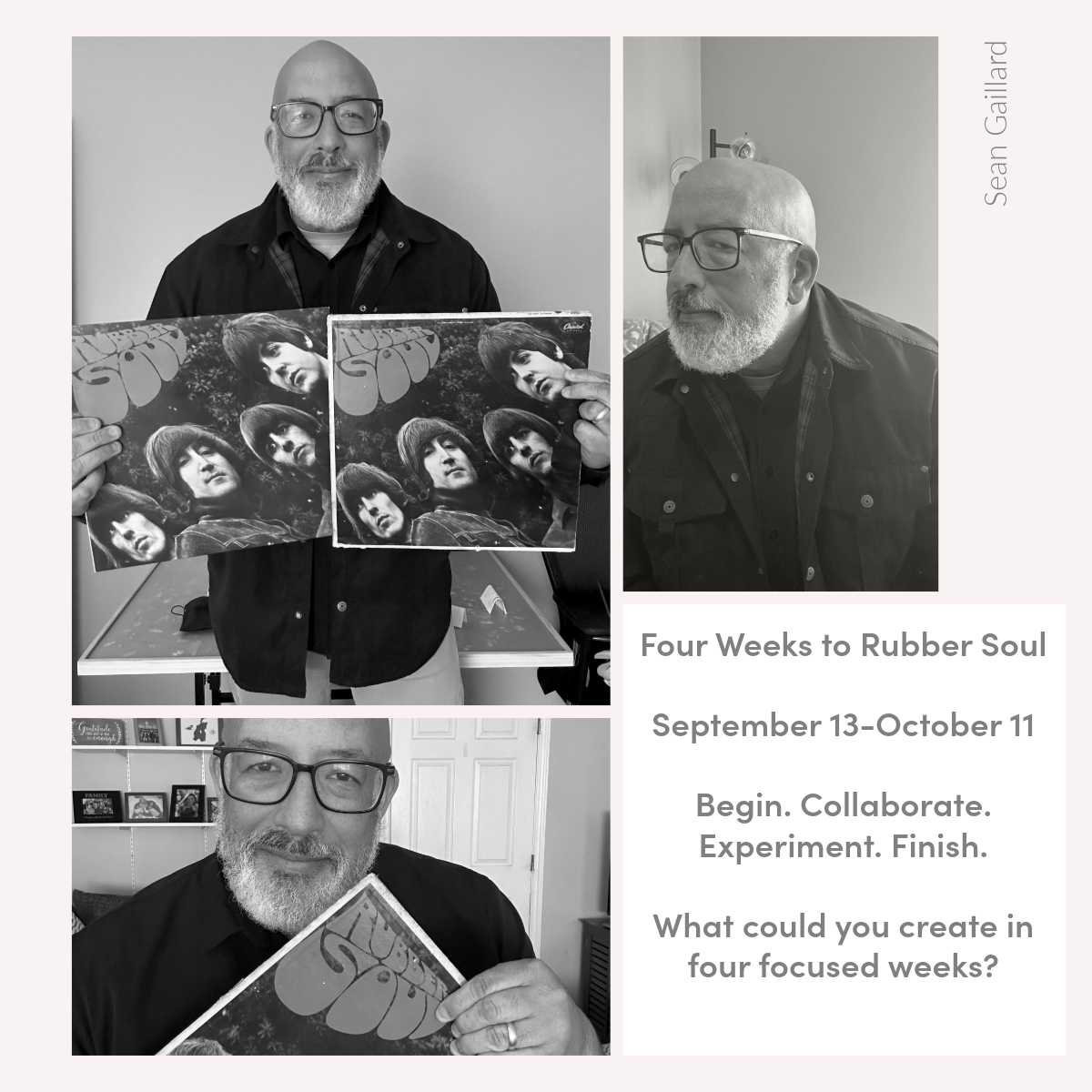
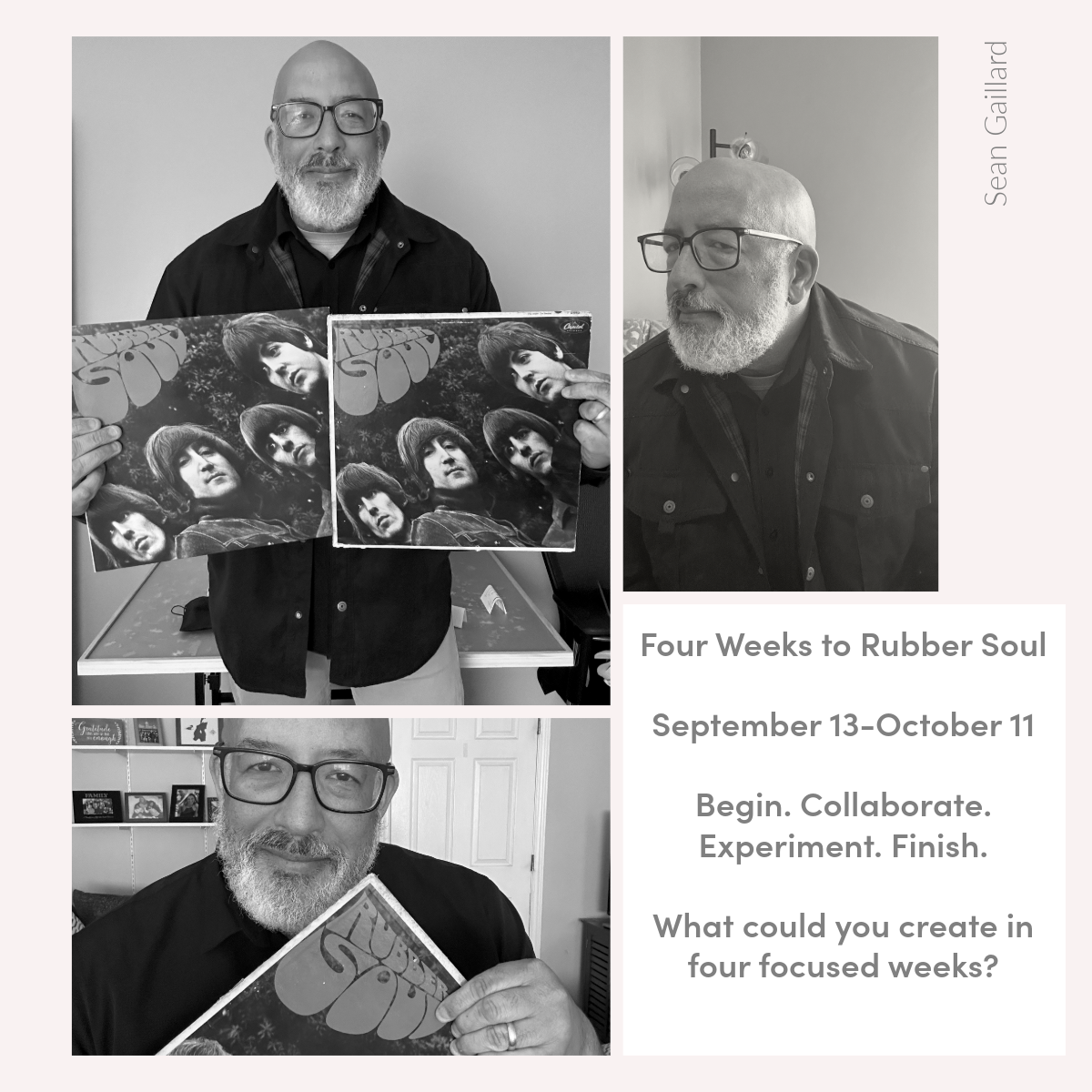
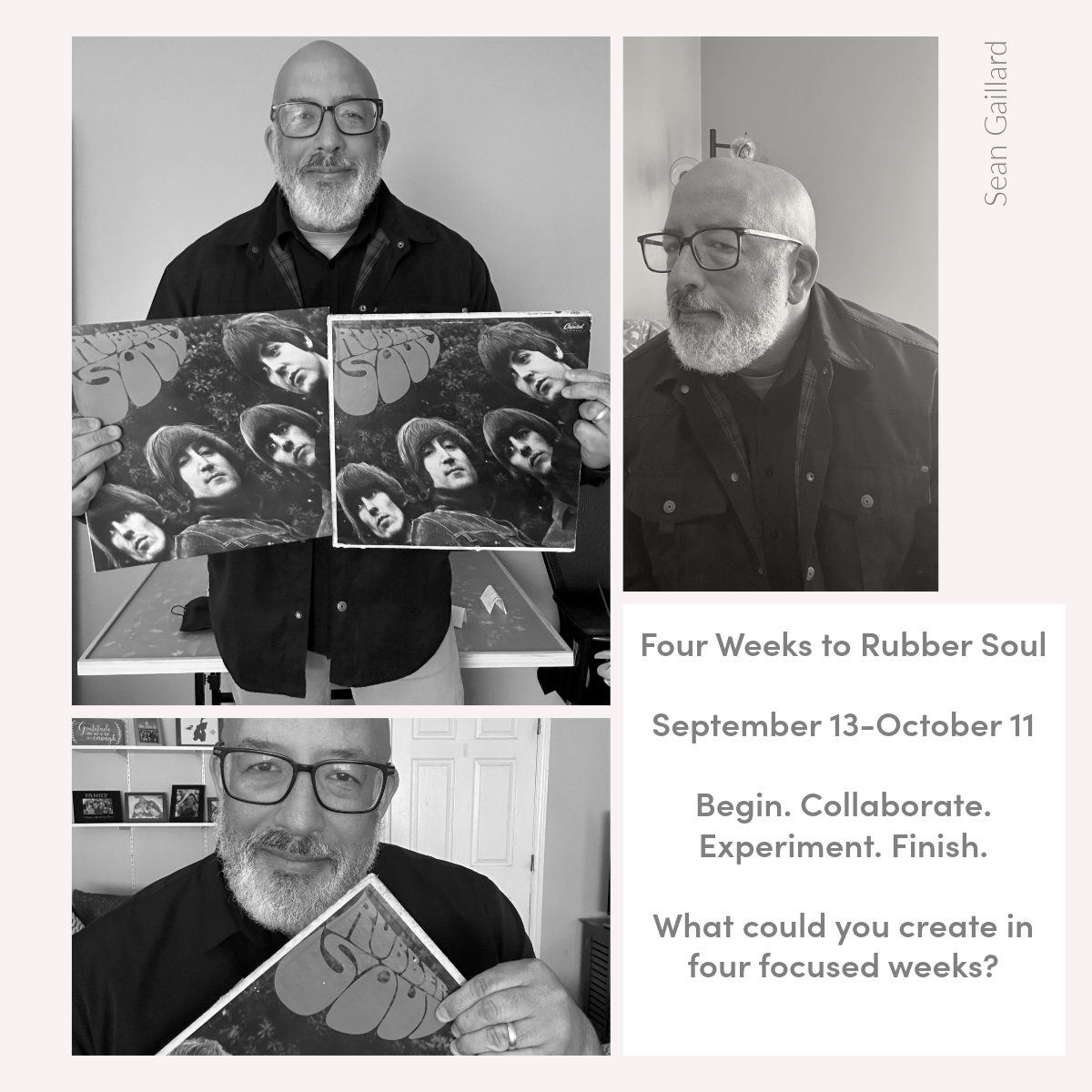
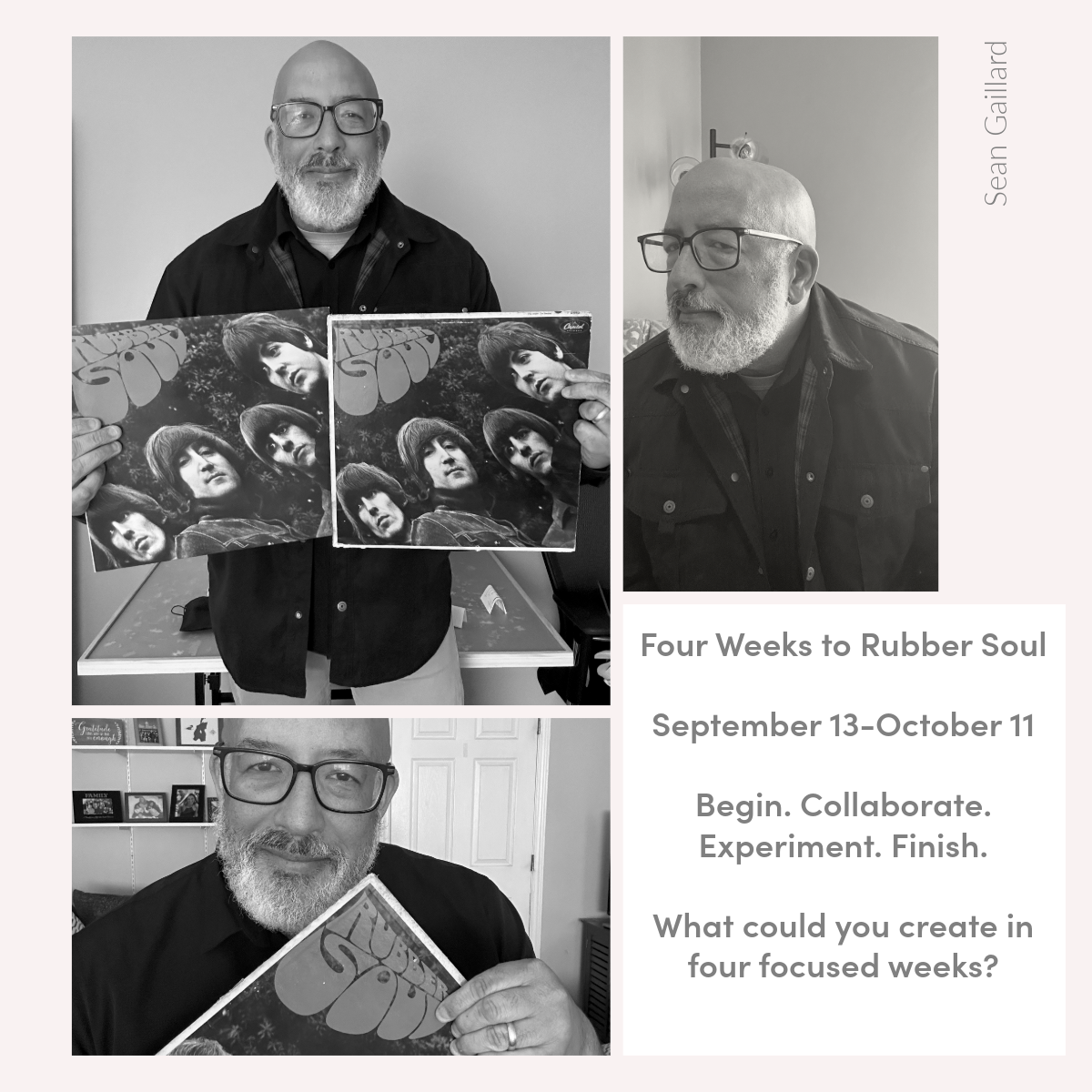
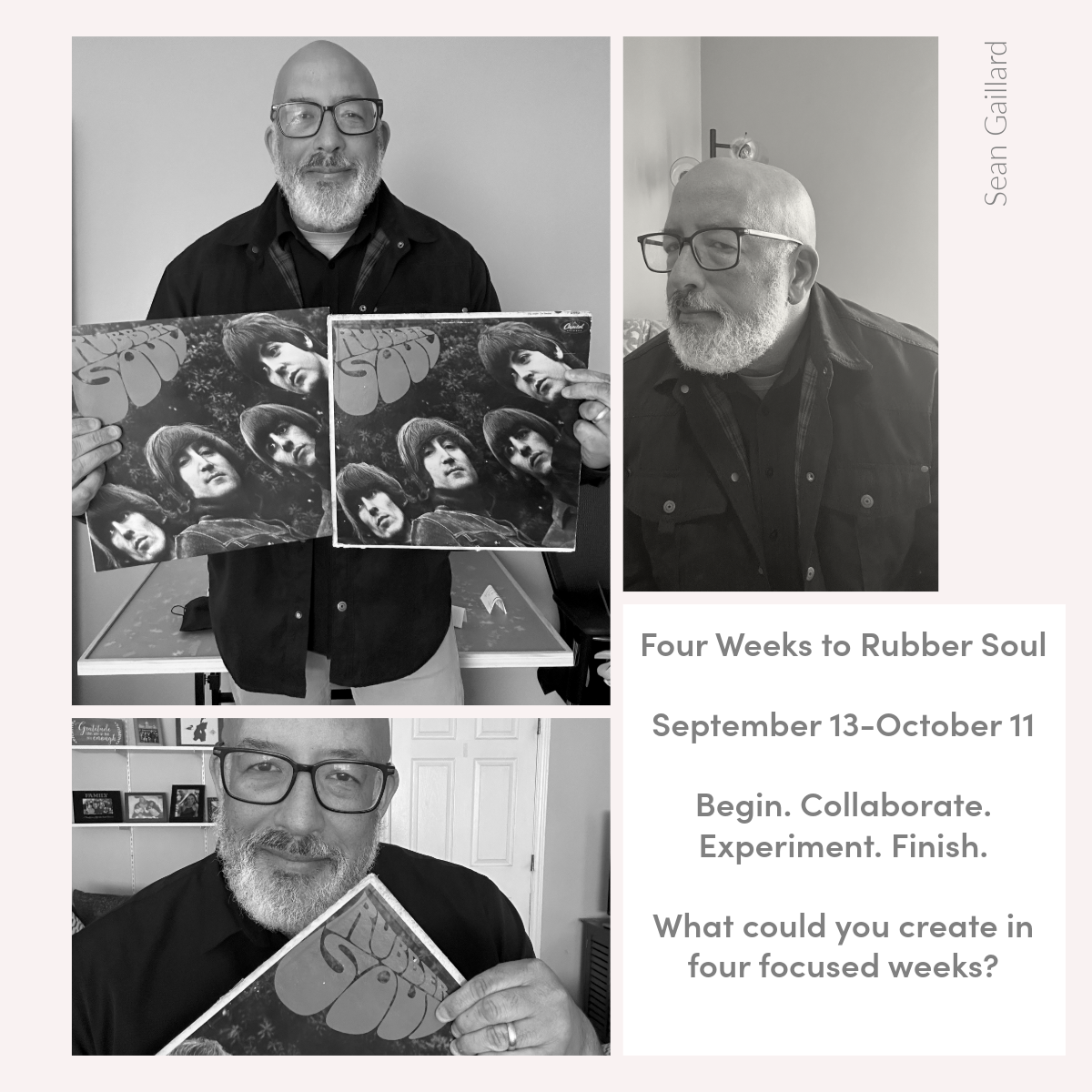
Welcome back to Four Weeks to Rubber Soul. We are embarking on a month long journey to explore creativity through the lens of The Beatles’ album Rubber Soul. The album took about a month to record, and I am engaging in my own daily challenge during these four weeks: do something creative each day in service of this series through blog posts, reels, reflection, and conversation.

This week, our focus is Collaborate, which brings us to today’s word: Invite. Collaboration rarely happens without someone first opening the door. Someone has to share the unfinished idea, ask the question, make the call, or simply say, “What do you think?”

The U.K. version of Rubber Soul opens with the witty rocker “Drive My Car.” It is The Beatles deep in the groove, telling an amusing story that turns the familiar “boy meets girl” trope on its head. Paul McCartney arrived with the musical idea, but the original lyrics were not working. He had a refrain built around “golden rings,” an idea that Paul later acknowledged was going nowhere.

Paul knew he had access to a pretty remarkable wordsmith in his songwriting partner, John Lennon. Rather than protecting an unfinished idea or abandoning it altogether, Paul invited John into the process. The two worked through the problem together, eventually landing on the phrase “Drive My Car” and building the clever story we know today.

That invitation offers a glimpse into the Lennon and McCartney songwriting partnership. Sometimes they wrote together. Sometimes they wrote separately. Sometimes one arrived with a nearly completed song that needed something more. A fragment, missing section, lyric, or unfinished idea could become an invitation for the other person to enter the creative process.

Think about what grew from those invitations. Their collaboration helped change the shape of popular music, yet so much of that extraordinary work began with something remarkably ordinary: an invitation.

The same principle extends beyond Lennon and McCartney. Throughout Rubber Soul, songs changed as they entered the studio and other band members contributed their own musical ideas. Invitation requires trust. It also requires recognizing that another person may possess a gift, perspective, or idea that can take our work somewhere we could not reach alone.

Some of my most meaningful collaborations have begun with a simple invitation. Making that invitation requires a little courage because there is always the possibility that someone will decline. I would rather risk hearing “no” than carry the regret of wondering what we might have created together.

That is how my collaboration with Donya Ball began. I had invited Donya, an author, keynote speaker, and thought leader, to join us as a guest on the Leading While Human podcast. I valued her insights, appreciated her upbeat approach, and recognized that we shared an interest in talking about leadership in real and transparent ways. During that conversation, I realized how much I enjoyed riffing on ideas with her. I decided to extend another invitation.

That invitation eventually became our podcast, Real Riffs. Our conversations have challenged me, expanded my thinking about leadership, and created something that neither of us would have created independently. I am grateful that I made the invitation and even more grateful that Donya accepted it.

As I reflect on Four Weeks to Rubber Soul, I recognize that much of this particular creative journey is a solo pursuit. I am writing the blog posts, recording the reels, creating the social media posts, and showing up every day for a month. Some days, that can be challenging. Sometimes it can even feel a little lonely because I do not have a Lennon or McCartney sitting across from me, ready to riff on the next idea.

Maybe that is where you enter the story.

I hope Four Weeks to Rubber Soul feels like an invitation. Consider this your invitation to share an idea, leave a comment, ask a question, challenge a thought, or tell me what you are creating. I have deeply appreciated the comments and notes of encouragement from those who have joined me during these first nine days. Your words matter more than you probably realize.

Creativity does not always have to be a solo pursuit. Sometimes the next step is simply opening the door and inviting someone else into the room. Your unfinished idea might need another voice. Your next project might need a bandmate. Your creative journey might begin to take a different shape because you had the courage to extend an invitation.

Maybe, over these four weeks, we are all building our own Rubber Soul together.

You are invited.
Bandmates: Day 8 of Four Weeks to Rubber Soul

Today is Day 8 of Four Weeks to Rubber Soul, and we begin a new theme in our four week journey. This week, we will explore the different ways creativity invites us to collaborate. Collaboration is woven throughout The Beatles story, and it is an essential ingredient of “Rubber Soul.” For all of the individual personalities and voices within the group, this is very much a band album.

“Rubber Soul” was not the product of isolated genius. John Lennon, Paul McCartney, George Harrison, and Ringo Starr each brought something different into the room. Producer George Martin and the studio team added their own ideas, judgment, expertise, and craft. Great collaboration expands the work without erasing the individual voices that make the work distinctive.

Our word for today is one of my favorite words: Bandmate.

If you know me, you know that I sometimes view the world as one big band. Each of us has a part to play. Each of us brings a gift that contributes to the sound. I often call people I cherish and trust as collaborators my “Bandmates.” It is my way of expressing gratitude, connection, trust, and kinship. When I call someone a Bandmate, I am saying, “I see you. I appreciate what you bring. I am grateful that we get to make something together.”

“Rubber Soul” offers a wonderful picture of this idea. Look at the back cover of the album and read the credits. Throughout the track listing, you see combinations of names and contributions. For example, you see credits like “Paul and John with George,” “George with John and Paul,” and “Ringo with Paul and John.” You even see specific musical contributions identified, such as George on sitar, Paul on fuzz bass, Ringo on Hammond organ, and George Martin on piano. The back cover almost becomes a set of liner notes for collaboration.

You can hear the same idea on “Think for Yourself.” It is George Harrison’s song, yet listen to everything his Bandmates bring into the recording. Paul contributes that memorable fuzz bass. John adds organ and harmony vocals. Ringo anchors the song with drums and percussion. The group layers its voices together around George. The song retains George’s voice while becoming richer because his Bandmates bring their voices into the room.

That is what great Bandmates do. They do not diminish your voice. They help you discover what your voice can become when it connects with theirs. The individual strengths of John, Paul, George, and Ringo became something even more powerful when those strengths worked together. Rubber Soul gives us fourteen reminders of what can happen when people bring their gifts into the room and make something together.

Who are your Bandmates?

Take a moment today to give someone your own liner notes shoutout. Send a text. Write an email or a note. Make a phone call. Find them in person and tell them what they bring to the band. Let somebody know that you see their contribution, that you appreciate their presence, and that the sound would not be quite the same without them.

Every great band needs Bandmates. Make sure yours know that they matter.

Check out today’s daily reel:

Reflect: Day 7 of Four Weeks to Rubber Soul

This is Day 7 of Four Weeks to Rubber Soul, and today’s word is Reflect. We are also closing out Week 1, which has centered on the theme of Begin. The Beatles’ creative growth, so evident on Rubber Soul, came from entering the room with songs, fragments, influences, ideas, and a willingness to work. The lesson is not to achieve perfection before starting. The lesson is to begin the work, knowing that it is completely acceptable if the beginning is rough and raw. What matters is that you enter the room and that the room is the right one, aligned with your creativity and ready to support the gifts you are bringing.

An important part of the creative process is reflection. Creative growth becomes visible when we stop long enough to notice what has changed since we began. Reflection asks us to pause, look back at what we created, and listen again. There is an art to that pause because we do not want to become so immersed in reflection that we lose momentum. Sometimes we need a trusted thought partner or bandmate who can help us listen, notice, and keep our creative work moving in the groove.

That brings me back to Rubber Soul. One reason I am looking forward to the multiple takes and alternate versions included with the forthcoming Rubber Soul Super Deluxe Edition is the opportunity to hear that creative evolution. The Beatles, along with producer George Martin, continually shaped these songs by changing harmonies, sounds, spaces, arrangements, and instrumentation. Reflection does not mean doubting what you created. Reflection means giving yourself enough space to hear what the work still needs.

Sometimes we need to return to what we made and ask three simple questions: What is working? What is missing? What could make this better? On Rubber Soul, a song could enter the studio one way and leave sounding very different on the finished master. That transformation happened because the band was willing to listen to the work as it developed and respond to what the song needed.

For example on “Norwegian Wood,” George Harrison felt that the song needed something different. His growing interest in Indian music led him toward the sitar, and he worked out a part that became one of the defining sounds of the song. That decision helped give the recording its distinctive character and introduced many listeners to a sound they may not have expected to hear on a Beatles record.

“In My Life” offers another beautiful example of reflection in action. The basic track had already been recorded, but the instrumental middle still needed something. George Martin experimented with ideas, including Hammond organ, before developing the Baroque inspired piano passage we now know so well. Since the part was difficult to play at the required speed, he recorded it more slowly and sped the tape up afterward. The result became an essential part of the song and a reminder that sometimes the creative breakthrough comes after we are willing to listen again.

As we close Week 1, take some time to reflect on something you have created. Do not judge it too quickly. Listen to it and ask yourself: What is working? What is missing? What could make this better? Consider bringing a trusted thought partner or bandmate into that reflection because sometimes another set of ears helps us hear possibilities we cannot hear alone.

Reflection is not about doubting your work. It is about asking what the work still needs and then having the courage to make the adjustment. I would love to hear how reflection fits into your creative process as we continue this journey through Four Weeks to Rubber Soul.

Check out today’s daily reel. Thanks to Starbucks for serving as my own Abbey Road Studios!

Listen: Day 6 of Four Weeks to Rubber Soul

Today’s word for Day 6 of Four Weeks to Rubber Soul is Listen.

One of the things I love about The Beatles is how much they listened. They absorbed what was happening around them. Folk music. Soul. Motown. Indian music. Bob Dylan. The Beach Boys. They were fans, students, competitors, and curious creators all at once.

They listened deeply, but they did not simply copy what they heard. They took those influences, filtered them through their own voices, and created something that still sounded unmistakably like The Beatles. You can hear that sense of curiosity and expansion throughout Rubber Soul.

That idea keeps coming back to me during this project.

If I ever have the chance to meet you in person, there is a good chance I will ask you one of my favorite questions:

What’s on your turntable?

Sometimes I mean that literally. I genuinely want to know what record you are spinning. The question also goes much deeper than music.

What are you reading? What are you listening to? What are you noticing? What ideas have your attention right now? What is feeding your work, your soul, and your passion?

For me, asking that question is an invitation to connect. I want to know what matters to you because I can learn from you. Your interests, ideas, and passions may help me see something differently. Listening becomes more than receiving information. It becomes an act of connection.

Creativity works that way, too.

We listen to the things that move us. We notice the work of other people. We absorb ideas, sounds, conversations, books, art, and experiences. Somewhere in all of that listening, something begins to stir within us. We take what inspired us and begin making something of our own.

That is part of what Four Weeks to Rubber Soul has become for me.

This is a daily creativity challenge. Every day, I am showing up with a word, recording a reel, and writing a blog post inspired by an album that continues to challenge and inspire me. Some days the ideas arrive easily. Other days I have to dig a little deeper. The point is to keep listening, noticing, creating, and showing up.

Rubber Soul has stayed on my turntable for years because it represents a courageous creative pivot. It reminds me what can happen when artists remain curious, listen widely, trust one another, and allow themselves to grow.

Plus, the music is pretty damn good.

My hope is that these daily riffs might do for someone else what Rubber Soul continues to do for me. Maybe a thought, a song, a question, or one small idea will encourage you to make something, try something, or return to something you have been putting aside.

So, here is today’s invitation:

What’s on your turntable?

What are you listening to, reading, noticing, or experiencing that is challenging you and inspiring your creativity?

Keep listening.

Keep creating.

And keep going.

Watch the Day 6 reel below.

Courage in the Grooves: Day 5 of Four Weeks to Rubber Soul

It can be daunting to face one’s creativity and then put on display for others. There are many forms and permutations of this feeling. Perhaps, it’s pressing “Publish” on a blog or reel. Maybe, it’s sitting at the keyboard and literally facing the music. We create doubts, orchestrate judgement from others, and quietly place a watermark of failure on our work. This impedes our expression and may even result in the zero sum of our creative output.

We need to dig deeply into our core for the courage to hold our heads high. We have to possess the belief in our creativity. We must be convicted that the world needs our ideas, dreams, and creative action. It takes courage to do all these things. I know it isn’t easy. By taking steps in these Four Weeks to Rubber Soul, my hope is to help inspire courage in your work. You may not have the camaraderie and support of a John, Paul, George, and Ringo surrounding you in your own creative pursuit. My hope is that creativity series will be like a bandmate for you as you dream, explore, and create.

Today’s word is Courage. I explore that very thing in today’s reel. Check out my riffs on “Rubber Soul” in today’s daily reel:

Connections Matter: Still Learning at the 200th Blog Post

This is my 200th blog post.

That number feels both impossible and deeply humbling.

As I write these words after several weeks of traveling from Charlotte to Maine, then to Orlando, and finally to Chicago, I cannot help but wonder what the person who wrote Blog Post Number One would think of the person writing Blog Post Number Two Hundred.

I imagine he would be surprised that the blog is still here.

He would marvel at watching three little girls grow into remarkable young women. He would be grateful for the unwavering love of an incredible wife who has stood beside him through seasons of joy, uncertainty, challenge, and hope. He would probably smile knowing that so much of life unfolded differently than he expected.

If I could sit across the table from that younger version of myself, I would not spend much time talking about titles, resumés, or accomplishments. I would encourage him to breathe more deeply, pray more often, trust his faith, and care for his nervous system as faithfully as he cares for everyone else. I would remind him that family always comes before work and that meaningful relationships will outlast recognition every single time.

Most of all, I would tell him to become more human-centered.

Two hundred blog posts later, I am still learning what that means.

My recent travels became an unexpected classroom.

Before heading to Orlando for the ISTE+ASCD Conference, Deb and I spent several peaceful days with family in Maine. Every morning, I found myself sitting quietly beside the lake, watching sunlight shimmer across the water. After a year filled with transition, those moments of stillness restored something within me. The lake reminded me that clarity often arrives when we finally become quiet enough to receive it.

Orlando continued the lesson.

One afternoon, I wandered into Park Ave CDs, a record store I had wanted to visit after doing some pre-trip research. A listening party for Madonna’s upcoming album filled the store with music, laughter, conversation, and people from every walk of life. I spent hours browsing records, discovering books, talking with strangers, and simply enjoying being present.

Before leaving, I thanked one of the employees for creating such a welcoming place.

The response has stayed with me ever since.

“We work to make this a safe space for everyone. We want everyone to belong.”

That simple sentence became one of the defining leadership lessons of my trip.

As the conference unfolded, I realized the moments that stayed with me had very little to do with keynote stages or crowded expo halls. They happened around dinner tables, over cups of coffee, during hallway conversations, and in those unplanned moments that never appear on a conference schedule.

One evening, I shared dinner with Matt Miller and Eric Nelson. Our conversation drifted toward teachers, leadership, AI, and one simple question that refuses to leave me: “How do we help teachers love teaching again?”

That conversation had very little to do with technology. It had everything to do with people.

Another morning, I shared coffee with Mandy Froehlich and Todd Whitaker. We laughed. We told stories. We talked about life more than the conference itself. Sometimes the best professional learning happens when nobody is trying to be professional.

I found myself reflecting in a crowded hallway with Chaunté Garrett and Craig Aarons-Martin about belonging in spaces like ISTE+ASCD. Conferences can be energizing, but they can also leave people wondering where they fit. Our conversation reminded me that belonging does not happen automatically. It happens because someone chooses to create space for another person.

During my virtual presentation on leadership in the age of AI, I found myself struggling with technology and timing. Right in the middle of it, Tamara Letter offered words of encouragement in the chat. It was a small gesture that made a tremendous difference. One voice reminding another person, “I’m with you,” can change everything.

Before my in-person presentation on #InstantPD, Natasha Nurse, Erik Francis, and Lindsey Cannon each offered encouragement in their own way. They reminded me that leadership is often quiet. Sometimes leadership is simply helping another person believe in themselves before they step into the room.

When it came time to facilitate my #InstantPD session, I found myself walking around the room before we even began. I wanted to greet people personally, thank them for coming, and learn their names. I cared less about how many people attended than I did about the people who had chosen to be there. Every educator deserved to know they mattered.

One of the greatest gifts of the conference came during an impromptu conversation with Angela Maiers. Sitting across from someone whose life’s work has centered on mattering felt less like meeting a renowned educator and more like sitting with someone who has spent years exploring many of the same questions that continue to shape my own journey. Our conversation reminded me that human centered leadership is not another initiative. It is a way of seeing people.

I experienced that same lesson while interviewing Jessica Garner. Somewhere along the way, our interview quietly transformed into a conversation. We explored artificial intelligence, differentiation, and learning, but what I remember most is the humanity that emerged when two people became curious together.

On the final day of the conference, I was wandering around looking for a place to rest. I ran into Greg Bagby and Cindy Gaston. After the warm words and welcoming, I asked what was on their respective turntables. That conversation became a communal sharing of music where we grooved, hummed, smiled, and connected to the beats being shared.

A few days later, Deb, my brother, my sister-in-law, and I visited the newly-opened Obama Presidential Center in Chicago.

Throughout the experience, one word kept appearing.

We.

It quietly echoed throughout the exhibits and invited every visitor to think beyond themselves. The recurring invitation to “Bring Change Home” reminded me that meaningful change begins in our families, our schools, our neighborhoods, and our communities. Lasting change has never belonged to one person. It grows wherever people choose to listen, encourage, and build something together.

As I reflected on Maine, Orlando, and Chicago, I realized they had all been teaching me the same lesson.

The lake.

The record store.

The dinner conversations.

The coffee.

The hallway encounters.

The encouraging text.

The shared laughter.

The presentation.

The interview.

The museum.

None of those moments were really about places.

They were about people.

After thousands of miles, countless conversations, and two hundred blog posts, I keep returning to the same simple truth:

People want to matter. People want to belong.

Connection is how we remind one another that we matter. Belonging is what makes us stay.

As I reflect on these travels and experiences, I remain grateful for YOU. Thanks for being sharing common ground with me and being such an essential part of the human journey.

Sunshowers and Summer Clothes: When Music Brings Us Home

For Thelma Houston, Jimmy Webb, Brian Wilson, and Bruce Springsteen

Today, I wasn’t expecting to break down in tears. As I write this, my face is warm and wet from tears evoked by a song.

Music can do that.

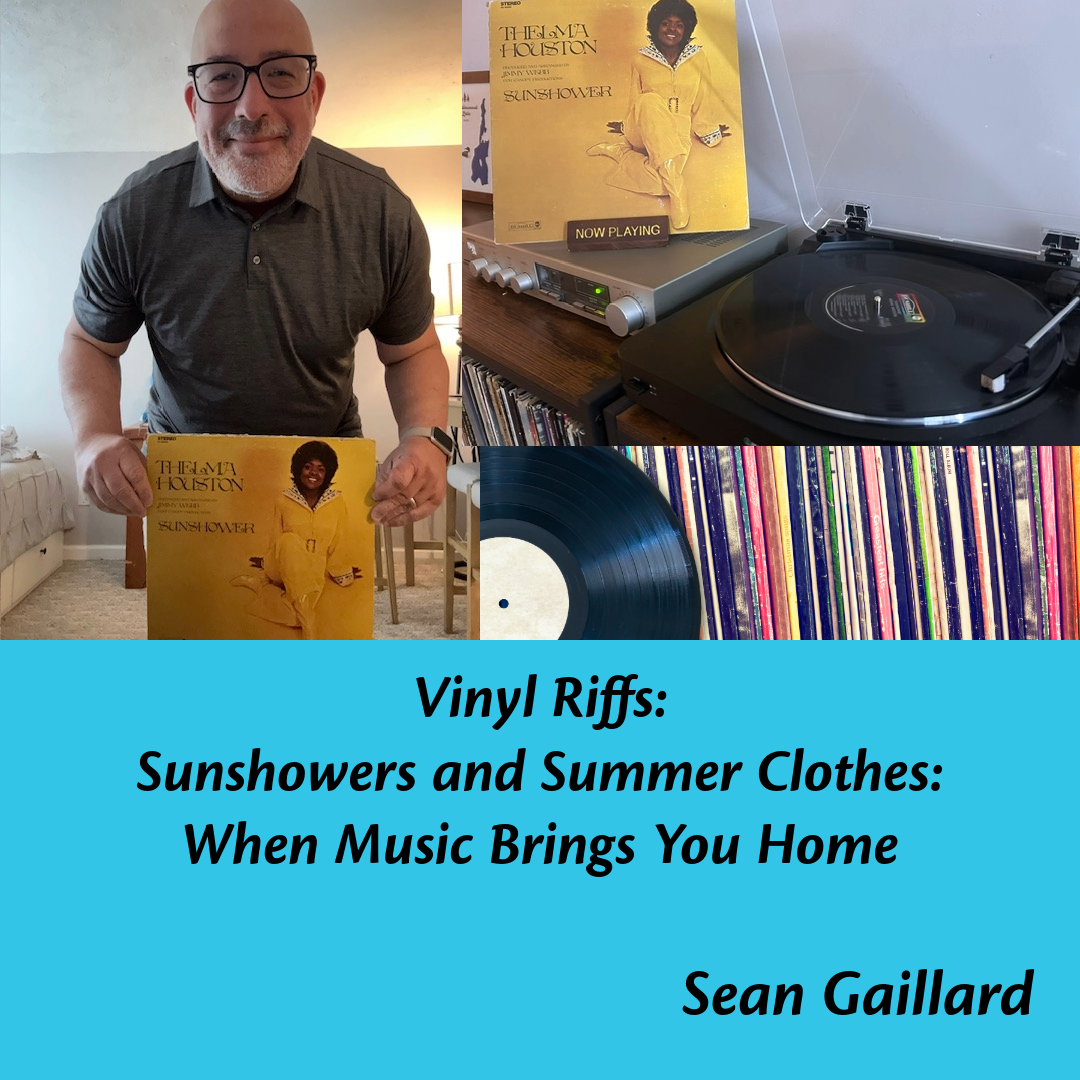
Earlier in the week, I had come across a picture on Instagram of Jimmy Webb and Thelma Houston. Their 1969 collaboration yielded a beautiful album entitled “Sunshower.” It’s a stunning collection of songs from the pen of Jimmy Webb. You know Jimmy Webb if you know songs like “Up, Up, & Away,” “MacArthur Park,” and “Wichita Lineman.” He arranged and produced the album with noble support from various studio musicians from the legendary Wrecking Crew. Thelma Houston is the star of the show with her vocals evoking Gospel, Broadway, R&B, Soul, and Pop all amalagated into a sound that transcends categories.

My mother had a beloved copy of the album. I remember the illuminating album cover of Thelma Houston arrayed in a yellow pantsuit sitting in a yellow room. Her smile was sunshine personified. Heck, she was the sun itself.

Having seen that picture on Instagram, I decided to put the needle on the album that my mother had given me last year. It’s the same album and the original pressing with its crackling warm hiss of snaps, crackles, and pops just aligned with my Sunday morning.

The second track on the album triggered my tears. “Everybody Gets to Go to the Moon” kicks in on a solid set of triplets evocative of the symphonic sound during the middle instrumental section of “MacArthur Park.” Drummer Hal Blaine, the master studio percussionist, keeps the beat snappy and swinging. As soon as I heard the opening notes, I am instantly transformed to my early childhood in Carson, California. I might be 4 or 5 years old. I can see Mom preparing Rice-A-Roni in the kitchen. She’s got Houston belting out the beauty of moon travel in the midst of complex shifting time signatures all in one measure as Webb conducts the Wrecking Crew amidst a loving tidal wave of sound. I remember dancing with my arms outstretched with my big brother and little sister. We are twirling about and pretending we are flying to the Moon. Mom is keeping the beat on a ladle as she is stirring the rice in the kitchen. She is also gently encouraging us to be quiet as my newborn baby sister was sleeping.

Then, we hear the magic sound amidst Jimmy Webb’s mini-opera for Thelma Houston. It’s the magic sound of jangling keys on the front door. The sound denotes one thing and one thing only: “DADDY!” The three of us run at top speed toward that magical sound of keys dancing on the front door. The door opens and we leap into our Daddy. There are kisses and hugs. It’s joy and then we start dancing in time to Thelma Houston’s aria of “Everybody Gets to Go to the Moon.” Incidentally, another version of the song by The Three Degrees is used in the classic film, “The French Connection.”

I was so moved by the song this morning that I went to share the memories of Carson with my wife. I am weeping, smiling, laughing, and grooving to the solid beat of the song all at once. Carson was heaven on earth for me. That song simply brought me back to the sound of my father’s keys in the door and the joy of being in our family. As I am sharing these memories, I make a connection to another song that evokes a memory.

It’s 2007 and all of our daughter are home and their kids again. I am hearing “Girls In Their Summer Clothes” by Bruce Springsteen. It’s a warm day amidst a North Carolina summer. I pull into the driveway with the windows down and I see all three of my daughters playing in the backyard. They spot me and come running to me. I am crying as I write this. It’s full circle. I can now feel what my father felt as he jangled those keys in our front door on Radlett Avenue. All three leap into my arms. It’s heaven on earth. Springsteen’s song sounds like a lost track from the “Sunshower” album or even “Pet Sounds.” Both Brian Wilson of The Beach Boys and Jimmy Webb both drank from the same aspirational well of Technicolor sound in their records.

Brian Wilson once said that “Music is God’s voice.” I firmly believe that. It’s the divine thread that transcends all boundaries, divisions. Music is a time machine that connects us to memories. We hear a song and we transported backward into a memory. It keeps in perspective within the present. It can point us toward possibilities for the future.

What song does that for you? I would love to hear. Please share in the comments.


Here’s “Everybody Gets to Go to the Moon” by Thelma Houston:


Here’s “Girls In Their Summer Clothes” by Bruce Springsteen:

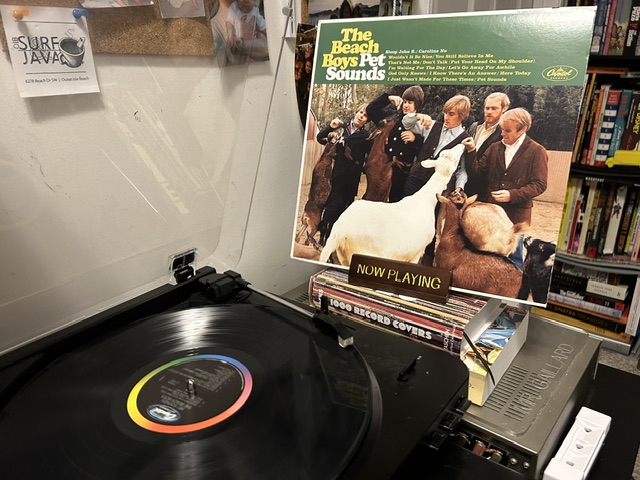
“Pet Sounds” Turns 60!

Sixty years ago, “Pet Sounds” changed the way people heard music, emotion, vulnerability, and possibility.

This week on “Vinyl Riffs with Sean Gaillard,” I want to open up a conversation instead of simply doing a podcast episode.

What does “Pet Sounds” mean to you?

Maybe it is a memory.
Maybe it is a song that found you at the right moment.
Maybe it is an album that changed how you hear music.
Maybe it simply reminds you that beauty and vulnerability still matter.

Share your thoughts, memories, favorite songs, reflections, or stories in the comments.

I will be curating responses from music lovers, musicians, writers, podcasters, and fans around the world for a special 60th anniversary episode dropping this Saturday.

Music still connects us.
Albums still shape us.
“Pet Sounds” still matters.

Vinyl Riffs: Sagittarius’ “Present Tense and the Courage to Create

Years ago, I remember reading about a hallowed single featuring members of the Wrecking Crew. The song was “My World Fell Down,” credited to a group called Sagittarius. The truth is that Sagittarius was never really a group. It was something more elusive and, in many ways, more meaningful.

Released in 1967, “My World Fell Down” felt like it existed in the same sonic universe as what Brian Wilson was building with The Beach Boys. Think about “Good Vibrations” and the unfolding ambition of SMiLE. The form was shifting. The rules were dissolving. Pop music was becoming something expansive, layered, and deeply expressive.

That single led me, years later in the late 1990s, to track down a CD reissue of Present Tense. That is when I learned that the architect behind Sagittarius was Gary Usher, a collaborator with Brian Wilson of The Beach Boys who co-wrote “In My Room” and produced The Notorious Byrd Brothers. Alongside him was another studio visionary, Curt Boettcher.

What they created together on Present Tense was not just an album. It was a sanctuary.


A Studio Project That Became Something More

Sagittarius was never built for the stage. It was built in the studio, piece by piece, with contributions from elite session musicians and collaborators. It was a collective before that word became fashionable. It was a shared space where ideas could breathe.

At the time, Gary Usher was an in-demand producer at Columbia Records. The expectations were constant. The pressure to deliver was real. The work never stopped.

He created something outside of that system.

Sagittarius became his creative outlet. It became a place to experiment, to reconnect with meaning, and to create without the weight of constant expectation.

There is a story that has stayed with me from those liner notes I read years ago. Usher was hesitant to fully reveal himself as the force behind Sagittarius. He feared that doing so would only bring more demands from the label. More work would follow. More pressure would build. Less space would remain.

He recorded during off hours. Nights and weekends became the canvas.

That tells you everything you need to know about this album.


The Sound of Freedom and Trust

Released in 1968, Present Tense moves across genres with ease:

  • Baroque pop
  • Sunshine pop
  • Psychedelia

It is unified not by category, but by feeling.

You hear it immediately in the opening track, “Another Time.” The harp enters. The harmonies follow. The song feels warm, sublime, and almost otherworldly. It sounds like something beyond the everyday. It sounds like possibility.

Curt Boettcher’s songwriting and arranging shine throughout the record. His work here would extend into The Millennium, another project that stretched the boundaries of what pop music could be.

Across the album, the listener hears:

  • Layered vocal harmonies that feel choral and immersive
  • Studio experimentation including phasing and multi-track recording
  • Orchestral textures that elevate each arrangement

There are also moments of bold experimentation. Usher and Boettcher explored musique concrète, early synthesizer textures, and even incorporated elements connected to The Firesign Theatre. These were not safe choices. They were necessary ones.

This was not about chasing a hit.

This was about making something that mattered.


The Return of Present Tense

That is why this reissue matters so much.

Music On Vinyl has brought Present Tense back into the world with care and intention. This Netherlands-based label is known for its commitment to quality, and it shows here.

This limited reissue of 1000 copies is pressed on 180-gram vinyl. The packaging is thoughtfully reproduced on high-quality cardstock. The sound is pristine.

Every detail comes through:

  • The depth of the harmonies
  • The nuance of the arrangements
  • The studio innovations that defined the original sessions

When I drop the needle on “Another Time,” I hear something that still stops me in my tracks. Those opening notes feel like the sound of heaven.

There is love in this reissue. The same kind of love that went into creating the album in the first place.

You can explore more about their work here:
https://www.musiconvinyl.com/


The Leadership Riff: Protecting the Creative Soul

What compels me most about Present Tense is not just how it sounds. It is why it exists.

Gary Usher needed an outlet.

He needed space to create without expectation.
He needed room to experiment without judgment.
He needed to reconnect with the part of himself that made the work meaningful.

That resonates deeply.

In leadership, in music, and in life, the demands can take over. Expectations can define the work. Output can overshadow purpose.

Present Tense is a reminder that:

  • Space to create is essential
  • Trust in collaborators elevates the work
  • Courage to explore leads to meaning

This album is the sound of freedom.
It is the sound of collaboration.
It is the sound of quiet courage.

It is the sound of someone protecting their creative soul in a world that kept asking for more.


Take Your Present Tense for Present Tense

Every time I return to this album, I am reminded to be present in the work that matters.

To create.
To collaborate.
To trust.

To make space for something meaningful, even if it does not fit the mold.

I would love to hear how this album resonates with you. What do you hear when you listen to Present Tense? What does it bring out in you?


Listen and Subscribe: Vinyl Riffs with Sean Gaillard

This album will be featured in an upcoming episode of Vinyl Riffs with Sean Gaillard. If this resonates with you, I invite you to listen, subscribe, and share the journey.

YouTube: https://youtube.com/@seangaillard3841?si=qQtdTHssmUu3qL8m
Apple Podcasts: https://podcasts.apple.com/us/podcast/vinyl-riffs-with-sean-gaillard/id1875382603
Spotify: https://open.spotify.com/show/0qZ1Qa79O5ssx10OYFPVKO?si=d05d95748ab54eb8


Call for Guests and Albums to Riff On

I am always looking to connect with others who feel this music deeply.

If you have an album that has shaped you, or if you want to join me for a conversation on Vinyl Riffs, I would love to hear from you.

Please reach out at: sgaillard84@gmail.com


Much gratitude to Gary Usher and Curt Boettcher for creating something timeless.

Much gratitude to Music On Vinyl for honoring that legacy with care.

Much gratitude to you for taking the time to listen, read, and share in this space.

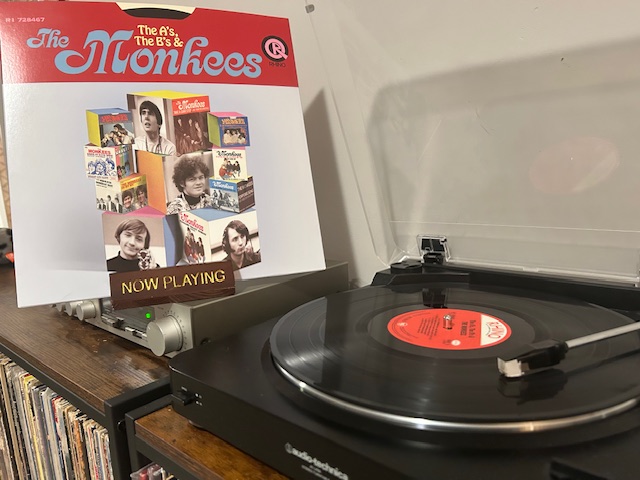
Nostalgia, Warmth, & Joy from “The A’s, The B’s, & The Monkees”-A Father’s Recollection

There are weeks when leadership feels heavy and the noise of the world presses in. This has been one of those weeks. In the quiet spaces between meetings and responsibilities, I have found myself missing my daughters.

They are adults now. They are building lives of their own with courage and independence. I am proud of the paths they are carving. I would not change a thing about the strong women they have become. And yet, there are moments when I would give anything to load them into the car again, roll down the windows, and belt out a song at the top of our lungs.

As an unabashed fan of all things music, I always claimed the role of radio commander. I took that responsibility seriously. I wanted them to have a well balanced musical education. That meant a steady dose of The Beatles, plenty of The Beach Boys, and the soul and heartbeat of Motown. It also meant that they had to experience the joyful and slightly mischievous sounds of The Monkees.

We would sing along to “Daydream Believer,” “I’m a Believer,” and “Listen to the Band.” We would lean into the deeper cuts too, songs like “The Girl I Knew Somewhere,” “Cuddly Toy,” and “The Door into Summer.” They would giggle when I sang off key. We would quote silly lines from episodes of The Monkees television show. There was no agenda in those moments. There was only music, laughter, and the feeling that the world was right where it needed to be.

Recently, I put on the compilation The A’s, The B’s, and The Monkees and something in me softened. The songs came back like waves of warmth. I could hear their younger voices in the back seat. I could feel the steering wheel in my hands. I could sense that simple joy of being together with an upbeat soundtrack and sunshine in the grooves.

This upcoming episode of Vinyl Riffs with Sean Gaillard is rooted in that space. It is about nostalgia, warmth, and joy. It is about how music holds memory in a way nothing else quite can. It is about how a collection of A sides and B sides can become the soundtrack of a family story.

I have started this podcast project as a vehicle to express my passion. Leadership requires outlets. It demands a place where we can exhale and create without measurement or evaluation. For me, Vinyl Riffs is that trapdoor for creativity. It aligns with who I am at my core. It reminds me that before I was a leader, I was a listener. Before I carried titles, I carried records.

When I spin this album, I am not just revisiting songs. I am revisiting a season of life filled with back seat harmonies and open road joy. I am reminded that the moments that matter most are often soundtracked by simple melodies and shared laughter.

The A’s, The B’s, and The Monkees will always trigger memories of my daughters. It will always resonate with nostalgia, warmth, and joy. As I press record for this episode, I am grateful that music still gives me a way to hold those moments close while cheering them on from where they are now.