A simple riff in music can be unforgettable. Consider Keith Richards’ iconic guitar hook on The Rolling Stones’ “(I Can’t Get No) Satisfaction.” A handful of notes became one of the most recognizable sounds in rock and roll history. Sometimes a simple musical idea can leave a lasting impression.
There is another kind of riff that I find equally fascinating. It is the free flow of ideas, thoughts, and questions that happens when we feel comfortable enough to explore unfinished thoughts with someone else. There is no script or predetermined destination. There is simply the freedom to think aloud, listen, respond, and see where the conversation takes us.
When people listen and respond without judgment or competition, something magical happens. There is synergy, connection, and trust. I think of jazz musicians like Miles Davis and John Coltrane, listening and responding to each other through their instruments. One musician introduces an idea. Another builds upon it. Someone takes it somewhere unexpected. Together, they create something that might never have emerged independently.
I love those moments when a conversation becomes a genuine riff. There is no pressure to have the perfect answer or even the right words. We can stumble, explore, laugh, reconsider, and discover something new together. A great riff is not always about having the right notes. Sometimes it is about finding the right people who are willing to listen, respond, and create something alongside us.
Those connections matter. The people who give us the freedom to think aloud and make us feel that our voices matter are worth celebrating. They remind us that some of our most meaningful discoveries happen when we are willing to listen as much as we contribute.
Who are the people in your life who make it safe to riff, explore, stumble, and discover something new? Have you told them lately how much their voices matter?
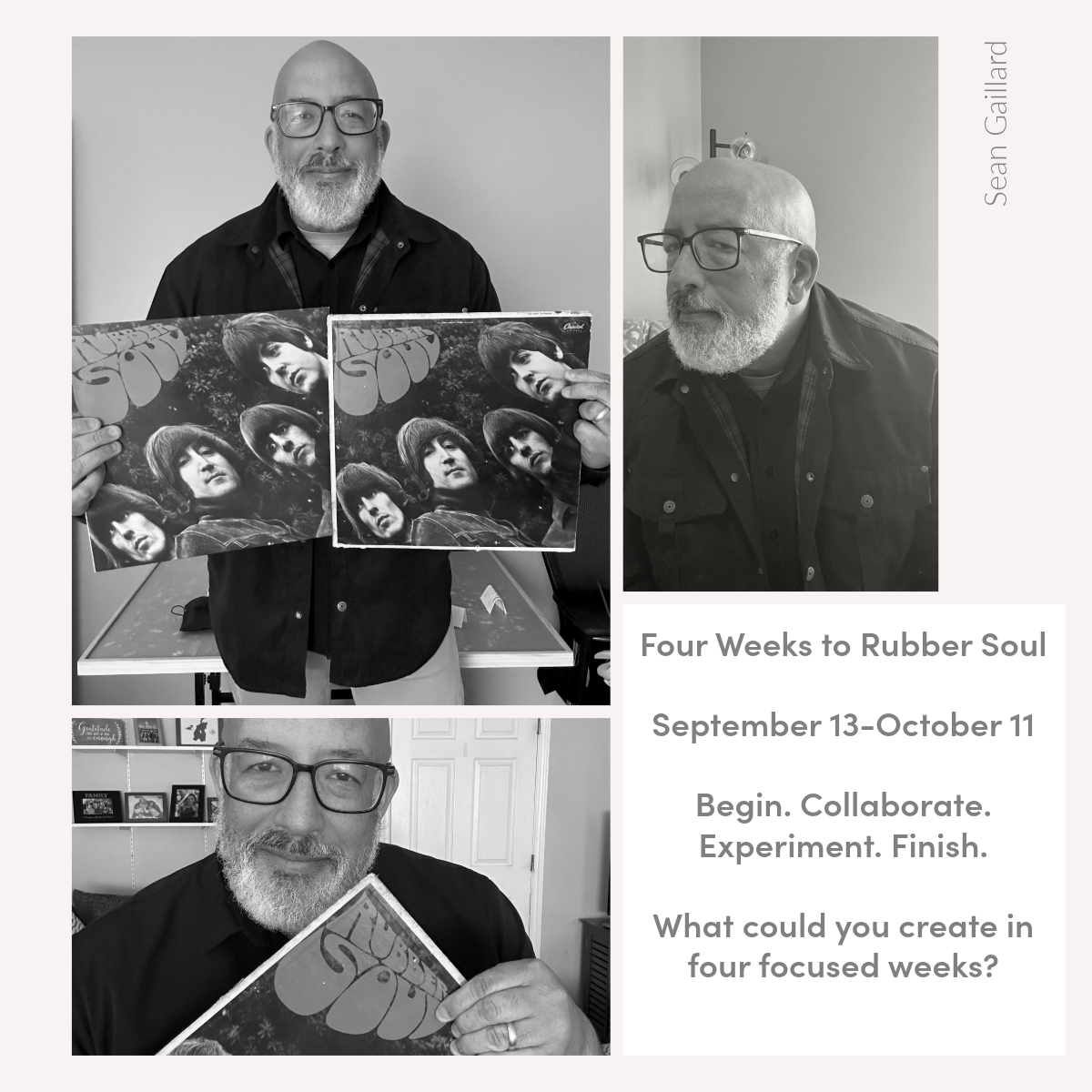
Today is Day 10 of Four Weeks to Rubber Soul, and the word is Blend.
This week is centered on the theme of collaboration. We have already explored the importance of bandmates and the power of invitation. Today moves us into what happens when different voices, ideas, influences, and perspectives actually come together. When we have the combination of contributing gifts from the hands of others, beautiful synergy happens.
One of the clearest examples of “Blend” on Rubber Soul is the album’s vocal harmony. John, Paul, and George each had distinctive voices. They did not sound alike. That difference was part of the magic. Once those disparate voices blended on any given track, a new sound emerged. Songs like “Nowhere Man,” “If I Needed Someone,” “You Won’t See Me,” and “The Word” show how those individual voices could come together and create something richer.
“Rubber Soul” is an album where vocal harmony flows throughout the grooves. None of The Beatles were formally trained in crafting harmony, but the album is rife with pristine harmonies which add to the depth and humanity of the album. Just listen those wordless “Ahhhs” in the middle part of “If I Needed Someone” to get sense of their vocal artistry.
Blend does not mean sameness. Harmony actually depends on difference. Different notes, different voices, and different perspectives come together to create something fuller than any one of them could create alone. You can hear that all across Rubber Soul. Nearly every song carries some beautiful blend of voices, whether it is a harmony tucked into the background or a full vocal arrangement moving the song forward. John, Paul, George, and Ringo each sounded different, yet those differences became part of the album’s identity. Decades later, that blend still resonates. The goal is not sameness. The goal is harmony.
As you create today, think about what you might be willing to blend into your work. Whose voice might strengthen what you are creating? What different perspective could make the work richer? Keep your voice and make room for someone else’s. Bring what only you can bring, but remain open to what another person can add. Rubber Soul reminds us that when distinct voices find a way to work together, the result can become something lasting. You never know what kind of harmony might emerge when different voices meet.
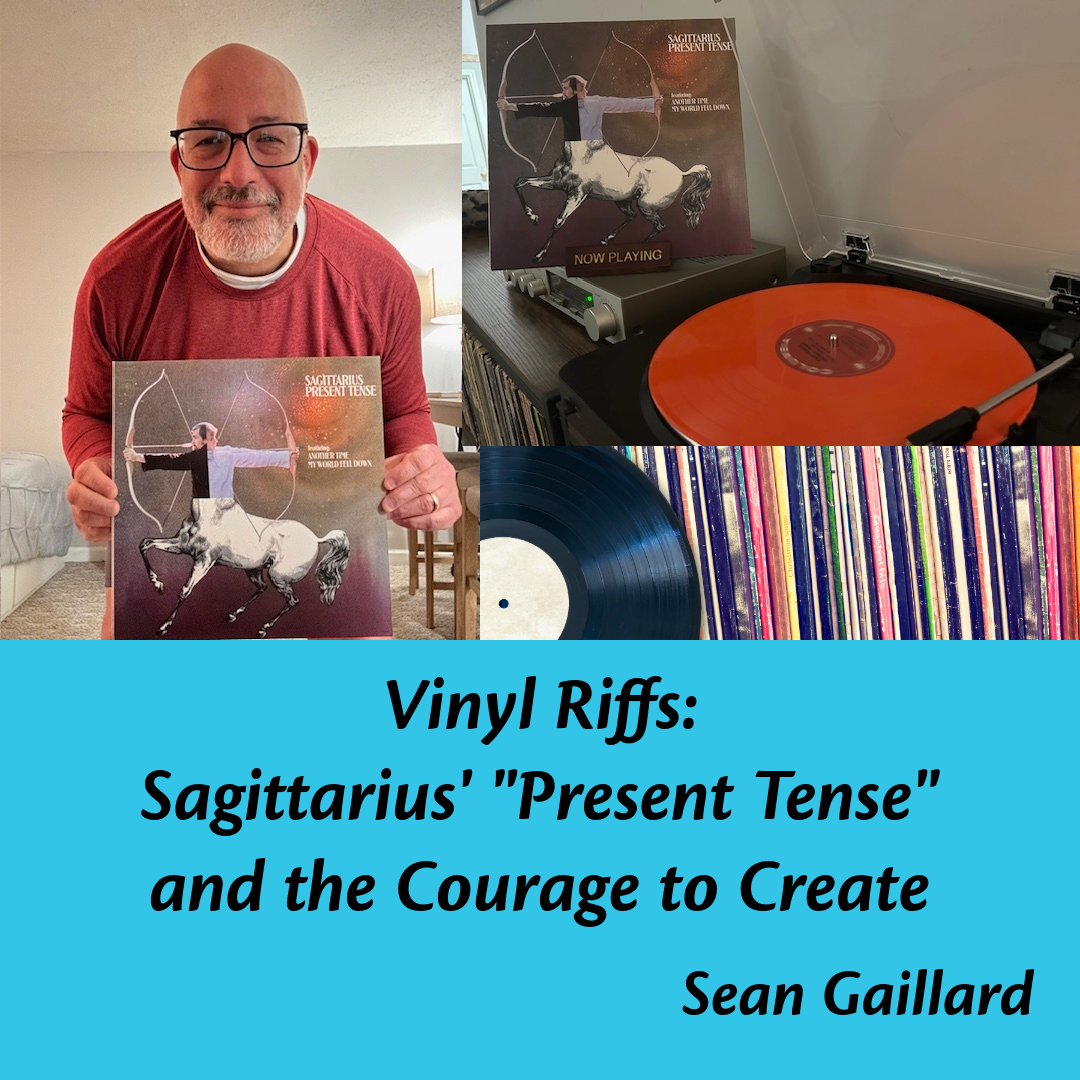
Years ago, I remember reading about a hallowed single featuring members of the Wrecking Crew. The song was “My World Fell Down,” credited to a group called Sagittarius. The truth is that Sagittarius was never really a group. It was something more elusive and, in many ways, more meaningful.
Released in 1967, “My World Fell Down” felt like it existed in the same sonic universe as what Brian Wilson was building with The Beach Boys. Think about “Good Vibrations” and the unfolding ambition of SMiLE. The form was shifting. The rules were dissolving. Pop music was becoming something expansive, layered, and deeply expressive.
That single led me, years later in the late 1990s, to track down a CD reissue of Present Tense. That is when I learned that the architect behind Sagittarius was Gary Usher, a collaborator with Brian Wilson of The Beach Boys who co-wrote “In My Room” and produced The Notorious Byrd Brothers. Alongside him was another studio visionary, Curt Boettcher.
What they created together on Present Tense was not just an album. It was a sanctuary.
A Studio Project That Became Something More
Sagittarius was never built for the stage. It was built in the studio, piece by piece, with contributions from elite session musicians and collaborators. It was a collective before that word became fashionable. It was a shared space where ideas could breathe.
At the time, Gary Usher was an in-demand producer at Columbia Records. The expectations were constant. The pressure to deliver was real. The work never stopped.
He created something outside of that system.
Sagittarius became his creative outlet. It became a place to experiment, to reconnect with meaning, and to create without the weight of constant expectation.
There is a story that has stayed with me from those liner notes I read years ago. Usher was hesitant to fully reveal himself as the force behind Sagittarius. He feared that doing so would only bring more demands from the label. More work would follow. More pressure would build. Less space would remain.
He recorded during off hours. Nights and weekends became the canvas.
That tells you everything you need to know about this album.
The Sound of Freedom and Trust
Released in 1968, Present Tense moves across genres with ease:
Baroque pop
Sunshine pop
Psychedelia
It is unified not by category, but by feeling.
You hear it immediately in the opening track, “Another Time.” The harp enters. The harmonies follow. The song feels warm, sublime, and almost otherworldly. It sounds like something beyond the everyday. It sounds like possibility.
Curt Boettcher’s songwriting and arranging shine throughout the record. His work here would extend into The Millennium, another project that stretched the boundaries of what pop music could be.
Across the album, the listener hears:
Layered vocal harmonies that feel choral and immersive
Studio experimentation including phasing and multi-track recording
Orchestral textures that elevate each arrangement
There are also moments of bold experimentation. Usher and Boettcher explored musique concrète, early synthesizer textures, and even incorporated elements connected to The Firesign Theatre. These were not safe choices. They were necessary ones.
This was not about chasing a hit.
This was about making something that mattered.
The Return of Present Tense
That is why this reissue matters so much.
Music On Vinyl has brought Present Tense back into the world with care and intention. This Netherlands-based label is known for its commitment to quality, and it shows here.
This limited reissue of 1000 copies is pressed on 180-gram vinyl. The packaging is thoughtfully reproduced on high-quality cardstock. The sound is pristine.
Every detail comes through:
The depth of the harmonies
The nuance of the arrangements
The studio innovations that defined the original sessions
When I drop the needle on “Another Time,” I hear something that still stops me in my tracks. Those opening notes feel like the sound of heaven.
There is love in this reissue. The same kind of love that went into creating the album in the first place.
What compels me most about Present Tense is not just how it sounds. It is why it exists.
Gary Usher needed an outlet.
He needed space to create without expectation. He needed room to experiment without judgment. He needed to reconnect with the part of himself that made the work meaningful.
That resonates deeply.
In leadership, in music, and in life, the demands can take over. Expectations can define the work. Output can overshadow purpose.
Present Tense is a reminder that:
Space to create is essential
Trust in collaborators elevates the work
Courage to explore leads to meaning
This album is the sound of freedom. It is the sound of collaboration. It is the sound of quiet courage.
It is the sound of someone protecting their creative soul in a world that kept asking for more.
Take Your Present Tense for Present Tense
Every time I return to this album, I am reminded to be present in the work that matters.
To create. To collaborate. To trust.
To make space for something meaningful, even if it does not fit the mold.
I would love to hear how this album resonates with you. What do you hear when you listen to Present Tense? What does it bring out in you?
Listen and Subscribe: Vinyl Riffs with Sean Gaillard
This album will be featured in an upcoming episode of Vinyl Riffs with Sean Gaillard. If this resonates with you, I invite you to listen, subscribe, and share the journey.
The organ was an accident and Al Kooper was not an organist.
It is June 1965. Bob Dylan is in a Columbia Records studio in New York, pushing further away from the acoustic folk sound that made him a voice of protest and into something louder, riskier, and electric. His recent album, Bringing It All Back Home, has already signaled that shift. The influence of The Beatles is in the air, and Dylan is not looking back.
Producer Tom Wilson invites Kooper to the session. Kooper shows up with his guitar, even though he is there to observe. As the musicians settle in, one presence changes everything. Mike Bloomfield begins warming up.
Kooper listens.
He hears something different. He hears a level of artistry that causes him to pause. He makes a decision in that moment. He sets the guitar aside. He recognizes that he is not the right voice for that part of the song.
That decision does not end his contribution. It creates space for it.
As the band works through early takes, Kooper hears something else. He hears a part that is not there yet. He notices an organ sitting in the corner with an empty chair beside it. He shares the idea with Wilson. Wilson pushes back and reminds him that he is not an organist.
Kooper does not argue. He does not retreat.
He walks over and plays anyway.
Kooper would later recall, “He just sort of scoffed at me. He did not say no, so I went out there.” He slips into the track, feeling his way through the chords, slightly behind the beat, searching for the right touch.
Wilson notices. Bob Dylan notices more.
Dylan tells him to stay.
Later, Dylan insists that the organ be turned up in the mix.
The song is “Like a Rolling Stone.” It becomes a seismic shift in popular music. It stretches past six minutes. It blends poetry with electric instrumentation. It challenges what a hit song can be. It shows up at Newport and divides a crowd that expected something safer and more familiar.
That organ part, the one played by someone who was not supposed to be there, becomes essential to the song’s identity. It carries emotion. It adds tension. It lifts the track into something timeless.
You cannot imagine the song without it.
This is the leadership riff.
Kooper did not force his way in with the instrument he knew best. He listened first. He stepped back when needed. He paid attention to what the moment required. He trusted the idea that came to him. He acted on it, even when others questioned his credibility to do so.
Leadership asks the same of us.
There are moments when the room is filled with voices that seem stronger, louder, and more accomplished. Those moments can push us to the margins if we let them. Those moments can also invite us to listen more deeply and find where our contribution truly fits.
Kooper’s choice to set aside the guitar was not a failure. It was awareness. It was humility. It was the beginning of something better.
His decision to move to the organ was belief. It was risk. It was action.
That combination changed the song.
Too often, we allow doubt and outside voices to close the door before we ever reach for the handle. We convince ourselves that we are not ready, not qualified, or not invited. We stay seated when the chair is open.
Kooper reminds us to get up and move.
He reminds us that contribution is not always about mastery. It is about awareness, courage, and timing. It is about trusting that what we hear and feel has value.
He reminds us to play on anyway.
In this season, that lesson matters.
There will be rooms where you feel outmatched. There will be moments when someone questions your role before you even begin. There will be ideas that arrive quietly and ask you to take a step that feels uncertain.
Take it.
The work needs your voice, even if it comes through a different instrument than the one you planned to play.
That is how breakthroughs happen.
That is how songs change.
That is how leadership finds its sound.
Postscript
I am grateful to my good friend Max Pizarro for the conversation that sparked this reflection. He encouraged me to spend time with this story and to listen more closely. That nudge led to this piece and to a deeper appreciation of what it means to trust the moment and step into it.
I can already hear this one spinning forward as a future episode of Vinyl Riffs with Sean Gaillard. Stay tuned for that podcast episode to drop soon.
I remember being one of the last kids picked for kickball. Standing there in the dust with my hands in my pockets, waiting for someone to call my name. Everyone else seemed to belong somewhere. Everyone else seemed to have a team. That feeling has followed me into adulthood more times than I care to admit.
It rises up again whenever I put something out into the world and the room stays quiet. Every blog post. Every episode. Every reflection. Each one is a small act of courage. Each one is a piece of my soul placed gently on the table. Yet the silence that follows can hit with the same sting I felt on that kickball field.
There are days when it feels like no one wants me in their band. No replies. No call backs. No echoes of connection. I have chosen two of the loneliest gigs in the world. Leadership asks you to walk into the unknown even when no one notices. Writing asks you to offer your heart with no promise that anyone will take it. There is no applause built into any of this. There is no guarantee that your work will lead to opportunity.
So I have to keep the faith that there are quiet listeners out there. I have to trust that someone is reading or watching or absorbing even if I never hear the echo. I have to accept that my work may never be seen by the people I wish would see it. I have to keep creating anyway because that is the only way I can stay true to myself.
When doubt begins to weigh me down, I think of George Harrison. In the latter days of The Beatles, he felt like an outsider in his own band. His songs were often pushed aside. Yet he kept writing. He kept believing in his sound. Even in those difficult seasons, he delivered “Something” and “Here Comes The Sun.” Those songs became the heart of what many considered to be their greatest album, “Abbey Road.”
Then came the moment when his backlog of unheard songs found their place. “All Things Must Pass “emerged as a three album masterpiece by George Harrison. A triumph born from years of quiet rejection. A reminder that some brilliance finds its home only after the world grows ready for it. That album just celebrated its fifty fifth anniversary. It is a cherished album for me. It reminds me that the work we create in the shadows can one day light the way for someone else.
Maybe the same can be true for me. I have been part of good bands in my life. Maybe one more band is still out there. Until then, I will keep the faith even when the room feels quiet. I will write anyway. I will lead anyway. I will create anyway.
Because someone somewhere may need the sound I am trying to make. Even if I never hear the echo, the act of making it still matters.
How Brian Wilson’s Music Taught Me About Leadership, Vulnerability, and the Courage to Keep Going
Devastated.
Brian Wilson is gone.
The news hit me hard today. Brian wasn’t just a musical genius. He was a spiritual guide, a quiet architect of harmony, and the voice behind songs that shaped my life. His music—those symphonies of soul, longing, and joy—have been my compass through the loud and quiet moments of living.
Just last week, I was basking in the joy of a surprise Father’s Day gift from my wife and daugthers: tickets to see The Beach Boys live. Brian had long since retired from performing, but his presence was felt. It always is. It lingers in the harmonies. It rises in the arrangements. It pulses in every chorus sung by a crowd of strangers suddenly made family by melody.
I was fortunate to see Brian perform live several times in the late 1990s and early 2000s during his remarkable comeback. It was more than a concert. It was a rebirth.
Brian’s music has accompanied the milestones of my life.
I remember pressing my ear to a clock radio 45 years ago, trying to catch every layered nuance of Good Vibrations. I didn’t understand the complexity of what I was hearing yet—but I felt it. I was entranced.
I remember watching a Beach Boys concert on HBO in the 1980s with my dad. He loved R&B and soul, and yet there we were—grooving, smiling, singing along to Fun, Fun, Fun like it was gospel.
I remember hearing the opening chords of California Girls in the delivery room as my twin daughters were being born. That mini-symphony played while new life entered the world, and in that moment, I felt the rush of peace. God was with us. Everything was going to be okay.
I remember not gettingPet Sounds, in its first when I first heard it in 1990. But I grew into it—and came to see it for what it is: the greatest album of all time. A masterpiece of heart, soul, and innovation.
I remember hearing Cabin Essence from a bootleg copy of SMiLE on vinyl in a record store. I looked around in stunned silence. A clerk caught my gaze and nodded as if to silently say, “We get it, don’t we?” No words. Just knowing.
I remember driving my oldest daughter home from daycare, both of us singing Heroes and Villains at the top of our lungs. Laughter and joy spilling through the car like sunshine.
But Brian Wilson didn’t just give us songs. He gave us strength.
Through Pet Sounds, he showed me that vulnerability isn’t weakness—it’s strength in its purest form. Through SMiLE, he taught me that unfinished dreams can be resurrected with grace, imagination, and perseverance. Through his life, he reminded us that the creative process is messy, sacred, and worth the fight.
Brian Wilson’s willingness to face his mental health struggles publicly—amidst a whirlwind of fame and pressure—changed how I view courage. He didn’t hide his pain. He didn’t pretend it wasn’t there. He just kept going. Kept writing. Kept harmonizing. That quiet, determined bravery became a guiding light for me.
Last year, when I experienced a heart episode that resulted in me being rushed to the hospital, I found myself in one of the most vulnerable seasons of my life. Alongside the physical recovery came emotional weight—mental health struggles I didn’t always know how to name. In that difficult stretch, I thought of Brian. I revisited his story. I played Pet Sounds and SMiLE. His music gave me permission to slow down, to feel, to heal. His example reminded me that we don’t have to be perfect to keep going—we just have to keep showing up, one note at a time.
Brian Wilson’s quote, “Music is God’s voice,” echoes eternally in my mind.
As a school leader, that idea centers me. It reminds me that learning is sacred. That harmony matters. That love, when set to rhythm, can move hearts and minds in ways nothing else can.
For those who’ve followed this blog or listened to the Principal Liner Notes podcast, you’ve heard me talk about Creative Courage. That’s Brian Wilson to the core. The courage to innovate. To feel deeply. To fail. To rise. To try again.
Today, I mourn. But I also give thanks.
I give thanks for the peace his songs brought me in a delivery room. I give thanks for the laughter his melodies brought into my car. I give thanks for the strength his life gave me when I needed it most.
Brian Wilson changed my life.
His harmonies still ring. His spirit still sings. And for those of us willing to listen, his legacy keeps leading us forward—in the key of empathy, in the tempo of grace.
Thank you, Brian. You gave us harmony. You gave us honesty. You gave us your heart.
Leaders need a soundtrack. Not just a playlist for meetings and icebreakers. Our journey is driven by service and selflessness, often forgetting to nurture our own well-being. I’m talking about a personal soundtrack for leaders—a melody that resonates with peace and balance in our lives. Music is the universal remedy that stirs deep emotions and memories.
For me, the world is a soundtrack filled with sounds, notes, and harmonies. Music is the divine thread that connects us to our shared humanity. Each of us carries a beat that shapes our days. I often associate memories with specific songs or albums. For instance, when I hear Bruce Springsteen’s “Girls in Their Summer Clothes,” I’m transported back to a warm June afternoon. The song blared from my car windows as I returned home from school. Spotting my three daughters playing joyfully in the backyard, I was enveloped in a moment of pure bliss. We ran to create each other with hugs and kisses. The song seemed crafted for this snapshot of fatherhood, etching the memory deep within. Music has a way of reminding us of life’s blessings.
Music can transport us through time, reliving moments etched on our life’s canvas. Amid the frenzy of deadlines and endless meetings, leaders can lose touch with why we embarked on this journey. That’s why I infuse my days with music—it’s my fuel for meaningful pauses. Reflection becomes a reminder of life’s goodness and the limitless possibilities, even amid challenges.
Recently, I rediscovered David Bowie’s “Black Tie White Noise,” an album often overshadowed by his classics. This gem from 1993 holds a special place in my heart. I remember picking it up on an April afternoon, eager to reunite with the woman who later became my wife. As a first-year teacher navigating the challenges of a new role, the album’s energy and Bowie’s lyrics mirrored my confidence and excitement. Driving to meet Deb, the traffic allowed a stop at a record store, where “The Wedding Song” echoed from the stereo. Bowie’s voice, poignant and urgent, captured the essence of love. I was captivated, buying the CD without hesitation. The album’s ethereal romanticism mirrored my own love story, affirming that all was right in my world.
“Black Tie White Noise” emerged from Bowie’s response to the Rodney King riots and his marriage to Iman—a reflection on racial harmony and personal union. As a young Black man also in a relationship with a White woman, I resonated with Bowie’s introspection. The album’s resonance endures, reminding me of a time filled with hope and promise.
Every note of “Black Tie White Noise” transports me to that spring of ’93—windows down, singing along with Bowie. It’s a reminder of the blessings and the people who uplift me. This soundtrack underscores life’s meaning and my place within it.
Every leader deserves a soundtrack—a melody that echoes our humanity and reminds us of life’s richness beyond our professional realms. Music not only heals but also reaffirms our purpose.
Add The Music Referenced Here To Your Day:
Questions for Reflection and Connection
What songs make up your life’s soundtrack?
Which tunes inspire and evoke cherished memories for you?
How does music influence your leadership journey?
Feel free to share your songs on X or Instagram. Tag me at @smgaillard and use #PrincipalLinerNotes. Let’s celebrate the power of music together.
Let’s harness the power of music to inspire, reflect, and connect.
Please feel free to share these songs on X or Instagram and tag me at @smgaillard and #PrincipalLinerNotes. I would love to share in the Music with you.
Three Moves to Build Your Life Soundtrack
1. Take intentional time to revisit a song from your past that sparks joy and journal about its significance.
2. Create a shared playlist with colleagues and friends, sharing songs that inspire fond memories.
3. Connect with loved ones through music. Ask them about songs that hold special meaning for them.