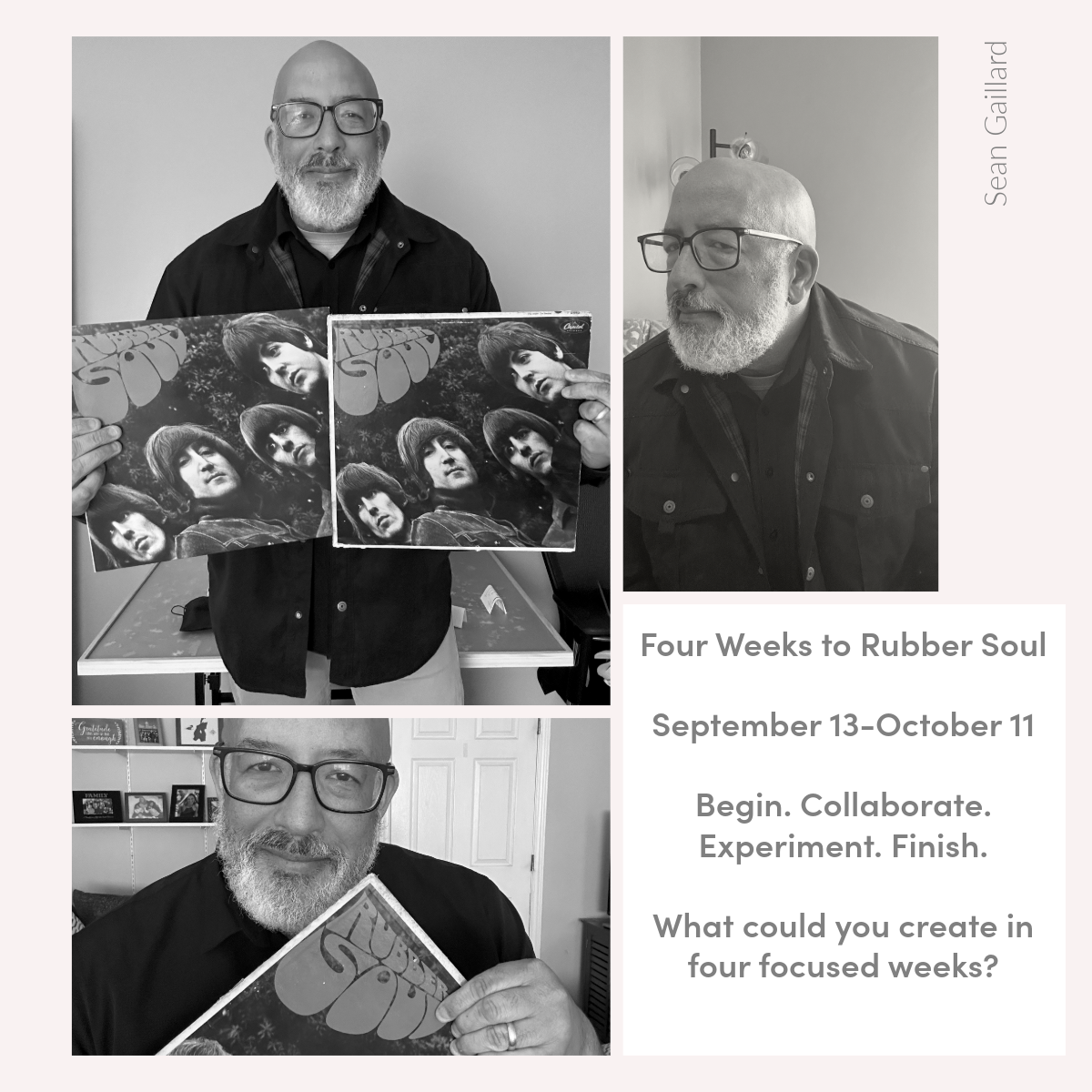
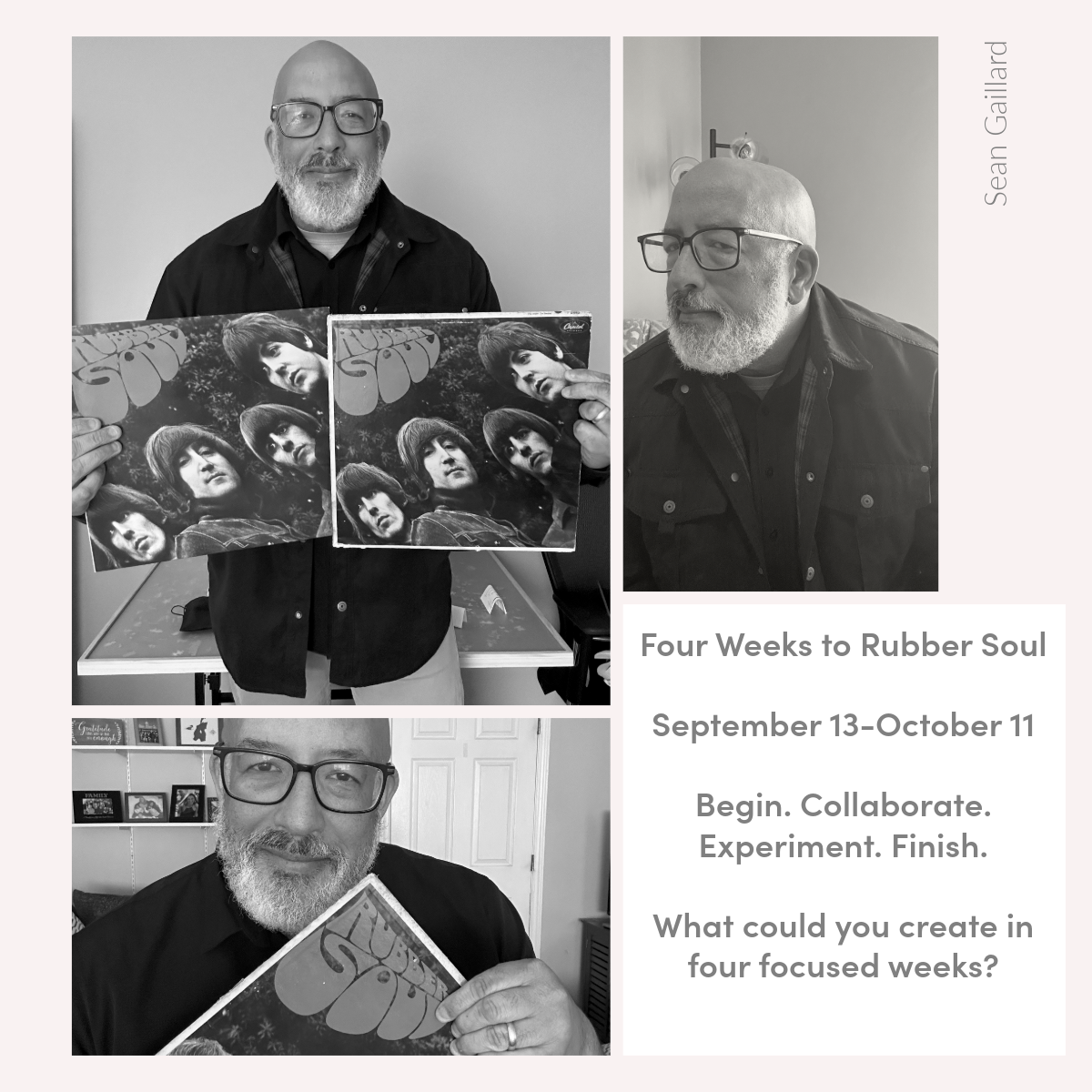
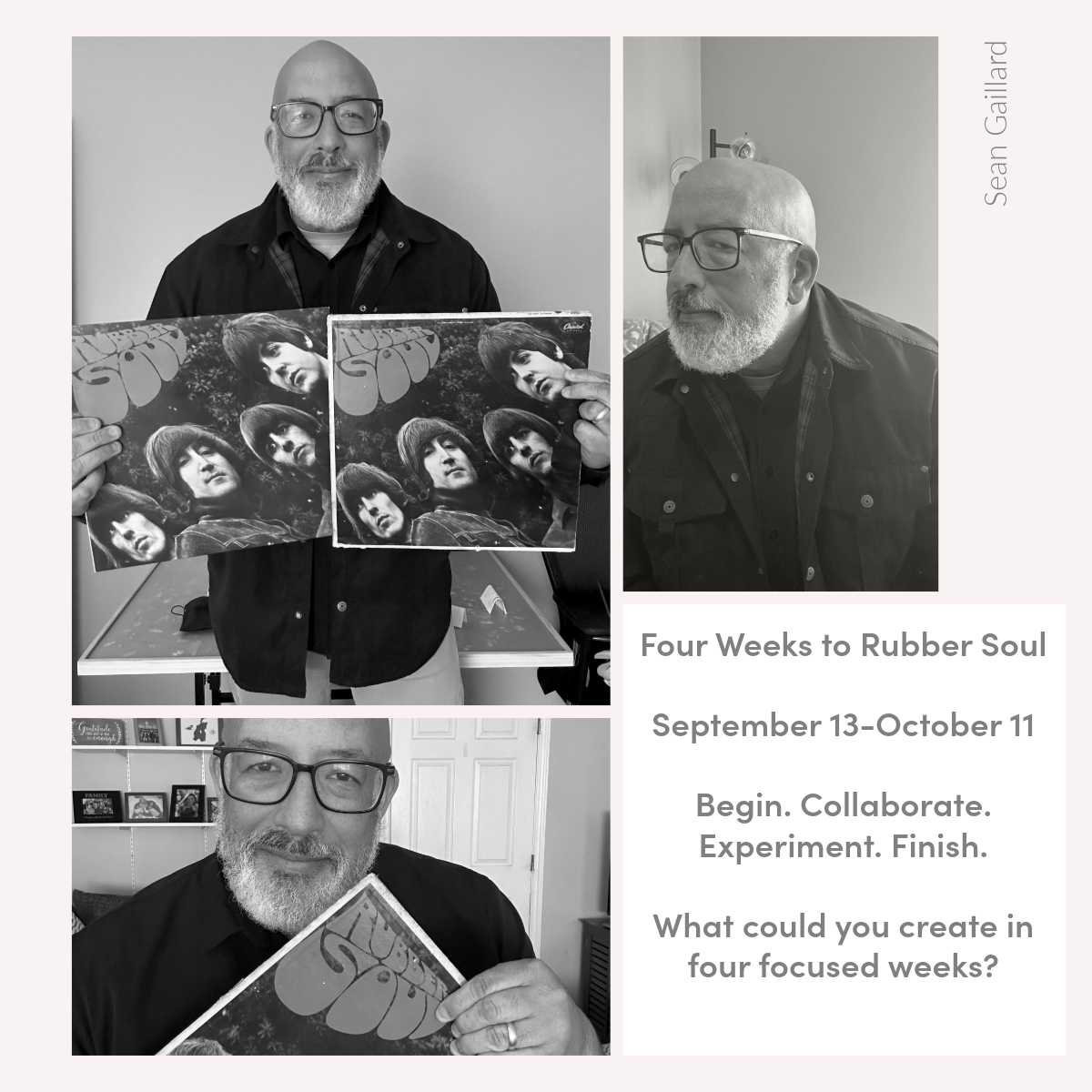
As we wrap up Week Three of Four Weeks to Rubber Soul, I am still carrying the positive energy from two wonderful moments: the release of the Rubber Soul Super Deluxe Edition and the opportunity to speak at FabFest in Charlotte. Both experiences arrived at just the right time as we close a week centered on one theme: Experiment.
Experimentation is how we discover what we could not have planned. The key word in that sentence is Discover, our word for Day 21. This week, we have explored curiosity. We have tried. We have played. We have taken risks. We have approached new frontiers. We have rested. Each word has invited us to move beyond what we already know and remain open to what might emerge.
That is the gift of experimentation. We may begin with an idea of where we are going, but discovery can reveal possibilities we never imagined. Sometimes the most meaningful result of an experiment is not what we create. It is what we discover along the way.
The Beatles did not enter EMI Studios in October 1965 with every innovation on Rubber Soul mapped out. They experimented with sounds, instruments, arrangements, tempos, harmonies, and approaches. Their curiosity opened doors, and their willingness to try new things helped them discover possibilities that expanded their music and helped redefine what a Beatles album could be.
That idea feels especially meaningful to me today because I started Four Weeks to Rubber Soul as an experiment. I wanted to spend four weeks reflecting on this remarkable album while exploring what its creation could teach us about creativity, collaboration, and our own work. Three weeks later, I am discovering where some of these ideas might lead me.
This experiment has produced more than 21 blog posts and reels and counting. More importantly, it has helped me see a new thread in my own work. I originally planned to speak about my book The Pepper Effect at FabFest. That work uses The Beatles and Sgt. Pepper’s Lonely Hearts Club Band as a lens for thinking about leadership, collaboration, creativity, and culture.
Something began to shift as I spent these weeks immersed in Rubber Soul. I started wondering whether the ideas I explored in The Pepper Effect could reach beyond Sgt. Pepper. I began looking at the larger creative journey of The Beatles and seeing a thread that stretches across albums, songs, relationships, risks, failures, breakthroughs, and reinventions.
A new idea began to emerge from that exploration. I started calling it The Beatles Effect, a broader look at what the creative journey of The Beatles can teach us about creativity, collaboration, growth, leadership, and possibility. Rubber Soul became an ideal entry point because it captures a band willing to move beyond what had worked before and discover what might come next.
Instead of simply revisiting The Pepper Effect at FabFest, I decided to experiment. I shared this emerging idea of The Beatles Effect and used Rubber Soul to help tell the story. The response was warm and encouraging, and I left FabFest inspired to keep exploring where this idea might lead.
None of that was part of my original plan when I started this series three weeks ago. The idea emerged because I stayed curious, tried something, played with ideas, accepted some risk, and stepped toward a new frontier. Discovery did not arrive because I knew exactly where I was going. It arrived because I was willing to experiment.
As Week Three comes to a close, consider your own experiments. Think about something you have tried recently without knowing exactly where it might lead. Consider the possibilities that may have appeared simply because you gave yourself permission to explore. What has your experiment helped you discover?
Discovery matters because it shows us possibilities we could not see when we began. Eventually, those possibilities ask something more from us. We have to decide what deserves our attention, commit to the work, and bring something across the finish line.
Tomorrow begins our fourth and final week of Four Weeks to Rubber Soul, and our theme is Finish. We have spent three weeks beginning, collaborating, experimenting, and discovering what might be possible. Now it is time to take what we have discovered and finish what we started.
Yesterday, we explored the importance of curiosity and the willingness to ask, “What if?” Curiosity opens the door to new possibilities, invites us to question familiar approaches, and encourages us to imagine something different. There is something exciting about allowing ourselves to wonder what might be possible.
Today, we take that curiosity one step further with a simple but powerful word: Try. Curiosity encourages us to imagine what might be possible, while trying requires us to take action and discover what happens.
Trying something new can be challenging. It can be uncomfortable, a little scary, and even risky. The moment we move an idea from our imagination into the world, we make ourselves vulnerable. Others might embrace what we create, question our intentions, or criticize our efforts. We might even begin questioning ourselves before anyone else has an opportunity to respond.
That is one of the challenges of creativity. We cannot always know how something will turn out until we give ourselves permission to try. There are no guarantees of acceptance, success, or even understanding. Sometimes we simply have to take a chance and see where our curiosity leads us. We cannot wait for that permission to try. Now is the time to try!
The Beatles and the Courage to Try
One of the remarkable qualities of “Rubber Soul” is the willingness of The Beatles to explore new creative territory. By the fall of 1965, they had already achieved extraordinary commercial success. They could have continued recording music using familiar approaches and formulas that had served them well. Instead, they continued pushing their sound forward. They knew that they had to grow and evolve as a band. This growth happened in the course of a month under a looming deadline from the record company.
Their songwriting was becoming more introspective, their musical influences were expanding, and their recording sessions were becoming opportunities to experiment with different sounds and arrangements. Producer George Martin played an important role in this process, helping the group translate their growing creative ambitions into the recordings we continue to enjoy today. His willingness to experiment alongside the Beatles helped create an environment where new ideas could flourish.
Consider a few examples from Rubber Soul that demonstrate this willingness to try:
On “I’m Looking Through You,” the Beatles recorded three different versions of the song before arriving at the arrangement that appeared on the album. They explored different tempos, instrumentation, and musical passages. An earlier version, eventually released on “Anthology 2,” sounds noticeably different from the familiar recording. They continued experimenting because they believed there was something more to discover within the song.
On “Girl,” John Lennon’s intimate vocal performance includes the distinctive sound of his breathing, deliberately emphasized in the recording. George Harrison’s acoustic guitar incorporates a sound inspired by Greek music, adding another dimension to the arrangement. These musical choices reflected the group’s growing interest in exploring sounds and influences beyond their earlier recordings.
Perhaps one of my favorite examples is “In My Life.” George Martin wanted to add an intricate piano solo but found that playing the passage at the desired speed presented a challenge. His solution was wonderfully inventive. He recorded the piano at half speed and played the tape back at normal speed, creating the distinctive sound that gives the song such an unforgettable musical moment.
Imagine what might have happened had Martin simply abandoned the idea because the original approach was not working. We would have missed one of the most memorable musical moments on the album. His willingness to try a different approach helped create something that continues to resonate with listeners more than sixty years later.
Each example reminds us that experimentation requires more than having an interesting idea. It requires the willingness to pursue that idea, explore different possibilities, and discover what happens. The Beatles did not know that every experiment would succeed. They simply continued trying, with George Martin serving as a creative partner who helped bring their ideas to life.
What Happens When We Try?
There is an important leadership and creativity lesson in these recording sessions. We often spend considerable time imagining what could happen if we pursued something different. We think about the possibilities, consider the challenges, and sometimes become so concerned about the outcome that we never take the first step.
What if nobody likes the idea? What if the project fails? What if someone questions our ability or criticizes our intentions? These questions can become barriers that prevent us from discovering what might be possible. We can spend so much time anticipating the reactions of others that we lose sight of the excitement that inspired our curiosity in the first place.
Trying requires us to move beyond those questions and give an idea an opportunity to develop. It also requires us to recognize that the value of our creative efforts cannot always be measured by immediate applause, widespread acceptance, or the number of people who notice our work.
Sometimes the greatest value comes from what we learn along the way. We discover new possibilities, develop greater confidence, and uncover strengths that might have remained hidden had we never attempted something different. There is growth in the process itself, even when the outcome does not match our original expectations.
Trying is not a guarantee of success. It is a commitment to possibility.
That is an important distinction because experimentation does not demand that everything work perfectly the first time. It invites us to learn from the experience, make adjustments, and continue growing. Creativity often develops through a series of attempts that move us closer to discovering something meaningful.
My Own Journey of Trying
I think about this often when I reflect on my own creative journey. Several years ago, I had an idea to write a book connecting the Beatles’ “Sgt. Pepper’s Lonely Hearts Club Band” era with leadership, creativity, collaboration, and education. On the surface, it might have seemed like an unusual combination. What could a groundbreaking album from 1967 teach us about leading schools and organizations?
I believed there was a powerful connection worth exploring. The creative spirit that made the “Sgt. Pepper” album such a remarkable achievement offered lessons that could extend far beyond the recording studio. I wanted to explore how those lessons might inspire educators and leaders to approach their work with greater imagination, courage, and collaboration.
That idea eventually became my book, The Pepper Effect. Writing it required me to step beyond familiar approaches to educational leadership and bring together two passions that had shaped my life. It was an opportunity to try something different and share a perspective that I believed could make a meaningful contribution.
It was also a risk. I encountered skepticism and my share of ridicule along the way. There were moments when I questioned whether anyone would understand what I was attempting to create. I had my own doubts about whether this approach would resonate with others.
Fortunately, I kept trying. The Pepper Effect has since reached educators and schools around the world, encouraging conversations about innovation, creativity, collaboration, and the importance of building a culture where everyone has an opportunity to contribute. The book has opened doors to meaningful conversations and connections that I could never have anticipated when I first began writing. I first knew the book had made an significant impact on others when it was adapted for stage by a school in Canada.
None of that would have happened had I allowed my doubts or the criticism of others to prevent me from moving forward. I am grateful that I took the chance, even when the outcome remained uncertain. The experience continues to remind me that some of our most meaningful creative contributions begin with the courage to pursue an idea that others might not immediately understand.
Continuing to Try
I find myself returning to this lesson as I continue creating “Four Weeks to Rubber Soul.” Every day, I am writing a new blog post and recording a new reel inspired by the creative journey of the Beatles. I am exploring ideas, making connections, and sharing reflections that I hope will encourage others to embrace creativity in their own lives and leadership.
Some posts connect with people immediately. Others receive relatively little attention. There are moments when the response is encouraging and others when I wonder whether the message is reaching anyone at all. The temptation to measure the value of creative work through views, comments, and reactions is certainly real.
In spite of all that, I am learning to appreciate something more important about this experience. Every day provides another opportunity to develop my voice, explore an idea, and create something that did not exist the day before. I am trying different approaches to communicating, connecting with an audience, and bringing my love of music into conversations about creativity and leadership.
I cannot control how many people will encounter a particular post or whether a message will resonate with everyone. I can control my willingness to keep creating and sharing the work. I can also choose to appreciate the people who are following this journey and finding something meaningful in these daily reflections.
There is a certain freedom in that realization. We do not need the approval of the masses to pursue something that matters. We do not need to know that everyone will understand our intentions. We certainly do not need a guarantee that our ideas will be immediately embraced.
We need the courage to begin and the willingness to keep learning. Sometimes that means moving forward when the applause is quiet or when our work does not receive the attention we had hoped to generate. The important thing is to remain connected to the purpose that inspired us to create in the first place.
The Beatles certainly had an audience waiting for their next release in 1965. They also had expectations surrounding their work and considerable pressure to continue delivering successful recordings. Their willingness to pursue new musical directions reminds us that creativity requires a commitment to growth, even when familiar approaches might seem more comfortable. “Rubber Soul” is an quantum leap from their previous albums and The Beatles were very much aware of that upon its release.
Give Yourself Permission to Try
As we continue our week of Experiment, I invite you to consider something you have been wanting to pursue. Perhaps it is a creative project, a different approach to leadership, an idea for your classroom, or a conversation that might open the door to something new. It might even be something you have been considering for years without finding the courage to begin.
Maybe you have been holding onto that idea because you are unsure how others will respond. Perhaps you are waiting for the perfect moment or hoping to develop enough confidence before taking the first step. There will always be reasons to hesitate, especially when we allow the possibility of criticism or disappointment to overshadow our curiosity.
Give yourself permission to try. You do not have to have every detail figured out before beginning. You can learn as you go, make adjustments when necessary, and discover possibilities that might never have occurred to you during the planning process.
The Beatles did not discover the possibilities of “Rubber Soul’ by remaining satisfied with what they already knew. They explored different sounds, experimented with recording techniques, and followed their growing curiosity into unfamiliar creative territory. Their willingness to try helped create an album that continues to inspire listeners more than sixty years later.
We have no way of knowing what our own experiments might eventually inspire. The person who needs to hear our message, experience our creativity, or benefit from our leadership might be someone we have not even met. Our willingness to try might also encourage someone else to take a chance on an idea they have been reluctant to pursue.
As I reflect on The Pepper Effect and my continuing journey with Four Weeks to Rubber Soul, I am reminded that some of the most meaningful things we create begin with a willingness to take a chance. There will be challenges, moments of uncertainty, and occasions when our efforts do not unfold as we originally imagined. Those experiences are part of the creative journey and can become opportunities to discover something new. Don’t let those doubts compel you to abandon what you are creating.
Curiosity helps us imagine what might be possible. Trying gives those possibilities a chance to become real.
Keep exploring and keep creating. Give yourself the opportunity to discover something new, even when the outcome remains uncertain. The world does not need another perfect imitation of something that already exists. It needs people who are willing to bring their unique voices, perspectives, and ideas into the creative process. You never know what might happen until you try. That simple act of courage could become the beginning of something meaningful for you and for the people who encounter your work.
Perhaps your next creative experiment will become something you never imagined possible. There is only one way to discover what that might be.
This is Day 7 of Four Weeks to Rubber Soul, and today’s word is Reflect. We are also closing out Week 1, which has centered on the theme of Begin. The Beatles’ creative growth, so evident on Rubber Soul, came from entering the room with songs, fragments, influences, ideas, and a willingness to work. The lesson is not to achieve perfection before starting. The lesson is to begin the work, knowing that it is completely acceptable if the beginning is rough and raw. What matters is that you enter the room and that the room is the right one, aligned with your creativity and ready to support the gifts you are bringing.
An important part of the creative process is reflection. Creative growth becomes visible when we stop long enough to notice what has changed since we began. Reflection asks us to pause, look back at what we created, and listen again. There is an art to that pause because we do not want to become so immersed in reflection that we lose momentum. Sometimes we need a trusted thought partner or bandmate who can help us listen, notice, and keep our creative work moving in the groove.
That brings me back to Rubber Soul. One reason I am looking forward to the multiple takes and alternate versions included with the forthcoming Rubber Soul Super Deluxe Edition is the opportunity to hear that creative evolution. The Beatles, along with producer George Martin, continually shaped these songs by changing harmonies, sounds, spaces, arrangements, and instrumentation. Reflection does not mean doubting what you created. Reflection means giving yourself enough space to hear what the work still needs.
Sometimes we need to return to what we made and ask three simple questions: What is working? What is missing? What could make this better? On Rubber Soul, a song could enter the studio one way and leave sounding very different on the finished master. That transformation happened because the band was willing to listen to the work as it developed and respond to what the song needed.
For example on “Norwegian Wood,” George Harrison felt that the song needed something different. His growing interest in Indian music led him toward the sitar, and he worked out a part that became one of the defining sounds of the song. That decision helped give the recording its distinctive character and introduced many listeners to a sound they may not have expected to hear on a Beatles record.
“In My Life” offers another beautiful example of reflection in action. The basic track had already been recorded, but the instrumental middle still needed something. George Martin experimented with ideas, including Hammond organ, before developing the Baroque inspired piano passage we now know so well. Since the part was difficult to play at the required speed, he recorded it more slowly and sped the tape up afterward. The result became an essential part of the song and a reminder that sometimes the creative breakthrough comes after we are willing to listen again.
As we close Week 1, take some time to reflect on something you have created. Do not judge it too quickly. Listen to it and ask yourself: What is working? What is missing? What could make this better? Consider bringing a trusted thought partner or bandmate into that reflection because sometimes another set of ears helps us hear possibilities we cannot hear alone.
Reflection is not about doubting your work. It is about asking what the work still needs and then having the courage to make the adjustment. I would love to hear how reflection fits into your creative process as we continue this journey through Four Weeks to Rubber Soul.
Check out today’s daily reel. Thanks to Starbucks for serving as my own Abbey Road Studios!
Over the past few weeks, I have found myself returning again and again to The Beatles. Not simply as albums or songs, but as companions through different seasons of life.
Hearing “Two of Us” recently in “Project Hail Mary” brought me to tears. The song landed differently this time. Maybe that is what great music does. It grows alongside us.
With “Revolver” turning 60 this summer and the announcement of the upcoming 3 Savile Row fan experience in London, it feels like the right time to bring back “Why The Beatles” for a new season of conversations, reflections, stories, creativity, memory, and belonging.
This is not about nostalgia alone. It is about why this music still matters. Why it still connects. Why it still inspires. Why it still helps us feel human.
Season 2 is on the way. Please subscribe on Spotify or Apple Podcasts. Stay tuned!
A Guest Blog Post for Dave Burgess Consulting, Inc!
Recently, I had the honor of writing a guest post for my publisher, Dave Burgess Consulting, Inc.! Their support goes back to the very beginning, when the team believed in an idea I had for a book. That idea became The Pepper Effect—my mash-up love letter to The Beatles and education. I’ll always be grateful for their belief in this project.
This new guest post grew out of some reflections I’ve been having on The Pepper Effect. It was a refreshing chance to wander down a meaningful rabbit hole as I continue work on my next book, Leadership Riffs, also with Dave Burgess Consulting.
You can read the post here: What’s Right: A Pivot Into Bright Spots. I’d love to hear your thoughts! Leave a comment, share it, or tag me on your favorite social media platform so we can keep the conversation going.
A huge thank-you to Dave Burgess and Tara Martin of #dbcincbooks for their belief, encouragement, and ongoing support!
There is a phrase I keep coming back to: the impossible becomes possible.
Recently, I had another health scare that resulted in a visit to the hospital. I am alright and recuperating, but in the days that followed, I found myself searching for something to hold onto. A remix of a Beatles reunion song sent me on a journey to re-embrace hope and belief.
When The Beatles broke up in 1970, the world declared it over. Headlines announced the end of the most influential band of all time. In the years that followed, reunion rumors surfaced constantly, often fueled by money, charity, or fan speculation. Yet, The Beatles remained steadfast: no reunion. Even after John Lennon’s senseless murder in 1980, people still asked if the three surviving members might somehow return, with John’s sons stepping in. It seemed impossible.
And yet in 1995, a demo tape of John Lennon’s rough home recording was dusted off. With the steady guidance of Jeff Lynne, Paul, George, and Ringo added their voices and instruments. Out of grief, absence, and fractured history came something astonishing: “Free As A Bird.”
For me, it was a moment of awe. I was a young teacher then, two years into my career. When I read a small article about the surviving Beatles reuniting for Anthology, I ran off copies for every teacher’s mailbox in my school. I wanted everyone to feel the electricity I felt: this is really happening. When the song finally aired on television, I remember tearing up. It was not just about music, it was about reconciliation, healing, and the audacity of creating something new out of what seemed broken forever. I wrote about this event and its personal meaning to me in my book,The Pepper Effect.
In my office today, I still keep a tattered photocopy of Linda McCartney’s photo of Paul, George, and Ringo together from that era. Above it, I have written: “The Impossible Becomes Possible.” Because that is what the reunion meant to me then, and what it still means now.
And now, nearly 30 years later, “Free As A Bird” returns in a brand new mix. Thanks to modern audio restoration, John Lennon’s voice emerges clearer, closer, more present. It feels as if all four Beatles are back in the studio together. Each time I play it, I feel renewal. I feel hope.
Hope as a Leadership Catalyst
Hope is a word often dismissed in leadership circles. Some see it as naïve or impractical, a soft idea in a world that demands hard results. But I believe hope is not a weakness. Hope is a catalyst. It is the ignition that sparks vision into action.
As Casey Gwinn and Chan Hellman remind us in Hope Rising, hope is the belief that “your future can be brighter and better than your past and that you actually have a role to play in making it better.” That belief matters, especially when the weight of challenges threatens to crush our momentum.
The space between vision and action is leadership. Hope and belief have to be in that vision as catalysts.
As leaders, we do not always need a grand plan or sweeping solution in every moment. Sometimes, we just need an entry point. A reminder that even the hardest, most impossible-seeming work can move forward. For me, that entry point is hearing John Lennon’s voice stitched back into the fabric of his bandmates’ music. It is a symbol of reconciliation, resilience, and possibility.
Belief Made Real
The truth is, leadership often feels like trying to reunite what has been broken. It is messy. It is emotional. It is full of skeptics. But the work is also full of potential. When we model belief for our students, for our teachers, for ourselves, we give others permission to believe too.
“Free As A Bird” reminds me daily that impossible things can be made possible. For The Beatles, it was a reunion across decades and even death. For us, it might be turning around a struggling school, reigniting a team’s confidence, or building something new when resources seem scarce.
Whatever the context, hope can be the spark. And belief, when it is shared, nurtured, and lived, can make it real.
So when the days are heavy and the obstacles feel immovable, I return to that song. I hear the reunion of four bandmates who found a way. And I am reminded: if The Beatles could find harmony after all they endured, then maybe we can find our way, too.
As leaders, we have to believe that the impossible becomes possible. That is the gig. We must be relentless in that belief, even when the naysayers gather and the narratives say it cannot be done. Hope gives us the entry point. Belief carries us the rest of the way.
Our calling as leaders is to believe when others doubt, and to carry hope when the weight feels too heavy. When the impossible finds its voice, leaders must believe enough for others to join in the song.
Check out “Free As A Bird” (2025 Mix) by The Beatles:
What if we lived like the masterpiece was already within us?
Not something to chase. Not something to prove. But something to uncover: one brushstroke, one note, one word, one choice at a time.
Every student. Every educator. Every human.
Brushstrokes of Belief
I think about the times I’ve compromised this mindset. When I was told I dreamed too big. When I was advised to play it safe. I think of the moments when I silenced the masterpiece inside me and gave in to the ease of the status quo. I remember the opportunities I allowed to slip by: ideas that could’ve blossomed into impact because I chose comfort over courage.
As leaders, we must stay grounded in our core. We must also recognize and nurture the masterpiece within the people we serve. Every child, every teacher, every staff member-each one carries the potential for something extraordinary. And it’s our role to invite them into that mindset by stewarding a culture of trust and belonging.
The Invitational Question
As the school year begins, it’s easy to get swept up in to-do lists, calendars, classroom setups, and kickoff meetings. We aim for a smooth start. We hope for a clean slate and an open horizon.
But what if we paused and started the year with one powerful, invitational question?-
How might we co-create a masterpiece in our schoolhouse: one that uplifts our students and each other?
Let that question be your catalyst. Maybe it’s what your team needs to hear from you. Maybe it’s what you need to hear from yourself. Let it refuel your purpose. Let it restore your voice. Let it help you walk in your truth.
Rewriting the Lesson Plan Narrative
In The Pepper Effect, I write about believing in your school’s masterpiece. Just like The Beatles banded together to create Sgt. Pepper’s Lonely Hearts Club Band, a masterpiece isn’t made in isolation—it’s built in collaboration and powered by belief.
At one school where I served as principal, we embraced this mindset in an unexpected place: lesson plans.
Too often, lesson plans become compliance checklists, stifling creativity and reducing the work of educators to mere documentation. Some principals use them as instruments of what Stephen M.R. Covey calls “Command and Control” leadership.
We flipped the script.
Instead of just turning in lesson plans, teachers would highlight a Masterpiece Moment: a singular experience they crafted with passion and intention. It might be a writing prompt, a science experiment, a read-aloud, or a student-led discussion. It didn’t have to be perfect: it had to be purposeful.
In faculty meetings, these moments were shared and celebrated. One teacher compared her lesson to Georgia O’Keeffe’s Sky Above Clouds. Another likened hers to a jazz solo-improvised yet deeply moving.
That small practice opened space for connection, creativity, and belonging. And it reminded us that teaching, like art, is about resonance not replication.
Beethoven’s Ninth and the Schoolhouse
When Beethoven composed his Ninth Symphony, he was completely deaf. Yet, out of silence, he created one of the most profound masterpieces in human history, a work that transcends time, language, and boundaries. The Ode to Joy finale still brings audiences to their feet in awe. It always brings me to tears.
What does that have to do with school leadership?
Everything.
Sometimes leadership feels like working through silence. This can occur when feedback is absent, progress feels slow, or inspiration wanes. And yet, like Beethoven, we still compose. We still create. We still believe. Because the masterpiece is not in the noise, it’s in the conviction, the resilience, and the courage to keep going.
Your school can be your Ode to Joy—crafted not out of perfection, but out of perseverance and purpose.
Four Moves to Practice Masterpiece Leadership All Year Long
1. Curate “Masterpiece Moments” Monthly Set aside 5 minutes during staff meetings to highlight one standout teaching moment from a colleague. Let them share what made it special. Invite joy, not judgment.
2. Embed the Question Into Coaching & Walkthroughs Use the question “What part of your instruction this week feels like a masterpiece?” as a reflection prompt in coaching conversations or feedback forms.
3. Display Masterpiece Boards In a shared space, physically or virtually, let staff (and students!) contribute their own “masterpiece” moments throughout the year. This builds a gallery of impact, belonging, and belief.
4. Model It as a Leader Share your own masterpiece moments as a principal—an email to families, a conversation with a student, a restored partnership. Let your staff see your brushstrokes, too.
The Masterpiece Within
A true masterpiece is timeless and universal. It’s not about accolades or applause; rather, it’s about meaning. It connects us to our humanity. It sparks new ideas. And in leadership, that’s our calling: to ignite that mindset in others.
Especially on the days filled with deadlines, meetings, emails, and decisions—remember:
You are the catalyst. You carry the brush, the baton, the pen.
We all carry a masterpiece within us. What if that belief became the prevailing mindset—in our schools, in our leadership, in our lives?
Let’s lead from that place. Let’s teach from that place. Let’s be that place.
Spinning a New Track: Announcing My Next Book Leadership Riffs
As I write this blog on an early Saturday morning, the soulful sounds of jazz guitarist Wes Montgomery are playing in the background. I can’t think of a better soundtrack to accompany this announcement: my next book is on the way, Leadership Riffs: Harmonizing Inspiration, Innovation, and Impact.
In music, a riff is a catchy, repeated musical phrase or pattern—something that grabs your attention, moves the song forward, and stays with you long after the final note. That’s the heart of this book: exploring the powerful, repeatable moves that leaders can make to inspire others, spark innovation, and create lasting impact.
I am deeply honored to partner once again with the amazing team at Dave Burgess Consulting, Inc. Their belief in my first book, The Pepper Effect, a mash-up love letter to The Beatles and school leadership, meant the world to me. Their continued support of Leadership Riffs is just as heartfelt and I am filled with gratitude.
Imagine leadership as a beautifully orchestrated album:
Each decision is a purposeful chord
Each collaboration is a blend of voices in harmony
Each courageous innovation becomes a memorable melody
Leadership Riffs will serve as a guidebook for educational leaders. It will blend timeless lessons from legendary musicians with practical, actionable strategies for leading schools and teams. This is about crafting leadership that grooves with authenticity and resonates with those we serve.
Publishing The Pepper Effect was a dream come true. Now I’m thrilled that it will have a “bandmate” in Leadership Riffs. If you’d like to revisit The Pepper Effect or read it for the first time as I continue work on the new book, you can find it here on Amazon.
I invite you to join me on this journey. Follow along here on the blog for behind-the-scenes updates and maybe a few surprises along the way.
Stay tuned and be sure to follow the conversation on #LeadershipRiffs via X, BlueSky, Instagram, Facebook, and LinkedIn.
In the meantime, let’s keep the vinyl spinning and move forward with the kind of inspiration that stays at the top of our leadership playlist. The kind that makes the world a better place for others.
Signing the book contract for #LeadershipRiffs! Photo Courtesy of Courtney Gaillard
Hope is something we all need. Whether we’re leading a school, guiding a team, or simply navigating the ups and downs of daily life, hope serves as our compass. It’s the whisper that reminds us we’re on the right path, that our vision matters, and that our efforts have the potential to create something meaningful.
But let’s be real—there are days when the compass feels broken. Days when we question our choices, when doubt creeps in, and Imposter Syndrome casts a shadow over our accomplishments. I’ve been there. We all have. And in those moments, I’ve learned that it’s the small, unexpected flashes of hope that keep us going: the spontaneous smile from a student as I walk down the hallway, the moment a teacher’s lesson hits its stride, or even a kind text from a loved one reminding me I’m not alone in this work.
Sometimes, hope arrives in the form of a song. As many of you know, I’m an unabashed Beatles fan. From The Pepper Effect to #ThePepperEffect, to countless references in talks, blog posts, and podcasts, The Beatles are my creative wellspring. My book, The Pepper Effect, explores the lessons of collaboration, creativity, and leadership that can be drawn from The Beatles’ groundbreaking Sgt. Pepper’s Lonely Hearts Club Band. If you’d like to learn more about it, you can check it out here.
Last year, I had the privilege of writing a piece for Culture Sonar about Now and Then, the “last” Beatles song. The story behind this song resonates deeply with me as a testament to the power of hope. You can read that full piece here.
The story of Now and Then is itself a lesson in hope and perseverance. John Lennon recorded a rough demo at his piano in 1977. When the surviving Beatles—Paul McCartney, George Harrison, and Ringo Starr—tried to finish it in the mid-90s, the project hit a wall. The synergy wasn’t there, and the technical limitations made it impossible to isolate John’s vocal clearly. The song was shelved, unfinished, but Paul never let it go. He believed there was something special in John’s demo—a spark waiting to ignite.
Decades later, in 2022, Paul and Ringo revisited Now and Then. With the help of advances in AI and the brilliant production skills of Giles Martin (son of George Martin, The Beatles’ original producer), they were able to clean up John’s vocal and add new musical elements. In 2023, the song was released, and for me, it felt like the world was witnessing a small miracle—a moment when something lost was found again. It was a triumph of hope, a testament to the belief that the impossible can become possible.
Earlier this week, I heard the news: Now and Then has been nominated for a Grammy Award for Record of the Year. It’s a powerful reminder that music—like hope—has the power to change the world. This song, born from a rough demo and sustained by Paul McCartney’s unwavering belief, is a symbol of what can happen when we refuse to give up on something that matters. It’s a lesson for all of us as leaders: sometimes, our vision won’t be embraced right away. There will be times when our ideas are met with polite nods or silence. But that doesn’t mean the idea isn’t worth pursuing. It just means we need to persevere and trust in the process.
Hope isn’t just a feeling; it’s a leadership move. It’s the quiet persistence to revisit ideas, to keep communicating, to invite others to collaborate and play together in the sandbox of possibility. I think about my latest initiative at school—the Principal Read Aloud. As a new leader, I wanted to find a way to connect with our students and teachers, to build trust and community. I proposed giving teachers a 30-minute break while I read aloud to their classes. It’s a simple idea, but it’s grounded in hope and the desire to show our school community that I’m here for them.
So far, only two teachers have signed up, and that’s okay. I’m hanging in there, just like Paul McCartney did with Now and Then. I believe in this small act of connection, and I’m willing to wait for it to grow, one read-aloud session at a time. Because that’s what hope looks like—it’s the willingness to keep showing up, to keep believing in the possibility of something beautiful taking shape.
As leaders, we have to hold onto hope like a North Star. It’s our guiding light, helping us navigate through challenges and inspiring others to do the same. Whether it’s in our school hallways, our team meetings, or even in the quiet moments of reflection, we have to keep hope in the foreground. It’s not always easy, but it’s always worth it.
And as The Beatles remind us in their final song, hope is the thread that ties the past, present, and future together. Now and then, there is hope. It’s what brings us back, time and time again, to believe in the magic of possibility and the power of collaboration.
Let’s keep hope alive in our leadership moves. Let’s embrace the small moments that spark joy and connection. Let’s take the time to revisit old ideas, to share our vision with others, and to trust that, in the end, something beautiful will emerge.
Tune in to Hope:
Embrace Small Acts of Connection: Like my Principal Read Aloud, find simple ways to show your heart and commitment to your school community.
Persevere with Your Ideas: Even if your vision isn’t immediately accepted, keep refining and revisiting it. Trust that it has the potential to resonate with others over time.
Invite Others to Collaborate: Hope grows when we invite others to join us on the journey. Create space for shared ownership and creative contributions.
The journey of Now and Then is a reminder that we’re all part of something bigger. When we lead with hope, we open the door for new possibilities to enter, and that’s when the real magic happens.
As someone who proudly wears the badge of a “Beatles Encyclopedia,” my journey in music appreciation is a perpetual adventure. The joy I derive from delving into the world of music, particularly the legendary band that holds a special place in my heart, knows no bounds. If you were to step into my home office, you’d find it adorned with shelves filled to the brim with books dedicated to none other than “The Beatles.” I’ve devoured so many books over the years on this iconic band that I could probably recite passages from memory. (I’d likely be of little help in the book refuge depicted in Fahrenheit 451!)
Currently, my literary journey has led me to “The Lyrics” by Paul McCartney. Released just last year in hardcover, I couldn’t resist adding the paperback edition to my collection. This remarkable book sees McCartney opening up about the stories and personal anecdotes behind the songs that defined his tenure with The Beatles and his solo career. In the book’s introduction, McCartney shares an anecdote from the early days of The Beatles that, surprisingly, I had never encountered before.
Let me share a quick recap. Picture the scene: The Beatles, in the nascent stages of their career, find themselves on a wintry night journeying between gigs. Suddenly, their van skids on ice, careening off the road and down an embankment. Miraculously, no one is hurt, but they’re left stranded. Amidst the chaos, McCartney recalls a pivotal statement uttered by someone in the band: “Something will happen.” This simple phrase quickly became a rallying cry for The Beatles whenever faced with adversity or uncertainty. I try to envision when this statement would echo at various stages during The Beatles trajectory as a band. It is a tantalizing game to play in imagining when this line would be appropriate.
The profound simplicity of this statement struck a chord with me as I immersed myself in McCartney’s book. It served as a poignant reminder that even the idols we admire are, at their core, human. “Something will happen” encapsulates a resolute hope, reminding us that amidst seemingly insurmountable odds, the realm of possibility remains wide open.
Reflecting on this mantra, I couldn’t help but draw parallels to my own journey as a principal and school leader. In the face of daunting challenges, “Something will happen” embodies a steadfast belief in the power of resilience and perseverance. It speaks to the essence of our roles as leaders, tasked with navigating complex landscapes against all odds. We have to tune into possibilities on a daily basis. Additionally, we have to encourage others to tune into possibilities as we educate and empower the kids we serve.
Recently, our team encountered a situation demanding swift action and collaboration. In its aftermath, I found myself echoing a similar mantra to reassure my colleagues: “We responded. We were there for others.” I have echoed this statement many times as a leader to serve as a salve for others who support during a crisis. This instance brought to mind The Beatles and their mantra, reinforcing the notion that amidst uncertainty, hope prevails.
My mantra, “We responded,” shares the same essence and intention as The Beatles’ rallying cry. As leaders, it’s our responsibility to provide comfort and empowerment through compassionate words and actions. Whether serving as a soothing balm in times of crisis or bringing clarity to chaos, our words hold the power to inspire and uplift. Being intentional with our words is a necessary move as a leader. We are the navigators of our narrative and we must choose our words with care, compassion, and intention.
Stepping back and reflecting on our experiences is not just advisable; it’s imperative for effective leadership. Taking stock of our decisions and actions allows us to glean valuable insights and pave the way for growth. In the end, it’s the simple yet profound words—whether “Something will happen” or “We responded”—that ignite the spark of hope and resilience in those we lead.
Next Moves for Dynamic Leadership Action: Reflection on Communication
-Reflect: Find intentional time to reflect on the words you use as a leader to comfort or inspire during a crisis.
-Write: Jot down those words and statements you use. Reflect upon the meaning and intention in each of those words. Do they empower? Do they avoid judgement or placing blame?
-Share: Find a trusted thought partner and share words to gain feedback and growth.
-Connect: With people you serve and collaborate, take time as a group to discuss words used during a crisis. Establish kinship and understanding along with ensuring that meanings are understood.
Whether serving as a soothing balm in times of crisis or bringing clarity to chaos, our words hold the power to inspire and uplift. Being intentional with our words is a necessary move as a leader. We are the navigators of our narrative and we must choose our words with care, compassion, and intention.