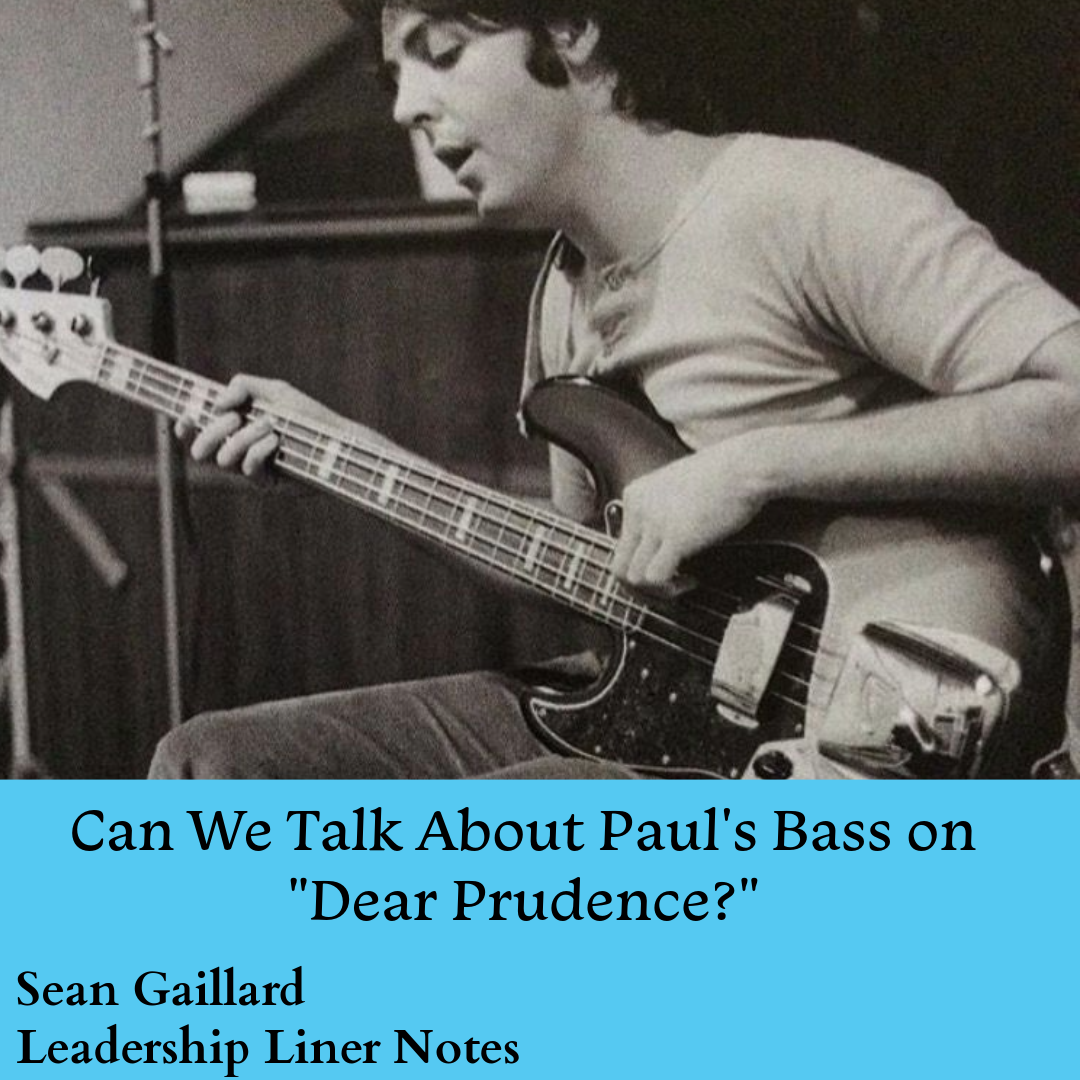
There are certain moments in music that move me on a visceral level, no matter how many times I have heard them. Paul McCartney’s bass playing on The Beatles’ “Dear Prudence” is one of those moments. The song is a highlight of the band’s eponymously titled 1968 double album, The Beatles, affectionately known as The White Album because of its stark, nearly all-white cover. From the instant Paul’s bass enters the song to that magnificent final crescendo, I find myself immersed in the sheer beauty and joy of his musicianship.
Some bass lines hold a song together. Others take a song somewhere entirely new. Paul’s bass on “Dear Prudence” does both. Every time I hear it, I am reminded why I love music so much.
Yes, “Dear Prudence” is a John Lennon song, but Paul’s bass is an essential part of its magic. I love discovering those particular moments in a recording when one instrument elevates everything around it. Paul’s bass grounds the song in a groove that dances, soars, and transcends. His playing is both a melodic voice and an empathetic anchor to the emotional beauty of the song.
There is something deeply renewing about hearing that bass line unfold. It brings me joy, peace, and a reassuring sense that somehow, we are going to be okay. That is the transcendent power of music, and Paul captures it beautifully.
I invite you to listen to “Dear Prudence” again. Follow Paul’s bass from its first entrance to that glorious final crescendo. Lose yourself in the groove and experience the magic.
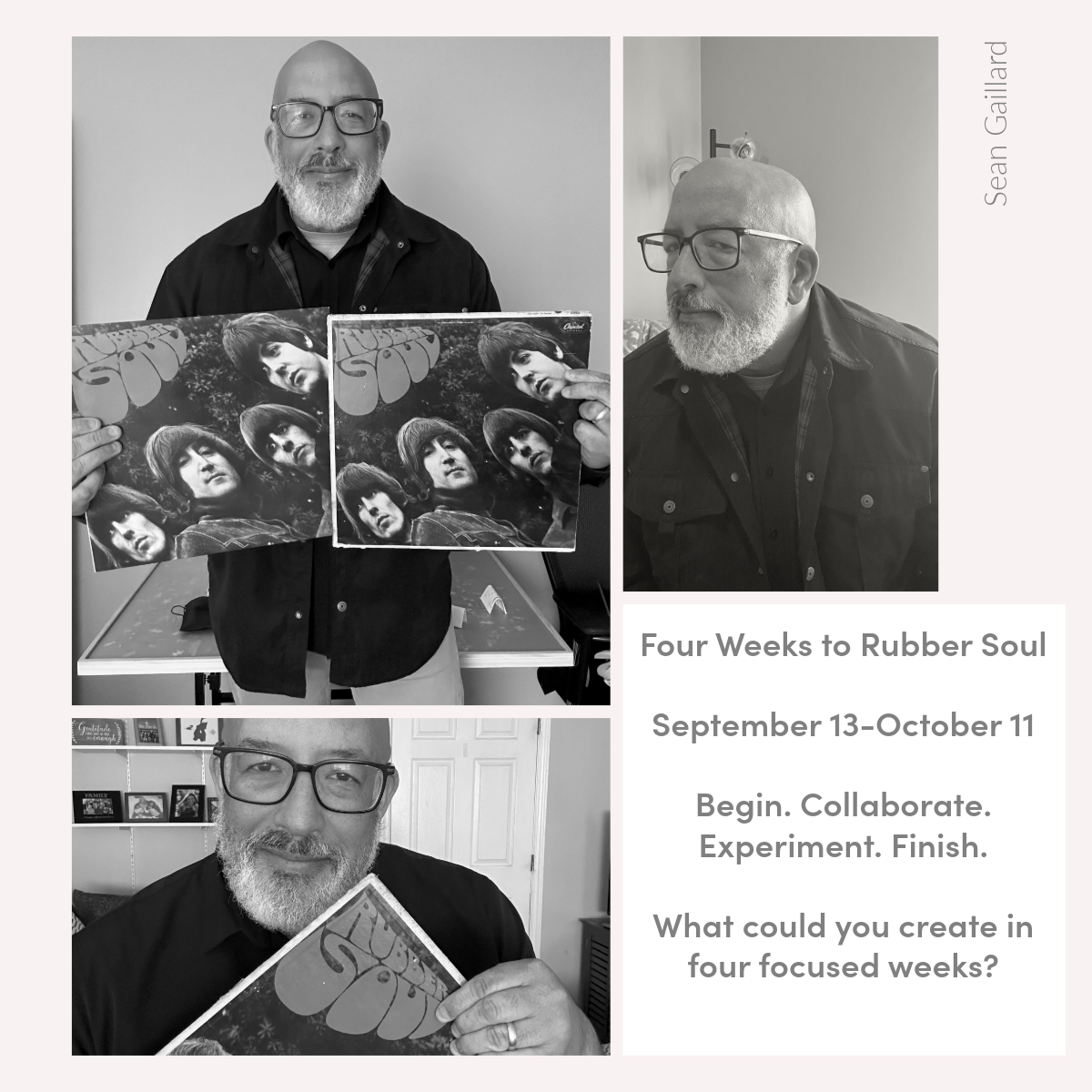
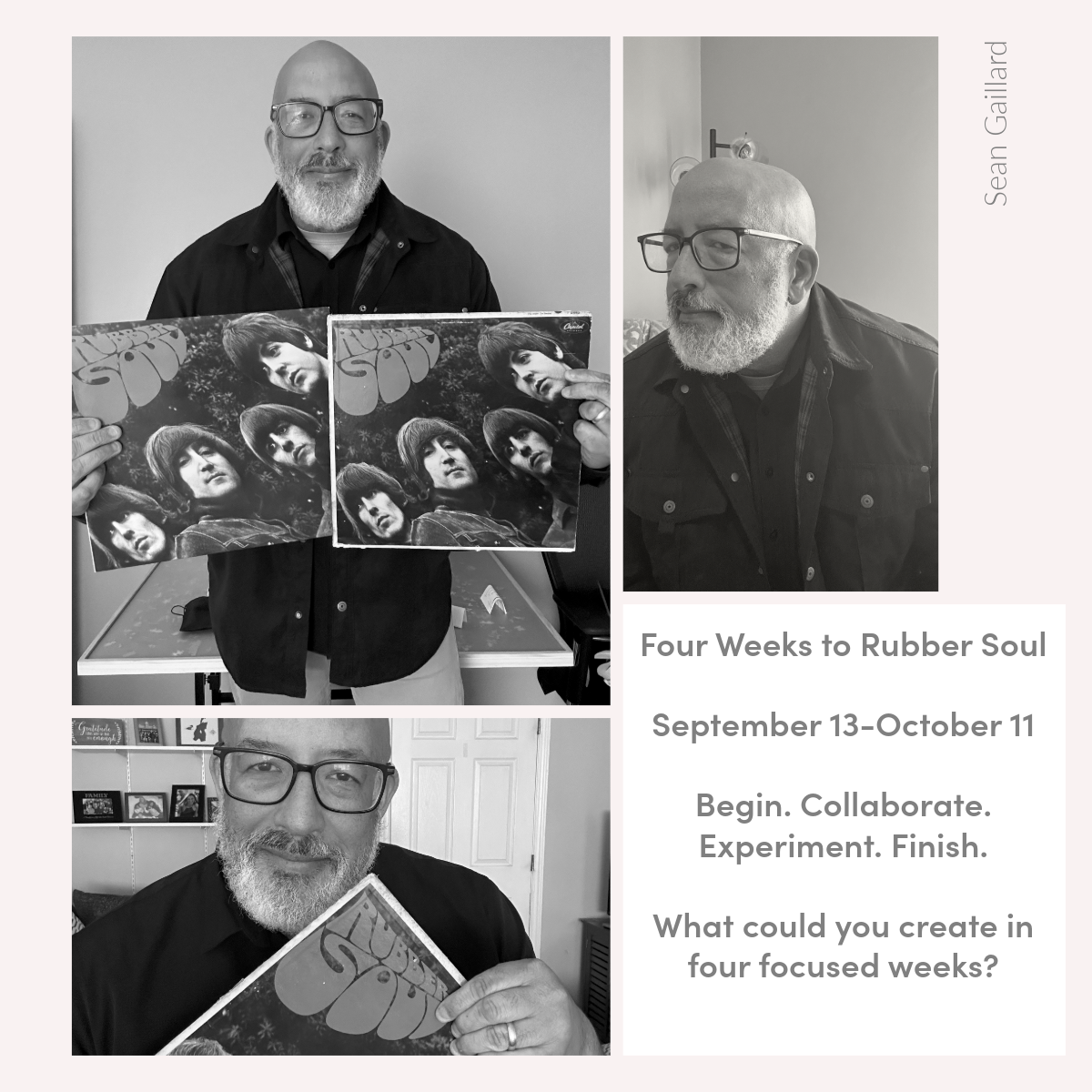
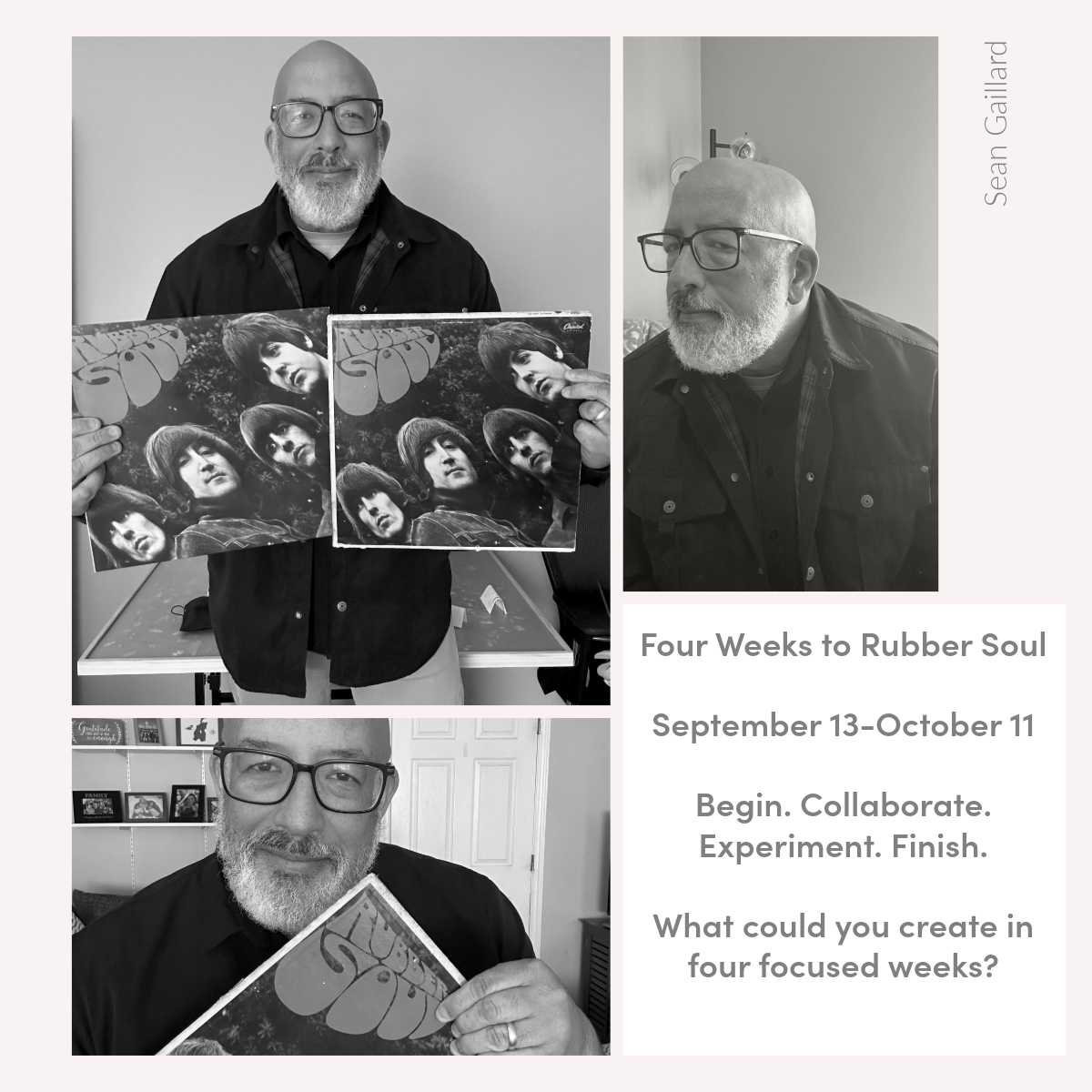
Twenty-eight days ago, I began a creative journey inspired by an album that The Beatles recorded over approximately four weeks during the fall of 1965. I wanted to explore the lessons of creativity, collaboration, experimentation, and commitment found within the making of Rubber Soul. More importantly, I wanted to challenge myself to create something meaningful every single day while encouraging others to embrace their own creative possibilities.
Today, October 11, 2026, I reach the finish line of this journey. For twenty-eight consecutive days, I have written a blog post and recorded a reel inspired by four musicians whose creativity continues to shape my life. I have researched, reflected, listened, experimented, and shared ideas that have challenged me to think differently about my own creative process. What began as a celebration of an extraordinary album gradually became something much more personal.
Somewhere along the way, I discovered that I needed this experience as much as anyone who might have been reading or watching. I began with the hope of inspiring others, but I am finishing with a renewed understanding of what creativity means in my own life.
I began this journey hoping to build community and connection. I wanted to encourage others who might be struggling to find their creative voices or searching for their own bandmates. After all, one of the greatest lessons of The Beatles is that remarkable things can happen when people bring their individual talents together in pursuit of something meaningful. I hoped this series might create opportunities for conversation, encouragement, and perhaps even collaboration.
The experience did not always unfold as I imagined. There were days when the engagement was quiet and the response was less than I had hoped. I sometimes wondered whether these reflections were reaching anyone or whether the ideas I was sharing were making a difference. Those moments were difficult because the desire for connection was a genuine part of why I began this journey.
At times, I felt as though I was standing alone on a stage in an empty auditorium, sharing my voice with rows of unoccupied seats. There is a certain vulnerability in putting something personal into the world and wondering whether anyone is listening. I have experienced that feeling more than once throughout these four weeks.
Still, I kept showing up. I kept writing, recording, learning, and sharing. Even when the auditorium seemed empty, I continued to fill the space with my voice. I began to understand that the absence of applause did not mean the absence of purpose. The courage to create could not depend entirely upon whether someone was there to acknowledge the work.
I also want to recognize that the auditorium was never entirely empty. There were people who took the time to read these reflections, watch the daily reels, leave thoughtful comments, and offer words of encouragement. Some followed the journey quietly, while others shared their thoughts along the way. Every expression of support mattered, and I am genuinely grateful to everyone who made room for this creative journey in their lives.
That gratitude is important to me because I never wanted this experience to be simply about producing content. I wanted it to be about sharing ideas that might encourage someone else to begin creating, take a risk, or rediscover something meaningful in their own life. I may never know how these reflections resonated with everyone who encountered them, but I am grateful for every opportunity to make a connection.
The four words that guided this journey were Begin, Collaborate, Experiment, and Finish. Looking back, each one carries a deeper meaning than it did when I started.
I began with an idea and the willingness to take a creative risk. I explored collaboration by studying the extraordinary chemistry of The Beatles and reflecting on the importance of finding people who encourage and challenge one another. Although I did not discover the band of collaborators I had hoped to find, the experience reminded me why those connections matter and why I want to remain open to them.
I experimented with my writing, my voice, and the daily practice of recording and sharing reflections. I became more comfortable putting my ideas into the world without knowing how they would be received. The discipline of creating something every day gradually became less intimidating and more natural. I discovered that the simple act of showing up consistently could strengthen my confidence and give me the courage to explore new possibilities.
Now, I have finished something I promised myself I would complete. I have twenty-eight days of creative work to show for that commitment, along with lessons that I could never have anticipated when I began. I have learned that creativity requires discipline, but it also requires trust in ourselves and a willingness to keep going when the response is uncertain.
The Beatles offer a remarkable example of what finishing can make possible. When Rubber Soul was released on December 3, 1965, it represented a significant creative achievement. The Beatles had expanded their musical vocabulary, explored new approaches to songwriting, and demonstrated an increasing willingness to challenge their own artistic boundaries.
They could have continued repeating that successful formula, but their curiosity and creative ambitions carried them forward. Within months, they were recording Revolver, an album that would take their experimentation into even more adventurous territory. Their journey continued through Sgt. Pepper’s Lonely Hearts Club Band and beyond, with each completed project opening possibilities that had not existed before.
That example has stayed with me as I have approached the conclusion of this challenge. Finishing something meaningful does not require us to remain in the same creative space. The accomplishment deserves to be celebrated, but it can also become the foundation for another beginning.
Finish is not the opposite of Begin. Finish is what makes Next possible.
There is something particularly meaningful about the timing of this final reflection. Today is October 11, and tomorrow marks the sixty-first anniversary of the beginning of The Beatles’ Rubber Soul recording sessions at EMI Studios in London. On October 12, 1965, they began recording music that would eventually become one of the most influential albums of their career.
I find something beautiful in that connection. As I finish this journey inspired by Rubber Soul, I am standing on the eve of the anniversary of its beginning. More than six decades separate these two creative experiences, yet the lessons of curiosity, commitment, and courage continue to resonate. An album created in 1965 inspired me to begin something in 2026, and finishing that experience has given me the courage to consider what comes next.
For much of my life, I have believed in the power of community, collaboration, and finding people who share a common purpose. I still believe in those things, and I still hope to find more bandmates who want to create, encourage, and build something meaningful together. That hope has not disappeared simply because this experience was sometimes quieter than I anticipated.
What has changed is my understanding of what I can do while those connections have yet to develop. I do not have to wait for a full auditorium to share my voice. I do not have to wait for someone to invite me into a creative space or measure the worth of an idea by the number of people who respond to it. I can begin where I am, create with what I have, and trust that the work itself has meaning.
Perhaps that is the true lesson I have discovered through Rubber Soul. The album is certainly a testament to the extraordinary possibilities of collaboration, but it is also a reminder that creativity requires curiosity, courage, and the willingness to move beyond what we already know. The Beatles continued to grow because they remained open to what might come next.
I want to carry that same spirit forward. I want to continue creating, learning, exploring, and sharing ideas that might make a difference in someone’s life. I want to remain open to the possibility of finding new bandmates while recognizing that I already have the ability to create something meaningful on my own.
I am grateful for everyone who followed this journey, read the daily reflections, watched the reels, shared a comment, or offered encouragement. Your presence and support have meant more than you may realize. I hope that somewhere along the way, something I shared encouraged you to consider your own creative possibilities.
Most of all, I am grateful that I did not abandon this journey when it became difficult or when the response was not what I had imagined. I gave myself the opportunity to discover something about my own creativity, discipline, and courage. I found a renewed sense of purpose in the simple act of showing up each day and creating something meaningful.
I do not want this journey to end. The daily rhythm of creating has become something I genuinely value, and I hope to continue nurturing it. I do not know exactly what the next creative chapter will look like, but I am no longer waiting for every detail to fall into place before I begin.
There is still music to discover, stories to tell, ideas to explore, and meaningful work to create. There are still people I hope to meet and bandmates I hope to find. There are possibilities I cannot yet imagine, and I want to remain open to discovering them.
Twenty-eight days ago, I stepped onto a stage with an idea and the hope that someone might listen. Today, I may still be standing on that same stage, but something has changed. I have filled that space with my voice, my creativity, and the courage to keep going. The auditorium may not be full, but I am no longer waiting for an audience before I begin.
I began. I explored the possibilities of collaboration. I experimented. I finished. The journey did not unfold exactly as I had imagined, but it gave me something I needed and reminded me that there is still so much more to discover.
As I finish this journey, I am grateful for everyone who shared even a small part of it. I am grateful for the music of The Beatles, for the lessons of Rubber Soul, and for the courage I have discovered through these twenty-eight days.
I may not know exactly what comes next, but I know that I am ready to begin.
Thank you for being part of Four Weeks to Rubber Soul.
Special Acknowledgements:
A very special thanks to Nicole Michael of 910 Public Relations and Dave Burgess of Dave Burgess Consulting, Inc. for their generosity in promoting this series on their respective platforms. Both have always been in corner for years and I grateful for their sincere support. Their belief in my work means the world to me.
Stay tuned for my next book with Dave Burgess Consulting, Inc: Leadership Riffs.
There comes a moment in every creative journey when we have to stop revising, stop second-guessing, and trust the work we have created. We have to declare it complete. For The Beatles, that moment arrived in November 1965 as they finished recording Rubber Soul. For me, that moment arrives every morning when I press Publish on another blog post or reel, sending a small piece of my creativity into the world with the hope that it will find its way to someone who needs it.
It is not always easy to declare something complete. There may be doubts, fears, and uncertainties behind placing that final period at the end of the final sentence. There may even be a flaw or two in the finished work, and that is perfectly fine. We have to honor our humanity, embrace the imperfections that come with the creative process, and believe that our vision is worthy of being shared with others. Completion does not necessarily mean perfection. Sometimes, it simply means having the courage to trust the work.
Think about the remarkable journey of Rubber Soul. The Beatles had spent weeks recording, experimenting, rewriting, refining, and pushing themselves into new creative territory. They were working against a deadline while discovering new dimensions of their artistic identities. Each recording session brought them closer to completing an album that would mark an important turning point in their creative evolution.
Their final recording session for the album took place on November 11, 1965, extending into the early hours of November 12. Among the final songs recorded was “Girl,” a John Lennon composition that beautifully demonstrates the increasingly introspective direction of his songwriting. I often wonder what that final session must have felt like for John, Paul, George, and Ringo. Was there exhaustion mixed with relief? Did they feel a sense of pride in what they had accomplished? Were they uncertain about how their latest collection of songs would be received? I would have loved to have been a part of that final recording session, simply to experience the atmosphere in the studio and witness the band reaching the finish line. We cannot know exactly what they were feeling, but I find myself drawn to imagining that moment when the work was finally complete.
For the past 26 days, I have published a daily blog and reel as part of this personal creative challenge. Each morning, I have stepped into the unknown by sharing my ideas, reflections, and creativity with the world. My passion for The Beatles and Rubber Soul is certainly nothing new. Their music has always been a comfortable and familiar place for me to dwell, reflect, and find inspiration. Through this series, however, I have attempted to move beyond simply celebrating the music by connecting the album to new ideas about creativity, collaboration, leadership, and the importance of doing the work.
There have been mornings when I have felt a quiet sense of pride in what I have completed. There have also been moments when I have wondered whether my work has resonated with anyone or whether anyone has even taken the time to read or watch. Some posts and reels have generated meaningful responses and connections, while others have received far less engagement than I had hoped. I would be less than truthful if I said that those quieter moments did not occasionally leave me questioning myself. Yet, through all those moments of uncertainty, I have continued to create, reflect, and share. I have honored the commitment I made to myself when this journey began.
As I approach the conclusion of this month-long series, I am beginning to look back and marinate on what I have learned. There is much to ponder about the discipline of creating something every day, the courage of sharing personal reflections, and the unexpected discoveries that emerge when we give ourselves permission to explore our creativity. One particular lesson resonates with me today as I consider the word “Complete.”
Completion is the moment when we stop measuring our work by what we might still change and begin trusting what we have already created.
I cannot control who reads my blog or watches my reels. I cannot determine whether friends, family, colleagues, or complete strangers will take the time to engage with what I have shared. I can only control the care, intention, authenticity, and effort I bring to the creative process. Once I press Publish, the work begins a journey beyond my control. It may resonate with someone today, tomorrow, or perhaps years from now. It may reach only a handful of people. None of those possibilities diminishes the value of the work or the personal growth that came from creating it.
As I reflect upon my discoveries during Four Weeks to Rubber Soul, I realize that I am not simply writing about The Beatles. I am using their creative journey to better understand my own. The daily discipline of writing, recording, revising, and publishing has reminded me of the importance of trusting my voice, embracing the creative process, and finding fulfillment in the work itself. There is something liberating about recognizing that the act of creating has its own rewards, even when the response from the outside world is quieter than we might hope.
Complete is a powerful word because it asks us to trust ourselves. It invites us to recognize the effort we have invested, the lessons we have learned, and the creativity we have shared. There will always be another sentence to revise, another recording to improve, or another idea to explore. At some point, we have to believe that what we have created is worthy of being shared. We press Publish, release our work into the world, and hope it lands where it needs to land. The act of completion becomes an act of faith in our creativity and in ourselves.
Today also carries a special significance as we remember John Lennon on what would have been his 86th birthday. When I listen to Rubber Soul, I hear an artist becoming increasingly willing to explore new dimensions of his creative voice. Songs such as “Norwegian Wood,” “Nowhere Man,” and “In My Life” reveal a songwriter moving into more personal, introspective, and imaginative territory. John was willing to explore new possibilities in his songwriting, and that creative courage continues to inspire me.
John and his fellow Beatles completed Rubber Soul without knowing the lasting impact their work would have on generations of listeners. They had created something meaningful, trusted their creative instincts, and released their music into the world. Perhaps that is one of the most beautiful lessons we can take from their journey. We do the work, give it the care and attention it deserves, and trust that it will find its place in the world.
As I press Publish on Day 26, I am learning to embrace that same sense of trust. I am grateful for the journey, the discoveries, and the opportunity to share a little piece of myself each morning through the music that has meant so much to me throughout my life. My work for today is complete, even as my creative journey continues.
I keep coming back to the focus it took for The Beatles to finish Rubber Soul. They were working against an immovable deadline, with EMI needing a new album ready for the Christmas market. A deadline can certainly sharpen our attention, but I wonder if something else was driving them. Maybe they knew they were onto something. Maybe they could feel the music changing and did not want to lose the momentum.
Consider “I’m Looking Through You.” The Beatles first worked on the song on October 24, spending hours developing a version that ultimately did not make the album. They returned to it on November 6 and tried again. They still were not satisfied. Four days later, with the deadline looming, they started over once more and finally found the arrangement we know from Rubber Soul. The song was completed with additional vocals and handclaps during their marathon final recording session on November 11.
That is focus. Focus is not always sitting down, locking in, and getting everything right on the first attempt. Sometimes focus means returning to something that is not working. It means staying with an idea long enough to discover what it can become. The Beatles could have settled for one of the earlier versions. Instead, they kept listening, adjusting, and returning to the work.
Focus is not always easy for me, either. My own creative work has plenty of starts and stops. Doubt creeps into the process. Confidence disappears. Other responsibilities compete for attention, and sometimes the easiest response is to put the work aside and promise myself that I will return later.
This daily series has taught me something about focus. Showing up every day for Four Weeks to Rubber Soul has required me to keep returning to an idea, writing about it, recording a reel, and putting it into the world. The discipline has helped me focus, but it has also helped me appreciate what focus actually requires.
Today’s word is Focus, but focus cannot simply be something we practice for one ephemeral day. It is something we choose again tomorrow. We return to the song. We return to the page. We return to the idea that still needs our attention.
The deadline may get us into the room. Focus keeps us there long enough to finish something that matters.
Welcome to the fourth and final week of Four Weeks to Rubber Soul. For the past three weeks, we have explored what it means to begin, collaborate, and experiment. Now we arrive at our final theme: Finish.
Our word for Day 22 is Commit because finishing begins with a decision. At some point, the experiment needs a commitment. Ideas become work when we commit to finishing them.
The Beatles understood that reality during the making of Rubber Soul. For all the creativity surrounding those sessions, there was also an immovable deadline. The Beatles needed to deliver a new album in time for the Christmas market. They could experiment with unusual sounds, rewrite songs, abandon takes, work through long sessions, and chase new ideas, but eventually they had to finish the record.
That deadline did not stop experimentation. It gave the experimentation somewhere to go. The ideas had to become songs, the songs had to become an album, and the album had to be finished.
I am thinking about commitment quite a bit these days. I am finishing my second book, Leadership Riffs, after months of writing, revising, questioning, discovering, and trying again. There comes a point in any creative project when the question has to change. We stop asking whether the idea could become something and start doing the work necessary to make it something.
The same is true for Four Weeks to Rubber Soul. I have made it through three weeks of daily blog posts and reels. The novelty and excitement of beginning have faded. I have experimented publicly, shared ideas that were still developing, and kept showing up even when the engagement sometimes disappointed me.
Now there are seven days remaining. This final week is less about asking, “Can I do this?” and more about saying, “I am going to see this through.”
Commitment matters because beginnings are exciting and experiments are full of possibility. Finishing asks something different from us. It asks us to keep showing up after the novelty disappears, continue when the response is quieter than we hoped, and stay with the work long enough to complete what we started.
The Beatles had a record to finish. I have a book to finish and seven more days of this creative journey to complete. You may have something waiting for your commitment too.
As we begin this final week, think about the unfinished work in your own life. What idea, project, dream, or creative pursuit deserves more than another someday? What would happen if you decided that now is the time to see it through?
That is where Finish begins. It begins with a commitment to the work and a decision to keep going until the work is complete.
Yesterday, we explored the importance of curiosity and the willingness to ask, “What if?” Curiosity opens the door to new possibilities, invites us to question familiar approaches, and encourages us to imagine something different. There is something exciting about allowing ourselves to wonder what might be possible.
Today, we take that curiosity one step further with a simple but powerful word: Try. Curiosity encourages us to imagine what might be possible, while trying requires us to take action and discover what happens.
Trying something new can be challenging. It can be uncomfortable, a little scary, and even risky. The moment we move an idea from our imagination into the world, we make ourselves vulnerable. Others might embrace what we create, question our intentions, or criticize our efforts. We might even begin questioning ourselves before anyone else has an opportunity to respond.
That is one of the challenges of creativity. We cannot always know how something will turn out until we give ourselves permission to try. There are no guarantees of acceptance, success, or even understanding. Sometimes we simply have to take a chance and see where our curiosity leads us. We cannot wait for that permission to try. Now is the time to try!
The Beatles and the Courage to Try
One of the remarkable qualities of “Rubber Soul” is the willingness of The Beatles to explore new creative territory. By the fall of 1965, they had already achieved extraordinary commercial success. They could have continued recording music using familiar approaches and formulas that had served them well. Instead, they continued pushing their sound forward. They knew that they had to grow and evolve as a band. This growth happened in the course of a month under a looming deadline from the record company.
Their songwriting was becoming more introspective, their musical influences were expanding, and their recording sessions were becoming opportunities to experiment with different sounds and arrangements. Producer George Martin played an important role in this process, helping the group translate their growing creative ambitions into the recordings we continue to enjoy today. His willingness to experiment alongside the Beatles helped create an environment where new ideas could flourish.
Consider a few examples from Rubber Soul that demonstrate this willingness to try:
On “I’m Looking Through You,” the Beatles recorded three different versions of the song before arriving at the arrangement that appeared on the album. They explored different tempos, instrumentation, and musical passages. An earlier version, eventually released on “Anthology 2,” sounds noticeably different from the familiar recording. They continued experimenting because they believed there was something more to discover within the song.
On “Girl,” John Lennon’s intimate vocal performance includes the distinctive sound of his breathing, deliberately emphasized in the recording. George Harrison’s acoustic guitar incorporates a sound inspired by Greek music, adding another dimension to the arrangement. These musical choices reflected the group’s growing interest in exploring sounds and influences beyond their earlier recordings.
Perhaps one of my favorite examples is “In My Life.” George Martin wanted to add an intricate piano solo but found that playing the passage at the desired speed presented a challenge. His solution was wonderfully inventive. He recorded the piano at half speed and played the tape back at normal speed, creating the distinctive sound that gives the song such an unforgettable musical moment.
Imagine what might have happened had Martin simply abandoned the idea because the original approach was not working. We would have missed one of the most memorable musical moments on the album. His willingness to try a different approach helped create something that continues to resonate with listeners more than sixty years later.
Each example reminds us that experimentation requires more than having an interesting idea. It requires the willingness to pursue that idea, explore different possibilities, and discover what happens. The Beatles did not know that every experiment would succeed. They simply continued trying, with George Martin serving as a creative partner who helped bring their ideas to life.
What Happens When We Try?
There is an important leadership and creativity lesson in these recording sessions. We often spend considerable time imagining what could happen if we pursued something different. We think about the possibilities, consider the challenges, and sometimes become so concerned about the outcome that we never take the first step.
What if nobody likes the idea? What if the project fails? What if someone questions our ability or criticizes our intentions? These questions can become barriers that prevent us from discovering what might be possible. We can spend so much time anticipating the reactions of others that we lose sight of the excitement that inspired our curiosity in the first place.
Trying requires us to move beyond those questions and give an idea an opportunity to develop. It also requires us to recognize that the value of our creative efforts cannot always be measured by immediate applause, widespread acceptance, or the number of people who notice our work.
Sometimes the greatest value comes from what we learn along the way. We discover new possibilities, develop greater confidence, and uncover strengths that might have remained hidden had we never attempted something different. There is growth in the process itself, even when the outcome does not match our original expectations.
Trying is not a guarantee of success. It is a commitment to possibility.
That is an important distinction because experimentation does not demand that everything work perfectly the first time. It invites us to learn from the experience, make adjustments, and continue growing. Creativity often develops through a series of attempts that move us closer to discovering something meaningful.
My Own Journey of Trying
I think about this often when I reflect on my own creative journey. Several years ago, I had an idea to write a book connecting the Beatles’ “Sgt. Pepper’s Lonely Hearts Club Band” era with leadership, creativity, collaboration, and education. On the surface, it might have seemed like an unusual combination. What could a groundbreaking album from 1967 teach us about leading schools and organizations?
I believed there was a powerful connection worth exploring. The creative spirit that made the “Sgt. Pepper” album such a remarkable achievement offered lessons that could extend far beyond the recording studio. I wanted to explore how those lessons might inspire educators and leaders to approach their work with greater imagination, courage, and collaboration.
That idea eventually became my book, The Pepper Effect. Writing it required me to step beyond familiar approaches to educational leadership and bring together two passions that had shaped my life. It was an opportunity to try something different and share a perspective that I believed could make a meaningful contribution.
It was also a risk. I encountered skepticism and my share of ridicule along the way. There were moments when I questioned whether anyone would understand what I was attempting to create. I had my own doubts about whether this approach would resonate with others.
Fortunately, I kept trying. The Pepper Effect has since reached educators and schools around the world, encouraging conversations about innovation, creativity, collaboration, and the importance of building a culture where everyone has an opportunity to contribute. The book has opened doors to meaningful conversations and connections that I could never have anticipated when I first began writing. I first knew the book had made an significant impact on others when it was adapted for stage by a school in Canada.
None of that would have happened had I allowed my doubts or the criticism of others to prevent me from moving forward. I am grateful that I took the chance, even when the outcome remained uncertain. The experience continues to remind me that some of our most meaningful creative contributions begin with the courage to pursue an idea that others might not immediately understand.
Continuing to Try
I find myself returning to this lesson as I continue creating “Four Weeks to Rubber Soul.” Every day, I am writing a new blog post and recording a new reel inspired by the creative journey of the Beatles. I am exploring ideas, making connections, and sharing reflections that I hope will encourage others to embrace creativity in their own lives and leadership.
Some posts connect with people immediately. Others receive relatively little attention. There are moments when the response is encouraging and others when I wonder whether the message is reaching anyone at all. The temptation to measure the value of creative work through views, comments, and reactions is certainly real.
In spite of all that, I am learning to appreciate something more important about this experience. Every day provides another opportunity to develop my voice, explore an idea, and create something that did not exist the day before. I am trying different approaches to communicating, connecting with an audience, and bringing my love of music into conversations about creativity and leadership.
I cannot control how many people will encounter a particular post or whether a message will resonate with everyone. I can control my willingness to keep creating and sharing the work. I can also choose to appreciate the people who are following this journey and finding something meaningful in these daily reflections.
There is a certain freedom in that realization. We do not need the approval of the masses to pursue something that matters. We do not need to know that everyone will understand our intentions. We certainly do not need a guarantee that our ideas will be immediately embraced.
We need the courage to begin and the willingness to keep learning. Sometimes that means moving forward when the applause is quiet or when our work does not receive the attention we had hoped to generate. The important thing is to remain connected to the purpose that inspired us to create in the first place.
The Beatles certainly had an audience waiting for their next release in 1965. They also had expectations surrounding their work and considerable pressure to continue delivering successful recordings. Their willingness to pursue new musical directions reminds us that creativity requires a commitment to growth, even when familiar approaches might seem more comfortable. “Rubber Soul” is an quantum leap from their previous albums and The Beatles were very much aware of that upon its release.
Give Yourself Permission to Try
As we continue our week of Experiment, I invite you to consider something you have been wanting to pursue. Perhaps it is a creative project, a different approach to leadership, an idea for your classroom, or a conversation that might open the door to something new. It might even be something you have been considering for years without finding the courage to begin.
Maybe you have been holding onto that idea because you are unsure how others will respond. Perhaps you are waiting for the perfect moment or hoping to develop enough confidence before taking the first step. There will always be reasons to hesitate, especially when we allow the possibility of criticism or disappointment to overshadow our curiosity.
Give yourself permission to try. You do not have to have every detail figured out before beginning. You can learn as you go, make adjustments when necessary, and discover possibilities that might never have occurred to you during the planning process.
The Beatles did not discover the possibilities of “Rubber Soul’ by remaining satisfied with what they already knew. They explored different sounds, experimented with recording techniques, and followed their growing curiosity into unfamiliar creative territory. Their willingness to try helped create an album that continues to inspire listeners more than sixty years later.
We have no way of knowing what our own experiments might eventually inspire. The person who needs to hear our message, experience our creativity, or benefit from our leadership might be someone we have not even met. Our willingness to try might also encourage someone else to take a chance on an idea they have been reluctant to pursue.
As I reflect on The Pepper Effect and my continuing journey with Four Weeks to Rubber Soul, I am reminded that some of the most meaningful things we create begin with a willingness to take a chance. There will be challenges, moments of uncertainty, and occasions when our efforts do not unfold as we originally imagined. Those experiences are part of the creative journey and can become opportunities to discover something new. Don’t let those doubts compel you to abandon what you are creating.
Curiosity helps us imagine what might be possible. Trying gives those possibilities a chance to become real.
Keep exploring and keep creating. Give yourself the opportunity to discover something new, even when the outcome remains uncertain. The world does not need another perfect imitation of something that already exists. It needs people who are willing to bring their unique voices, perspectives, and ideas into the creative process. You never know what might happen until you try. That simple act of courage could become the beginning of something meaningful for you and for the people who encounter your work.
Perhaps your next creative experiment will become something you never imagined possible. There is only one way to discover what that might be.
This is Day 7 of Four Weeks to Rubber Soul, and today’s word is Reflect. We are also closing out Week 1, which has centered on the theme of Begin. The Beatles’ creative growth, so evident on Rubber Soul, came from entering the room with songs, fragments, influences, ideas, and a willingness to work. The lesson is not to achieve perfection before starting. The lesson is to begin the work, knowing that it is completely acceptable if the beginning is rough and raw. What matters is that you enter the room and that the room is the right one, aligned with your creativity and ready to support the gifts you are bringing.
An important part of the creative process is reflection. Creative growth becomes visible when we stop long enough to notice what has changed since we began. Reflection asks us to pause, look back at what we created, and listen again. There is an art to that pause because we do not want to become so immersed in reflection that we lose momentum. Sometimes we need a trusted thought partner or bandmate who can help us listen, notice, and keep our creative work moving in the groove.
That brings me back to Rubber Soul. One reason I am looking forward to the multiple takes and alternate versions included with the forthcoming Rubber Soul Super Deluxe Edition is the opportunity to hear that creative evolution. The Beatles, along with producer George Martin, continually shaped these songs by changing harmonies, sounds, spaces, arrangements, and instrumentation. Reflection does not mean doubting what you created. Reflection means giving yourself enough space to hear what the work still needs.
Sometimes we need to return to what we made and ask three simple questions: What is working? What is missing? What could make this better? On Rubber Soul, a song could enter the studio one way and leave sounding very different on the finished master. That transformation happened because the band was willing to listen to the work as it developed and respond to what the song needed.
For example on “Norwegian Wood,” George Harrison felt that the song needed something different. His growing interest in Indian music led him toward the sitar, and he worked out a part that became one of the defining sounds of the song. That decision helped give the recording its distinctive character and introduced many listeners to a sound they may not have expected to hear on a Beatles record.
“In My Life” offers another beautiful example of reflection in action. The basic track had already been recorded, but the instrumental middle still needed something. George Martin experimented with ideas, including Hammond organ, before developing the Baroque inspired piano passage we now know so well. Since the part was difficult to play at the required speed, he recorded it more slowly and sped the tape up afterward. The result became an essential part of the song and a reminder that sometimes the creative breakthrough comes after we are willing to listen again.
As we close Week 1, take some time to reflect on something you have created. Do not judge it too quickly. Listen to it and ask yourself: What is working? What is missing? What could make this better? Consider bringing a trusted thought partner or bandmate into that reflection because sometimes another set of ears helps us hear possibilities we cannot hear alone.
Reflection is not about doubting your work. It is about asking what the work still needs and then having the courage to make the adjustment. I would love to hear how reflection fits into your creative process as we continue this journey through Four Weeks to Rubber Soul.
Check out today’s daily reel. Thanks to Starbucks for serving as my own Abbey Road Studios!
What if we lived like the masterpiece was already within us?
Not something to chase. Not something to prove. But something to uncover: one brushstroke, one note, one word, one choice at a time.
Every student. Every educator. Every human.
Brushstrokes of Belief
I think about the times I’ve compromised this mindset. When I was told I dreamed too big. When I was advised to play it safe. I think of the moments when I silenced the masterpiece inside me and gave in to the ease of the status quo. I remember the opportunities I allowed to slip by: ideas that could’ve blossomed into impact because I chose comfort over courage.
As leaders, we must stay grounded in our core. We must also recognize and nurture the masterpiece within the people we serve. Every child, every teacher, every staff member-each one carries the potential for something extraordinary. And it’s our role to invite them into that mindset by stewarding a culture of trust and belonging.
The Invitational Question
As the school year begins, it’s easy to get swept up in to-do lists, calendars, classroom setups, and kickoff meetings. We aim for a smooth start. We hope for a clean slate and an open horizon.
But what if we paused and started the year with one powerful, invitational question?-
How might we co-create a masterpiece in our schoolhouse: one that uplifts our students and each other?
Let that question be your catalyst. Maybe it’s what your team needs to hear from you. Maybe it’s what you need to hear from yourself. Let it refuel your purpose. Let it restore your voice. Let it help you walk in your truth.
Rewriting the Lesson Plan Narrative
In The Pepper Effect, I write about believing in your school’s masterpiece. Just like The Beatles banded together to create Sgt. Pepper’s Lonely Hearts Club Band, a masterpiece isn’t made in isolation—it’s built in collaboration and powered by belief.
At one school where I served as principal, we embraced this mindset in an unexpected place: lesson plans.
Too often, lesson plans become compliance checklists, stifling creativity and reducing the work of educators to mere documentation. Some principals use them as instruments of what Stephen M.R. Covey calls “Command and Control” leadership.
We flipped the script.
Instead of just turning in lesson plans, teachers would highlight a Masterpiece Moment: a singular experience they crafted with passion and intention. It might be a writing prompt, a science experiment, a read-aloud, or a student-led discussion. It didn’t have to be perfect: it had to be purposeful.
In faculty meetings, these moments were shared and celebrated. One teacher compared her lesson to Georgia O’Keeffe’s Sky Above Clouds. Another likened hers to a jazz solo-improvised yet deeply moving.
That small practice opened space for connection, creativity, and belonging. And it reminded us that teaching, like art, is about resonance not replication.
Beethoven’s Ninth and the Schoolhouse
When Beethoven composed his Ninth Symphony, he was completely deaf. Yet, out of silence, he created one of the most profound masterpieces in human history, a work that transcends time, language, and boundaries. The Ode to Joy finale still brings audiences to their feet in awe. It always brings me to tears.
What does that have to do with school leadership?
Everything.
Sometimes leadership feels like working through silence. This can occur when feedback is absent, progress feels slow, or inspiration wanes. And yet, like Beethoven, we still compose. We still create. We still believe. Because the masterpiece is not in the noise, it’s in the conviction, the resilience, and the courage to keep going.
Your school can be your Ode to Joy—crafted not out of perfection, but out of perseverance and purpose.
Four Moves to Practice Masterpiece Leadership All Year Long
1. Curate “Masterpiece Moments” Monthly Set aside 5 minutes during staff meetings to highlight one standout teaching moment from a colleague. Let them share what made it special. Invite joy, not judgment.
2. Embed the Question Into Coaching & Walkthroughs Use the question “What part of your instruction this week feels like a masterpiece?” as a reflection prompt in coaching conversations or feedback forms.
3. Display Masterpiece Boards In a shared space, physically or virtually, let staff (and students!) contribute their own “masterpiece” moments throughout the year. This builds a gallery of impact, belonging, and belief.
4. Model It as a Leader Share your own masterpiece moments as a principal—an email to families, a conversation with a student, a restored partnership. Let your staff see your brushstrokes, too.
The Masterpiece Within
A true masterpiece is timeless and universal. It’s not about accolades or applause; rather, it’s about meaning. It connects us to our humanity. It sparks new ideas. And in leadership, that’s our calling: to ignite that mindset in others.
Especially on the days filled with deadlines, meetings, emails, and decisions—remember:
You are the catalyst. You carry the brush, the baton, the pen.
We all carry a masterpiece within us. What if that belief became the prevailing mindset—in our schools, in our leadership, in our lives?
Let’s lead from that place. Let’s teach from that place. Let’s be that place.