A simple riff in music can be unforgettable. Consider Keith Richards’ iconic guitar hook on The Rolling Stones’ “(I Can’t Get No) Satisfaction.” A handful of notes became one of the most recognizable sounds in rock and roll history. Sometimes a simple musical idea can leave a lasting impression.
There is another kind of riff that I find equally fascinating. It is the free flow of ideas, thoughts, and questions that happens when we feel comfortable enough to explore unfinished thoughts with someone else. There is no script or predetermined destination. There is simply the freedom to think aloud, listen, respond, and see where the conversation takes us.
When people listen and respond without judgment or competition, something magical happens. There is synergy, connection, and trust. I think of jazz musicians like Miles Davis and John Coltrane, listening and responding to each other through their instruments. One musician introduces an idea. Another builds upon it. Someone takes it somewhere unexpected. Together, they create something that might never have emerged independently.
I love those moments when a conversation becomes a genuine riff. There is no pressure to have the perfect answer or even the right words. We can stumble, explore, laugh, reconsider, and discover something new together. A great riff is not always about having the right notes. Sometimes it is about finding the right people who are willing to listen, respond, and create something alongside us.
Those connections matter. The people who give us the freedom to think aloud and make us feel that our voices matter are worth celebrating. They remind us that some of our most meaningful discoveries happen when we are willing to listen as much as we contribute.
Who are the people in your life who make it safe to riff, explore, stumble, and discover something new? Have you told them lately how much their voices matter?
There is something that always brings a smile to my face when I look at my calendar and see the words Record with Donya. Our monthly conversations on Real Riffs with Donya Ball have become one of the most rewarding and enriching creative collaborations I have experienced. We have now recorded six episodes, and I genuinely look forward to each opportunity to connect, reflect, and explore the realities of educational leadership.
What I especially appreciate is how naturally our conversations unfold. We have reached the point where there is no elaborate preparation, no scripted questions, and no predetermined agenda. We simply hit record and start riffing. There is something refreshing about allowing a conversation to develop organically, particularly when both participants bring trust, mutual respect, and a willingness to listen.
The Art of Riffing
I often think about the similarities between our conversations and a jazz jam session. Great improvisation requires more than individual talent. It requires deep listening, trust, and an understanding of what another musician brings to the performance. One musician introduces an idea, another builds upon it, and something new emerges through the collaboration.
That is the dynamic I value in working with Donya. We challenge and expand each other’s thinking in a supportive and trusting environment. Donya brings thoughtful perspectives and a wealth of leadership experience to our conversations, and I appreciate how our exchanges often lead me to consider ideas from a different angle. We are not competing for the spotlight. We are simply having meaningful conversations and learning from one another.
The Sixth Riff: Getting Into the Real Stuff
Our latest episode, The Sixth Riff: Educelebrity Culture, Brokenness, and the Courage to Lead, explores some challenging realities of educational leadership.
We examine the educelebrity phenomenon and the tension between visibility, recognition, and authentic leadership. We also discuss the brokenness that leaders sometimes experience in education, including disappointment, isolation, and the challenge of maintaining a sense of purpose when the work becomes difficult.
These are conversations that deserve more attention. We approach them with honesty, reflection, and a willingness to acknowledge that neither of us has all the answers. That is the spirit of Real Riffs. We are unflinchingly real about the profession we care deeply about and the human experiences that accompany leadership.
Looking Ahead
I am excited that our next episode in November will be recorded in person! After six virtual conversations, it will be a welcome opportunity to continue our discussions in the same room. We will maintain the approach that has worked so well for us: no script, no agenda, and plenty of room for spontaneous conversation.
I am grateful for this collaboration and for everyone who has listened and supported Real Riffs. This experience continues to reinforce something I believe deeply about leadership and creativity. Meaningful collaboration grows through trust, reciprocity, and the willingness to make room for another person’s voice.
Sometimes the best ideas emerge when we stop trying to control every moment and simply listen to one another. That is what makes a good jazz session, a good conversation, and a good collaboration.
Listen to The Sixth Riff
The Sixth Riff: Educelebrity Culture, Brokenness, and the Courage to Lead
We appreciate every listen, share, review, and subscription. Please subscribe so you do not miss our November episode, when we will be recording together in person!
Thank you for supporting Real Riffs and being part of these conversations!
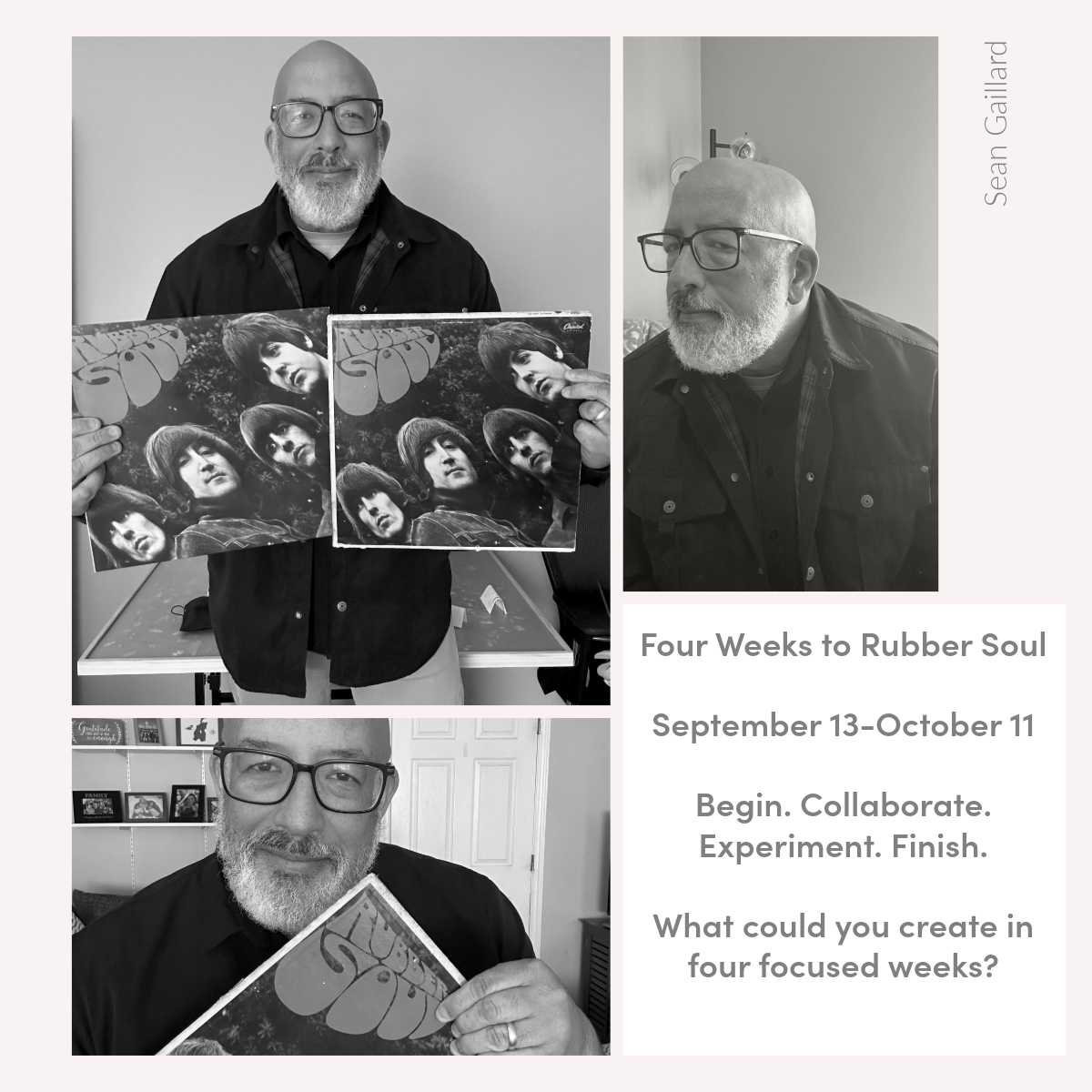
This is Day 7 of Four Weeks to Rubber Soul, and today’s word is Reflect. We are also closing out Week 1, which has centered on the theme of Begin. The Beatles’ creative growth, so evident on Rubber Soul, came from entering the room with songs, fragments, influences, ideas, and a willingness to work. The lesson is not to achieve perfection before starting. The lesson is to begin the work, knowing that it is completely acceptable if the beginning is rough and raw. What matters is that you enter the room and that the room is the right one, aligned with your creativity and ready to support the gifts you are bringing.
An important part of the creative process is reflection. Creative growth becomes visible when we stop long enough to notice what has changed since we began. Reflection asks us to pause, look back at what we created, and listen again. There is an art to that pause because we do not want to become so immersed in reflection that we lose momentum. Sometimes we need a trusted thought partner or bandmate who can help us listen, notice, and keep our creative work moving in the groove.
That brings me back to Rubber Soul. One reason I am looking forward to the multiple takes and alternate versions included with the forthcoming Rubber Soul Super Deluxe Edition is the opportunity to hear that creative evolution. The Beatles, along with producer George Martin, continually shaped these songs by changing harmonies, sounds, spaces, arrangements, and instrumentation. Reflection does not mean doubting what you created. Reflection means giving yourself enough space to hear what the work still needs.
Sometimes we need to return to what we made and ask three simple questions: What is working? What is missing? What could make this better? On Rubber Soul, a song could enter the studio one way and leave sounding very different on the finished master. That transformation happened because the band was willing to listen to the work as it developed and respond to what the song needed.
For example on “Norwegian Wood,” George Harrison felt that the song needed something different. His growing interest in Indian music led him toward the sitar, and he worked out a part that became one of the defining sounds of the song. That decision helped give the recording its distinctive character and introduced many listeners to a sound they may not have expected to hear on a Beatles record.
“In My Life” offers another beautiful example of reflection in action. The basic track had already been recorded, but the instrumental middle still needed something. George Martin experimented with ideas, including Hammond organ, before developing the Baroque inspired piano passage we now know so well. Since the part was difficult to play at the required speed, he recorded it more slowly and sped the tape up afterward. The result became an essential part of the song and a reminder that sometimes the creative breakthrough comes after we are willing to listen again.
As we close Week 1, take some time to reflect on something you have created. Do not judge it too quickly. Listen to it and ask yourself: What is working? What is missing? What could make this better? Consider bringing a trusted thought partner or bandmate into that reflection because sometimes another set of ears helps us hear possibilities we cannot hear alone.
Reflection is not about doubting your work. It is about asking what the work still needs and then having the courage to make the adjustment. I would love to hear how reflection fits into your creative process as we continue this journey through Four Weeks to Rubber Soul.
Check out today’s daily reel. Thanks to Starbucks for serving as my own Abbey Road Studios!
The email arrived, and I will admit that it rocked me a little. I felt the disappointment immediately. Then perspective started to find its way into the room.
Sometimes I feel a little like Charlie Brown running toward that football. I know Lucy may pull it away. I run toward it anyway.
For a long time, moments like this would send me straight into my feelings. Imposter syndrome would start whispering. Comparison would creep in. I would begin wondering what someone else had that I did not. I would question whether my voice mattered, whether my work was good enough, or whether I had somehow missed my moment.
I have had conversations with companies and organizations about speaking, consulting, collaboration, and other possibilities. Some of those conversations have felt promising. Some have seemed like the beginning of something meaningful. Then nothing happens.
That can wear on you if you allow every unanswered email, closed door, or rejection to become a referendum on your worth.
I am learning not to do that anymore.
More and more, I am subscribing to a different path. I want to find the people and spaces where I know I matter. I want to bring my ideas, experience, creativity, leadership, and full humanity into rooms where those things are actually valued. I do not want to spend my energy convincing people to see something they have already decided not to see.
If an opportunity is not meant to be, I can accept that. If the energy around something does not resound with a genuine “Hell yes,” I am beginning to see that as information. It may simply be a sign to keep moving.
Rejection is one of the constants of being human. Change is another. Rejection is not a definitive statement about my value. It is not a verdict on my journey. It does not erase what I have accomplished, what I know, what I have survived, what I have created, or what I still have left to offer.
Sometimes rejection simply means that this particular opportunity was not mine. The people who say no do not deserve unlimited space in my mind. The organizations that cannot see my value do not get to define it.
That lesson sounds simple when I write it. Living it is harder. Some days still sting. Some emails still hurt. Some opportunities still make me wonder what might have been. I am learning that I can acknowledge those feelings without building a home inside them.
I can feel disappointed and still carry on. I can question myself for a moment and still return to what I know. I can watch Lucy pull the football away one more time and still get back up.
My responsibility is to keep creating, writing, speaking, building, and sharing the ideas that live inside me. I also have to remember that my life is bigger than the educational gig, the conference invitation, the speaking opportunity, the job title, or the approval of an organization.
Joy has to exist outside of those things. I find it in music. I find it in writing. I find it in conversations with people who see me. I find it in creating something that did not exist before. I find it in the people I love. I find it in those moments when I am completely myself and do not feel the need to shrink, explain, perform, or prove anything.
Those are the spaces I want more of in my life. Spaces where curiosity matters. Spaces where creativity is welcomed. Spaces where humanity comes before status. Spaces where my voice is valued. Spaces where I know I matter.
I did not get the speaking gig, and that is disappointing. It does not change the work I am called to do or the value of what I bring. There are still rooms I have not entered, people I have not met, and possibilities I cannot yet see. My job is to keep moving toward them while continuing to build a life rooted in joy, purpose, creativity, and the people and spaces that remind me who I am.
I have been thinking a great deal about noticing lately.
My current morning reading is The Power of Mattering by Zach Mercurio, and one chapter in particular has stayed with me. The chapter explores noticing as the first step toward helping people feel they matter. That idea has lingered with me long after I closed the book.
Two recent experiences reinforced that lesson. Both of them occurred in close proximity to each other and I believe the timing of the impact is of significance. Recently, I have been recalibrating my approach and taking proactive steps to reach out to others. I have been in the occasional doldrums of wondering why the phone wasn’t ringing for me or why my shoulder wasn’t being tapped for invitations. I decided to just simply outreach and share.
In each instance, I reached out to someone. In each instance, my outreach was met with silence. Neither situation was catastrophic. Neither involved ill intent, at least as far as I know. Both, however, reminded me of something deeply human. We notice when we are not noticed. It can sting and it does leave a mark.
That realization could have easily led me toward disappointment or resentment. Instead, it led me toward reflection. I decided to flip my own paradigm of giving into the weight of those doldrums. I stepped back and took a pause to reflect.
As I looked inward, I reflected on the times that I may have missed noticing someone else. I thought about the times that I failed to really see someone. How often have I unintentionally done the same thing to someone else?
Leadership has taught me many lessons over the years, but this one reaches beyond leadership. Every one of us wants to know that our presence matters. Every one of us wants to know that someone saw us, heard us, and cared enough to respond. We crave to be valued and validated. Those connections sustain and inspire. We feel connection and belonging with others. Human connection is universal and is an essential component for our well-being.
Noticing is never just about acknowledgement. It is about communicating, “I see you. You matter.”
The opposite carries weight as well. Silence often says more than we intend.
My recent experiences became unexpected gifts. They reminded me to respond. They reminded me to follow up. They reminded me that connection rarely happens by accident. It happens because someone makes the intentional choice to notice another person.
The more I read Mercurio’s work, the more I believe that noticing is not simply a leadership competency. It is a human practice. Leaders certainly need it, but so do neighbors, friends, colleagues, spouses, teachers, and strangers.
Recently, I have also been immersed in the music of the Bill Evans Trio. Listening closely to those recordings reveals something remarkable. Three musicians are not simply playing at the same time. They are listening to one another. Every phrase is met with another phrase. Every musical idea is acknowledged, expanded, or gently redirected. Space is given. Responses matter. The music exists because each musician notices the others.
Leadership works much the same way.
Organizations become healthier when people feel noticed. Relationships deepen when people feel heard. Cultures of mattering begin with small moments of intentional attention.
Noticing is the first note.
Connection is the melody.
Mattering is what people remember long after the conversation ends.
Here’s to continuing the conversation.
Want to Continue the Conversation?
I am available to serve as a thought partner, speaker, and leadership coach for individuals, teams, and organizations seeking to build more human centered cultures. My work focuses on helping leaders create spaces where people feel seen, valued, supported, and empowered to succeed.
I would be honored to connect, listen, and explore how we might work together. Please feel free to drop me a line at sgaillard84@gmail.com and check out the links below here:
Sean Gaillard Founder & CEO | The Gaillard Group Author • Speaker • Leadership Coach
We all want to be a part of something that is meaningful and that gives a sense of belonging. That truth has never felt more real to me than it does right now. It is not just a passing thought. It is something I carry with me in the quiet moments and in the spaces where I am trying to make sense of where I am and where I am going.
Sometimes the hardest truth to carry is that your own backyard may not hear your song the way it was meant to be heard. For me, that is not just a metaphor. I can point to moments that still sit with me. I remember sharing the idea for #CelebrateMonday in a meeting and being laughed at. That idea later grew beyond those walls as schools across the country and beyond began using it to build culture and recognize the good in their communities. I have shared #InstantPD, presented on it, and believed in its potential to create quick, meaningful learning for teachers, yet it never fully took root in the schools and district where I served. I have stood as a finalist for North Carolina Principal of the Year and still felt like I was on the outside of that circle, never quite included in the way I had hoped. I think about principal meetings where I would sit alone, not quite feeling like I fit in, with no one saving me a seat. I think about presenting at local and state conferences and seeing small turnouts for sessions I poured myself into. I think about traveling to state and national conferences on my own without a team beside me, navigating those spaces as an individual rather than as part of a group. These are not grievances. These are truths. They have shaped how I understand what it means to feel like an outsider in my own professional community.
That realization has forced me to look inward in ways that are both honest and uncomfortable. I have had to sit with the reality that the spaces I thought would affirm me have often been quiet. That silence can feel heavy. It can make you question your voice and your place.
I have felt adrift in that silence.
At the same time, I know that this season has been both joyful and agonizing. There have been moments of clarity where I feel aligned with the work I am doing. There have also been moments where I question everything and wonder if any of it is landing with anyone beyond me. That tension is real. It is part of what it means to be human in this work.
What I am learning is that peace cannot be dependent on whether others hear the music.
It has to come from within.
I have to be willing to be transparent with myself. I have to face the truths of my past, the realities of my present, and the uncertainty of my future without turning away. That kind of honesty is not easy. It requires me to separate the events of failure from my identity. It requires me to acknowledge the hurt without allowing it to define me. It requires me to keep going even when the path forward is not clear.
The absence of recognition does not mean the music is wrong.
It means I am still in the process of finding my people.
There are people out there who will recognize this sound. They will lean in. They will connect with what I am creating in a way that feels real and mutual. They will not just hear the dream. They will help me play it louder. That belief matters, even on the days when it feels fragile.
At the same time, I am coming to terms with another truth.
No band is going to come calling for me.
That realization is not defeat. It is clarity.
It is my cue to build something of my own.
Instead of waiting to be called in or tapped on the shoulder, I am choosing to create my own spaces and invite others in. I am doing that through the work I am building with my podcast projects and through the Disruption Table webinar, where leaders from different spaces can come together in honest conversation. I am doing that in collaboration with Dr. Donya Ball as we create a space for “Real Riffs,” a podcast that is grounded in truth, reflection, and the voices of those who want to be part of something real. That work is coming to life in April, and it represents more than a project. It represents a shift in how I see my role in this work.
If I want a space where belonging is real, where voices are valued, and where the work carries meaning, then I have to create it. I have to be willing to take the same risks I have been waiting for others to take with me. I have to trust that what I am building has value, even before anyone else affirms it.
This is what leading while human looks like for me right now.
It is holding joy and struggle in the same space.
It is continuing to create even when the response is quiet.
It is choosing peace within myself while still seeking connection with others.
It is believing that there is a place for this work and being willing to build that place if it does not yet exist.
I am still learning.
I am still searching.
I am still here.
There is a sound within me that is not finished.
I am going to keep playing until it finds its way.
Lately I have been reflecting on past failures as a leader. In many leadership circles across social media, conferences, and professional spaces, failure is often mentioned briefly and then quickly reframed as a lesson learned. The story usually resolves neatly, much like a sitcom where the main character faces a conflict and everything wraps up by the end of the episode.
Leadership does not work that way.
Failure in leadership rarely resolves quickly. Even when we fill our days scrolling through inspirational memes about perseverance and growth, the pain still lingers. The hurt continues. Failure does not disappear simply because we choose to frame it positively.
Too often we rush to the happy ending.
Several years ago, the “Famous Failures” memes were widely shared online. I remember drawing inspiration from those images that highlighted the early setbacks of people like Michael Jordan, Oprah Winfrey, and Albert Einstein. One of the examples that resonated deeply with me was the story of The Beatles being rejected by Decca Records before becoming the most influential band in history. A Decca executive reportedly told them that guitar groups were on the way out.
I wrote about that moment in my book The Pepper Effect. I shared that story many times with faculty during my years as a principal because it offered a powerful reminder that rejection and failure often precede greatness. In recent years I have noticed that the story no longer carries the same inspirational weight for some audiences. I sometimes walk away from sharing that anecdote feeling a quiet sense of disappointment. I love The Beatles. I wrote a book about them. I have spoken about their story at conferences and leadership gatherings. At times the response has been enthusiastic. At other times it has been a collection of polite nods.
That realization stings a little. It reminds me that even the stories we believe will inspire others do not always land the way we hope.
Leadership author John Maxwell addressed this tension in his book Failure Forward: Turning Mistakes into Stepping Stones for Success. Maxwell writes, “One of the greatest problems people have with failure is that they are too quick to judge isolated situations in their lives and label them as failures.” He reminds readers that mistakes are inevitable and that mistakes only become true failures when we continually respond to them incorrectly.
Amy Edmondson, a leading voice on psychological safety, explores similar ideas in her book Right Kind of Wrong: The Science of Failing Well. Edmondson encourages leaders to rethink how organizations respond to mistakes and to recognize the potential for growth and discovery that can emerge from them.
Both perspectives resonate with me. I appreciate the wisdom behind them.
Yet the more I reflect on my own experiences, the more I arrive at a simple and honest truth.
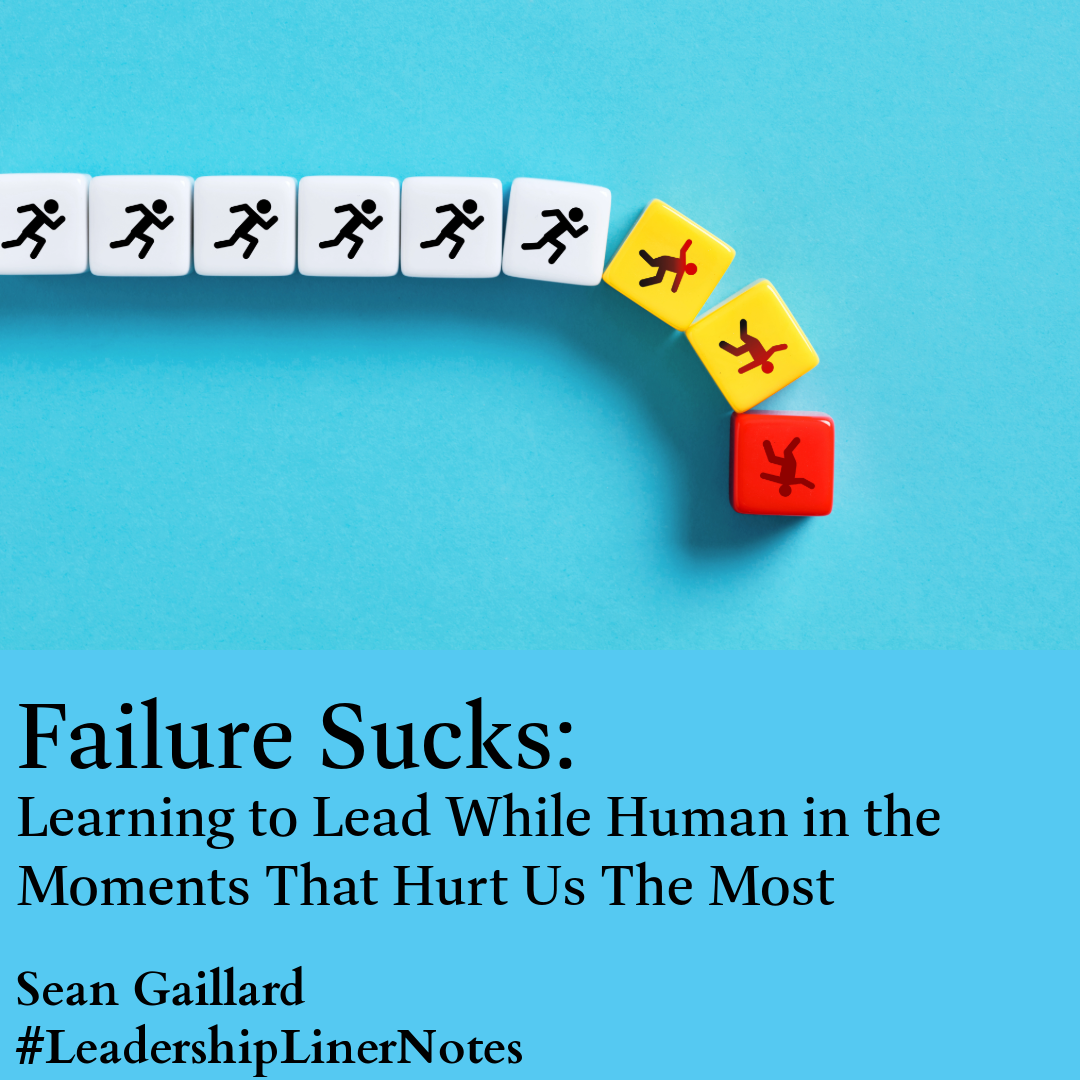
Failure sucks.
Failure is painful. Failure can be debilitating. Failure drains energy and confidence. Failure often shows up when we step into bold and unfamiliar territory. It waits quietly beside us as we take risks, stumble, and fall short.
There is not enough honest conversation about the emotional toll of failure. Many leadership conversations focus on the research, the strategies, and the case studies. Those perspectives are important. At the same time, they often overlook the personal hurt that accompanies failure.
Leading while human requires that we acknowledge that pain.
I recently attempted to start a book study for colleagues. No one responded. That moment hurt more than I expected. I think about a conference session where only three people showed up. The room felt far too large for such a small audience. I delivered the session anyway, though the experience was both humbling and uncomfortable.
Moments like those stay with you.
Failure has a way of reaching into the deeper parts of our identity and purpose. It can leave us questioning our abilities and wondering whether we truly belong in the spaces where we serve.
I wish there were a simple antidote.
There are many inspiring stories about overcoming failure. I am curious about John Maxwell’s upcoming book How to Get a Return on Failure: Fail Smarter, Return Stronger. The title alone reflects an important mindset shift. Organizations must build cultures that offer grace, coaching, and support when people struggle or fall short. Many organizations do this well. Others do not. In some seasons of my career, authentic and humane support was inconsistent or absent.
Those seasons can feel incredibly lonely.
During this current liminal season of my life and leadership, I often revisit my own failures. Some moments invite reflection. Some invite reconsideration. Some even invite regret. Those reflections lead me to a deeper question.
How do we remain human centered leaders while staying true to our own humanity?
Perhaps the pain of failure is part of what makes us human. Perhaps the sting becomes the catalyst that pushes us toward growth and perseverance. Charlie Brown runs toward the football again and again, even though Lucy might pull it away at the last moment. He still runs forward with hope.
Leadership sometimes feels exactly like that moment.
Failure invites us to pivot. Failure invites us to step back and reflect. Failure invites us to rediscover the gifts that still live within us. Failure teaches us lessons we could not learn any other way.
Those lessons matter.
At the same time, honesty requires that we acknowledge a simple truth.
Failure still sucks.
Leaders cannot pretend that the pain does not exist. We must acknowledge the hurt. We must allow ourselves moments of reflection and even moments of sadness. We gather ourselves again, roll up our sleeves, and keep moving forward.
Our response to failure ultimately defines us far more than the failure itself.
That is the work.
That is the calling.
That is the gig.
Our response to failure ultimately defines us far more than the failure itself. Leading while human means we acknowledge the pain, gather ourselves, and keep showing up anyway.
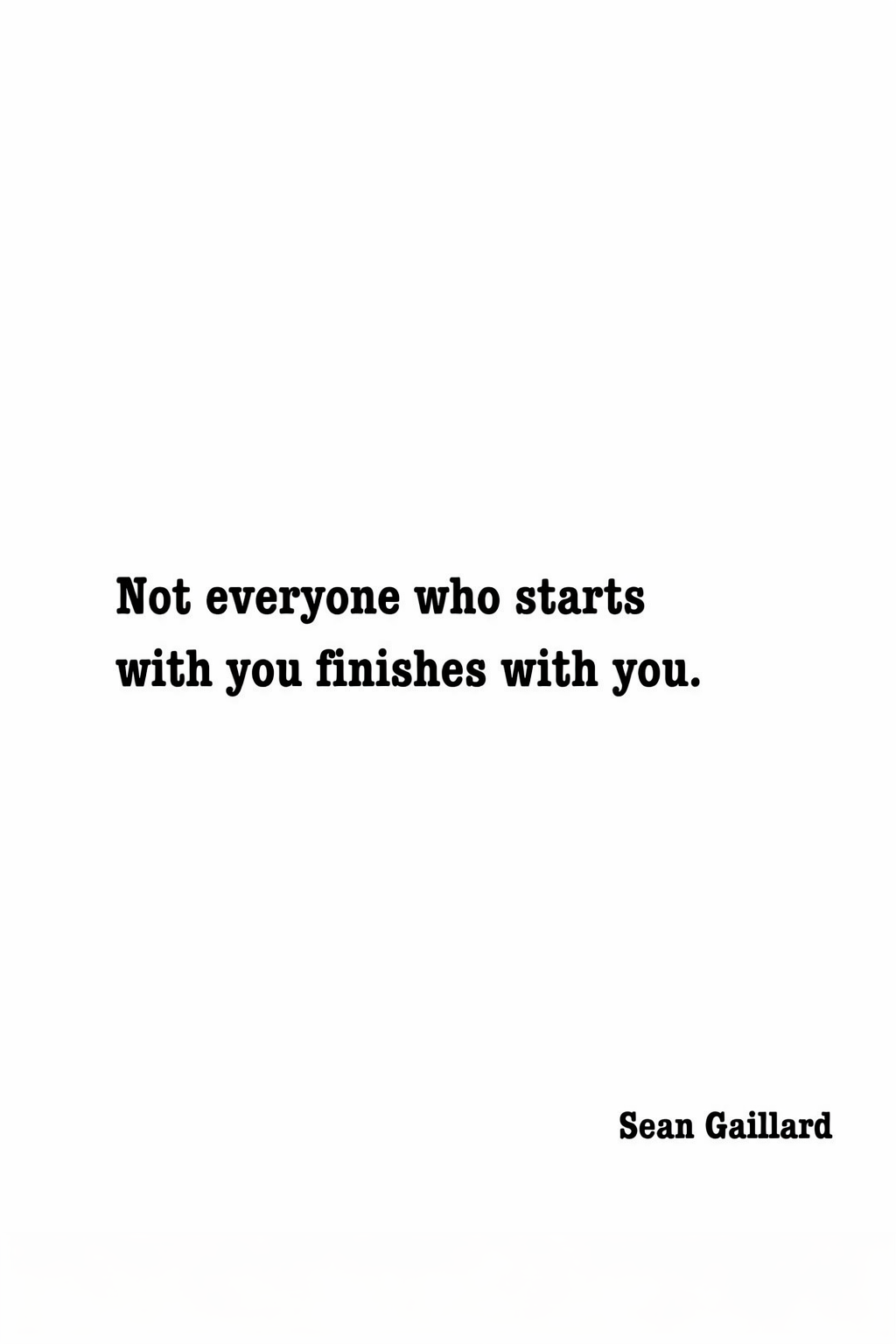
Some connections are for a season. They help us grow, reflect, and find our footing. Then, sometimes, the paths quietly diverge.
I am learning that clarity around values can be both grounding and lonely. It does not mean anger. It does not mean judgment. It simply means paying attention to what no longer fits.
I am choosing to keep moving toward what aligns with who I am becoming. I am choosing alignment over approval. I am choosing peace over proximity. With gratitude for what was. With honesty about what is.
Some mornings arrive heavier than others. You wake up carrying more than you expected, unsure where the weight came from, only knowing that it is there. In those moments, the quiet around your work, your words, and your efforts can feel louder than any criticism. This reflection comes from one of those mornings.
This blog post is a form of self-talk for me. It is equally written for anyone else who is struggling quietly right now.
Leadership can be deeply meaningful, but it can also be profoundly lonely. We are encouraged to share our thinking, our learning, and our growth. We are reminded that vulnerability builds trust and that authenticity matters. Still, there are times when we share something heartfelt. We direct it toward others or put it into the world with care, and nothing comes back. That absence can hurt in ways that are hard to explain.
I have learned that sometimes our ideas are not heard in our own backyard. That realization can sting, especially when the words came from a sincere and hopeful place. It is also why it is essential to find spaces and platforms where your voice can breathe. For me, that space is writing. It is blogging. It is podcasting. These are the places where I process, reflect, and continue learning out loud.
It is easy to fall into the trap of measuring impact by numbers. Views. Downloads. Likes. Shares. Over time, those metrics can quietly convince us that our work only matters if it reaches a certain volume. I am still unlearning that thinking. Today, I remind myself of something simple and grounding. If one person finds what they need in something I share, then the work has meaning. If one person feels seen or steadied for a moment, then the effort was worth it.
This reflection is a reminder to keep showing up anyway. It is an invitation to keep sharing your thoughts even when the response is uneven or delayed. It is a quiet act of trust in the belief that someone is listening, even when you cannot see them. The work of leadership is not about being the loudest voice in the room. It is about being a steady one.
I am writing this to remind myself that my voice still matters on the days when it feels unseen. I am also writing it for anyone else who needs permission to keep going without guarantees. The quiet does not mean you failed. Sometimes it simply means your words are traveling, settling, and finding their way to the right person at the right moment.
Hope does not always arrive with applause. Sometimes it shows up as resolve. Sometimes it shows up as consistency. Sometimes it shows up as choosing to center people over metrics and meaning over momentum.
For today, choosing to stay human in the work is enough.