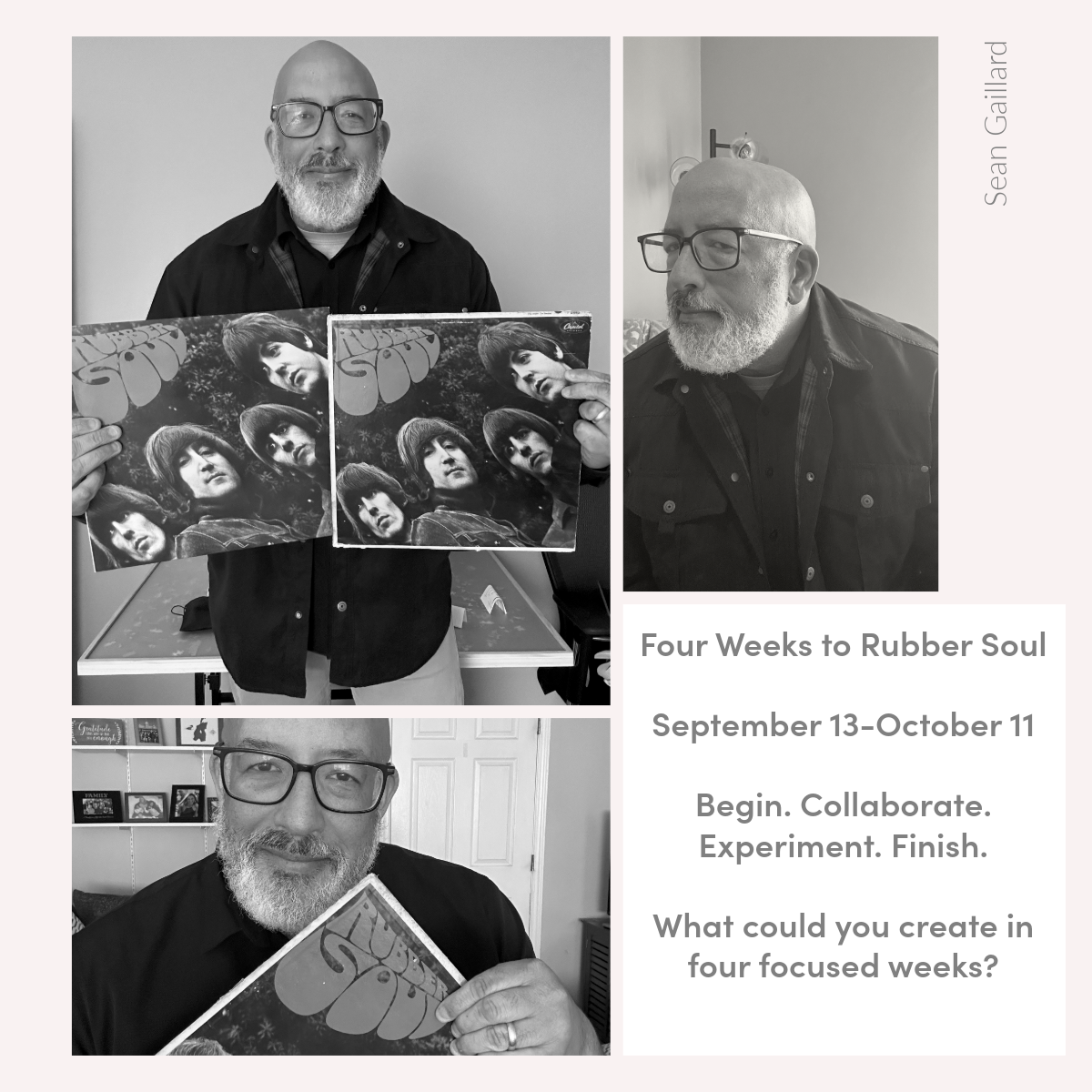
Welcome to the fourth and final week of Four Weeks to Rubber Soul. For the past three weeks, we have explored what it means to begin, collaborate, and experiment. Now we arrive at our final theme: Finish.
Our word for Day 22 is Commit because finishing begins with a decision. At some point, the experiment needs a commitment. Ideas become work when we commit to finishing them.
The Beatles understood that reality during the making of Rubber Soul. For all the creativity surrounding those sessions, there was also an immovable deadline. The Beatles needed to deliver a new album in time for the Christmas market. They could experiment with unusual sounds, rewrite songs, abandon takes, work through long sessions, and chase new ideas, but eventually they had to finish the record.
That deadline did not stop experimentation. It gave the experimentation somewhere to go. The ideas had to become songs, the songs had to become an album, and the album had to be finished.
I am thinking about commitment quite a bit these days. I am finishing my second book, Leadership Riffs, after months of writing, revising, questioning, discovering, and trying again. There comes a point in any creative project when the question has to change. We stop asking whether the idea could become something and start doing the work necessary to make it something.
The same is true for Four Weeks to Rubber Soul. I have made it through three weeks of daily blog posts and reels. The novelty and excitement of beginning have faded. I have experimented publicly, shared ideas that were still developing, and kept showing up even when the engagement sometimes disappointed me.
Now there are seven days remaining. This final week is less about asking, “Can I do this?” and more about saying, “I am going to see this through.”
Commitment matters because beginnings are exciting and experiments are full of possibility. Finishing asks something different from us. It asks us to keep showing up after the novelty disappears, continue when the response is quieter than we hoped, and stay with the work long enough to complete what we started.
The Beatles had a record to finish. I have a book to finish and seven more days of this creative journey to complete. You may have something waiting for your commitment too.
As we begin this final week, think about the unfinished work in your own life. What idea, project, dream, or creative pursuit deserves more than another someday? What would happen if you decided that now is the time to see it through?
That is where Finish begins. It begins with a commitment to the work and a decision to keep going until the work is complete.
I have been thinking a great deal about noticing lately.
My current morning reading is The Power of Mattering by Zach Mercurio, and one chapter in particular has stayed with me. The chapter explores noticing as the first step toward helping people feel they matter. That idea has lingered with me long after I closed the book.
Two recent experiences reinforced that lesson. Both of them occurred in close proximity to each other and I believe the timing of the impact is of significance. Recently, I have been recalibrating my approach and taking proactive steps to reach out to others. I have been in the occasional doldrums of wondering why the phone wasn’t ringing for me or why my shoulder wasn’t being tapped for invitations. I decided to just simply outreach and share.
In each instance, I reached out to someone. In each instance, my outreach was met with silence. Neither situation was catastrophic. Neither involved ill intent, at least as far as I know. Both, however, reminded me of something deeply human. We notice when we are not noticed. It can sting and it does leave a mark.
That realization could have easily led me toward disappointment or resentment. Instead, it led me toward reflection. I decided to flip my own paradigm of giving into the weight of those doldrums. I stepped back and took a pause to reflect.
As I looked inward, I reflected on the times that I may have missed noticing someone else. I thought about the times that I failed to really see someone. How often have I unintentionally done the same thing to someone else?
Leadership has taught me many lessons over the years, but this one reaches beyond leadership. Every one of us wants to know that our presence matters. Every one of us wants to know that someone saw us, heard us, and cared enough to respond. We crave to be valued and validated. Those connections sustain and inspire. We feel connection and belonging with others. Human connection is universal and is an essential component for our well-being.
Noticing is never just about acknowledgement. It is about communicating, “I see you. You matter.”
The opposite carries weight as well. Silence often says more than we intend.
My recent experiences became unexpected gifts. They reminded me to respond. They reminded me to follow up. They reminded me that connection rarely happens by accident. It happens because someone makes the intentional choice to notice another person.
The more I read Mercurio’s work, the more I believe that noticing is not simply a leadership competency. It is a human practice. Leaders certainly need it, but so do neighbors, friends, colleagues, spouses, teachers, and strangers.
Recently, I have also been immersed in the music of the Bill Evans Trio. Listening closely to those recordings reveals something remarkable. Three musicians are not simply playing at the same time. They are listening to one another. Every phrase is met with another phrase. Every musical idea is acknowledged, expanded, or gently redirected. Space is given. Responses matter. The music exists because each musician notices the others.
Leadership works much the same way.
Organizations become healthier when people feel noticed. Relationships deepen when people feel heard. Cultures of mattering begin with small moments of intentional attention.
Noticing is the first note.
Connection is the melody.
Mattering is what people remember long after the conversation ends.
Here’s to continuing the conversation.
Want to Continue the Conversation?
I am available to serve as a thought partner, speaker, and leadership coach for individuals, teams, and organizations seeking to build more human centered cultures. My work focuses on helping leaders create spaces where people feel seen, valued, supported, and empowered to succeed.
I would be honored to connect, listen, and explore how we might work together. Please feel free to drop me a line at sgaillard84@gmail.com and check out the links below here:
Sean Gaillard Founder & CEO | The Gaillard Group Author • Speaker • Leadership Coach
Here’s an old post from the archive that I am re-blogging. In leadership, we often times downplay dreams. Sometimes dreams are viewed as impractical and wasteful when it comes to the daily grind. I still maintain a dream as an unabashed fan of The Beatles that Paul McCartney and Ringo Starr are going to visit my schoolhouse.
Now that may seem impossible and you may dismiss me as a pitiful dreamer. Why not? Why not have a dream? Why not share that dream with others? As leaders, we are called to be human-centered. Dreams are what make us human. We must support conditions where others feel safe to share their dreams as well.
Here’s my dream that I am re-sharing with you. I hope you enjoy it. I would love to hear your dreams, too. Please feel free to leave something in the comments or share this blog on your social media channels and tag me.
Last week, I experienced what it means to feel diminished.
I will not go into the details because this reflection is about something larger than one moment. The experience left me feeling invisible. I felt like I did not matter. I felt like my strengths and gifts were not needed or invested in. The weight of that feeling stayed with me long after the moment passed.
That experience became a catalyst for reflection.
I started thinking about the moments in my life when I have felt diminished on both a personal and professional level. I also thought about the times when I may have unintentionally contributed to someone else feeling that way. None of us are immune from causing harm when we fail to truly see each other.
The opposite of diminishment is mattering.
I recently found myself deeply moved by an episode of Lainie Rowell’s podcast, “Evolving with Gratitude,” featuring Jennifer Breheny Wallace, author of Mattering: The Secret to a Life of Deep Connection and Purpose, Their conversation explored the human need to feel valued not simply for achievement or output, but for who we are and what we uniquely bring into the world. ((Check out that pivotal episode here.)
That conversation stayed with me because it helped put language around something I had already been feeling deeply. The concept of mattering fueled my own deep dive into human-centered leadership. It helped me better understand why so many people are emotionally exhausted, disconnected, anxious, and overwhelmed right now.
Those numbers point toward something much deeper than engagement surveys or workplace morale. They point toward a growing crisis of human disconnection and invisibility.
Many people are not struggling because they lack talent, intelligence, work ethic, or resilience. Many are struggling because they no longer feel seen.
People are struggling right now because they do not feel seen. They feel valued for output, production, compliance, metrics, or whatever bottom line is driving the moment. Many people no longer feel valued for their humanity, creativity, presence, compassion, wisdom, or unique gifts. Over time, that kind of culture wears people down emotionally, mentally, spiritually, and physically.
I know this because I have lived it.
There was a season where the stress of carrying invisibility, anxiety, pressure, and emotional exhaustion landed me in the hospital twice. The nervous system keeps score when people carry the weight of feeling unseen for too long.
That realization has been sitting with me deeply lately.
When I think about the collaborative spaces that have brought me healing and renewal, I notice a common thread. My work with Sonia Matthew through “Leading While Human,” my conversations with Donya Ball on “Real Riffs,” and the gathering space we created through “The Disruption Table” alongside Marcel Schwantes have all centered around one truth: people want to feel seen, heard, valued, and connected.
Those collaborations have mattered to me more than I can fully express.
Each conversation became a reminder that leadership is not about performance alone. Leadership is about presence. It is about creating spaces where people can bring their full humanity into the room without fear of diminishment. Those conversations helped lessen my own sense of invisibility. They reminded me that my voice still mattered. They reminded me that I still had gifts worth sharing.
I believe many people are quietly carrying this same feeling right now.
Some are sitting in meetings feeling unseen. Some are showing up to workplaces where their gifts are overlooked. Some are leading teams while privately wondering if they matter at all. Some are exhausted from environments that celebrate output while neglecting the human beings producing it.
People do not need another gimmick, slogan, or leadership trend.
People need cultures of belonging.
My father used to say, “Everybody gets off the bench. Everybody plays.”
I carry those words with me more now than ever before.
Cultures of belonging are built when people are invited into the game. They are built when strengths are recognized. They are built when encouragement becomes intentional. They are built when someone chooses to pause long enough to truly see another human being.
We cannot wait for the perfect leader, perfect initiative, or perfect professional learning experience to create that kind of culture. We create it ourselves through everyday acts of listening, encouragement, trust, compassion, and belief in one another.
Everyone has a gift to share.
Sometimes the most important act of leadership is helping someone remember that their gift still matters.
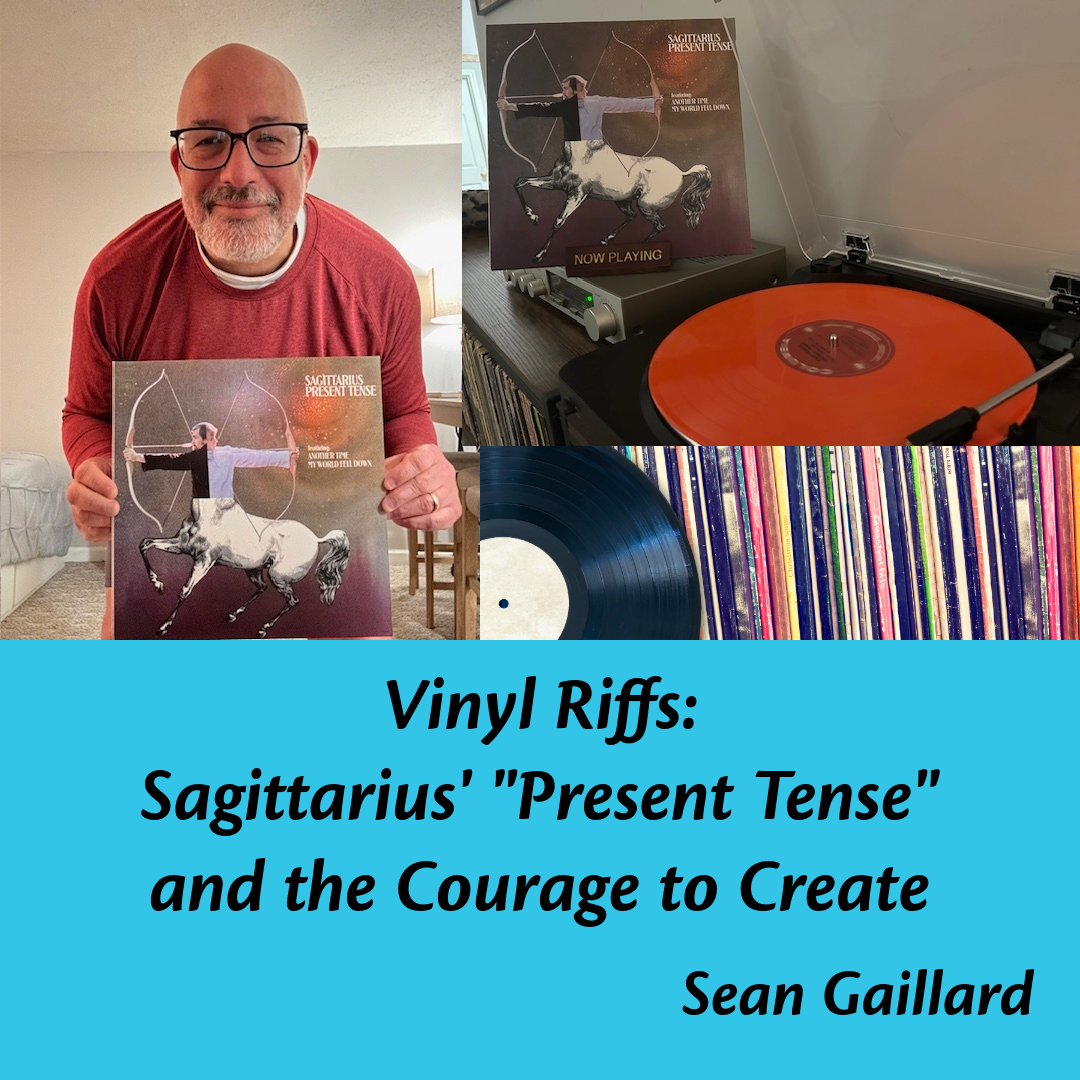
Years ago, I remember reading about a hallowed single featuring members of the Wrecking Crew. The song was “My World Fell Down,” credited to a group called Sagittarius. The truth is that Sagittarius was never really a group. It was something more elusive and, in many ways, more meaningful.
Released in 1967, “My World Fell Down” felt like it existed in the same sonic universe as what Brian Wilson was building with The Beach Boys. Think about “Good Vibrations” and the unfolding ambition of SMiLE. The form was shifting. The rules were dissolving. Pop music was becoming something expansive, layered, and deeply expressive.
That single led me, years later in the late 1990s, to track down a CD reissue of Present Tense. That is when I learned that the architect behind Sagittarius was Gary Usher, a collaborator with Brian Wilson of The Beach Boys who co-wrote “In My Room” and produced The Notorious Byrd Brothers. Alongside him was another studio visionary, Curt Boettcher.
What they created together on Present Tense was not just an album. It was a sanctuary.
A Studio Project That Became Something More
Sagittarius was never built for the stage. It was built in the studio, piece by piece, with contributions from elite session musicians and collaborators. It was a collective before that word became fashionable. It was a shared space where ideas could breathe.
At the time, Gary Usher was an in-demand producer at Columbia Records. The expectations were constant. The pressure to deliver was real. The work never stopped.
He created something outside of that system.
Sagittarius became his creative outlet. It became a place to experiment, to reconnect with meaning, and to create without the weight of constant expectation.
There is a story that has stayed with me from those liner notes I read years ago. Usher was hesitant to fully reveal himself as the force behind Sagittarius. He feared that doing so would only bring more demands from the label. More work would follow. More pressure would build. Less space would remain.
He recorded during off hours. Nights and weekends became the canvas.
That tells you everything you need to know about this album.
The Sound of Freedom and Trust
Released in 1968, Present Tense moves across genres with ease:
Baroque pop
Sunshine pop
Psychedelia
It is unified not by category, but by feeling.
You hear it immediately in the opening track, “Another Time.” The harp enters. The harmonies follow. The song feels warm, sublime, and almost otherworldly. It sounds like something beyond the everyday. It sounds like possibility.
Curt Boettcher’s songwriting and arranging shine throughout the record. His work here would extend into The Millennium, another project that stretched the boundaries of what pop music could be.
Across the album, the listener hears:
Layered vocal harmonies that feel choral and immersive
Studio experimentation including phasing and multi-track recording
Orchestral textures that elevate each arrangement
There are also moments of bold experimentation. Usher and Boettcher explored musique concrète, early synthesizer textures, and even incorporated elements connected to The Firesign Theatre. These were not safe choices. They were necessary ones.
This was not about chasing a hit.
This was about making something that mattered.
The Return of Present Tense
That is why this reissue matters so much.
Music On Vinyl has brought Present Tense back into the world with care and intention. This Netherlands-based label is known for its commitment to quality, and it shows here.
This limited reissue of 1000 copies is pressed on 180-gram vinyl. The packaging is thoughtfully reproduced on high-quality cardstock. The sound is pristine.
Every detail comes through:
The depth of the harmonies
The nuance of the arrangements
The studio innovations that defined the original sessions
When I drop the needle on “Another Time,” I hear something that still stops me in my tracks. Those opening notes feel like the sound of heaven.
There is love in this reissue. The same kind of love that went into creating the album in the first place.
What compels me most about Present Tense is not just how it sounds. It is why it exists.
Gary Usher needed an outlet.
He needed space to create without expectation. He needed room to experiment without judgment. He needed to reconnect with the part of himself that made the work meaningful.
That resonates deeply.
In leadership, in music, and in life, the demands can take over. Expectations can define the work. Output can overshadow purpose.
Present Tense is a reminder that:
Space to create is essential
Trust in collaborators elevates the work
Courage to explore leads to meaning
This album is the sound of freedom. It is the sound of collaboration. It is the sound of quiet courage.
It is the sound of someone protecting their creative soul in a world that kept asking for more.
Take Your Present Tense for Present Tense
Every time I return to this album, I am reminded to be present in the work that matters.
To create. To collaborate. To trust.
To make space for something meaningful, even if it does not fit the mold.
I would love to hear how this album resonates with you. What do you hear when you listen to Present Tense? What does it bring out in you?
Listen and Subscribe: Vinyl Riffs with Sean Gaillard
This album will be featured in an upcoming episode of Vinyl Riffs with Sean Gaillard. If this resonates with you, I invite you to listen, subscribe, and share the journey.
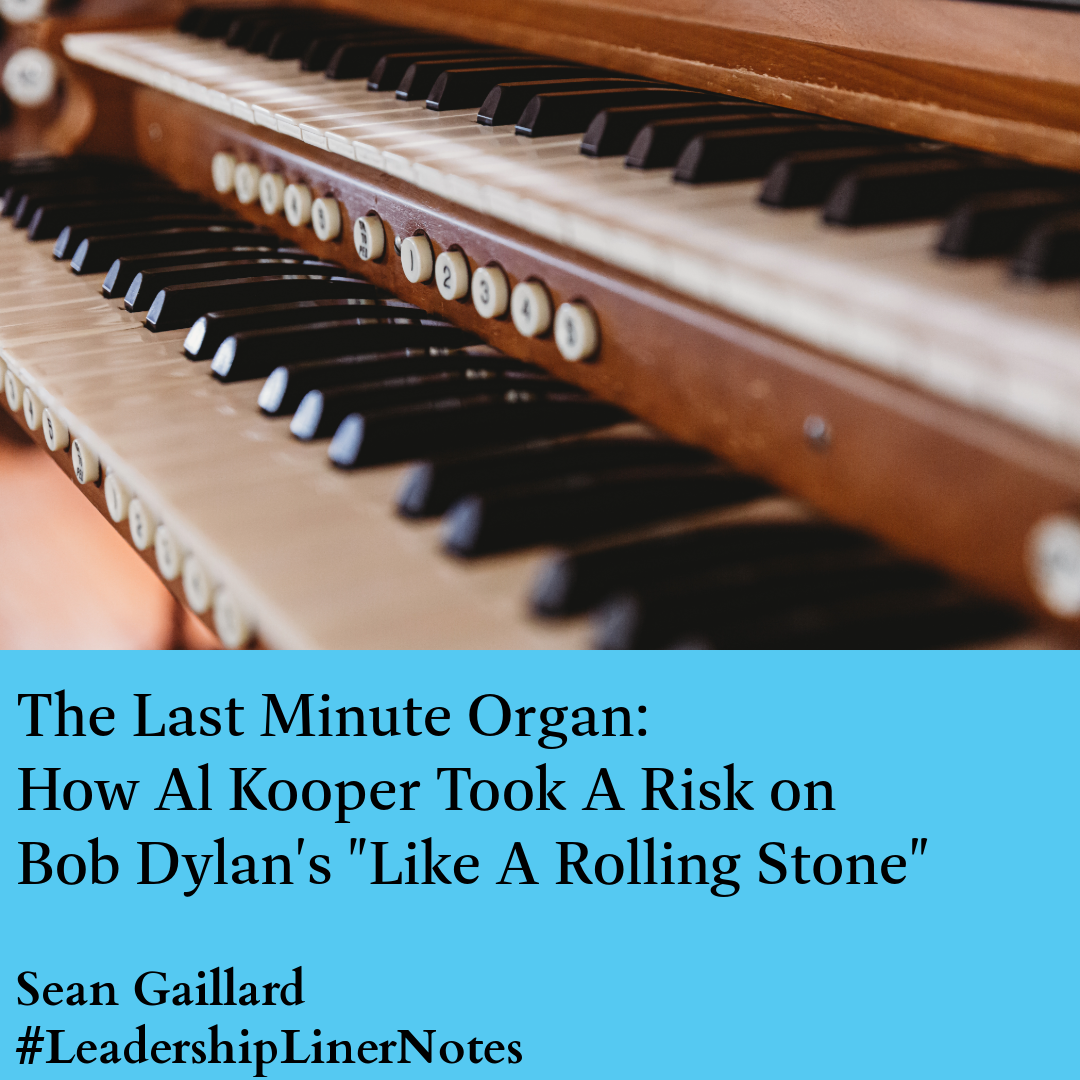
The organ was an accident and Al Kooper was not an organist.
It is June 1965. Bob Dylan is in a Columbia Records studio in New York, pushing further away from the acoustic folk sound that made him a voice of protest and into something louder, riskier, and electric. His recent album, Bringing It All Back Home, has already signaled that shift. The influence of The Beatles is in the air, and Dylan is not looking back.
Producer Tom Wilson invites Kooper to the session. Kooper shows up with his guitar, even though he is there to observe. As the musicians settle in, one presence changes everything. Mike Bloomfield begins warming up.
Kooper listens.
He hears something different. He hears a level of artistry that causes him to pause. He makes a decision in that moment. He sets the guitar aside. He recognizes that he is not the right voice for that part of the song.
That decision does not end his contribution. It creates space for it.
As the band works through early takes, Kooper hears something else. He hears a part that is not there yet. He notices an organ sitting in the corner with an empty chair beside it. He shares the idea with Wilson. Wilson pushes back and reminds him that he is not an organist.
Kooper does not argue. He does not retreat.
He walks over and plays anyway.
Kooper would later recall, “He just sort of scoffed at me. He did not say no, so I went out there.” He slips into the track, feeling his way through the chords, slightly behind the beat, searching for the right touch.
Wilson notices. Bob Dylan notices more.
Dylan tells him to stay.
Later, Dylan insists that the organ be turned up in the mix.
The song is “Like a Rolling Stone.” It becomes a seismic shift in popular music. It stretches past six minutes. It blends poetry with electric instrumentation. It challenges what a hit song can be. It shows up at Newport and divides a crowd that expected something safer and more familiar.
That organ part, the one played by someone who was not supposed to be there, becomes essential to the song’s identity. It carries emotion. It adds tension. It lifts the track into something timeless.
You cannot imagine the song without it.
This is the leadership riff.
Kooper did not force his way in with the instrument he knew best. He listened first. He stepped back when needed. He paid attention to what the moment required. He trusted the idea that came to him. He acted on it, even when others questioned his credibility to do so.
Leadership asks the same of us.
There are moments when the room is filled with voices that seem stronger, louder, and more accomplished. Those moments can push us to the margins if we let them. Those moments can also invite us to listen more deeply and find where our contribution truly fits.
Kooper’s choice to set aside the guitar was not a failure. It was awareness. It was humility. It was the beginning of something better.
His decision to move to the organ was belief. It was risk. It was action.
That combination changed the song.
Too often, we allow doubt and outside voices to close the door before we ever reach for the handle. We convince ourselves that we are not ready, not qualified, or not invited. We stay seated when the chair is open.
Kooper reminds us to get up and move.
He reminds us that contribution is not always about mastery. It is about awareness, courage, and timing. It is about trusting that what we hear and feel has value.
He reminds us to play on anyway.
In this season, that lesson matters.
There will be rooms where you feel outmatched. There will be moments when someone questions your role before you even begin. There will be ideas that arrive quietly and ask you to take a step that feels uncertain.
Take it.
The work needs your voice, even if it comes through a different instrument than the one you planned to play.
That is how breakthroughs happen.
That is how songs change.
That is how leadership finds its sound.
Postscript
I am grateful to my good friend Max Pizarro for the conversation that sparked this reflection. He encouraged me to spend time with this story and to listen more closely. That nudge led to this piece and to a deeper appreciation of what it means to trust the moment and step into it.
I can already hear this one spinning forward as a future episode of Vinyl Riffs with Sean Gaillard. Stay tuned for that podcast episode to drop soon.
We all want to be a part of something that is meaningful and that gives a sense of belonging. That truth has never felt more real to me than it does right now. It is not just a passing thought. It is something I carry with me in the quiet moments and in the spaces where I am trying to make sense of where I am and where I am going.
Sometimes the hardest truth to carry is that your own backyard may not hear your song the way it was meant to be heard. For me, that is not just a metaphor. I can point to moments that still sit with me. I remember sharing the idea for #CelebrateMonday in a meeting and being laughed at. That idea later grew beyond those walls as schools across the country and beyond began using it to build culture and recognize the good in their communities. I have shared #InstantPD, presented on it, and believed in its potential to create quick, meaningful learning for teachers, yet it never fully took root in the schools and district where I served. I have stood as a finalist for North Carolina Principal of the Year and still felt like I was on the outside of that circle, never quite included in the way I had hoped. I think about principal meetings where I would sit alone, not quite feeling like I fit in, with no one saving me a seat. I think about presenting at local and state conferences and seeing small turnouts for sessions I poured myself into. I think about traveling to state and national conferences on my own without a team beside me, navigating those spaces as an individual rather than as part of a group. These are not grievances. These are truths. They have shaped how I understand what it means to feel like an outsider in my own professional community.
That realization has forced me to look inward in ways that are both honest and uncomfortable. I have had to sit with the reality that the spaces I thought would affirm me have often been quiet. That silence can feel heavy. It can make you question your voice and your place.
I have felt adrift in that silence.
At the same time, I know that this season has been both joyful and agonizing. There have been moments of clarity where I feel aligned with the work I am doing. There have also been moments where I question everything and wonder if any of it is landing with anyone beyond me. That tension is real. It is part of what it means to be human in this work.
What I am learning is that peace cannot be dependent on whether others hear the music.
It has to come from within.
I have to be willing to be transparent with myself. I have to face the truths of my past, the realities of my present, and the uncertainty of my future without turning away. That kind of honesty is not easy. It requires me to separate the events of failure from my identity. It requires me to acknowledge the hurt without allowing it to define me. It requires me to keep going even when the path forward is not clear.
The absence of recognition does not mean the music is wrong.
It means I am still in the process of finding my people.
There are people out there who will recognize this sound. They will lean in. They will connect with what I am creating in a way that feels real and mutual. They will not just hear the dream. They will help me play it louder. That belief matters, even on the days when it feels fragile.
At the same time, I am coming to terms with another truth.
No band is going to come calling for me.
That realization is not defeat. It is clarity.
It is my cue to build something of my own.
Instead of waiting to be called in or tapped on the shoulder, I am choosing to create my own spaces and invite others in. I am doing that through the work I am building with my podcast projects and through the Disruption Table webinar, where leaders from different spaces can come together in honest conversation. I am doing that in collaboration with Dr. Donya Ball as we create a space for “Real Riffs,” a podcast that is grounded in truth, reflection, and the voices of those who want to be part of something real. That work is coming to life in April, and it represents more than a project. It represents a shift in how I see my role in this work.
If I want a space where belonging is real, where voices are valued, and where the work carries meaning, then I have to create it. I have to be willing to take the same risks I have been waiting for others to take with me. I have to trust that what I am building has value, even before anyone else affirms it.
This is what leading while human looks like for me right now.
It is holding joy and struggle in the same space.
It is continuing to create even when the response is quiet.
It is choosing peace within myself while still seeking connection with others.
It is believing that there is a place for this work and being willing to build that place if it does not yet exist.
I am still learning.
I am still searching.
I am still here.
There is a sound within me that is not finished.
I am going to keep playing until it finds its way.
A Guest Blog Post for Dave Burgess Consulting, Inc!
Recently, I had the honor of writing a guest post for my publisher, Dave Burgess Consulting, Inc.! Their support goes back to the very beginning, when the team believed in an idea I had for a book. That idea became The Pepper Effect—my mash-up love letter to The Beatles and education. I’ll always be grateful for their belief in this project.
This new guest post grew out of some reflections I’ve been having on The Pepper Effect. It was a refreshing chance to wander down a meaningful rabbit hole as I continue work on my next book, Leadership Riffs, also with Dave Burgess Consulting.
You can read the post here: What’s Right: A Pivot Into Bright Spots. I’d love to hear your thoughts! Leave a comment, share it, or tag me on your favorite social media platform so we can keep the conversation going.
A huge thank-you to Dave Burgess and Tara Martin of #dbcincbooks for their belief, encouragement, and ongoing support!
Spinning a New Track: Announcing My Next Book Leadership Riffs
As I write this blog on an early Saturday morning, the soulful sounds of jazz guitarist Wes Montgomery are playing in the background. I can’t think of a better soundtrack to accompany this announcement: my next book is on the way, Leadership Riffs: Harmonizing Inspiration, Innovation, and Impact.
In music, a riff is a catchy, repeated musical phrase or pattern—something that grabs your attention, moves the song forward, and stays with you long after the final note. That’s the heart of this book: exploring the powerful, repeatable moves that leaders can make to inspire others, spark innovation, and create lasting impact.
I am deeply honored to partner once again with the amazing team at Dave Burgess Consulting, Inc. Their belief in my first book, The Pepper Effect, a mash-up love letter to The Beatles and school leadership, meant the world to me. Their continued support of Leadership Riffs is just as heartfelt and I am filled with gratitude.
Imagine leadership as a beautifully orchestrated album:
Each decision is a purposeful chord
Each collaboration is a blend of voices in harmony
Each courageous innovation becomes a memorable melody
Leadership Riffs will serve as a guidebook for educational leaders. It will blend timeless lessons from legendary musicians with practical, actionable strategies for leading schools and teams. This is about crafting leadership that grooves with authenticity and resonates with those we serve.
Publishing The Pepper Effect was a dream come true. Now I’m thrilled that it will have a “bandmate” in Leadership Riffs. If you’d like to revisit The Pepper Effect or read it for the first time as I continue work on the new book, you can find it here on Amazon.
I invite you to join me on this journey. Follow along here on the blog for behind-the-scenes updates and maybe a few surprises along the way.
Stay tuned and be sure to follow the conversation on #LeadershipRiffs via X, BlueSky, Instagram, Facebook, and LinkedIn.
In the meantime, let’s keep the vinyl spinning and move forward with the kind of inspiration that stays at the top of our leadership playlist. The kind that makes the world a better place for others.
Signing the book contract for #LeadershipRiffs! Photo Courtesy of Courtney Gaillard