A simple riff in music can be unforgettable. Consider Keith Richards’ iconic guitar hook on The Rolling Stones’ “(I Can’t Get No) Satisfaction.” A handful of notes became one of the most recognizable sounds in rock and roll history. Sometimes a simple musical idea can leave a lasting impression.
There is another kind of riff that I find equally fascinating. It is the free flow of ideas, thoughts, and questions that happens when we feel comfortable enough to explore unfinished thoughts with someone else. There is no script or predetermined destination. There is simply the freedom to think aloud, listen, respond, and see where the conversation takes us.
When people listen and respond without judgment or competition, something magical happens. There is synergy, connection, and trust. I think of jazz musicians like Miles Davis and John Coltrane, listening and responding to each other through their instruments. One musician introduces an idea. Another builds upon it. Someone takes it somewhere unexpected. Together, they create something that might never have emerged independently.
I love those moments when a conversation becomes a genuine riff. There is no pressure to have the perfect answer or even the right words. We can stumble, explore, laugh, reconsider, and discover something new together. A great riff is not always about having the right notes. Sometimes it is about finding the right people who are willing to listen, respond, and create something alongside us.
Those connections matter. The people who give us the freedom to think aloud and make us feel that our voices matter are worth celebrating. They remind us that some of our most meaningful discoveries happen when we are willing to listen as much as we contribute.
Who are the people in your life who make it safe to riff, explore, stumble, and discover something new? Have you told them lately how much their voices matter?
There is something that always brings a smile to my face when I look at my calendar and see the words Record with Donya. Our monthly conversations on Real Riffs with Donya Ball have become one of the most rewarding and enriching creative collaborations I have experienced. We have now recorded six episodes, and I genuinely look forward to each opportunity to connect, reflect, and explore the realities of educational leadership.
What I especially appreciate is how naturally our conversations unfold. We have reached the point where there is no elaborate preparation, no scripted questions, and no predetermined agenda. We simply hit record and start riffing. There is something refreshing about allowing a conversation to develop organically, particularly when both participants bring trust, mutual respect, and a willingness to listen.
The Art of Riffing
I often think about the similarities between our conversations and a jazz jam session. Great improvisation requires more than individual talent. It requires deep listening, trust, and an understanding of what another musician brings to the performance. One musician introduces an idea, another builds upon it, and something new emerges through the collaboration.
That is the dynamic I value in working with Donya. We challenge and expand each other’s thinking in a supportive and trusting environment. Donya brings thoughtful perspectives and a wealth of leadership experience to our conversations, and I appreciate how our exchanges often lead me to consider ideas from a different angle. We are not competing for the spotlight. We are simply having meaningful conversations and learning from one another.
The Sixth Riff: Getting Into the Real Stuff
Our latest episode, The Sixth Riff: Educelebrity Culture, Brokenness, and the Courage to Lead, explores some challenging realities of educational leadership.
We examine the educelebrity phenomenon and the tension between visibility, recognition, and authentic leadership. We also discuss the brokenness that leaders sometimes experience in education, including disappointment, isolation, and the challenge of maintaining a sense of purpose when the work becomes difficult.
These are conversations that deserve more attention. We approach them with honesty, reflection, and a willingness to acknowledge that neither of us has all the answers. That is the spirit of Real Riffs. We are unflinchingly real about the profession we care deeply about and the human experiences that accompany leadership.
Looking Ahead
I am excited that our next episode in November will be recorded in person! After six virtual conversations, it will be a welcome opportunity to continue our discussions in the same room. We will maintain the approach that has worked so well for us: no script, no agenda, and plenty of room for spontaneous conversation.
I am grateful for this collaboration and for everyone who has listened and supported Real Riffs. This experience continues to reinforce something I believe deeply about leadership and creativity. Meaningful collaboration grows through trust, reciprocity, and the willingness to make room for another person’s voice.
Sometimes the best ideas emerge when we stop trying to control every moment and simply listen to one another. That is what makes a good jazz session, a good conversation, and a good collaboration.
Listen to The Sixth Riff
The Sixth Riff: Educelebrity Culture, Brokenness, and the Courage to Lead
We appreciate every listen, share, review, and subscription. Please subscribe so you do not miss our November episode, when we will be recording together in person!
Thank you for supporting Real Riffs and being part of these conversations!
I keep coming back to the focus it took for The Beatles to finish Rubber Soul. They were working against an immovable deadline, with EMI needing a new album ready for the Christmas market. A deadline can certainly sharpen our attention, but I wonder if something else was driving them. Maybe they knew they were onto something. Maybe they could feel the music changing and did not want to lose the momentum.
Consider “I’m Looking Through You.” The Beatles first worked on the song on October 24, spending hours developing a version that ultimately did not make the album. They returned to it on November 6 and tried again. They still were not satisfied. Four days later, with the deadline looming, they started over once more and finally found the arrangement we know from Rubber Soul. The song was completed with additional vocals and handclaps during their marathon final recording session on November 11.
That is focus. Focus is not always sitting down, locking in, and getting everything right on the first attempt. Sometimes focus means returning to something that is not working. It means staying with an idea long enough to discover what it can become. The Beatles could have settled for one of the earlier versions. Instead, they kept listening, adjusting, and returning to the work.
Focus is not always easy for me, either. My own creative work has plenty of starts and stops. Doubt creeps into the process. Confidence disappears. Other responsibilities compete for attention, and sometimes the easiest response is to put the work aside and promise myself that I will return later.
This daily series has taught me something about focus. Showing up every day for Four Weeks to Rubber Soul has required me to keep returning to an idea, writing about it, recording a reel, and putting it into the world. The discipline has helped me focus, but it has also helped me appreciate what focus actually requires.
Today’s word is Focus, but focus cannot simply be something we practice for one ephemeral day. It is something we choose again tomorrow. We return to the song. We return to the page. We return to the idea that still needs our attention.
The deadline may get us into the room. Focus keeps us there long enough to finish something that matters.
This is Day 15 of Four Weeks to Rubber Soul, which means we have reached the halfway point of our month together. We have spent the past two weeks exploring the creative journey The Beatles took during the fall of 1965 as they recorded Rubber Soul along with “Day Tripper” and “We Can Work It Out.” Those two songs were released separately from the album as their first double A side single.
I am grateful for everyone who has followed these daily blog posts and reels, shared them, reposted them, or offered a nudge of encouragement along the way. If you have missed a day or fallen behind, there is no checklist, deadline, or test waiting at the end. Creativity does not always move according to a schedule. Sometimes we need room to explore, wander, return, and move at the pace that helps the work grow.
Today also begins a new week and a new theme: Experiment. Our word for Day 15 is Curiosity, because experimentation usually begins with one of the simplest and most powerful creative questions we can ask:
What if?
That question seems especially fitting for Rubber Soul. The Beatles were increasingly interested in finding different sounds, trying unfamiliar instruments, and pushing beyond the musical boundaries that had defined their earlier recordings. George Martin later recalled that they were constantly experimenting with unusual sounds and bringing new ideas into the studio.
Imagine some of the questions surrounding those sessions. What if George Harrison tried a sitar on “Norwegian Wood?” What if a piano part could be manipulated to create a completely different texture? What if another harmony changed the emotional feel of a passage? What if an unexpected percussion sound gave a song exactly what it needed?
Those questions may be imagined, but the experimentation behind them was very real. George Harrison brought the sitar into “Norwegian Wood,” one of the album’s most distinctive sounds and an early sign of his growing fascination with Indian music. The larger spirit of Rubber Soul was one of exploration, with the band deliberately searching for sounds and approaches they had not used before.
“What if?” is an essential question for any creative pursuit because it creates room for possibility. It moves us beyond the safety of what we already know and invites us to explore what might happen next. Curiosity opens the door to conversation, experimentation, collaboration, and discovery.
The best part is that asking the question does not require knowing the answer. Creativity rarely gives us that luxury. Sometimes we simply have to follow the idea, try the sound, write the paragraph, make the call, invite the collaboration, or test the possibility.
What question are you willing to follow as you work to ship something that matters? What question could invite a new idea, a different perspective, or an unexpected collaboration into your work?
Curiosity gives us permission to wonder before we know. Experimentation gives us permission to find out.
As we wrap up week two of “Four Weeks’ to Rubber Soul,” our landing for today’s word is “Give.” The word blends in as suitable ending for the 2nd week theme of the series being “Collaborate.” Each member of The Beatles willing give of their strengths, ideas, and talents on each track of the “Rubber Soul” album. Their actions serve as a solid lesson for what it means to be a supportive collaborator in the creative process.
For us, the lesson from The Beatles is to give your part everything you have. On Rubber Soul, nobody simply showed up and occupied a role. John brought songs, voice, rhythm guitar, vulnerability, humor, and increasingly personal writing. Paul brought songs, bass lines, harmonies, musical imagination, and an instinct for arrangement. George brought guitar textures, harmony, songwriting, and the sitar that helped transform “Norwegian Wood.” Ringo brought the pulse, feel, personality, and exactly the kind of drumming each song needed. George Martin and the Abbey Road team also gave their creativity to the record. Each groove on the album is filled with sonic excellence.
The lesson becomes bigger than The Beatles. Giving does not require being the person in the spotlight. Giving means bringing your full contribution to the work because the work matters and because your bandmates matter. When you have a full balance of mattering among bandmates, the desire to give of yourself is heightened. It’s a beautiful thing when it happens in within the realm of any team, organization, or creative collaboration.
You may be wondering what is it that you have to give to a band. Ringo Starr once said in The Beatles Anthology documentary that when The Beatles got to focusing on the music, they put in “a thousand percent.” He is talking about this in relation to their final studio album, Abbey Road. That 1000% contribution factor is all over Rubber Soul. Each Beatle brought something different, but each one gave himself to the song.
You do not have to give what somebody else gives. Give what is yours to give. Bring your voice. Bring your gift. Bring your effort. Believe that you have to give matters and helps make the world a better place. The band becomes stronger when everyone gives something to the song.
Today is Day 13 of Four Weeks to Rubber Soul, and the word for today is Persist. I have to admit that I am feeling this word in a very real way right now because this series has been more emotionally challenging than I expected.
I have been showing up every day, writing blog posts, recording reels, sharing ideas, and inviting people into the conversation. I am grateful for every person who has commented, responded, or offered encouragement, but the overall response has been pretty quiet. I would be lying if I said that did not hurt. When you put something personal into the world, you hope someone will meet you there. You hope the work will spark a thought, a conversation, or some kind of connection.
There have been moments during this series when I have wondered why I am doing it. I have asked myself whether anyone really cares about these daily reflections on creativity and “Rubber Soul.” I have wondered whether I am simply talking into the silence. Those are uncomfortable questions, but I think they belong in a series about creativity because the creative life is not always filled with applause, encouragement, or visible signs that the work is reaching anyone.
One of the things I envy about The Beatles is that they had a band. They had people in the room who could hear an idea, challenge it, improve it, add something unexpected, or simply help carry the weight of the creative process. “Rubber Soul” was created through that kind of interaction. John could bring something to Paul. Paul could bring something to John. George and Ringo brought their own voices, ideas, musicianship, and perspectives into the room. They did not have to create in complete isolation.
I do not have that kind of band for this project, and I suspect many people who are creating something meaningful do not have one either. Creativity can be an incredibly solitary pursuit. There are days filled with loneliness, uncertainty, doubt, and silence. You make the thing, send it into the world, and sometimes hear almost nothing in return. You still have to decide whether you are willing to return to the work the next day.
That is where persistence becomes important. Persistence is not pretending that the silence does not hurt. It is not acting as though encouragement, collaboration, or connection do not matter. Those things matter deeply. Persistence is choosing to continue even when the response does not match the effort and even when you wish someone were sitting beside you helping you figure out the next chord.
“Rubber Soul” reminds me that meaningful creative work often develops because people stay with the idea. Songs changed. Lyrics evolved. Arrangements were shaped and reshaped. John Lennon’s early approach to “In My Life,” for example, began as a much more literal reflection on places from his Liverpool past before developing into something more universal and emotionally resonant. The song became something greater because the creative process continued.
Persistence does not always mean stubbornly holding onto the first version of an idea. Sometimes it means staying with the work long enough to discover what the idea is trying to become. Sometimes it means returning the next morning when yesterday felt disappointing. Sometimes it simply means making the next thing even though you are not sure anyone is waiting for it.
I am beginning to realize that this may be one of the reasons I need to keep doing “Four Weeks to Rubber Soul.” My hope is not simply to talk about an album I love. My hope is that these daily blogs and reels might reach someone else who is creating alone. Maybe there is a writer, artist, educator, musician, podcaster, leader, or dreamer out there who does not have a band either.
If that is you, I hope this series can offer a little companionship. I hope these daily reflections can remind you that somebody else understands what it feels like to keep creating through uncertainty. I hope I can be a kind of bandmate from a distance, someone reminding you to keep working the song, keep following the idea, and keep believing that the creative process itself has value.
I need that kind of bandmate, too.
Maybe that is part of what I am discovering through this project. Creativity may sometimes be solitary, but it does not have to leave us completely alone. We can encourage one another. We can notice the work. We can remind each other that the quiet seasons still count and that the work happening inside us may not always be visible through comments, likes, or shares.
I am going to persist. I am going to keep writing, recording, reflecting, and following this monthlong journey wherever it leads. I still hope more people join the conversation, and I am not going to pretend that the response does not matter to me. At the same time, I am learning that the work can still matter even when the room feels quiet.
Maybe someone out there needs a bandmate today. Maybe I do, too. Until we find one another, we can keep making the music and reminding each other that we are not creating entirely alone.
That is my question for Day 13: What helps you persist when creativity feels lonely? If you are creating something and the room feels quiet, I hope you will keep going. I will be over here trying to do the same. Know that I am pulling for you and that I believe in what you have to offer.
Keep creating. Keep listening. Keep following the song. Thanks for being in the band!
Today is Day 11 of Four Weeks to Rubber Soul, and our word is Mattering.
Mattering is a word that carries a great deal of meaning for me. People need more than a place in the room. We need to know that we are seen, heard, valued, and needed. We need to know that our presence makes a difference and that our gifts have a place in the band.
Rubber Soul offers a small example of that idea. John Lennon and Paul McCartney will always be at the center of The Beatles songwriting story, yet George Harrison and Ringo Starr also have meaningful space on the album. George contributed “Think for Yourself” and “If I Needed Someone.” Ringo stepped into the spotlight as the lead vocalist on “What Goes On,” which also carried his name in the songwriting credit alongside Lennon and McCartney.
I do not want to romanticize The Beatles. They experienced tension, disagreement, frustration, and complicated relationships along the way. They were human, just like us. Their story still reminds us that collaboration does not require perfect relationships. It does require making room for other people to contribute.
That is where I see the connection to mattering. A band becomes stronger when people know there is room for their voice. A team becomes stronger when people know their strengths are noticed. A community becomes stronger when people understand that they are not simply occupying a chair. Their presence, perspective, and contribution matter.
Mattering has become significant in my own leadership journey because I have seen what happens when people feel invisible. I have also seen the difference that one moment of affirmation can make. Sometimes it is noticing someone’s effort. Sometimes it is asking for an idea or opening the door for someone else to lead. Sometimes it is communicating through our words and actions, we need what you bring to this band.
Those moments do not have to be grand. George gets a song. Ringo gets a vocal. Someone else gets the microphone. Someone gets invited into the conversation. Someone hears their contribution named and appreciated. Small moves can carry tremendous weight when they help people understand that they matter.
Mattering asks us to move beyond simply inviting people into the room. It asks us to notice what they bring once they arrive. It asks us to listen for their voice, recognize their strengths, and create opportunities for those strengths to contribute to something larger.
Rubber Soul works because it sounds like a band stretching together. Different voices, different gifts, and different personalities all contribute to the record. Our organizations, classrooms, teams, creative communities, and relationships need that same spirit.
Take a look around your band today. Consider who needs to know that you see them, whose voice needs more room, and whose gift you have noticed but have not yet named. Mattering grows when we help another person understand a simple and powerful truth: You are here. I see you. We need what you bring.
Today is Day 8 of Four Weeks to Rubber Soul, and we begin a new theme in our four week journey. This week, we will explore the different ways creativity invites us to collaborate. Collaboration is woven throughout The Beatles story, and it is an essential ingredient of “Rubber Soul.” For all of the individual personalities and voices within the group, this is very much a band album.
“Rubber Soul” was not the product of isolated genius. John Lennon, Paul McCartney, George Harrison, and Ringo Starr each brought something different into the room. Producer George Martin and the studio team added their own ideas, judgment, expertise, and craft. Great collaboration expands the work without erasing the individual voices that make the work distinctive.
Our word for today is one of my favorite words: Bandmate.
If you know me, you know that I sometimes view the world as one big band. Each of us has a part to play. Each of us brings a gift that contributes to the sound. I often call people I cherish and trust as collaborators my “Bandmates.” It is my way of expressing gratitude, connection, trust, and kinship. When I call someone a Bandmate, I am saying, “I see you. I appreciate what you bring. I am grateful that we get to make something together.”
“Rubber Soul” offers a wonderful picture of this idea. Look at the back cover of the album and read the credits. Throughout the track listing, you see combinations of names and contributions. For example, you see credits like “Paul and John with George,” “George with John and Paul,” and “Ringo with Paul and John.” You even see specific musical contributions identified, such as George on sitar, Paul on fuzz bass, Ringo on Hammond organ, and George Martin on piano. The back cover almost becomes a set of liner notes for collaboration.
You can hear the same idea on “Think for Yourself.” It is George Harrison’s song, yet listen to everything his Bandmates bring into the recording. Paul contributes that memorable fuzz bass. John adds organ and harmony vocals. Ringo anchors the song with drums and percussion. The group layers its voices together around George. The song retains George’s voice while becoming richer because his Bandmates bring their voices into the room.
That is what great Bandmates do. They do not diminish your voice. They help you discover what your voice can become when it connects with theirs. The individual strengths of John, Paul, George, and Ringo became something even more powerful when those strengths worked together. Rubber Soul gives us fourteen reminders of what can happen when people bring their gifts into the room and make something together.
Who are your Bandmates?
Take a moment today to give someone your own liner notes shoutout. Send a text. Write an email or a note. Make a phone call. Find them in person and tell them what they bring to the band. Let somebody know that you see their contribution, that you appreciate their presence, and that the sound would not be quite the same without them.
Every great band needs Bandmates. Make sure yours know that they matter.
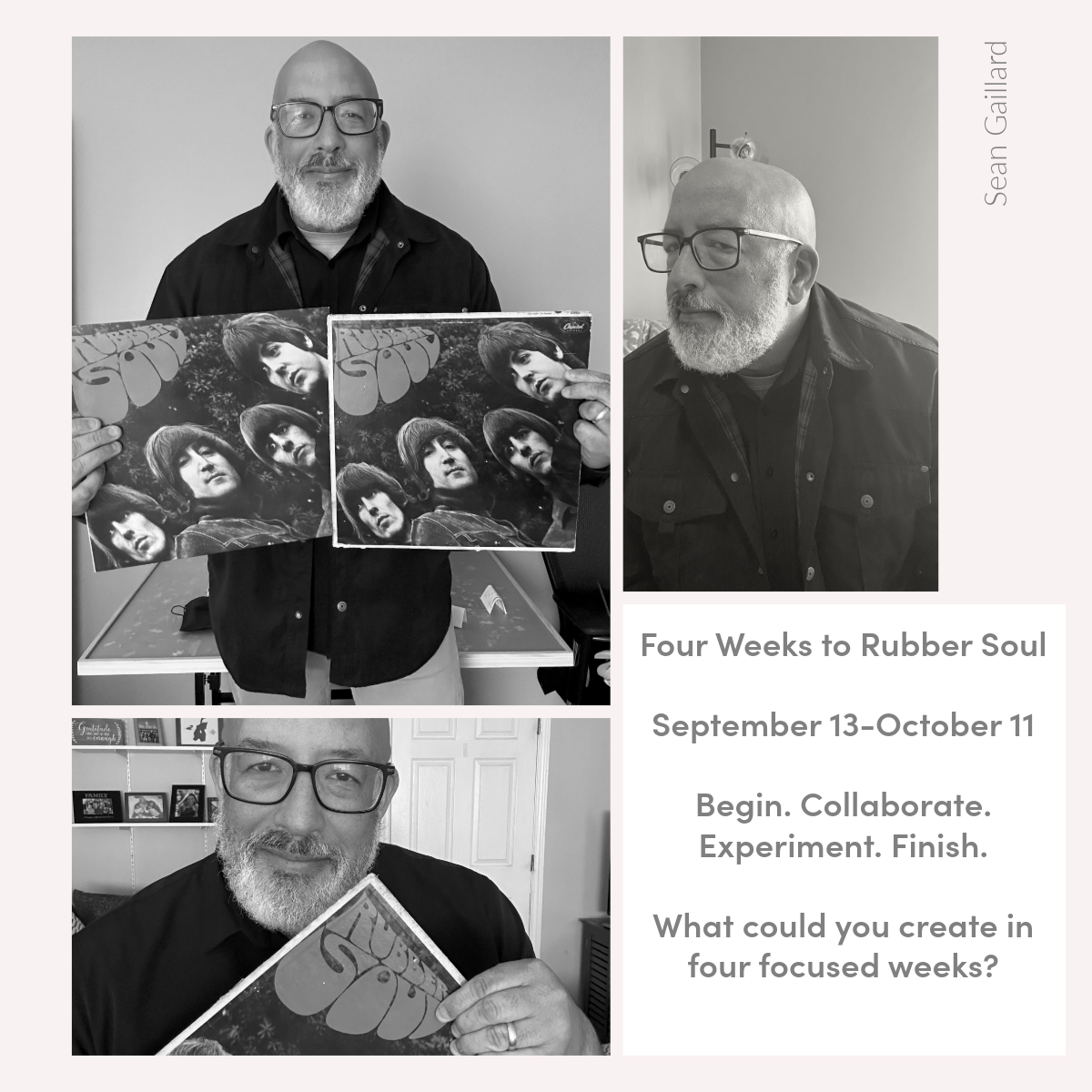
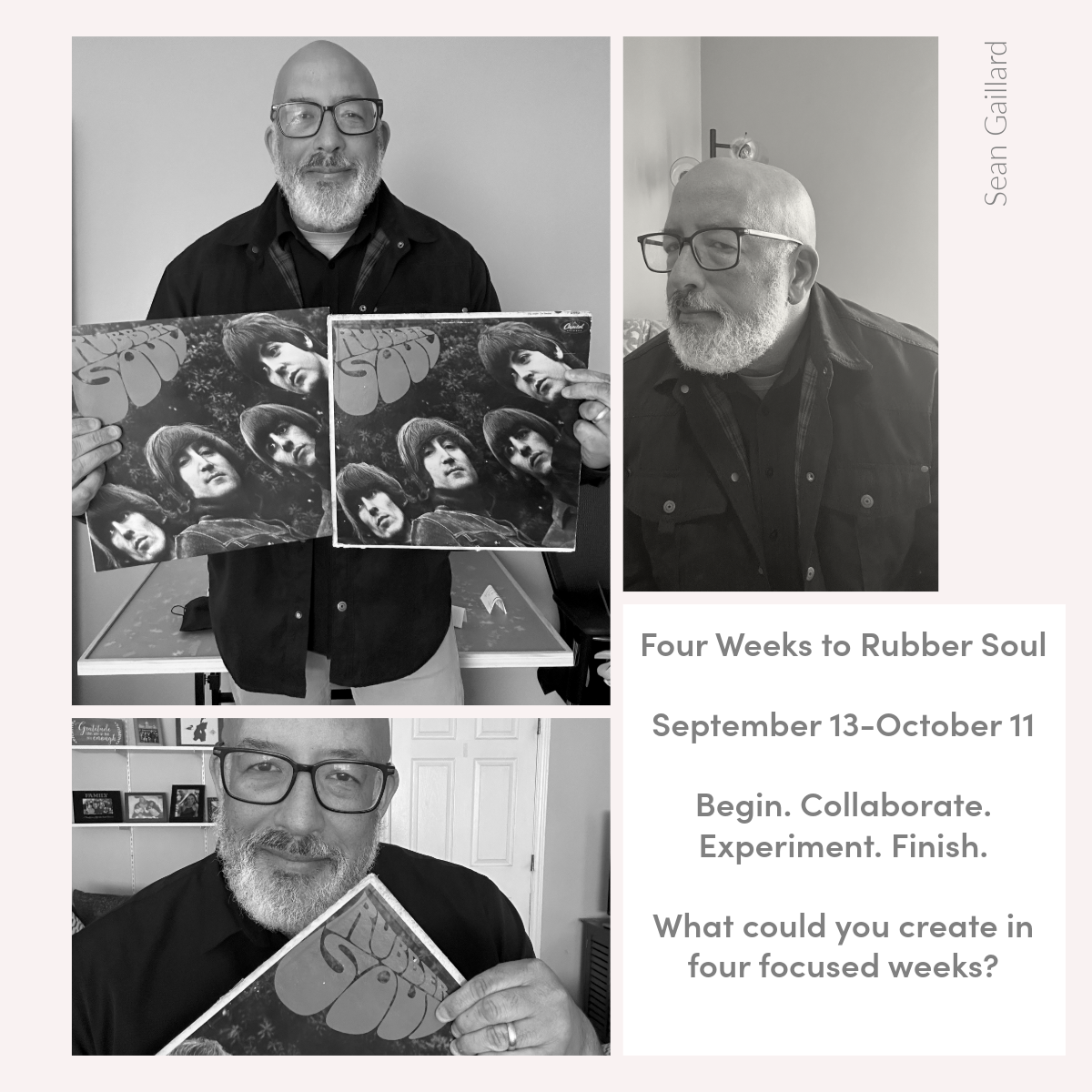
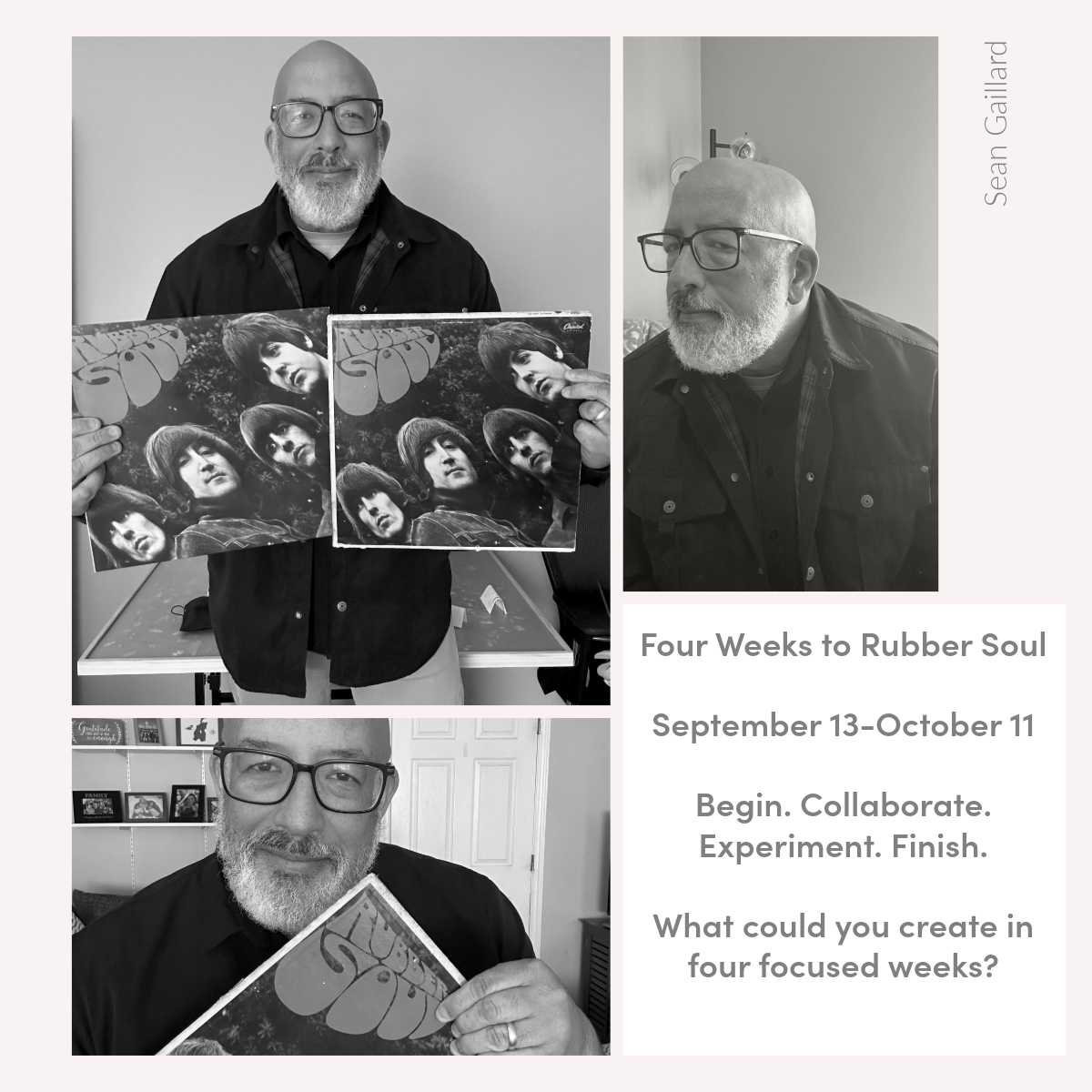
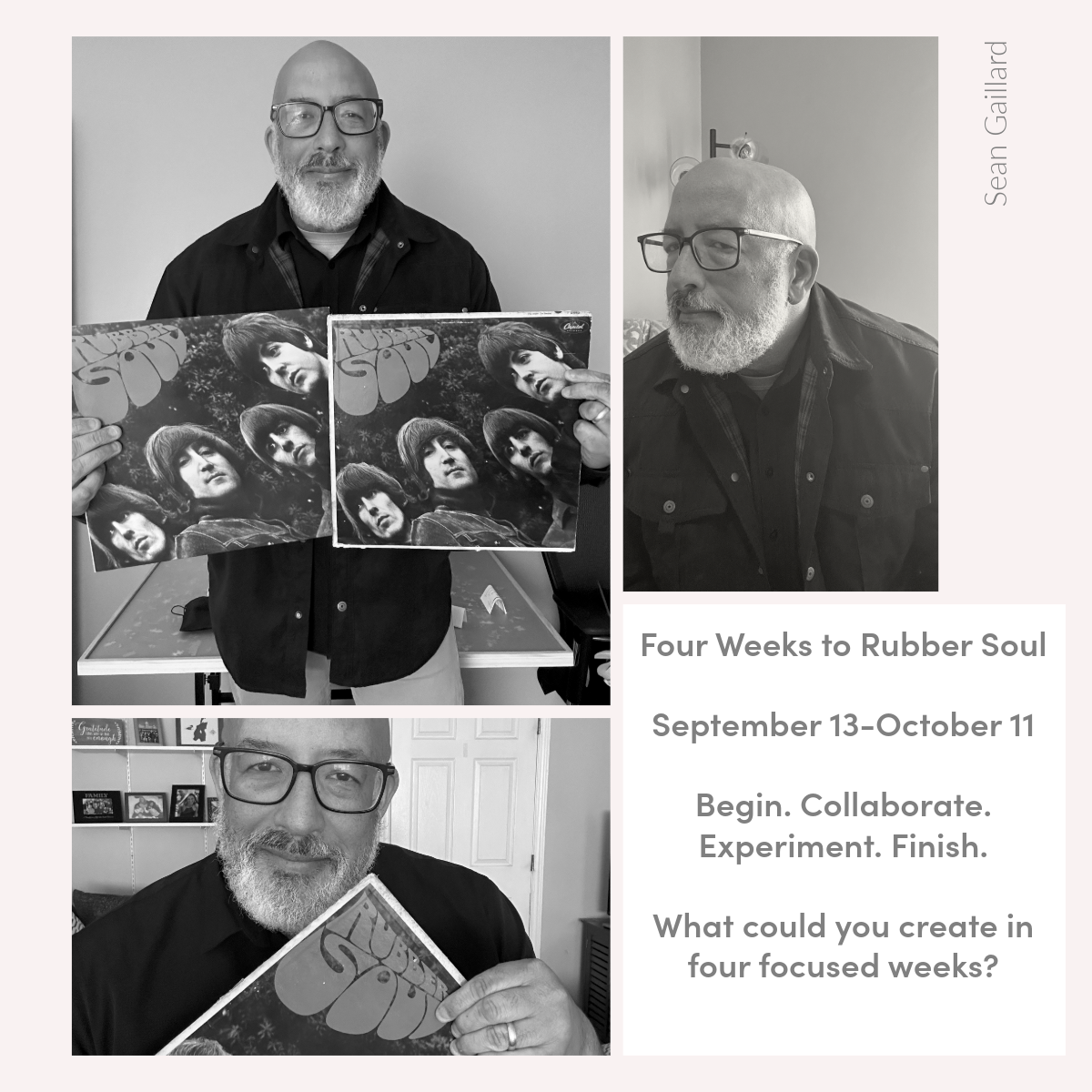
This is Day 7 of Four Weeks to Rubber Soul, and today’s word is Reflect. We are also closing out Week 1, which has centered on the theme of Begin. The Beatles’ creative growth, so evident on Rubber Soul, came from entering the room with songs, fragments, influences, ideas, and a willingness to work. The lesson is not to achieve perfection before starting. The lesson is to begin the work, knowing that it is completely acceptable if the beginning is rough and raw. What matters is that you enter the room and that the room is the right one, aligned with your creativity and ready to support the gifts you are bringing.
An important part of the creative process is reflection. Creative growth becomes visible when we stop long enough to notice what has changed since we began. Reflection asks us to pause, look back at what we created, and listen again. There is an art to that pause because we do not want to become so immersed in reflection that we lose momentum. Sometimes we need a trusted thought partner or bandmate who can help us listen, notice, and keep our creative work moving in the groove.
That brings me back to Rubber Soul. One reason I am looking forward to the multiple takes and alternate versions included with the forthcoming Rubber Soul Super Deluxe Edition is the opportunity to hear that creative evolution. The Beatles, along with producer George Martin, continually shaped these songs by changing harmonies, sounds, spaces, arrangements, and instrumentation. Reflection does not mean doubting what you created. Reflection means giving yourself enough space to hear what the work still needs.
Sometimes we need to return to what we made and ask three simple questions: What is working? What is missing? What could make this better? On Rubber Soul, a song could enter the studio one way and leave sounding very different on the finished master. That transformation happened because the band was willing to listen to the work as it developed and respond to what the song needed.
For example on “Norwegian Wood,” George Harrison felt that the song needed something different. His growing interest in Indian music led him toward the sitar, and he worked out a part that became one of the defining sounds of the song. That decision helped give the recording its distinctive character and introduced many listeners to a sound they may not have expected to hear on a Beatles record.
“In My Life” offers another beautiful example of reflection in action. The basic track had already been recorded, but the instrumental middle still needed something. George Martin experimented with ideas, including Hammond organ, before developing the Baroque inspired piano passage we now know so well. Since the part was difficult to play at the required speed, he recorded it more slowly and sped the tape up afterward. The result became an essential part of the song and a reminder that sometimes the creative breakthrough comes after we are willing to listen again.
As we close Week 1, take some time to reflect on something you have created. Do not judge it too quickly. Listen to it and ask yourself: What is working? What is missing? What could make this better? Consider bringing a trusted thought partner or bandmate into that reflection because sometimes another set of ears helps us hear possibilities we cannot hear alone.
Reflection is not about doubting your work. It is about asking what the work still needs and then having the courage to make the adjustment. I would love to hear how reflection fits into your creative process as we continue this journey through Four Weeks to Rubber Soul.
Check out today’s daily reel. Thanks to Starbucks for serving as my own Abbey Road Studios!
Today’s word for Day 6 of Four Weeks to Rubber Soul is Listen.
One of the things I love about The Beatles is how much they listened. They absorbed what was happening around them. Folk music. Soul. Motown. Indian music. Bob Dylan. The Beach Boys. They were fans, students, competitors, and curious creators all at once.
They listened deeply, but they did not simply copy what they heard. They took those influences, filtered them through their own voices, and created something that still sounded unmistakably like The Beatles. You can hear that sense of curiosity and expansion throughout Rubber Soul.
That idea keeps coming back to me during this project.
If I ever have the chance to meet you in person, there is a good chance I will ask you one of my favorite questions:
What’s on your turntable?
Sometimes I mean that literally. I genuinely want to know what record you are spinning. The question also goes much deeper than music.
What are you reading? What are you listening to? What are you noticing? What ideas have your attention right now? What is feeding your work, your soul, and your passion?
For me, asking that question is an invitation to connect. I want to know what matters to you because I can learn from you. Your interests, ideas, and passions may help me see something differently. Listening becomes more than receiving information. It becomes an act of connection.
Creativity works that way, too.
We listen to the things that move us. We notice the work of other people. We absorb ideas, sounds, conversations, books, art, and experiences. Somewhere in all of that listening, something begins to stir within us. We take what inspired us and begin making something of our own.
That is part of what Four Weeks to Rubber Soul has become for me.
This is a daily creativity challenge. Every day, I am showing up with a word, recording a reel, and writing a blog post inspired by an album that continues to challenge and inspire me. Some days the ideas arrive easily. Other days I have to dig a little deeper. The point is to keep listening, noticing, creating, and showing up.
Rubber Soul has stayed on my turntable for years because it represents a courageous creative pivot. It reminds me what can happen when artists remain curious, listen widely, trust one another, and allow themselves to grow.
Plus, the music is pretty damn good.
My hope is that these daily riffs might do for someone else what Rubber Soul continues to do for me. Maybe a thought, a song, a question, or one small idea will encourage you to make something, try something, or return to something you have been putting aside.
So, here is today’s invitation:
What’s on your turntable?
What are you listening to, reading, noticing, or experiencing that is challenging you and inspiring your creativity?