A simple riff in music can be unforgettable. Consider Keith Richards’ iconic guitar hook on The Rolling Stones’ “(I Can’t Get No) Satisfaction.” A handful of notes became one of the most recognizable sounds in rock and roll history. Sometimes a simple musical idea can leave a lasting impression.
There is another kind of riff that I find equally fascinating. It is the free flow of ideas, thoughts, and questions that happens when we feel comfortable enough to explore unfinished thoughts with someone else. There is no script or predetermined destination. There is simply the freedom to think aloud, listen, respond, and see where the conversation takes us.
When people listen and respond without judgment or competition, something magical happens. There is synergy, connection, and trust. I think of jazz musicians like Miles Davis and John Coltrane, listening and responding to each other through their instruments. One musician introduces an idea. Another builds upon it. Someone takes it somewhere unexpected. Together, they create something that might never have emerged independently.
I love those moments when a conversation becomes a genuine riff. There is no pressure to have the perfect answer or even the right words. We can stumble, explore, laugh, reconsider, and discover something new together. A great riff is not always about having the right notes. Sometimes it is about finding the right people who are willing to listen, respond, and create something alongside us.
Those connections matter. The people who give us the freedom to think aloud and make us feel that our voices matter are worth celebrating. They remind us that some of our most meaningful discoveries happen when we are willing to listen as much as we contribute.
Who are the people in your life who make it safe to riff, explore, stumble, and discover something new? Have you told them lately how much their voices matter?
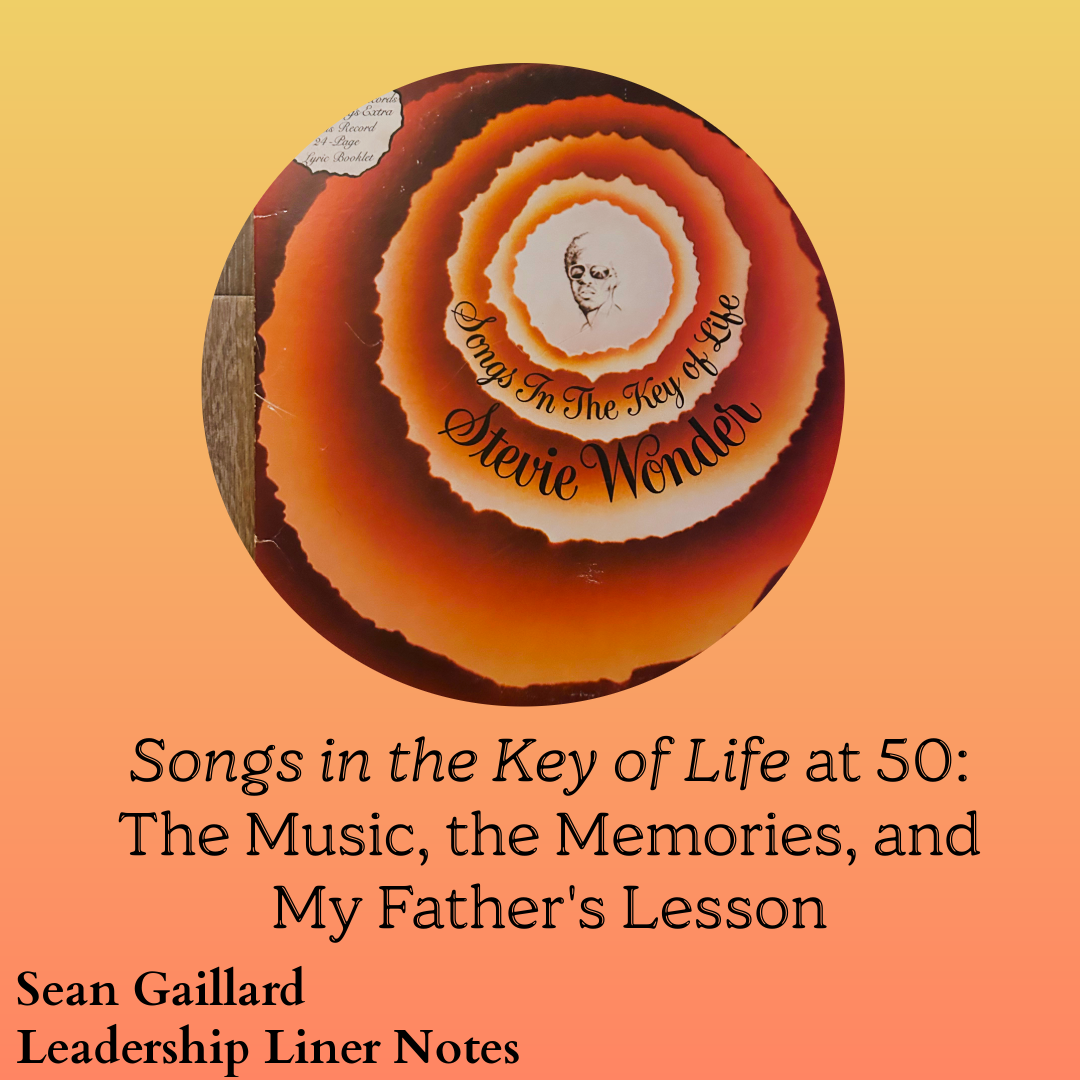
Some albums become part of our lives in ways that transcend the music itself. They become connected to the places we have called home, the people who shaped us, and the experiences that continue to influence our journey. For me, Stevie Wonder’s “Songs in the Key of Life” is one of those albums.
Today marks the 50th anniversary of this extraordinary masterpiece, originally released on September 28, 1976. As I reflect on this milestone, I find myself traveling back to my early childhood in Carson, California, where my love of music, family, and faith began taking shape.
The Soundtrack of My Childhood
I remember my dear father playing “Songs in the Key of Life” on our old stereo hi fi shortly after its release. Those songs filled our home, and I can still hear them today as vividly as I did fifty years ago. At the time, I had no idea that the music coming through those speakers would become such an important part of my life.
Carson holds a special place in my heart. Our home on Radlett Avenue provided the setting for so many memories that helped shape the person I am today. Every time I hear this album, I am transported back to those wonderful days of childhood, when life seemed filled with endless possibilities.
I remember running and dancing through the neighborhood, chasing ice cream trucks on my Big Wheel, enjoying story time with my mother, and playing catch with my father at the park. I remember dreaming about growing up to become a Jedi Knight or the Six Million Dollar Man. I was very much a product of a 1970s childhood, surrounded by the music, television, imagination, and cultural experiences of that remarkable decade.
Those memories remain precious to me. They are reminders of the love that surrounded me and the people who helped me discover the world. Whenever I return to “Songs in the Key of Life,” those feelings come rushing back.
A Remarkable Period of Creativity
Of course, “Songs in the Key of Life” represents something extraordinary beyond my personal memories. It stands as one of the defining artistic achievements of Stevie Wonder’s career and an incredible period of musical creativity.
Consider the remarkable sequence of albums he released between 1972 and 1976. There was “Music of My Mind” and “Talking Book” in 1972, followed by “Innervisions” in 1973 and “Fulfillingness’ First Finale” in 1974. Each album expanded his artistic possibilities, ultimately leading to the double album release of “Songs in the Key of Life” in 1976.
What an extraordinary creative journey! Stevie Wonder was willing to explore new sounds, embrace different musical influences, and push the boundaries of his songwriting. His music reflected the complexities of the human experience, from joy and celebration to struggle, injustice, spirituality, and love.
The result was an album filled with songs that continue to speak across generations. From the celebration of musical greatness in “Sir Duke” to the tenderness of “Isn’t She Lovely,” the social commentary of “Village Ghetto Land,” and the enduring message of love in “As,” the album offers a remarkable portrait of life itself.
There is a reason this music continues to resonate fifty years later. Stevie Wonder created something that speaks to our shared humanity while also allowing each listener to discover a deeply personal connection.
My Father’s Lesson About Love
Of all the memories associated with this album, one remains especially meaningful. It involves my father, a classroom at St. Philomena Catholic Church in Carson, and the song “As.”
My father was teaching a CCD class at our parish, and he decided to bring his copy of “Songs in the Key of Life” to share with the students. Rather than relying solely on a traditional lesson, he used music to communicate something profound about faith and the nature of God’s love.
He played “As” for the class. I remember my father in deep voice annotating the song and connecting the song to Scripture. Even though my father was teaching the class, I felt like he was talking directly to me. He was imparting the infinite nature of God’s love to me. He was giving me the gift of Faith. He was embedding a lesson in me that I would carry with me all my life and then pass on to my three daughters.
If you know the song, you understand its extraordinary message about the enduring and seemingly limitless nature of love. My father used that message to help his students understand the infinite love that God has for each of us. He connected a contemporary song to a timeless spiritual truth, making that lesson relevant, accessible, and meaningful I have carried that memory throughout my life.
My father could have taught that lesson in any number of ways. He chose to bring something familiar and beautiful into the classroom to help his students make a connection. He understood that music could communicate an idea in ways that ordinary explanations sometimes cannot.
Looking back, I recognize just how influential that experience became for me. My father was doing something that I would eventually embrace in my own professional journey. He was using music to build understanding, create connections, and make learning come alive.
The Lesson That Became Part of My Leadership
Years later, when I became an English teacher, I frequently incorporated music into my classroom. Songs became opportunities to explore language, poetry, history, culture, and the human experience. I wanted my students to discover connections between the literature we studied and the world they inhabited. I wanted learning to be something they could feel as well as understand.
That philosophy continued to shape my work when I became a school leader. Music has remained an important part of how I communicate, connect with others, and think about leadership. It has helped me consider how creativity, collaboration, belonging, and human connection can transform our schools and organizations.
There is something powerful about recognizing that a single childhood experience can influence an entire professional journey. My father probably never imagined that bringing a Stevie Wonder album into his CCD classroom would help shape the educator and leader his son would eventually become.
Yet, that is exactly what happened. I am a better father, husband, and teacher because of that event.
His lesson reminds me that meaningful teaching is not always about following a prescribed approach. Sometimes the most lasting learning happens when we connect with people through something they already love. Sometimes a song can help us understand an idea that might otherwise remain abstract.
The best educators and leaders recognize the importance of making those connections. They understand that people remember how an experience made them feel, especially when it brings them closer to something meaningful.
Fifty Years Later, the Music Plays On
Today, the celebration of Songs in the Key of Life includes an additional gift. Stevie Wonder has released a new four song EP featuring previously unreleased recordings from the original album sessions. It is wonderful to know that fifty years later, there is still more music to discover from this remarkable creative period.
For me, though, the greatest gift of this anniversary is the opportunity to revisit the memories and people connected to the album. I think about my father and mother, our home on Radlett Avenue, the joy of growing up in Carson, and the music that accompanied those formative years.
I think about the little boy who listened to Stevie Wonder through the family stereo without realizing how deeply those songs would become woven into his life. I also think about the father who understood that music could teach us something about love, faith, and our responsibilities to one another.
Fifty years later, I am still learning from that example. As spin the album today, the learning continues and my gratitude for what my father taught me grows.
Perhaps that is one of the greatest gifts of music. It allows us to return to places and moments that continue to live within us. A familiar melody can reconnect us with the people who loved us, the lessons that shaped us, and the dreams that helped us become who we are today.
As I listen to “Songs in the Key of Life” on this anniversary, I am filled with gratitude for Stevie Wonder’s artistry and for the family that introduced me to his music. I am equally grateful for the lasting influence of my father’s example, which continues to guide my work as an educator, leader, and lifelong learner.
The album may be fifty years old, but its music continues to inspire new connections, memories, and possibilities. For this boy from Carson, California, the songs will always be connected to the life I have been fortunate enough to experience.
Thank you, Stevie Wonder, for the music. Thank you, Dad, for the lessons and the love.
Today is Day 10 of Four Weeks to Rubber Soul, and the word is Blend.
This week is centered on the theme of collaboration. We have already explored the importance of bandmates and the power of invitation. Today moves us into what happens when different voices, ideas, influences, and perspectives actually come together. When we have the combination of contributing gifts from the hands of others, beautiful synergy happens.
One of the clearest examples of “Blend” on Rubber Soul is the album’s vocal harmony. John, Paul, and George each had distinctive voices. They did not sound alike. That difference was part of the magic. Once those disparate voices blended on any given track, a new sound emerged. Songs like “Nowhere Man,” “If I Needed Someone,” “You Won’t See Me,” and “The Word” show how those individual voices could come together and create something richer.
“Rubber Soul” is an album where vocal harmony flows throughout the grooves. None of The Beatles were formally trained in crafting harmony, but the album is rife with pristine harmonies which add to the depth and humanity of the album. Just listen those wordless “Ahhhs” in the middle part of “If I Needed Someone” to get sense of their vocal artistry.
Blend does not mean sameness. Harmony actually depends on difference. Different notes, different voices, and different perspectives come together to create something fuller than any one of them could create alone. You can hear that all across Rubber Soul. Nearly every song carries some beautiful blend of voices, whether it is a harmony tucked into the background or a full vocal arrangement moving the song forward. John, Paul, George, and Ringo each sounded different, yet those differences became part of the album’s identity. Decades later, that blend still resonates. The goal is not sameness. The goal is harmony.
As you create today, think about what you might be willing to blend into your work. Whose voice might strengthen what you are creating? What different perspective could make the work richer? Keep your voice and make room for someone else’s. Bring what only you can bring, but remain open to what another person can add. Rubber Soul reminds us that when distinct voices find a way to work together, the result can become something lasting. You never know what kind of harmony might emerge when different voices meet.
This is Day 7 of Four Weeks to Rubber Soul, and today’s word is Reflect. We are also closing out Week 1, which has centered on the theme of Begin. The Beatles’ creative growth, so evident on Rubber Soul, came from entering the room with songs, fragments, influences, ideas, and a willingness to work. The lesson is not to achieve perfection before starting. The lesson is to begin the work, knowing that it is completely acceptable if the beginning is rough and raw. What matters is that you enter the room and that the room is the right one, aligned with your creativity and ready to support the gifts you are bringing.
An important part of the creative process is reflection. Creative growth becomes visible when we stop long enough to notice what has changed since we began. Reflection asks us to pause, look back at what we created, and listen again. There is an art to that pause because we do not want to become so immersed in reflection that we lose momentum. Sometimes we need a trusted thought partner or bandmate who can help us listen, notice, and keep our creative work moving in the groove.
That brings me back to Rubber Soul. One reason I am looking forward to the multiple takes and alternate versions included with the forthcoming Rubber Soul Super Deluxe Edition is the opportunity to hear that creative evolution. The Beatles, along with producer George Martin, continually shaped these songs by changing harmonies, sounds, spaces, arrangements, and instrumentation. Reflection does not mean doubting what you created. Reflection means giving yourself enough space to hear what the work still needs.
Sometimes we need to return to what we made and ask three simple questions: What is working? What is missing? What could make this better? On Rubber Soul, a song could enter the studio one way and leave sounding very different on the finished master. That transformation happened because the band was willing to listen to the work as it developed and respond to what the song needed.
For example on “Norwegian Wood,” George Harrison felt that the song needed something different. His growing interest in Indian music led him toward the sitar, and he worked out a part that became one of the defining sounds of the song. That decision helped give the recording its distinctive character and introduced many listeners to a sound they may not have expected to hear on a Beatles record.
“In My Life” offers another beautiful example of reflection in action. The basic track had already been recorded, but the instrumental middle still needed something. George Martin experimented with ideas, including Hammond organ, before developing the Baroque inspired piano passage we now know so well. Since the part was difficult to play at the required speed, he recorded it more slowly and sped the tape up afterward. The result became an essential part of the song and a reminder that sometimes the creative breakthrough comes after we are willing to listen again.
As we close Week 1, take some time to reflect on something you have created. Do not judge it too quickly. Listen to it and ask yourself: What is working? What is missing? What could make this better? Consider bringing a trusted thought partner or bandmate into that reflection because sometimes another set of ears helps us hear possibilities we cannot hear alone.
Reflection is not about doubting your work. It is about asking what the work still needs and then having the courage to make the adjustment. I would love to hear how reflection fits into your creative process as we continue this journey through Four Weeks to Rubber Soul.
Check out today’s daily reel. Thanks to Starbucks for serving as my own Abbey Road Studios!
Today’s word for Day 6 of Four Weeks to Rubber Soul is Listen.
One of the things I love about The Beatles is how much they listened. They absorbed what was happening around them. Folk music. Soul. Motown. Indian music. Bob Dylan. The Beach Boys. They were fans, students, competitors, and curious creators all at once.
They listened deeply, but they did not simply copy what they heard. They took those influences, filtered them through their own voices, and created something that still sounded unmistakably like The Beatles. You can hear that sense of curiosity and expansion throughout Rubber Soul.
That idea keeps coming back to me during this project.
If I ever have the chance to meet you in person, there is a good chance I will ask you one of my favorite questions:
What’s on your turntable?
Sometimes I mean that literally. I genuinely want to know what record you are spinning. The question also goes much deeper than music.
What are you reading? What are you listening to? What are you noticing? What ideas have your attention right now? What is feeding your work, your soul, and your passion?
For me, asking that question is an invitation to connect. I want to know what matters to you because I can learn from you. Your interests, ideas, and passions may help me see something differently. Listening becomes more than receiving information. It becomes an act of connection.
Creativity works that way, too.
We listen to the things that move us. We notice the work of other people. We absorb ideas, sounds, conversations, books, art, and experiences. Somewhere in all of that listening, something begins to stir within us. We take what inspired us and begin making something of our own.
That is part of what Four Weeks to Rubber Soul has become for me.
This is a daily creativity challenge. Every day, I am showing up with a word, recording a reel, and writing a blog post inspired by an album that continues to challenge and inspire me. Some days the ideas arrive easily. Other days I have to dig a little deeper. The point is to keep listening, noticing, creating, and showing up.
Rubber Soul has stayed on my turntable for years because it represents a courageous creative pivot. It reminds me what can happen when artists remain curious, listen widely, trust one another, and allow themselves to grow.
Plus, the music is pretty damn good.
My hope is that these daily riffs might do for someone else what Rubber Soul continues to do for me. Maybe a thought, a song, a question, or one small idea will encourage you to make something, try something, or return to something you have been putting aside.
So, here is today’s invitation:
What’s on your turntable?
What are you listening to, reading, noticing, or experiencing that is challenging you and inspiring your creativity?
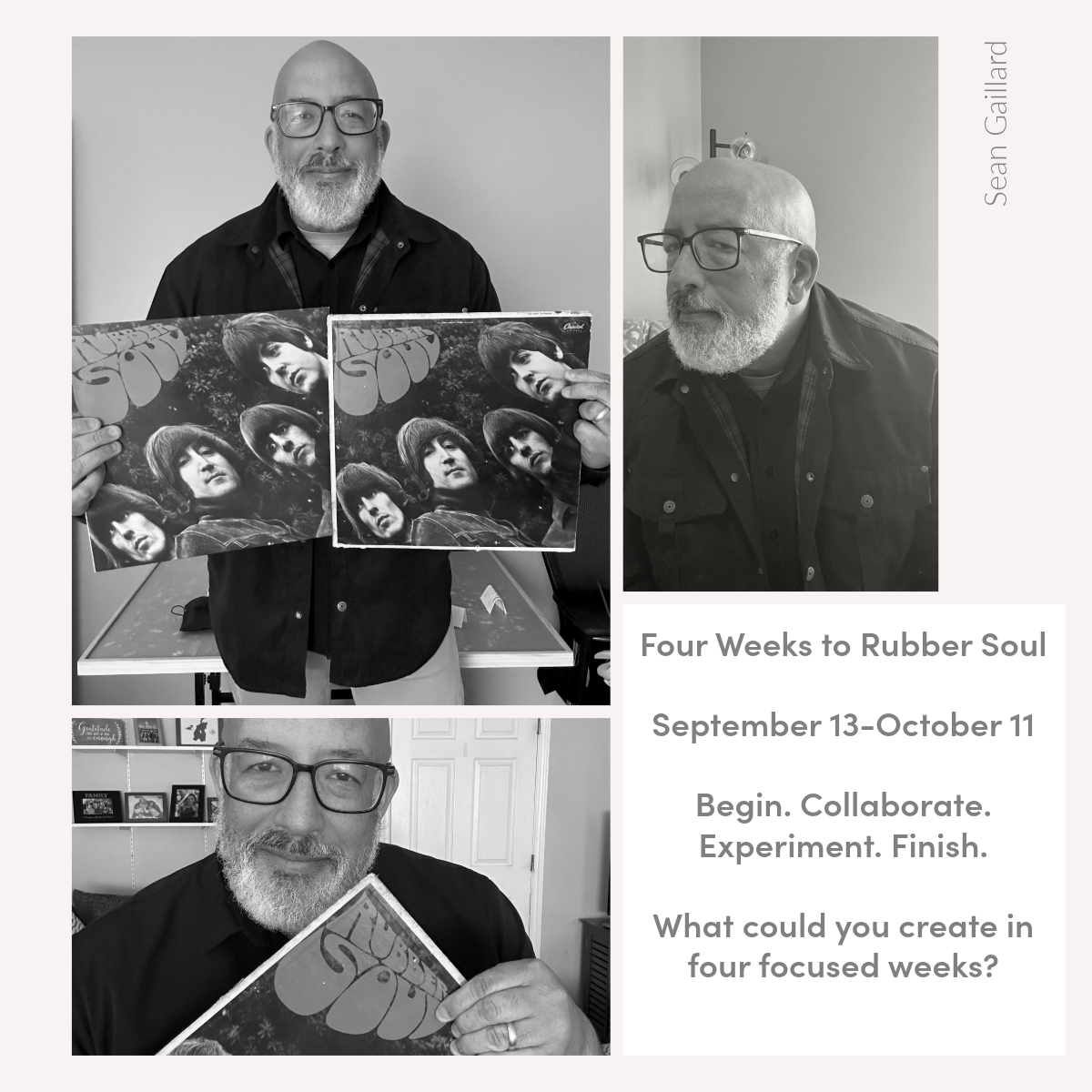
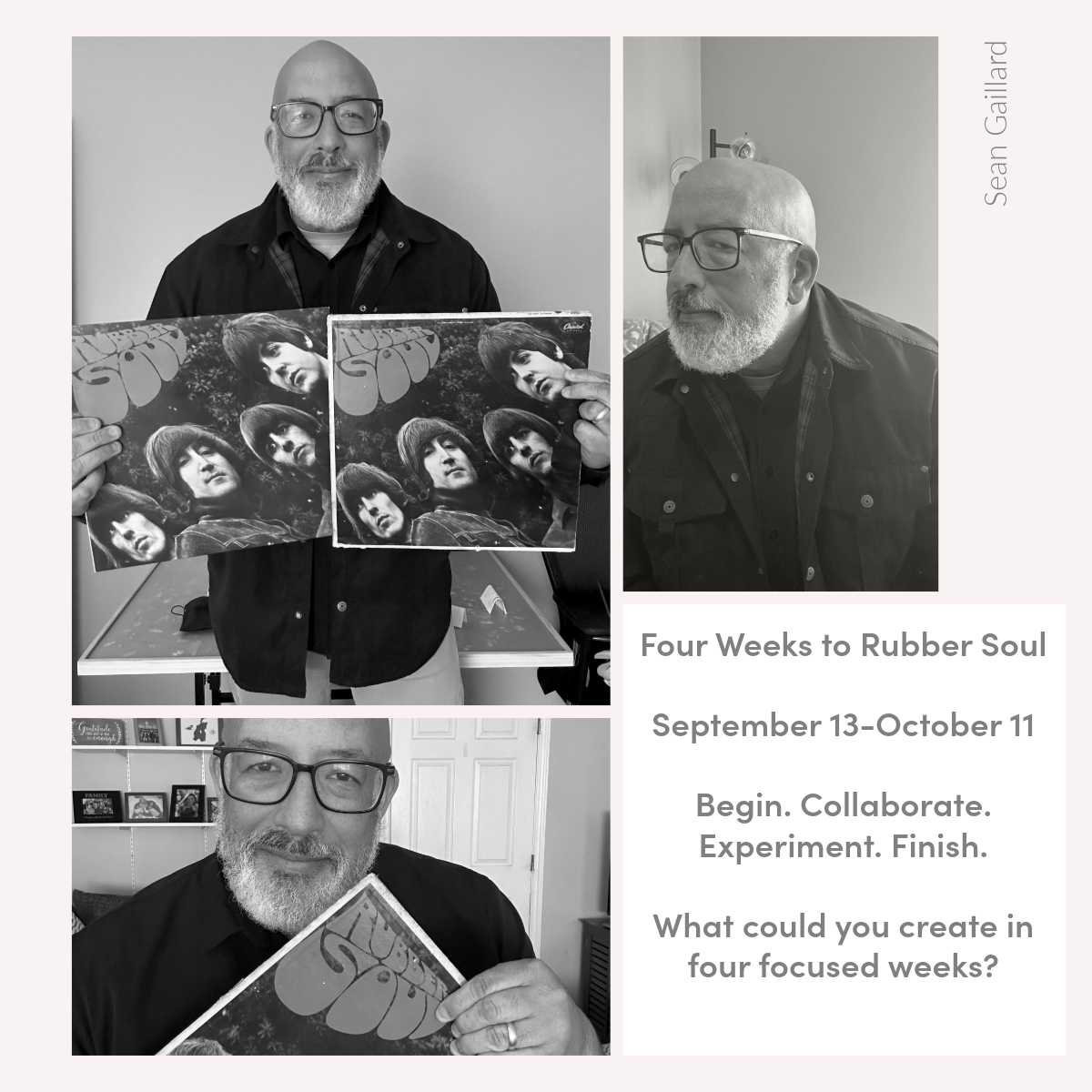
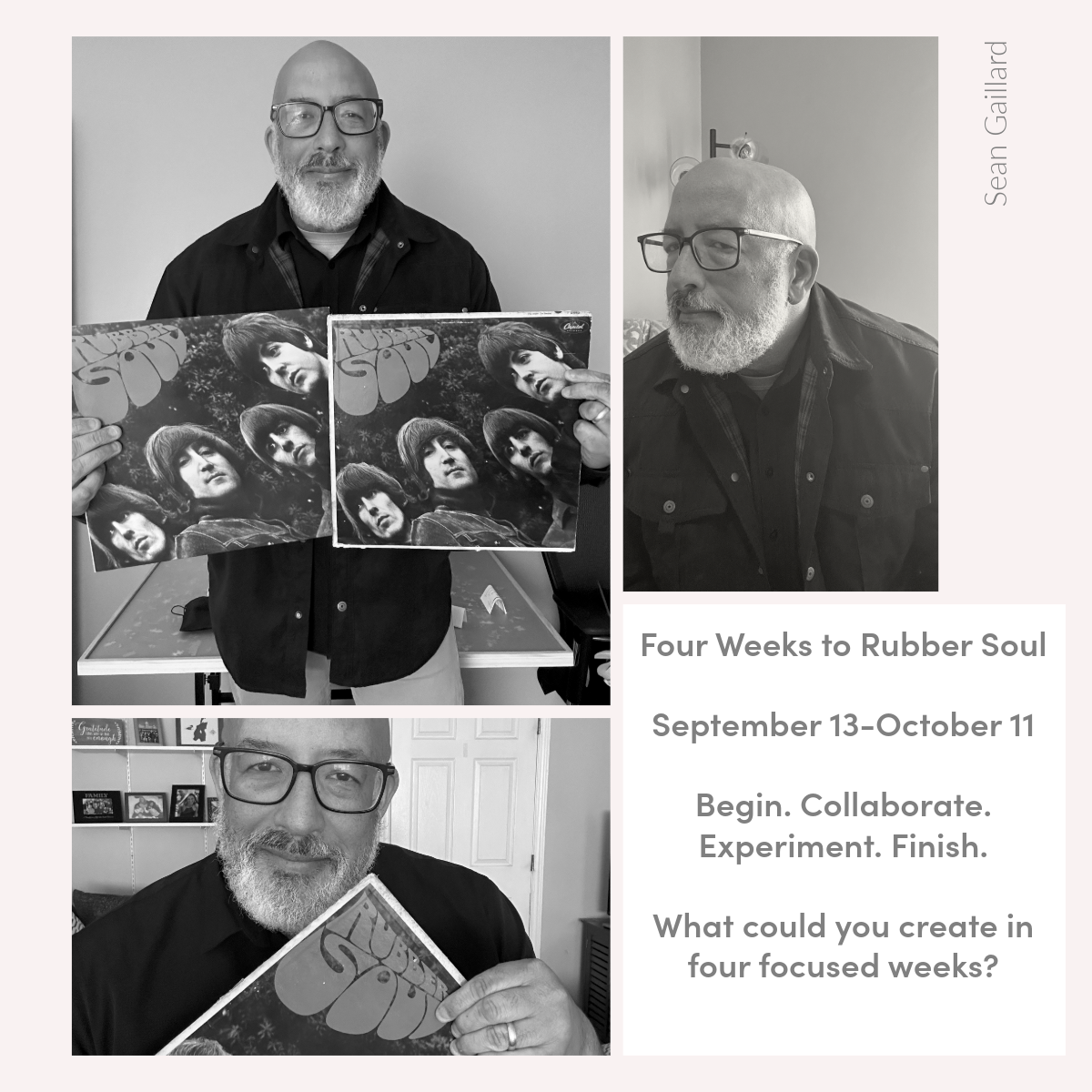
On September 14, I am starting a four week creative experiment and countdown inspired by one of my favorite albums and one of the most important records in popular music history. I am getting ready for the upcoming Super Deluxe Edition of Rubber Soul, arriving October 2, and I wanted to do more than simply count the days. I want to use that time to create.
The Beatles recorded Rubber Soul in roughly a month during the fall of 1965. That still amazes me. In that brief stretch of time, they created an album that included “Drive My Car,” “Norwegian Wood,” “Nowhere Man,” “Michelle,” “Girl,” “If I Needed Someone,” and “In My Life.” During that same period, they also recorded “Day Tripper” and “We Can Work It Out.” In a matter of weeks, they created a classic that would help change the direction of popular music.
Rubber Soul marked a turning point for The Beatles. The writing became deeper. The sound became broader. The studio became part of the creative process in new ways. The band was stretching beyond what had worked before and exploring what might come next.
The impact traveled far beyond The Beatles. Brian Wilson heard Rubber Soul and was inspired to create Pet Sounds. The album also influenced bands such as The Kinks and The Rolling Stones. Decades later, its legacy remains strong. Rubber Soul entered the Grammy Hall of Fame in 2000, and “Michelle” won the Grammy for Song of the Year. It continues to appear on lists of the most important albums ever recorded.
What stays with me most is the process. Four people walked into a studio with ideas, songs, curiosity, tension, trust, and a willingness to try something different. They worked with George Martin and the Abbey Road team. They collaborated, experimented, changed direction, and kept moving.
That process is the inspiration behind Four Weeks to Rubber Soul. For the next four weeks, I am going to focus on four creative moves: Begin, Collaborate, Experiment, and Finish. Begin is about giving an idea permission to exist before it is fully formed. Collaborate is about recognizing that our work can become stronger when we allow other voices, perspectives, and gifts into the process. Experiment is about following curiosity, trying something unfamiliar, and accepting that not everything has to work the first time. Finish is about carrying the work across the line and releasing it rather than keeping it trapped in our heads, notebooks, or hard drives.
I want to see what happens when I commit to those four moves for four focused weeks. Starting September 14, I will share something every day inspired by Rubber Soul and the creative process behind it as I count down to October 2. Some days it will be a reel. Some days it will be a blog post. There will also be special riffs on Why The Beatles Matter. The goal is not simply to talk about an album I love. The goal is to use the album as a catalyst for making something.
The question I will carry through these four weeks is simple: What can we create when we trust the process, work with intention, and keep moving forward?
The first reel drops September 14. Follow along, create something of your own, tag me, and use #FourWeeksToRubberSoul so we can encourage one another through the process.
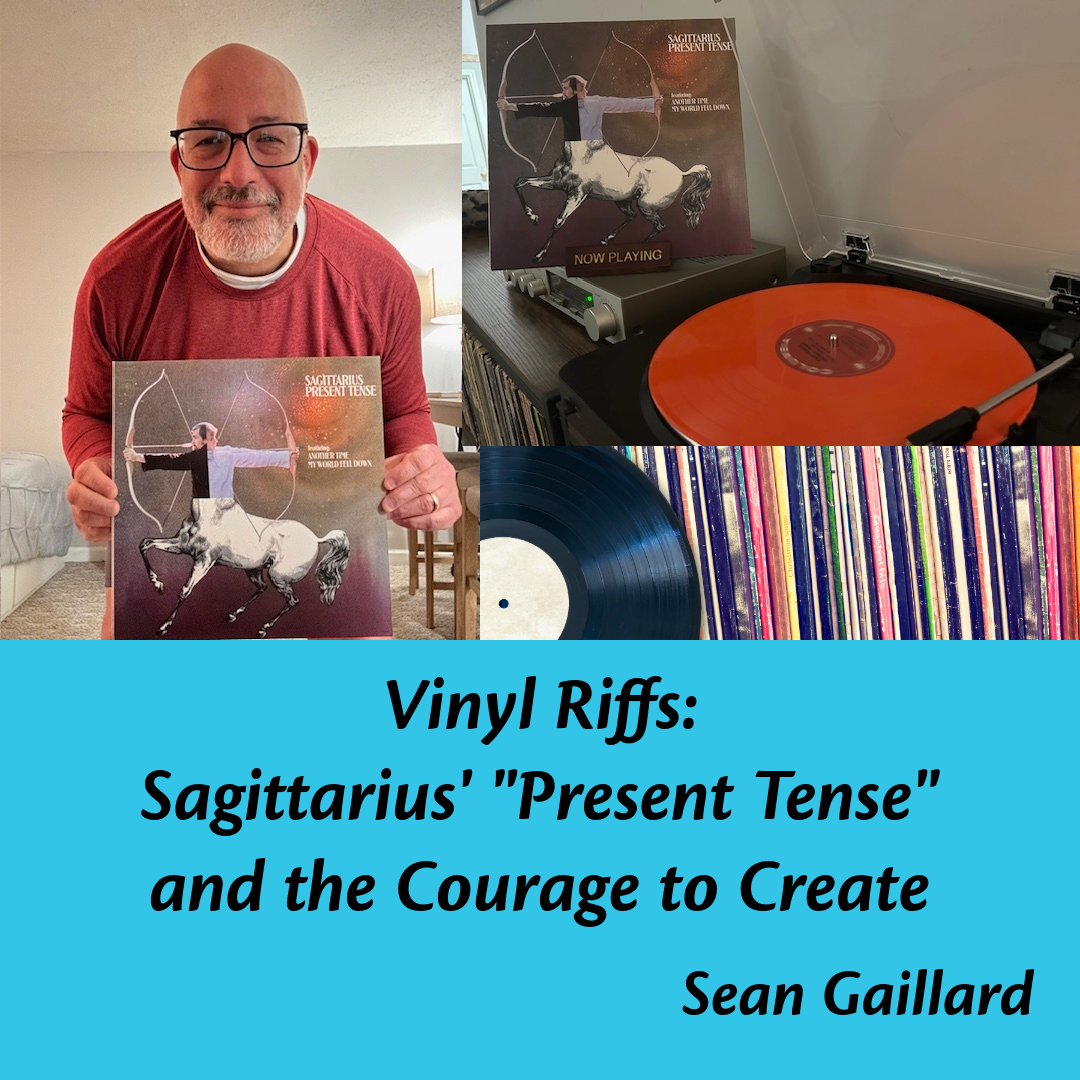
Years ago, I remember reading about a hallowed single featuring members of the Wrecking Crew. The song was “My World Fell Down,” credited to a group called Sagittarius. The truth is that Sagittarius was never really a group. It was something more elusive and, in many ways, more meaningful.
Released in 1967, “My World Fell Down” felt like it existed in the same sonic universe as what Brian Wilson was building with The Beach Boys. Think about “Good Vibrations” and the unfolding ambition of SMiLE. The form was shifting. The rules were dissolving. Pop music was becoming something expansive, layered, and deeply expressive.
That single led me, years later in the late 1990s, to track down a CD reissue of Present Tense. That is when I learned that the architect behind Sagittarius was Gary Usher, a collaborator with Brian Wilson of The Beach Boys who co-wrote “In My Room” and produced The Notorious Byrd Brothers. Alongside him was another studio visionary, Curt Boettcher.
What they created together on Present Tense was not just an album. It was a sanctuary.
A Studio Project That Became Something More
Sagittarius was never built for the stage. It was built in the studio, piece by piece, with contributions from elite session musicians and collaborators. It was a collective before that word became fashionable. It was a shared space where ideas could breathe.
At the time, Gary Usher was an in-demand producer at Columbia Records. The expectations were constant. The pressure to deliver was real. The work never stopped.
He created something outside of that system.
Sagittarius became his creative outlet. It became a place to experiment, to reconnect with meaning, and to create without the weight of constant expectation.
There is a story that has stayed with me from those liner notes I read years ago. Usher was hesitant to fully reveal himself as the force behind Sagittarius. He feared that doing so would only bring more demands from the label. More work would follow. More pressure would build. Less space would remain.
He recorded during off hours. Nights and weekends became the canvas.
That tells you everything you need to know about this album.
The Sound of Freedom and Trust
Released in 1968, Present Tense moves across genres with ease:
Baroque pop
Sunshine pop
Psychedelia
It is unified not by category, but by feeling.
You hear it immediately in the opening track, “Another Time.” The harp enters. The harmonies follow. The song feels warm, sublime, and almost otherworldly. It sounds like something beyond the everyday. It sounds like possibility.
Curt Boettcher’s songwriting and arranging shine throughout the record. His work here would extend into The Millennium, another project that stretched the boundaries of what pop music could be.
Across the album, the listener hears:
Layered vocal harmonies that feel choral and immersive
Studio experimentation including phasing and multi-track recording
Orchestral textures that elevate each arrangement
There are also moments of bold experimentation. Usher and Boettcher explored musique concrète, early synthesizer textures, and even incorporated elements connected to The Firesign Theatre. These were not safe choices. They were necessary ones.
This was not about chasing a hit.
This was about making something that mattered.
The Return of Present Tense
That is why this reissue matters so much.
Music On Vinyl has brought Present Tense back into the world with care and intention. This Netherlands-based label is known for its commitment to quality, and it shows here.
This limited reissue of 1000 copies is pressed on 180-gram vinyl. The packaging is thoughtfully reproduced on high-quality cardstock. The sound is pristine.
Every detail comes through:
The depth of the harmonies
The nuance of the arrangements
The studio innovations that defined the original sessions
When I drop the needle on “Another Time,” I hear something that still stops me in my tracks. Those opening notes feel like the sound of heaven.
There is love in this reissue. The same kind of love that went into creating the album in the first place.
What compels me most about Present Tense is not just how it sounds. It is why it exists.
Gary Usher needed an outlet.
He needed space to create without expectation. He needed room to experiment without judgment. He needed to reconnect with the part of himself that made the work meaningful.
That resonates deeply.
In leadership, in music, and in life, the demands can take over. Expectations can define the work. Output can overshadow purpose.
Present Tense is a reminder that:
Space to create is essential
Trust in collaborators elevates the work
Courage to explore leads to meaning
This album is the sound of freedom. It is the sound of collaboration. It is the sound of quiet courage.
It is the sound of someone protecting their creative soul in a world that kept asking for more.
Take Your Present Tense for Present Tense
Every time I return to this album, I am reminded to be present in the work that matters.
To create. To collaborate. To trust.
To make space for something meaningful, even if it does not fit the mold.
I would love to hear how this album resonates with you. What do you hear when you listen to Present Tense? What does it bring out in you?
Listen and Subscribe: Vinyl Riffs with Sean Gaillard
This album will be featured in an upcoming episode of Vinyl Riffs with Sean Gaillard. If this resonates with you, I invite you to listen, subscribe, and share the journey.
The organ was an accident and Al Kooper was not an organist.
It is June 1965. Bob Dylan is in a Columbia Records studio in New York, pushing further away from the acoustic folk sound that made him a voice of protest and into something louder, riskier, and electric. His recent album, Bringing It All Back Home, has already signaled that shift. The influence of The Beatles is in the air, and Dylan is not looking back.
Producer Tom Wilson invites Kooper to the session. Kooper shows up with his guitar, even though he is there to observe. As the musicians settle in, one presence changes everything. Mike Bloomfield begins warming up.
Kooper listens.
He hears something different. He hears a level of artistry that causes him to pause. He makes a decision in that moment. He sets the guitar aside. He recognizes that he is not the right voice for that part of the song.
That decision does not end his contribution. It creates space for it.
As the band works through early takes, Kooper hears something else. He hears a part that is not there yet. He notices an organ sitting in the corner with an empty chair beside it. He shares the idea with Wilson. Wilson pushes back and reminds him that he is not an organist.
Kooper does not argue. He does not retreat.
He walks over and plays anyway.
Kooper would later recall, “He just sort of scoffed at me. He did not say no, so I went out there.” He slips into the track, feeling his way through the chords, slightly behind the beat, searching for the right touch.
Wilson notices. Bob Dylan notices more.
Dylan tells him to stay.
Later, Dylan insists that the organ be turned up in the mix.
The song is “Like a Rolling Stone.” It becomes a seismic shift in popular music. It stretches past six minutes. It blends poetry with electric instrumentation. It challenges what a hit song can be. It shows up at Newport and divides a crowd that expected something safer and more familiar.
That organ part, the one played by someone who was not supposed to be there, becomes essential to the song’s identity. It carries emotion. It adds tension. It lifts the track into something timeless.
You cannot imagine the song without it.
This is the leadership riff.
Kooper did not force his way in with the instrument he knew best. He listened first. He stepped back when needed. He paid attention to what the moment required. He trusted the idea that came to him. He acted on it, even when others questioned his credibility to do so.
Leadership asks the same of us.
There are moments when the room is filled with voices that seem stronger, louder, and more accomplished. Those moments can push us to the margins if we let them. Those moments can also invite us to listen more deeply and find where our contribution truly fits.
Kooper’s choice to set aside the guitar was not a failure. It was awareness. It was humility. It was the beginning of something better.
His decision to move to the organ was belief. It was risk. It was action.
That combination changed the song.
Too often, we allow doubt and outside voices to close the door before we ever reach for the handle. We convince ourselves that we are not ready, not qualified, or not invited. We stay seated when the chair is open.
Kooper reminds us to get up and move.
He reminds us that contribution is not always about mastery. It is about awareness, courage, and timing. It is about trusting that what we hear and feel has value.
He reminds us to play on anyway.
In this season, that lesson matters.
There will be rooms where you feel outmatched. There will be moments when someone questions your role before you even begin. There will be ideas that arrive quietly and ask you to take a step that feels uncertain.
Take it.
The work needs your voice, even if it comes through a different instrument than the one you planned to play.
That is how breakthroughs happen.
That is how songs change.
That is how leadership finds its sound.
Postscript
I am grateful to my good friend Max Pizarro for the conversation that sparked this reflection. He encouraged me to spend time with this story and to listen more closely. That nudge led to this piece and to a deeper appreciation of what it means to trust the moment and step into it.
I can already hear this one spinning forward as a future episode of Vinyl Riffs with Sean Gaillard. Stay tuned for that podcast episode to drop soon.
There are albums that arrive in your life right on time. There are also albums that feel as if they have been waiting for you all along.
Neil Diamond’s Gold is that kind of record for me.
It was recorded live at the Troubadour on Santa Monica Boulevard in July of 1970. Just about ten miles away, in Inglewood, I was two months old and brand new to the world. I did not know it then, but something meaningful was happening nearby. A voice was finding its footing. A performer was stepping into himself. A bridge was being built toward what would come next.
I did not discover Gold until my junior year of college. I found it in a used record store in Washington, D.C., sometime around 1990 or 1991. I remember taking it back to my dorm room. I lowered the needle and felt something familiar. It was something I could not yet name. Even then, it sounded like an album caught between chapters. Confident, yet searching. Grounded, yet reaching.
That feeling has only deepened with time.
Gold captures Neil Diamond in a liminal season. He was between record labels. He had experienced success in the 1960s, yet the full arc of his 1970s creative breakthrough had not fully arrived. This was not a greatest hits collection, even though the title suggests one. It was something far more human. It was a document of becoming.
The band matters here. Carol Hunter’s guitar work has a raw edge. It gives the music a sense of forward motion. Her style was shaped by time alongside artists like Bob Dylan. Eddie Rubin’s drumming, informed by deep jazz roots and work with artists like Billie Holiday, brings both restraint and release. Randy Sterling’s bass provides an anchor that allows everything else to breathe. This was a group capable of listening, responding, and taking risks in real time. That truth is audible.
Then there is “Lordy.”
That song feels like a door being pushed open. Gospel-inflected. Theatrical. Unfiltered. It hints at the ambition that would soon fully emerge on Tap Root Manuscript. On this album, “Cracklin’ Rosie” would become Neil Diamond’s first number-one hit. “The African Trilogy” placed on Side 2 of that album would expand his songwriting into something expansive and cinematic. “Lordy” is not the destination. “Lordy” is the signal.
This is why Gold resonates so deeply with me right now.
I find myself in my own in-between season. Years of experience remain present. Familiar structures are loosening their grip. Listening has become more important than certainty. This album reminds me that the middle matters. The bridge is not wasted time. Confidence is often built quietly in rooms that do not yet resemble arenas.
My connection to Gold also brings to mind the film Song Sung Blue. I love that movie deeply. The film is based on the real life story of Mike and Claire Sardina, who form a Neil Diamond tribute band known as Lightning & Thunder. Watching the two main characters played by Hugh Jackman and Kate Hudson is profoundly life-affirming. They challenge the impossible until it becomes possible. The film honors persistence, hope, and belief without irony. It treats becoming with dignity. The music performances are truly “so good, so good!”
That same spirit lives inside Gold.
This record honors the becoming.
This post accompanies the latest episode of #LeadershipLinerNotes. In it, I share more about this album and the Troubadour. I explain why this particular season of my life feels so closely tied to it. You can listen to the podcast version here: Spotify/Megaphone:
I would love to know what your Gold has been. Was there an album, moment, or season that met you in the middle? Did it quietly remind you that something meaningful was still unfolding? Please share in the comments. I would love to hear from you.
Sometimes the gold is not found at the beginning. Sometimes the gold is not waiting at the end. Sometimes the gold lives right in the in-between.