Finish Makes Next Possible
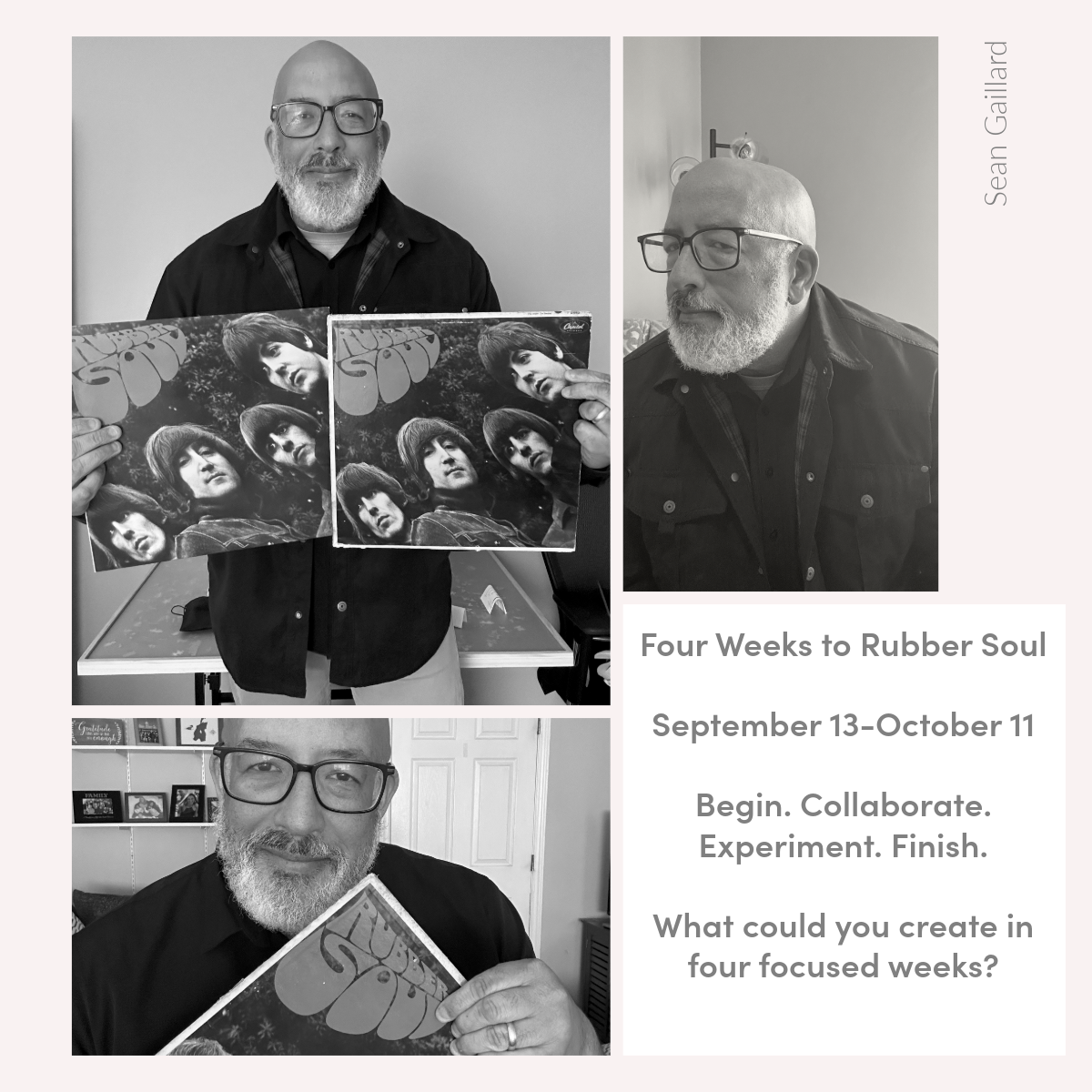
Twenty-eight days ago, I began a creative journey inspired by an album that The Beatles recorded over approximately four weeks during the fall of 1965. I wanted to explore the lessons of creativity, collaboration, experimentation, and commitment found within the making of Rubber Soul. More importantly, I wanted to challenge myself to create something meaningful every single day while encouraging others to embrace their own creative possibilities.
Today, October 11, 2026, I reach the finish line of this journey. For twenty-eight consecutive days, I have written a blog post and recorded a reel inspired by four musicians whose creativity continues to shape my life. I have researched, reflected, listened, experimented, and shared ideas that have challenged me to think differently about my own creative process. What began as a celebration of an extraordinary album gradually became something much more personal.
Somewhere along the way, I discovered that I needed this experience as much as anyone who might have been reading or watching. I began with the hope of inspiring others, but I am finishing with a renewed understanding of what creativity means in my own life.
I began this journey hoping to build community and connection. I wanted to encourage others who might be struggling to find their creative voices or searching for their own bandmates. After all, one of the greatest lessons of The Beatles is that remarkable things can happen when people bring their individual talents together in pursuit of something meaningful. I hoped this series might create opportunities for conversation, encouragement, and perhaps even collaboration.
The experience did not always unfold as I imagined. There were days when the engagement was quiet and the response was less than I had hoped. I sometimes wondered whether these reflections were reaching anyone or whether the ideas I was sharing were making a difference. Those moments were difficult because the desire for connection was a genuine part of why I began this journey.
At times, I felt as though I was standing alone on a stage in an empty auditorium, sharing my voice with rows of unoccupied seats. There is a certain vulnerability in putting something personal into the world and wondering whether anyone is listening. I have experienced that feeling more than once throughout these four weeks.
Still, I kept showing up. I kept writing, recording, learning, and sharing. Even when the auditorium seemed empty, I continued to fill the space with my voice. I began to understand that the absence of applause did not mean the absence of purpose. The courage to create could not depend entirely upon whether someone was there to acknowledge the work.
I also want to recognize that the auditorium was never entirely empty. There were people who took the time to read these reflections, watch the daily reels, leave thoughtful comments, and offer words of encouragement. Some followed the journey quietly, while others shared their thoughts along the way. Every expression of support mattered, and I am genuinely grateful to everyone who made room for this creative journey in their lives.
That gratitude is important to me because I never wanted this experience to be simply about producing content. I wanted it to be about sharing ideas that might encourage someone else to begin creating, take a risk, or rediscover something meaningful in their own life. I may never know how these reflections resonated with everyone who encountered them, but I am grateful for every opportunity to make a connection.
The four words that guided this journey were Begin, Collaborate, Experiment, and Finish. Looking back, each one carries a deeper meaning than it did when I started.
I began with an idea and the willingness to take a creative risk. I explored collaboration by studying the extraordinary chemistry of The Beatles and reflecting on the importance of finding people who encourage and challenge one another. Although I did not discover the band of collaborators I had hoped to find, the experience reminded me why those connections matter and why I want to remain open to them.
I experimented with my writing, my voice, and the daily practice of recording and sharing reflections. I became more comfortable putting my ideas into the world without knowing how they would be received. The discipline of creating something every day gradually became less intimidating and more natural. I discovered that the simple act of showing up consistently could strengthen my confidence and give me the courage to explore new possibilities.
Now, I have finished something I promised myself I would complete. I have twenty-eight days of creative work to show for that commitment, along with lessons that I could never have anticipated when I began. I have learned that creativity requires discipline, but it also requires trust in ourselves and a willingness to keep going when the response is uncertain.
The Beatles offer a remarkable example of what finishing can make possible. When Rubber Soul was released on December 3, 1965, it represented a significant creative achievement. The Beatles had expanded their musical vocabulary, explored new approaches to songwriting, and demonstrated an increasing willingness to challenge their own artistic boundaries.
They could have continued repeating that successful formula, but their curiosity and creative ambitions carried them forward. Within months, they were recording Revolver, an album that would take their experimentation into even more adventurous territory. Their journey continued through Sgt. Pepper’s Lonely Hearts Club Band and beyond, with each completed project opening possibilities that had not existed before.
That example has stayed with me as I have approached the conclusion of this challenge. Finishing something meaningful does not require us to remain in the same creative space. The accomplishment deserves to be celebrated, but it can also become the foundation for another beginning.
Finish is not the opposite of Begin. Finish is what makes Next possible.
There is something particularly meaningful about the timing of this final reflection. Today is October 11, and tomorrow marks the sixty-first anniversary of the beginning of The Beatles’ Rubber Soul recording sessions at EMI Studios in London. On October 12, 1965, they began recording music that would eventually become one of the most influential albums of their career.
I find something beautiful in that connection. As I finish this journey inspired by Rubber Soul, I am standing on the eve of the anniversary of its beginning. More than six decades separate these two creative experiences, yet the lessons of curiosity, commitment, and courage continue to resonate. An album created in 1965 inspired me to begin something in 2026, and finishing that experience has given me the courage to consider what comes next.
For much of my life, I have believed in the power of community, collaboration, and finding people who share a common purpose. I still believe in those things, and I still hope to find more bandmates who want to create, encourage, and build something meaningful together. That hope has not disappeared simply because this experience was sometimes quieter than I anticipated.
What has changed is my understanding of what I can do while those connections have yet to develop. I do not have to wait for a full auditorium to share my voice. I do not have to wait for someone to invite me into a creative space or measure the worth of an idea by the number of people who respond to it. I can begin where I am, create with what I have, and trust that the work itself has meaning.
Perhaps that is the true lesson I have discovered through Rubber Soul. The album is certainly a testament to the extraordinary possibilities of collaboration, but it is also a reminder that creativity requires curiosity, courage, and the willingness to move beyond what we already know. The Beatles continued to grow because they remained open to what might come next.
I want to carry that same spirit forward. I want to continue creating, learning, exploring, and sharing ideas that might make a difference in someone’s life. I want to remain open to the possibility of finding new bandmates while recognizing that I already have the ability to create something meaningful on my own.
I am grateful for everyone who followed this journey, read the daily reflections, watched the reels, shared a comment, or offered encouragement. Your presence and support have meant more than you may realize. I hope that somewhere along the way, something I shared encouraged you to consider your own creative possibilities.
Most of all, I am grateful that I did not abandon this journey when it became difficult or when the response was not what I had imagined. I gave myself the opportunity to discover something about my own creativity, discipline, and courage. I found a renewed sense of purpose in the simple act of showing up each day and creating something meaningful.
I do not want this journey to end. The daily rhythm of creating has become something I genuinely value, and I hope to continue nurturing it. I do not know exactly what the next creative chapter will look like, but I am no longer waiting for every detail to fall into place before I begin.
There is still music to discover, stories to tell, ideas to explore, and meaningful work to create. There are still people I hope to meet and bandmates I hope to find. There are possibilities I cannot yet imagine, and I want to remain open to discovering them.
Twenty-eight days ago, I stepped onto a stage with an idea and the hope that someone might listen. Today, I may still be standing on that same stage, but something has changed. I have filled that space with my voice, my creativity, and the courage to keep going. The auditorium may not be full, but I am no longer waiting for an audience before I begin.
I began. I explored the possibilities of collaboration. I experimented. I finished. The journey did not unfold exactly as I had imagined, but it gave me something I needed and reminded me that there is still so much more to discover.
As I finish this journey, I am grateful for everyone who shared even a small part of it. I am grateful for the music of The Beatles, for the lessons of Rubber Soul, and for the courage I have discovered through these twenty-eight days.
I may not know exactly what comes next, but I know that I am ready to begin.
Thank you for being part of Four Weeks to Rubber Soul.
Special Acknowledgements:
A very special thanks to Nicole Michael of 910 Public Relations and Dave Burgess of Dave Burgess Consulting, Inc. for their generosity in promoting this series on their respective platforms. Both have always been in corner for years and I grateful for their sincere support. Their belief in my work means the world to me.
Stay tuned for my next book with Dave Burgess Consulting, Inc: Leadership Riffs.