Release: Day 27 of Four Weeks to Rubber Soul

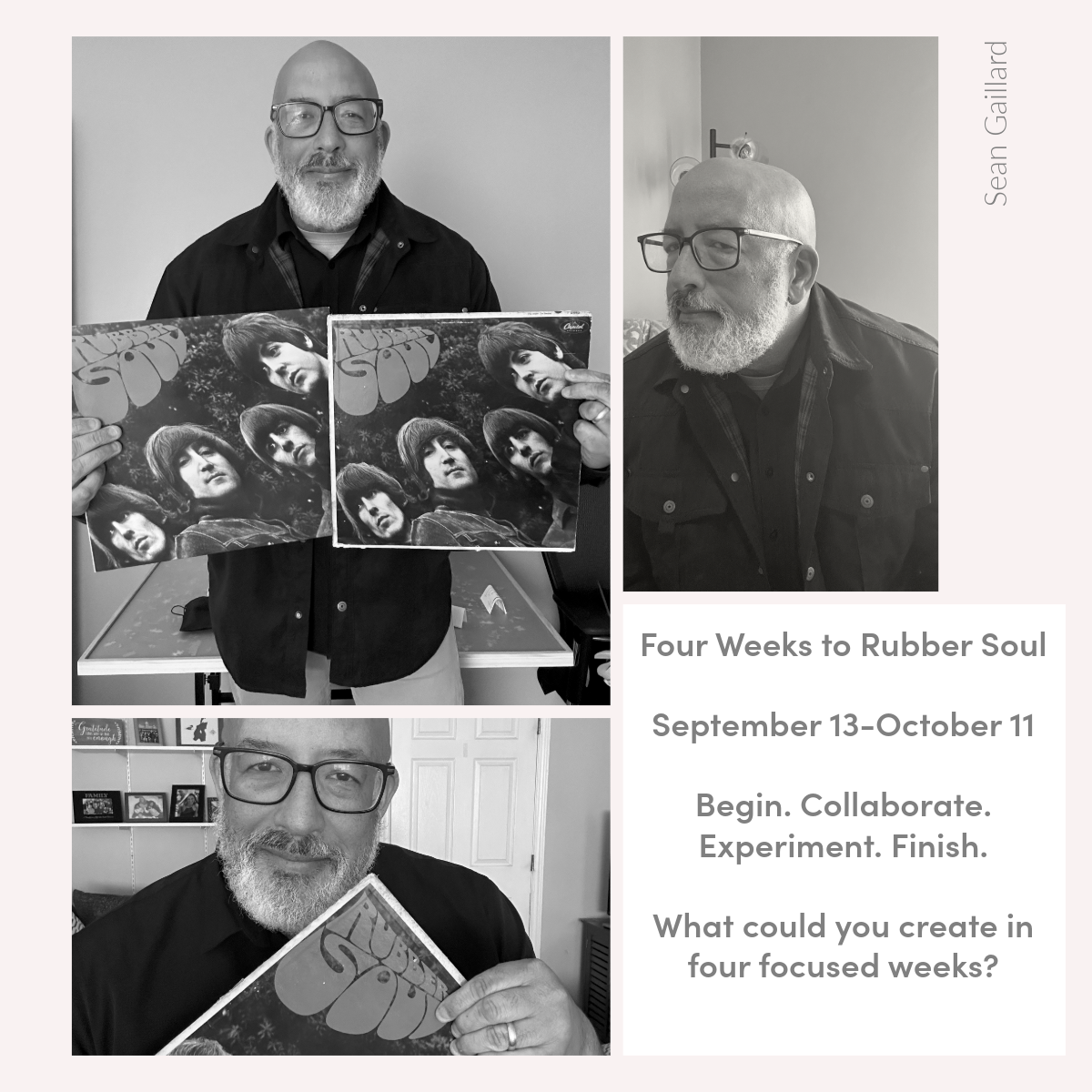
There is something magical about release day, especially when it involves The Beatles. For the past several years, I have made it a personal tradition to purchase new Beatles releases and reissues on the very day they become available. There is an excitement that comes with holding the finished product, opening the packaging, exploring the liner notes, and listening to familiar music in an entirely new way. I recently experienced that excitement again with the Super Deluxe Edition of Rubber Soul, an album that has been the inspiration for this four week creative journey.

As I listened to the recordings and explored the evolution of these remarkable songs, I began thinking about the word “Release” and what it means beyond the arrival of a new album. Release is about sharing something we have created with the world, but it is also about having the courage to let go.

On December 3, 1965, The Beatles released Rubber Soul in the United Kingdom. After approximately four weeks of intense recording sessions, they had completed an album that represented a remarkable evolution in their songwriting, musicianship, and creativity. They had experimented with new sounds, explored more introspective themes, and challenged themselves to move beyond what had previously worked so successfully.

Then came release day. The music that had occupied their days and nights at EMI Studios was now available for the world to experience. The Beatles had given their creativity, collaboration, and commitment to the recording process. What happened next was no longer entirely within their control. Listeners would discover the songs, interpret their meanings, and make the music part of their own lives. There was the possibility that the album could be a critical and commercial flop.

I wonder whether John, Paul, George, and Ringo could have imagined the impact that Rubber Soul would continue to have more than six decades later. I certainly doubt they could have envisioned an educator and lifelong Beatles fan in North Carolina finding enough inspiration in that album to undertake a daily creative challenge in 2026.

Over sixty years later, here we are.or nearly four weeks, I have written a blog post and recorded a reel every single day. I have explored the creative lessons found within the making of Rubber Soul and considered how those lessons might apply to our own lives. Along the way, I have discovered that the daily practice of creating and releasing something has become easier. What initially required a conscious effort has gradually become part of my daily rhythm.

I would be less than truthful if I suggested that the response to this journey has always been what I had hoped. There have been moments when I wondered whether anyone was reading, watching, or finding encouragement in these reflections. I began this challenge hoping to inspire others to embrace their own creativity, and I would still love to know that these ideas have resonated with someone.

However, I am learning something important about the act of releasing creative work. We cannot control the reception of our creativity, but we can control the courage it takes to release it.

Release also means letting go of the expectations we attach to our work. We cannot determine whether something will become a bestseller, reach a large audience, or generate the recognition we might hope to receive. Those possibilities should never become the measure of whether our creativity was worth pursuing in the first place.

There is a certain freedom in recognizing that distinction. We can give our best effort to something, refine it with intention, and share it with the world without allowing the response to determine its value. We can also release the anxiety, doubt, and fear that sometimes accompany the vulnerability of sharing something personal.

Perhaps the most meaningful discovery of these past four weeks is that the daily act of releasing my work has also given me greater courage to create. I have become more willing to explore an idea, trust my voice, and share something without waiting for permission, an invitation, or the assurance that someone will respond. That is a lesson I hope to carry well beyond this challenge.

When The Beatles released Rubber Soul in December 1965, they could not have known all the lives their music would touch or the creative journeys it would inspire. More than sixty years later, their work continues to find new listeners and inspire new possibilities. I find something deeply encouraging in that thought.

As I approach the conclusion of Four Weeks to Rubber Soul, I am beginning to understand that release is not simply the final step in the creative process. It is an act of courage and trust. We create something meaningful, give it our best effort, and find the courage to let it go.

Release is not the moment when the world decides our work matters. Release is the moment when we decide our work is worth sharing.

Tomorrow brings the final day of this journey. Today, I am grateful for the courage to create, the freedom to release, and the possibilities that emerge when we allow our work to find its own way into the world.

Check out the reel for more:
Courage in the Grooves: Day 5 of Four Weeks to Rubber Soul

It can be daunting to face one’s creativity and then put on display for others. There are many forms and permutations of this feeling. Perhaps, it’s pressing “Publish” on a blog or reel. Maybe, it’s sitting at the keyboard and literally facing the music. We create doubts, orchestrate judgement from others, and quietly place a watermark of failure on our work. This impedes our expression and may even result in the zero sum of our creative output.

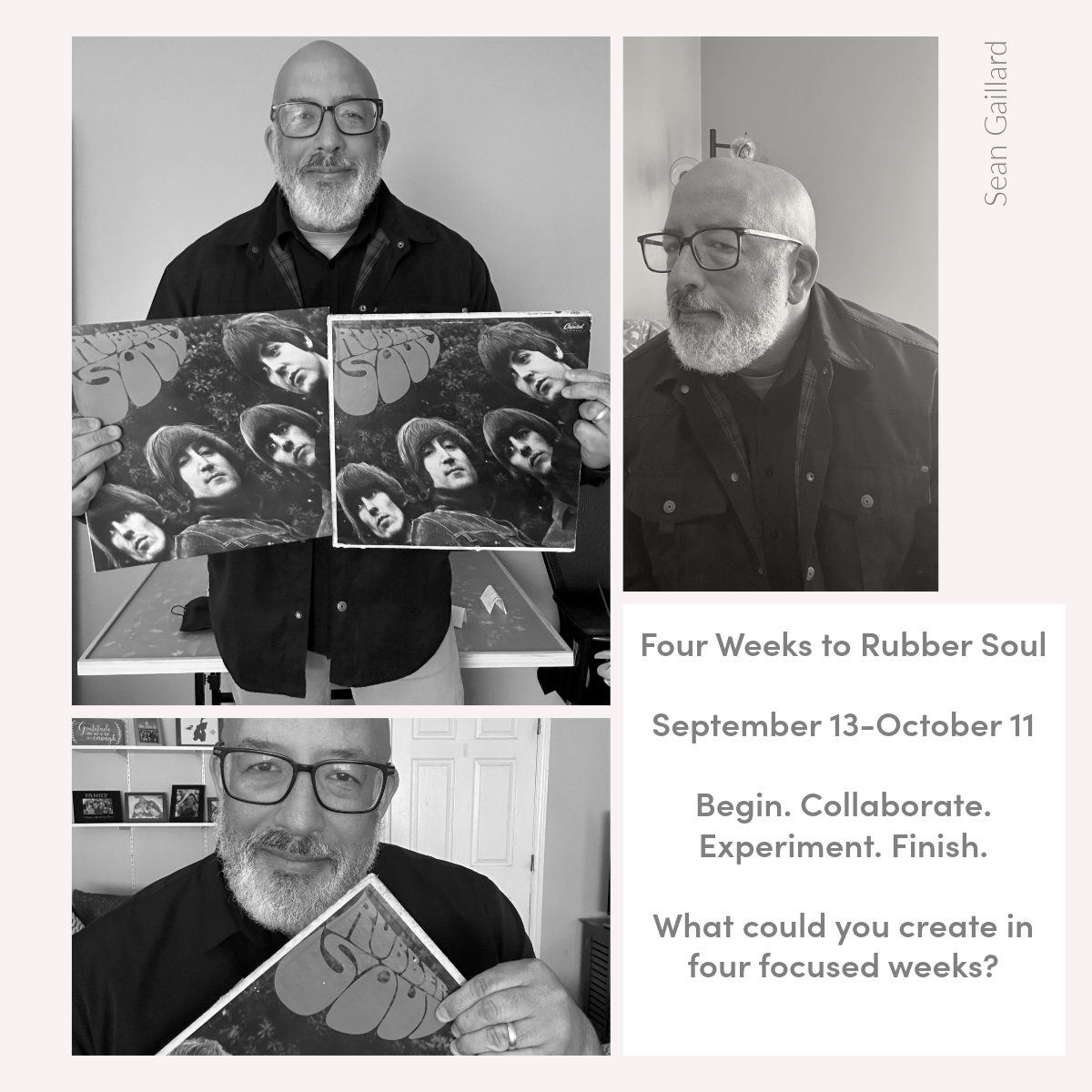
We need to dig deeply into our core for the courage to hold our heads high. We have to possess the belief in our creativity. We must be convicted that the world needs our ideas, dreams, and creative action. It takes courage to do all these things. I know it isn’t easy. By taking steps in these Four Weeks to Rubber Soul, my hope is to help inspire courage in your work. You may not have the camaraderie and support of a John, Paul, George, and Ringo surrounding you in your own creative pursuit. My hope is that creativity series will be like a bandmate for you as you dream, explore, and create.

Today’s word is Courage. I explore that very thing in today’s reel. Check out my riffs on “Rubber Soul” in today’s daily reel:

Go Electric: A Lesson from Bob Dylan

I didn’t expect the tears.

But there I was, sitting in a dimly lit theater, tears streaming down my face as Bob Dylan defiantly sang “Maggie’s Farm” to an audience torn between boos and cheers. I was watching A Complete Unknown with my oldest daughter, Maddie—a thoughtful Christmas gift she knew I’d treasure.

The scene that stopped me in my tracks was Dylan’s iconic performance at the 1965 Newport Folk Festival. Armed with a Fender Stratocaster, he boldly plugged in and “went electric,” breaking away from the acoustic traditions revered by the folk community. The reaction was a mix of outrage and elation. Boos echoed from the purists, but Dylan, backed by members of the Paul Butterfield Blues Band and organist Al Kooper, played on.

As a lifelong fan of the Butterfield Blues Band, seeing actors portray my music heroes—Mike Bloomfield on guitar, Sam Lay on drums, and Jerome Arnold on bass—deeply moved me. Their musicianship had always resonated with me, and witnessing their essence captured on screen added another layer of emotion to an already powerful moment.

This scene, beautifully brought to life by Timothée Chalamet as Dylan, is more than just a snapshot in music history. It’s a testament to creative courage.

Resonating with Dylan’s Defiance

I’ve watched the documentaries, taught this moment in my high school English classes, and pored over Elijah Wald’s Dylan Goes Electric. I even dedicated an episode of my Principal Liner Notes podcast to it. Yet, seeing it unfold on the big screen hit differently.

Dylan’s act of “going electric” wasn’t just about plugging in an electric guitar; it was about rejecting the status quo, staying true to his evolving vision, and embracing the risk of change. The boos, the backlash—none of it stopped him. He knew that growth required stepping out of the safe and into the bold.

That lesson transcends the 1960s. For leaders, it’s a call to innovate, to embrace challenges, and to stay true to our core values, even when met with resistance.

The Courage to Play On

As leaders, we often face our own “Newport moments.” Whether it’s introducing a new initiative, rethinking old practices, or simply challenging the comfort of the status quo, there’s always a risk of pushback. People may not immediately understand—or embrace—our vision.

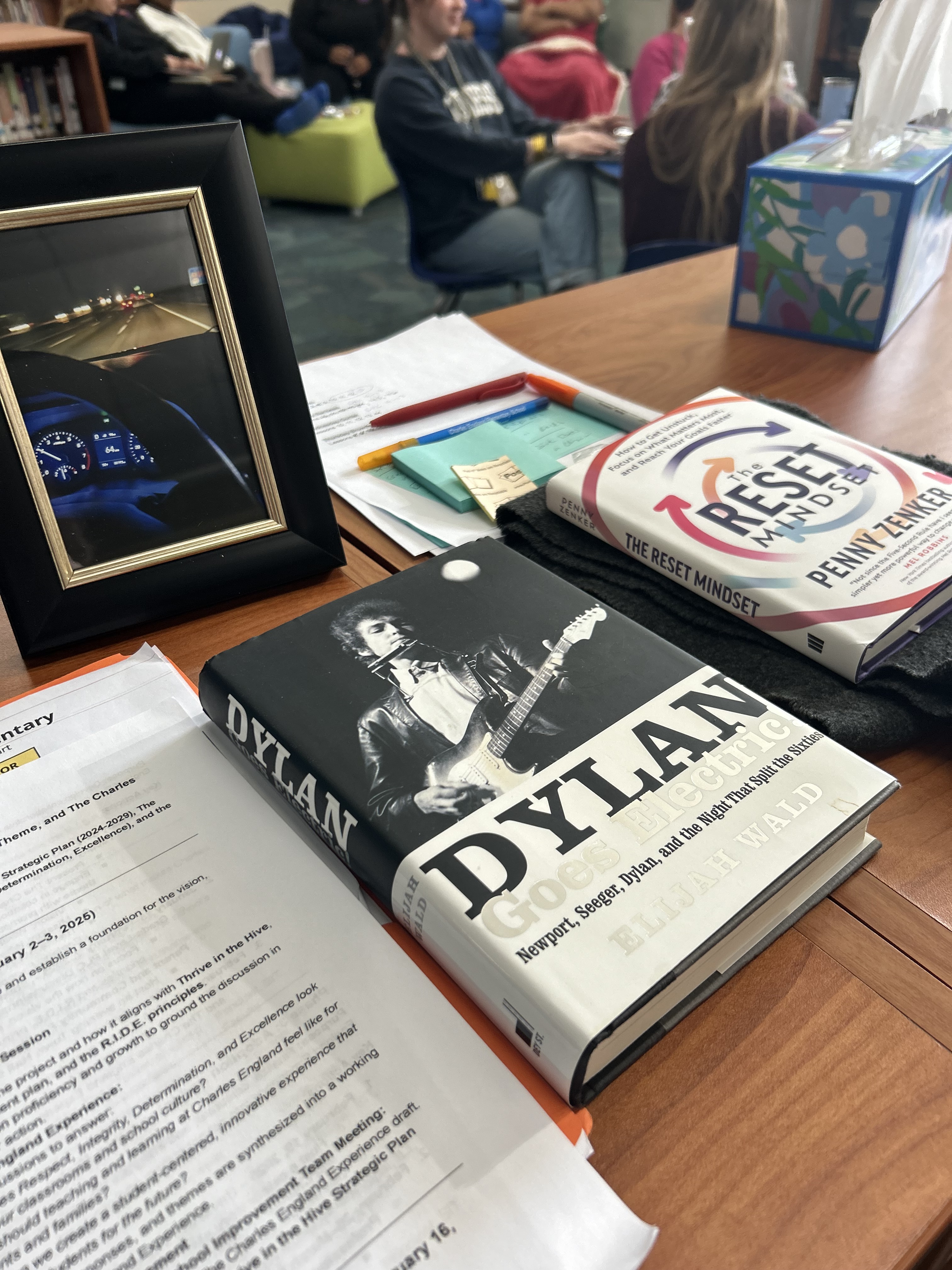
During a recent faculty meeting, I introduced a new approach to teaching and learning. I’ll admit, I was nervous about how it would be received. To ground myself, I brought along my copy of Wald’s Dylan Goes Electric. On the cover was Dylan, guitar in hand, staring down the crowd with quiet resolve. That image reminded me to stay steadfast, to “play on” even when the riffs might not land perfectly with everyone. (See picture below.)

Going electric is about more than innovation. It’s about embodying the courage to grow, to inspire others, and to stay true to our vision. It’s a reminder that, as leaders, we have the responsibility to model resilience and boldness for those we serve.

A Legacy of Creative Courage

Dylan’s 1965 performance is more than a legendary moment in music—it’s a blueprint for leadership. After Newport, Dylan continued to push boundaries, recording groundbreaking albums, earning accolades, and even winning the Nobel Prize for Literature. He didn’t let the boos define him; he let his vision propel him forward.

His story inspires us to embrace creative courage. When we face the naysayers or wrestle with self-doubt, we can hold our heads high, just as Dylan did, and press forward with conviction.

Four Ways Leaders Can “Go Electric”

  1. Stay True to Your Vision: Know your core values and let them guide your actions, even when facing resistance.
  2. Embrace Growth: Innovation often means stepping into the unknown. Take bold steps to evolve and improve.
  3. Play On Through Adversity: Be prepared for challenges. Stay resilient and committed to your vision, even when others push back.
  4. Inspire Others Through Action: Your courage can empower those around you to embrace their own growth and creativity.

Dylan’s journey reminds us that leadership is not about avoiding the boos but about playing on, louder and prouder. So, let’s go electric—and inspire those we lead to do the same.

Link to my “Go Electric” episode of Principal Liner Notes