The Last Minute Organ: How Al Kooper Took A Risk on Bob Dylan’s “Like A Rolling Stone”

The organ was an accident and Al Kooper was not an organist.

It is June 1965. Bob Dylan is in a Columbia Records studio in New York, pushing further away from the acoustic folk sound that made him a voice of protest and into something louder, riskier, and electric. His recent album, Bringing It All Back Home, has already signaled that shift. The influence of The Beatles is in the air, and Dylan is not looking back.

Producer Tom Wilson invites Kooper to the session. Kooper shows up with his guitar, even though he is there to observe. As the musicians settle in, one presence changes everything. Mike Bloomfield begins warming up.

Kooper listens.

He hears something different. He hears a level of artistry that causes him to pause. He makes a decision in that moment. He sets the guitar aside. He recognizes that he is not the right voice for that part of the song.

That decision does not end his contribution. It creates space for it.

As the band works through early takes, Kooper hears something else. He hears a part that is not there yet. He notices an organ sitting in the corner with an empty chair beside it. He shares the idea with Wilson. Wilson pushes back and reminds him that he is not an organist.

Kooper does not argue. He does not retreat.

He walks over and plays anyway.

Kooper would later recall, “He just sort of scoffed at me. He did not say no, so I went out there.” He slips into the track, feeling his way through the chords, slightly behind the beat, searching for the right touch.

Wilson notices. Bob Dylan notices more.

Dylan tells him to stay.

Later, Dylan insists that the organ be turned up in the mix.

The song is “Like a Rolling Stone.” It becomes a seismic shift in popular music. It stretches past six minutes. It blends poetry with electric instrumentation. It challenges what a hit song can be. It shows up at Newport and divides a crowd that expected something safer and more familiar.

That organ part, the one played by someone who was not supposed to be there, becomes essential to the song’s identity. It carries emotion. It adds tension. It lifts the track into something timeless.

You cannot imagine the song without it.

This is the leadership riff.

Kooper did not force his way in with the instrument he knew best. He listened first. He stepped back when needed. He paid attention to what the moment required. He trusted the idea that came to him. He acted on it, even when others questioned his credibility to do so.

Leadership asks the same of us.

There are moments when the room is filled with voices that seem stronger, louder, and more accomplished. Those moments can push us to the margins if we let them. Those moments can also invite us to listen more deeply and find where our contribution truly fits.

Kooper’s choice to set aside the guitar was not a failure. It was awareness. It was humility. It was the beginning of something better.

His decision to move to the organ was belief. It was risk. It was action.

That combination changed the song.

Too often, we allow doubt and outside voices to close the door before we ever reach for the handle. We convince ourselves that we are not ready, not qualified, or not invited. We stay seated when the chair is open.

Kooper reminds us to get up and move.

He reminds us that contribution is not always about mastery. It is about awareness, courage, and timing. It is about trusting that what we hear and feel has value.

He reminds us to play on anyway.

In this season, that lesson matters.

There will be rooms where you feel outmatched. There will be moments when someone questions your role before you even begin. There will be ideas that arrive quietly and ask you to take a step that feels uncertain.

Take it.

The work needs your voice, even if it comes through a different instrument than the one you planned to play.

That is how breakthroughs happen.

That is how songs change.

That is how leadership finds its sound.


Postscript

I am grateful to my good friend Max Pizarro for the conversation that sparked this reflection. He encouraged me to spend time with this story and to listen more closely. That nudge led to this piece and to a deeper appreciation of what it means to trust the moment and step into it.

I can already hear this one spinning forward as a future episode of Vinyl Riffs with Sean Gaillard. Stay tuned for that podcast episode to drop soon.

Go Electric: A Lesson from Bob Dylan

I didn’t expect the tears.

But there I was, sitting in a dimly lit theater, tears streaming down my face as Bob Dylan defiantly sang “Maggie’s Farm” to an audience torn between boos and cheers. I was watching A Complete Unknown with my oldest daughter, Maddie—a thoughtful Christmas gift she knew I’d treasure.

The scene that stopped me in my tracks was Dylan’s iconic performance at the 1965 Newport Folk Festival. Armed with a Fender Stratocaster, he boldly plugged in and “went electric,” breaking away from the acoustic traditions revered by the folk community. The reaction was a mix of outrage and elation. Boos echoed from the purists, but Dylan, backed by members of the Paul Butterfield Blues Band and organist Al Kooper, played on.

As a lifelong fan of the Butterfield Blues Band, seeing actors portray my music heroes—Mike Bloomfield on guitar, Sam Lay on drums, and Jerome Arnold on bass—deeply moved me. Their musicianship had always resonated with me, and witnessing their essence captured on screen added another layer of emotion to an already powerful moment.

This scene, beautifully brought to life by Timothée Chalamet as Dylan, is more than just a snapshot in music history. It’s a testament to creative courage.

Resonating with Dylan’s Defiance

I’ve watched the documentaries, taught this moment in my high school English classes, and pored over Elijah Wald’s Dylan Goes Electric. I even dedicated an episode of my Principal Liner Notes podcast to it. Yet, seeing it unfold on the big screen hit differently.

Dylan’s act of “going electric” wasn’t just about plugging in an electric guitar; it was about rejecting the status quo, staying true to his evolving vision, and embracing the risk of change. The boos, the backlash—none of it stopped him. He knew that growth required stepping out of the safe and into the bold.

That lesson transcends the 1960s. For leaders, it’s a call to innovate, to embrace challenges, and to stay true to our core values, even when met with resistance.

The Courage to Play On

As leaders, we often face our own “Newport moments.” Whether it’s introducing a new initiative, rethinking old practices, or simply challenging the comfort of the status quo, there’s always a risk of pushback. People may not immediately understand—or embrace—our vision.

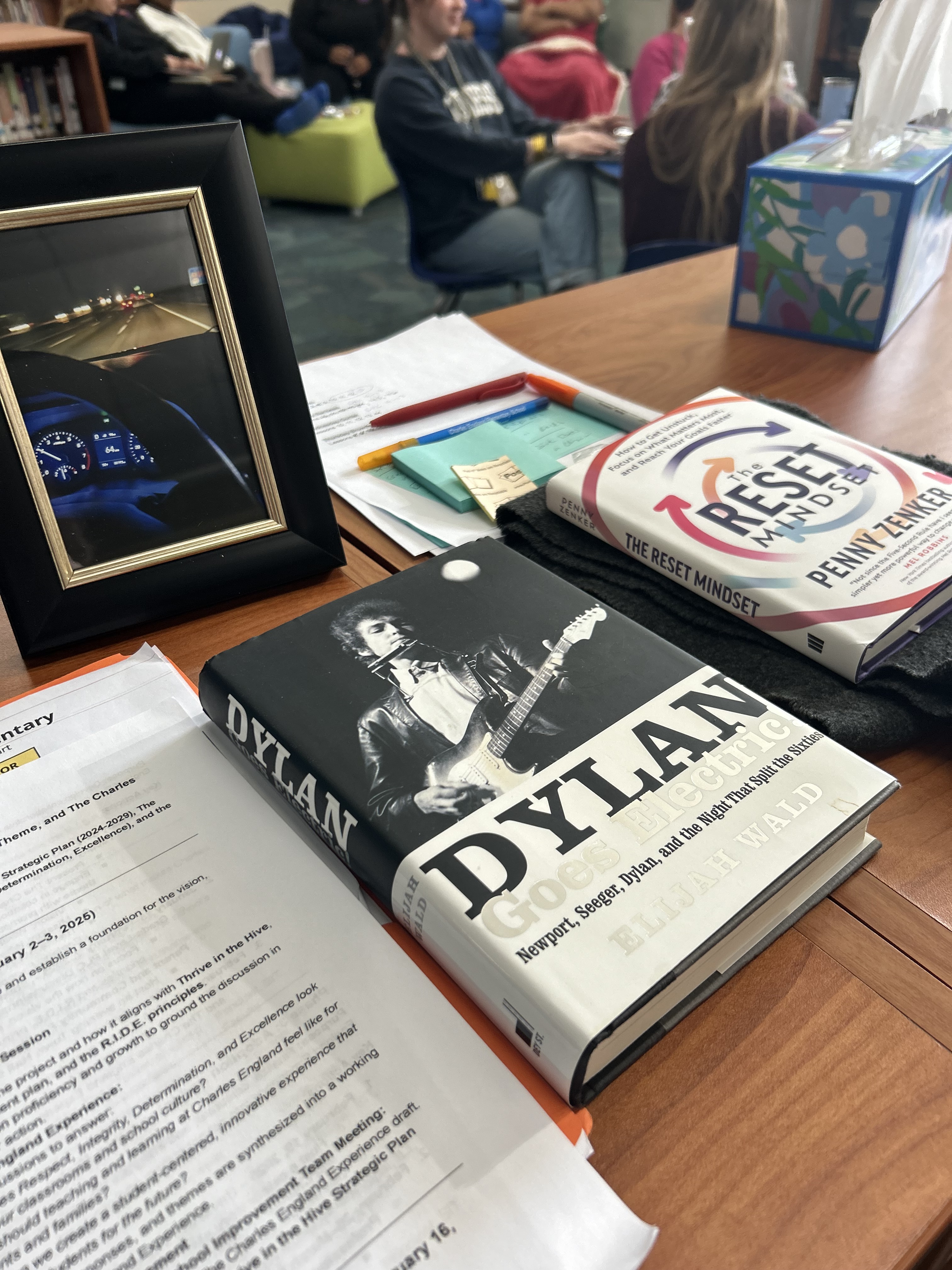
During a recent faculty meeting, I introduced a new approach to teaching and learning. I’ll admit, I was nervous about how it would be received. To ground myself, I brought along my copy of Wald’s Dylan Goes Electric. On the cover was Dylan, guitar in hand, staring down the crowd with quiet resolve. That image reminded me to stay steadfast, to “play on” even when the riffs might not land perfectly with everyone. (See picture below.)

Going electric is about more than innovation. It’s about embodying the courage to grow, to inspire others, and to stay true to our vision. It’s a reminder that, as leaders, we have the responsibility to model resilience and boldness for those we serve.

A Legacy of Creative Courage

Dylan’s 1965 performance is more than a legendary moment in music—it’s a blueprint for leadership. After Newport, Dylan continued to push boundaries, recording groundbreaking albums, earning accolades, and even winning the Nobel Prize for Literature. He didn’t let the boos define him; he let his vision propel him forward.

His story inspires us to embrace creative courage. When we face the naysayers or wrestle with self-doubt, we can hold our heads high, just as Dylan did, and press forward with conviction.

Four Ways Leaders Can “Go Electric”

  1. Stay True to Your Vision: Know your core values and let them guide your actions, even when facing resistance.
  2. Embrace Growth: Innovation often means stepping into the unknown. Take bold steps to evolve and improve.
  3. Play On Through Adversity: Be prepared for challenges. Stay resilient and committed to your vision, even when others push back.
  4. Inspire Others Through Action: Your courage can empower those around you to embrace their own growth and creativity.

Dylan’s journey reminds us that leadership is not about avoiding the boos but about playing on, louder and prouder. So, let’s go electric—and inspire those we lead to do the same.

Link to my “Go Electric” episode of Principal Liner Notes