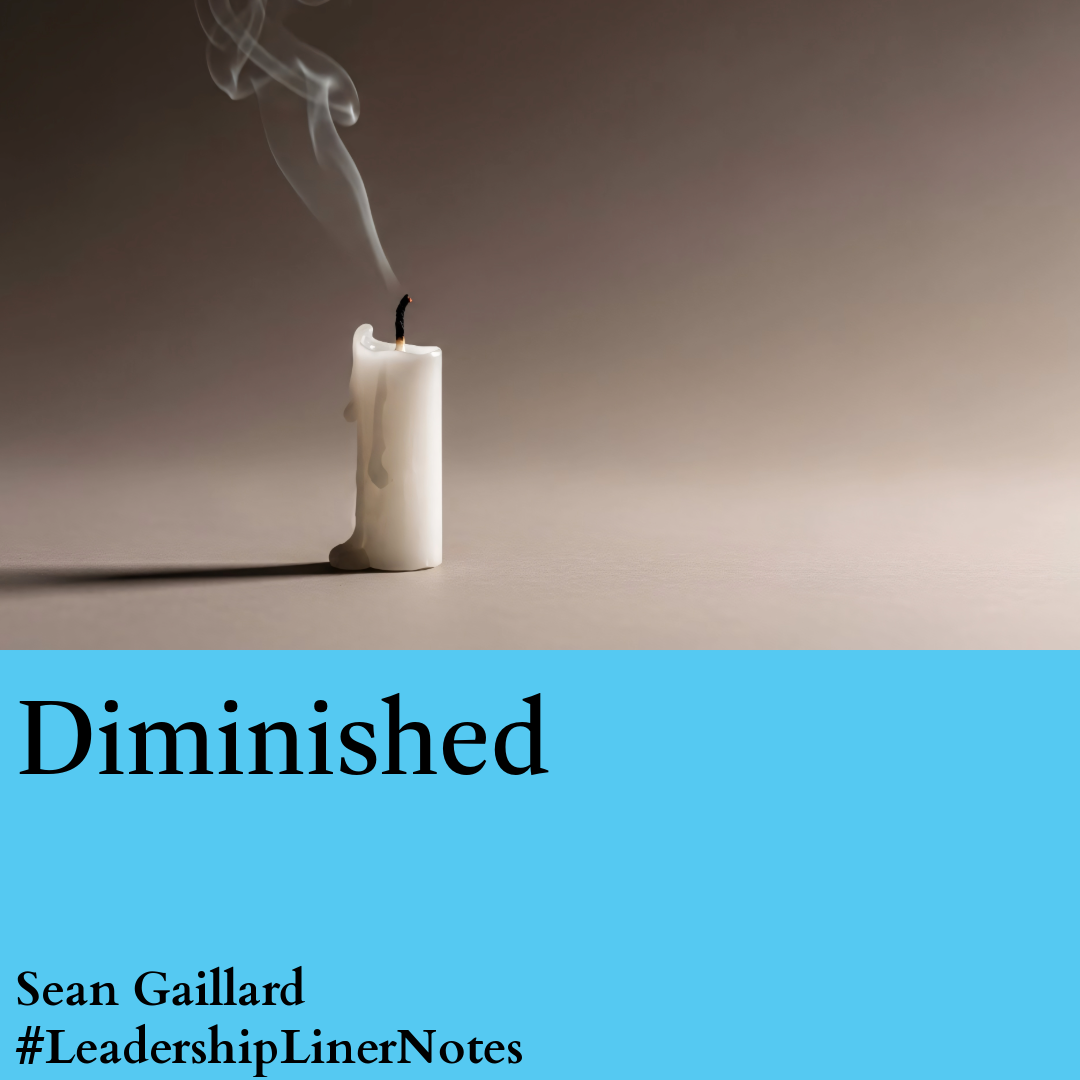
Diminished

Last week, I experienced what it means to feel diminished.

I will not go into the details because this reflection is about something larger than one moment. The experience left me feeling invisible. I felt like I did not matter. I felt like my strengths and gifts were not needed or invested in. The weight of that feeling stayed with me long after the moment passed.

That experience became a catalyst for reflection.

I started thinking about the moments in my life when I have felt diminished on both a personal and professional level. I also thought about the times when I may have unintentionally contributed to someone else feeling that way. None of us are immune from causing harm when we fail to truly see each other.

The opposite of diminishment is mattering.

I recently found myself deeply moved by an episode of Lainie Rowell’s podcast, “Evolving with Gratitude,” featuring Jennifer Breheny Wallace, author of Mattering: The Secret to a Life of Deep Connection and Purpose, Their conversation explored the human need to feel valued not simply for achievement or output, but for who we are and what we uniquely bring into the world. ((Check out that pivotal episode here.)

That conversation stayed with me because it helped put language around something I had already been feeling deeply. The concept of mattering fueled my own deep dive into human-centered leadership. It helped me better understand why so many people are emotionally exhausted, disconnected, anxious, and overwhelmed right now.

Gallup research reveals that only 28% of employees strongly agree that their opinions count at work. Another Gallup study found that only 37% of employees strongly agree they are treated with respect in the workplace.

Those numbers point toward something much deeper than engagement surveys or workplace morale. They point toward a growing crisis of human disconnection and invisibility.

Many people are not struggling because they lack talent, intelligence, work ethic, or resilience. Many are struggling because they no longer feel seen.

People are struggling right now because they do not feel seen. They feel valued for output, production, compliance, metrics, or whatever bottom line is driving the moment. Many people no longer feel valued for their humanity, creativity, presence, compassion, wisdom, or unique gifts. Over time, that kind of culture wears people down emotionally, mentally, spiritually, and physically.

I know this because I have lived it.

There was a season where the stress of carrying invisibility, anxiety, pressure, and emotional exhaustion landed me in the hospital twice. The nervous system keeps score when people carry the weight of feeling unseen for too long.

That realization has been sitting with me deeply lately.

When I think about the collaborative spaces that have brought me healing and renewal, I notice a common thread. My work with Sonia Matthew through “Leading While Human,” my conversations with Donya Ball on “Real Riffs,” and the gathering space we created through “The Disruption Table” alongside Marcel Schwantes have all centered around one truth: people want to feel seen, heard, valued, and connected.

Those collaborations have mattered to me more than I can fully express.

Each conversation became a reminder that leadership is not about performance alone. Leadership is about presence. It is about creating spaces where people can bring their full humanity into the room without fear of diminishment. Those conversations helped lessen my own sense of invisibility. They reminded me that my voice still mattered. They reminded me that I still had gifts worth sharing.

I believe many people are quietly carrying this same feeling right now.

Some are sitting in meetings feeling unseen. Some are showing up to workplaces where their gifts are overlooked. Some are leading teams while privately wondering if they matter at all. Some are exhausted from environments that celebrate output while neglecting the human beings producing it.

People do not need another gimmick, slogan, or leadership trend.

People need cultures of belonging.

My father used to say, “Everybody gets off the bench. Everybody plays.”

I carry those words with me more now than ever before.

Cultures of belonging are built when people are invited into the game. They are built when strengths are recognized. They are built when encouragement becomes intentional. They are built when someone chooses to pause long enough to truly see another human being.

We cannot wait for the perfect leader, perfect initiative, or perfect professional learning experience to create that kind of culture. We create it ourselves through everyday acts of listening, encouragement, trust, compassion, and belief in one another.

Everyone has a gift to share.

Sometimes the most important act of leadership is helping someone remember that their gift still matters.
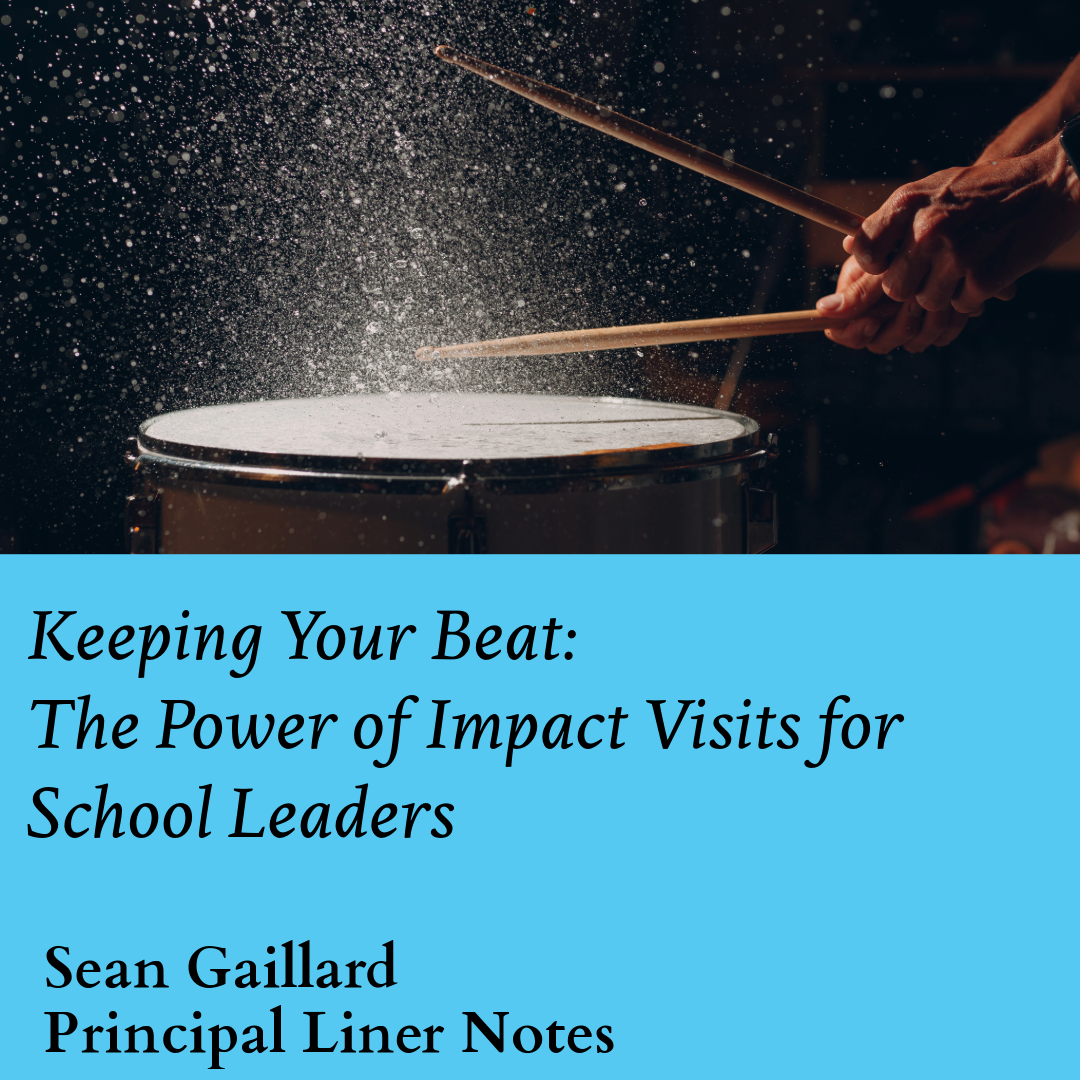
Keeping Your Beat: The Power of Impact Visits for School Leaders

A reflection inspired by John Bonham, legacy, and the rhythm of leadership
#PrincipalLinerNotes

Special Thanks to Jimmy Casas and Lainie Rowell for their respective missions inspiring my gig! I am grateful that our PLN connections have evolved into sincere, lifelong friendships.

A very special thanks to my amazing wife, Deb, for being that constant source of love, inspiration, and strength every day! Thanks for inspiring Impact Visits!


A Soundcheck at Knebworth

It was just a soundcheck.
August 1979. Knebworth. A wide open field waiting to be filled with music. Led Zeppelin was preparing for a monumental return to the British stage. But as the band warmed up, it wasn’t John Bonham—the thunderous backbone of the band—behind the drum kit. It was his 13-year-old son, Jason.

In a rare and touching moment, Bonham stepped away from the drums and wandered into the field. He didn’t just want to hear the band; he wanted to listen from a distance. He stood alone, away from the stage, and let the sound wash over him. The rhythm of his legacy. His son’s rhythm.

There were no headlines. No fanfare. But there was something sacred in that quiet act: a father making space for the next generation, a rock legend becoming an audience member. Trust. Love. Legacy. It was all there in that field of amplifiers and dreams.

As a teenager, I remember reading about that moment in one of the many music biographies I devoured. It stuck with me. Especially knowing that John Bonham would pass away just over a year later. His son, Jason, would grow up to carry the torch—eventually joining surviving members of Led Zeppelin for reunion shows, most notably in the legendary 2007 performance captured on Celebration Day.

That soundcheck was more than rehearsal. It was legacy in action. It was impact. It was a leader stepping back—so something deeper could move forward.


Stepping Back for Impact

The response to my recent blog post, The Loneliness of Leadership, has been both humbling and healing. I wrote it to name and navigate the isolation I’ve felt in leadership—and to extend a hand to others who may be feeling the same. The heartfelt messages and outreach reminded me that we’re not as alone as we think. There is resonance when we share our truth.

This morning, I had the sincere honor of being a guest on Jimmy Casas’ podcast, The Interview Chair.
You can listen to that episode soon, but here’s what struck me during our conversation: Jimmy asked how I maintain mental health in leadership—especially after sharing my heart episode experience from last year. My answer came quickly: Impact Visits.


What Are Impact Visits?

Impact Visits are intentional moments carved out of the chaos. They’re brief detours in your day where you go and witness your leadership in motion—where the fingerprints of your work are making a difference.

Over the years of my principalship, my wife Deb would often tell me, especially on the hard days, “Go visit a classroom where you know it’s working.” She’d say it gently but with urgency—usually on the days when I was feeling discouraged, disconnected, or alienated. I didn’t always listen. I’d get swept up in the whirlwind of tasks and to-dos. But since my heart episode and my renewed focus on mental health, I’ve made it a point to follow her advice.

So, thank you, Deb. I know to listen to you now.

These are not evaluative visits. They’re not walk-throughs with clipboards and checklists. They’re personal moments—to be reminded, to be renewed. A time to refuel your spirit and reconnect to why you said yes to this work in the first place.

If you can, use these visits as a chance to connect. To offer a word of thanks. A fist bump. A simple “You’re doing great.” As my friend Lainie Rowell reminds us in her #EvolvingWithGratitude mission—gratitude is a powerful act of leadership. A little goes a long way.


Four Ways to Make Impact Visits Happen

  1. Schedule Intentionally
    Block time on your calendar each week. Just 10–15 minutes to step into a classroom, a hallway, or the front line of your impact.
  2. Make It Routine
    Ritual turns into rhythm. If you make Impact Visits a part of your leadership practice, they’ll become the pause that powers your next move.
  3. Share the Visit
    Reflect on your visits with a thought partner or friend. If you don’t have someone, you’re welcome to reach out to me. I’d be honored to be that listening ear: sgaillard84@gmail.com
  4. Encourage Others
    Inspire your team, your assistant principals, or even colleagues in your PLN to create their own version of Impact Visits. Help build a culture of reflection and renewal.

Your Beat Still Matters

Leadership is not a sprint of perfection. It’s a series of riffs—some raw, some refined. We owe it to ourselves and those we serve to keep our rhythm aligned with our core values.

So, take that walk. Stand in that hallway. Listen to the beat that’s still echoing from something you once helped shape.

Because even in the quiet moments—maybe especially in the quiet moments—we find proof that we’re still making a difference.

Keep your beat.