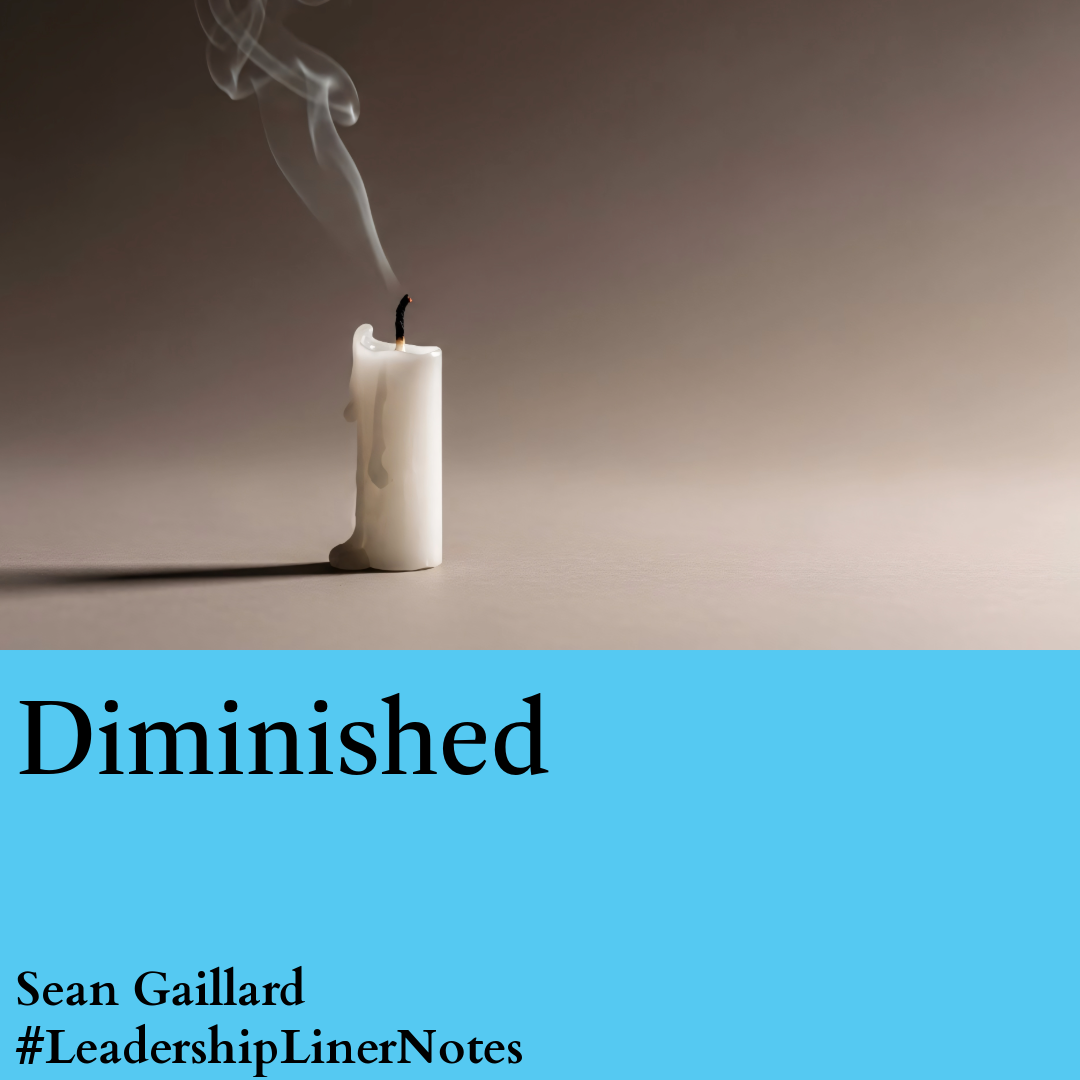
Diminished

Last week, I experienced what it means to feel diminished.

I will not go into the details because this reflection is about something larger than one moment. The experience left me feeling invisible. I felt like I did not matter. I felt like my strengths and gifts were not needed or invested in. The weight of that feeling stayed with me long after the moment passed.

That experience became a catalyst for reflection.

I started thinking about the moments in my life when I have felt diminished on both a personal and professional level. I also thought about the times when I may have unintentionally contributed to someone else feeling that way. None of us are immune from causing harm when we fail to truly see each other.

The opposite of diminishment is mattering.

I recently found myself deeply moved by an episode of Lainie Rowell’s podcast, “Evolving with Gratitude,” featuring Jennifer Breheny Wallace, author of Mattering: The Secret to a Life of Deep Connection and Purpose, Their conversation explored the human need to feel valued not simply for achievement or output, but for who we are and what we uniquely bring into the world. ((Check out that pivotal episode here.)

That conversation stayed with me because it helped put language around something I had already been feeling deeply. The concept of mattering fueled my own deep dive into human-centered leadership. It helped me better understand why so many people are emotionally exhausted, disconnected, anxious, and overwhelmed right now.

Gallup research reveals that only 28% of employees strongly agree that their opinions count at work. Another Gallup study found that only 37% of employees strongly agree they are treated with respect in the workplace.

Those numbers point toward something much deeper than engagement surveys or workplace morale. They point toward a growing crisis of human disconnection and invisibility.

Many people are not struggling because they lack talent, intelligence, work ethic, or resilience. Many are struggling because they no longer feel seen.

People are struggling right now because they do not feel seen. They feel valued for output, production, compliance, metrics, or whatever bottom line is driving the moment. Many people no longer feel valued for their humanity, creativity, presence, compassion, wisdom, or unique gifts. Over time, that kind of culture wears people down emotionally, mentally, spiritually, and physically.

I know this because I have lived it.

There was a season where the stress of carrying invisibility, anxiety, pressure, and emotional exhaustion landed me in the hospital twice. The nervous system keeps score when people carry the weight of feeling unseen for too long.

That realization has been sitting with me deeply lately.

When I think about the collaborative spaces that have brought me healing and renewal, I notice a common thread. My work with Sonia Matthew through “Leading While Human,” my conversations with Donya Ball on “Real Riffs,” and the gathering space we created through “The Disruption Table” alongside Marcel Schwantes have all centered around one truth: people want to feel seen, heard, valued, and connected.

Those collaborations have mattered to me more than I can fully express.

Each conversation became a reminder that leadership is not about performance alone. Leadership is about presence. It is about creating spaces where people can bring their full humanity into the room without fear of diminishment. Those conversations helped lessen my own sense of invisibility. They reminded me that my voice still mattered. They reminded me that I still had gifts worth sharing.

I believe many people are quietly carrying this same feeling right now.

Some are sitting in meetings feeling unseen. Some are showing up to workplaces where their gifts are overlooked. Some are leading teams while privately wondering if they matter at all. Some are exhausted from environments that celebrate output while neglecting the human beings producing it.

People do not need another gimmick, slogan, or leadership trend.

People need cultures of belonging.

My father used to say, “Everybody gets off the bench. Everybody plays.”

I carry those words with me more now than ever before.

Cultures of belonging are built when people are invited into the game. They are built when strengths are recognized. They are built when encouragement becomes intentional. They are built when someone chooses to pause long enough to truly see another human being.

We cannot wait for the perfect leader, perfect initiative, or perfect professional learning experience to create that kind of culture. We create it ourselves through everyday acts of listening, encouragement, trust, compassion, and belief in one another.

Everyone has a gift to share.

Sometimes the most important act of leadership is helping someone remember that their gift still matters.

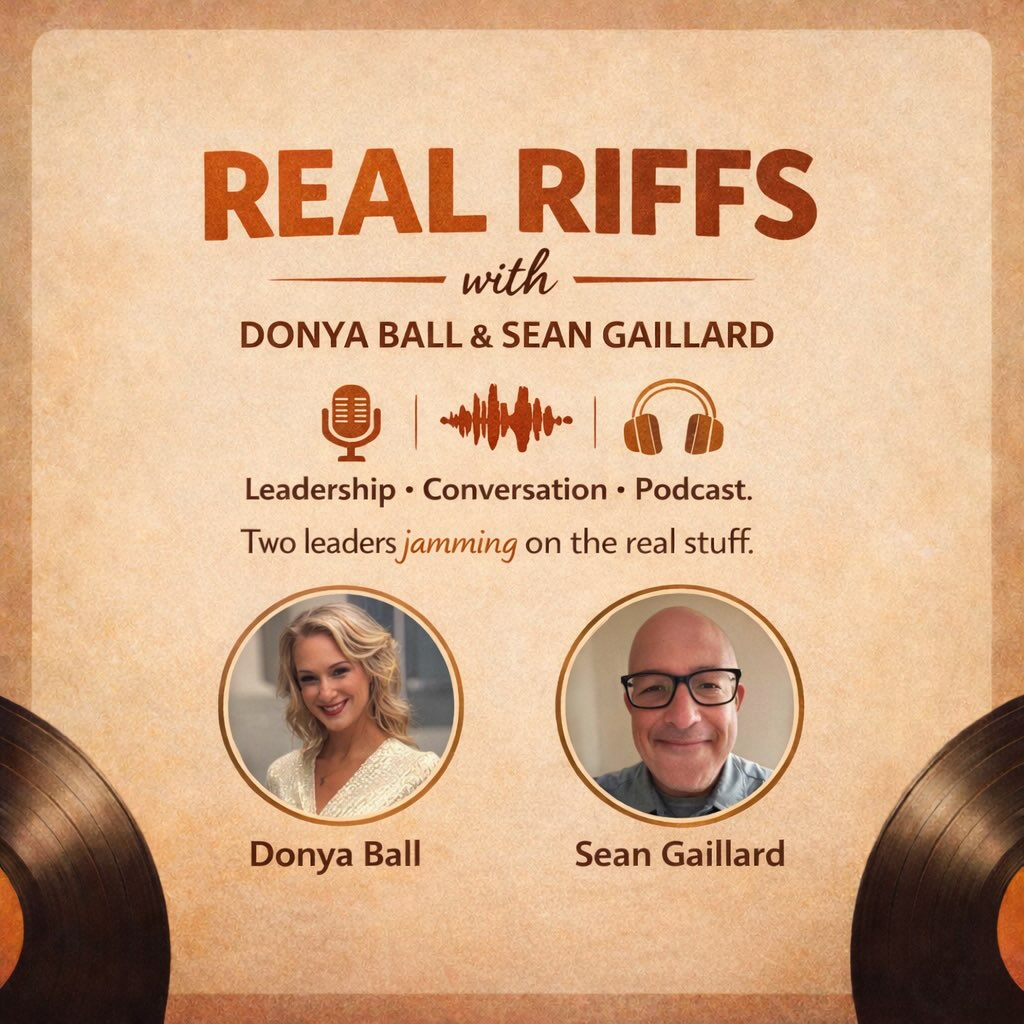
“Real Riffs”: Finding the Signal in the Noise

There comes a point where you get tired of the noise, the performance, and leadership being reduced to slogans, gimmicks, and quick fixes.

Over the past couple of years, I have been on a journey of searching, grappling, and wrestling with what it truly means to lead while remaining human-centered. I have written about it, spoken about it, and lived it through moments of clarity and moments of failure. Through it all, one truth continues to rise to the surface. Leadership is deeply human work, and too often that humanity gets lost.

This new project is a response to that realization.

I am deeply grateful to be on this journey with Dr. Donya Ball. What we have built together did not come from a strategy session or a content plan. It came from connection. It is the kind of connection that you recognize immediately and trust without hesitation.

Have you ever experienced that moment in music when you are in the middle of a jam session and someone takes the song in a direction that resonates with you? You lock eyes, exchange a nod, and realize that you are hearing the same thing. In that moment, a shared language emerges and you continue playing, knowing something meaningful is unfolding.

That is what this collaboration has felt like.

Donya and I found that same kinship, and out of that connection, “Real Riffs” was born.

This is not just another leadership podcast.

“Real Riffs” is built for you.

We are creating a space for real conversations about leadership without stunts, product placements, or games. We are committed to honest dialogue about the work, the weight, the joy, and the failures that come with leading. There are conversations that are not being had, topics that are being avoided, and truths that are being softened to fit a narrative. Leaders deserve better, and you deserve better.

“Real Riffs” is an open invitation.

We want to hear from you. We invite you to share the questions that stay with you, the challenges that keep you up at night, and the moments that push you to reflect and grow. You can share your ideas in the comments here, email me directly at sgaillard84@gmail.com, or reach out through direct message on social media to me or to Donya. You can also connect with Donya and learn more about her work at https://www.donyaball.com/.

We are not talking at you. We are building “Real Riffs” with you.

This podcast is designed to reach beyond education because leadership is not confined to a single profession. This space is for anyone doing the work of leading and striving to stay grounded in what matters most.

“Real Riffs” will launch in April, with new episodes released monthly.

Each episode will be approached like an album. We will drop the needle and let it play. Your questions will guide the direction, and your voice will help shape the sound. What emerges will be something real, something shared, and something worth holding onto.

This is your invitation to join the jam.

Bring your questions. Bring your experiences. Bring your truth.

Let’s create something that matters.

Resetting Rejection: Leading with Resilience and Authenticity

Rejection is a reality. It happens, and it stings. Sometimes, the worst rejection isn’t from others who naysay, doubt, or echo endlessly the phrases, “We’ve never done it this way…” or “We always have…” Often, it’s the rejection we inflict upon ourselves that hurts the most.

The Beatles faced rejection head-on. In my 2018 book, The Pepper Effect, I recount their infamous rejection by Decca Records in 1962. The label dismissed them with the now-legendary phrase: “Guitar groups are on their way out.” Yet, the Beatles didn’t let that stop them. Instead, they adopted a “reset mindset” amidst the setback. They persevered, refined their craft, and sought opportunities elsewhere. Their resilience led to a groundbreaking partnership with producer George Martin and, eventually, music that would change the world.

Recently, I revisited the concept of resilience while reading Penny Zenker’s The Reset Mindset. Zenker outlines a three-step process for overcoming both personal and professional setbacks: Step Back, Get Perspective, and Realign. Her approach emphasizes mindful choices and intentional progress. The Beatles, whether consciously or not, exemplified this mindset. They regrouped, made strategic changes (including bringing Ringo Starr into the band), and doubled down on their songwriting. Their determination and shared vision propelled them to unimaginable heights.

I’ve endured my own share of rejection—writer’s block, rejected book proposals, pilfered ideas from unreliable collaborators, and negative problem admirers eclipsing possibilities. At times, I’ve been my harshest critic, rejecting myself before anyone else had the chance. Pressing “Publish” on a blog post can feel like stepping off a ledge, wondering if anyone will read it or if it will resonate. Recording a podcast episode Yet, a trusted thought partner recently reminded me to let my words go—to trust they’ll land where they’re meant to do so.

This advice brought to mind the Beatles’ 1968 self-titled album, commonly known as the “White Album.” This sprawling, 30-song masterpiece faced criticism for being too long or unfocused. Paul McCartney’s response? “It’s great, it sold, it’s the bloody Beatles’ White Album, shut up!” That unapologetic confidence is a lesson in staying true to one’s vision and maintaining a reset mindset.

I channeled that spirit recently when deciding whether to bring my guitar to a school assembly. As a new principal at my school, I felt hesitation. I have been a principal for 16 years and I have lugged my guitar to school for various events so this was not first gig with a guitar in the schoolhouse. Yet, I endured a series of stumbling doubts with bringing my guitar along to school. Would this feel out of place? Would it connect? But in the end, I applied the Reset Mindset. I took an intentional step back to reflect and wonder. I focused on my purpose: creating a joyful, meaningful moment for our students. I decided to move forward, tune into building a culture of belonging for students and faculty, and bring my beloved guitar to the scheduled grade level assemblies. Music is an entry point for others and serves a divine thread that connects us to our shared humanity.

The butterflies didn’t stop as I hurriedly carried my guitar into school, but when I sat down in front of our first graders and began to play, I knew I’d made the right choice. The laughter, joy, and connection we shared affirmed the decision. It was a reminder of the power of leading with authenticity and purpose. I love playing music and I wanted to be unabashedly comfortable with my best self.

Recently, on my podcast Why The Beatles Matter, I had a conversation with Dr. Donya Ball that gave me even more perspective on rejection. It was serendipitous that she brought up the idea of leaders leaning into and accepting rejection.  As I was just working on this blog post before our conversation, I readily welcomed her insight on rejection. She shared how we, as leaders, don’t talk about rejection enough and how it’s a necessary part of growth. I deeply appreciated her real talk on this reality. Rejection, she said, is an opportunity to renew, recalibrate, and re-focus. It’s another way to adapt the Reset Mindset—seeing rejection not as the end or the finality of an idea, but as a stepping stone to connect with others, build collaborative coalitions, or simply reset.

As leaders, our gig is to create meaningful moments that inspire, connect, and uplift. When we embrace resilience and focus on our purpose, we transcend rejection and lead from a place of authenticity.

Four Leadership Moves Inspired by The Beatles and the Reset Mindset:

  1. Evolve and Adapt: The Beatles didn’t let their rejection by Decca define them. They stepped back, reflected on what they needed, and made a bold move by bringing in Ringo Starr. This pivotal decision transformed their sound and solidified their lineup, exemplifying the importance of adapting to move forward.
  2. Collaborate with Vision: Recognizing the need for a fresh perspective, the Beatles partnered with George Martin, who brought a new dimension to their music. This collaboration highlighted the power of seeking thought partners who align with your vision and elevate your work.
  3. Refine Your Craft: After their setback at the failed Decca Records Audition, the Beatles didn’t stagnate. They doubled down on songwriting, tirelessly honing their skills and experimenting with new ideas. This relentless pursuit of excellence demonstrates how leaders can use rejection as fuel to refine their craft.
  4. Stay True to Your Purpose: Despite criticism and pushback, The Beatles never abandoned their creative vision. Whether it was the ambitious scope of the “White Album” or their genre-defying innovations, they stayed true to their purpose, leading with authenticity and confidence.

The importance of tuning into the Reset Mindset cannot be overstated. As leaders, modeling this mindset for others empowers our teams and fosters resilience. Let’s embrace the journey together and inspire others to do the same.


Resources to Dig Deeper for Reflection and Action

Tune in to the upcoming episode of my podcast, Why The Beatles Matter, where I continue this conversation with Dr. Donya Ball. Her insights on leadership, rejection, and authenticity are not to be missed. Plus, she’s a joy to engage in for conversation! You can also learn more about her work and check out her TEDx Talk at https://www.donyaball.com/.

Explore more connections to The Beatles and leadership in my book, The Pepper Effect: Tap into the Magic of Creativity, Collaboration, and Innovation.

Check out Penny Zenker’s The Reset Mindset: How To Get Unstuck, Focus on What Matters Most, and Reach Your Goals Faster.

Paul McCartney on “The White Album” as mentioned above: It’s a great quote and shows The Reset Mindset in action.