This summer was supposed to be my breakthrough. I was a featured speaker at a major conference. I was on a roll with regular blogging and podcasting. I was amidst writing my second book. I was working on putting together an LLC.
Then, there were some hard realities that began to arise. My sessions at the conference were not well attended. This would be the second time in row that this happened where I was a featured speaker. The blogs and podcasts were not gaining the traction that I thought they merited. The usual friends who had supported my content in the past were not doing so.
I felt alienated and lost amidst a professional learning network that I once held high as a community. Feeling that same alienation in my daily work, I thought that if I invested in my PLN that I would get the return on investment that I craved. I figured if I upped my ante with blogging and podcasting that I would find solace with like-minded colleagues. Ultimately, I was looking for emotional support for my words and ideas in which I shared my humanity.
Impact is hard to judge when you write and podcast. There is no room to riff and vibe with when you do those things. All that I rely on are the likes and comments from my posts. The encouraging texts from friends in my PLN that I would receive after I posted a blog or a podcast. That traction has been missing lately and it hurts. When the reciprocity for the support I share for others, it does sting.
Over time, I realized I had begun measuring connection by engagement. I had unintentionally allowed algorithms, notifications, and analytics to become my scoreboard. Somewhere along the way, I confused being seen with being known and being followed with being supported.
The irony is not lost on me. Much of my recent writing has centered on mattering, belonging, and creating cultures where people feel noticed. Yet, I found myself looking for those very things in places that were never designed to provide them. Social media can introduce us to people, but it cannot sustain us. Likes can be affirming, but they are a poor substitute for authentic relationships. Real connection is built in conversations, shared experiences, and showing up for one another over time.
As I reflected on this difficult season, I found myself returning to something I wrote several weeks ago. At the time, I thought I was writing about the frustration of creating in the silence. Looking back now, I realize I was also writing about the danger of allowing that silence to define us.
Perhaps I needed to read my own words again.
What follows is a repost of that reflection, “When the Crickets Hurt.” Reading it today, I hear it differently than I did when I first pressed publish.
I have been thinking a great deal about noticing lately.
My current morning reading is The Power of Mattering by Zach Mercurio, and one chapter in particular has stayed with me. The chapter explores noticing as the first step toward helping people feel they matter. That idea has lingered with me long after I closed the book.
Two recent experiences reinforced that lesson. Both of them occurred in close proximity to each other and I believe the timing of the impact is of significance. Recently, I have been recalibrating my approach and taking proactive steps to reach out to others. I have been in the occasional doldrums of wondering why the phone wasn’t ringing for me or why my shoulder wasn’t being tapped for invitations. I decided to just simply outreach and share.
In each instance, I reached out to someone. In each instance, my outreach was met with silence. Neither situation was catastrophic. Neither involved ill intent, at least as far as I know. Both, however, reminded me of something deeply human. We notice when we are not noticed. It can sting and it does leave a mark.
That realization could have easily led me toward disappointment or resentment. Instead, it led me toward reflection. I decided to flip my own paradigm of giving into the weight of those doldrums. I stepped back and took a pause to reflect.
As I looked inward, I reflected on the times that I may have missed noticing someone else. I thought about the times that I failed to really see someone. How often have I unintentionally done the same thing to someone else?
Leadership has taught me many lessons over the years, but this one reaches beyond leadership. Every one of us wants to know that our presence matters. Every one of us wants to know that someone saw us, heard us, and cared enough to respond. We crave to be valued and validated. Those connections sustain and inspire. We feel connection and belonging with others. Human connection is universal and is an essential component for our well-being.
Noticing is never just about acknowledgement. It is about communicating, “I see you. You matter.”
The opposite carries weight as well. Silence often says more than we intend.
My recent experiences became unexpected gifts. They reminded me to respond. They reminded me to follow up. They reminded me that connection rarely happens by accident. It happens because someone makes the intentional choice to notice another person.
The more I read Mercurio’s work, the more I believe that noticing is not simply a leadership competency. It is a human practice. Leaders certainly need it, but so do neighbors, friends, colleagues, spouses, teachers, and strangers.
Recently, I have also been immersed in the music of the Bill Evans Trio. Listening closely to those recordings reveals something remarkable. Three musicians are not simply playing at the same time. They are listening to one another. Every phrase is met with another phrase. Every musical idea is acknowledged, expanded, or gently redirected. Space is given. Responses matter. The music exists because each musician notices the others.
Leadership works much the same way.
Organizations become healthier when people feel noticed. Relationships deepen when people feel heard. Cultures of mattering begin with small moments of intentional attention.
Noticing is the first note.
Connection is the melody.
Mattering is what people remember long after the conversation ends.
Here’s to continuing the conversation.
Want to Continue the Conversation?
I am available to serve as a thought partner, speaker, and leadership coach for individuals, teams, and organizations seeking to build more human centered cultures. My work focuses on helping leaders create spaces where people feel seen, valued, supported, and empowered to succeed.
I would be honored to connect, listen, and explore how we might work together. Please feel free to drop me a line at sgaillard84@gmail.com and check out the links below here:
Sean Gaillard Founder & CEO | The Gaillard Group Author • Speaker • Leadership Coach
I have been sitting with something that is difficult to admit.
I put a great deal of myself into the work I share. The blogs, podcasts, reflections, and Leadership Riffs often come from somewhere deep in my soul. When they are met with silence, especially from people I have consistently supported and celebrated, it hurts.
This is not about keeping score or expecting applause. It is about reciprocity. It is about knowing that the people you show up for might occasionally show up for you.
I will keep creating because I believe in the message. I will keep encouraging others because that is who I am. I am also learning to invest more deeply in the people and spaces where support, connection, and care move in both directions.
Thankful for the few folks out there who do show support of my eclectic content.
Two years ago, I probably would have said no. I would have found an excuse. I would have allowed fear, discomfort, or uncertainty to talk me out of the moment. My eyes would have remained fixed on an email, a text, or a document. I would have been determined to beat the clock or conquer another deadline.
This time, I said yes.
My daughter Rachel suggested that we ride bikes together at Sunset Beach. She had mentioned the idea to my wife, Deb, before, but I had been noncommittal. I had not ridden a bike in years, and Rachel gently reminded me of something that stopped me in my tracks.
“Dad, we’ve never ridden bikes together.”
She was right. We borrowed a few bikes stored at the house we were renting, and I wondered whether I would remember how to ride. I did.
Before long, I was smiling, laughing, and waving to people as we passed them. I wished strangers a good morning. I rode between Deb and Rachel, overwhelmed by the beauty and simplicity of the moment.
I could hear Mike Nesmith’s “Rio” playing in my mind. A lyric from the song found its way to my lips, and I softly sang, “I feel such a sense of well being. The problems have come to be solved.”
No, the problems had not disappeared. The professional disappointments were still there. The questions about purpose, belonging, and what comes next had not suddenly been answered. The pangs of imposter syndrome and professional loneliness still gnawed at me. For that moment, though, none of them controlled me. All I cared about was mattering to my wife and daughter and helping them feel that they mattered to me.
Deb, riding behind me, softly said, “This wouldn’t have happened two years ago.”
She was right. Two years ago, I would have found a way out of the ride. I would have stayed behind, protected by what felt familiar and safe. This time, I got on the bike.
As I rode through the streets of Sunset Beach, tears rolled down my face and a smile formed. For that moment, I was free.
At the end of our ride, I hugged Rachel. I felt proud of the strong woman she has become. I also felt proud that I had stepped outside my comfort zone and modeled something important for her.
We are never too old to try again. We are never too far gone to rediscover joy. We are never too broken to experience a moment of healing.
People want to matter. People want to belong. Sometimes the most meaningful way we communicate that is not through a speech, a program, or a grand gesture. Sometimes we simply say yes. I said yes to someone I love.
Healing does not always announce itself with fireworks, applause, professional recognition, or social media likes. Sometimes it arrives on an old bicycle, riding between the people you love, with the sun on your face and a song playing quietly in your soul. Sometimes healing looks like a bicycle ride.
That ride reminded me to remain close to my core. Our core is made up of the people, values, and moments that remind us who we are. We must stay close to the people who need our love, the people who remind us where we came from, and the people who knew us before the title, the position, or the accomplishments. We must stay close to the people who know our name and not merely our role.
For too many years, I made the mistake of prioritizing position over presence. It took two trips to the emergency room for me to begin understanding the cost of that choice. I learned it the hard way, and I would not wish that lesson on anyone.
We are called to be human centered in our work as leaders. Before we can do that authentically, we must be human centered at home. We must be intentionally present for the people who love us without a title, an agenda, or an expectation attached. They do not see us as a data point, and they do not need us to carry another deadline. They simply want us there. Rachel did not need me to solve a problem, answer an email, or accomplish something impressive. She wanted to ride bikes with her dad. This time, I said yes, and I am grateful I did.
Here’s to continuing the conversation.
Want to Continue the Conversation?
I am available to serve as a thought partner, speaker, and leadership coach for individuals, teams, and organizations seeking to build more human centered cultures. My work focuses on helping leaders create spaces where people feel seen, valued, supported, and empowered to succeed.
I would be honored to connect, listen, and explore how we might work together. Please feel free to drop me a line at sgaillard84@gmail.com and check out the links below here:
Sean Gaillard Founder & CEO | The Gaillard Group Author • Speaker • Leadership Coach
Here’s an old post from the archive that I am re-blogging. In leadership, we often times downplay dreams. Sometimes dreams are viewed as impractical and wasteful when it comes to the daily grind. I still maintain a dream as an unabashed fan of The Beatles that Paul McCartney and Ringo Starr are going to visit my schoolhouse.
Now that may seem impossible and you may dismiss me as a pitiful dreamer. Why not? Why not have a dream? Why not share that dream with others? As leaders, we are called to be human-centered. Dreams are what make us human. We must support conditions where others feel safe to share their dreams as well.
Here’s my dream that I am re-sharing with you. I hope you enjoy it. I would love to hear your dreams, too. Please feel free to leave something in the comments or share this blog on your social media channels and tag me.
That number feels both impossible and deeply humbling.
As I write these words after several weeks of traveling from Charlotte to Maine, then to Orlando, and finally to Chicago, I cannot help but wonder what the person who wrote Blog Post Number One would think of the person writing Blog Post Number Two Hundred.
I imagine he would be surprised that the blog is still here.
He would marvel at watching three little girls grow into remarkable young women. He would be grateful for the unwavering love of an incredible wife who has stood beside him through seasons of joy, uncertainty, challenge, and hope. He would probably smile knowing that so much of life unfolded differently than he expected.
If I could sit across the table from that younger version of myself, I would not spend much time talking about titles, resumés, or accomplishments. I would encourage him to breathe more deeply, pray more often, trust his faith, and care for his nervous system as faithfully as he cares for everyone else. I would remind him that family always comes before work and that meaningful relationships will outlast recognition every single time.
Most of all, I would tell him to become more human-centered.
Two hundred blog posts later, I am still learning what that means.
My recent travels became an unexpected classroom.
Before heading to Orlando for the ISTE+ASCD Conference, Deb and I spent several peaceful days with family in Maine. Every morning, I found myself sitting quietly beside the lake, watching sunlight shimmer across the water. After a year filled with transition, those moments of stillness restored something within me. The lake reminded me that clarity often arrives when we finally become quiet enough to receive it.
Orlando continued the lesson.
One afternoon, I wandered into Park Ave CDs, a record store I had wanted to visit after doing some pre-trip research. A listening party for Madonna’s upcoming album filled the store with music, laughter, conversation, and people from every walk of life. I spent hours browsing records, discovering books, talking with strangers, and simply enjoying being present.
Before leaving, I thanked one of the employees for creating such a welcoming place.
The response has stayed with me ever since.
“We work to make this a safe space for everyone. We want everyone to belong.”
That simple sentence became one of the defining leadership lessons of my trip.
As the conference unfolded, I realized the moments that stayed with me had very little to do with keynote stages or crowded expo halls. They happened around dinner tables, over cups of coffee, during hallway conversations, and in those unplanned moments that never appear on a conference schedule.
One evening, I shared dinner with Matt Miller and Eric Nelson. Our conversation drifted toward teachers, leadership, AI, and one simple question that refuses to leave me: “How do we help teachers love teaching again?”
That conversation had very little to do with technology. It had everything to do with people.
Another morning, I shared coffee with Mandy Froehlich and Todd Whitaker. We laughed. We told stories. We talked about life more than the conference itself. Sometimes the best professional learning happens when nobody is trying to be professional.
I found myself reflecting in a crowded hallway with Chaunté Garrett and Craig Aarons-Martin about belonging in spaces like ISTE+ASCD. Conferences can be energizing, but they can also leave people wondering where they fit. Our conversation reminded me that belonging does not happen automatically. It happens because someone chooses to create space for another person.
During my virtual presentation on leadership in the age of AI, I found myself struggling with technology and timing. Right in the middle of it, Tamara Letter offered words of encouragement in the chat. It was a small gesture that made a tremendous difference. One voice reminding another person, “I’m with you,” can change everything.
Before my in-person presentation on #InstantPD, Natasha Nurse, Erik Francis, and Lindsey Cannon each offered encouragement in their own way. They reminded me that leadership is often quiet. Sometimes leadership is simply helping another person believe in themselves before they step into the room.
When it came time to facilitate my #InstantPD session, I found myself walking around the room before we even began. I wanted to greet people personally, thank them for coming, and learn their names. I cared less about how many people attended than I did about the people who had chosen to be there. Every educator deserved to know they mattered.
One of the greatest gifts of the conference came during an impromptu conversation with Angela Maiers. Sitting across from someone whose life’s work has centered on mattering felt less like meeting a renowned educator and more like sitting with someone who has spent years exploring many of the same questions that continue to shape my own journey. Our conversation reminded me that human centered leadership is not another initiative. It is a way of seeing people.
I experienced that same lesson while interviewing Jessica Garner. Somewhere along the way, our interview quietly transformed into a conversation. We explored artificial intelligence, differentiation, and learning, but what I remember most is the humanity that emerged when two people became curious together.
On the final day of the conference, I was wandering around looking for a place to rest. I ran into Greg Bagby and Cindy Gaston. After the warm words and welcoming, I asked what was on their respective turntables. That conversation became a communal sharing of music where we grooved, hummed, smiled, and connected to the beats being shared.
A few days later, Deb, my brother, my sister-in-law, and I visited the newly-opened Obama Presidential Center in Chicago.
Throughout the experience, one word kept appearing.
We.
It quietly echoed throughout the exhibits and invited every visitor to think beyond themselves. The recurring invitation to “Bring Change Home” reminded me that meaningful change begins in our families, our schools, our neighborhoods, and our communities. Lasting change has never belonged to one person. It grows wherever people choose to listen, encourage, and build something together.
As I reflected on Maine, Orlando, and Chicago, I realized they had all been teaching me the same lesson.
The lake.
The record store.
The dinner conversations.
The coffee.
The hallway encounters.
The encouraging text.
The shared laughter.
The presentation.
The interview.
The museum.
None of those moments were really about places.
They were about people.
After thousands of miles, countless conversations, and two hundred blog posts, I keep returning to the same simple truth:
People want to matter. People want to belong.
Connection is how we remind one another that we matter. Belonging is what makes us stay.
As I reflect on these travels and experiences, I remain grateful for YOU. Thanks for being sharing common ground with me and being such an essential part of the human journey.
What does it mean to lead while human? This has been my essential question for the last couple of years. Human-Centered Leadership is more than just some hip buzz word or shiny new toy in one’s bag of leadership trips. We are called to support each other’s humanity in a way that is inclusive, empowering, and inviting.
Below is a link to my most read blog post. I am still reflecting on why this post resonated on such a large level. I am not one who goes viral and I don’t legions of followers that hang on my every word. I do think that at the end of the day we all want to feel like we matter. The large response to my particular blog post shows that people are craving mattering. I hope that my revisit here brings some warmth, value, and connection to your day.
Last week, I experienced what it means to feel diminished.
I will not go into the details because this reflection is about something larger than one moment. The experience left me feeling invisible. I felt like I did not matter. I felt like my strengths and gifts were not needed or invested in. The weight of that feeling stayed with me long after the moment passed.
That experience became a catalyst for reflection.
I started thinking about the moments in my life when I have felt diminished on both a personal and professional level. I also thought about the times when I may have unintentionally contributed to someone else feeling that way. None of us are immune from causing harm when we fail to truly see each other.
The opposite of diminishment is mattering.
I recently found myself deeply moved by an episode of Lainie Rowell’s podcast, “Evolving with Gratitude,” featuring Jennifer Breheny Wallace, author of Mattering: The Secret to a Life of Deep Connection and Purpose, Their conversation explored the human need to feel valued not simply for achievement or output, but for who we are and what we uniquely bring into the world. ((Check out that pivotal episode here.)
That conversation stayed with me because it helped put language around something I had already been feeling deeply. The concept of mattering fueled my own deep dive into human-centered leadership. It helped me better understand why so many people are emotionally exhausted, disconnected, anxious, and overwhelmed right now.
Those numbers point toward something much deeper than engagement surveys or workplace morale. They point toward a growing crisis of human disconnection and invisibility.
Many people are not struggling because they lack talent, intelligence, work ethic, or resilience. Many are struggling because they no longer feel seen.
People are struggling right now because they do not feel seen. They feel valued for output, production, compliance, metrics, or whatever bottom line is driving the moment. Many people no longer feel valued for their humanity, creativity, presence, compassion, wisdom, or unique gifts. Over time, that kind of culture wears people down emotionally, mentally, spiritually, and physically.
I know this because I have lived it.
There was a season where the stress of carrying invisibility, anxiety, pressure, and emotional exhaustion landed me in the hospital twice. The nervous system keeps score when people carry the weight of feeling unseen for too long.
That realization has been sitting with me deeply lately.
When I think about the collaborative spaces that have brought me healing and renewal, I notice a common thread. My work with Sonia Matthew through “Leading While Human,” my conversations with Donya Ball on “Real Riffs,” and the gathering space we created through “The Disruption Table” alongside Marcel Schwantes have all centered around one truth: people want to feel seen, heard, valued, and connected.
Those collaborations have mattered to me more than I can fully express.
Each conversation became a reminder that leadership is not about performance alone. Leadership is about presence. It is about creating spaces where people can bring their full humanity into the room without fear of diminishment. Those conversations helped lessen my own sense of invisibility. They reminded me that my voice still mattered. They reminded me that I still had gifts worth sharing.
I believe many people are quietly carrying this same feeling right now.
Some are sitting in meetings feeling unseen. Some are showing up to workplaces where their gifts are overlooked. Some are leading teams while privately wondering if they matter at all. Some are exhausted from environments that celebrate output while neglecting the human beings producing it.
People do not need another gimmick, slogan, or leadership trend.
People need cultures of belonging.
My father used to say, “Everybody gets off the bench. Everybody plays.”
I carry those words with me more now than ever before.
Cultures of belonging are built when people are invited into the game. They are built when strengths are recognized. They are built when encouragement becomes intentional. They are built when someone chooses to pause long enough to truly see another human being.
We cannot wait for the perfect leader, perfect initiative, or perfect professional learning experience to create that kind of culture. We create it ourselves through everyday acts of listening, encouragement, trust, compassion, and belief in one another.
Everyone has a gift to share.
Sometimes the most important act of leadership is helping someone remember that their gift still matters.
For Thelma Houston, Jimmy Webb, Brian Wilson, and Bruce Springsteen
Today, I wasn’t expecting to break down in tears. As I write this, my face is warm and wet from tears evoked by a song.
Music can do that.
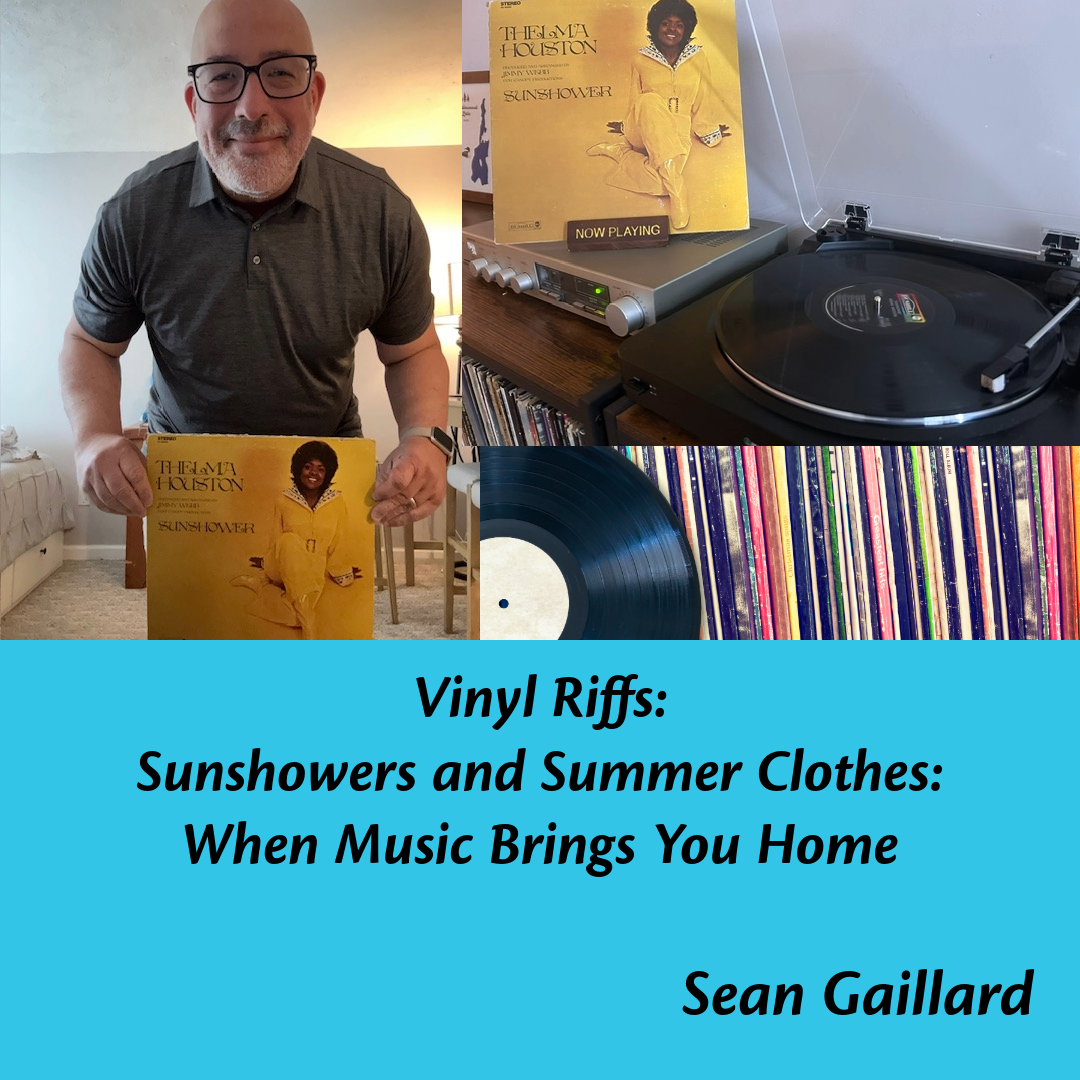
Earlier in the week, I had come across a picture on Instagram of Jimmy Webb and Thelma Houston. Their 1969 collaboration yielded a beautiful album entitled “Sunshower.” It’s a stunning collection of songs from the pen of Jimmy Webb. You know Jimmy Webb if you know songs like “Up, Up, & Away,” “MacArthur Park,” and “Wichita Lineman.” He arranged and produced the album with noble support from various studio musicians from the legendary Wrecking Crew. Thelma Houston is the star of the show with her vocals evoking Gospel, Broadway, R&B, Soul, and Pop all amalagated into a sound that transcends categories.
My mother had a beloved copy of the album. I remember the illuminating album cover of Thelma Houston arrayed in a yellow pantsuit sitting in a yellow room. Her smile was sunshine personified. Heck, she was the sun itself.
Having seen that picture on Instagram, I decided to put the needle on the album that my mother had given me last year. It’s the same album and the original pressing with its crackling warm hiss of snaps, crackles, and pops just aligned with my Sunday morning.
The second track on the album triggered my tears. “Everybody Gets to Go to the Moon” kicks in on a solid set of triplets evocative of the symphonic sound during the middle instrumental section of “MacArthur Park.” Drummer Hal Blaine, the master studio percussionist, keeps the beat snappy and swinging. As soon as I heard the opening notes, I am instantly transformed to my early childhood in Carson, California. I might be 4 or 5 years old. I can see Mom preparing Rice-A-Roni in the kitchen. She’s got Houston belting out the beauty of moon travel in the midst of complex shifting time signatures all in one measure as Webb conducts the Wrecking Crew amidst a loving tidal wave of sound. I remember dancing with my arms outstretched with my big brother and little sister. We are twirling about and pretending we are flying to the Moon. Mom is keeping the beat on a ladle as she is stirring the rice in the kitchen. She is also gently encouraging us to be quiet as my newborn baby sister was sleeping.
Then, we hear the magic sound amidst Jimmy Webb’s mini-opera for Thelma Houston. It’s the magic sound of jangling keys on the front door. The sound denotes one thing and one thing only: “DADDY!” The three of us run at top speed toward that magical sound of keys dancing on the front door. The door opens and we leap into our Daddy. There are kisses and hugs. It’s joy and then we start dancing in time to Thelma Houston’s aria of “Everybody Gets to Go to the Moon.” Incidentally, another version of the song by The Three Degrees is used in the classic film, “The French Connection.”
I was so moved by the song this morning that I went to share the memories of Carson with my wife. I am weeping, smiling, laughing, and grooving to the solid beat of the song all at once. Carson was heaven on earth for me. That song simply brought me back to the sound of my father’s keys in the door and the joy of being in our family. As I am sharing these memories, I make a connection to another song that evokes a memory.
It’s 2007 and all of our daughter are home and their kids again. I am hearing “Girls In Their Summer Clothes” by Bruce Springsteen. It’s a warm day amidst a North Carolina summer. I pull into the driveway with the windows down and I see all three of my daughters playing in the backyard. They spot me and come running to me. I am crying as I write this. It’s full circle. I can now feel what my father felt as he jangled those keys in our front door on Radlett Avenue. All three leap into my arms. It’s heaven on earth. Springsteen’s song sounds like a lost track from the “Sunshower” album or even “Pet Sounds.” Both Brian Wilson of The Beach Boys and Jimmy Webb both drank from the same aspirational well of Technicolor sound in their records.
Brian Wilson once said that “Music is God’s voice.” I firmly believe that. It’s the divine thread that transcends all boundaries, divisions. Music is a time machine that connects us to memories. We hear a song and we transported backward into a memory. It keeps in perspective within the present. It can point us toward possibilities for the future.
What song does that for you? I would love to hear. Please share in the comments.
Here’s “Everybody Gets to Go to the Moon” by Thelma Houston:
Here’s “Girls In Their Summer Clothes” by Bruce Springsteen:
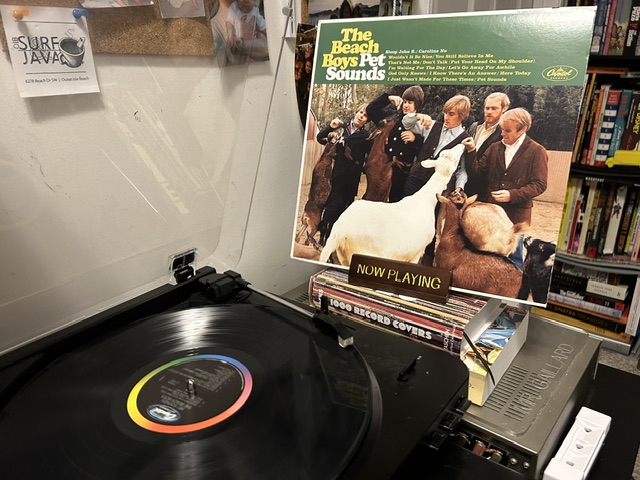
Sixty years ago, “Pet Sounds” changed the way people heard music, emotion, vulnerability, and possibility.
This week on “Vinyl Riffs with Sean Gaillard,” I want to open up a conversation instead of simply doing a podcast episode.
What does “Pet Sounds” mean to you?
Maybe it is a memory. Maybe it is a song that found you at the right moment. Maybe it is an album that changed how you hear music. Maybe it simply reminds you that beauty and vulnerability still matter.
Share your thoughts, memories, favorite songs, reflections, or stories in the comments.
I will be curating responses from music lovers, musicians, writers, podcasters, and fans around the world for a special 60th anniversary episode dropping this Saturday.
Music still connects us. Albums still shape us. “Pet Sounds” still matters.

 Leadership Liner Notes: Sean Gaillard