The Power of a Check-In

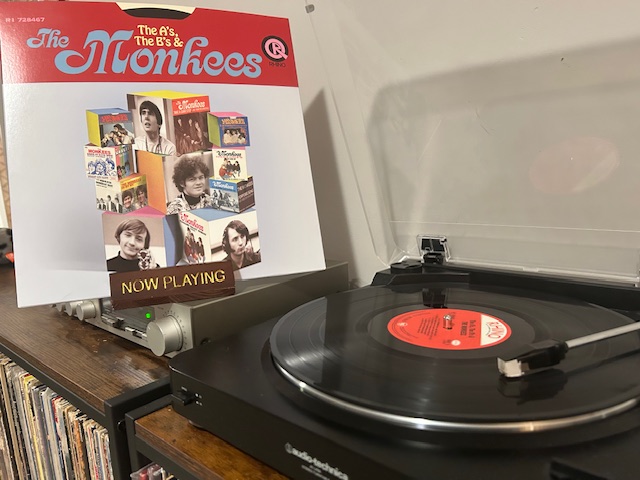
“So, what’s on your turntable?”

That question was a daily gift during my final year of teaching at Bedford High School. It came from my colleague and kindred spirit, Barry Low, our brilliant music teacher. Barry had a way of showing up with his warmth, wisdom, and that irresistible curiosity for all things music.

Back then, it was 2003. I had a small boombox perched in the corner of my English classroom. CDs were still king, and there was always one queued up and ready to play—usually something from The Beatles, Sinatra, or a little Bossa Nova to soundtrack the morning.

Barry would pop in between classes and ask that now-legendary question: “So, what’s on your turntable?”

Those moments felt like sacred mini-sessions—a spontaneous graduate seminar in music. We riffed on everything from Sergio Mendes to Frank Sinatra to Brazilian jazz. Barry always had a new artist to share, a bootleg CD to lend, or a story that made both of us laugh. My students waiting for class would often catch a glimpse of our camaraderie, and they were drawn in by his wit and warmth.

What Barry didn’t know at the time was how much I needed those check-ins. I was carrying some heavy emotional weight. I’d taken an ethical stand in my department and found myself increasingly isolated. There were days when the silence from others felt deafening. But Barry’s daily drop-ins cut through that fog. His kindness, his curiosity, his way of being present—it all reminded me that I wasn’t alone.

And isn’t that the thing? We never really know what someone is carrying when they walk through the doors of the schoolhouse. But one simple check-in can shift everything.

That’s the lesson Barry gave me—and it’s a lesson that’s stayed with me for over 20 years.

In my last blog post, I shared about being rushed to the hospital after a heart episode that occurred at school. I believe now more than ever in the power of a check-in. A few friends reached out after that moment. Their words, texts, phone calls, and prayers helped guide me back to healing. That experience reminded me again that compassion is not complicated. We just need to ask, “How are you really doing?” And mean it.

We live in an era where emojis and likes are often mistaken for connection. But real connection—life-giving connection—happens when we extend our arm, when we lean in, when we show up. As my good friend Max Pizarro says, “Arm extended.” That phrase carries a quiet power. It’s a posture of empathy. A stance of solidarity. An invitation to belong.

Lauren Kaufman recently wrote, “You don’t have to carry it all alone.” That line struck a deep chord. It reminded me of the invisible loads we all carry and the ways we can lighten each other’s burdens just by being present.

Belonging isn’t just a buzzword—it’s essential. Dr. Susie Wise puts it best in her book Design for Belonging: “Being accepted and invited to participate; being a part of something and having the opportunity to show up as yourself.”

That’s the heart of it. Create spaces where others can show up as themselves. Be the colleague who tunes into others. Be the leader who notices. Be the friend who checks in. Because that’s the gig—that’s the leadership jam that transforms classrooms, staff rooms, and lives.

We are the entry points for belonging. Let’s carry that with purpose and with rhythm.

So, what’s on your turntable today? Maybe it’s kindness. Maybe it’s courage. Maybe it’s simply showing up for someone. Whatever it is, press play and let it echo.


Further Reading:

🎧 Design for Belonging by Dr. Susie Wise — Purchase the book here

📝 Lauren Kaufman’s blog post, “Shine A Light, Share A Load” — Read it here


A Special Note of Gratitude on My Last Blog Post:

A special thanks to for the overwhelming response for my last blog post, “A Principal’s Rebirth: Finding Life, Love, & Leadership Again.” That post came from a deep place in my heart and I am humbled by the outreach many of you shared. I want my words to help others and this post serves a salve for others who are struggling. Please feel free to share that post linked HERE. Mental Health is so important and my hope is that this blog is a support for all who need it. I am here for you and I am glad that the world has you in it.

The Rooftop Moment: Embracing Creative Courage Amidst Doubt

I’ve written and rewritten this blog post countless times in my mind. It has been weighing on my heart, especially after navigating a week filled with a few setbacks. Nothing catastrophic, but still moments of dejection that linger. One of those moments was particularly difficult: an idea I had for a collaborative book was taken in a new direction—without me.

As someone who values collaboration and the joy it brings, I’ve learned that I need to be more mindful of whom I choose to collaborate with. Seeing my work and ideas rebranded as someone else’s originality hurt deeply. It stung because the creative journey is already fraught with battles against Imposter Syndrome and anxiety. These emotions creep in especially when I venture into new creative territory: Will it be good enough? Will people understand what I’m trying to do? When someone else quickly disinvites you from a project and takes it solo, it’s a painful reminder of the delicate steps needed to protect your own creative vision.

Late last year, I thought I had cracked the code on a follow-up to my first book, The Pepper Effect. I had an outline, a vision, and an unshakable drive. But that momentum fizzled as life threw its challenges my way. Stress, high blood pressure, and self-doubt culminated in a health scare that landed me in the hospital. It was a wake-up call. With the support of my incredible wife, my family, my therapist, and my faith, I began to rebuild—both physically and emotionally. Part of that rebuilding process involved reconnecting with my writing. Blogging weekly became my creative anchor, a way to keep my writing muscles intact and grooving. Each blog post has been a step forward, a way to regain confidence and prepare myself for the marathon of writing another book.

The recent letdown with the collaborative book idea is a chapter I’m reframing not as failure, but as a lesson learned. It’s a reminder to trust my vision, something I wrote about extensively in The Pepper Effect. Sure, it stings to see accolades being given for an idea that I helped shape, but as Mel Robbins writes in The Let Them Theory, I can’t let other people’s actions control my journey. Let them take their version of the idea, I tell myself. Let me move forward with my vision. And as my therapist often reminds me, “…and that’s okay.”

When I need inspiration, I return to The Beatles. They are my creative North Star. My first book explored how their story is a template for creativity, collaboration, and innovation. My follow-up book, which I’m calling The Let It Be Effect, will continue in that vein, diving into the Get Back/Let It Be era. If you’ve followed me on social media, read my blogs, or listened to my podcasts, you’ve seen glimpses of this concept. The Let It Be Effect will build on the four tenets of The Pepper Effect (Believe in your vision, Believe in your masterpiece, Believe in your collaborators, Ignore the Naysayers), but it will also introduce something new: the idea of the Rooftop Moment.

The Rooftop Moment is inspired by the Beatles’ legendary final live performance in January 1969. During the recording of what would become the Let It Be album, the band faced immense challenges. They hadn’t performed live in three years, there were creative differences, and at one point, George Harrison even quit the band. Despite all this, they decided to perform—not in a grand concert hall, but on the rooftop of their Apple Corps headquarters in London. It was a cold January day, and the decision to perform wasn’t finalized until the last minute. According to director Michael Lindsay-Hogg, John Lennon’s decisive words were, “F— it—let’s go do it.”

And they did. The Beatles, joined by keyboardist Billy Preston, walked up to the rooftop and made history. That performance became their iconic Rooftop Concert, a moment of creative triumph amidst doubt and adversity. It was the final time they performed live together, and it remains a testament to the power of taking bold action despite uncertainty.

The Rooftop Moment is about just that: taking a dynamic leap of creative courage when the odds feel overwhelming. It’s about playing your gig, painting your masterpiece, or writing your book, even when doubt tries to hold you back. The Beatles ignored convention and their own self-doubts to create something unforgettable. I know I need to do the same with my follow-up book.

Let the critics and naysayers have their opinions. Let them. As for me, I’ll aim for my Rooftop Moment—that decisive act of putting my creativity into the world, no matter what. I’ll let the inspiration flow and trust that what I create will resonate with those who need it most. And that’s okay.

I hope this inspires you to find your own Rooftop Moment. Whether it’s a project you’ve been hesitant to start, a challenge you’re ready to face, or a dream you’ve been quietly nurturing, remember: the world is waiting for your masterpiece. Let it be.


Four Moves to Create Your Rooftop Moment:

  1. Lead with Vulnerability: Share your passion or a creative idea with your team or community, even if it feels risky. Vulnerability fosters connection and courage. For me, this was bringing my guitar to school and sharing a song I wrote based on our school’s core values during grade-level assemblies. It was risky, but it created a memorable and inspiring moment for my students and staff.
  2. Model Risk-Taking: Show your team that it’s okay to step outside their comfort zones by doing it yourself. Whether it’s trying a new teaching strategy or presenting an innovative idea, your example can inspire others to embrace risks.
  3. Create Space for Creativity: Provide opportunities for your staff and students to experiment and express their ideas. This could be through collaborative brainstorming sessions, innovation labs, or simply encouraging them to bring their unique talents to the table.
  4. Celebrate the Journey: Acknowledge the effort and courage it takes to create something new, even if the outcome isn’t perfect. Recognizing progress builds momentum and reinforces the value of the creative process.

Sometimes you have to aim for what I call that Rooftop Moment—that moment where you take a move for dynamic creative action amidst overwhelming odds and you simply play your gig, paint your masterpiece, write your book. The Beatles ignored convention and their own self-doubts and applied the Let Them theory in their own way. I know I have to do the same in writing my book follow-up because I know I have another book in me and that’s ok.

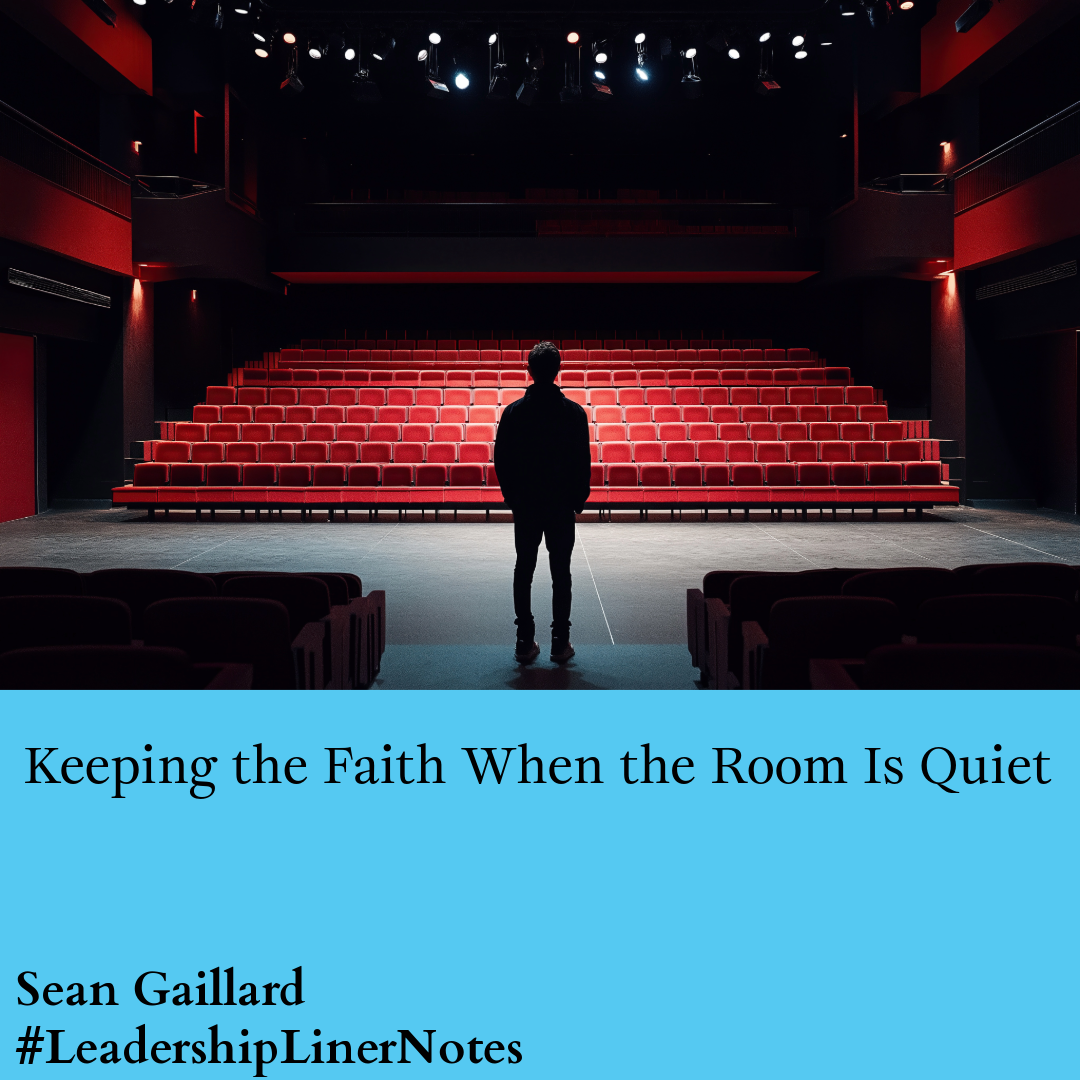
Playing to Empty Rooms: A Lesson in Perseverance

As I write this, the early morning hours find me awake, wrestling with insomnia. It’s around 3:00 a.m., and in the quiet solitude, I decide to revisit this blog. Against my better judgment, I check the stats on a recent post. I know the adage, “Comparison is the thief of joy,” but still, I fall into the trap.

The numbers aren’t encouraging. They stir up a flood of past memories—times when my efforts seemed to fall flat. The book giveaway that garnered no participation. The speaking engagement with an empty room. The book study I excitedly promoted, only to find no one signed up.

I have played to empty rooms. It’s a gut-wrenching experience. You pour your heart into your work, stepping vulnerably onto a stage without a net, only to be met with silence. It feels like validation of your worst fear: that your voice doesn’t matter. That your efforts aren’t enough. The doubt can spiral quickly, pulling you into an abyss that’s hard to climb out of.

I find myself wondering about the lack of engagement with my writing. I tag others and hear no response. I try to support others when tagged, yet often feel like I’m shouting into the void when I press Publish.

Before I sink too deep into this whirlpool of self-doubt, I pause and take a cue from The Reset Mindset by Penny Zenker, a book that has been a lifeline for me recently. The concept of resetting resonates deeply. It’s about an intentional pause—a mindful shift in perspective to open the door to new possibilities. Resetting means revisiting your core purpose and recalibrating your moves with intention.

So here, in this moment of doubt, I reset.

Why do I write? It’s not for stats, clicks, or reposts. It’s for connection. Writing is my bridge—to myself, to others, and to meaning. It’s a way to foster belonging, to reflect, and to find resonance with others navigating the lonely and challenging paths of leadership.

When I embrace this reset mindset, I remember: this moment of doubt is just that—a moment. It doesn’t define me or my work. My writing is not about chasing external validation; it’s about helping others seek meaning in their own leadership journeys. It’s about creating space for reflection and connection.

I remind myself of the moments that truly matter: the time a struggling reader reached out with gratitude after finding solace in my book. The fulfillment of a lifelong dream in publishing a book, The Pepper Effect. The joy of being invited to speak at upcoming conferences like FETC and the North Carolina Middle School Matters Conference. These are the moments that validate my voice and purpose.

And then, as I often do, I think of The Beatles.

In December 1961, before Beatlemania, before sold-out arenas and screaming fans, The Beatles played a gig at the Palais Ballroom in Aldershot. A booking error left the show poorly promoted, and only 18 people attended. Imagine it: the band that would change the world, performing in near obscurity.

But they didn’t let it break them. They played on, laughing and joking through the set, treating it as an opportunity rather than a failure. That moment was just one small chapter in their story—a necessary step on the path to greatness.

Failures happen. We stumble. We fall. And yet, like The Beatles, we get back up and keep playing.

As I stand in my own empty room—whether as a writer or a leader—I hold fast to my purpose. We all must. The value of our voice, our vision, isn’t determined by the size of the audience. It’s found in the connection with that one reader, that one listener, that one colleague who sees and understands your purpose.

When you play to empty rooms, remember: it’s not the end. It’s a pit stop—a chance to hone your craft, to reset, and to move forward.

Someone out there needs your voice. Someone out there is better because of your vision. Take heart in the small moments of connection and press on.

Each moment—success or setback—is a step forward in this journey of leadership and perseverance. Let’s keep playing.

Garden Party Lessons: Writing, Reflection, and Finding Your Voice

Pressing Publish

There, I had done it. I clicked the “Publish” button on my blog post draft. I could almost hear the applause in the background. The feeling of accomplishment in completing a piece of writing is a rush that emanates with satisfaction. I am not a mountain climber, but I do feel like I am perched proudly atop Mt. Everest. Writing has a grind similar to a hard workout, and once completed, there’s an exhilarating sense of achievement, a triumph over the doubts that come with sharing your ideas with the world.

I write for many reasons. First and foremost, I simply love it. I love the process and the connection it fosters with others. Leadership can be a lonely endeavor, and writing for me is a gateway to individual reflection, propelling me toward deeper connections. I want my words to resonate with kindred spirits. It can be challenging for leaders like me to find such connections, so I strive to maintain outreach, always seeking opportunities for connection, collaboration, and growth.

Lately, that connection through content creation has slowed due to a recent health scare. As a result, my nerve endings are a little more sensitive. However, I am back to a good place with my health and am channeling my reflections from that time into my content creation.

I hope that my gradual return to content creation will be welcomed with open arms by those who have followed me. I envisioned being victoriously held aloft by others in my professional learning network.

Well, none of those daydreams became realities. Consequently, I found myself in a brief space of doubt. Imposter Syndrome reared its ugly head and invited me to dance. I entertained the idea of taking down my content, feeling as though my blog posts and podcasts were adrift in an echo chamber of unacceptance. I believed my words had value and meaning, but the lack of likes and retweets made me feel less valuable as a writer and podcaster. I fell into the comparison trap, measuring my worth based on social media metrics.

This wasn’t the first time I had tasted this despair. Since my health scare, I have been feeling things more deeply. I was ready to fade into the shadows. Then, I got a timely reminder from a song and my favorite human.

Two Important Questions

My wife, Deborah, always reads me at the right time. She saw something I had posted hinting that I was going to withdraw from creating content. Deb simply asked me two questions:

“Why do you write?”
“Who’s your audience?”

My response was that I write to express myself and connect with others. As for my audience, there is no specific target because I write primarily for myself. Now, I am simplifying a complex conversation for the purposes of this blog, but her questions really hit home. Essentially, it doesn’t matter who likes, retweets, or shares if my purpose in writing is for myself. If my words connect with others, then that’s a beautiful bonus for which I am honored and grateful. If they don’t, that’s okay because I am doing something to fill my soul.

Deb’s words carried me to thinking about that classic song by Rick Nelson, “Garden Party.” The song tells the true story of Nelson playing a 1950s Rock & Roll Revival Concert at Madison Square Garden circa 1971. Nelson had changed considerably since his heyday as a 1950s television and Rock idol. He showed up with long hair, bell bottoms, and a purple velvet shirt. His set included recent songs from The Rolling Stones and Bob Dylan. The audience did not take kindly to this new version of Rick Nelson, a far cry from the teenage idol they had grown up with. There were reports of Nelson being booed off the stage.

Regardless, Rick Nelson took the elements of this episode of failure and transformed it into a Top Ten hit in 1972. “Garden Party” became the signature song of Rick Nelson’s career. In the song, Nelson reflects on the lessons learned from the audience’s rejection and sums it up beautifully: “But, it’s alright now, I learned my lesson well/You can’t please everyone, so you got to please yourself.”

A timely connection for me and anyone struggling to find their footing in the space of content creation. I have to remember that writing is my outlet. If others gather meaning from it, then all the more reason to continue. It’s important to maintain the truth in our expression. Rick Nelson did not compromise his artistic principles, and neither should I. It’s important that I should continue to write from my heart and keep at the process. I simply enjoy it. Creating content in the written word and digital production is an essential outlet to do what I want to do.

Deb’s words of wisdom and the lyrics from “Garden Party” lifted me to a new level of confidence in my expression.

3 Moves for Content Creation Confidence

In the journey of content creation, maintaining confidence is crucial. Here are three steps to help you stay confident:

  1. Remember Your ‘Why’: Always keep in mind why you started creating content in the first place. Whether it’s to express yourself, connect with others, or simply because you love it, your reason is valid and important.
  2. Focus on Authenticity: Stay true to your voice and message. Authenticity resonates more deeply than chasing trends or likes. When you are genuine, your content will find its audience.
  3. Celebrate Small Wins: Acknowledge and celebrate each step of your journey, whether it’s finishing a draft, receiving positive feedback, or simply pressing ‘publish.’ These small victories build your confidence over time.

Your content matters because you matter. Embrace your unique voice and share it with the world, knowing that your words have the power to inspire, connect, and uplift others. Keep writing, keep sharing, and keep believing in yourself. I believe in you and the world needs your voice.