Finding Grace: Vince Guaraldi’s Jazz Mass and the Sacred Sound of Connection

Sunday has always been a day for reflection, renewal, and reconnecting with what matters most. Music often finds its way into those moments for me. Today, I’m spending time with a lesser known work by one of my favorite musicians, Vince Guaraldi, and an album that deserves far more attention.

As we move deeper into November, Guaraldi’s music becomes increasingly familiar. We hear the unforgettable sounds of It’s the Great Pumpkin, Charlie Brown, A Charlie Brown Thanksgiving, and, of course, A Charlie Brown Christmas. These recordings have become part of our collective musical memory, reminding us of childhood, friendship, belonging, and the simple beauty of being human. There’s another side of Vince Guaraldi’s musical story that deserves to be heard.

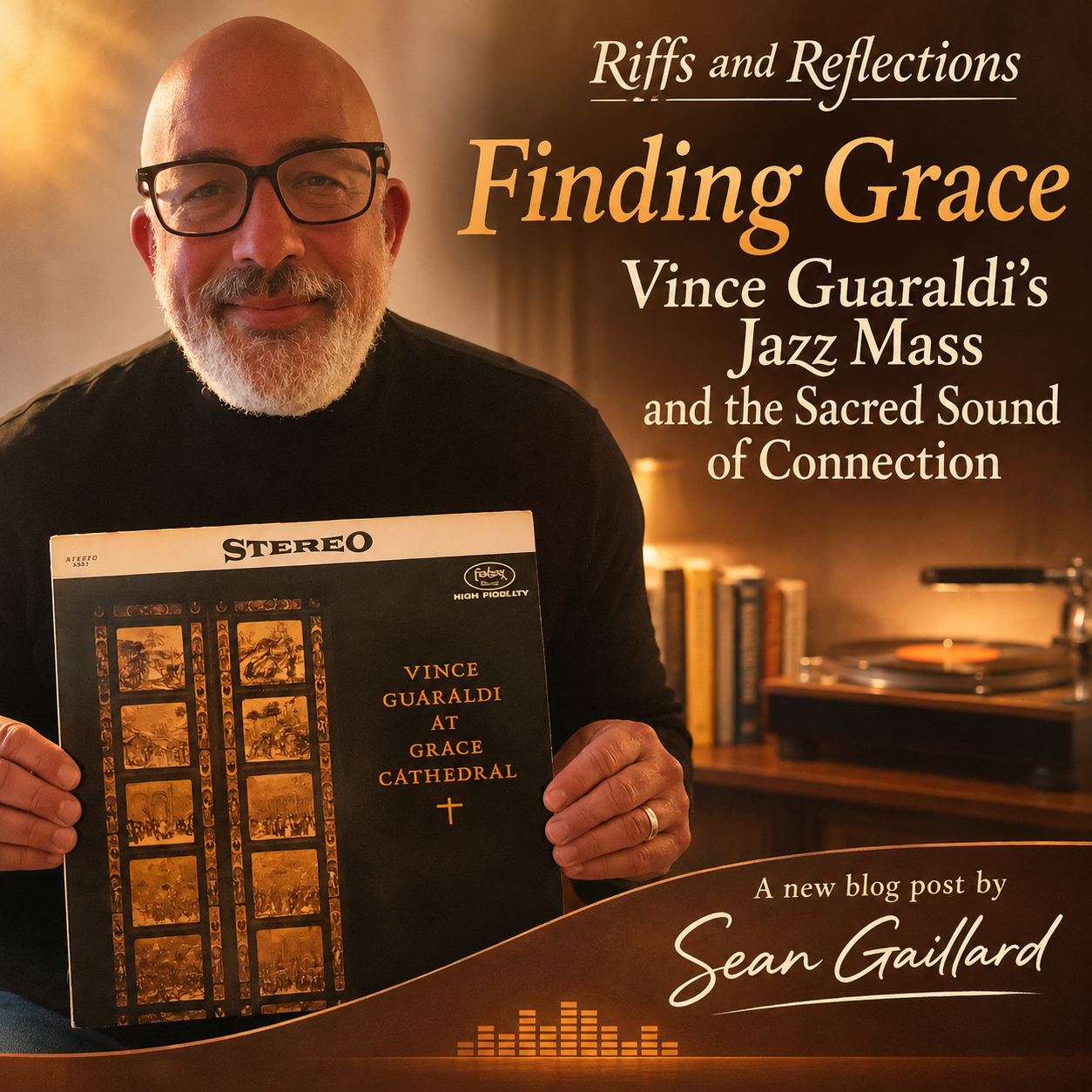
In 1965, Guaraldi was commissioned to compose music for an Episcopal Mass at Grace Cathedral in San Francisco. The resulting Jazz Mass brought together the traditions of Christian worship and the improvisational spirit of jazz. It was an extraordinary undertaking that demonstrated how sacred music could embrace new sounds while maintaining its reverence and spiritual purpose.

Guaraldi was doing more than performing jazz inside a cathedral. He was creating music that became part of the worship experience itself. Accompanied by bassist Tom Beeson and drummer Lee Charlton, along with a choir, Guaraldi brought his unmistakable musical voice into a sacred setting.

One of the remarkable qualities of this recording is the chemistry within the trio. Guaraldi always seemed to have a gift for bringing out the best in his fellow musicians. His musical partnerships reflected trust, collaboration, and a willingness to listen. That connection is especially evident throughout this Jazz Mass.

There is a defined structure within the liturgy, yet Guaraldi, Beeson, and Charlton find room for improvisation and individual expression. Their playing is tight, intuitive, and beautifully connected. Guaraldi’s distinctive chords and melodic phrasing provide a foundation while the bass and drums respond with sensitivity and purpose. Each musician contributes to something greater than his individual performance.

That musical trust is part of what makes this recording so deeply human. The trio demonstrates that collaboration does not require sacrificing individuality. Instead, their collective expression creates something none of them could accomplish alone.

I first became aware of this remarkable recording through George Winston’s tribute album, Linus & Lucy: The Music of Vince Guaraldi. Winston’s interpretation of “Theme to Grace,” along with his thoughtful and detailed liner notes, opened another door into Guaraldi’s musical world.

The melody immediately captured my attention. There was something beautifully simple and evocative about it. The music invited reflection without demanding attention. It created space to listen, to think, and perhaps even to pray.

I have always been fascinated by musicians who explore spiritual themes through their work. Duke Ellington’s Sacred Concerts, Dave Brubeck’s religious compositions, and even the Electric Prunes’ Mass in F Minor demonstrate how artists have explored the relationship between faith and musical expression. Brian Wilson once described SMiLE as “a teenage symphony to God,” and the beautiful opening to that album, “Our Prayer,” remains one of my favorite examples of music reaching toward something greater than ourselves.

Guaraldi’s Jazz Mass belongs in that conversation, offering its own distinctive expression of spirituality through jazz. Music is that divine bridge to God and Guaraldi’s composition is a willing guide for us.

As a Catholic, I find something particularly moving about hearing jazz incorporated into a sacred liturgical setting. Although Guaraldi composed this music for an Episcopal service, the spiritual connection transcends denominational boundaries. The solemnity of the occasion and the warmth of his musical approach complement one another beautifully.

I feel fortunate to own what appears to be a first pressing of Vince Guaraldi at Grace Cathedral. The original album is out of print, although the music remains accessible through streaming. There is something special about placing that record on the turntable and hearing Guaraldi’s music fill the room.

What continues to resonate with me is how deeply human his music feels. Whether composing for Charlie Brown and his friends or creating music for worship, Guaraldi understood that music could express emotions that words sometimes struggle to capture. His melodies speak to our need for connection, our longing for belonging, and our search for meaning.

At Grace Cathedral, that connection reached toward God. Guaraldi did not abandon his musical identity when he entered a sacred space. He brought his gifts, his collaborators, and his creative spirit into that space, allowing them to become part of something larger.

There is a lesson in that for all of us. We do not have to separate our creativity from our spirituality. Sometimes our gifts become most meaningful when we offer them in service to something beyond ourselves. Guaraldi’s Jazz Mass reminds us that faith, creativity, trust, and collaboration can coexist beautifully.

On this Sunday, I am grateful for the music of Vince Guaraldi and for this remarkable recording that continues to inspire reflection more than sixty years after its creation. I hope more listeners discover this overlooked chapter of his musical legacy, particularly during a season when his familiar melodies are everywhere.

Sometimes grace arrives through a familiar melody. Sometimes it arrives through the quiet spaces between the notes. Sometimes it emerges when musicians trust one another enough to create something beautiful together.

Sometimes grace arrives through jazz.

Listen to Vince Guaraldi’s “Theme to Grace.”

Finding My Groove in Woodstock’s Dream: Vince Guaraldi, Belonging, and the Music That Keeps Us Moving

There are certain songs that feel like old friends. They arrive at just the right moment, offering comfort, encouragement, and a reminder that we are not alone. Sometimes those songs are familiar standards that everyone recognizes. Other times, they are obscure musical treasures that somehow find their way into our lives and become part of our personal soundtrack.

For me, one of those treasures is “Woodstock’s Dream” by Vince Guaraldi, from the 1974 television special It’s the Easter Beagle, Charlie Brown. It is a little piece of musical joy that has become something of a personal anthem. Whenever I hear it, I find myself smiling, tapping my foot, and reconnecting with a part of myself that sometimes gets lost amid the noise and disappointments of everyday life.

The Musical Genius Behind Our Childhood

We are in the season of Thanksgiving, which naturally brings to mind A Charlie Brown Thanksgiving and the wonderful music of Vince Guaraldi. His compositions have become such an integral part of our holiday traditions that it is almost impossible to separate the music from our memories of childhood.

Guaraldi was much more than the composer of those beloved Peanuts television specials. He was a remarkable jazz musician whose musical imagination combined the sophistication of jazz with the accessibility of pop, the rhythmic influence of Latin music, and an unmistakable sense of soul. His Grammy Award winning composition “Cast Your Fate to the Wind” remains one of my favorite jazz recordings and serves as a testament to his extraordinary musical gifts.

There is something wonderfully human about Guaraldi’s music. He could capture Charlie Brown’s melancholy, Snoopy’s irrepressible spirit, and the innocence of childhood without a single word. His music understood the emotional landscape of Charles Schulz’s characters and gave those emotions a voice. He created a musical world where vulnerability, humor, hope, and friendship could coexist.

For generations of listeners, Guaraldi provided more than background music for animated television specials. He gave us a soundtrack for our childhood, our holidays, and the complicated experience of being human.

Rediscovering a Musical Treasure

One of the great developments in recent years has been the remarkable Vince Guaraldi renaissance taking place through the work of Lee Mendelson Film Productions. The careful restoration and release of the original Peanuts soundtracks have allowed listeners to experience this music with a clarity and richness that was previously unavailable.

The complete soundtrack to It’s the Easter Beagle, Charlie Brown, released in 2025, is one of those treasures. Originally recorded in 1974, the music reveals Guaraldi and his ensemble exploring a remarkable range of musical textures and moods. The recordings feature Guaraldi on piano, electric keyboards, and guitar, alongside bassist Seward McCain, flutist Robert Clare, and drummers Glenn Cronkhite and Eliot Zigmund.

The standout for me is “Woodstock’s Dream,” a composition that appears in several variations throughout the soundtrack. There is something almost irresistible about the way the music unfolds. Guaraldi establishes a melodic idea that feels both playful and purposeful, while the rhythm section settles into a groove that seems to breathe with the music.

The piano work is insistent without being overpowering. There is sincerity in every phrase, as though Guaraldi is having a conversation with the listener. The music carries a subtle Latin influence, while the soulful backbeat gives the composition an earthy, almost funky quality. Guaraldi’s guitar work adds another dimension to the soundtrack’s musical personality, revealing an artist who was never content to remain within a single musical boundary.

What I love most is the interplay among the musicians. The bass and drums lock into the pocket, creating a rhythmic foundation that allows the melody to dance freely. Nobody seems interested in dominating the performance. Each musician contributes something essential, and the collective result is greater than the individual parts. It is the sound of a band finding its groove and trusting one another enough to let the music breathe.

My Personal Double A-Sided Single

If I could create a personal double A-sided single featuring two Vince Guaraldi compositions, I would place “Woodstock’s Dream” on one side and “Cast Your Fate to the Wind” on the other. Both compositions speak to different dimensions of my life, yet they share an underlying message about possibility.

“Cast Your Fate to the Wind” reminds me of the courage required to embrace uncertainty. Life rarely unfolds according to our carefully constructed plans. Sometimes we have to release our expectations, trust our instincts, and allow ourselves to discover possibilities that we could never have anticipated.

“Woodstock’s Dream” reminds me that we can still find joy and purpose while navigating that uncertainty. There is an unmistakable forward motion in the music. The rhythm keeps moving, the melody keeps unfolding, and the musicians remain connected through a shared sense of purpose. I need both of those reminders these days.

There have been moments in my personal and professional life when I have felt disconnected from the band. Friendships have changed, opportunities have disappeared, and the sense of belonging that once seemed so certain has occasionally felt distant. I have spent considerable time reflecting on what it means to contribute something meaningful when the people or communities around us no longer seem to hear our music.

During those moments, I often return to Guaraldi. When I need a friend, his music shows up. When I feel like I no longer have a band, “Woodstock’s Dream” reminds me that I still belong in the music. There is room for my own unique contribution, even when I cannot hear anyone else playing alongside me.

That may sound like a lot of meaning to place upon a relatively obscure instrumental composition from a children’s television special. Music has always possessed that extraordinary ability to reach the places within us that ordinary conversation sometimes cannot.

Finding Our Place in the Universal Groove

One of the enduring gifts of Charles Schulz’s Peanuts is its recognition of our shared humanity. Charlie Brown struggles with disappointment and self-doubt. Linus searches for reassurance. Snoopy approaches life with an imagination that refuses to accept ordinary limitations. Woodstock, despite his diminutive size, possesses a personality and spirit that are entirely his own.

Guaraldi understood those characters because he understood something essential about being human. We are all navigating our own insecurities, aspirations, disappointments, and dreams. Each of us possesses unique gifts that deserve to be expressed and shared. That is what I hear in “Woodstock’s Dream.”

I hear the beauty of musicians contributing their individual talents to something larger than themselves. I hear the possibility of finding harmony without sacrificing individuality. I hear a joyful reminder that our differences can become strengths when we create space for one another. Most importantly, I hear an invitation to keep moving.

Life can sometimes convince us that we have lost our rhythm. We begin questioning our contributions, wondering whether our efforts matter, or waiting for someone to invite us back into the band. Those feelings can become especially difficult when we have invested so much of ourselves in relationships, communities, and work that once provided a deep sense of belonging.

Guaraldi’s music offers me another perspective. The groove does not have to disappear simply because the circumstances around us have changed. We can rediscover our rhythm, explore a different melody, and remain open to the possibility of new musical connections.

Perhaps that is the most important lesson I continue to learn through music and life. Belonging is not always dependent upon receiving an invitation. Sometimes it begins with recognizing the value of the music we already carry within ourselves.

Keeping the Groove Moving

As Thanksgiving approaches, I find myself feeling especially grateful for musicians like Vince Guaraldi. His music has accompanied generations of families through the changing seasons of life, providing warmth, laughter, reflection, and reassurance. The ongoing restoration of his recordings is a wonderful reminder that meaningful art continues to find new audiences and new purposes long after its creation.

I am particularly grateful for the way “Woodstock’s Dream” continues to find me when I need its message most. It reminds me that joy can emerge from the simplest musical moments and that friendship sometimes arrives through the familiar sound of a piano, a bass line, and a drummer settling into the pocket.

The song also reminds me that my own humanity is connected to the humanity of others. We are all trying to find our place, contribute our gifts, and make something meaningful from the time we have been given. Our individual rhythms may be different, but we are all part of a much larger musical experience.

Perhaps that is why this little composition from 1974 means so much to me in 2026. It offers a sense of companionship without demanding anything in return. It encourages me to keep creating, keep believing, and keep listening for the possibilities that remain.

I may not always know where my next musical adventure will lead or who might join me along the way. I do know that I still have something meaningful to contribute, and I refuse to let the occasional silence of others convince me otherwise. Somewhere in the joyful interplay of Vince Guaraldi and his band, I hear a reassuring truth about life, friendship, and belonging.

My groove still matters, my music still belongs, and I am still part of the universal rhythm that connects us all.


Enjoy “Woodstock’s Dream” by Vince Guaraldi:

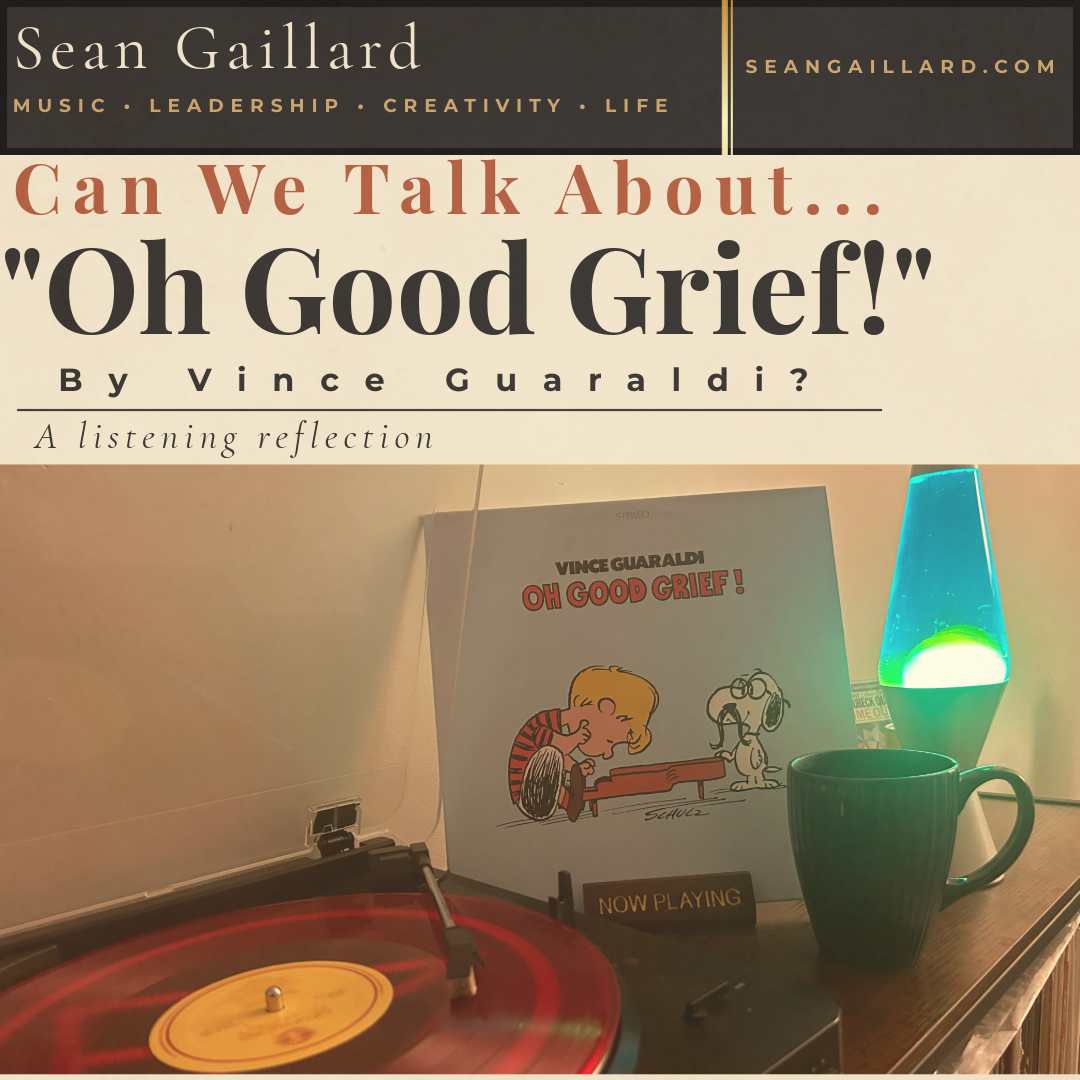
Can We Talk About…”Oh Good Grief!” by Vince Guaraldi?

There is something about Vince Guaraldi’s music that always brings me home. I have loved his music since childhood, and no matter what mood I am in, his unmistakable piano playing always lifts my spirits. His music takes me back to being that kid curled up on the couch, waiting for a Charlie Brown special to begin on CBS. Remember that iconic CBS Special Presentation introduction? Remember those Dolley Madison commercials? Those little details are forever connected to the warmth and wonder of growing up with Charlie Brown and the Peanuts gang.

Guaraldi is a year round listening experience for me, but his music takes on a special meaning when autumn finally arrives. On that first cool, crisp morning, when the leaves begin changing colors and the air feels different, I can almost hear “The Great Pumpkin Waltz” playing in my head. Suddenly, I am transported back to those childhood evenings filled with anticipation and wonder. For a few beautiful moments, I know that the world is alright.

This morning, I have been grooving to Guaraldi’s 1968 album Oh Good Grief!, a wonderfully cool collection of familiar Peanuts compositions given a fresh musical personality. Recorded in San Francisco and released on Warner Bros., the album features Eddie Duran on guitar, Stanley Gilbert on bass, and Carl Burnett on drums. Guaraldi adds electric harpsichord to several arrangements, giving songs like “Linus and Lucy” and “Peppermint Patty” a funky, contemporary sound. It is playful, inventive, and unmistakably Guaraldi.

This year marks 75 years since Guaraldi began his recording career. I am grateful for the wonderful archival releases and reissues that have helped preserve his legacy, including the work of Lee Mendelson Film Productions. His music continues to reach new generations while reminding longtime listeners like me why we fell in love with it.

As I listen on this beautiful October Sunday, I am reminded that music has an extraordinary ability to bring back moments we thought were long gone. Guaraldi’s music offers comfort, joy, and a little reassurance when the world feels overwhelming. It is a soundtrack for every season of my life.

Some music marks time. Vince Guaraldi’s music brings time back.


Check out today’s reel on this gem of an album: