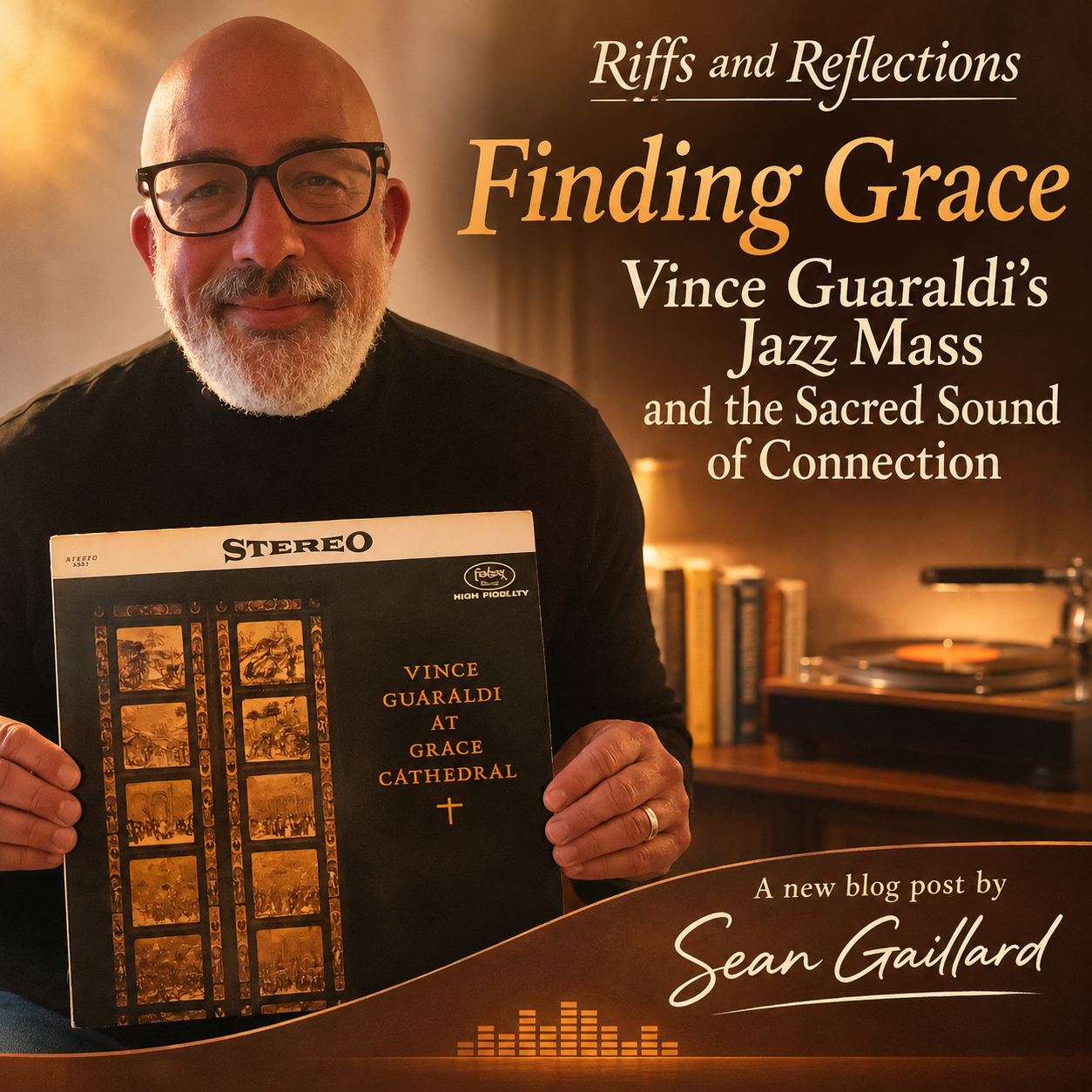
Sunday has always been a day for reflection, renewal, and reconnecting with what matters most. Music often finds its way into those moments for me. Today, I’m spending time with a lesser known work by one of my favorite musicians, Vince Guaraldi, and an album that deserves far more attention.
As we move deeper into November, Guaraldi’s music becomes increasingly familiar. We hear the unforgettable sounds of It’s the Great Pumpkin, Charlie Brown, A Charlie Brown Thanksgiving, and, of course, A Charlie Brown Christmas. These recordings have become part of our collective musical memory, reminding us of childhood, friendship, belonging, and the simple beauty of being human. There’s another side of Vince Guaraldi’s musical story that deserves to be heard.
In 1965, Guaraldi was commissioned to compose music for an Episcopal Mass at Grace Cathedral in San Francisco. The resulting Jazz Mass brought together the traditions of Christian worship and the improvisational spirit of jazz. It was an extraordinary undertaking that demonstrated how sacred music could embrace new sounds while maintaining its reverence and spiritual purpose.
Guaraldi was doing more than performing jazz inside a cathedral. He was creating music that became part of the worship experience itself. Accompanied by bassist Tom Beeson and drummer Lee Charlton, along with a choir, Guaraldi brought his unmistakable musical voice into a sacred setting.
One of the remarkable qualities of this recording is the chemistry within the trio. Guaraldi always seemed to have a gift for bringing out the best in his fellow musicians. His musical partnerships reflected trust, collaboration, and a willingness to listen. That connection is especially evident throughout this Jazz Mass.
There is a defined structure within the liturgy, yet Guaraldi, Beeson, and Charlton find room for improvisation and individual expression. Their playing is tight, intuitive, and beautifully connected. Guaraldi’s distinctive chords and melodic phrasing provide a foundation while the bass and drums respond with sensitivity and purpose. Each musician contributes to something greater than his individual performance.
That musical trust is part of what makes this recording so deeply human. The trio demonstrates that collaboration does not require sacrificing individuality. Instead, their collective expression creates something none of them could accomplish alone.
I first became aware of this remarkable recording through George Winston’s tribute album, Linus & Lucy: The Music of Vince Guaraldi. Winston’s interpretation of “Theme to Grace,” along with his thoughtful and detailed liner notes, opened another door into Guaraldi’s musical world.
The melody immediately captured my attention. There was something beautifully simple and evocative about it. The music invited reflection without demanding attention. It created space to listen, to think, and perhaps even to pray.
I have always been fascinated by musicians who explore spiritual themes through their work. Duke Ellington’s Sacred Concerts, Dave Brubeck’s religious compositions, and even the Electric Prunes’ Mass in F Minor demonstrate how artists have explored the relationship between faith and musical expression. Brian Wilson once described SMiLE as “a teenage symphony to God,” and the beautiful opening to that album, “Our Prayer,” remains one of my favorite examples of music reaching toward something greater than ourselves.
Guaraldi’s Jazz Mass belongs in that conversation, offering its own distinctive expression of spirituality through jazz. Music is that divine bridge to God and Guaraldi’s composition is a willing guide for us.
As a Catholic, I find something particularly moving about hearing jazz incorporated into a sacred liturgical setting. Although Guaraldi composed this music for an Episcopal service, the spiritual connection transcends denominational boundaries. The solemnity of the occasion and the warmth of his musical approach complement one another beautifully.
I feel fortunate to own what appears to be a first pressing of Vince Guaraldi at Grace Cathedral. The original album is out of print, although the music remains accessible through streaming. There is something special about placing that record on the turntable and hearing Guaraldi’s music fill the room.
What continues to resonate with me is how deeply human his music feels. Whether composing for Charlie Brown and his friends or creating music for worship, Guaraldi understood that music could express emotions that words sometimes struggle to capture. His melodies speak to our need for connection, our longing for belonging, and our search for meaning.
At Grace Cathedral, that connection reached toward God. Guaraldi did not abandon his musical identity when he entered a sacred space. He brought his gifts, his collaborators, and his creative spirit into that space, allowing them to become part of something larger.
There is a lesson in that for all of us. We do not have to separate our creativity from our spirituality. Sometimes our gifts become most meaningful when we offer them in service to something beyond ourselves. Guaraldi’s Jazz Mass reminds us that faith, creativity, trust, and collaboration can coexist beautifully.
On this Sunday, I am grateful for the music of Vince Guaraldi and for this remarkable recording that continues to inspire reflection more than sixty years after its creation. I hope more listeners discover this overlooked chapter of his musical legacy, particularly during a season when his familiar melodies are everywhere.
Sometimes grace arrives through a familiar melody. Sometimes it arrives through the quiet spaces between the notes. Sometimes it emerges when musicians trust one another enough to create something beautiful together.
Sometimes grace arrives through jazz.

