There are weeks when leadership feels heavy and the noise of the world presses in. This has been one of those weeks. In the quiet spaces between meetings and responsibilities, I have found myself missing my daughters.
They are adults now. They are building lives of their own with courage and independence. I am proud of the paths they are carving. I would not change a thing about the strong women they have become. And yet, there are moments when I would give anything to load them into the car again, roll down the windows, and belt out a song at the top of our lungs.
As an unabashed fan of all things music, I always claimed the role of radio commander. I took that responsibility seriously. I wanted them to have a well balanced musical education. That meant a steady dose of The Beatles, plenty of The Beach Boys, and the soul and heartbeat of Motown. It also meant that they had to experience the joyful and slightly mischievous sounds of The Monkees.
We would sing along to “Daydream Believer,” “I’m a Believer,” and “Listen to the Band.” We would lean into the deeper cuts too, songs like “The Girl I Knew Somewhere,” “Cuddly Toy,” and “The Door into Summer.” They would giggle when I sang off key. We would quote silly lines from episodes of The Monkees television show. There was no agenda in those moments. There was only music, laughter, and the feeling that the world was right where it needed to be.
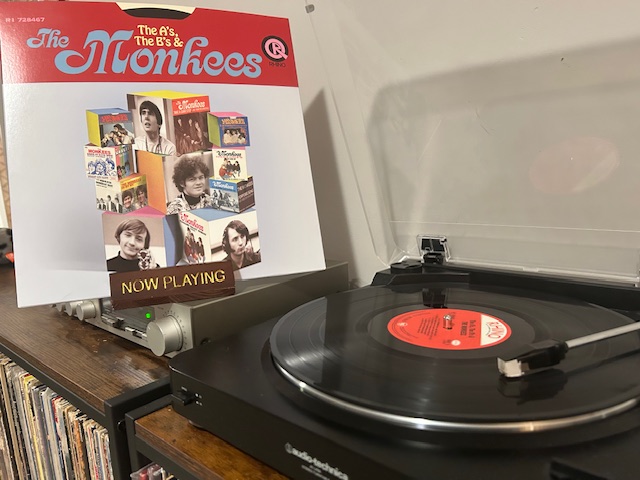
Recently, I put on the compilation The A’s, The B’s, and The Monkees and something in me softened. The songs came back like waves of warmth. I could hear their younger voices in the back seat. I could feel the steering wheel in my hands. I could sense that simple joy of being together with an upbeat soundtrack and sunshine in the grooves.
This upcoming episode of Vinyl Riffs with Sean Gaillard is rooted in that space. It is about nostalgia, warmth, and joy. It is about how music holds memory in a way nothing else quite can. It is about how a collection of A sides and B sides can become the soundtrack of a family story.
I have started this podcast project as a vehicle to express my passion. Leadership requires outlets. It demands a place where we can exhale and create without measurement or evaluation. For me, Vinyl Riffs is that trapdoor for creativity. It aligns with who I am at my core. It reminds me that before I was a leader, I was a listener. Before I carried titles, I carried records.
When I spin this album, I am not just revisiting songs. I am revisiting a season of life filled with back seat harmonies and open road joy. I am reminded that the moments that matter most are often soundtracked by simple melodies and shared laughter.
The A’s, The B’s, and The Monkees will always trigger memories of my daughters. It will always resonate with nostalgia, warmth, and joy. As I press record for this episode, I am grateful that music still gives me a way to hold those moments close while cheering them on from where they are now.
There are albums that arrive in your life right on time. There are also albums that feel as if they have been waiting for you all along.
Neil Diamond’s Gold is that kind of record for me.
It was recorded live at the Troubadour on Santa Monica Boulevard in July of 1970. Just about ten miles away, in Inglewood, I was two months old and brand new to the world. I did not know it then, but something meaningful was happening nearby. A voice was finding its footing. A performer was stepping into himself. A bridge was being built toward what would come next.
I did not discover Gold until my junior year of college. I found it in a used record store in Washington, D.C., sometime around 1990 or 1991. I remember taking it back to my dorm room. I lowered the needle and felt something familiar. It was something I could not yet name. Even then, it sounded like an album caught between chapters. Confident, yet searching. Grounded, yet reaching.
That feeling has only deepened with time.
Gold captures Neil Diamond in a liminal season. He was between record labels. He had experienced success in the 1960s, yet the full arc of his 1970s creative breakthrough had not fully arrived. This was not a greatest hits collection, even though the title suggests one. It was something far more human. It was a document of becoming.
The band matters here. Carol Hunter’s guitar work has a raw edge. It gives the music a sense of forward motion. Her style was shaped by time alongside artists like Bob Dylan. Eddie Rubin’s drumming, informed by deep jazz roots and work with artists like Billie Holiday, brings both restraint and release. Randy Sterling’s bass provides an anchor that allows everything else to breathe. This was a group capable of listening, responding, and taking risks in real time. That truth is audible.
Then there is “Lordy.”
That song feels like a door being pushed open. Gospel-inflected. Theatrical. Unfiltered. It hints at the ambition that would soon fully emerge on Tap Root Manuscript. On this album, “Cracklin’ Rosie” would become Neil Diamond’s first number-one hit. “The African Trilogy” placed on Side 2 of that album would expand his songwriting into something expansive and cinematic. “Lordy” is not the destination. “Lordy” is the signal.
This is why Gold resonates so deeply with me right now.
I find myself in my own in-between season. Years of experience remain present. Familiar structures are loosening their grip. Listening has become more important than certainty. This album reminds me that the middle matters. The bridge is not wasted time. Confidence is often built quietly in rooms that do not yet resemble arenas.
My connection to Gold also brings to mind the film Song Sung Blue. I love that movie deeply. The film is based on the real life story of Mike and Claire Sardina, who form a Neil Diamond tribute band known as Lightning & Thunder. Watching the two main characters played by Hugh Jackman and Kate Hudson is profoundly life-affirming. They challenge the impossible until it becomes possible. The film honors persistence, hope, and belief without irony. It treats becoming with dignity. The music performances are truly “so good, so good!”
That same spirit lives inside Gold.
This record honors the becoming.
This post accompanies the latest episode of #LeadershipLinerNotes. In it, I share more about this album and the Troubadour. I explain why this particular season of my life feels so closely tied to it. You can listen to the podcast version here: Spotify/Megaphone:
I would love to know what your Gold has been. Was there an album, moment, or season that met you in the middle? Did it quietly remind you that something meaningful was still unfolding? Please share in the comments. I would love to hear from you.
Sometimes the gold is not found at the beginning. Sometimes the gold is not waiting at the end. Sometimes the gold lives right in the in-between.
As the year winds down, our inboxes begin to tell a familiar story.
Year-end notices arrive in waves. Deadlines stack up. Checklists multiply. There is an understandable push toward closure, accountability, and tying up loose ends. Much of it is necessary. Much of it is also draining, especially in a profession where the emotional labor rarely slows down.
Then, there is Spotify Wrapped.
Every year, I look forward to it in a way that surprises me. Wrapped does not ask me to prove anything. It does not measure me against anyone else. Instead, it reflects back what I returned to over time. It names patterns. It celebrates consistency. It turns data into story.
No surprise that The Beatles were once again at the top of my list. It also did not surprise me to see that I landed in the top point five percent of listeners globally. That statistic is fun, but what matters more is what sits beneath it. These are the songs I go back to when I need grounding. The music that meets me where I am and helps me remember who I am.
That contrast stayed with me.
Wrapped invites reflection. School systems often rush toward evaluation. Both look back, but they do so with very different intentions.
The Leadership Reset That Sparked the Idea
This idea began to take shape during a Leadership Reset I have been practicing and sharing with others. You can see an earlier blog post on The Leadership Reset here. It is intentionally simple and designed to fit into real days, not ideal ones. It does not need special materials or extended time. Just a few minutes of presence.
The 3 Minute Leadership Reset
Step 1. Take a Breath for 30 seconds Close your eyes if you can. Inhale slowly and say to yourself, I am still here. Exhale and say, I am enough. Repeat this three times. Let your shoulders drop and your breathing slow. This is the act of reclaiming your space in the moment.
Step 2. Anchor in Gratitude for 1 minute Ask yourself quietly: What one small moment today reminded me I am alive? What one connection, a smile, a song, a student, gave me a spark? What one thing am I proud of, even if no one noticed it? Write it down or say it aloud. These moments are leadership echoes that ripple outward even when they feel small.
Step 3. Affirm and Reframe for 1 minute Say these words out loud, slowly and intentionally: I am not invisible. I am building something that lasts beyond applause. My work is meaningful, even when it is quiet. The music I make through service, kindness, and creativity still plays, whether or not the crowd is listening. Let these words settle. This is the act of tuning yourself back to the right frequency.
Step 4. Reconnect for 30 seconds Before moving on with your day, take one small action to reconnect: Send a brief message to a friend or colleague. Offer a kind word to a student or staff member. Play a song that brings you joy. These micro moments rebuild our leadership core from the inside out.
As I reached this final step, I pressed play on “Now and Then” by The Beatles. It was my number one song again for the second year in a row on my Spotify Wrapped List.
There was something deeply fitting about that moment.
The song carries themes of time, memory, and continuity. It reminds us that voices can still be heard long after the room grows quiet. That truth feels especially relevant in schools, where so much meaningful work happens without applause or recognition.
Leadership is not always loud. Teaching is not always visible. Learning does not always announce itself on a dashboard.
But the work still plays.
What If Schools Had a Wrapped Moment?
Spotify Wrapped works because it tells a story of return. It shows us what we came back to again and again when no one was watching. It honors presence over perfection and patterns over isolated moments. It gives language to what sustained us.
What if we borrowed that spirit in our classrooms and schoolhouses?
Not as another initiative. Not as something to hand in or score. Not as a tool for comparison.
But as an invitation.
A moment to pause. A chance to reflect on the year through a human lens. A way to help students, teachers, and leaders feel seen in a season that often feels rushed.
Your Year Wrapped
A Reflection Template for Classrooms, Teams, and School Communities
This reflection can be used in many ways. It serves as a journaling activity. It can spark a classroom conversation. It can act as a PLC opener. It can also be a quiet end-of-year pause during a staff meeting. There are no right answers and no expectations for sharing. The goal is reflection, not performance.
Most Revisited Moment What moment from this year did you find yourself returning to in your thoughts or conversations? What made it stay with you?
Most Meaningful Connection Who made this year better simply by being part of it? This could be a student, a colleague, a mentor, or someone outside of school who helped you keep perspective.
The Song That Carried You What song, quote, book, prayer, or moment gave you comfort? What gave you energy when you needed it most? Why did it matter?
A Quiet Win What is something you are proud of that did not receive recognition or attention? What does that say about the kind of work you value?
Your Growth Genre In what ways did you grow this year, even if it felt uncomfortable, unfinished, or messy? What did you learn about yourself?
Your Comeback Track On hard days, what helped you reset and keep going? What practices, people, or routines supported you?
Your Hope for What Comes Next What do you want to carry forward into the next season with intention and care?
This kind of reflection helps us name what often goes unnoticed. It gives dignity to effort, presence, and perseverance.
Why This Matters
In education, we spend a lot of time focusing on gaps and goals. We analyze what is missing, what needs to improve, and what did not move fast enough. That work has its place, but it cannot be the only story we tell.
Reflection like this builds belonging. It helps people feel valued for who they are, not just what they produce. It reminds students that their experiences matter. It helps teachers reconnect with purpose. It allows leaders to remember why they chose this work in the first place.
Most importantly, it creates space for humanity in systems that often move too quickly to notice it.
Press Play Before the Year Ends
Before we close the year with another notice or checklist, perhaps we take an intentional pause.
We take a breath. We reflect on what carried us. We press play on what still brings us joy and meaning.
The music we make through service, kindness, and creativity still plays whether or not the crowd is listening. That work echoes in ways we may never fully see.
And sometimes, that is exactly enough.
If you try a Year Wrapped reflection in your classroom or school, I would love to hear how it goes. Please feel free to leave a comment here or tag me on social media. This work is better when we share the music that keeps us grounded and moving ahead.
I remember being one of the last kids picked for kickball. Standing there in the dust with my hands in my pockets, waiting for someone to call my name. Everyone else seemed to belong somewhere. Everyone else seemed to have a team. That feeling has followed me into adulthood more times than I care to admit.
It rises up again whenever I put something out into the world and the room stays quiet. Every blog post. Every episode. Every reflection. Each one is a small act of courage. Each one is a piece of my soul placed gently on the table. Yet the silence that follows can hit with the same sting I felt on that kickball field.
There are days when it feels like no one wants me in their band. No replies. No call backs. No echoes of connection. I have chosen two of the loneliest gigs in the world. Leadership asks you to walk into the unknown even when no one notices. Writing asks you to offer your heart with no promise that anyone will take it. There is no applause built into any of this. There is no guarantee that your work will lead to opportunity.
So I have to keep the faith that there are quiet listeners out there. I have to trust that someone is reading or watching or absorbing even if I never hear the echo. I have to accept that my work may never be seen by the people I wish would see it. I have to keep creating anyway because that is the only way I can stay true to myself.
When doubt begins to weigh me down, I think of George Harrison. In the latter days of The Beatles, he felt like an outsider in his own band. His songs were often pushed aside. Yet he kept writing. He kept believing in his sound. Even in those difficult seasons, he delivered “Something” and “Here Comes The Sun.” Those songs became the heart of what many considered to be their greatest album, “Abbey Road.”
Then came the moment when his backlog of unheard songs found their place. “All Things Must Pass “emerged as a three album masterpiece by George Harrison. A triumph born from years of quiet rejection. A reminder that some brilliance finds its home only after the world grows ready for it. That album just celebrated its fifty fifth anniversary. It is a cherished album for me. It reminds me that the work we create in the shadows can one day light the way for someone else.
Maybe the same can be true for me. I have been part of good bands in my life. Maybe one more band is still out there. Until then, I will keep the faith even when the room feels quiet. I will write anyway. I will lead anyway. I will create anyway.
Because someone somewhere may need the sound I am trying to make. Even if I never hear the echo, the act of making it still matters.
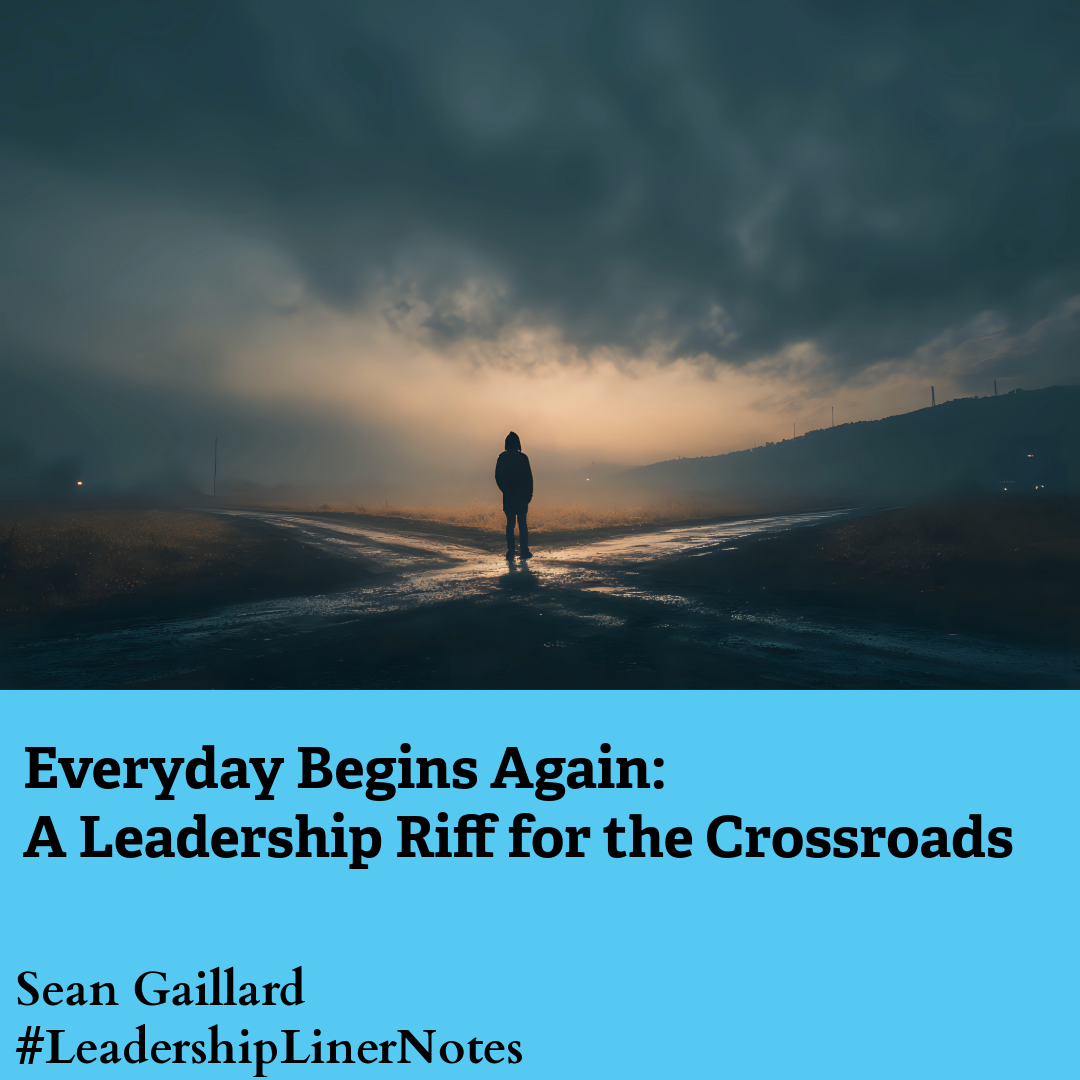
There is a scene near the end of Mad Men that has been living in my mind lately. It appears in “The Milk and Honey Route,” the penultimate episode of the entire series. Don Draper is sitting alone on a simple wooden bench at a literal crossroads. His past is heavy. His sense of identity is shaken. Every illusion he has held onto is slipping away.
He is not in a boardroom. He is not commanding a room or crafting the perfect pitch. He is simply a human being at a crossroads waiting for a bus. Two roads stretch away from him. The world around him is still and quiet. Then Buddy Holly’s song, “Everyday,” begins to play. It is light and gentle almost innocent against the weight of everything happening in his life. Don does not say a word. He simply smiles. It is small and worn but it is real.
And in that moment the crossroads becomes something else entirely. It is not a sign of failure. It is a place of possibility. A reminder that endings are also invitations. A signal that a new chapter might be waiting just beyond the next turn. That scene has always stayed with me and it echoes especially whenever I reach crossroads. The crossroads can sometimes be a place where I feel like a castaway from my own story. It sometimes resonates as place where the past feels louder than the future.
But crossroads are also moments of choice. They remind us that the narrative is not over.
Leaders Are Human First
Leadership can trick us into believing that we need to be composed and clear at all times. But human centeredness asks us to stop pretending. It reminds us that we can feel discouraged. We can feel disconnected. We can feel unsure. We can feel deeply human.
We cannot foster belonging for others if we ignore our own longing. We cannot create connection for others if we are afraid to name the disconnection inside of us. We cannot invite others to honor their gifts if we forget the gifts we carry.
When we forget our humanity leadership becomes empty. When we honor our humanity belonging begins to grow.
Taking Back the Narrative
Lately, I have been wrestling with my narrative. The old version no longer fits yet the new one has not appeared in full shape. That in-between space can make even the strongest leader feel small. It can stir up doubt. It can amplify old wounds. It can convince us that we have failed.
But the narrative is not fixed. It is alive. It breathes. We have the ability to reclaim it. We have the ability to reinterpret the past. We have the ability to decide what comes with us into the next chapter.
Reclaiming a narrative does not require us to erase pain. It requires us to believe that we are still in the story.
How Might We Move Forward
I have been sitting with a set of big questions. Quiet questions. Honest questions that come from a place of wanting to understand what comes next.
How might we create belonging when we feel lost? How might we honor our gifts when doubt feels heavy? How might we acknowledge the seasons that humbled us? How might we carry on when the path does not reveal itself?
Maybe the answer is simpler than we think. We choose the next small step that moves us forward. Not the perfect step. Not the loudest or most impressive step. Just the one that points toward healing and growth and connection.
Forward is not about speed. Forward is about intention. There is always a way forward at a crossroads.
A New Narrative Begins With One Step
Crossroads do not require us to know the entire map. They only require us to breathe to rise and to choose. Leaders carry the responsibility of illuminating a future path for others. That same responsibility calls us to illuminate a future path inside ourselves.
We keep showing up. We keep tuning into the gifts that are still there. We keep noticing the gifts others bring. We keep giving ourselves permission to change. We keep claiming belonging even when we feel like castaways.
Most of all we keep writing the next sentence of our narrative with honest hope and steady courage trusting that more of the story is still waiting to be revealed.
Your Move at the Crossroads
If you find yourself at your own crossroads I hope you remember this. You are not alone. You have not failed. You have not reached the end. You are standing in a place where your narrative can open into something new and meaningful. A place where the horizon stretches in every direction. A place where you get to choose the next chapter.
There is a future waiting that you cannot yet see. But it will meet you as soon as you take the next step toward it.
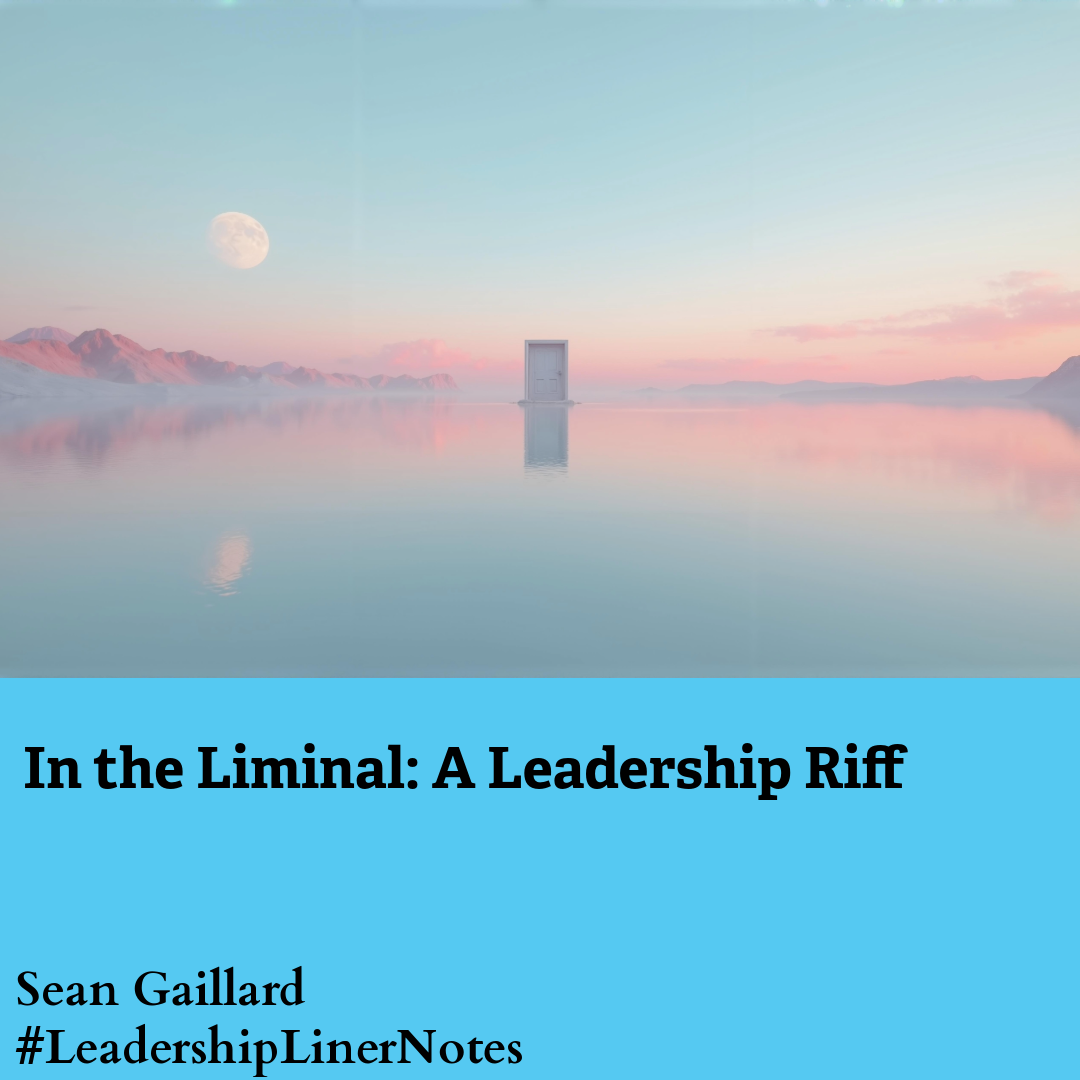
There are seasons when the music fades and all that’s left is the echo. You find yourself standing in the hallway between what was and what’s next. The applause has stopped. The setlist is blank. It can feel lonely, alienating, and rough. Yet this space, the liminal, often carries the quiet rhythm of our becoming.
Every artist and every leader eventually enters this space. It’s not failure. It’s the necessary silence before the next riff.
The Sound of the In-Between
David Bowie once walked away from his own fame. After Ziggy Stardust, he felt trapped inside the glitter and noise. He moved to Berlin, stripped his sound to its essence, and created Low and “Heroes.” Those albums didn’t just reinvent his music; they reinvented him. Bowie found clarity in exile.
Bruce Springsteen did the same when he recorded Nebraska. Alone with a cassette recorder, he traded stadium lights for solitude. Those stark songs revealed a deeper truth: sometimes the loudest growth happens in quiet rooms.
Aretha Franklin’s Amazing Grace marked her own liminal awakening. She paused the pop spotlight to sing from her foundation. By returning to the gospel roots that first shaped her voice, she reminded the world and herself where her power began.
Johnny Cash, long written off by the industry as an oldies act, found redemption through American Recordings. One man, one guitar, one truth. The stripped-down sound of renewal.
Paul Simon, after heartbreak and creative uncertainty, traveled the world and discovered Graceland, an album that is proof that curiosity and collaboration can pull us from the shadows into new light.
Each of them faced an in-between. Each emerged with something truer, deeper, and more human.
The Leadership Riff
Leadership has its own liminal moments. The band breaks up. The stage lights dim. We’re left wondering if what we created mattered at all. It’s tempting to see these stretches as endings, but they are often tuning sessions. These are times to recalibrate, rediscover, and ready ourselves for the next song.
These moments test us. They strip away the applause and ask, Who are you when no one’s listening? They demand honesty and patience. They can feel endless. Yet this is where the next riff takes shape.
A leadership riff is born in those quiet intervals when we listen more closely to the rhythm beneath the noise. It’s the small act of courage to keep playing, even when the room is empty.
The Stage Beyond the Silence
Growth is rarely glamorous. It’s often silent, slow, and unseen. But it’s in those moments when we are not center stage that our next chapter quietly tunes itself.
Like Bowie, we learn reinvention. Like Springsteen, we rediscover simplicity. Like Aretha, we return to our roots. Like Cash, we reclaim authenticity. Like Simon, we find new rhythms in unexpected places.
The liminal isn’t the end of the concert. It’s the soundcheck for the encore.
So if you’re in that hallway right now feeling unsure, unseen, and waiting for direction trust that the next song is coming. This is the space where your voice deepens, your purpose sharpens, and your leadership takes on a new sound.
Keep playing. The world will hear you in time.
Author’s Note
This reflection is part of the evolving ideas that will shape my next book, Leadership Riffs: Harmonizing Inspiration, Innovation, and Impact. It’s about the music that plays in the background of leadership: the improvisation, the courage, and the faith to keep going when the crowd goes quiet.
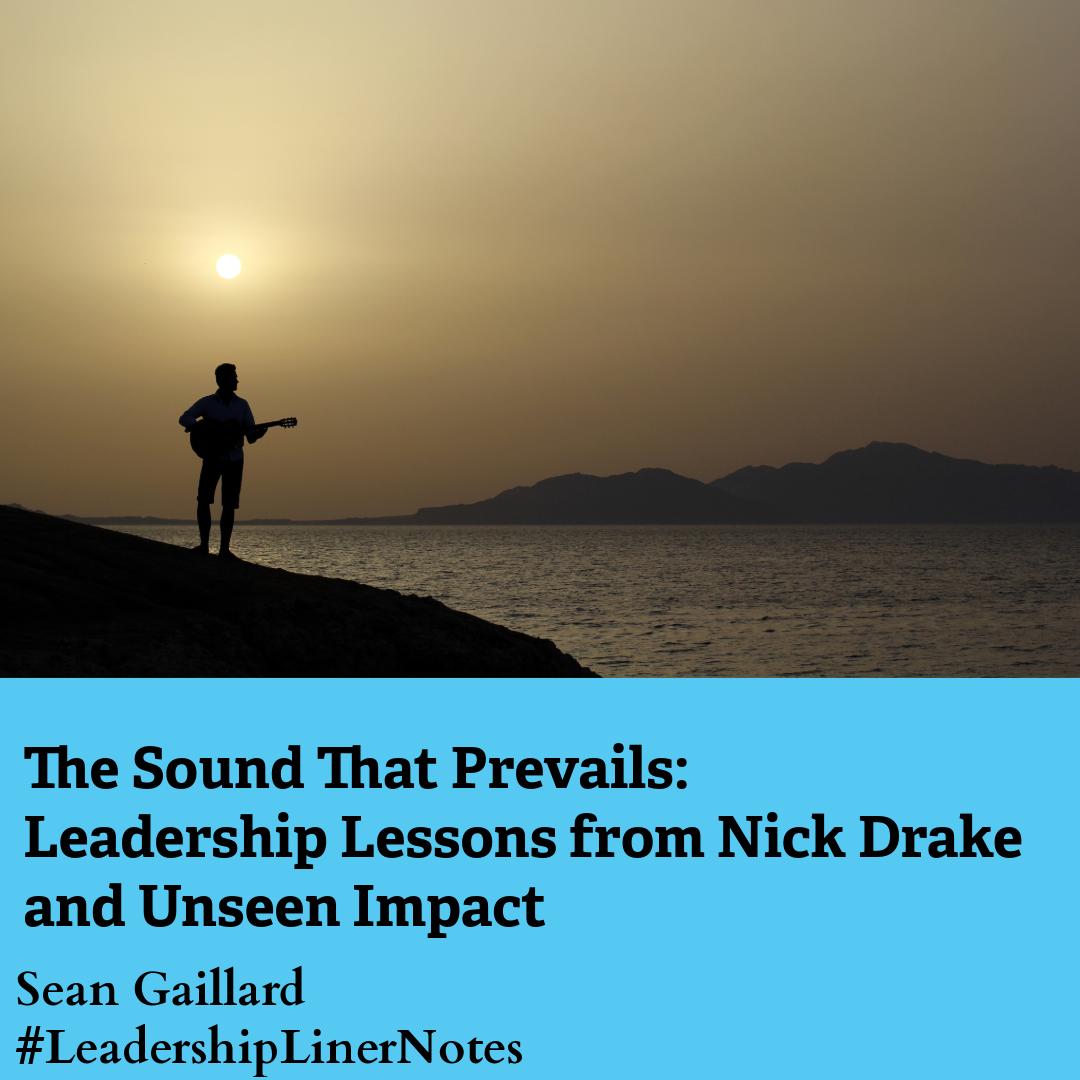
This morning, I started my day with a cup of black coffee and a vinyl spin. I always appreciate the reflective warmth of time alone with coffee and the crackle of the needle on an album. I decided to start the day with Nick Drake’s “Five Leaves Left.” His 1968 debut is going through a renaissance of source with a recently released multi-disc archival reissue. “The Making of ‘Five Leaves Left'” was recently nominated for a Grammy Award for Best Historical Album.” “Five Leaves Left” is timeless and intimate with the delicate stylings of Nick Drake’s voice and solid layers of his acoustic guitar fingerpicking. Some of the tracks resonate with the lush sensitivity of orchestral accompaniment. Unfortunately, the quiet beauty of this music was largely unheard in Nick Drake’s lifetime. The album did not chart in the artist’s United Kingdom homeland or the United States. It is estimated that “Five Leaves Left” my have sold 5,000 copies initially. A few UK critics admired the album and praised its songwriting, but Nick Drake’s debut did not serve as the basis for any triumphant herald.
There is something sacred about starting the day with Nick Drake on vinyl. The gentle crackle of the needle gives way to his quiet voice, fragile yet eternal. In his lifetime, few listened. His albums never charted. His songs drifted into silence before they could find an audience. Yet decades later, his music has become a timeless canon that reaches hearts he never lived to know. I think about that often as a leader. We may never fully know the reach of our work or the appreciation we long to feel. We hear the critiques, the surveys, the noise of what is wrong. But somewhere, in the midst of that silence, our sound still carries. It reaches someone. It matters.
The Unheard Artist
Nick Drake’s musical career continued on that same trajectory as his debut. He released two more albums in his lifetime. None of them charted and received little radio airplay. Nick Drake also struggled with promoting his work due to his lack of confidence with live performance. The record company believed in his artistry but struggled with how to market and promote him. Nick Drake also struggled with depression. Tragically, Nick Drake died at 26 unaware of how profoundly his music would resonate decades later.
There’s something in the story of Nick Drake that mirrors leadership. The work we do as leaders is sometimes unseen, unacknowledged, and often uncelebrated.
The Leader’s Quiet Stage
As a school leader over the years, I have had my share of complaints, negative survey outcomes, and feedback that can sting. It’s easy to for others to fixate on what’s wrong or missing from your leadership. In those moments, it can alienating like no one can hear the song you are trying to play. Even though these moments are fleeting, sometimes they can fester. I can definitely acknowledge the emotional cost that those moments can ignite spaces of self doubt, loneliness, and Imposter Syndrome. We have to tune into the belief that leadership, like art, is an act of faith that the sound will reach someone even if you never know it.
A Therapeutic Takeaway for Reflection
In a recent conversation with my therapist, he encouraged me to sit still and reflect upon the impact that I had made over the years as a school leader. It was a timely reminder that I took to heart as we bemoaning the negative moments and allowing them permission to define my core and impact as a leader. Sometimes, it’s not loud applause but quiet ripples that matter the most. Those quiet ripples like a teacher’s growth, a student’s success or a colleague’s encouragement that resonate in ways that we never know. We just have to know that when we lean into the gifts of others that we are making an impact. We have to believe in ourselves even on the days when we think no one believes in us.
An Unlikely Impact in a Volkswagen Commercial
Nick Drake’s songs eventually reached millions nearly 25 years after his untimely death. The resonance of his beautifully wrought music from his small corpus of three albums took time, but it happened. In 1999, a commerical promoting the Volkswagen Cabrio used the title track from Nick Drake’s final album, “Pink Moon.” A massive revival of Nick Drake followed and the small cult following that had kindled the flames of Nick Drake’s work felt validated by this movement. I remember seeing said commerical and almost falling off my couch. I had lovingly kept, “Way to Blue,” a compact disc complilation of Nick Drake’s music as one of my most cherished albums. I was in a small club of devoted followers who were drawn to the ache of Drake’s music-the bittersweet, poetic lyrics, the complex guitar tunings, and the moving production. Now, Nick Drake was catapaulted into legendary musical infinity. His voice now timeless and boundless for future generations to discover and cherish.
In leadership, sometmes our influence often plays out long after the moment. The sound of encouragement, belief, and kindness endures even if we never hear it echoed back. When we do hear that echo land back to us, it is important that we treasure that moment and know that our presence mattered to someone else. We should take stock of that moment of impact on someone else and be grateful that our presence mattered to someone else and proved to be a salve for that person.
I think of the leaders and teachers who saw something in me that I did not see in myself and I am grateful. As best as I can, I try to let that past leaders and teachers that their seemingly small act of seeing me and believing in my worth changed my world. Even though Nick Drake passed away when I was a mere child of four years and an ocean away, his music made my days less lonely when I was questioning my own journey. Now, I unabashedly give thanks for the music and legacy of Nick Drake.
Keep Playing
Even when appreciation feels absent, keep playing your song. Leadership is not a performance for applause or validation. Sometimes, it’s a quiet composition for connection. The work we do may not always be noticed, but it still matters. Somewhere, in a classroom, a meeting, or a passing moment, a note of what you’ve created is resonating. The sound may be soft, but it carries. Keep playing, even when the room feels silent. Trust that your melody will reach someone who needs it, even if you never hear the echo. The sound prevails.
Here’s the famous 1999 Volkswagen commercial featuring Nick Drake’s “Pink Moon.”
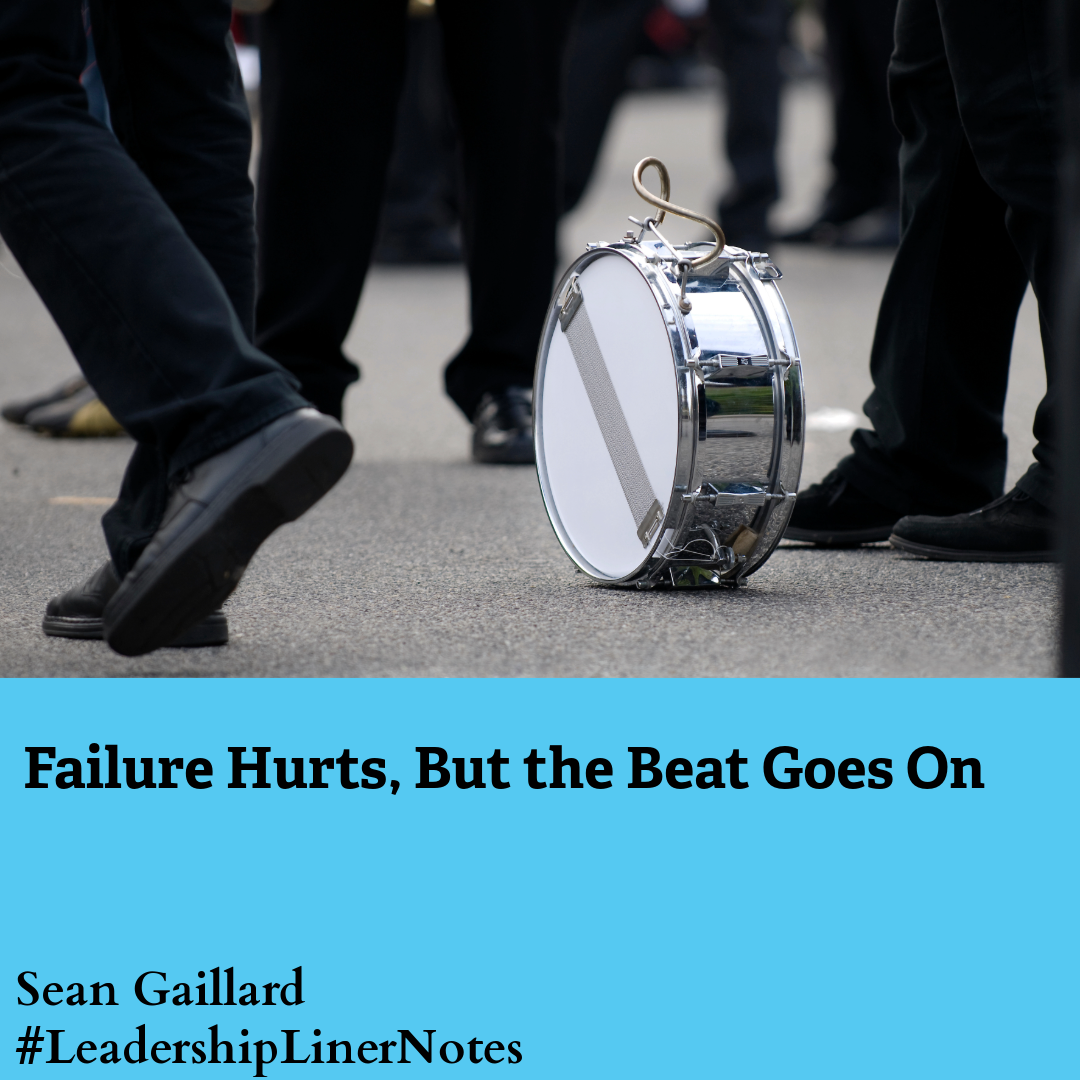
Failure hurts. There’s no sugar-coating that simple truth. When the Beatles were turned down by Decca Records, it could have been the end of their story. But it wasn’t. They found another path and changed the world. As I wrote in The Pepper Effect, that “no” was just the prelude to a bigger “yes.”
And they’re in good company. Walt Disney was once fired for “lacking imagination,” and Oprah Winfrey was told she was “unfit for television” before becoming a media icon. Each of them had moments that could have ended their journeys, but instead, they used those setbacks to fuel their next success.
In leadership, we all have those moments. And I’ll say personally, I’ve had my own failures. Sometimes the things I write or the ideas I share don’t resonate the way I hope. Sometimes a well-intentioned plan becomes a flop and I fall on the sword of doubt. Each of those moments is a chance to keep creating, keep pushing, and keep striving. It’s a reminder that our perseverance can inspire others to do the same.
In leadership, we face our own versions of these stories. Sometimes failure lands on our shoulders alone, and it feels isolating. The secret I have learned over the years is that failure is less sharp when you’re in a band, when you have those who know you and stand by you. It’s easier to turn a setback into a new song when you’re not playing solo. That’s why it is essential to surround yourself with those who support and empower you. That’s why it is essential to stay connected with those who knew you and stood by before you got the leadership gig, corner office, or prestigious title.
When failure comes, and it will, remember that you’re not the first and you won’t be the last. Take a breath, lean on your bandmates, and see failure as the beginning of a new opportunity. Failure is the spark for something greater. I know that failure can hurt and force you to stand still in the marrow of your doubts. Someone needs your spark and there is a band relies upon your sound. One day, your failure story will be the inspiration for someone else and may even be that spark that sets the world as a better place for others.
When failure comes, let it be your cue, not your curtain call. Let it remind you that you’re not alone, that your story isn’t over, and that the band is still playing. Every “no” carries the seed of a future “yes.” Every closed door echoes with the sound of what’s next. Lean into your vision, surround yourself with those who believe in your song, and keep showing up with your whole heart. Because someone out there needs the music only you can make.
Every great song needs a pause between the notes. The same is true for leadership. Take a moment, breathe, and tune your heart back to harmony.
As leaders, we have our days. I am talking about the days where we feel our humanity and gaze at our limits. Sometimes that limit gazing leads to doubt. We doubt our purpose. We question our impact. We embrace our blunders and define them as reasons why we don’t matter.
There are times when self doubt takes the stage. We begin to question our purpose. We wonder if we make a difference. We replay our mistakes and convince ourselves they define us.
Leadership can be lonely. I can certainly attest to that after almost twenty years in school administration. It is a loneliness that gnaws at you, the kind that can box you into becoming a castaway who is adrift, rudderless, isolated.
That is the irony of leadership. We are surrounded by people every day, students, teachers, families, and community members, yet the weight of decisions, the scrutiny, and the responsibility can still leave us feeling alone. There are joyful days, of course, but there are also those days when you must make the hard call, stand by your principles even when they are unpopular, and face the quiet stares that question your choices.
Those are theAm I Cut Out for This?days, echoing the title of my good friend Elizabeth Dampf’s recently published, powerful book.
When Doubt Knocks
Every leader faces those moments that stir imposter syndrome, stress, or even depression. It is easy to forget that leadership, as meaningful as it can be, does not define who we are.
Yes, the work might be a calling or vocation, but at its core, it is still a job. What truly defines us is the why behind what we do, our passions, dreams, and values that form the center of who we are.
The work can also be beautiful, impactful, and world changing.
Just the other day, I sat in a parent teacher conference with a parent I had once served years ago at another school. She smiled through tears as she said she was grateful her child was in a place where I could help. That simple moment reminded me that the echoes of our leadership often reach further than we realize. Those moments when we feel seen, valued, and appreciated are the quiet affirmations that we have helped others feel the same.
The Power of the Pause
We are human. We will doubt. We will stumble. But we must also give ourselves permission to pause.
We must be intentional about being present, especially with the people who loved us before we ever had a leadership title. Sometimes, the most courageous move we can make is to take a moment to reset.
Last year, I came across an insightful book, The Reset Mindset by Penny Zenker. It is filled with practical, grounded steps for slowing down, refocusing, and rediscovering purpose. The concept of “reset” has stuck with me ever since, not just as a leadership practice but as a way of living.
Here is my own adaptation, a simple reflection I call The 3 Minute Leadership Reset.
🎧 The 3 Minute Leadership Reset
1. Take a Breath (30 seconds)
Close your eyes. Inhale slowly and say to yourself:
“I am still here.”
Exhale and say:
“I am enough.”
Do this three times. Feel your shoulders drop. Feel your pulse slow. You have just reclaimed your space in the moment.
2. Anchor in Gratitude (1 minute)
Ask yourself quietly:
What one small moment today reminded me I am alive?
What one connection, a smile, a song, a student, gave me a spark?
What one thing am I proud of, even if no one noticed it?
Write it down in a notebook or say it aloud. That is your leadership echo, a reminder that small actions still ripple outward.
3. Affirm and Reframe (1 minute)
Say these words out loud, slowly and intentionally:
“I am not invisible. I am building something that lasts beyond applause.” “My work is meaningful, even when it is quiet.” “The music I make through service, kindness, and creativity still plays, whether or not the crowd is listening.”
Let those words live in your breath. You have just tuned your soul back to the right frequency.
4. Reconnect (30 seconds)
Before moving on with your day, take one small action to reconnect:
Send a short message to a friend or colleague.
Share a kind word with a student or staff member.
Play a song that brings you joy.
These micro moments rebuild our leadership core from the inside out.
One More Thing
Remember this truth: Your presence matters. There are people, family, friends, and colleagues, who love you simply for who you are. You are never truly alone.
There will be days when the gig feels heavy, isolating, and uncertain. But even in those moments, you have got this. And I believe in you.
As I often say on my podcast:
“Do not forget to share your dreams with the world. The world needs them, and you help make it a better place.”



 Leadership Liner Notes: Sean Gaillard