The other day, I had the privilege of speaking with a former superintendent from the early days of my principalship in Winston-Salem. It was one of those conversations that stays with you long after it ends. I felt deeply grateful for her wisdom, for the lessons she shared years ago, and for the way she continues to lead with humility and care.
At one point, our conversation turned to belonging. We did not speak of it as a buzzword or a program. We spoke of it as a fundamental human need in schools and in leadership. That moment mattered. It affirmed something that has been awakening in me over the past year and a half, a journey that began after my heart episode and has been deepened through therapy, reflection, and honest reckoning with myself. That conversation did not begin this journey, but it reignited it. It reminded me that leadership, at its best, is rooted in humanity.
That conversation also made something painfully clear.
The leadership we are currently celebrating in too many spaces is missing the mark.
Many systems have become overly reliant on noise, metrics, programs, and performance. Visibility is often mistaken for value. Activity is often mistaken for impact. Standing on tables, creating a staged video, or chasing what is trending is frequently confused with leadership. In the process, we are losing sight of what actually sustains schools and the people inside them.
A line from Dr. Donya Ball has been echoing in my mind ever since that conversation: “One of the biggest leadership turn offs is the leader who chases public recognition instead of private excellence.”
That distinction matters now more than ever.
Private excellence is where real leadership lives. It lives in quiet conversations. It lives in trust built over time. It lives in making people feel seen, heard, and valued when no one is watching. That is where belonging is cultivated, not performed. I am grateful for the inspiring words and thought partnership of Dr. Donya Ball. She is definitely a worthwhile addition to any Professional Learning Network.
Greater care is also required in choosing the voices we amplify. Many voices offer quick solutions and so-called fixes to deeply complex problems of practice. Some of those voices have not been in a classroom or schoolhouse doing the work in years. Others sell packaged answers designed more for self promotion than service. Discernment matters, because what we consume shapes what we believe leadership is supposed to look like.
There are sincere voices doing this work with integrity. These are leaders who stay close to schools, who listen more than they sell, and who center belonging over branding. That sincerity feels harder to find than it once was, which makes intentional discernment even more important.
The voices worth seeking are those that foster belonging, courage, and empowerment. They honor the complexity of schools. They understand that innovation does not come in a package and that transformation cannot be rushed.
This moment calls for a return to something more human. It calls for leadership that is analog in spirit and rooted in connection rather than consumption.
I often think about The Beatles performing Hey Judeon the David Frost Show in 1968. As the song reached its closing chorus, the band invited a diverse group of audience members to gather around them. Everyone sang together. There was no hierarchy in that moment and no spotlight chasing. There was shared humanity in action. Everyone had a place in the song.
That image offers a powerful metaphor for the leadership we need now.
Belonging is not an accessory to leadership. Belonging is the entry point. It is the foundation that allows people to take risks, grow, and contribute their gifts. My father used to say, “Everybody starts, everybody plays.” That belief has never felt more urgent.
Schools are facing real challenges. Budgets are shrinking. Demands are increasing. Pipelines into teaching and leadership are fragile. Burnout is widespread and cannot be resolved through another initiative or an unfunded mandate. This is not the moment to double down on outdated leadership playbooks.
There is still reason for hope. Educators continue to make a profound difference in the lives of others. This moment invites leaders to pause and reflect. It encourages them to reimagine how school communities are served in ways that are sustainable, affirming, and deeply human. We need to change the conversation on what it means to lead in schools. We must invite everyone to the table for this much-needed crucial conversation.
A few places offer meaningful starting points:
-Leaders can create intentional space for reflection in daily practice. They should treat it as a priority rather than an add on. -Leaders can commit to real conversations that center around listening and learning. -Leaders can commit to building belonging first, knowing everything else grows from that foundation.
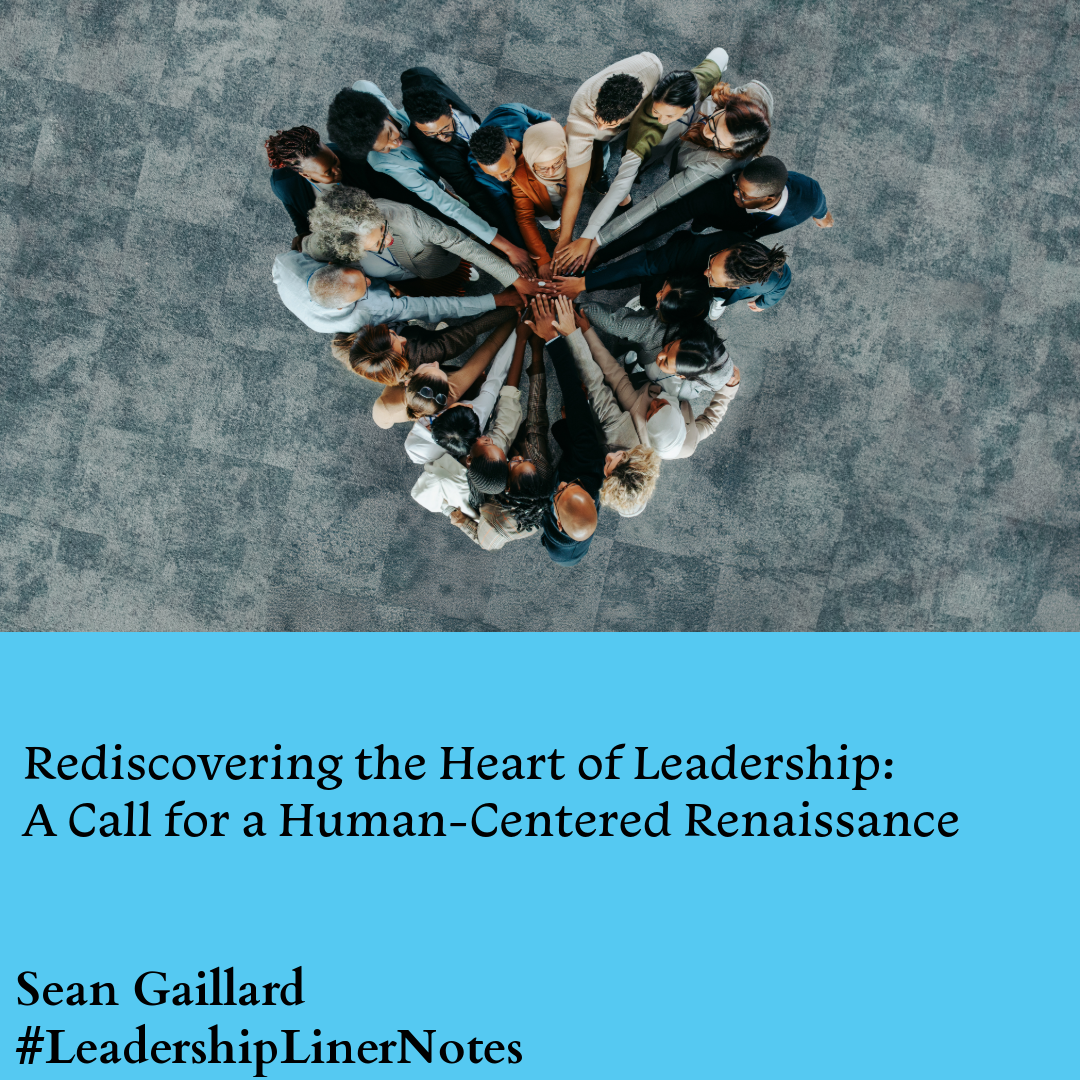
School leadership is overdue for a renaissance. That renaissance must be rooted in presence, humility, and courage. When leaders dare to lead from the heart and make belonging the work, leadership can once again be reclaimed as a human act rather than a spectacle.
Author’s Note
This piece was written as an invitation rather than an indictment. It reflects a personal and professional awakening shaped by lived experience, reflection, and honest conversations about what leadership demands in this moment. The hope is that it encourages thoughtful pause, renewed discernment, and a recommitment to leadership grounded in humanity.
I recently read an article in Inc. that stopped me in my tracks. It argued that curiosity, not coding, is the most essential trait leaders will need for the future of work. That idea resonated deeply because it echoes what many of us in education feel but often struggle to defend. Human centeredness matters. Curiosity matters. Schools often over rely on test scores. They depend too much on canned surveys and unfunded mandates. As a result, we miss the very conditions that allow real learning to take root.
Curiosity is not an add on. Curiosity is not a kit. Curiosity is not a scripted program rolled out with fidelity checklists. Curiosity is a mindset embedded in culture. It shapes how people ask questions, how they listen, and how they engage with uncertainty. When curiosity is confined to a STEM lab or a special event, the message becomes clear. Wonder is optional. Compliance is the goal.
That is not the world our students are walking into now.
A culture of curiosity cannot exist without belonging. Students do not take intellectual risks in spaces where they do not feel seen, valued, and safe. Teachers do not model curiosity in environments where trust is fragile. Leaders cannot inspire curiosity without the conviction that belonging matters first.
Belonging is the catalyst.
When students feel they belong, they ask better questions. When teachers feel they belong, they experiment. When leaders build belonging intentionally, curiosity follows naturally. Culture is not built through slogans on the wall. Culture is built through interactions, shared experiences, and the daily signals that tell people they matter.
This belief was reinforced for me at the ISTE+ASCD Conference in San Antonio this past summer. One of the keynotes was delivered by Scott Shigeoka, author of Seek: How Curiosity Can Transform Your Life and Change the World. His message was powerful and deeply affirming. He shared research that shows deep curiosity strengthens relationships, expands empathy, and fuels innovation. Curiosity, he reminded us, is an invitation. An invitation to seek. An invitation to share what we are learning. An invitation to be open to one another.
That keynote moved me so much that I left the session and immediately bought his book for myself and for a friend. It raised questions that continue to linger. What if we inspired curiosity without inhibition? What if we were curious about each other’s gifts? What if curiosity became a shared practice rather than a private trait?
These ideas are not theoretical for me.
Years ago, when I served as principal of a STEAM Magnet Middle School, we intentionally stepped outside the schoolhouse to experience innovation in action. We formed a community partnership with the Innovation Quarter in Winston Salem, a living ecosystem of research, entrepreneurship, and collaboration. The most important decision was sending teachers first.
Teachers visited the space. Teachers listened to innovators describe their work. Teachers asked questions about how ideas move from concept to impact. No binders were handed out. No scripts were followed. Conversations emerged organically. Beliefs began to shift. Instruction changed because mindsets changed.
This work is possible in any schoolhouse.
Here are practical first steps leaders can take to build a culture of curiosity grounded in belonging.
Start with a PLC on Curiosity Begin by naming curiosity as a shared value. Use a PLC to explore what curiosity looks like in classrooms, adult learning, and leadership practice. Invite teachers to reflect on when they feel most curious and when students seem most engaged. Anchor the conversation in real experiences rather than initiatives. Curiosity grows when people feel heard.
Lead With Questions Model curiosity as a leader. Replace quick answers with thoughtful questions during meetings, walkthroughs, and coaching conversations. Ask students what they are wondering. Ask teachers what they are noticing. Ask teams what might happen if they tried something new. Questions communicate trust and signal that thinking matters.
Build Authentic Problem Based Experiences Design learning experiences connected to real problems students care about. Invite students to tackle challenges in their school or community. Allow them to research, collaborate, and present solutions. Authentic problems invite ownership and deepen belonging because students see their voices matter.
Schedule Time for Curiosity Schools protect time for silent reading because literacy matters. Curiosity deserves the same respect. Build dedicated time into the master schedule for inquiry, exploration, and passion projects. This time might look like Genius Hour, inquiry labs, or interdisciplinary exploration blocks. Time signals value.
Partner With Innovative Organizations Seek partnerships with businesses or organizations where innovation is embedded in the culture. Invite professionals to share how curiosity drives their work. Organize site visits for staff. Allow students to see curiosity modeled beyond the classroom walls. Exposure expands possibility.
I am over test scores and canned surveys being the primary guides for the work that needs to be done in service of students. Data has a place, but humanity must lead. Human centered schools create the conditions for belonging. Belonging ignites curiosity. Curiosity fuels learning that lasts.
If schools are to prepare students for an unknown future, leaders must have the courage to protect curiosity and the conviction to build belonging. This work is bold. This work is attainable. This work is necessary.
Curiosity is not a distraction from achievement. Curiosity is the pathway.
When I was a kid, I was often one of the last picked for kickball. I remember the sting of waiting. I stood in awkward anticipation. I hoped someone would invite me on the team. I did my best to keep my head held high like my father had taught me. I watched captains point to someone else and tried not to show my disappointment. I was that kid hoping to belong. Hoping to be seen. Hoping to be chosen.
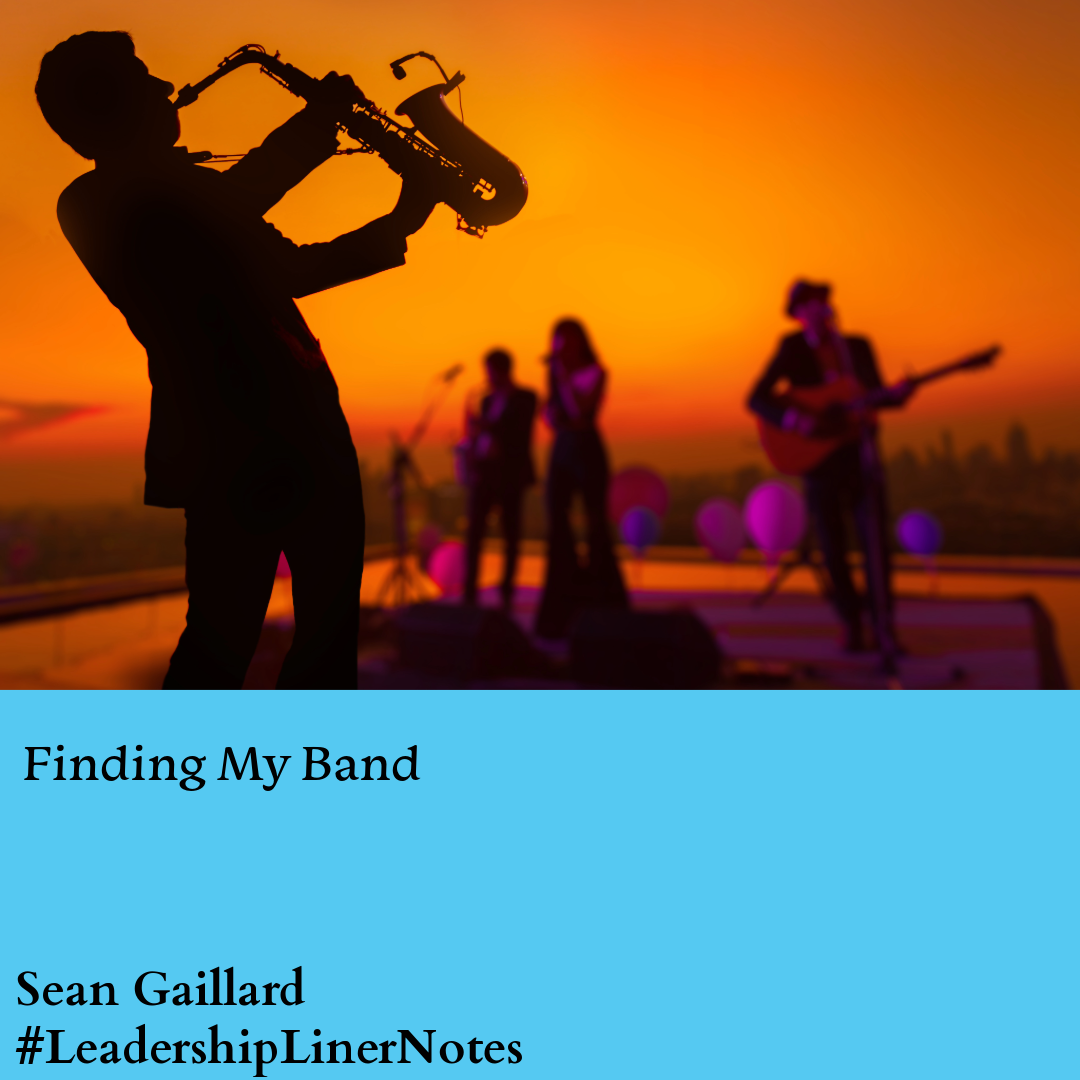
I think I have spent most of my life chasing that feeling of belonging. Wanting to be part of something bigger than myself. Wanting to feel the spark when you look around and know you are with your people who see you. Wanting a band.
A band for me is not just the literal type where individuals play music together. I use the band as an analogy for collaboration, belonging, and sustaining a shared vision. As a school leader, I would perpetuate this concept by referring to colleagues as “bandmates.” I thought that this mindset would help the culture and enhance belonging for all in the schoolhouse.
Being in a band is wonderful. There is purpose and possibility in the sound you create together. I felt that sense of belonging as a guitarist in a few literal bands. There is nothing like locking into a groove. Seeing another musician look over with that nod says we are in the pocket. I felt that same belonging when I taught English at Governor’s School. I was surrounded by a team of educators who celebrated collaboration and creativity. I felt it a few times in school leadership within administrative teams that shared a vision and worked in harmony.
Spinning on my turntable as of late is “The Beatles Anthology Collection.” It is a treasure trove of alternate takes, live recordings, and demos. It also includes unreleased tracks and a trio of their reunion songs. I love hearing the band workshopping songs and encouraging each other through various mistakes and flubs in the studio. It serves as a reminder of what a band should do when they face an echo of a failure. They should handle the resonance of a mistake wisely and stick together. You play through it, learn from it, and keep the groove moving on. Listening to this beautiful audio package of The Beatles in this alternate trajectory is wonderful. It makes me miss the joy of being in a band. I miss being with people who understand my sound.
Lately, I have been drifting. Feeling like a castaway. Wandering around a crossroads. Watching from a distance as others find their bands. I see camaraderie and connection and I often feel sadness that I am not part of it. Recently, I saw a group of leaders celebrating together in a LinkedIn post and I felt left out. I felt that old kickball feeling. The one that sits heavy.
For a long time I thought that if I waited long enough a band would find me. That a group would invite me in. That someone would want my presence, ideas, and voice. I waited. I believed. I hoped.
And then it hit me. I was waiting for a band that was never coming.
I have also forced the idea of band on others over the years. I regret that. Not everyone is ready to be in a band. I never took the time to realize that I am the barrier to the band. And the harder truth to accept is that maybe nobody wants to be in a band with me. Maybe I am not meant to join someone else’s group. Maybe I am meant to build something from the ground up. I am learning to sit with that. I am learning to accept it with honesty.
So here is where I am now.
I am at peace with where I am now.
I am at peace with the people I get to meet and support daily.
In the meantime, I am forming my own band.
Not by asking others or convincing colleagues or trying to prove myself that a band is the way to go. Not by waiting for an invitation that will never arrive. I am just going to keep creating. Keep writing. Keep podcasting. Keep blogging. Keep finishing the second book. Keep playing my sound without apology.
If I stay true to that maybe the right bandmates will hear the music. Maybe the ones who resonate with authenticity will wander into the room. Maybe belonging is not something you wait for. Maybe belonging is something you build.
During my days in “administrator school,” I was fortunate to have our superintendent, where I was employed as a teacher, instruct one of our courses. The course was Strategic Planning, and I gained much wisdom from his years as a seasoned district leader. The class happened to land on the final day of the semester for our cohort. Looking back, it was a meaningful milestone as it marked the last class on the last day of my entire Master’s in School Administration program.
A moment from that day has stayed with me throughout my career. At the time, I did not realize how deeply it would echo through my leadership journey.
A Moment That Still Resonates
We were wrapping up the final review before exams when our superintendent began to share parting wisdom. I do not know what moved him to do so, but his reflections were powerful. He began to riff on lessons from his own career, weaving together aphorisms, stories, and insights.
Then came the moment I will never forget. He said, “Remember those conversations you had about your principal or even about me after a faculty meeting? Remember those meetings after the meetings where you shared your thoughts about leadership decisions? Maybe you complained and maybe you didn’t. Well, someday soon, you will be the topic of those conversations in the parking lot. How will you respond to that?”
He paused and looked at each of us. The room fell silent. We all sat in the weight of his words.
At the time, those words felt heavy and unsettling. Over the years, I have come to understand their profound truth about leadership and influence.
The Power of the Leadership Echo
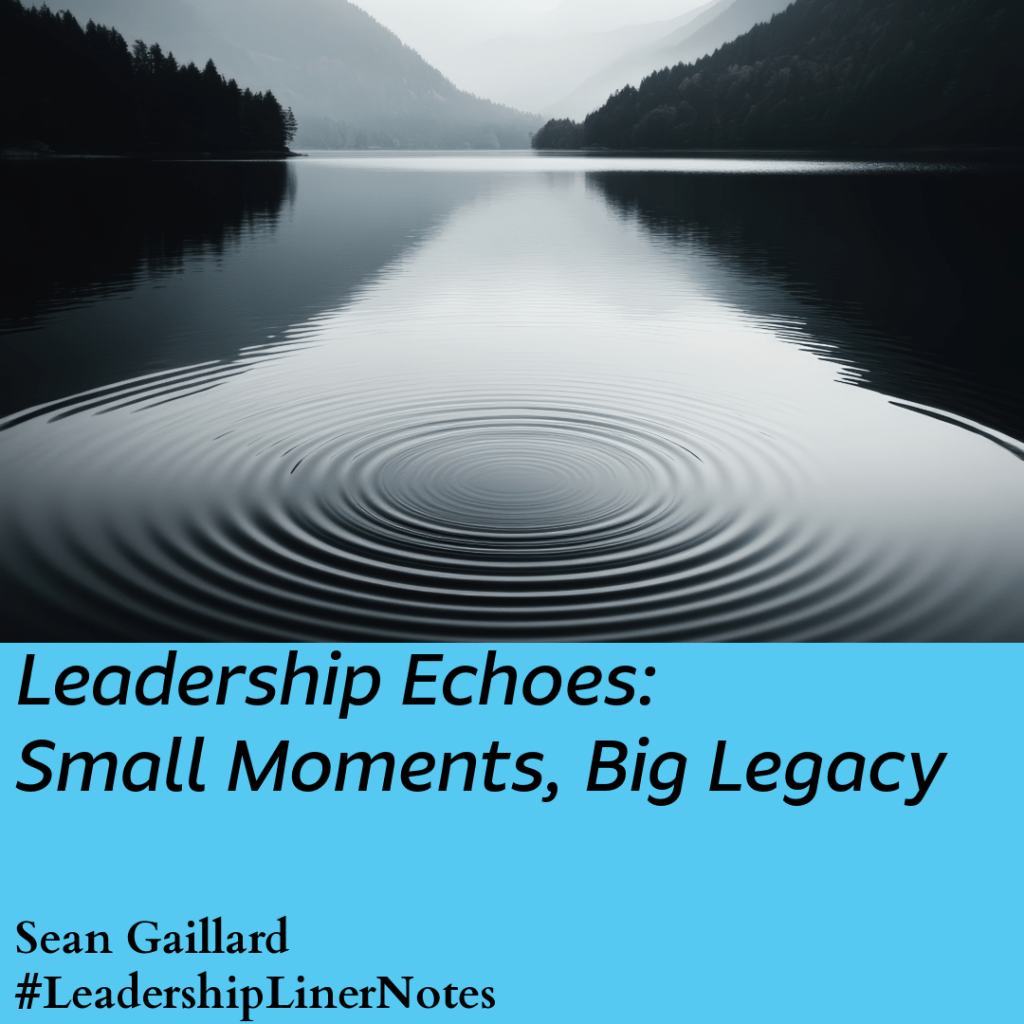
All leaders have what I call a leadership echo. This is the way our tone, actions, empathy, and integrity ripple beyond our presence. It is the resonance of the legacy we create for others. Each of us has a leadership echo, and we are the composers of the melody it leaves behind.
Music and the Subtle Notes That Stay
As a lifelong music fan, I am always drawn to the small details in a song that stay with you. One of my favorite moments in music is the bridge of “Here Comes the Sun” by The Beatles. The sequence of handclaps adds a percussive joy that lingers long after the song ends.
Leadership works the same way. The small, intentional acts: kind word, a listening ear, a thoughtful pause before reacting—create lasting harmony. They resonate across classrooms and communities.
I still remember the high five I received from my principal after he observed my American Literature class. I was teaching “Richard Cory” and playing Simon and Garfunkel’s musical version. That simple gesture not only encouraged me, but I could see my students respond to it, too. It was a cool moment, one that continues to echo for me.
Echoes in Action
Leadership echoes take many forms. A leader checking in on a struggling teacher. A principal celebrating small wins during a tough week. A colleague modeling grace under pressure. A teacher calling home to share a moment of student success.
These gestures may seem small, but they often become the stories others tell later. When we amplify these positive echoes, they build the shared culture that defines our schools.
Hearing the Unflattering Echo
Sometimes, the echoes we hear are not flattering. Thinking back to what my superintendent said that day, leaders will always be the subject of conversation. Those conversations are sometimes positive and sometimes not.
As leaders, we must approach those moments with reflection, not fear. Even when the echo is critical, it can still reveal purpose and integrity. I recently reviewed survey data about my leadership. Some of it stung, but I chose to use it as a mirror for growth rather than a judgment.
Listening to your leadership echo takes humility and curiosity. It is an opportunity to grow, not to defend.
Three Ways to Strengthen Your Leadership Echo
Here are three reflective strategies for tuning your leadership echo into a source of growth and impact:
Tune Your Tone: Pause before responding. Speak as if your words might echo in someone’s memory tomorrow.
Play Small Notes Loud: Celebrate micro moments with either a handwritten note, a hallway check-in, or a quick “thank you.” Small gestures can carry great resonance.
Listen for Resonance: Ask for feedback, reflect often, and be open to what comes back, even when it is uncomfortable.
The Last Chord
Just like the handclaps in “Here Comes the Sun,” your leadership will ring on long after you have turned the page to a new chapter. Think of the final chord in “A Day in the Life” by The Beatles. It sustains, fades, and lingers with an unforgettable sound that carries on long after the needle travels off the record.
Leadership is the same way. The decisions we make, the tone we set, and the kindness we extend all continue to reverberate through others long after we leave the room. Every word, action, and choice becomes part of our echo.
Each of us has the power to shape what that echo sounds like. We can choose to create an echo that uplifts, inspires, and builds others. The more we lead with intention, empathy, and grace, the more beautiful that resonance becomes.
My father often reminded me to lead with humility and to hold my head high. His words, much like that chord in “A Day in the Life,” continue to echo in my life and in my leadership.
May your echo be one of kindness, courage, and grace. May it be the kind that reminds others of the good they carry within. And may it continue to resonate long after the music fades.
One More Thing
This reflection is part of my ongoing Leadership Liner Notes blog, where I explore the harmony between music and leadership. The idea of the leadership echo reminds me that every interaction carries a note of influence, just like every chord in a great song contributes to the melody.
As I continue to write and learn, I’m inspired by the small moments that form the soundtrack of leadership. Every conversation, every decision, and every high five in the hallway becomes part of the echo we leave behind.
If this reflection resonates with you, share your own leadership echo story on social media using #LeadershipRiffs and #LeadershipLinerNotes, and tag me in your post. Let’s keep the conversation. and the echoes going.
A Collaborative Blog Post by Meghan Lawson & Sean Gaillard
Sean:
This post is a follow-up to our recent collaboration on Season 4 of The Bear. Meghan Lawson and I had such a great time thought-partnering and exploring leadership through the lens of this compelling show that we knew we had to keep the conversation going. When a story grabs your heart and your mind in equal measure, you follow it. For us, The Bear does just that.
We both love this show. We find ourselves returning to its characters, their struggles, their growth, and the environments they navigate because there are so many leadership lessons embedded in their journeys. These are not neat, polished takeaways. These are messy, raw, and very real moments that mirror the work we do in schools and systems every day.
One of the most moving scenes from Season Two is found in Episode Seven, “Forks.” It’s a moment where Richie, played with heart and grit by recent Emmy nominee Ebon Moss-Bachrach, has just completed a transformative stage at a fine dining restaurant. He wanders into the kitchen, reflecting, observing, absorbing. There, he finds Chef Terry, portrayed with quiet power by Olivia Colman, delicately peeling mushrooms.
They exchange a short but unforgettable conversation.
Richie asks, “Why do you do this?” Terry replies, “Respect.”
That single word hangs in the air—soft yet commanding. It lands like a truth bomb.
Richie follows up, “Time well spent. That’s what it’s all about?” Terry responds, “Yeah, I think so.”
As she steps away, she shares a simple, affirming note: Carmy, Richie’s current boss, told her that Richie was good with people.
That moment is not loud. It is not filled with urgency or ego. It is filled with presence, affirmation, and intentionality. Those are the moments worth striving for as a leader.
I love those quiet moments when I’m walking the hallways and visiting classrooms in the school I serve. These are the quiet moments that reflect the glow of a child who feels that sense of belonging. It is the knowing glance from a teacher when I see them in action with a teachable moment. Those are the moments which sustain and carry me on the days when I may be bereft of energy or I have forgotten my leadership purpose.
You go in quest of those moments that echo your purpose as a leader and resonate in impact that ignites the good for others. That makes the whole gig worthwhile.
Over the years, school leadership has sometimes been mistaken for performance art—standing on tables, performing viral-worthy stunts, orchestrating social media optics. While there’s a place for fun, it should never be contrived. Leadership is not about applause. It’s about authenticity.
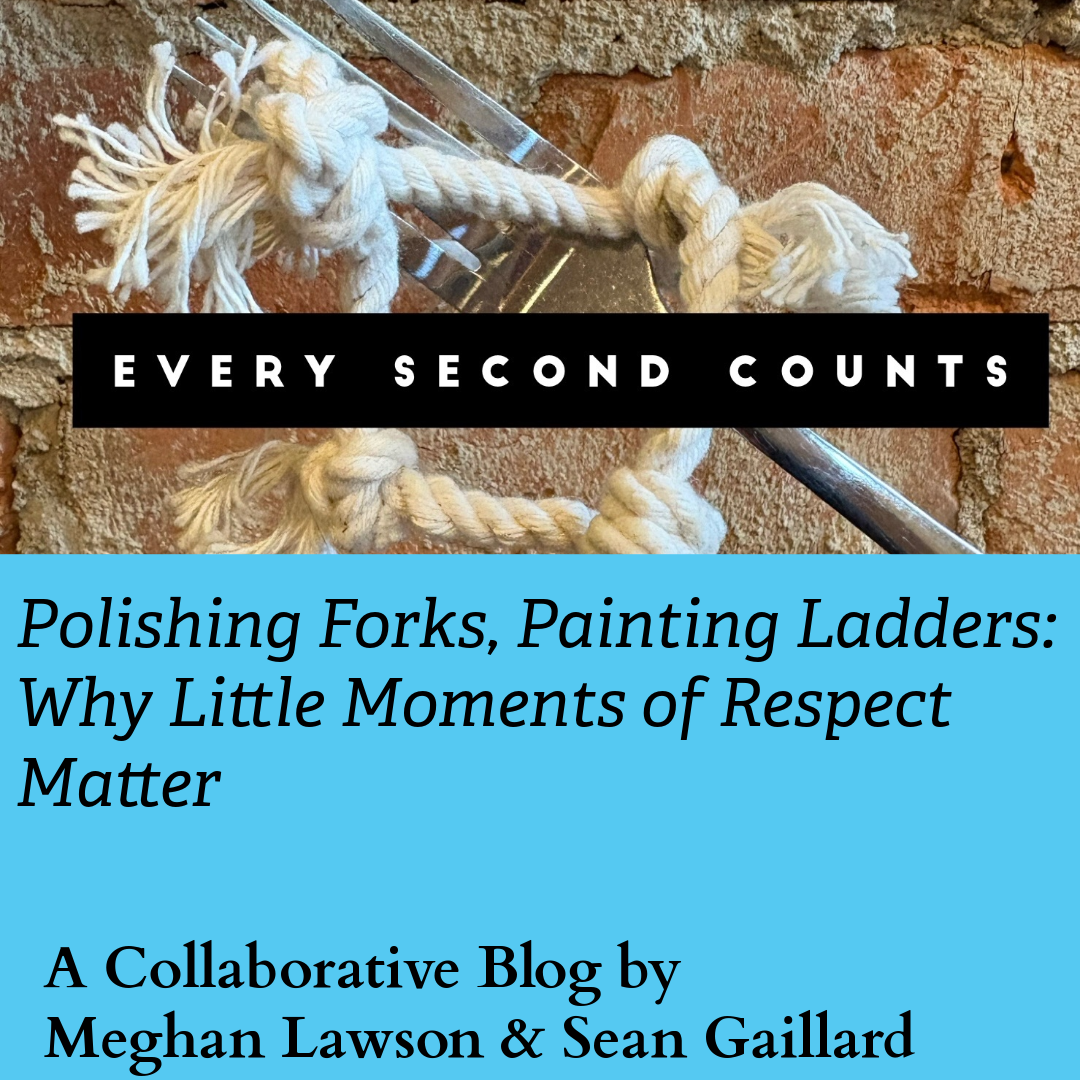
The “Forks” episode plays like a compelling work of art. It simmers and marinates with beautifully-wrought simplicity. And in that quiet simplicity, we’re reminded: respect isn’t loud. It’s intentional.
And there it is—one leadership lesson.
Meghan:
Sean has so beautifully captured this story, and I’m so glad he mentions it because it is indeed one of my favorite moments from the show.
My husband works in college basketball, and a while back, I wrote a blog post titled, Painting Ladders. It was about how I learned from him that every little detail matters, and none of us are above contributing to those little details.
There was a season when his team won their conference. We all know the tradition: players climb the ladder to cut down the net. That moment is symbolic, beautiful, and hard-earned.
But before the moment, there was the ladder.
The team’s ladder was yellow—not one of the school’s colors. My husband didn’t complain or delegate. He went out, bought navy paint, and stayed up until midnight painting it. No announcement. No credit. He just did it.
Because it mattered. Because of respect.
I try to carry that lesson with me into schools. No job is below me. No detail is too small. It’s about honoring the work and the people who do it. It’s about the culture we’re building—one choice at a time.
“Every second counts” is a phrase repeated throughout The Bear. It’s even emblazoned on the kitchen wall. But this scene reminds us: it doesn’t mean hustle until you break. It means something deeper. Every second is an opportunity to honor your work, your people, and the space you share.
Leadership isn’t just pushing for results. It’s about presence. Listening. Quietly showing someone they matter.
Terry is peeling mushrooms. Richie is paying attention. A few words are exchanged. A leader is affirmed. A purpose is clarified.
That is leadership.
I believe these kinds of moments shape culture. Hallway conversations. Check-ins after a tough day. The unseen prep done with care. The fork that gets polished when no one is watching.
I remember when I first became a building principal. I had dreams of grand gestures for staff, but I was serving over 700 students PK–5 with no assistant principal or counselor. The grand ideas gave way to meaningful ones: showing up in classrooms, learning kids’ names (first, last, and middle), greeting students at the door, cleaning fingernails, brushing hair, riding the bus.
That’s where the culture was built.
There are no small moments in a school.
So, here’s to peeling mushrooms. Here’s to painting ladders. Here’s to time well spent, quiet presence, and respect that shows up without a microphone.
Every second really does count.
Let’s keep leading like it matters. Because it does.
Four Actionable Leadership Moves:
Lead with Presence, Not Performance Show up consistently, not for the spotlight, but for the people. Leadership is built in everyday interactions, not staged moments.
Honor the Small Details From a clean classroom to a student’s confidence boost, the smallest touches reflect the greatest respect. Don’t underestimate their impact.
Practice Intentional Affirmation Just like Terry affirmed Richie, leaders should look for genuine moments to recognize others. Quiet encouragement often speaks the loudest.
Be Willing to Paint the Ladder Do the behind-the-scenes work. Fix the overlooked things. Whether anyone notices or not, that’s how you show respect for the team and the mission.
Let’s keep polishing forks and painting ladders. Leadership lives in the quiet corners.
A collaborative reflection by Meghan Lawson & Sean Gaillard on leadership, belonging, and bright spots inspired by Season 4 of The Bear
Special Note: Big thanks to my good friend, Meghan Lawson, for collaboration and thought partnership on this joint blog post! Meghan is a dream to collaborate with and I am honored that we joined writing forces on this shared piece. Thank you, Chef!
Lessons from Season 4 of The Bear
So, if you haven’t watched, SPOILER ALERT.
I told my good friend, Sean Gaillard, this week that his friendship not only makes me a better leader, it helps me to listen more deeply and appreciate more fully. This includes music which won’t surprise those of you who know Sean. Over the past couple of years, Sean and I have bonded over our love of the show, The Bear, a show filled with beautiful messy people who love imperfectly but love deeply. We cannot help but see many connections to education and hope you enjoy our six lessons from season 4 below.
Meghan 1: Less is More
Prior to this season, Carmy wanted to put out a new menu every day. He claimed to have many reasons for this. Fresh ingredients, novelty, the possibility of a Michilin star, but this proved to be both taxing on his team and expensive and unsustainable long-term. If The Bear wanted to stay in business, they would have to simplify. They would have to do less well. So, they started to minimize ingredients, focused on making simplified but exquisite meals consistently, and they worked to optimize the customer experience. As a result, things start to turn around for their restaurant.
I couldn’t help but see the inevitable parallel between this restaurant story and our work in schools. Too often, well-intentioned educational leaders learn of the latest and greatest in education and push those initiatives out to the staff in the hopes that this will be the year that they reach their school goals and see swift improvements in their data. We all know how the story ends. Some teachers burnout and others become disengaged figuring that “this too shall pass” so why bother with some of these “flavor of the month” strategies.
There is such a thing as too much of a good thing. When I need reminding of this, life humbles me with little missteps. I’ve put too much salt on my food to the point it’s become inedible. I’ve used too much blush or too much hair product and spent the day looking like a Broadway stage wannabe. And I’ve tried to do too much at one time with my team and had it backfire. So, I’m not writing this as some leadership expert. I’m writing this as someone who seems to learn lessons over and over again and only one way: the hard way.
We’ve been working on growing the capacity of our building leadership teams in my school district. I presented a plan for the work to principals for feedback in the spring. Then, when the hustle of the school year subsided, and we shifted gears to summer planning and learning, after digging into some learning together, it was clear. Parts of my plan were too much, and we needed to pivot. So, we did.
And this is why you need to listen to and trust your team.
Meghan 2: You Need a Team More than You Think
I read something powerful. I believe I found it in The Culture Code by Daniel Coyle. Essentially, in a study of teams, the team of high achievers who didn’t work closely together did not perform as well as the average performers on a high-functioning team. In The Bear, members of the team fully embrace their special role on the team. Ebraheim focuses on The Beef sandwich shop where it all started for this family owned restaurant. Turns out, this simple sandwich window is single-handedly keeping The Bear afloat. Syd focuses on her scallops. Tina (man, I just love her) focuses on making her pasta dish in under 3 minutes. Marcus focuses on being the best pastry chef he can be and even earns recognition in Food & Wine magazine. Richie, perhaps my favorite character, focuses on service. Nat on finances. They all do their part and do it well, and when another person is in some kind of trouble, they offer to help. They are in constant communication throughout the night. They have to be. They have to know when someone is walking behind them or when someone has a hot plate in their hands and or how much time remains before service. As they say, “Every Second Counts.” For the most part, they all have enough basic knowledge required to execute on various basic functions of the restaurants as needed. But they don’t have to do it all.
And yet, here we are. Often expecting ourselves to be the master of all things in our classrooms and schools. We want to be able to do it all and do it all at a high level. But what if we shifted our energy to identify how to leverage the strengths of our team? It’s not that we aren’t going to meet and won’t be collaborating. The Bear has a team meeting every day as do most restaurants. Some even break bread together before they begin service. But are we being strategic about the way we utilize the gifts of our teammates in a way that is equitable and advances our mission? I’m not a whiz at spreadsheets, but I know how to facilitate a meeting that moves us from point A to point B and ensures equity of voice. Can I learn how to be better at spreadsheet work? Sure, I can. We are all learners. Learning is our business. Is becoming a spreadsheet master, something I hate by the way, the best use of my time and energy when I have teammates who thrive in spreadsheets? Probably not. Planning an impactful meeting, using those sheets, gives me energy and is also needed.
Meghan 3: You Are Not Your Job
Throughout this season of The Bear, it’s clear that Carmy is having an existential crisis. He’s spent his adult life hyper-focused on his work. So much so, that this work became all he knew of the world and himself. For those of us, myself included, with childhood and adult trauma, this is a coping mechanism that I know all too well. It’s easier to compartmentalize the hard stuff and throw ourselves fully into our work than it is to confront painful realities. Natalie forces Carmy to hold her baby for a moment. He’s meeting her baby for the first time, and you can tell he is uncomfortable holding the baby at first but with time, he eases into it and himself in the moment with her. There’s a split second where Richie catches a glimpse of them, uncle and niece together, and smiles to himself realizing how special this moment truly is for Carmy. Carmy has countless moments of awakening outside of the kitchen this season and explains in the final season that he doesn’t know who he is outside of the kitchen.
I love our profession. I believe deeply in the work we do. And I worry about us. For too many of us, myself included, we’ve centered our lives and identities on success in education. I worry about this so much that I wrote about it in Legacy of Learning, “You are giving others the strength to move forward, the strength to believe in themselves, the strength to try to make this world a better place. Knowing this makes being an educator so meaningful. But we don’t have to suffer while we make this kind of impact. In fact, the more we can live well and be well, the more our impact will grow.”
If our well-being and self-esteem is solely predicated on how well we are believe we are performing in our work, that is a very fragile ecosystem. We don’t have to earn love or earn self-worth. We already have it. Everything we have is everything we need. So, let’s start paying attention to how we talk to ourselves. Let’s talk to ourselves like we talk to people we love. The most important work is the work we do on ourselves. Everything else is secondary.
Sean: Collaborating with Meghan Lawson is always a bright spot. Her lens on leadership sharpens mine. What’s even better is that her friendship always makes be better. Her reflections on The Bear Season 4 kick open the door for all of us to pause, reflect, and notice the extraordinary in the everyday. I’m grateful to add to this conversation not just as a fan of the show, but as a school leader who believes deeply in the power of culture, connection, and care just as Meghan exemplifies.
This summer, Meghan and I had the chance to hear Dan Heath speak live at the ISTE + ASCD Annual Conference in San Antonio. His keynote, inspired by his book Reset: How To Change What’s Not Working, challenged us to “study the bright spots.” His words weren’t just memorable; they were actionable. That idea has stayed with me, echoing in my heart and practice.
Bright spots can be found in great TV, too. And The Bear is brimming with them—tiny, powerful moments that show what leadership, belonging, and humanity look like under pressure. Here are a few that have stuck with me and how they’ve nudged me to lead better:
Sean: 1. The Art of Delight
In one of the standout scenes, Richie makes sure a guest gets an authentic Chicago Beef sandwich. That alone would’ve been enough. But then? The restaurant team makes it snow. A surprise. A moment of joy. An act of intentional delight.
Great leaders do the same. They listen for delight opportunities. They tune into what others need even if they don’t say it out loud. Delight isn’t about flashy gestures; it’s about showing people they matter.
For me, this takes the form of Positive Principal Phone Calls Home. I call families not because something went wrong—but because something went right. A student showed kindness. A kid made growth. A teacher created magic. It’s the equivalent of snow falling indoors. And it always lands.
Sean: 2. You Are Never Alone
Carmy, fractured and guarded, prepares lunch for his estranged mother. Syd chooses to show up for Richie even though the wedding they’re attending is for his ex-wife. These moments speak volumes. In the kitchen or in the chaos, someone chooses to be there.
Leadership, at its best, is presence. Not performance.
On a recent flight home, I noticed a fellow passenger battling flight anxiety. No fanfare. Just a quiet offer to talk, sit, and be. We shared the journey—sky and fear alike. That moment reminded me of school. We often say the principal’s office can be a lonely place. But it doesn’t have to be. Leaders must extend that reminder: you are not alone to students, staff, and families. And sometimes, to ourselves.
Sean: 3. Belonging Matters
There’s a powerful scene where Richie’s daughter is too afraid to dance at a wedding. What do the adults do? They crawl under the table and share their own fears. It’s tender, honest, and unforgettable.
Leadership is often loud. But sometimes, it’s quiet courage: the willingness to go under the table with someone else’s fear and stay there with them until they’re ready to rise.
This summer, I wrote handwritten letters to my staff. Simple notes of gratitude and anticipation. No big speech. Just connection. It’s how belonging begins by saying: I see you. I’m glad you’re here. I can’t wait for what’s ahead.
The Bear isn’t just entertainment. It’s a mirror. A reminder. A bright spot. And as we get ready for a new school year, there’s no better time to slow down, reflect, and carry these lessons into our leadership.
-Here’s to delight. -Here’s to presence. – Here’s to belonging. – Here’s to the bright spots.
The groove is on the move in San Antonio, and Marvin Gaye’s “Got To Give It Up” is pulling me into the aisle at the end of an unforgettable MainStage experience at the ISTE + ASCD Conference. DJ Catwalk is spinning the exit music. The room is clearing out after being inspired by the beautiful voices and stories of Sabba Quidwai, Scott Shigeoka, and Jason Reynolds. And there I am—dancing alone. No choreography. No cool moves. Just me, caught in the joy of the moment.
This was one of those in-between moments—the kind you don’t plan for but end up meaning the most. The kind that happens off-script, off-schedule, and sometimes even offbeat. It’s like a classroom teachable moment or when a band falls into an unexpected groove and something beautiful just… happens.
I hadn’t been to ISTE in six years. I had never been to an ASCD event. I have been a member of both organizations for years. But this first combined experience didn’t feel like two worlds crashing together—it felt like home. It reminded me of The Brady Bunch hitting its stride: unless you were paying attention to the lyrics or the first season, you forgot it was a blended family. It was seamless, like when the Brady kids became a singing group and belted out “It’s A Sunshine Day.”
There were many moments that filled my heart.
I was honored to be named an ISTE-ASCD 20 to Watch Award recipient. (Grateful for to meet Lauren Richardson!) It was humbling beyond words. I was also privileged to co-present with my friend and thought-partner, Dr. Andrea Trudeau, on the partnership between principals and librarians—a project that has grown from our year-long ISTE-ASCD Expert Webinar Series. That presentation was special, no doubt.
But the moments in between—those moments between sessions, in the aisles, on bookstore strolls, and even in hurried walks through the Expo Hall—are the ones that have stayed with me. Like meeting finally, Jacie Maslyk, an amazing author and expert on STEM and Literacy, was akin to meeting a member of The Beatles. Or even meeting Jen Rafferty, an inspiring voice and friend in my PLN, was so meaningful.
I had the joy of finally meeting my longtime friend and collaborator, Meghan Lawson, in person. Walking the bookstore with her, sharing sessions, and learning side-by-side filled my soul. We made sure to share learning and send love to our mutual friend Lauren Kaufman, whose presence was deeply missed. And it was incredible to reconnect with some of my North Carolina PLN band—Brian Whitson, Lindsey Sipe, and Ashley McBride. Seeing familiar faces from home made it all the more meaningful.
I’ll never forget the rush of moving through the Expo Hall with Andrea as we tried to find one of our longtime inspirations, Jennifer Gonzalez. We’ve admired her work through her Cult of Pedagogy podcast and blog for years. When we finally met, the moment turned into a conversation about music, vinyl, and what’s on our respective turntables. It felt like family.
I had the honor of seeing my mentor, Todd Whitaker, co-present with Steve Gruenert. They are the co-authors of School Culture Rewired, a book that sparked the beginning of #CelebrateMonday for me years ago. During their session, Todd spotted me from the audience and invited me to share a quick story from my seat. That was another in-between moment I won’t forget.
There were so many others. Seeing Danny Steele drop the mic in a session on instructional leadership. Sitting in awe during Suzanne Dailey’s powerful Turbo Talk on happiness. One line in particular stuck with me: “Instead of asking someone how their day was, ask them, ‘Tell me something good.’” That simple shift reframed how I want to connect with others—whether in the hallway, in PLCs, or with students at dismissal. Of course, the uplifting symphony of the words of Baruti Kafele during his session on his book, What Is My Value Instructionally to the Teachers I Supervise? resonated with me deeply.
And perhaps one of the most unexpected and humbling moments? During a roundtable discussion hosted by Educational Leadership magazine, someone referenced this very blog—Principal Liner Notes—as a resource. That meant more to me than I can express. It was one of those quiet nods that affirms you’re doing something that matters.
Bringing It Home: Six In-Between Moves for Meaningful Momentum
When a conference like this ends, it’s easy to slip into the post-event blues. But I choose to stay in the groove—to keep the connection and meaning alive in small but powerful ways. Here are six moves I’m bringing back to the schoolhouse:
Move
What to Try
Why It Matters
1. Share One Track
Don’t overwhelm: just share one idea or resource with your team.
Simple focus leads to deeper conversation.
2. Ask Better Questions
Replace “How was your day?” with “Tell me something good.”
Invites joy, not just information.
3. Cue the Turntable
Ask someone what’s on their playlist, book stack, or lesson plan.
Sparks connection beyond the surface.
4. Micro-PD Moments
Host a 15-minute “conference spark” PD during planning or lunch.
Small doses of big ideas go a long way.
5. Partner Up with Purpose
Try a principal-librarian collaboration or cross-role project.
Creativity thrives in unlikely pairings.
6. Keep the Groove Going
Schedule a reconnection call with someone you met at ISTE-ASCD.
Keeps momentum rolling beyond the swag bag.
Final Riff
This conference reminded me that the work we do is about people. It’s about presence. It’s about staying in rhythm with the learners, teachers, mentors, and friends who help us write our leadership song.
To everyone I met, hugged, high-fived, or learned with in San Antonio: thank you. You filled my heart. You reminded me of the beauty in the in-between.
So keep asking what’s on someone’s turntable. Keep dancing in the aisle. And most of all—keep leading without limits. .
“The waiting is the hardest part.”-Tom Petty (1981)
As I continue my sojourn in Maine, I gaze upon the lake on another cool summer morning. A warm cup of coffee is my company along with the occasional sparkles smiling at me on the water and a lone loon swimming alongside this morning reverie in the distance.
There’s a certain kind of silence that settles in when your waiting. It’s not always peaceful. It’s filled with hope, doubt, questions, and whispers of “what if.” That’s where I have been reflecting upon lately. There is an art to waiting that leaders must take hold of and learn to appreciate. Many look to us as a lamppost on a dark, foggy night. It is important that we make that the light we carry within, our leadership core, is intact, balanced, and focused.
The Struggle of Waiting
It is important to acknowledge the truth. Waiting is frustrating. It is excruciating into its life span and sometimes I allow negative moments to roam rent free in my head. I try to cope with waiting by cueing up familiar songs to carry me through the anxiety of waiting: “The Waiting” by Tom Petty, “Tired of Waiting for You” by The Kinks, or “I Am Waiting” by The Rolling Stones (a great deep cut by them from my favorite album of theirs, “Aftermath.”) Speaking of the Stones, I even imagine myself in their classic “Waiting on a Friend” video hanging out on the stoop with Mick Jagger looking for Keith Richards. Yet, the bottom line remains for me that waiting is just plain hard.
As leaders, we are wired to take action, make moves, plan next steps. We calculate, strategize, and analyze. There is urgency in the air that needs our focus and we called to act. The clock is ticking, people need decisions, and our vision and mission to serve our school community must be maintain momentum.
Sometimes the most important growth most important growth happens when nothing appears to be happening. For leaders, waiting can feel like failure. It can compel us to embrace the abysmal and tune into second-guesses and should haves. But in this stillness, I’m learning that not moving doesn’t mean not growing.
Waiting is an opportunity.
A Leadership Riff in the Shadows: George’s Quiet Resilience
George Harrison waited. He always did. Whether it was waiting for his guitar solo cue during the early days of The Beatles or waiting for spiritual enlightenment during his pursuit of Transcendental Meditation, George simply waited. He endured a long journey to have his voice and songs recognized within The Beatles. He waited in the shadow of the successful and thriving shadow of the Lennon-McCartney songwriting partnership for years. He watched song after song of his get passed over. But instead of giving up and surrendering to doubt, he kept writing. Occasionally, a song would be accepted and many of his songs in The Beatles still resonate today like “Something,” “While My Guitar Gently Weeps,” and “Here Comes The Sun.”
When the time finally came, George Harrison released the epic-three album, “All Things Must Pass.” This was an album of such depth, resonance, and majesty that it proved to the waiting wasn’t a waste; rather, it was a gathering. That gathering included an all-star line up musicians ranging from former bandmate, Ringo Starr, to Eric Clapton, Klaus Voorman, and all members of Badfinger. Phil Spector co-produced and served the album up with the Wall of Sound. It was filled with songs that The Beatles had rejected and hits that still spin today like “My Sweet Lord” and “What Is Life.”
George Harrison proved that waiting does not have to yield in an abrupt ending. Waiting can compel something beautiful to happen.
Leadership Wait Time
Waiting is a leadership discipline. It can take years to cultivate and nuance for one’s own leadership practice. Waiting teaches us patience, humility, faith, and emotional agility. In the classroom, teachers use “wait time” as a move to create space for students to pause, think, and reflect. It is an intentional pause that is meant to create belonging for students who may feel bashful at responding or to set the stage for a teachable moment to resonate within the classroom.
Leaders have wait time, too. The waiting room is where character gets built. It’s where we learn to lead without control, to listen instead of speak, to reflect instead of react.
As leaders, we have to cultivate space for waiting to ignite reflection. We have to give permission for ourselves to roam into that space to discover new things within ourselves and the people we serve.
This is not always easy and it can be ponderous. I reflect upon the moments of when I am challenged to wait as a leader and as an individual. Within the frustration of the moments of endless waiting, I have sometimes missed those opportunities for reflection and positivity. It’s easy to default to damning doubts and shifting the blame to some universe conspiring against me. Waiting does not have to be negative. We have to shift the paradigm on waiting to something akin to opportunity.
Brene Brown expressed this best for leaders, “Patience is not about waiting. It’s about how we behave while we’re waiting.” This is where we must be very cognizant of how we respond and move during our leadership wait time. We model the expectations and set the tone in our moves. Many look us to be that solid beacon of calm during any level of wait time and it’s important that we lead with grace, poise, and purpose during a leadership wait time.
Waiting can be a pressure cooker for leaders, but it’s important to maintain our core during those ponderous wait times.
There may have been pressure to fill a vacancy quickly whether it was for a teacher, assistant principal, or support staff member. But instead of rushing, you held out for the right fit. You waited, trusted your instincts, and stayed aligned with your school’s mission and values. And when that person arrived, it was clear they were the one. They didn’t just fill a role; they elevated the culture, built trust, and made a lasting impact on students and staff.
That moment, that hire validated the wait. The right choice often takes time.
A Quiet Riff to Carry Forward
Waiting is not weakness. It’s part of the journey. The silence we endure on a decision to be made or an action to occur is not empty. The silence may be an opportunity for you to compose a new song you don’t yet hear. I think of a time during my first principalship when our school was waiting for the outcome of our magnet grant application. The waiting was far-reaching and I remember checking my inbox every day several minutes at a time. This lasted for months and it was not pleasant. The waiting period did bring the faculty closer together as we shared this collective anticipation.
Looking back, it was the waiting that not only bonded us but it helped us persevere when we found out that we didn’t get the grant. The community that was forged during this period lead our school to being the first in the district to successfully implement a non-funded magnet. We had a positive impact on kids and achievement due to the community that was forged during the waiting game.
The truth is, we don’t always get to fast-forward through uncertainty. But we do get to keep showing up with grace, grit, and belief. You can use waiting as an opportunity to model resilience, reflection, and connection with others. And that’s the kind of leadership I want to grow in, one quiet step at a time.
Three Action Steps to Make Waiting More Meaningful for Your Leadership
1. Seek Out Thought Partners
Waiting doesn’t have to be lonely. Use the pause to deepen your leadership bench. Reach out to a mentor, a colleague, or someone who inspires you. Take a spin within your Professional Learning Network (PLN) to seek those people out who can inspire and support you. Share your thoughts and listen to theirs. Thought partnership sharpens perspective, calms uncertainty, and reminds you that you’re not navigating the unknown alone. Collaboration during the waiting season often leads to renewed clarity and creative momentum.
2. Study Leadership Riffs from History
Waiting has shaped some of the most significant leaders and movements in history. Lincoln waited through agonizing losses before the tide turned. Mandela waited in a prison cell for 27 years before transforming a nation. Singer-songwriter Carole King waited years to emerge as a solo artist and record her multi-platinum selling masterpiece, Tapestry. Even The Beatles waited through setbacks and missteps before crafting Sgt. Pepper. Explore these stories not just for inspiration, but as evidence that purpose-driven delay can lead to extraordinary outcomes.
3. Use the Quiet to Bring Your People Closer
While the external outcome is pending, focus inward. Use this time to connect more deeply with your team. Hold space for listening. Celebrate small wins. Reaffirm your shared mission. Leadership isn’t just about making decisions, it’s about fostering belonging. Waiting offers a powerful window to strengthen community, build trust, and ensure your team feels seen and valued.
Recently, I came across a clip on YouTube of the late Ray Manzarek of The Doors telling the origin story of their 1967 hit Light My Fire. It’s one of those creative origin stories that just sticks. Ray talked about how each band member added a unique musical flavor that transformed the song into something iconic.
Guitarist Robby Krieger brought his flamenco background and wrote the core of the tune. John Densmore layered in a Latin beat on drums. Jim Morrison added a poetic and haunting verse about a funeral pyre. Ray himself took a page from Bach to create that unforgettable keyboard intro. All these ingredients came together like a great jam session, different parts working in harmony to create something innovative, inspired, and bold.
The Doors didn’t play it safe. They took a leap. They trusted each other. And they built something greater than the sum of their parts. That story got me thinking about what it means to lead and solve problems in a school.
When it came time to revise our master schedule at the school I serve as principal, the challenge was real. We needed to maximize instructional time and expand opportunities for intervention. But we didn’t tackle it in isolation. We did it together.
Over two weeks, I brought the challenge to our Instructional Leadership Team, the School Improvement Team, and several staff and teacher partners. These weren’t just quick drop-ins or top-down mandates. These were real conversations, one-on-one meetings, small group huddles, and full team sessions. I started each one with a simple design thinking prompt: How Might We…?
I’ll never forget one particular session with the School Improvement Team. We were all gathered around the same table. Teachers led the discussion. We weighed pros and cons. Ideas flew. Everyone added a perspective, and each voice mattered. There was no single author of the final schedule. Just like The Doors building Light My Fire, each person added a line, a beat, a riff.
Once we landed on a draft, I shared we’d treat it as a trial run. That removed pressure and opened space for feedback. We gave it a shot, came back, reflected, and adjusted. And here’s the best part—it worked. Not because it was perfect, but because it was owned. Teachers had skin in the game. Everyone contributed. Everyone collaborated. Everyone made it better.
This process reminded me that these collaborative moments between teachers and school leaders must echo what we want our students to experience. According to the World Economic Forum, one of the top job skills for 2025 is complex problem solving. Our students won’t master that skill from worksheets alone. They’ll learn it because we model it. Because we live it. Because we solve problems together.
3 Action Steps To Take Build A Collaborative Problem Solving Culture
Leadership is about making space for others to create. It’s about asking How Might We instead of You Must. It’s about letting teachers jam. Here are three ways schools can start building that kind of collaborative problem-solving culture:
1. Create Solution Building Time Set aside time during the month for small, creative think tanks. Bring together teachers, staff, and leaders in a low-pressure space to brainstorm, ideate, and prototype solutions. Use design thinking prompts. Use sticky notes. Use music. Just make it fun and focused.
2. Launch #InstantPD Moments Give teachers the mic. Once a week, host a 15-minute pop-up PD session where a teacher shares a strategy that works. These micro-sessions build confidence, spread great practice, and create the conditions for more teacher-led innovation.
3. Use the Power of the Trial Run When testing something new, give permission to try without pressure. Frame it as a pilot. Invite feedback. Circle back. This builds trust and opens the door for authentic input that shapes real change.
Whether it’s jamming with colleagues on a new idea or leading a full schedule redesign, when we bring people together, we get better. We build trust. We spark creativity. We light fires.
Let’s keep jamming. Let’s keep solving. Let’s keep leading like it matters.
This is your latest #LeadershipRiffs moment from the desk of a school principal who still believes in the power of collaboration, creativity, and the beautiful noise we make when we lead together.
There are checklists to check off. Boxes to move. Emails to answer. Meetings to attend. Conversations to wrap. It can feel like you’re racing a clock with no hands—just noise, motion, and that persistent push toward “done.” As school leaders, we often wear this urgency like a badge of honor. But somewhere in the frenzy, we lose sight of something vital:
The pause.
The other day, our custodian was out, and I had to stay late to close the building. Alone. I walked the halls, locking doors and preparing to set the alarm. The building was still. No laughter echoing down the halls. No rush of students heading to the buses. Just me and the walls that had witnessed a school year’s worth of highs, lows, pivots, and quiet victories.
That simple rhythm—step, door, lock, breathe—became something sacred. I wasn’t just closing a building. I was closing a chapter. In that silence, the year spoke back to me. I remembered the breakthroughs. The bruises. The bounce-backs. The beauty of what we had built together.
And I realized something all over again: reflection is not a luxury. It’s a necessity.
Since my heart episode last year—a moment that forced me to recharge not just physically, but mentally and spiritually—I’ve come to believe even more deeply in the power of pause. I spent too many years avoiding it. Confusing the speed of leadership with the strength of leadership. I mistook checklists for vision. And it nearly broke me.
Innovation doesn’t come from being in constant motion. It comes from being still enough to listen to what the year has been teaching us all along.
So I offer this, not just as a fellow school leader, but as someone who had to learn the hard way: Make reflection part of your leadership practice. Not later. Now.
Here are three ways I’m leaning into reflection, even in the middle of the end-of-year mania:
🎧 1. Schedule 15 Minutes of Stillness
Block out 15 minutes this week—no email, no meetings, no phone. Find a quiet corner of your school. Sit. Breathe. Let the silence remind you of your why.
📝 2. Journal with Three Prompts
What am I most proud of this year? What did I learn from my staff? What will I do differently next year? Keep it short. Keep it honest. But write it down. Let your words catch up with your heart.
🚶♂️ 3. Take a Solo Walk Through the Building
No agenda. No checklist. Just walk. Let the sights, sounds, and stillness speak to you. Every poster, every student project, every empty seat is a story. These are the artifacts of your leadership.
If you’re reading this and feeling overwhelmed or alone, know this: you’re not. I’m walking this with you. And if you need a thought partner or a word of encouragement, I’m here.
Leadership is lonely—but it doesn’t have to be isolating. Especially when we choose to pause, reflect, and lead with presence.



 Leadership Liner Notes: Sean Gaillard