The Power of Belonging and Curiosity in Schools


Inspired by “Why Curiosity Not Coding Is the Top Trait CEOs Need for the Future of Work”
https://www.inc.com/joe-galvin/why-curiosity-not-coding-is-the-top-trait-ceos-need-for-the-future-of-work/91278344

I recently read an article in Inc. that stopped me in my tracks. It argued that curiosity, not coding, is the most essential trait leaders will need for the future of work. That idea resonated deeply because it echoes what many of us in education feel but often struggle to defend. Human centeredness matters. Curiosity matters. Schools often over rely on test scores. They depend too much on canned surveys and unfunded mandates. As a result, we miss the very conditions that allow real learning to take root.

Curiosity is not an add on. Curiosity is not a kit. Curiosity is not a scripted program rolled out with fidelity checklists. Curiosity is a mindset embedded in culture. It shapes how people ask questions, how they listen, and how they engage with uncertainty. When curiosity is confined to a STEM lab or a special event, the message becomes clear. Wonder is optional. Compliance is the goal.

That is not the world our students are walking into now.

A culture of curiosity cannot exist without belonging. Students do not take intellectual risks in spaces where they do not feel seen, valued, and safe. Teachers do not model curiosity in environments where trust is fragile. Leaders cannot inspire curiosity without the conviction that belonging matters first.

Belonging is the catalyst.

When students feel they belong, they ask better questions. When teachers feel they belong, they experiment. When leaders build belonging intentionally, curiosity follows naturally. Culture is not built through slogans on the wall. Culture is built through interactions, shared experiences, and the daily signals that tell people they matter.

This belief was reinforced for me at the ISTE+ASCD Conference in San Antonio this past summer. One of the keynotes was delivered by Scott Shigeoka, author of Seek: How Curiosity Can Transform Your Life and Change the World. His message was powerful and deeply affirming. He shared research that shows deep curiosity strengthens relationships, expands empathy, and fuels innovation. Curiosity, he reminded us, is an invitation. An invitation to seek. An invitation to share what we are learning. An invitation to be open to one another.

That keynote moved me so much that I left the session and immediately bought his book for myself and for a friend. It raised questions that continue to linger. What if we inspired curiosity without inhibition? What if we were curious about each other’s gifts? What if curiosity became a shared practice rather than a private trait?

These ideas are not theoretical for me.

Years ago, when I served as principal of a STEAM Magnet Middle School, we intentionally stepped outside the schoolhouse to experience innovation in action. We formed a community partnership with the Innovation Quarter in Winston Salem, a living ecosystem of research, entrepreneurship, and collaboration. The most important decision was sending teachers first.

Teachers visited the space. Teachers listened to innovators describe their work. Teachers asked questions about how ideas move from concept to impact. No binders were handed out. No scripts were followed. Conversations emerged organically. Beliefs began to shift. Instruction changed because mindsets changed.

This work is possible in any schoolhouse.

Here are practical first steps leaders can take to build a culture of curiosity grounded in belonging.

Start with a PLC on Curiosity
Begin by naming curiosity as a shared value. Use a PLC to explore what curiosity looks like in classrooms, adult learning, and leadership practice. Invite teachers to reflect on when they feel most curious and when students seem most engaged. Anchor the conversation in real experiences rather than initiatives. Curiosity grows when people feel heard.

Lead With Questions
Model curiosity as a leader. Replace quick answers with thoughtful questions during meetings, walkthroughs, and coaching conversations. Ask students what they are wondering. Ask teachers what they are noticing. Ask teams what might happen if they tried something new. Questions communicate trust and signal that thinking matters.

Build Authentic Problem Based Experiences
Design learning experiences connected to real problems students care about. Invite students to tackle challenges in their school or community. Allow them to research, collaborate, and present solutions. Authentic problems invite ownership and deepen belonging because students see their voices matter.

Schedule Time for Curiosity
Schools protect time for silent reading because literacy matters. Curiosity deserves the same respect. Build dedicated time into the master schedule for inquiry, exploration, and passion projects. This time might look like Genius Hour, inquiry labs, or interdisciplinary exploration blocks. Time signals value.

Partner With Innovative Organizations
Seek partnerships with businesses or organizations where innovation is embedded in the culture. Invite professionals to share how curiosity drives their work. Organize site visits for staff. Allow students to see curiosity modeled beyond the classroom walls. Exposure expands possibility.

I am over test scores and canned surveys being the primary guides for the work that needs to be done in service of students. Data has a place, but humanity must lead. Human centered schools create the conditions for belonging. Belonging ignites curiosity. Curiosity fuels learning that lasts.

If schools are to prepare students for an unknown future, leaders must have the courage to protect curiosity and the conviction to build belonging. This work is bold. This work is attainable. This work is necessary.

Curiosity is not a distraction from achievement. Curiosity is the pathway.

That is the work worth doing.

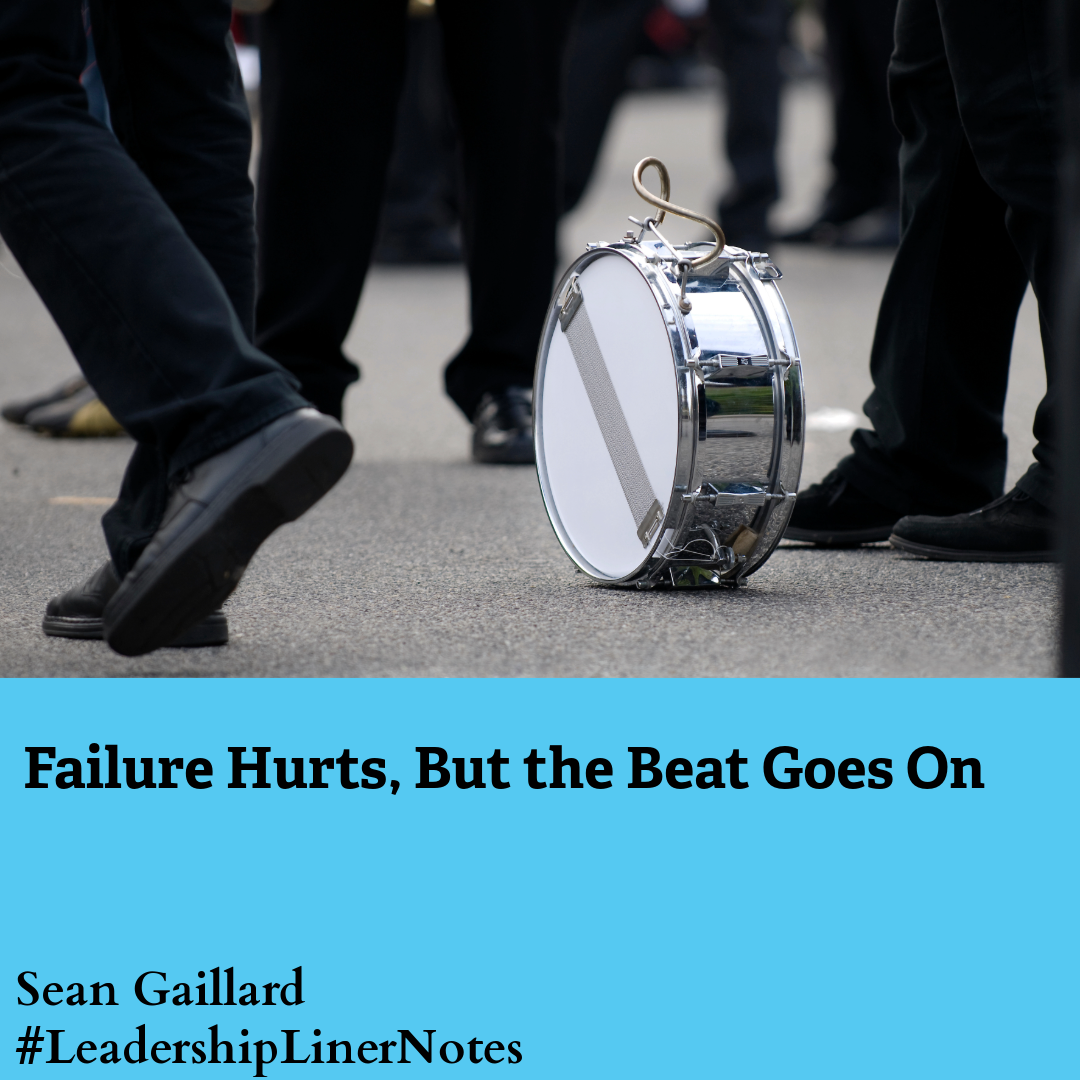
Failure Hurts, But the Beat Goes On

Failure hurts. There’s no sugar-coating that simple truth. When the Beatles were turned down by Decca Records, it could have been the end of their story. But it wasn’t. They found another path and changed the world. As I wrote in The Pepper Effect, that “no” was just the prelude to a bigger “yes.”

And they’re in good company. Walt Disney was once fired for “lacking imagination,” and Oprah Winfrey was told she was “unfit for television” before becoming a media icon. Each of them had moments that could have ended their journeys, but instead, they used those setbacks to fuel their next success.

In leadership, we all have those moments. And I’ll say personally, I’ve had my own failures. Sometimes the things I write or the ideas I share don’t resonate the way I hope. Sometimes a well-intentioned plan becomes a flop and I fall on the sword of doubt. Each of those moments is a chance to keep creating, keep pushing, and keep striving. It’s a reminder that our perseverance can inspire others to do the same.

In leadership, we face our own versions of these stories. Sometimes failure lands on our shoulders alone, and it feels isolating. The secret I have learned over the years is that failure is less sharp when you’re in a band, when you have those who know you and stand by you. It’s easier to turn a setback into a new song when you’re not playing solo. That’s why it is essential to surround yourself with those who support and empower you. That’s why it is essential to stay connected with those who knew you and stood by before you got the leadership gig, corner office, or prestigious title.

When failure comes, and it will, remember that you’re not the first and you won’t be the last. Take a breath, lean on your bandmates, and see failure as the beginning of a new opportunity. Failure is the spark for something greater. I know that failure can hurt and force you to stand still in the marrow of your doubts. Someone needs your spark and there is a band relies upon your sound. One day, your failure story will be the inspiration for someone else and may even be that spark that sets the world as a better place for others.

When failure comes, let it be your cue, not your curtain call. Let it remind you that you’re not alone, that your story isn’t over, and that the band is still playing. Every “no” carries the seed of a future “yes.” Every closed door echoes with the sound of what’s next. Lean into your vision, surround yourself with those who believe in your song, and keep showing up with your whole heart. Because someone out there needs the music only you can make.

A Mindset for Masterpiece Leadership

What if we lived like the masterpiece was already within us?

Not something to chase.
Not something to prove.
But something to uncover: one brushstroke, one note, one word, one choice at a time.

Every student.
Every educator.
Every human.


Brushstrokes of Belief

I think about the times I’ve compromised this mindset. When I was told I dreamed too big. When I was advised to play it safe. I think of the moments when I silenced the masterpiece inside me and gave in to the ease of the status quo. I remember the opportunities I allowed to slip by: ideas that could’ve blossomed into impact because I chose comfort over courage.

As leaders, we must stay grounded in our core. We must also recognize and nurture the masterpiece within the people we serve. Every child, every teacher, every staff member-each one carries the potential for something extraordinary. And it’s our role to invite them into that mindset by stewarding a culture of trust and belonging.


The Invitational Question

As the school year begins, it’s easy to get swept up in to-do lists, calendars, classroom setups, and kickoff meetings. We aim for a smooth start. We hope for a clean slate and an open horizon.

But what if we paused and started the year with one powerful, invitational question?-

How might we co-create a masterpiece in our schoolhouse: one that uplifts our students and each other?

Let that question be your catalyst.
Maybe it’s what your team needs to hear from you.
Maybe it’s what you need to hear from yourself.
Let it refuel your purpose. Let it restore your voice. Let it help you walk in your truth.


Rewriting the Lesson Plan Narrative

In The Pepper Effect, I write about believing in your school’s masterpiece. Just like The Beatles banded together to create Sgt. Pepper’s Lonely Hearts Club Band, a masterpiece isn’t made in isolation—it’s built in collaboration and powered by belief.

At one school where I served as principal, we embraced this mindset in an unexpected place: lesson plans.

Too often, lesson plans become compliance checklists, stifling creativity and reducing the work of educators to mere documentation. Some principals use them as instruments of what Stephen M.R. Covey calls “Command and Control” leadership.

We flipped the script.

Instead of just turning in lesson plans, teachers would highlight a Masterpiece Moment: a singular experience they crafted with passion and intention. It might be a writing prompt, a science experiment, a read-aloud, or a student-led discussion. It didn’t have to be perfect: it had to be purposeful.

In faculty meetings, these moments were shared and celebrated. One teacher compared her lesson to Georgia O’Keeffe’s Sky Above Clouds. Another likened hers to a jazz solo-improvised yet deeply moving.

That small practice opened space for connection, creativity, and belonging. And it reminded us that teaching, like art, is about resonance not replication.


Beethoven’s Ninth and the Schoolhouse

When Beethoven composed his Ninth Symphony, he was completely deaf. Yet, out of silence, he created one of the most profound masterpieces in human history, a work that transcends time, language, and boundaries. The Ode to Joy finale still brings audiences to their feet in awe. It always brings me to tears.

What does that have to do with school leadership?

Everything.

Sometimes leadership feels like working through silence. This can occur when feedback is absent, progress feels slow, or inspiration wanes. And yet, like Beethoven, we still compose. We still create. We still believe. Because the masterpiece is not in the noise, it’s in the conviction, the resilience, and the courage to keep going.

Your school can be your Ode to Joy—crafted not out of perfection, but out of perseverance and purpose.


Four Moves to Practice Masterpiece Leadership All Year Long

1. Curate “Masterpiece Moments” Monthly
Set aside 5 minutes during staff meetings to highlight one standout teaching moment from a colleague. Let them share what made it special. Invite joy, not judgment.

2. Embed the Question Into Coaching & Walkthroughs
Use the question “What part of your instruction this week feels like a masterpiece?” as a reflection prompt in coaching conversations or feedback forms.

3. Display Masterpiece Boards
In a shared space, physically or virtually, let staff (and students!) contribute their own “masterpiece” moments throughout the year. This builds a gallery of impact, belonging, and belief.

4. Model It as a Leader
Share your own masterpiece moments as a principal—an email to families, a conversation with a student, a restored partnership. Let your staff see your brushstrokes, too.


The Masterpiece Within

A true masterpiece is timeless and universal. It’s not about accolades or applause; rather, it’s about meaning. It connects us to our humanity. It sparks new ideas. And in leadership, that’s our calling: to ignite that mindset in others.

Especially on the days filled with deadlines, meetings, emails, and decisions—remember:

You are the catalyst.
You carry the brush, the baton, the pen.

We all carry a masterpiece within us.
What if that belief became the prevailing mindset—in our schools, in our leadership, in our lives?

Let’s lead from that place.
Let’s teach from that place.
Let’s be that place.

A Leadership Riff for You

Here’s a thought to share from my reflection and writing this morning.

I hope you know that your sound matters and any band is lucky to have you. I sure do believe in you. Thanks for being in the band!

Creating Connections in Flight: A Lesson in Empathy from Delta Airlines

As many of my close friends and family know, I am a nervous flyer. Over the years, I have had to face this fear head-on, seeking the support of a therapist and using strategies, including medication, to overcome the challenges of flying. While it hasn’t been easy, I’m proud of my ongoing efforts to confront this fear.

Flying isn’t something I do often—time and expense tend to be barriers—but recently, I had the opportunity to attend the National Education Leaders Workshop in Atlanta. It was an incredible event, full of ideas on reimagining teaching and learning in the schoolhouse. To experience it, though, I had to book a flight.

Before the trip, I reviewed my strategies with my therapist and felt optimistic. For the first time in a long while, I didn’t feel that familiar pit of anxiety in my stomach as I prepared for the flight. Instead, I felt calm anticipation.

As I sat at the gate with my colleagues, I began to notice small, powerful moments unfolding around me. At one point, a pilot walked out—likely heading for a quick coffee—and spotted two young boys playing with a toy plane. He knelt down to greet them warmly, telling them how excited he was to have them on his flight. Then, he invited them and their parents to visit the cockpit before takeoff. Later, as I boarded, the gate agent greeted each passenger—including me—by name. Touched by her effort, I made sure to thank her personally, using her name from her nametag.

These intentional acts of connection helped dissolve any lingering nervousness I had about the flight. They also served as a powerful reminder of the importance of small, meaningful gestures in leadership. Witnessing those moments inspired me to think about how such intentional actions could foster trust and belonging in the schoolhouse, reaffirming my commitment to creating a culture of connection in our community. The flight itself was smooth, and I even shared a lighthearted exchange with the pilot, who joked about our shared baldness. These small yet meaningful moments reminded me of a recent book I read, Unreasonable Hospitality by Will Guidara. It’s a must-read for leaders who want to create cultures of connection and build meaningful moments within their organizations. Check out the book here.

Delta Airlines demonstrated a commitment to humanity and empathy during that flight, and it left a profound impact on me. Their intentional gestures—from personalized greetings to creating special moments for passengers—highlight the power of thoughtful actions. As a school leader, this translates to practices like ensuring every student and teacher feels personally welcomed, celebrating achievements in visible ways, and creating opportunities for connection that make each person feel valued and supported. Their thoughtful gestures weren’t just routine—they were intentional, and they made me feel seen and valued. As a school leader, this experience reinforced my belief in the power of small yet meaningful actions to create a culture of connection in the schoolhouse.

Four Action Steps for Building Connections in Your Schoolhouse

  1. Greet Students and Teachers at the Door Be present and intentional at the start of the day. A warm greeting at the door sets a positive tone and ensures that everyone—students and teachers alike—feels seen and valued.
  2. Write Handwritten Notes Take time to write notes to teachers, celebrating the amazing things you see happening in classrooms. A personal, sincere message can uplift and inspire.
  3. Make Positive Phone Calls Home Share good news with families about their children. A positive phone call can build trust and strengthen relationships with parents and guardians.
  4. Surprise Your Team with Small Acts of Kindness Bring a favorite coffee order, leave a sticky note of encouragement on a desk, or organize a quick celebration to recognize milestones. These unexpected gestures build morale and community.

Building Psychological Safety

The Delta crew had no idea I struggled with flight anxiety, but their thoughtful actions created an environment where I felt safe and at ease. Similarly, in our schools, we may not always know the struggles our students, teachers, families, and staff carry with them each day. It is our responsibility to create an atmosphere of psychological safety—a place where everyone feels supported and valued.

Each act of connection, no matter how small, sends a powerful message: “You matter. We’re glad you’re here.” When we lead with hope and belief, we create ripples of positivity that can transform our schoolhouse communities. Let’s commit to making these moments a daily practice, knowing that our words and actions have the power to uplift, inspire, and connect.

Celebrating Small Wins and Building Delight in the Schoolhouse

As a principal, I often find myself dreaming big. I thrive on the grand visions, the Moonshot thinking, and the aspirational moves that inspire transformation. I envision a schoolhouse where many hands work together, creating a masterpiece of learning. But here’s the thing: while I may live in that realm of possibility, I know not everyone shares the same bandwidth or sense of urgency. We all move at different speeds, and it’s our responsibility as leaders to gauge where our teams are. To lead effectively, we must be visible, be present, and most importantly, listen. It’s through this intentional awareness that trust is cultivated.

In the past year, I’ve found a renewed appreciation for the power of small wins, a lesson beautifully captured in two books that have become cornerstones of my leadership practice: Legacy of Learning by Meghan Lawson and The Leader Inside by Lauren Kaufman. Both authors remind us of the importance of celebrating small moves as stepping stones to greater heights. They offer a powerful perspective on how small, intentional acts can build momentum, nurture growth, and foster a culture of progress.

Embracing the Power of Small Wins

In today’s educational landscape, many of us are feeling the weight of the pandemic’s aftermath and the uncertainties of new challenges. I see it daily in our school—a fatigue that cannot be lifted by a Jeans Day or a Donut Party. We need more than quick fixes or temporary boosts. As leaders, we must make deeper, more intentional moves that celebrate small wins and bring joy back into our school communities.

One way I’ve embraced this approach is through curating Images of Possibility. I’ve been using Wakelet to capture and share snapshots of the good happening in our schoolhouse—students smiling, engaging in hands-on learning, or experiencing new adventures like a virtual field trip to Alaska via Nearpod. I sent this Wakelet collection to our staff with a simple note, inviting them to pause and savor these moments. It was a small gesture, but it created a powerful ripple of positivity.

During a recent focus group with our teacher assistants, I shared the Wakelet collection and asked them to reflect on the small wins they’ve witnessed. One TA’s words resonated deeply: “A small win is just that—a win. And a win is a win.” Her comment sparked a wave of sharing, as others opened up about personal victories and classroom successes. It was a moment filled with belonging, connection, and most importantly, hope.

Building Delight Through Intentional Leadership

Reading Unreasonable Hospitality by Will Guidara has also shaped my perspective on leadership lately. Guidara talks about building delight, not through grand gestures, but through thoughtful, intentional moves that show we care. This idea has inspired me to rethink how I approach small wins, not as fleeting moments, but as opportunities to build delight and create lasting impact.

We, as leaders, are called to cultivate hope. We must lift each other up, recognizing that our presence and our voice are catalysts for the hope our students need. It’s about finding the small wins, tuning into them with intention, and amplifying them with purpose.

Four Action Steps for Building Delight and Celebrating Small Wins

  1. Curate Moments of Joy: Start a collection on Wakelet to capture images and posts that highlight the everyday successes in your school. Share these with your staff regularly, creating a visual reminder of the good happening in your schoolhouse. It’s a simple yet powerful way to inspire and uplift.
  2. Begin Meetings with Small Wins: Kick off your meetings by inviting staff to share a recent small win. This practice sets a positive tone, fosters a sense of accomplishment, and encourages a mindset of celebration. It’s a small step that can create a big impact.
  3. Build a Culture of Sharing: Encourage your staff and PLN to use the hashtag #SmallWinsEDU across social media platforms. By sharing small wins, we create a dialogue of support and inspiration. Let’s celebrate each other’s victories and build a network of hope together.
  4. Celebrate Progress, Not Just Perfection: Make it a point to notice and celebrate progress, even if it’s incremental. Acknowledge the effort and the journey, not just the final outcome. When we focus on progress, we create a culture where every step forward is valued and celebrated.

A Call to Action

As school leaders, we have the power to shape the narrative. Let’s tune into the small wins, build delight, and create a culture of hope. Let’s support each other in this journey, lifting each other up through the small yet powerful moves we make every day. Together, we can make a difference, one small win at a time.

So, let’s start today. Share your small wins using the hashtag #SmallWinsEDU and let’s create a collective space of inspiration and support. After all, a small win is still a win, and every win deserves to be celebrated.

Keep dreaming big and finding joy in the small moments. We’ve got this—together.

Leadership Beyond the Podium: Lessons from Dad and the Olympic Spirit

Advice from Dad

“It’s not about you anymore.”

That was the statement my father shared with me when I sought his advice for my first leadership challenge. I was newly appointed as the English Department Chair and was grappling with a seemingly small issue. Naturally, I turned to the best leadership coach I know—my dad. He was blunt and direct, following up with, “Hold your head high like I taught you.”

It took me some time to fully understand the depth of that lesson. Leadership, I realized, isn’t about advancing my own goals; it’s about lifting others up and amplifying their strengths.

In the Olympic Spirit

The 2024 Paris Olympics have been a treasure trove of inspiring stories and moments that remind us of our shared humanity. I’ve been captivated by the Olympic Spirit—athletes from different countries embracing and encouraging each other in the face of fierce competition.

One story that stood out to me was featured in Inc. Magazine. It highlighted a powerful leadership lesson from Katie Ledecky, an Olympic medalist extraordinaire. During one of her many medal ceremonies, as she stood on the podium with her gold medal, she invited her teammate, Paige Madden, to join her. Despite Madden earning a bronze, her journey to Paris was marked by significant health challenges. Yet she persevered. Ledecky, already cemented as one of the greatest Olympians of all time, showed remarkable leadership by literally uplifting a teammate to share the glory on a global stage.

True Leadership

Leadership isn’t about titles or authority. It’s not about getting people to follow orders. True leadership is about recognizing potential in others and empowering them to shine. I’m immensely grateful for the mentors, coaches, and teachers who saw something in me that I couldn’t see in myself. They pushed me out of my comfort zone, helping me take both small and giant steps toward becoming the leader I am today. As someone who stood out in my awkwardness as a youth, I’m especially thankful for those in the schoolhouse who believed in me.

As a school principal, I see it as my duty to coach others to reach new heights, drawing on their unique strengths and talents. My heart belongs in the classroom. Even though I’m no longer assigned to one, I firmly believe that a principal’s role is to facilitate and model leadership for all teachers and staff members. I love mentoring and coaching budding leaders within the schoolhouse, which is a crucial responsibility for any principal. We are talent scouts, tuning into the strengths of others and creating an environment where those strengths can flourish and evolve into leadership.

One of the most rewarding aspects of my role has been the opportunity to coach principal interns and assistant principals. Watching their careers blossom into significant roles—whether as principals, central office directors, or even a superintendent—has been a true testament to the power of mentorship and guidance. Seeing them take what they’ve learned and apply it in their own leadership journeys fills me with pride and reinforces the importance of investing in others.

A principal’s job is to lead, manage, and supervise, but it doesn’t end there. The vision and mission of a schoolhouse rests on the principal’s shoulders, but it must be shared and modeled in order to empower others. We can’t do it alone. Part of our role is to inspire leadership within the community we serve. Too often, we see diluted versions of leadership reduced to superficial stunts—like standing on tables or staging selfies to appear innovative. But real leadership isn’t about appearances; it’s about inviting others to share their gifts, strengths, and abilities. As my father often says, “Everyone plays. Everyone is off the bench.” As leaders, our job is to call people off the bench, encouraging them to play to each other’s strengths and score points for our kids. Everyone should be invited to stand on the gold medal podium, sharing in the success and lifting others along the way.

Four Actionable Steps for Leaders:

  1. Embrace a Servant Leadership Mindset: Shift your focus from personal success to empowering others. Your role is to amplify the strengths and gifts of those around you.
  2. Be a Talent Scout: Identify and nurture the potential in your team. Create opportunities for others to step up and lead, and encourage them to take on new challenges.
  3. Model Leadership Daily: Lead by example. Show your team what true leadership looks like through your actions, whether it’s mentoring a colleague or stepping back to let others shine.
  4. Check Out #TheLeaderInside: Dive into The Leader Inside: Stories of Mentorship to Inspire the Leader Within by Lauren Kaufman. It’s a treasure trove of stories that can inspire you to cultivate leadership in yourself and others. Read more here.

True leadership is about lifting others to new heights and creating a culture where everyone plays. Let’s all stand together on that gold medal podium, celebrating each other’s successes and pushing each other to be the best we can be

Illuminating Your Core: Leadership Moves for Authenticity

When I was a young adult, I used to shudder at the statement, “Be yourself.” It seemed like a trite sentiment, almost painfully obvious. Of course, one would want to be oneself. Why wouldn’t that advice make sense? Now, in my later years as a school principal, I have a much deeper appreciation for those words.

During my early years as a principal, I believed I had to conform to the image others had of a school leader. I modeled myself after the austere principals I saw in films like Lean On Me. I thought I needed to wear a three-piece suit, keep my shoes polished, and stride through the building with a Morgan Freeman-like swagger. For those who know me, that’s not the character I am in the story I’m writing as a leader. I quickly learned that those I served could see through the facade and empathized with my internal struggle. I was pretending to be something I wasn’t, and I needed to return to my core values as a leader.

Seeking advice from the best leader I know, my father, I was reminded to hold my head high and stay true to my values. With his guidance and the support of a leadership coach, I was able to reflect on my core values and not only articulate them but also act with authenticity. It was a long journey of reflection and discovery, but it was worth it and helped shape the leader I am today.

We all have a story we are composing that serves as the architecture for our life’s journey. Early in my leadership as a principal, I learned the importance of carrying your values with courage, passion, and humility. My good friend, Lauren Kaufman, beautifully explores the significance of storytelling in unleashing one’s leadership potential in her recent book, The Leader Inside: Stories of Mentorship to Inspire the Leader Within. The inspiring Baruti Kafele, also known as Principal Kafele, emphasizes the importance of staying true to your leadership core. Your leadership core is the DNA of your momentum as a leader. It embodies the values that drive your vision and mission.

In the latest edition of Ryan Holiday’s The Daily Stoic newsletter, Holiday underscores the absolute importance of being yourself and embracing who you are. This resonated with me and highlighted the essential move of embracing our leadership core. We must remain true to ourselves as leaders and individuals. There will be naysayers who try to divert you from your core, and sometimes you may be your own worst critic. This self-doubt cannot be tolerated. Questioning your core and the goodness within leads to a path of devastation filled with Imposter Syndrome and personal well-being fractures. Trust me, I’ve been there and know the negative effects. I’ve seen it ruin leaders.

Stephen M.R. Covey’s pivotal book, Trust and Inspire: How Truly Great Leaders Unleash Greatness in Others, talks about the need for a new type of leadership in our ever-shifting global landscape. Covey challenges leaders to shift from a “Command and Control” style to one rooted in the ethos of “Trust and Inspire.” To flow as “Trust and Inspire” leaders, we must take stock of our authentic selves and connect with others. Remember, leadership is not about getting others to follow but rather about amplifying and encouraging the unique strengths of others.

Whether you are a leader returning to an assignment or starting anew, who you are matters. Your leadership is needed for a reason. Don’t shortchange your passion or compromise what inspires you. If you are an unabashed Taylor Swift fan and that inspires your leadership, then share it and incorporate it into your daily banter. If you are an avid, amateur geologist, then let rocks and soil be part of your faculty repertoire. By embracing the light of your leadership core, you build a culture of trust and inspire others to do the same.

I often sign off on the #PrincipalLinerNotes podcast with the following thought: “Don’t forget to share with the world your dreams, ideas, and insights because the world needs them, and you help make the world a better place for others.” This rings true for leaders grappling with expressing their authentic selves. You have value, and your leadership core will ignite gifts in others, making your school or organization a place that will better our world and community. Illuminate your core and let its light inspire others to do the same.

Action Steps for Leaders

  1. Reflect on Your Core Values: Take time to deeply consider what values are most important to you as a leader. Write them down and think about how they influence your actions and decisions.
  2. Seek Authentic Feedback: Engage with a mentor or leadership coach who can provide honest feedback and help you align your actions with your core values.
  3. Embrace Your Passions: Integrate your personal interests and passions into your leadership style. This authenticity will resonate with and inspire those you lead.
  4. Create a Culture of Trust: Foster an environment where others feel safe to express their authentic selves. Encourage and amplify the unique strengths of your team members.

Links to Books Mentioned