Pivoting Toward Presence: A Reflection on Love, Leadership, and Lennon

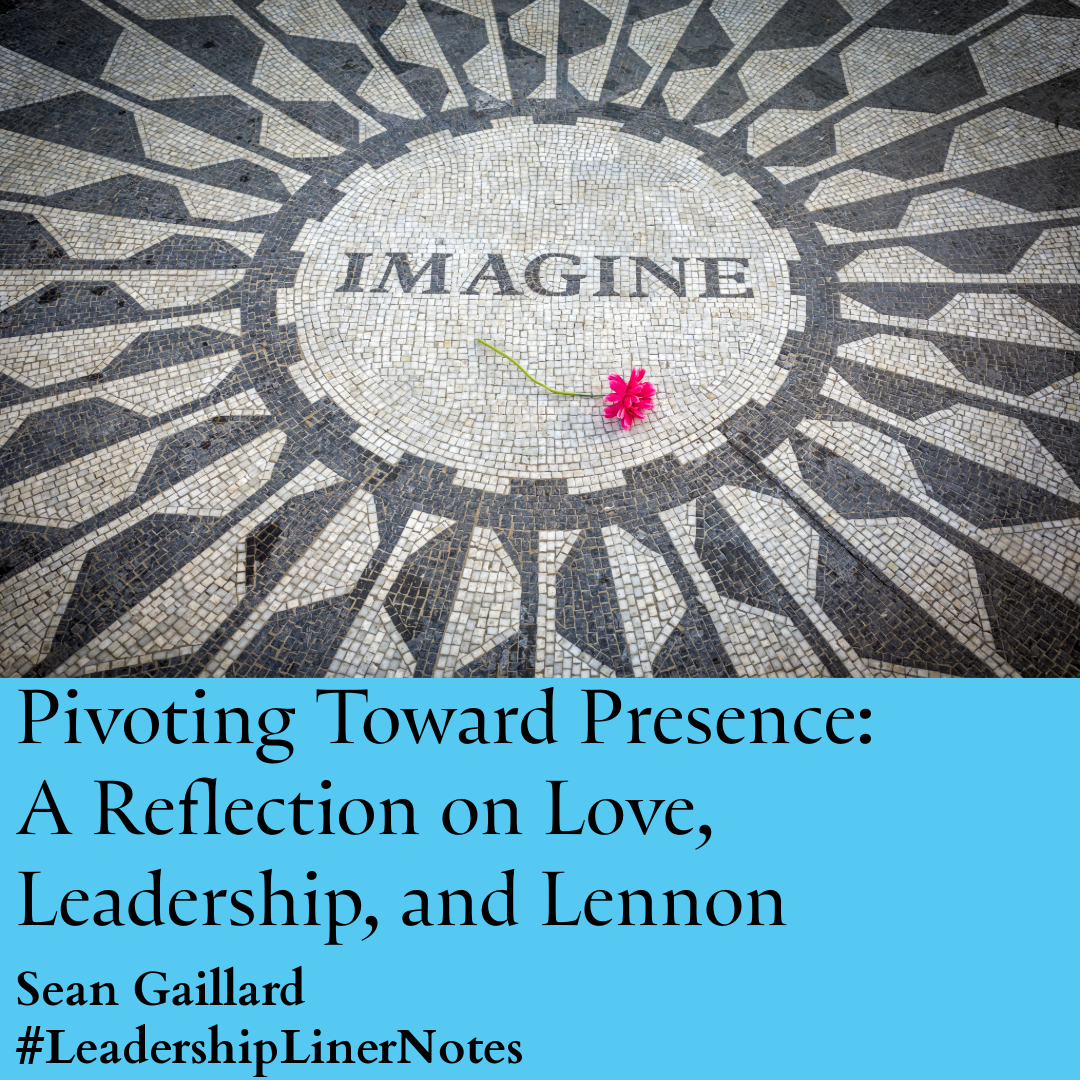
Today marks what would have been John Lennon’s 85th birthday. Had he not been so cruelly taken from the world, I imagine him surrounded by love, his wife, his sons, and perhaps a few close friends gathered around a cake. I can almost see John smiling, glasses glinting in the candlelight, grateful for another revolution around the sun. Grateful simply to be a husband and father.

Of course, this is a dream, a what if forever suspended in time. John Lennon is not with us. Yet every time we hear Imagine, or spin a Beatles record that once lifted the world, his spirit continues to sing. His ideas, his courage, and his music are eternal.

As I think about John’s life today, I am reminded of the profound pivot he made in his final years, a pivot that leaders, including myself, can learn from. After a painful separation from Yoko Ono, John chose to retreat from the spotlight. He became a stay at home father. He walked away from fame, record contracts, and the demands of celebrity life to raise his young son, Sean. He called this period his “househusband years.” Five years of seclusion. Five years of being present.

In that quiet season, John found peace. He cooked, baked bread, and rediscovered the small joys of daily life. He walked through Central Park and strolled with Yoko and Sean, savoring the moments that so many of us rush past. He wrote songs again, not for charts or critics, but from the heart. When he finally returned to the studio in 1980, he released Double Fantasy, a musical conversation between himself and Yoko celebrating love, family, and renewal. The album earned a Grammy for Album of the Year, a posthumous echo of his artistry at its most honest.

One song from that record, Beautiful Boy, contains a line that has haunted and guided me for years:
“Life is what happens to you while you’re busy making other plans.”

That lyric hits harder as I get older. I have lived its truth. As a husband, father, and leader, I have had moments when my presence was only partial, physically there but mentally buried in a phone, a to do list, or the next big initiative. When I faced my first serious health setback a year and a half ago, lying in a hospital room with machines beeping around me, I thought of all the moments I had missed. I remember wondering: Would I get to tell my children I loved them again? Would I see my wife’s beautiful smile? Would I have another chance to simply be, not as a principal, not as a leader, but as a husband, father, son, brother, and friend?

Thankfully, I was granted another chance. I am still learning and growing even as those health setbacks keep coming. That experience in the hospital room changed me. It reminded me that leadership is not just about impact, innovation, or outcomes. It is about love. It is about being present for the people who give your life meaning.

As leaders, we can lose ourselves in the rhythm of meetings, emails, and deadlines. The work matters, but so do the quiet moments that recharge our hearts. The people who know us beyond our title need us, not the version that is always on, but the one that listens, laughs, and lingers a little longer at the dinner table.

John Lennon’s decision to step away from the noise and focus on family was not an escape. It was an act of courage. It was his pivot into something beautiful.

So, what does that mean for us?


Leadership Action Steps: Simple Pivots into Something Beautiful

  1. Write for five minutes.
    End your day with a brief journal reflection, one sentence of gratitude or one small victory that made you smile.
  2. Call someone who matters.
    Reach out to a friend or loved one, not with an agenda, but simply to say, I’m thinking of you.
  3. Schedule sacred time.
    Block out 30 minutes this week for uninterrupted family time, a walk, or a shared meal. Treat it like your most important meeting and protect it.
  4. Be fully present.
    Put the phone away. Turn off notifications. Look into the eyes of the people you love and listen with your whole self.
  5. Revisit Your Pivot Song.
    Choose a song that helps you pause and reconnect with what truly matters. For me, it is Beautiful Boy by John Lennon, a reminder that love, presence, and purpose are the greatest compositions of all. John wrote that song for his youngest son and it serves as reminder that I must always pivot into fatherhood and being there for my three daughters.

John Lennon did not know that his five year retreat would be the last chapter of his life. Yet in those years, he created the most meaningful work of all: love, presence, and peace. His story challenges us to do the same. To pause. To connect. To pivot into something beautiful before life happens while we are busy making other plans.

When the Impossible Finds Its Voice: How a Beatles Song Taught Me About Hope and Carrying On

There is a phrase I keep coming back to: the impossible becomes possible.

Recently, I had another health scare that resulted in a visit to the hospital. I am alright and recuperating, but in the days that followed, I found myself searching for something to hold onto. A remix of a Beatles reunion song sent me on a journey to re-embrace hope and belief.

When The Beatles broke up in 1970, the world declared it over. Headlines announced the end of the most influential band of all time. In the years that followed, reunion rumors surfaced constantly, often fueled by money, charity, or fan speculation. Yet, The Beatles remained steadfast: no reunion. Even after John Lennon’s senseless murder in 1980, people still asked if the three surviving members might somehow return, with John’s sons stepping in. It seemed impossible.

And yet in 1995, a demo tape of John Lennon’s rough home recording was dusted off. With the steady guidance of Jeff Lynne, Paul, George, and Ringo added their voices and instruments. Out of grief, absence, and fractured history came something astonishing: “Free As A Bird.”

For me, it was a moment of awe. I was a young teacher then, two years into my career. When I read a small article about the surviving Beatles reuniting for Anthology, I ran off copies for every teacher’s mailbox in my school. I wanted everyone to feel the electricity I felt: this is really happening. When the song finally aired on television, I remember tearing up. It was not just about music, it was about reconciliation, healing, and the audacity of creating something new out of what seemed broken forever. I wrote about this event and its personal meaning to me in my book, The Pepper Effect.

In my office today, I still keep a tattered photocopy of Linda McCartney’s photo of Paul, George, and Ringo together from that era. Above it, I have written: “The Impossible Becomes Possible.” Because that is what the reunion meant to me then, and what it still means now.

And now, nearly 30 years later, “Free As A Bird” returns in a brand new mix. Thanks to modern audio restoration, John Lennon’s voice emerges clearer, closer, more present. It feels as if all four Beatles are back in the studio together. Each time I play it, I feel renewal. I feel hope.


Hope as a Leadership Catalyst

Hope is a word often dismissed in leadership circles. Some see it as naïve or impractical, a soft idea in a world that demands hard results. But I believe hope is not a weakness. Hope is a catalyst. It is the ignition that sparks vision into action.

As Casey Gwinn and Chan Hellman remind us in Hope Rising, hope is the belief that “your future can be brighter and better than your past and that you actually have a role to play in making it better.” That belief matters, especially when the weight of challenges threatens to crush our momentum.

The space between vision and action is leadership. Hope and belief have to be in that vision as catalysts.

As leaders, we do not always need a grand plan or sweeping solution in every moment. Sometimes, we just need an entry point. A reminder that even the hardest, most impossible-seeming work can move forward. For me, that entry point is hearing John Lennon’s voice stitched back into the fabric of his bandmates’ music. It is a symbol of reconciliation, resilience, and possibility.


Belief Made Real

The truth is, leadership often feels like trying to reunite what has been broken. It is messy. It is emotional. It is full of skeptics. But the work is also full of potential. When we model belief for our students, for our teachers, for ourselves, we give others permission to believe too.

“Free As A Bird” reminds me daily that impossible things can be made possible. For The Beatles, it was a reunion across decades and even death. For us, it might be turning around a struggling school, reigniting a team’s confidence, or building something new when resources seem scarce.

Whatever the context, hope can be the spark. And belief, when it is shared, nurtured, and lived, can make it real.

So when the days are heavy and the obstacles feel immovable, I return to that song. I hear the reunion of four bandmates who found a way. And I am reminded: if The Beatles could find harmony after all they endured, then maybe we can find our way, too.

As leaders, we have to believe that the impossible becomes possible. That is the gig. We must be relentless in that belief, even when the naysayers gather and the narratives say it cannot be done. Hope gives us the entry point. Belief carries us the rest of the way.

Our calling as leaders is to believe when others doubt, and to carry hope when the weight feels too heavy. When the impossible finds its voice, leaders must believe enough for others to join in the song.


Check out “Free As A Bird” (2025 Mix) by The Beatles:

Resetting Rejection: Leading with Resilience and Authenticity

Rejection is a reality. It happens, and it stings. Sometimes, the worst rejection isn’t from others who naysay, doubt, or echo endlessly the phrases, “We’ve never done it this way…” or “We always have…” Often, it’s the rejection we inflict upon ourselves that hurts the most.

The Beatles faced rejection head-on. In my 2018 book, The Pepper Effect, I recount their infamous rejection by Decca Records in 1962. The label dismissed them with the now-legendary phrase: “Guitar groups are on their way out.” Yet, the Beatles didn’t let that stop them. Instead, they adopted a “reset mindset” amidst the setback. They persevered, refined their craft, and sought opportunities elsewhere. Their resilience led to a groundbreaking partnership with producer George Martin and, eventually, music that would change the world.

Recently, I revisited the concept of resilience while reading Penny Zenker’s The Reset Mindset. Zenker outlines a three-step process for overcoming both personal and professional setbacks: Step Back, Get Perspective, and Realign. Her approach emphasizes mindful choices and intentional progress. The Beatles, whether consciously or not, exemplified this mindset. They regrouped, made strategic changes (including bringing Ringo Starr into the band), and doubled down on their songwriting. Their determination and shared vision propelled them to unimaginable heights.

I’ve endured my own share of rejection—writer’s block, rejected book proposals, pilfered ideas from unreliable collaborators, and negative problem admirers eclipsing possibilities. At times, I’ve been my harshest critic, rejecting myself before anyone else had the chance. Pressing “Publish” on a blog post can feel like stepping off a ledge, wondering if anyone will read it or if it will resonate. Recording a podcast episode Yet, a trusted thought partner recently reminded me to let my words go—to trust they’ll land where they’re meant to do so.

This advice brought to mind the Beatles’ 1968 self-titled album, commonly known as the “White Album.” This sprawling, 30-song masterpiece faced criticism for being too long or unfocused. Paul McCartney’s response? “It’s great, it sold, it’s the bloody Beatles’ White Album, shut up!” That unapologetic confidence is a lesson in staying true to one’s vision and maintaining a reset mindset.

I channeled that spirit recently when deciding whether to bring my guitar to a school assembly. As a new principal at my school, I felt hesitation. I have been a principal for 16 years and I have lugged my guitar to school for various events so this was not first gig with a guitar in the schoolhouse. Yet, I endured a series of stumbling doubts with bringing my guitar along to school. Would this feel out of place? Would it connect? But in the end, I applied the Reset Mindset. I took an intentional step back to reflect and wonder. I focused on my purpose: creating a joyful, meaningful moment for our students. I decided to move forward, tune into building a culture of belonging for students and faculty, and bring my beloved guitar to the scheduled grade level assemblies. Music is an entry point for others and serves a divine thread that connects us to our shared humanity.

The butterflies didn’t stop as I hurriedly carried my guitar into school, but when I sat down in front of our first graders and began to play, I knew I’d made the right choice. The laughter, joy, and connection we shared affirmed the decision. It was a reminder of the power of leading with authenticity and purpose. I love playing music and I wanted to be unabashedly comfortable with my best self.

Recently, on my podcast Why The Beatles Matter, I had a conversation with Dr. Donya Ball that gave me even more perspective on rejection. It was serendipitous that she brought up the idea of leaders leaning into and accepting rejection.  As I was just working on this blog post before our conversation, I readily welcomed her insight on rejection. She shared how we, as leaders, don’t talk about rejection enough and how it’s a necessary part of growth. I deeply appreciated her real talk on this reality. Rejection, she said, is an opportunity to renew, recalibrate, and re-focus. It’s another way to adapt the Reset Mindset—seeing rejection not as the end or the finality of an idea, but as a stepping stone to connect with others, build collaborative coalitions, or simply reset.

As leaders, our gig is to create meaningful moments that inspire, connect, and uplift. When we embrace resilience and focus on our purpose, we transcend rejection and lead from a place of authenticity.

Four Leadership Moves Inspired by The Beatles and the Reset Mindset:

  1. Evolve and Adapt: The Beatles didn’t let their rejection by Decca define them. They stepped back, reflected on what they needed, and made a bold move by bringing in Ringo Starr. This pivotal decision transformed their sound and solidified their lineup, exemplifying the importance of adapting to move forward.
  2. Collaborate with Vision: Recognizing the need for a fresh perspective, the Beatles partnered with George Martin, who brought a new dimension to their music. This collaboration highlighted the power of seeking thought partners who align with your vision and elevate your work.
  3. Refine Your Craft: After their setback at the failed Decca Records Audition, the Beatles didn’t stagnate. They doubled down on songwriting, tirelessly honing their skills and experimenting with new ideas. This relentless pursuit of excellence demonstrates how leaders can use rejection as fuel to refine their craft.
  4. Stay True to Your Purpose: Despite criticism and pushback, The Beatles never abandoned their creative vision. Whether it was the ambitious scope of the “White Album” or their genre-defying innovations, they stayed true to their purpose, leading with authenticity and confidence.

The importance of tuning into the Reset Mindset cannot be overstated. As leaders, modeling this mindset for others empowers our teams and fosters resilience. Let’s embrace the journey together and inspire others to do the same.


Resources to Dig Deeper for Reflection and Action

Tune in to the upcoming episode of my podcast, Why The Beatles Matter, where I continue this conversation with Dr. Donya Ball. Her insights on leadership, rejection, and authenticity are not to be missed. Plus, she’s a joy to engage in for conversation! You can also learn more about her work and check out her TEDx Talk at https://www.donyaball.com/.

Explore more connections to The Beatles and leadership in my book, The Pepper Effect: Tap into the Magic of Creativity, Collaboration, and Innovation.

Check out Penny Zenker’s The Reset Mindset: How To Get Unstuck, Focus on What Matters Most, and Reach Your Goals Faster.

Paul McCartney on “The White Album” as mentioned above: It’s a great quote and shows The Reset Mindset in action.

Why The Beatles Matter

Earlier this week, the world marked a somber anniversary—44 years since the tragic loss of John Lennon. For me, this day always stirs vivid memories. It was around this time that I first discovered The Beatles, embarking on a journey into a world of creativity, harmony, and collaboration that continues to shape my life and career. The Beatles have left an indelible mark on me, not only as a fan of their groundbreaking music but as someone who sees their legacy as a model for leadership, culture, and collaboration.

The Beatles’ story offers profound lessons for educators and leaders. Their journey is a testament to excellence, creativity, and innovation—qualities we all strive to cultivate in our schools and organizations. By nature, I am a storyteller, and I’ve always believed in the power of stories to build connections, foster belonging, and create psychological safety. In my years as a teacher and principal, I often found myself drawing comparisons to The Beatles, using their journey as a metaphor for teamwork and innovation. While I don’t expect everyone to love The Beatles as much as I do, I believe in sharing our passions as leaders. It’s a vehicle for hope, and education is a field that thrives on hope in abundance.

The Beatles didn’t invent creativity or collaboration, but they redefined it. They reinvented music, setting a standard for excellence that still resonates today. Imagine if we embraced their mindset in education—pushing boundaries, seeking new ideas, and innovating for the betterment of our students and communities. Steve Jobs, the visionary behind Apple, once credited The Beatles as his model for innovation and teamwork. He admired how the band’s chemistry and ability to balance each other’s strengths led to extraordinary accomplishments. Whether or not you’re a Beatles fan, every leader can appreciate the value of fostering a culture of excellence and innovation.

Next semester, I have the privilege of teaching a course on The Beatles at High Point University. It’s an opportunity to delve deeper into the band’s cultural impact and explore how their music and legacy continue to influence the world. Preparing for this course has inspired me to think about how The Beatles’ story resonates with others. Their music, recorded over a mere seven years, remains a staple on playlists and soundtracks across generations. The enduring relevance of their work speaks to their unparalleled ability to connect with people on a human level.

This reflection has also inspired the launch of my new podcast, Why The Beatles Matter, debuting December 12. Through this podcast, I aim to explore the band’s profound impact and why their music and legacy still matter today. I’m eager to hear and share stories from others who have been touched by The Beatles—whether as fans, creatives, or leaders. This podcast is a space to celebrate their influence and to discuss how their spirit of innovation and collaboration can inspire us in our own lives and work. I invite you to join the conversation by using the hashtag #WhyTheBeatlesMatter and share on the social media channel of your choice. Let’s connect, share, and celebrate the stories that bind us together.

As some of you may know, I am the author of The Pepper Effect, a book that explores how The Beatles’ timeless lessons can inspire creativity and collaboration in schools. If you’re interested, you can order a copy on Amazon. I hope the book serves as another bridge for connection and inspiration.

The Beatles matter because they remind us that we matter. They show us that we all have gifts to share, ideas to spark, and the potential to create something extraordinary. As we reflect on their legacy, let’s take a page from their story and embrace our own potential to innovate, collaborate, and make a lasting impact. I hope you’ll tune in to the podcast, join the conversation, and, together, let’s discover why The Beatles truly matter.

Building the Band: Cultivating Collaboration in the Schoolhouse

The principalship is a calling steeped in paradox. It is a role of service, yet it can often feel isolating. As leaders, we navigate the balance of vision and strategy while seeking connection and collaboration. We crave the kind of creative partnership that defined the great songwriting duos—like Lennon and McCartney, Ann and Nancy Wilson, or Stevie Nicks and Christine McVie. These partnerships thrived on synergy, mutual respect, and a shared goal of creating something timeless.

For me, The Beatles’ creative dynamic has always been a source of inspiration. I’ve long yearned to be the Lennon to someone’s McCartney or the McCartney to someone’s Lennon, building something extraordinary with a thought partner. That kind of collaboration can feel like a salve for the loneliness that sometimes accompanies leadership. But as I reflected the other day, I realized I might not be destined to be part of the duo. My role is to ensure the conditions are right for these partnerships to thrive.

This epiphany came as I watched two teachers collaborate on a shared vision for our school’s culture. They were bouncing ideas off one another, refining strategies, and creating something beautiful in the process. In that moment, I realized: they were Lennon and McCartney. My role wasn’t to join their duo but to ensure they had the space, encouragement, and support to succeed.

George Martin, reflecting on his work with Lennon and McCartney, once said: “My job was to make it easier for them to express themselves and to capture that in the best way possible.” That wisdom resonates deeply with me as a principal. Leaders must recognize that collaboration is not about claiming the spotlight but about amplifying the voices of others. It’s about creating the conditions where creativity and synergy can flourish.

Every school faculty has the potential to be a great collaborative band like The Beatles. The role of the leader is to help that band find its rhythm and create its best work. This realization brought both clarity and peace. I may not be in the band, but I can help the band I serve become something extraordinary—a group defined by its collaboration, creativity, and profound impact.

Leaders must tune into these moments and reflect on the ways we cultivate collaboration in our schools. It’s not always about being part of the duo or the band. Sometimes, the most meaningful contribution is ensuring the band can play its best.

Four Ways Leaders Can Foster a Culture of Collaboration

1. Create a Shared Vision

Collaboration thrives when everyone rallies around a common goal. Build a vision that is clear, compelling, and rooted in the needs of your school community. Like Will Guidara’s team in Unreasonable Hospitality, bring people together to align their work with a shared purpose.

2. Honor and Empower Partnerships

Seek out and celebrate the Lennon-and-McCartney-like duos in your building. Create opportunities for those partnerships to deepen, whether through shared leadership roles, co-teaching models, or collaborative projects.

3. Provide Tools and Time

Collaboration doesn’t happen by chance; it requires intentional structures. Build time into schedules for teams to meet, reflect, and create together. Provide resources—whether it’s professional learning, materials, or guidance—that remove barriers to teamwork.

4. Reflect, Celebrate, and Elevate

Regularly highlight collaborative wins, both big and small. Reflection helps us learn and grow, while celebration fuels the energy to keep creating. Whether through shout-outs in staff meetings or sharing stories in a blog post, elevate those moments where synergy shines.

The bands we serve have the potential to be like The Beatles, and with thoughtful leadership, it can become a force for something extraordinary. And at the heart of it all is the belief that collaboration is the foundation of every masterpiece.

Let’s help our schools find their rhythm, their harmony, and their shared purpose. Together, we can lead the band and inspire greatness for the kids we serve.

The Art of Going Solo: Why Leaders Need Time Alone


As I stood in line at Barnes & Noble with a couple of new books under my arm, I was feeling deflated. A recent collaborative project I had spearheaded hadn’t gone as planned. My vision for what it could become was met with challenges and miscommunications—mistakes I take full responsibility for. I found myself yearning for the comfort of a bookstore, a sanctuary where I could immerse in words and ideas, hoping to reset my mindset.

While browsing, the headline of a recent Harvard Business Review article caught my eye: “We’re Still Lonely at Work.” It stopped me in my tracks. Loneliness is an epidemic many of us grapple with, whether we’re school leaders, teachers, or district administrators. The piece reminded me of the isolation that can creep in, even when surrounded by people. As leaders, we often navigate a delicate balance between fostering connection and feeling adrift in our own roles.

The Myth of Constant Collaboration

In our line of work, there is a pervasive myth: that the most effective leaders are always collaborating. We’re encouraged to find our “bandmates,” to build a culture of teamwork and shared vision. And while this is crucial, it’s equally important to recognize when it’s time to take a step back and find our creative solitude.

I’ve had the privilege of being part of incredible collaborations, whether it’s through projects like my podcasts, #PrincipalLinerNotes and #HopeAmplified, or through dynamic partnerships in our school’s Professional Learning Network (PLN). Yet, I’ve also experienced the sting of collaborations gone awry—those moments when trust is broken or communication falters. I’ve had ideas co-opted, projects I thought I’d be part of move forward without me, and connections that simply fizzled out. There was the time I thought I was co-writing a book with someone, only to find out they decided to go ahead without me. Or the time I drafted a conference proposal for a co-presentation with a colleague, only to learn they chose not to include me and took the idea to someone else. These setbacks can feel personal, prompting deep reflection on my own role and contributions.

When those moments happen, I retreat into my own creative space. I turn to music and the stories of artists who dared to go solo, forging their own paths when the band wasn’t quite the right fit anymore.

Solo Albums as Metaphors for Leadership

Paul McCartney’s McCartney, Bruce Springsteen’s Nebraska, and Nick Drake’s Pink Moon all come to mind. Each album is a testament to the power of going it alone. McCartney, grappling with the breakup of The Beatles, recorded his first solo album at home. It’s raw, intimate, and features a vulnerability that inspires me. Bruce Springsteen’s Nebraska began as a set of demos intended for the E-Street Band. But when the full band recordings didn’t capture the raw emotion of the demos, Springsteen made a bold decision: he released the demos as the album. It’s a haunting, spare record that wouldn’t be the same with a full band.

Joni Mitchell’s Clouds is another beautiful example of solo expression. On this album, Mitchell showcases her introspective songwriting with just her voice and guitar for much of the record. It’s a deeply personal work that highlights the power of stripping back the layers and letting the essence of the music shine through.

Keith Jarrett’s The Köln Concert is a masterclass in solo creativity. This entirely improvised piano performance captures the raw beauty of an artist fully immersed in their own expression. It’s a reminder of the magic that can happen when we trust ourselves enough to follow our instincts, even without a plan.

These albums remind me that sometimes, we need to embrace our own creative solitude. It’s okay to be a solo act. In fact, it can be essential for recharging our spirits and clarifying our vision as leaders.

Gratitude for Collaborative Partners

As much as I value these solo pursuits, I am equally grateful for the collaborative partners who have taken a chance on me and embraced the spirit of shared creation. I owe a deep sense of gratitude to the few incredible educators who have been true bandmates on this journey. They’ve shown me the power of trust, shared vision, and authentic connection. Their willingness to join forces has renewed my belief in the possibilities of collaboration and reminded me of the joy that comes from making music together.

Four Ways Leaders Can Embrace Solo Creativity

Here are four actionable steps for leaders to carve out solo time and tap into their own creative wellspring:

  1. Write It Out: Start a blog, write a journal entry, or even pen a letter to your future self. Writing is a powerful tool for reflection and can help you process your thoughts and emotions. It’s your own form of “audio journaling,” much like Springsteen’s Nebraska.
  2. Record a Podcast Episode: If you’re feeling inspired, create a solo podcast episode. It doesn’t have to be perfect—just hit record and share your thoughts. This process can be cathartic and help you find your voice, much like McCartney did on his solo debut.
  3. Go for a Solo Walk or Run: Physical exercise can clear your mind and offer a fresh perspective. Leave the headphones at home and listen to the rhythm of your own thoughts. It’s a form of active meditation that can spark new ideas. Outdoor space is good for inspiration and introspection. You can even take Joni Mitchell’s album, “Clouds” with you on a solitary walk.
  4. Create an Art Piece: Whether it’s painting, drawing, or playing an instrument, creating something with your hands can be a wonderful way to express yourself. Like Keith Jarrett’s improvisations, let it be unstructured and free-form. See what emerges when you follow your instincts.

Conclusion: Finding Hope in Solitude and Connection

Leadership is about fostering a sense of belonging and connection for the people we serve, but it starts with us. It starts with acknowledging the times when we need to go solo, to reflect and create on our own terms. By stepping away from the noise of constant collaboration, we strengthen our ability to be present and authentic in our partnerships. We need both the band and the solo album to thrive.

As you reflect on your leadership journey, I encourage you to find your own version of “Walden Pond.” (Thoreau’s Cabin is pictured in the blog graphic for a reason.) Seek out those moments of quiet solitude to recharge your creative energy. It’s in these moments that we build the core of who we are as leaders. By doing so, we can return to our collaborations with renewed clarity, a sense of purpose, and the resolve to foster true connection and belonging.

Let’s embrace our solo efforts, find hope in our quiet moments, and continue building a sense of community for the bandmates who share this leadership journey with us. The interlude into solo pursuits can serve as the antidote for combatting work loneliness and inviting others into the band.

Now and Then, There Is Hope

Now and Then, There Is Hope

Hope is something we all need. Whether we’re leading a school, guiding a team, or simply navigating the ups and downs of daily life, hope serves as our compass. It’s the whisper that reminds us we’re on the right path, that our vision matters, and that our efforts have the potential to create something meaningful.

But let’s be real—there are days when the compass feels broken. Days when we question our choices, when doubt creeps in, and Imposter Syndrome casts a shadow over our accomplishments. I’ve been there. We all have. And in those moments, I’ve learned that it’s the small, unexpected flashes of hope that keep us going: the spontaneous smile from a student as I walk down the hallway, the moment a teacher’s lesson hits its stride, or even a kind text from a loved one reminding me I’m not alone in this work.

Sometimes, hope arrives in the form of a song. As many of you know, I’m an unabashed Beatles fan. From The Pepper Effect to #ThePepperEffect, to countless references in talks, blog posts, and podcasts, The Beatles are my creative wellspring. My book, The Pepper Effect, explores the lessons of collaboration, creativity, and leadership that can be drawn from The Beatles’ groundbreaking Sgt. Pepper’s Lonely Hearts Club Band. If you’d like to learn more about it, you can check it out here.

Last year, I had the privilege of writing a piece for Culture Sonar about Now and Then, the “last” Beatles song. The story behind this song resonates deeply with me as a testament to the power of hope. You can read that full piece here.

The story of Now and Then is itself a lesson in hope and perseverance. John Lennon recorded a rough demo at his piano in 1977. When the surviving Beatles—Paul McCartney, George Harrison, and Ringo Starr—tried to finish it in the mid-90s, the project hit a wall. The synergy wasn’t there, and the technical limitations made it impossible to isolate John’s vocal clearly. The song was shelved, unfinished, but Paul never let it go. He believed there was something special in John’s demo—a spark waiting to ignite.

Decades later, in 2022, Paul and Ringo revisited Now and Then. With the help of advances in AI and the brilliant production skills of Giles Martin (son of George Martin, The Beatles’ original producer), they were able to clean up John’s vocal and add new musical elements. In 2023, the song was released, and for me, it felt like the world was witnessing a small miracle—a moment when something lost was found again. It was a triumph of hope, a testament to the belief that the impossible can become possible.

Earlier this week, I heard the news: Now and Then has been nominated for a Grammy Award for Record of the Year. It’s a powerful reminder that music—like hope—has the power to change the world. This song, born from a rough demo and sustained by Paul McCartney’s unwavering belief, is a symbol of what can happen when we refuse to give up on something that matters. It’s a lesson for all of us as leaders: sometimes, our vision won’t be embraced right away. There will be times when our ideas are met with polite nods or silence. But that doesn’t mean the idea isn’t worth pursuing. It just means we need to persevere and trust in the process.

Hope isn’t just a feeling; it’s a leadership move. It’s the quiet persistence to revisit ideas, to keep communicating, to invite others to collaborate and play together in the sandbox of possibility. I think about my latest initiative at school—the Principal Read Aloud. As a new leader, I wanted to find a way to connect with our students and teachers, to build trust and community. I proposed giving teachers a 30-minute break while I read aloud to their classes. It’s a simple idea, but it’s grounded in hope and the desire to show our school community that I’m here for them.

So far, only two teachers have signed up, and that’s okay. I’m hanging in there, just like Paul McCartney did with Now and Then. I believe in this small act of connection, and I’m willing to wait for it to grow, one read-aloud session at a time. Because that’s what hope looks like—it’s the willingness to keep showing up, to keep believing in the possibility of something beautiful taking shape.

As leaders, we have to hold onto hope like a North Star. It’s our guiding light, helping us navigate through challenges and inspiring others to do the same. Whether it’s in our school hallways, our team meetings, or even in the quiet moments of reflection, we have to keep hope in the foreground. It’s not always easy, but it’s always worth it.

And as The Beatles remind us in their final song, hope is the thread that ties the past, present, and future together. Now and then, there is hope. It’s what brings us back, time and time again, to believe in the magic of possibility and the power of collaboration.

Let’s keep hope alive in our leadership moves. Let’s embrace the small moments that spark joy and connection. Let’s take the time to revisit old ideas, to share our vision with others, and to trust that, in the end, something beautiful will emerge.

Tune in to Hope:

  • Embrace Small Acts of Connection: Like my Principal Read Aloud, find simple ways to show your heart and commitment to your school community.
  • Persevere with Your Ideas: Even if your vision isn’t immediately accepted, keep refining and revisiting it. Trust that it has the potential to resonate with others over time.
  • Invite Others to Collaborate: Hope grows when we invite others to join us on the journey. Create space for shared ownership and creative contributions.

The journey of Now and Then is a reminder that we’re all part of something bigger. When we lead with hope, we open the door for new possibilities to enter, and that’s when the real magic happens.

Listen to Now and Then by The Beatles here.

#NowAndThen #LeadershipRiffs #TuneIntoHope


Links:

Tuning into Possibilities: A Lesson in Leadership from The Beatles

As someone who proudly wears the badge of a “Beatles Encyclopedia,” my journey in music appreciation is a perpetual adventure. The joy I derive from delving into the world of music, particularly the legendary band that holds a special place in my heart, knows no bounds. If you were to step into my home office, you’d find it adorned with shelves filled to the brim with books dedicated to none other than “The Beatles.” I’ve devoured so many books over the years on this iconic band that I could probably recite passages from memory. (I’d likely be of little help in the book refuge depicted in Fahrenheit 451!)

Currently, my literary journey has led me to “The Lyrics” by Paul McCartney. Released just last year in hardcover, I couldn’t resist adding the paperback edition to my collection. This remarkable book sees McCartney opening up about the stories and personal anecdotes behind the songs that defined his tenure with The Beatles and his solo career. In the book’s introduction, McCartney shares an anecdote from the early days of The Beatles that, surprisingly, I had never encountered before.

Let me share a quick recap. Picture the scene: The Beatles, in the nascent stages of their career, find themselves on a wintry night journeying between gigs. Suddenly, their van skids on ice, careening off the road and down an embankment. Miraculously, no one is hurt, but they’re left stranded. Amidst the chaos, McCartney recalls a pivotal statement uttered by someone in the band: “Something will happen.” This simple phrase quickly became a rallying cry for The Beatles whenever faced with adversity or uncertainty. I try to envision when this statement would echo at various stages during The Beatles trajectory as a band. It is a tantalizing game to play in imagining when this line would be appropriate.

The profound simplicity of this statement struck a chord with me as I immersed myself in McCartney’s book. It served as a poignant reminder that even the idols we admire are, at their core, human. “Something will happen” encapsulates a resolute hope, reminding us that amidst seemingly insurmountable odds, the realm of possibility remains wide open.

Reflecting on this mantra, I couldn’t help but draw parallels to my own journey as a principal and school leader. In the face of daunting challenges, “Something will happen” embodies a steadfast belief in the power of resilience and perseverance. It speaks to the essence of our roles as leaders, tasked with navigating complex landscapes against all odds. We have to tune into possibilities on a daily basis. Additionally, we have to encourage others to tune into possibilities as we educate and empower the kids we serve.

Recently, our team encountered a situation demanding swift action and collaboration. In its aftermath, I found myself echoing a similar mantra to reassure my colleagues: “We responded. We were there for others.” I have echoed this statement many times as a leader to serve as a salve for others who support during a crisis. This instance brought to mind The Beatles and their mantra, reinforcing the notion that amidst uncertainty, hope prevails.

My mantra, “We responded,” shares the same essence and intention as The Beatles’ rallying cry. As leaders, it’s our responsibility to provide comfort and empowerment through compassionate words and actions. Whether serving as a soothing balm in times of crisis or bringing clarity to chaos, our words hold the power to inspire and uplift. Being intentional with our words is a necessary move as a leader. We are the navigators of our narrative and we must choose our words with care, compassion, and intention.

Stepping back and reflecting on our experiences is not just advisable; it’s imperative for effective leadership. Taking stock of our decisions and actions allows us to glean valuable insights and pave the way for growth. In the end, it’s the simple yet profound words—whether “Something will happen” or “We responded”—that ignite the spark of hope and resilience in those we lead.

Next Moves for Dynamic Leadership Action: Reflection on Communication

-Reflect: Find intentional time to reflect on the words you use as a leader to comfort or inspire during a crisis.
-Write: Jot down those words and statements you use. Reflect upon the meaning and intention in each of those words. Do they empower? Do they avoid judgement or placing blame?
-Share: Find a trusted thought partner and share words to gain feedback and growth.
-Connect: With people you serve and collaborate, take time as a group to discuss words used during a crisis. Establish kinship and understanding along with ensuring that meanings are understood.

Whether serving as a soothing balm in times of crisis or bringing clarity to chaos, our words hold the power to inspire and uplift. Being intentional with our words is a necessary move as a leader. We are the navigators of our narrative and we must choose our words with care, compassion, and intention.