Movement One: Beyond the Checklist
Last week, I was conducting a classroom walkthrough. Like many school leaders, I spend a portion of my day visiting classrooms, observing instruction, and providing feedback to teachers. These walkthroughs are an important part of our work. They allow us to stay connected to the instructional core of the school while identifying strengths and opportunities for growth.
There is also an instrument to follow. A checklist of instructional practices to observe. Specific expectations to document. Boxes to check. While these tools serve an important purpose, I sometimes wonder whether we become so focused on completing the instrument that we overlook the human beings behind the instruction.
One practice I have come to value is something Mike Rutherford calls a “Craft Conversation.” The idea is simple. Rather than allowing feedback to exist solely within the confines of an observation instrument, an administrator takes time to engage a teacher in a meaningful conversation about the craft of teaching. It is an opportunity to listen, affirm, reflect, and encourage professional growth.
I believe deeply in the value of these conversations. Yet I must also acknowledge that I sometimes get caught up in the daily demands of school leadership. There are walkthrough quotas to meet, responsibilities to manage, and countless matters requiring attention. Before I know it, another day has passed, and I have completed the necessary documentation without making time for the kind of human connection that can make the experience more meaningful.
Last week, I made a deliberate choice to do something different. What followed reminded me why those human connections matter so much.
After completing a classroom walkthrough, I noticed that the students were working independently. The teacher had established a classroom culture where students were focused, engaged, and comfortable with the expectations of the learning environment. There was nothing performative about what I was observing. This was simply a teacher doing meaningful work with her students.
I invited her to sit with me for a few moments so that we could talk about what I had observed. During our conversation, I shared how impressed I was with the classroom culture she was cultivating. I told her that I could envision her classroom becoming a model for others to visit and learn from. We talked about the possibilities for her to share her practices and continue growing as a teacher leader.
She was receptive to the conversation. I sensed that the opportunity to talk about her strengths and potential carried a significance that extended beyond anything I could have documented on the walkthrough instrument. The conversation reminded me that meaningful feedback is not simply about what we record. It is also about what we recognize in others.
That moment stayed with me because it reminded me that leadership requires more than the ability to fulfill responsibilities and meet expectations. We must also develop the agility to recognize the human moments unfolding around us. Sometimes those moments invite us to move beyond the checklist and engage with the person standing in front of us.
Movement Two: The Music of Both Hands
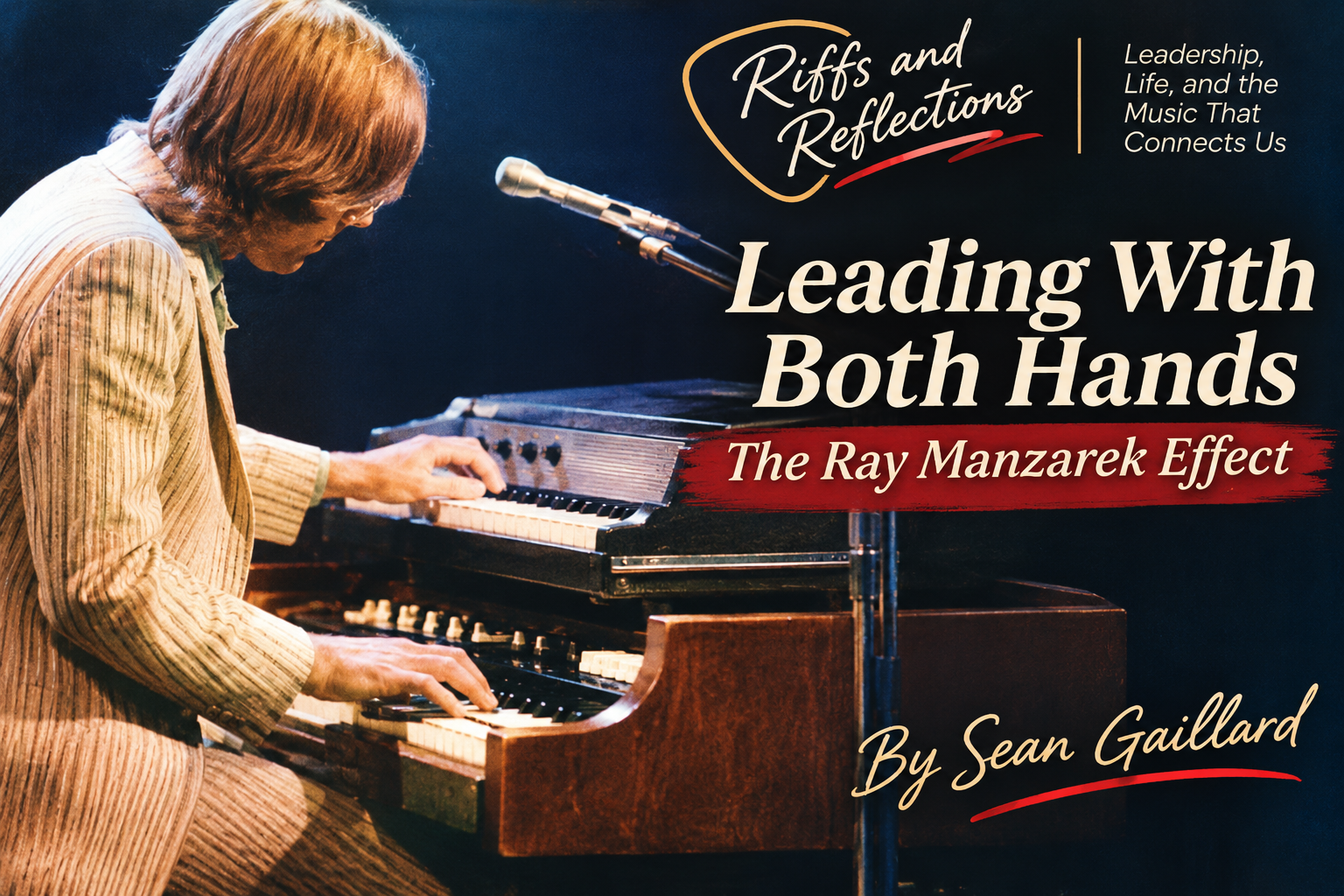
As I reflected on this experience, my thoughts turned to one of my favorite musicians, the late Ray Manzarek of The Doors. His remarkable musicianship offers an unexpected but meaningful connection to the daily work of leadership.
Manzarek was a classically trained keyboardist whose musicianship helped define the unmistakable sound of The Doors. What made his contributions particularly remarkable was his ability to serve two essential musical roles simultaneously.
With his left hand, Manzarek played the bass lines on a Fender Rhodes Piano Bass. His right hand handled the organ, creating melodies, textures, and solos that became an integral part of the band’s musical identity. This remarkable coordination was especially evident in live performances, where Manzarek frequently handled both responsibilities without the support of a traditional bass guitarist.
The studio recordings of The Doors offer an interesting distinction. Although Manzarek’s keyboard bass playing was central to the band’s identity, several studio recordings featured additional bass guitar contributions from session musicians. Larry Knechtel, for example, provided bass guitar on “Light My Fire,” while other recordings featured additional bass players. The band’s live performances often provided the clearest demonstration of Manzarek’s ability to sustain the bass foundation while exploring the possibilities of the organ.
His left hand provided the rhythmic and harmonic foundation, working in concert with John Densmore’s inventive drumming. Meanwhile, his right hand explored the musical possibilities of the organ, weaving around Robby Krieger’s guitar and providing a distinctive musical landscape for Jim Morrison’s poetic vocals.
Listen to classics such as “Light My Fire” and “The Crystal Ship.” You can hear the remarkable interplay among these musicians. Manzarek’s ability to maintain the musical foundation while responding creatively to the other members of the band helped give The Doors their distinctive sound.
He understood the importance of both responsibilities. The bass lines provided stability while the organ offered musical expression. Neither contribution existed in isolation. Both were essential to the music, and the relationship between them offers a compelling lesson about the responsibilities of leadership.
Movement Three: Finding Our Leadership Rhythm
Leadership requires us to play with both hands. One hand must remain attentive to the structures that guide our work. We have expectations to uphold, responsibilities to fulfill, and systems of accountability that deserve our attention. These are the foundational bass lines of leadership. Without them, the organization can lose its rhythm and direction.
At the same time, our other hand must remain responsive to the human dynamics unfolding around us. We must listen actively, demonstrate sincere empathy, recognize the contributions of others, and offer encouragement when it matters most. These responsibilities are not competing priorities. They are interconnected parts of the same leadership practice.
My classroom walkthrough reminded me of that balance. I completed the observation instrument and fulfilled an important responsibility. Yet the most meaningful part of that visit may have been the conversation that followed. The checklist helped me document what I observed. The conversation allowed me to recognize the human being whose work made those observations possible.
That distinction matters because leadership is ultimately about people. As leaders, we sometimes become so focused on the demands of the daily gig that we forget to listen for the quieter contributions holding our organizations together. Not every essential bandmate seeks the spotlight. Some are quietly establishing the rhythm, creating the conditions for others to succeed, and making a difference without drawing attention to themselves.
Ray Manzarek understood when to lead and when to support his bandmates. His musicianship reminds us that versatility is not simply about doing several things at once. It is about understanding what the moment requires and responding with intention. His ability to provide both musical foundation and creative expression offers a powerful example of how seemingly different responsibilities can work together.
The same principle applies to leadership. There are moments when we must provide direction and maintain accountability. There are other moments when we must listen, encourage, and recognize potential that might otherwise remain unnoticed. Often, we are called to do both simultaneously.
I think about this through the lens of one of my podcasts, Leading While Human. The title itself captures something I continue to learn through my experiences in school leadership. Our humanity should never become secondary to the responsibilities of our positions. It should inform how we carry out those responsibilities.
I am still learning to find that balance. Some days, I become too focused on the checklist. Other days, I recognize an opportunity to slow down and have a conversation that might make a meaningful difference for someone. Last week’s classroom walkthrough was one of those moments, and I hope to carry that lesson into my work this week and beyond.
I want to become more intentional about recognizing the people whose quiet contributions strengthen our schools and about creating opportunities for their voices and talents to emerge. That requires me to remain attentive to the structures that guide my work while also recognizing when a human moment deserves more than a completed form.
Perhaps that is one of the most important leadership riffs we can learn from Ray Manzarek. The best leaders do not have to choose between accountability and humanity. They learn to play both at once. One hand maintains the foundation while the other responds to the people who give the work its meaning.
When we learn to lead with both hands, we create something more meaningful than a completed checklist. We create opportunities for people to feel seen, valued, and encouraged to grow. Perhaps, like the music of The Doors, we discover that the most meaningful contributions come not from playing louder than everyone else, but from listening closely enough to know what the music needs.

