Rediscovering the passions that remind us who we are
Sometimes a familiar book can take us back to a chapter of our lives that we did not realize we needed to revisit. It can reconnect us with memories, experiences, and even versions of ourselves that have become buried beneath the responsibilities of everyday life.
I experienced one of those moments recently while walking through Barnes & Noble after a particularly difficult day at work. I was feeling fatigued by the daily rigors of school leadership and carrying the familiar weight of feeling unseen. I needed a little peace, and wandering among the shelves of books seemed like a good place to find some.
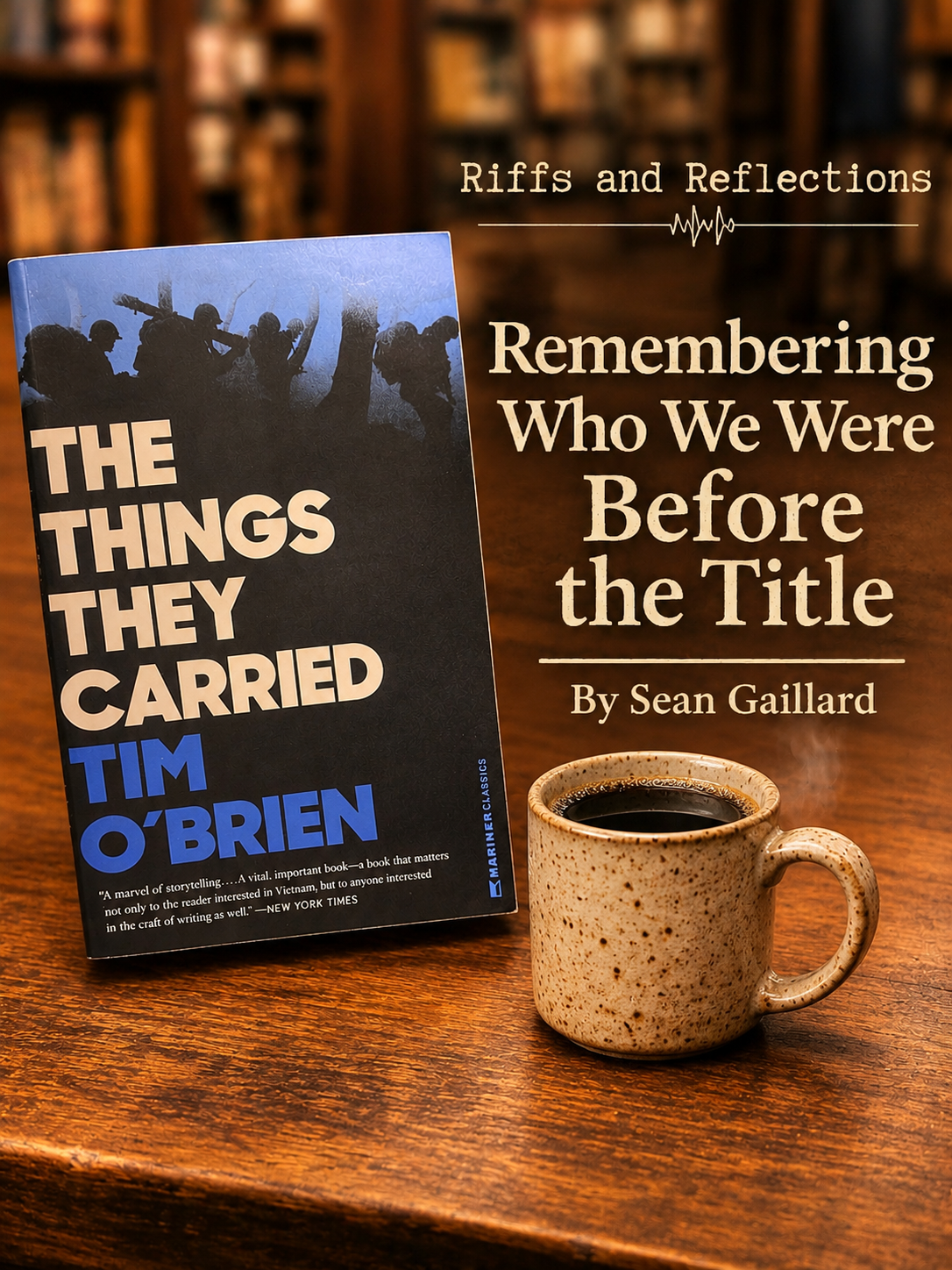
During my visit, I came across a familiar title that immediately stopped me in my tracks. There it was, The Things They Carried by Tim O’Brien, a book that had been such a meaningful part of my years as an English teacher.
I taught that book with everything I had, and somehow, it gave even more back to me. Every time I returned to The Things They Carried, I discovered something new in its pages, some insight or nuance that I had missed during previous readings. My students were an essential part of that discovery. Their questions, interpretations, and emotional responses often challenged my own thinking and helped me see the novel through an entirely different lens. I was teaching them, certainly, but they were teaching me just as much.
There was a certain kind of magic that happened whenever I taught The Things They Carried. It was one of those rare books that connected with students across different academic levels, backgrounds, and experiences. Students who loved reading found something meaningful in its pages, while students who struggled with literature often discovered something that spoke to them just as powerfully.
We took deep dives into metafiction and postmodernism, exploring how O’Brien blurred the boundaries between truth, memory, and storytelling. I loved challenging students to think about what makes a story true and how literature can sometimes reveal deeper truths through imagination. I would bring music from the 1960s into our classroom, allowing the sounds of that era to provide another dimension to our understanding of the Vietnam War and the cultural landscape surrounding O’Brien’s stories. Literature and music became companions in our exploration of history and the human experience.
I fell in love with that book every single time I taught it. Each reading brought new discoveries, different conversations, and moments of connection that reminded me why I loved being an English teacher. There was something profoundly rewarding about watching students find meaning in a story and recognize pieces of their own humanity through the experiences of its characters.
I especially remember teaching the final pages of the novel. I would read those passages aloud to my students, and without fail, I would find myself becoming emotional. My voice would sometimes break, and tears would fill my eyes. My students would become emotional, too. We shared something in those moments that went far beyond a lesson plan, a curriculum standard, or an assignment. We were experiencing the power of literature together.
Standing in Barnes & Noble, I found myself returning to those final pages once again. The words still moved me, but this time they carried an additional layer of meaning. They brought back memories of a younger version of myself, a teacher who found tremendous joy in sharing stories with students and helping them discover the beauty and complexity of the human experience.
Those memories also carried me back to my years living in the Boston area. I thought about the early days of being a husband and father, the excitement and uncertainty of building a family, and the experiences that were shaping me as both a person and an educator. Those were meaningful years, filled with the responsibilities of a young family and the possibilities of a profession that I genuinely loved.
Revisiting that book brought those memories back with remarkable clarity. For a few moments, the frustrations of my workday faded into the background. I was no longer thinking about professional expectations, the demands of leadership, or whether my contributions were being recognized. I was remembering the joy of teaching, the beauty of literature, and a chapter of my life that continues to mean so much to me.
The experience was unexpectedly renewing. I had walked into the bookstore feeling emotionally drained, but I found myself leaving with a greater sense of peace. Nothing about my professional circumstances had changed during that visit. What had changed was my perspective, and that small shift reminded me of something important about leadership and life.
We spend so much of our professional journeys pursuing opportunities, accepting responsibilities, and growing into positions that carry increasingly complex expectations. Titles become part of our identities, and the demands associated with those titles can gradually consume our attention. Somewhere along the journey, we can lose touch with the passions and experiences that once brought us such tremendous joy.
I wonder how often we give ourselves permission to revisit those earlier chapters of our lives. For school leaders, that might mean remembering the joy of teaching a favorite lesson, sharing a meaningful book, or connecting with students in ways that reminded us why we entered education. For corporate leaders, it might mean returning to a creative pursuit, an early professional experience, or a personal interest that existed long before the responsibilities of management and organizational leadership.
These experiences matter because our professional titles should never become the entirety of our identities. We are more than the positions we occupy, the responsibilities we carry, or the recognition we receive. We are also the people shaped by the books we have read, the music we have loved, the relationships we have nurtured, and the experiences that have given our lives meaning.
There is something restorative about reconnecting with those parts of ourselves. Perhaps we need to spend more time revisiting the passions that first made us feel alive, especially during seasons when our professional responsibilities leave us feeling depleted. Those passions are not distractions from our leadership. They are reminders of the humanity we bring to it.
I think about the title of O’Brien’s novel and the many things we carry throughout our lives. We carry responsibilities, expectations, disappointments, and the weight of experiences that shape our understanding of the world. We also carry memories of joy, meaningful relationships, and moments when we felt deeply connected to our sense of purpose.
That afternoon in Barnes & Noble reminded me that the things we carry do not always have to weigh us down. Sometimes they can lift us up, reconnect us with our younger selves, and remind us of the beauty that remains within our own stories.
I am grateful that I happened upon The Things They Carried that afternoon. I am grateful for the students who shared that book with me, the conversations we experienced, and the memories of a younger teacher living in the Boston area who loved his family, loved literature, and loved the opportunity to make a difference through teaching.
I still carry that teacher with me, even on the days when the demands of leadership make it difficult to remember him. That afternoon reminded me that I do not have to leave those earlier chapters of my life behind simply because my professional role has changed.
Sometimes remembering who we were is exactly what we need to reconnect with who we are.

