Failure hurts. There’s no sugar-coating that simple truth. When the Beatles were turned down by Decca Records, it could have been the end of their story. But it wasn’t. They found another path and changed the world. As I wrote in The Pepper Effect, that “no” was just the prelude to a bigger “yes.”
And they’re in good company. Walt Disney was once fired for “lacking imagination,” and Oprah Winfrey was told she was “unfit for television” before becoming a media icon. Each of them had moments that could have ended their journeys, but instead, they used those setbacks to fuel their next success.
In leadership, we all have those moments. And I’ll say personally, I’ve had my own failures. Sometimes the things I write or the ideas I share don’t resonate the way I hope. Sometimes a well-intentioned plan becomes a flop and I fall on the sword of doubt. Each of those moments is a chance to keep creating, keep pushing, and keep striving. It’s a reminder that our perseverance can inspire others to do the same.
In leadership, we face our own versions of these stories. Sometimes failure lands on our shoulders alone, and it feels isolating. The secret I have learned over the years is that failure is less sharp when you’re in a band, when you have those who know you and stand by you. It’s easier to turn a setback into a new song when you’re not playing solo. That’s why it is essential to surround yourself with those who support and empower you. That’s why it is essential to stay connected with those who knew you and stood by before you got the leadership gig, corner office, or prestigious title.
When failure comes, and it will, remember that you’re not the first and you won’t be the last. Take a breath, lean on your bandmates, and see failure as the beginning of a new opportunity. Failure is the spark for something greater. I know that failure can hurt and force you to stand still in the marrow of your doubts. Someone needs your spark and there is a band relies upon your sound. One day, your failure story will be the inspiration for someone else and may even be that spark that sets the world as a better place for others.
When failure comes, let it be your cue, not your curtain call. Let it remind you that you’re not alone, that your story isn’t over, and that the band is still playing. Every “no” carries the seed of a future “yes.” Every closed door echoes with the sound of what’s next. Lean into your vision, surround yourself with those who believe in your song, and keep showing up with your whole heart. Because someone out there needs the music only you can make.
This is a reflection for anyone who has ever stood in the in-between. The space where purpose meets uncertainty and the next chapter feels just out of reach. These are the moments that call for a leadership reset to pause, reflect, and begin again with renewed intention.
There is a strange stillness in the in-between. It is that quiet moment when one chapter fades but the next has not yet begun.
It is not regret. It is ache. The kind that comes from knowing you are at a crossroads. I have danced with failures and missed opportunities. I have wrestled with the silence that follows when you put your heart into something and it goes unseen. That silence has been my teacher.
I think often of those moments in music when an artist stood in their own in-between. When Miles Davis created Kind of Blue, he was leaving behind the familiar and stepping into something uncharted. He entered what is often called a liminal space, a threshold between what was and what could be. It was risky. It was uncertain. Yet from that space of transition came a timeless masterpiece that changed everything.
Or consider The Beatles during the Let It Be sessions. The band was fractured and weary. Yet in that fragile in-between space they still created moments of truth and beauty. They found the courage to keep recording even when it felt like the music had lost its way. Somehow, that honesty became the song that still echoes across time.
Liminal spaces are where the soul rewrites its melody. They are uncomfortable, but they are also sacred. They strip away titles, roles, and routines until only what is real remains.
What is real right now is that I still care. I still believe in people. I still believe in creativity, connection, and service. I still believe that words matter, even if no one reads them.
This is where the Leadership Reset comes alive. It is something I created and shared in a recent blog post. I was honored to share on a recent episode of the “Teachers on Fire Podcast” with Tim Cavey. It is a simple practice that can help any leader find rhythm again when the noise gets too loud or the silence feels too heavy.
1. Take a Breath (30 seconds) Close your eyes. Inhale slowly and say to yourself:
“I am still here.”
Exhale and say:
“I am enough.”
Do this three times. Feel your shoulders drop. Feel your pulse slow. You have just reclaimed your space in the moment.
2. Anchor in Gratitude (1 minute) Ask yourself quietly:
What one small moment today reminded me I am alive? What one connection, a smile, a song, a student, gave me a spark? What one thing am I proud of, even if no one noticed it?
Write it down in a notebook or say it aloud. That is your leadership echo, a reminder that small actions still ripple outward.
3. Affirm and Reframe (1 minute) Say these words out loud, slowly and intentionally:
“I am not invisible. I am building something that lasts beyond applause.” “My work is meaningful, even when it is quiet.” “The music I make through service, kindness, and creativity still plays, whether or not the crowd is listening.”
Let those words live in your breath. You have just tuned your soul back to the right frequency.
4. Reconnect (30 seconds) Before moving on with your day, take one small action to reconnect:
Send a short message to a friend or colleague. Share a kind word with a student or staff member. Play a song that brings you joy.
These micro moments rebuild our leadership core from the inside out.
Maybe leadership is not about applause or spotlight moments. Maybe it is about keeping the song going when you cannot tell if anyone is listening.
So I will stay here for a while, between what was and what is next, trusting that this ache is not the end of the song but the bridge that leads to the next verse.
We are all in-between something. We are all tuning, listening, resetting. Wherever you are in your journey, may you find time to breathe, to notice, and to let your next melody emerge.
Every leader faces doubt. Every visionary faces resistance. This reflection is about how we can rise above the noise, stay true to our purpose, and keep creating even when others question our path.
There will always be naysayers.
There will always be you, the one who dares to believe, to dream, and to create.
There will always be naysayers who question your heart, doubt your intentions, and smile to your face while tearing you down in private. There will always be your resilience, your steady conviction, and your choice to rise above the noise.
There will always be naysayers who talk about you. There will be you talking about solutions.
That contrast defines courageous leadership. The world has its critics. You have your calling.
The Constant and the Choice
Naysayers are not going anywhere. They are constant. In that regard, our values, beliefs, and dreams must remain constant, too.
Every leader faces the weight of skepticism and the sting of doubt. Even though naysayers can disturb our peace and invade our thoughts, they also present an opportunity for us to show courage and grit.
Rocky Balboa once said, “It ain’t about how hard you hit. It’s about how hard you can get hit and keep moving forward. How much you can take and keep moving forward. That’s how winning is done.”
Naysayers are not obstacles. They are resistance training. Each criticism, whisper, or eye roll becomes a repetition in the workout of our resolve.
Lessons from The Beatles
In my book The Pepper Effect, one of the four leadership riffs inspired by Sgt. Pepper’s Lonely Hearts Club Band is Ignore the Naysayers.
The other three riffs are Believe in Your Vision, Believe in Your Masterpiece, and Believe in Your Collaborators. Each one reminds us that masterpieces are born from vision, teamwork, and purpose.
When The Beatles were creating the Sgt. Pepper album, they were told they were finished and that their best work was behind them. They tuned out the static and created an album that forever changed music.
Sometimes, we can even invite the naysayers to the table. They rarely show up. They are often too busy critiquing from the sidelines while we are in the studio doing the work.
Holding On to Worth
We must believe in our worth and know that our impact matters.
It is time to stop allowing naysayers to live rent free in our minds. It is time to stop subscribing to their questioning of our value.
Naysayers will follow us with jibes, insults, and ridicule, but they will never step into the arena with us. They will never feel the rush of creation, the joy of risk, or the satisfaction of impact.
A Personal Note
I have been plagued by naysayers, too. Their words once haunted me. They disrupted my focus and dulled my joy. I regret giving them permission to occupy my thoughts and lower my head.
That regret became a teacher. It reminded me to stand taller, to protect my energy, and to refocus on what truly matters: purpose, integrity, and love for the work.
The Encore
There will always be naysayers. There will always be you.
You are leading with heart. You are believing when others doubt. You are building while others tear down. You are staying in the arena while others remain in the cheap seats.
Keep leading. Keep creating. Keep believing.
The noise fades. The work remains. The song goes on.
How do you stay grounded when naysayers appear in your path? Share your reflection or story in the comments. Together, we can create a chorus of encouragement that reminds us to keep the music of leadership alive.
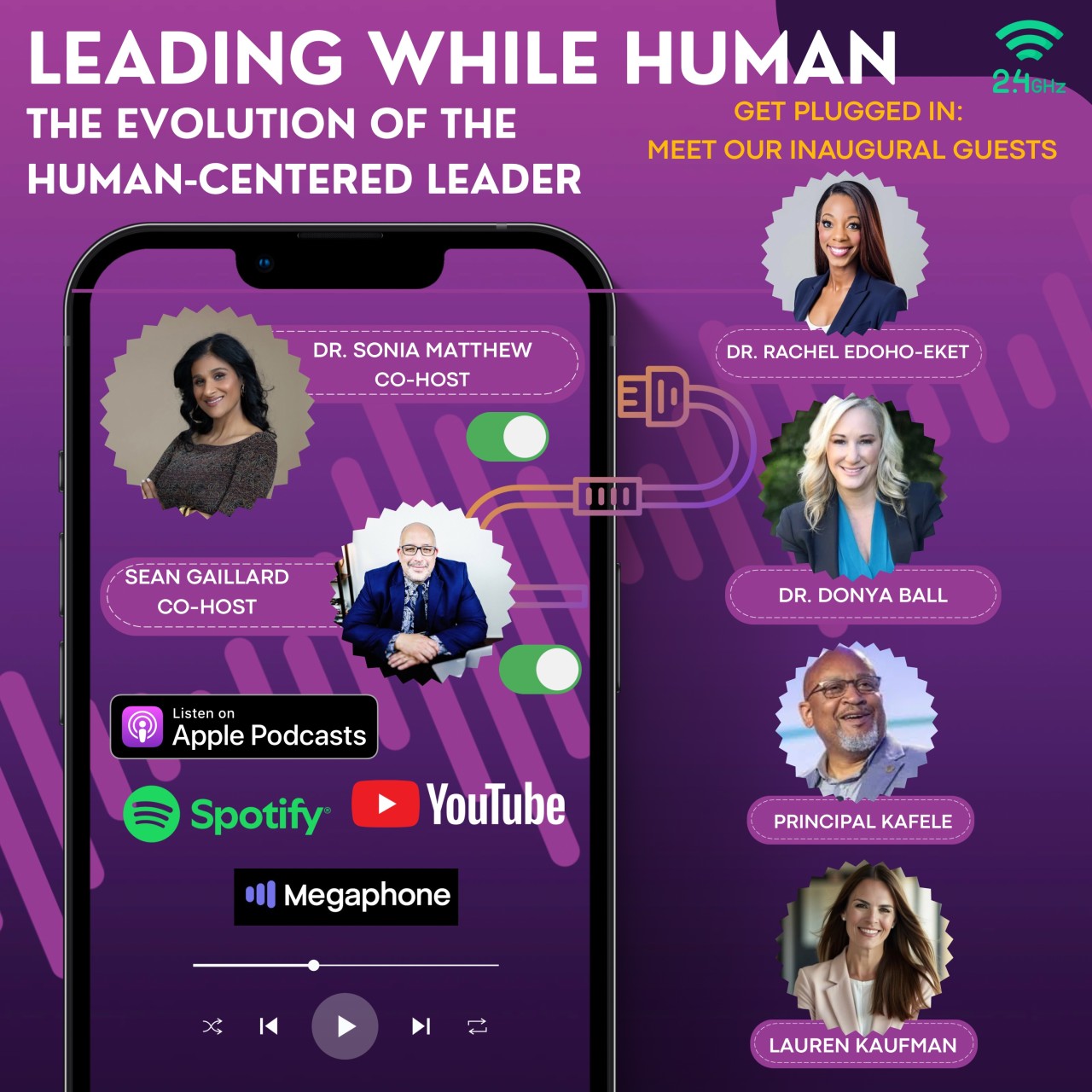
Back to the Mic: The Leadership Liner Notes Podcast
I am back to podcasting, and it feels good.
After some time away from the mic, I am excited to share a brand new project that is close to my heart, The Leadership Liner Notes Podcast. This new series builds on everything I have learned from Principal Liner Notes and takes it to a new space for reflection, connection, and growth.
This season begins with a fresh rhythm and a simple idea: #CelebrateTheMoment. It is a reminder that joy, gratitude, and presence are not limited to one day of the week. They live in the moments we create, when a student smiles, a colleague feels seen, or we take a breath to appreciate where we are right now.
Each episode will explore stories, lessons, and insights that inspire us to lead with heart. Some moments will be reflective, others practical, but all will be grounded in the belief that leadership is most powerful when it is authentic and human.
In the first episode, I share what inspired this return to podcasting, how I have been rethinking presence and purpose, and why now felt like the right time to reconnect with this creative space.
Thank you for continuing to be part of this journey. Your encouragement and support keep the music playing. Here is to new conversations, fresh insights, and moments that matter.
A Note on Leadership Riffs, My Upcoming Book
This podcast is also an echo of my upcoming book, Leadership Riffs. Both are rooted in the same belief that leadership, like music, is about harmony, collaboration, and finding your unique sound. We all have riffs to share: those small but powerful ideas and actions that lift others, shape culture, and bring rhythm to our work.
The Leadership Liner Notes Podcast is another verse in that song. It is a space for leaders, dreamers, and difference makers to reflect, recharge, and rediscover the joy in what they do.
Thank you for tuning in and being part of the band.
AI is not a passing trend. It is our wake-up call. In this defining moment for education, how we respond matters more than ever. The G.A.I.N Effect offers a roadmap for rising to the challenge.
I keep thinking about that moment when I read the headline: over 14,000 layoffs at Amazon. The reason? Artificial Intelligence. And these were not warehouse or frontline jobs. These were white collar roles. The kind of jobs many of us grew up believing were secure.
That was the gut punch. That was the message.
This is not just a corporate restructuring. It is a cultural turning point. It is our Sputnik moment.
Back in 1957, when Sputnik launched into orbit, it forced an entire education system to recalibrate. Science and innovation had to move from theory to reality. The classroom had to change fast.
Now AI is sending us that same signal. And we are the ones who must decide: do we lead into this new world, or do we cling to old maps that no longer guide?
Too often, we treat innovation like a slogan. A selfie at an edtech conference. A new tool we buy, but never deeply integrate.
Innovation cannot just be about branding or the latest tech buzz.
This seismic change requires attention, reflection, and action.
It also requires a mindset we take into dynamic motion. This is where I lean into the G.A.I.N. Effect: a leadership compass that moves beyond buzzwords and into bold, daily practice:
Growth: Embrace the mindset of a learner. Stay curious. Read. Reflect. Evolve.
Agility: Pivot with purpose. Stay flexible. Be ready to shift as needed. The world is not waiting.
Insight: Tune into your values. Lead with clarity. Stay grounded in what matters most.
Network: Find your people. Surround yourself with fellow learners and bold thinkers. Collaboration is essential.
We do not need to panic. But we do need to move.
We do not need to fear change. We need to embrace it together.
We do not need to avoid the current reality of AI. We need to lean into each other and collaborate in tune with other’s strengths and vulnerabilities.
We must help, support, encourage, collaborate, and learn together.
This is not about knowing all the answers. This is about having the courage to ask the right questions and take the next bold step forward.
Here are five visceral action steps that leaders, educators, and stakeholders can take right now:
Create space for curiosity Host a conversation. Invite wonder. Ask what people are thinking and feeling about AI. Include students. Include families. Let the questions guide the learning.
Model the learning Pick one AI tool. Use it. Reflect. Share what you noticed. If you are not exploring, you are signaling that learning stops at the top.
Design student-centered experiences Connect AI to real-world problem solving. Let students create, reflect, and engage with purpose. Prepare them for a future that demands more than memorization.
Connect with others doing the work Find your bandmates. Reach out. Share what is working. Ask for help. No one leads in isolation.
Anchor in purpose AI is not the destination. It is part of the journey. Our mission remains to see every student, support every educator, and strengthen every community. Let that be our guide.
This is not the time for passivity. This is not the time to say, “We will figure it out later.”
We have a moral imperative to prepare all of our students for a world where they can contribute as innovators.
We are not waiting for the future to arrive. It is already here.
In the swirl of learning and connection at the ISTE Live and ASCD Annual Conference, a friend’s kind act of saving a seat became something greater. It was a quiet reminder that leadership is not found in titles or stages, but in creating space where others feel they belong.
The other day, I was reminiscing about my experience this past summer at the ISTELive and ASCD Annual Conference in San Antonio. I had traveled there for two special reasons: co-presenting with my friend and thought partner, Dr. Andrea Trudeau, on Principal and School Librarian Collaboration, and being honored as one of the recipients of the ISTE + ASCD 20 to Watch recognition.
This conference was meaningful on many levels. With ISTE and ASCD coming together for the first time, it felt like the formation of a supergroup similar to The Traveling Wilburys of education. The learning sessions, the keynotes, and the energy of being surrounded by thousands of passionate educators were inspiring. Still, I arrived feeling a bit like a solo act.
Even though I was meeting up with friends from my Professional Learning Network (PLN), I could not help but feel that familiar pang of introverted hesitation. Traveling alone sometimes brings that quiet ache of wondering, Will I find my place here?
A Seat Saved
Then came a simple yet powerful act of kindness.
On the first day, my friend Meghan Lawson reached out and invited me to sit with her group. Meghan was a seat saver in every sense of the phrase. She sent messages throughout the conference:
“We have a seat for you.” “We are over here. Come join us.”
When I arrived, there she was with a smile and a wave, making sure there was space for me. She introduced me to her colleagues as if I had always been part of their circle. In those moments, I did not feel like an outsider anymore.
That act of saving a seat, so small on the surface, became a profound gesture of belonging. It was not just about a physical chair in a crowded session room. It was about creating space for someone else to feel seen, valued, and connected.
A Third Place in Action
This sense of belonging reminded me of an article by Superintendent Teresa Hill in the September 2025 issue of Educational Leadership titled“Help Students Find Their Third Place.” She builds on sociologist Ray Oldenburg’s concept of the third place, a setting beyond home (the first place) and work or school (the second place), where people gather, connect, and belong.
Hill’s words resonated deeply because, as leaders, we need to cultivate third places not just for students but for the adults we serve. Our schools, offices, and even conferences can become those spaces of belonging when we intentionally carve out room for others emotionally, physically, and spiritually.
That is exactly what Meghan did for me. Her saved seat was a third place. It represented welcome, community, and care. Andrea Trudeau did the same by inviting me to join sessions, co-presenting with encouragement and joy, and extending genuine friendship.
Even our friend Danny Steele showed up at our poster session just to support us. He did not need to be there, but he was, a quiet reminder that belonging is built one intentional gesture at a time.
Creating Space for Others
Something as simple as saving a seat carries great power. As leaders, we are often the ones carrying the weight of decisions, expectations, and responsibilities. It can be easy to isolate, even unintentionally. But we are called to do the opposite.
We are called to be seat savers, those who create and hold space for others to belong, contribute, and thrive.
Belonging is not a slogan or a tagline in a memo. It is the living, breathing act of inclusion. It is checking in with intentionality on another human. It is inviting others into a shared space of belonging. It is sharing what we have learned. It is offering encouragement without condition.
That is what Meghan and Andrea modeled in San Antonio. They made belonging an action, not an idea.
Paying It Forward
Before the conference ended, Meghan and I reached out to our friendLauren Kaufman, who was not in attendance. We missed our friend. We looped her into our group chat and shared the sessions that had inspired us. In a way, we were saving her a seat, too, a digital one in our learning community.
I carried that spirit home. I wanted to continue saving seats for others through my social media posts, sharing reflections and takeaways from the conference. Those posts were not just updates. They were invitations, small ways of saying, Come sit with us.
The Leadership Invitation
I am grateful for friends like Meghan, Andrea, and Danny who made space for me in San Antonio. Their kindness reminded me that belonging begins with awareness and intention.
As leaders, we can all be seat savers. We can all be the ones who make sure everyone has a place in the band.
Because when we save a seat, we do not just fill space. We create community. We create belonging. We create harmony.
Every great song needs a pause between the notes. The same is true for leadership. Take a moment, breathe, and tune your heart back to harmony.
As leaders, we have our days. I am talking about the days where we feel our humanity and gaze at our limits. Sometimes that limit gazing leads to doubt. We doubt our purpose. We question our impact. We embrace our blunders and define them as reasons why we don’t matter.
There are times when self doubt takes the stage. We begin to question our purpose. We wonder if we make a difference. We replay our mistakes and convince ourselves they define us.
Leadership can be lonely. I can certainly attest to that after almost twenty years in school administration. It is a loneliness that gnaws at you, the kind that can box you into becoming a castaway who is adrift, rudderless, isolated.
That is the irony of leadership. We are surrounded by people every day, students, teachers, families, and community members, yet the weight of decisions, the scrutiny, and the responsibility can still leave us feeling alone. There are joyful days, of course, but there are also those days when you must make the hard call, stand by your principles even when they are unpopular, and face the quiet stares that question your choices.
Those are theAm I Cut Out for This?days, echoing the title of my good friend Elizabeth Dampf’s recently published, powerful book.
When Doubt Knocks
Every leader faces those moments that stir imposter syndrome, stress, or even depression. It is easy to forget that leadership, as meaningful as it can be, does not define who we are.
Yes, the work might be a calling or vocation, but at its core, it is still a job. What truly defines us is the why behind what we do, our passions, dreams, and values that form the center of who we are.
The work can also be beautiful, impactful, and world changing.
Just the other day, I sat in a parent teacher conference with a parent I had once served years ago at another school. She smiled through tears as she said she was grateful her child was in a place where I could help. That simple moment reminded me that the echoes of our leadership often reach further than we realize. Those moments when we feel seen, valued, and appreciated are the quiet affirmations that we have helped others feel the same.
The Power of the Pause
We are human. We will doubt. We will stumble. But we must also give ourselves permission to pause.
We must be intentional about being present, especially with the people who loved us before we ever had a leadership title. Sometimes, the most courageous move we can make is to take a moment to reset.
Last year, I came across an insightful book, The Reset Mindset by Penny Zenker. It is filled with practical, grounded steps for slowing down, refocusing, and rediscovering purpose. The concept of “reset” has stuck with me ever since, not just as a leadership practice but as a way of living.
Here is my own adaptation, a simple reflection I call The 3 Minute Leadership Reset.
🎧 The 3 Minute Leadership Reset
1. Take a Breath (30 seconds)
Close your eyes. Inhale slowly and say to yourself:
“I am still here.”
Exhale and say:
“I am enough.”
Do this three times. Feel your shoulders drop. Feel your pulse slow. You have just reclaimed your space in the moment.
2. Anchor in Gratitude (1 minute)
Ask yourself quietly:
What one small moment today reminded me I am alive?
What one connection, a smile, a song, a student, gave me a spark?
What one thing am I proud of, even if no one noticed it?
Write it down in a notebook or say it aloud. That is your leadership echo, a reminder that small actions still ripple outward.
3. Affirm and Reframe (1 minute)
Say these words out loud, slowly and intentionally:
“I am not invisible. I am building something that lasts beyond applause.” “My work is meaningful, even when it is quiet.” “The music I make through service, kindness, and creativity still plays, whether or not the crowd is listening.”
Let those words live in your breath. You have just tuned your soul back to the right frequency.
4. Reconnect (30 seconds)
Before moving on with your day, take one small action to reconnect:
Send a short message to a friend or colleague.
Share a kind word with a student or staff member.
Play a song that brings you joy.
These micro moments rebuild our leadership core from the inside out.
One More Thing
Remember this truth: Your presence matters. There are people, family, friends, and colleagues, who love you simply for who you are. You are never truly alone.
There will be days when the gig feels heavy, isolating, and uncertain. But even in those moments, you have got this. And I believe in you.
As I often say on my podcast:
“Do not forget to share your dreams with the world. The world needs them, and you help make it a better place.”
During my days in “administrator school,” I was fortunate to have our superintendent, where I was employed as a teacher, instruct one of our courses. The course was Strategic Planning, and I gained much wisdom from his years as a seasoned district leader. The class happened to land on the final day of the semester for our cohort. Looking back, it was a meaningful milestone as it marked the last class on the last day of my entire Master’s in School Administration program.
A moment from that day has stayed with me throughout my career. At the time, I did not realize how deeply it would echo through my leadership journey.
A Moment That Still Resonates
We were wrapping up the final review before exams when our superintendent began to share parting wisdom. I do not know what moved him to do so, but his reflections were powerful. He began to riff on lessons from his own career, weaving together aphorisms, stories, and insights.
Then came the moment I will never forget. He said, “Remember those conversations you had about your principal or even about me after a faculty meeting? Remember those meetings after the meetings where you shared your thoughts about leadership decisions? Maybe you complained and maybe you didn’t. Well, someday soon, you will be the topic of those conversations in the parking lot. How will you respond to that?”
He paused and looked at each of us. The room fell silent. We all sat in the weight of his words.
At the time, those words felt heavy and unsettling. Over the years, I have come to understand their profound truth about leadership and influence.
The Power of the Leadership Echo
All leaders have what I call a leadership echo. This is the way our tone, actions, empathy, and integrity ripple beyond our presence. It is the resonance of the legacy we create for others. Each of us has a leadership echo, and we are the composers of the melody it leaves behind.
Music and the Subtle Notes That Stay
As a lifelong music fan, I am always drawn to the small details in a song that stay with you. One of my favorite moments in music is the bridge of “Here Comes the Sun” by The Beatles. The sequence of handclaps adds a percussive joy that lingers long after the song ends.
Leadership works the same way. The small, intentional acts: kind word, a listening ear, a thoughtful pause before reacting—create lasting harmony. They resonate across classrooms and communities.
I still remember the high five I received from my principal after he observed my American Literature class. I was teaching “Richard Cory” and playing Simon and Garfunkel’s musical version. That simple gesture not only encouraged me, but I could see my students respond to it, too. It was a cool moment, one that continues to echo for me.
Echoes in Action
Leadership echoes take many forms. A leader checking in on a struggling teacher. A principal celebrating small wins during a tough week. A colleague modeling grace under pressure. A teacher calling home to share a moment of student success.
These gestures may seem small, but they often become the stories others tell later. When we amplify these positive echoes, they build the shared culture that defines our schools.
Hearing the Unflattering Echo
Sometimes, the echoes we hear are not flattering. Thinking back to what my superintendent said that day, leaders will always be the subject of conversation. Those conversations are sometimes positive and sometimes not.
As leaders, we must approach those moments with reflection, not fear. Even when the echo is critical, it can still reveal purpose and integrity. I recently reviewed survey data about my leadership. Some of it stung, but I chose to use it as a mirror for growth rather than a judgment.
Listening to your leadership echo takes humility and curiosity. It is an opportunity to grow, not to defend.
Three Ways to Strengthen Your Leadership Echo
Here are three reflective strategies for tuning your leadership echo into a source of growth and impact:
Tune Your Tone: Pause before responding. Speak as if your words might echo in someone’s memory tomorrow.
Play Small Notes Loud: Celebrate micro moments with either a handwritten note, a hallway check-in, or a quick “thank you.” Small gestures can carry great resonance.
Listen for Resonance: Ask for feedback, reflect often, and be open to what comes back, even when it is uncomfortable.
The Last Chord
Just like the handclaps in “Here Comes the Sun,” your leadership will ring on long after you have turned the page to a new chapter. Think of the final chord in “A Day in the Life” by The Beatles. It sustains, fades, and lingers with an unforgettable sound that carries on long after the needle travels off the record.
Leadership is the same way. The decisions we make, the tone we set, and the kindness we extend all continue to reverberate through others long after we leave the room. Every word, action, and choice becomes part of our echo.
Each of us has the power to shape what that echo sounds like. We can choose to create an echo that uplifts, inspires, and builds others. The more we lead with intention, empathy, and grace, the more beautiful that resonance becomes.
My father often reminded me to lead with humility and to hold my head high. His words, much like that chord in “A Day in the Life,” continue to echo in my life and in my leadership.
May your echo be one of kindness, courage, and grace. May it be the kind that reminds others of the good they carry within. And may it continue to resonate long after the music fades.
One More Thing
This reflection is part of my ongoing Leadership Liner Notes blog, where I explore the harmony between music and leadership. The idea of the leadership echo reminds me that every interaction carries a note of influence, just like every chord in a great song contributes to the melody.
As I continue to write and learn, I’m inspired by the small moments that form the soundtrack of leadership. Every conversation, every decision, and every high five in the hallway becomes part of the echo we leave behind.
If this reflection resonates with you, share your own leadership echo story on social media using #LeadershipRiffs and #LeadershipLinerNotes, and tag me in your post. Let’s keep the conversation. and the echoes going.
The other day I was listening to The Beatles Channel on Sirius XM. I know that sounds like a casual moment, but truth be told, I spend plenty of time tuned into that station. As a lifelong Beatles fan, I’m fully immersed in their world of melodies, harmonies, and timeless lessons.
In between the songs and interviews, the channel often airs short reflections from musicians and fans. One that recently stood out to me came from John Oates, half of the legendary duo Hall & Oates. He shared a story about his friendship with George Harrison that has been playing in my mind ever since.
Oates talked about how he and George connected over a shared love of Formula One racing. That connection eventually led to visits at George’s home, Friar Park. During one visit, Oates mustered the courage to ask if George would play guitar on the Hall & Oates album Along the Red Ledge. George agreed, but he had one request: he only wanted to be a member of the band.
He didn’t want to take the lead. He didn’t want to be “George Harrison of The Beatles.” He just wanted to play alongside everyone else and contribute to the groove. His guitar work shines on the track “The Last Time,” yet what makes this story powerful is George’s humility. Here was someone who had stood on the world’s biggest stages, yet he found meaning in simply being part of the band.
That lesson resonates deeply with me. I’ve played in a few bands myself. I’m not a virtuoso guitarist, but I’m a solid rhythm player. I love creating that foundation that lets others soar. There’s something special about hearing another musician shine because you’re holding down the rhythm behind them. That’s leadership in action.
David Bowie did a similar move when formed the band, Tin Machine. Here was one of the most iconic solo acts in music simply wanting to be a part of a band. Bowie was known for making all kinds of unexpected turns and pivots in his career. Here, he took an eclectic turn and went back to the basics of being in a band. The band wasn’t called “David Bowie and Tin Machine.” It was simply Tin Machine.
Leadership is often seen as standing front and center, but the best leaders know when to step back. Sometimes the greatest impact we can have is to lay down a steady rhythm that allows others to take flight. Being a leader means being a collaborator, a listener, a supporter. It’s about tuning into the strengths of others and amplifying them for the good of the team.
George Harrison reminded us that leadership isn’t about spotlight moments or social media metrics. It’s about humility, collaboration, and humanity. It’s about seeing the gifts in others and creating the space for those gifts to be heard.
So, wherever you lead, whether it’s a classroom, a meeting, or a community, remember this simple truth: the best leaders know how to be a member of the band. Tune into the gifts of others. Uplift their strengths. Create harmony together. That’s how the best songs and the best teams are made.
Today marks what would have been John Lennon’s 85th birthday. Had he not been so cruelly taken from the world, I imagine him surrounded by love, his wife, his sons, and perhaps a few close friends gathered around a cake. I can almost see John smiling, glasses glinting in the candlelight, grateful for another revolution around the sun. Grateful simply to be a husband and father.
Of course, this is a dream, a what if forever suspended in time. John Lennon is not with us. Yet every time we hear Imagine, or spin a Beatles record that once lifted the world, his spirit continues to sing. His ideas, his courage, and his music are eternal.
As I think about John’s life today, I am reminded of the profound pivot he made in his final years, a pivot that leaders, including myself, can learn from. After a painful separation from Yoko Ono, John chose to retreat from the spotlight. He became a stay at home father. He walked away from fame, record contracts, and the demands of celebrity life to raise his young son, Sean. He called this period his “househusband years.” Five years of seclusion. Five years of being present.
In that quiet season, John found peace. He cooked, baked bread, and rediscovered the small joys of daily life. He walked through Central Park and strolled with Yoko and Sean, savoring the moments that so many of us rush past. He wrote songs again, not for charts or critics, but from the heart. When he finally returned to the studio in 1980, he released Double Fantasy, a musical conversation between himself and Yoko celebrating love, family, and renewal. The album earned a Grammy for Album of the Year, a posthumous echo of his artistry at its most honest.
One song from that record, Beautiful Boy, contains a line that has haunted and guided me for years: “Life is what happens to you while you’re busy making other plans.”
That lyric hits harder as I get older. I have lived its truth. As a husband, father, and leader, I have had moments when my presence was only partial, physically there but mentally buried in a phone, a to do list, or the next big initiative. When I faced my first serious health setback a year and a half ago, lying in a hospital room with machines beeping around me, I thought of all the moments I had missed. I remember wondering: Would I get to tell my children I loved them again? Would I see my wife’s beautiful smile? Would I have another chance to simply be, not as a principal, not as a leader, but as a husband, father, son, brother, and friend?
Thankfully, I was granted another chance. I am still learning and growing even as those health setbacks keep coming. That experience in the hospital room changed me. It reminded me that leadership is not just about impact, innovation, or outcomes. It is about love. It is about being present for the people who give your life meaning.
As leaders, we can lose ourselves in the rhythm of meetings, emails, and deadlines. The work matters, but so do the quiet moments that recharge our hearts. The people who know us beyond our title need us, not the version that is always on, but the one that listens, laughs, and lingers a little longer at the dinner table.
John Lennon’s decision to step away from the noise and focus on family was not an escape. It was an act of courage. It was his pivot into something beautiful.
So, what does that mean for us?
Leadership Action Steps: Simple Pivots into Something Beautiful
Write for five minutes. End your day with a brief journal reflection, one sentence of gratitude or one small victory that made you smile.
Call someone who matters. Reach out to a friend or loved one, not with an agenda, but simply to say, I’m thinking of you.
Schedule sacred time. Block out 30 minutes this week for uninterrupted family time, a walk, or a shared meal. Treat it like your most important meeting and protect it.
Be fully present. Put the phone away. Turn off notifications. Look into the eyes of the people you love and listen with your whole self.
Revisit Your Pivot Song. Choose a song that helps you pause and reconnect with what truly matters. For me, it is Beautiful Boy by John Lennon, a reminder that love, presence, and purpose are the greatest compositions of all. John wrote that song for his youngest son and it serves as reminder that I must always pivot into fatherhood and being there for my three daughters.
John Lennon did not know that his five year retreat would be the last chapter of his life. Yet in those years, he created the most meaningful work of all: love, presence, and peace. His story challenges us to do the same. To pause. To connect. To pivot into something beautiful before life happens while we are busy making other plans.