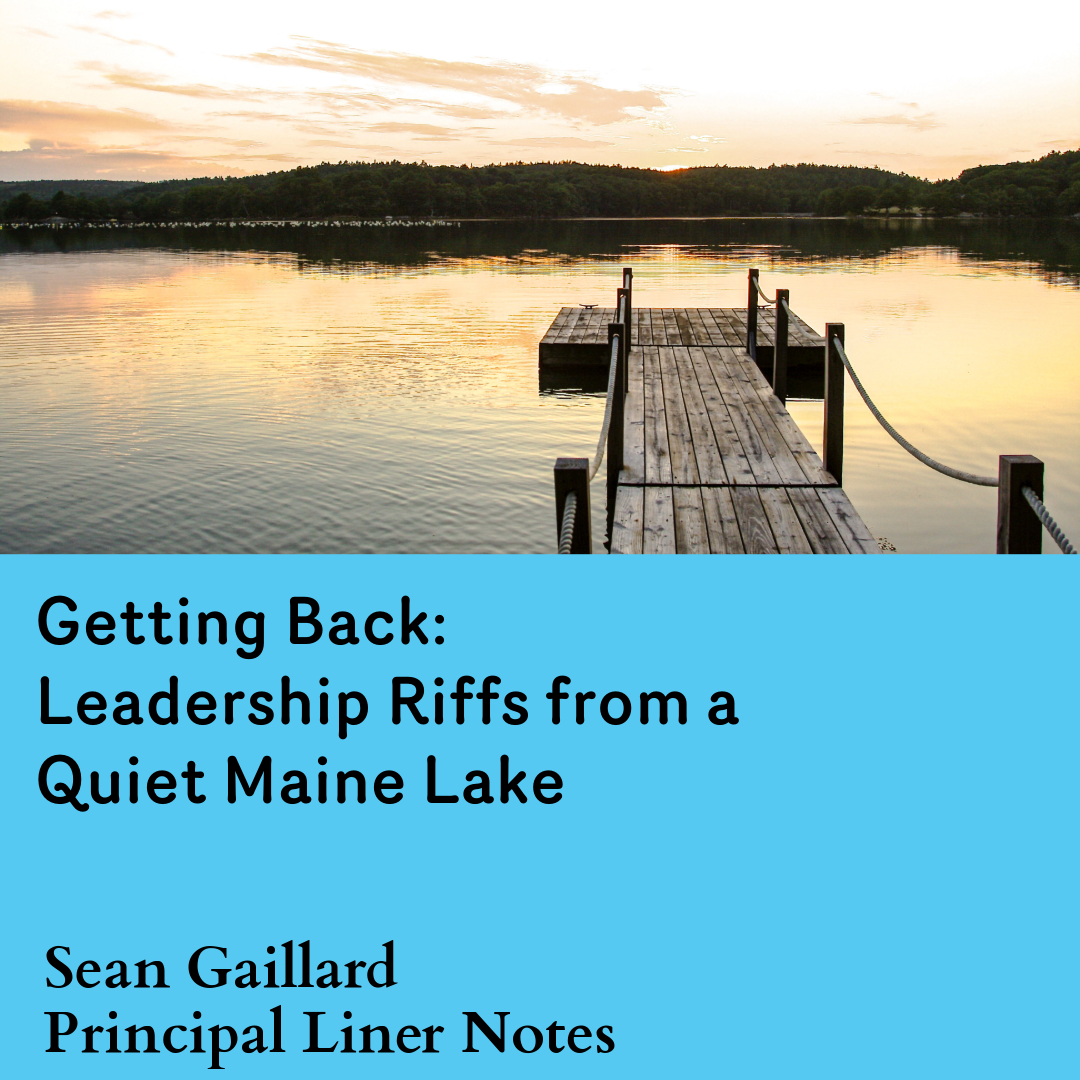
Getting Back: Leadership Riffs from a Quiet Maine Lake

Current State

I’m writing this on a still, cool summer morning beside a lake in Maine. Loons call across the water, pine needles perfume the air, and sunlight pirouettes on gentle waves. After the year-end whirlwind of school life, this New England retreat feels like hitting the reset button; an invitation to get back to what matters.

Nature’s Prompt to “Lead”

A few minutes of etymology searching reminded me that “lead” comes from the Old English lǣdan—“to guide” or “to bring forth.” Add the suffix “-ship,” meaning “state or quality,” and leadership becomes the state of bringing forth. That phrase reframes my job description: draw out the gifts, voice, and brilliance already living inside the people I serve.

The Beatles’ Blueprint

Getting back isn’t a new idea; The Beatles modeled it in January 1969. They shelved overdubs, circled their instruments, and vowed to play live in the studio: just four bandmates and a friend (thank you, Billy Preston on keyboards). The result was the rooftop concert and the album that still centers me: Let It Be. Their back-to-basics experiment birthed fresh energy, trust, and a legendary final act. I call that ripple The Let It Be Effect—and it’s the heartbeat of my Leadership Riffs mantra.

When “Innovation” Becomes Noise

Scroll any feed and you’ll find viral clips of table-top dances, choreographed high-fives, and selfie spectacles masquerading as leadership. Fun has its place, but hype is not the same as guidance. Authentic leaders serve others; they don’t stage-manage them. The Beatles didn’t grab headlines by stunts—they plugged in, faced each other, and played. The best leaders do the same by being present in the marrow of each moment in the schoolhouse and empowering others to share their gifts.

My Own Get-Back Move

Before leaving for vacation I hand-wrote a note to every colleague at Charles England. No templates, no mass email—just ink, gratitude, and belief in their gifts. It took hours and cramped my hand, yet each card was a little rooftop concert: proof that I see them, trust them, and am ready to make music together next year.

Your Lakeside Challenge

This summer, carve out your version of lakeside stillness:

  • Re-read the book that first lit your leadership fire.
  • Phone the mentor whose wisdom steadies you.
  • Gather teammates around a whiteboard and ask, “How might we…?”
  • Write one genuine note of thanks—no emojis necessary.

These simple riffs spark innovation while stitching the fabric of belonging and trust that every schoolhouse and every team needs.

Take the time to get back.
Get back to what called you.
Get back to your purpose.
Get back to the people you serve.

When we get back to our core, we lead with clarity, conviction, and heart. That’s the gig. That’s the work. Let’s get to it.


Special thanks to Lauren Kaufman for helping to inspire this blog post! Be sure to check out her amazing and insightful blog site: https://laurenmkaufman.com/.

A very special thanks to Deb Gaillard for inspiring our visit to Maine! She’s my favorite human and the best person I know!

Light Our Fire: Leadership, Problem-Solving, and the Sound of Collaboration

Recently, I came across a clip on YouTube of the late Ray Manzarek of The Doors telling the origin story of their 1967 hit Light My Fire. It’s one of those creative origin stories that just sticks. Ray talked about how each band member added a unique musical flavor that transformed the song into something iconic.

Guitarist Robby Krieger brought his flamenco background and wrote the core of the tune. John Densmore layered in a Latin beat on drums. Jim Morrison added a poetic and haunting verse about a funeral pyre. Ray himself took a page from Bach to create that unforgettable keyboard intro. All these ingredients came together like a great jam session, different parts working in harmony to create something innovative, inspired, and bold.

The Doors didn’t play it safe. They took a leap. They trusted each other. And they built something greater than the sum of their parts. That story got me thinking about what it means to lead and solve problems in a school.

When it came time to revise our master schedule at the school I serve as principal, the challenge was real. We needed to maximize instructional time and expand opportunities for intervention. But we didn’t tackle it in isolation. We did it together.

Over two weeks, I brought the challenge to our Instructional Leadership Team, the School Improvement Team, and several staff and teacher partners. These weren’t just quick drop-ins or top-down mandates. These were real conversations, one-on-one meetings, small group huddles, and full team sessions. I started each one with a simple design thinking prompt: How Might We…?

I’ll never forget one particular session with the School Improvement Team. We were all gathered around the same table. Teachers led the discussion. We weighed pros and cons. Ideas flew. Everyone added a perspective, and each voice mattered. There was no single author of the final schedule. Just like The Doors building Light My Fire, each person added a line, a beat, a riff.

Once we landed on a draft, I shared we’d treat it as a trial run. That removed pressure and opened space for feedback. We gave it a shot, came back, reflected, and adjusted. And here’s the best part—it worked. Not because it was perfect, but because it was owned. Teachers had skin in the game. Everyone contributed. Everyone collaborated. Everyone made it better.

This process reminded me that these collaborative moments between teachers and school leaders must echo what we want our students to experience. According to the World Economic Forum, one of the top job skills for 2025 is complex problem solving. Our students won’t master that skill from worksheets alone. They’ll learn it because we model it. Because we live it. Because we solve problems together.


3 Action Steps To Take Build A Collaborative Problem Solving Culture

Leadership is about making space for others to create. It’s about asking How Might We instead of You Must. It’s about letting teachers jam. Here are three ways schools can start building that kind of collaborative problem-solving culture:

1. Create Solution Building Time
Set aside time during the month for small, creative think tanks. Bring together teachers, staff, and leaders in a low-pressure space to brainstorm, ideate, and prototype solutions. Use design thinking prompts. Use sticky notes. Use music. Just make it fun and focused.

2. Launch #InstantPD Moments
Give teachers the mic. Once a week, host a 15-minute pop-up PD session where a teacher shares a strategy that works. These micro-sessions build confidence, spread great practice, and create the conditions for more teacher-led innovation.

3. Use the Power of the Trial Run
When testing something new, give permission to try without pressure. Frame it as a pilot. Invite feedback. Circle back. This builds trust and opens the door for authentic input that shapes real change.


Whether it’s jamming with colleagues on a new idea or leading a full schedule redesign, when we bring people together, we get better. We build trust. We spark creativity. We light fires.

Let’s keep jamming. Let’s keep solving. Let’s keep leading like it matters.

This is your latest #LeadershipRiffs moment from the desk of a school principal who still believes in the power of collaboration, creativity, and the beautiful noise we make when we lead together.

Keep leading with rhythm. Keep building with heart.
Watch the Ray Manzarek Clip

In the Key of Brian

How Brian Wilson’s Music Taught Me About Leadership, Vulnerability, and the Courage to Keep Going

Devastated.

Brian Wilson is gone.

The news hit me hard today. Brian wasn’t just a musical genius. He was a spiritual guide, a quiet architect of harmony, and the voice behind songs that shaped my life. His music—those symphonies of soul, longing, and joy—have been my compass through the loud and quiet moments of living.

Just last week, I was basking in the joy of a surprise Father’s Day gift from my wife and daugthers: tickets to see The Beach Boys live. Brian had long since retired from performing, but his presence was felt. It always is. It lingers in the harmonies. It rises in the arrangements. It pulses in every chorus sung by a crowd of strangers suddenly made family by melody.

I was fortunate to see Brian perform live several times in the late 1990s and early 2000s during his remarkable comeback. It was more than a concert. It was a rebirth.


Brian’s music has accompanied the milestones of my life.

I remember pressing my ear to a clock radio 45 years ago, trying to catch every layered nuance of Good Vibrations. I didn’t understand the complexity of what I was hearing yet—but I felt it. I was entranced.

I remember watching a Beach Boys concert on HBO in the 1980s with my dad. He loved R&B and soul, and yet there we were—grooving, smiling, singing along to Fun, Fun, Fun like it was gospel.

I remember hearing the opening chords of California Girls in the delivery room as my twin daughters were being born. That mini-symphony played while new life entered the world, and in that moment, I felt the rush of peace. God was with us. Everything was going to be okay.

I remember not getting Pet Sounds, in its first when I first heard it in 1990. But I grew into it—and came to see it for what it is: the greatest album of all time. A masterpiece of heart, soul, and innovation.

I remember hearing Cabin Essence from a bootleg copy of SMiLE on vinyl in a record store. I looked around in stunned silence. A clerk caught my gaze and nodded as if to silently say, “We get it, don’t we?” No words. Just knowing.

I remember driving my oldest daughter home from daycare, both of us singing Heroes and Villains at the top of our lungs. Laughter and joy spilling through the car like sunshine.


But Brian Wilson didn’t just give us songs. He gave us strength.

Through Pet Sounds, he showed me that vulnerability isn’t weakness—it’s strength in its purest form.
Through SMiLE, he taught me that unfinished dreams can be resurrected with grace, imagination, and perseverance.
Through his life, he reminded us that the creative process is messy, sacred, and worth the fight.

Brian Wilson’s willingness to face his mental health struggles publicly—amidst a whirlwind of fame and pressure—changed how I view courage. He didn’t hide his pain. He didn’t pretend it wasn’t there. He just kept going. Kept writing. Kept harmonizing. That quiet, determined bravery became a guiding light for me.

Last year, when I experienced a heart episode that resulted in me being rushed to the hospital, I found myself in one of the most vulnerable seasons of my life. Alongside the physical recovery came emotional weight—mental health struggles I didn’t always know how to name. In that difficult stretch, I thought of Brian. I revisited his story. I played Pet Sounds and SMiLE. His music gave me permission to slow down, to feel, to heal. His example reminded me that we don’t have to be perfect to keep going—we just have to keep showing up, one note at a time.


Brian Wilson’s quote, “Music is God’s voice,” echoes eternally in my mind.

As a school leader, that idea centers me. It reminds me that learning is sacred. That harmony matters. That love, when set to rhythm, can move hearts and minds in ways nothing else can.

For those who’ve followed this blog or listened to the Principal Liner Notes podcast, you’ve heard me talk about Creative Courage. That’s Brian Wilson to the core. The courage to innovate. To feel deeply. To fail. To rise. To try again.

Today, I mourn. But I also give thanks.

I give thanks for the peace his songs brought me in a delivery room.
I give thanks for the laughter his melodies brought into my car.
I give thanks for the strength his life gave me when I needed it most.

Brian Wilson changed my life.

His harmonies still ring. His spirit still sings. And for those of us willing to listen, his legacy keeps leading us forward—in the key of empathy, in the tempo of grace.

Thank you, Brian.
You gave us harmony.
You gave us honesty.
You gave us your heart.

We’ll carry the melody from here.

A Full Cirlce Moment: The Return of The Principal Liner Notes Podcast

Seven years ago today, a lifelong dream came true—I became a published author.

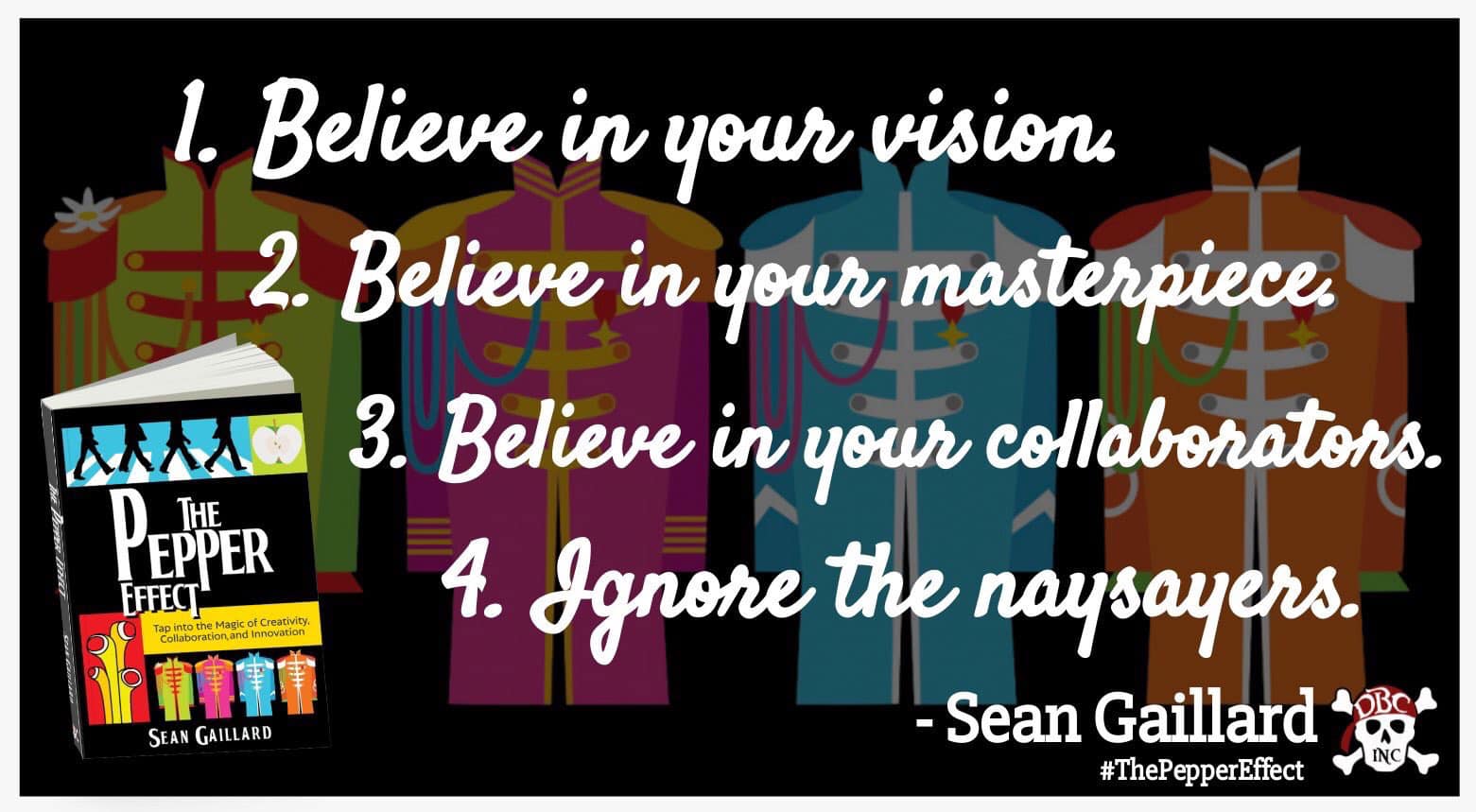
The Pepper Effect was more than a book. It was a love letter to The Beatles, to education, and to believing in the impossible. I’ll never forget the moving moments that surrounded its publication:
— My daughter Maddie finding my book on the shelf at Barnes & Noble—the first time I ever saw it in a bookstore.
— Hugging my parents and seeing the joy and pride on their faces when I handed them their copy.
— My true Fab Four—my wife and daughters—by my side at my first book signing at Underdog Records.
— Watching a stage adaptation of The Pepper Effect performed at a school in Canada.

I’m forever grateful for those moments and for every reader who took the time to read the book, share it, and apply its message in classrooms and schools around the world. If you haven’t read it yet, it’s available here: Order on Amazon.

Today, something serendipitous happened. On the book birthday of The Pepper Effect, I released a new episode of the #PrincipalLinerNotes podcast—featuring none other than Dave Burgess, the publisher who believed in me and gave my book its wings.

Our conversation is a celebration of creativity, connection, and passion for education. It’s also the beginning of a short summer season of the podcast, where I’ll be amplifying the voices of those who continue to inspire and lead.

🎧 Listen here:
Spotify: https://open.spotify.com/episode/3wUE2MTDzX7vcBnJ9T2yP8?si=yUDdid98TJ6NP7Q5FjZyyQ
YouTube: https://youtu.be/BxYkq96GBUs

I’m currently working on another book—fingers crossed that it gets the nod for publication. Until then, thank you for being in the band. Your encouragement, listens, reads, and reflections mean more than I can ever express.

Feel free to drop me a line at sean@seangaillard.com to share your thoughts on the podcast, the blog, or The Pepper Effect. I’d love to connect.

Let’s keep riffing.
—Sean

New Blog Post: A New URL, A Big Thank You, and a Little Help from My Friends

I’m excited to share that Principal Liner Notes now has a new home on the web:
🎶 seangaillard.com 🎶

This new site is where you can find all of my blog posts, reflections, podcast updates, and more. You’ll also be the first to hear a big announcement (or two) coming soon—things I’m really excited about and can’t wait to share.

To those who have followed, subscribed, shared, or just quietly read along—thank you. Your support fuels the creative spark and reminds me that this journey matters.

Please take a moment to subscribe at seangaillard.com and share it with a friend or fellow educator. I hope it continues to be a place of inspiration, connection, and purpose.

Today also marks the anniversary of an album that changed the world—Sgt. Pepper’s Lonely Hearts Club Band. That album didn’t just change music, it changed my life. It lit the fire that led to my first book, The Pepper Effect, a celebration of belief, collaboration, and educational leadership.

📚 Grab your copy here: https://a.co/d/4CD2gLW

And if you ever want to connect, collaborate, or just say hello, I’d love to hear from you.
📧 sean@seangaillard.com

Let’s keep building, growing, and creating together.
Cool things are coming. Stay tuned.

✌️
—Sean
#ThePepperEffect #PrincipalLinerNotes #LeadershipRiffs #SgtPepperDay

The Applause We Don’t Hear

The Applause We Don’t Hear

#PrincipalLinerNotes

There are moments in leadership—more than we care to admit—when it feels like leadership isn’t there for you.

You stand in a room and no one greets you. No one looks up. No one notices.

You offer ideas, vision, care—and it’s met with silence, or worse, indifference.

You give your best self and sometimes receive no acknowledgment in return.

The gig is tough. The gig is lonely. The gig will ask you to keep showing up, especially when the room grows quiet. And sometimes, it stays quiet.

And yet—we still walk in.

Why?

Because we’re human.

Because we crave meaning.

Because we want to belong just like anyone else.

I carry what my father taught me in these moments: Hold your head high. Even when no one seems to see you. Especially then.

And so, I look for the small things.

The fleeting glances. The quiet nods. The invisible applause.

Those moments when you know—deep in your gut—that you’re still in the groove.

I remember those moments when I played in bands. We’d be deep into a tune, and someone across the band space would catch my eye and offer a knowing smile. Just a look. A small moment that said, We’ve got this.

There’s a video I love of the Dave Brubeck Quartet performing Take Five. During Joe Morello’s legendary drum solo, Brubeck stops playing. He turns from the piano—not to take center stage, but to watch. To admire. To honor. No words. Just presence.

The Beatles did it, too. During that final rooftop concert, even amid the tension, they stole glances. Smiles. They saw each other. And they saw Billy Preston, too—playing keys right alongside them, lifting the sound, lifting the moment.

Even as the world watched from the streets below, the real audience wasn’t the crowd down there—it was amidst the band.

That’s what keeps me going in leadership—the small, true things.

A student’s unexpected smile.

A teacher’s thank-you whispered in the hallway.

A quiet moment where someone sees you—and maybe, just maybe, you see them too.

We may not always receive the applause. But we can give it.

We can be the nod.

We can be the smile.

We can be the Dave Brubeck who turns his head in full admiration.

We can be the Beatle who shares a grin in the middle of the chaos.

Those small moves? They matter.

They are leadership.

And when the room is quiet—lead anyway.

You never know who might be listening for your cue.

A Leadership Riff for You

Here’s a thought to share from my reflection and writing this morning.

I hope you know that your sound matters and any band is lucky to have you. I sure do believe in you. Thanks for being in the band!

Somewhere in the Universe, Someone Believes in You Completely

As I write this, I’m sitting with the weight of another school year nearing its close—reflective, grateful, and searching for meaning in the midst of it all.

I’ve been a principal for 16 years. I’ve poured myself into school after school, often the ones that needed the most care. I’ve stood on stages, been a finalist for NC Principal of the Year, written a book from my heart, and still—there are moments, like now, when I wonder if it’s all making a difference.

Maybe you’ve felt that too.

Lately, I’ve been thinking about The Beatles.
Specifically, August 29, 1966—their last public concert at Candlestick Park in San Francisco. They had reached a breaking point. They felt like they weren’t playing well.  Between public backlash over John Lennon’s remarks about The Beatles being more popular Jesus Christ and diplomatic fallout in the Philippines from unintentionally snubbing the President and First Lady there, the pressures became too much. So they did something radical—they stepped back. No farewell tour. No grand finale. Just a quiet pause.

Each band member took time to rediscover who they were beyond the noise. John went to Spain to film How I Won the War. Paul collaborated with George Martin on a film score. George immersed himself in sitar studies with Ravi Shankar in India. Ringo stayed home to be with his family.

Then, something beautiful happened.

They returned—not to the stage, but to the studio. And from that retreat came a wave of brilliance: Strawberry Fields Forever, Penny Lane, Sgt. Pepper’s Lonely Hearts Club Band.

All of it began with a pause. A reset. A reclaiming of identity. A spark of innovation that changed the face of Music.


As leaders, we may not have world tours or screaming fans, but we do know what it feels like to carry the weight of expectations and the constant drumbeat of demands. In that rhythm, we can forget to care for ourselves in the same way we care for others.

We all crave connection. We all crave belonging.
And while we work so hard to create that for our teams, our students, and our communities—we must also remember to create it for ourselves.

Take the walk.
Play the record.
Write what’s on your heart.
Give yourself the same grace you offer to everyone else.


It’s easy to fall into the comparison trap—scrolling through highlight reels, seeing the accolades, the applause, the polished smiles. I’ve been there too. But the truth is, none of that defines your worth or your purpose.

Your worth is in the quiet moment with a student who needed someone to believe in them.
It’s in the coaching conversation that sparked a teacher’s growth.
It’s in the way you show up—consistently, compassionately, courageously.

You may not always see the impact. But it’s there.


If you’re at a crossroads, unsure of what’s next, or simply longing to feel grounded again, let this be your reminder:

Somewhere in the universe, someone believes in you completely.

Not for your title.
Not for your credentials.
But for who you are. For how you lead with heart. For how you care, even when it’s hard.

You matter.

Your leadership matters.

Your impact matters, and it will continue to do so in ways seen and unseen.

Keeping Your Beat: The Power of Impact Visits for School Leaders

A reflection inspired by John Bonham, legacy, and the rhythm of leadership
#PrincipalLinerNotes

Special Thanks to Jimmy Casas and Lainie Rowell for their respective missions inspiring my gig! I am grateful that our PLN connections have evolved into sincere, lifelong friendships.

A very special thanks to my amazing wife, Deb, for being that constant source of love, inspiration, and strength every day! Thanks for inspiring Impact Visits!


A Soundcheck at Knebworth

It was just a soundcheck.
August 1979. Knebworth. A wide open field waiting to be filled with music. Led Zeppelin was preparing for a monumental return to the British stage. But as the band warmed up, it wasn’t John Bonham—the thunderous backbone of the band—behind the drum kit. It was his 13-year-old son, Jason.

In a rare and touching moment, Bonham stepped away from the drums and wandered into the field. He didn’t just want to hear the band; he wanted to listen from a distance. He stood alone, away from the stage, and let the sound wash over him. The rhythm of his legacy. His son’s rhythm.

There were no headlines. No fanfare. But there was something sacred in that quiet act: a father making space for the next generation, a rock legend becoming an audience member. Trust. Love. Legacy. It was all there in that field of amplifiers and dreams.

As a teenager, I remember reading about that moment in one of the many music biographies I devoured. It stuck with me. Especially knowing that John Bonham would pass away just over a year later. His son, Jason, would grow up to carry the torch—eventually joining surviving members of Led Zeppelin for reunion shows, most notably in the legendary 2007 performance captured on Celebration Day.

That soundcheck was more than rehearsal. It was legacy in action. It was impact. It was a leader stepping back—so something deeper could move forward.


Stepping Back for Impact

The response to my recent blog post, The Loneliness of Leadership, has been both humbling and healing. I wrote it to name and navigate the isolation I’ve felt in leadership—and to extend a hand to others who may be feeling the same. The heartfelt messages and outreach reminded me that we’re not as alone as we think. There is resonance when we share our truth.

This morning, I had the sincere honor of being a guest on Jimmy Casas’ podcast, The Interview Chair.
You can listen to that episode soon, but here’s what struck me during our conversation: Jimmy asked how I maintain mental health in leadership—especially after sharing my heart episode experience from last year. My answer came quickly: Impact Visits.


What Are Impact Visits?

Impact Visits are intentional moments carved out of the chaos. They’re brief detours in your day where you go and witness your leadership in motion—where the fingerprints of your work are making a difference.

Over the years of my principalship, my wife Deb would often tell me, especially on the hard days, “Go visit a classroom where you know it’s working.” She’d say it gently but with urgency—usually on the days when I was feeling discouraged, disconnected, or alienated. I didn’t always listen. I’d get swept up in the whirlwind of tasks and to-dos. But since my heart episode and my renewed focus on mental health, I’ve made it a point to follow her advice.

So, thank you, Deb. I know to listen to you now.

These are not evaluative visits. They’re not walk-throughs with clipboards and checklists. They’re personal moments—to be reminded, to be renewed. A time to refuel your spirit and reconnect to why you said yes to this work in the first place.

If you can, use these visits as a chance to connect. To offer a word of thanks. A fist bump. A simple “You’re doing great.” As my friend Lainie Rowell reminds us in her #EvolvingWithGratitude mission—gratitude is a powerful act of leadership. A little goes a long way.


Four Ways to Make Impact Visits Happen

  1. Schedule Intentionally
    Block time on your calendar each week. Just 10–15 minutes to step into a classroom, a hallway, or the front line of your impact.
  2. Make It Routine
    Ritual turns into rhythm. If you make Impact Visits a part of your leadership practice, they’ll become the pause that powers your next move.
  3. Share the Visit
    Reflect on your visits with a thought partner or friend. If you don’t have someone, you’re welcome to reach out to me. I’d be honored to be that listening ear: sgaillard84@gmail.com
  4. Encourage Others
    Inspire your team, your assistant principals, or even colleagues in your PLN to create their own version of Impact Visits. Help build a culture of reflection and renewal.

Your Beat Still Matters

Leadership is not a sprint of perfection. It’s a series of riffs—some raw, some refined. We owe it to ourselves and those we serve to keep our rhythm aligned with our core values.

So, take that walk. Stand in that hallway. Listen to the beat that’s still echoing from something you once helped shape.

Because even in the quiet moments—maybe especially in the quiet moments—we find proof that we’re still making a difference.

Keep your beat.

The Loneliness of Leadership: A Heartfelt Reflection for School Leaders


Typically, I don’t write blog posts back-to-back. I’ve kept to a steady rhythm of weekly writing since my heart episode last year. That ritual has become part of my healing—recommended by my therapist, yes, but also something I’ve come to cherish. Writing has broken through the fog of writer’s block that followed the release of The Pepper Effect. Through journaling and reflection, I’ve found my way back to words and meaning. I am even working on finishing up a proposal for a new book.

But this piece couldn’t wait.

I’ve been sitting with a question no one prepared me for in “Principal School”:
Why does leadership have to feel so lonely?

It’s a question that’s erupted into big feelings—enough to make me pause on other writing projects and sit with this one instead.

There’s a scene in Peter Jackson’s Get Back documentary that lingers with me. George has left the band. A meeting doesn’t go well. Paul and Ringo return to the studio, uncertain of what’s next. John is nowhere to be found. Paul, visibly shaken, says quietly, “And then there were two.” He stares off into the distance. His eyes well with tears. His voice trembles. You can feel the grief. The possibility that something beautiful and world-changing might be coming to an end.

Watching that moment recently, I didn’t just see it through the eyes of a Beatles fan—I saw it through the lens of a leader holding onto connection, trying not to lose grip.

I’ve been a principal for almost sixteen years. I’ve served in multiple schools, answered the call for turnaround, and poured myself into the gig. I’m grateful for a beautiful family—my wife and three amazing daughters. Their love is a constant light. And I do have a handful of trusted friends, most not nearby. But I’ve felt friendship fade over the years—some lost to distance, some to time, some to disillusionment.

This is the part they don’t tell you about leadership. That people may see your title before they see you. That the weight of tough decisions can sometimes isolate you. That you’ll have days where it feels like everyone is counting on you—and no one is standing with you.

I once thought the PLN (Professional Learning Network) would solve this. Twitter, Voxer groups, hashtags that I created like #CelebrateMonday and #TrendThePositive—those were my entry points to community. And for a while, they worked. I met incredible educators, interviewed inspirational guests for the Principal Liner Notes podcast, and even achieved my dream of becoming a published author.

But not all connections held. Some collaborations quietly ended. Some people I looked up to didn’t turn out to be who I thought they were. And yes, I’ve even had a book idea stolen.

Still, I’m thankful for the moments of light in those spaces—moments when a shoutout brightened someone’s Monday or a podcast guest became a kindred spirit. Yet, after the episode ended or the tweet was sent, the silence would sometimes creep in.

Loneliness doesn’t negate purpose. It doesn’t mean the work isn’t good. But it does mean we need to be mindful of our well-being and human need for belonging.

Recently, I’ve had the privilege of co-facilitating the ISTE-ASCD webinar series with Andrea Trudeau. We’ve explored what it means to create spaces of connection and belonging—especially for those in unique roles like principals and school librarians. These conversations have reminded me that belonging doesn’t just happen. It’s a practice. A choice. A rhythm to keep playing, even when the band seems scattered.

In her book The Let Them Theory, Mel Robbins has a powerful chapter on the quiet heartbreak of adult friendships. She describes how friendships shift from group experiences to individual efforts—and how easy it is to look around one day and realize your circle has vanished. Her advice? Reach out first. Be kind without expectation. Smile. Be curious. Give it time.

It’s advice I’ve tried to follow, even when it’s hard. Even when it’s lonely.

So what do we do with this?

We remember that our core matters. Our heart matters. And so does connection.

Here are a few ways I’m working to move through leadership loneliness—and maybe they’ll help you, too:

  • Savor family and those who know you beyond your title. The gig will wait—those moments with loved ones won’t. I am grateful daily for my wife and our daughters and my family.
  • Reach out. A coffee, a text, a hallway chat. Don’t wait for someone else to go first.
  • Find “only ones” like you. Look for the school librarian, the instructional coach, the counselor—others who might be the only one in their role. Forge that bond.
  • Be vulnerable. Share your story. Someone else might need to hear it. I have been writing deeply about the experiences surrounding my heart episode. I am grateful that others have found it helpful for their journey.
  • Build something outside the gig. A book club. A podcast. A project that brings joy without the pressure.

You are not alone—even when it feels that way. Someone out there gets it. Someone is looking for connection, too.

Keep showing up. Keep being kind. Keep playing your part in this great, imperfect, meaningful symphony of leadership.


Postscript:
During those Get Back sessions, Paul’s loneliness was palpable. But the story didn’t end there. The band found their way back. The Beatles regrouped. And they gave us the Rooftop Concert—a final live performance filled with joy, grit, and unity.

It was their last time playing live together. And it was iconic.

A reminder that even in moments of disconnection, something timeless can still emerge.