The Leadership I Lived and The Human-Centered Leadership I Choose Now

There is a place I often call Principal School. It is the imaginary training ground where we believe all the lessons of leadership will be handed to us before we ever step into the role. Over time, I have learned that some of the most important lessons are never taught there at all. They are learned the hard way, often quietly, and sometimes at great cost.

One of the biggest myths perpetuated in school leadership is that there is a single way to lead well. I bought into that myth for far too long. I watched other principals on social media and began to believe that if my style did not look like theirs, then I must not be good enough. I measured myself against highlight reels instead of my own values. That comparison and pressure sent me to the emergency room twice. It took a toll on my body, my mind, and my spirit.

Another lesson they do not teach you in Principal School is that leadership can slowly pull you away from the very relationships that sustain you. I regret not investing the time I once did in friendships. I regret choosing email replies and late night work over phone calls and shared meals. I felt the weight of that loss deeply over the last few years when the invitations stopped coming. I am grateful for the meaningful friendships I still have, even though many of them live far away. Today, I cherish every text message, every phone call, and every Zoom conversation because I know how easily those connections can fade when duty becomes all consuming.

I also regret the moments I missed with my wife and daughters. There were times when I chose the principalship over being fully present with them. That truth is hard to name, but it matters. You blink, and your children are grown and moving out of the house. You do not get that time back. Now, I cherish my family even more, and I hold our time together with greater care and intention than ever before.

For my physical and mental health, I made the decision to step away from the principalship. I returned to my assistant principal roots and found something I had lost along the way. I found myself again. I am happier, healthier, and more grounded. I have grown in my therapy work and remain deeply committed to it. That commitment has helped me reconnect with my core, my purpose, and my humanity. The version of leadership I was living was not aligned with who I am or how I want to live. In trying to be everything for everyone at school, I lost sight of who I needed to be for myself and for the people who love me.

Recently, in a conversation with Dr. Andrea Trudeau, a phrase stayed with me. We need to rescript the narrative. Human Centered Leadership is not widely accepted in some spaces, and I am fully aware of that. Still, I am determined to disrupt the conversation in a good way. Leadership does not have to cost you your health. It does not have to require the sacrifice of your family or your friendships. Human Centered Leadership is not only about how you serve others. It is also about how you care for yourself and how you show up for those who cherish you as a spouse, a parent, and a friend.

I learned these lessons the hard way. I do not want others to have to do the same. My purpose now is simple and deeply personal. If these words help one leader put their phone down and spend time with their child, then I have done my job. If they help one leader step away from email long enough to call a friend, then I have done my job. If they help one person avoid being rushed to the hospital from the schoolhouse like I was, then I have done my job.

This post will not go viral. It will not collect metrics or applause. That is not the point. Leadership does not have to be lonely. Leadership does not have to break you. You can lead with love. You can protect your humanity. You can serve others well without losing yourself along the way.

This reflection is not the end of the conversation for me. It is the beginning of a deeper commitment to naming what matters and creating space for a more human way to lead. One of the ways I am continuing this work is through a new podcast series I am co- hosting with Dr. Sonia Matthew called Leading While Human.

Our first episode drops on February 1 and features a powerful conversation with Dr. Rachel Edoho-Eket. Throughout February, we will release a new episode every Sunday with guests including Lauren Kaufman, Dr. Donya Ball, and Principal Kafele. Each voice brings wisdom, honesty, and lived experience to the question of what it truly means to lead while human.

Leading While Human will be a quarterly podcast. Each series will feature four guests and four conversations designed to slow us down, ground us, and remind us that leadership does not have to cost us our health, our relationships, or our humanity.

I am grateful for the opportunity to learn alongside these voices and to invite others into this space. Stay tuned for what comes next as we continue to rescript the narrative on leadership together, one human centered conversation at a time.

Still Spinning Toward What Matters

I keep returning to the same conviction lately. Leadership is not supposed to cost us our humanity.

That belief feels more urgent now than ever. Human centered leadership is not a slogan or a presentation slide. It is a way of being that honors dignity, presence, and care. It resists the temptation to reduce people to metrics, optics, or short term performance. It recognizes the unseen weight others carry and chooses compassion anyway.

This season has tested me in ways I did not anticipate. The pressure to produce test scores has felt relentless and narrow. Health scares forced me to stop and confront my own limits without avoidance. Failure has spoken loudly at times and left me questioning my impact and my place. There were moments when leadership felt less like calling and more like endurance.

Over time, I have begun to see that failure does not always signal an ending. Sometimes it offers an invitation.

Stepping away from a role I once loved because my health required it was hard. That decision still aches occasionally, but I know that I am a better person for my family. At the same time, it created space for a new beginning. I could not see it at first. It has helped me realize I was not a failure in that gig. I was holding on too tightly to the demands of the gig that I could not see straight. I experienced another new beginning. I reached out to start a book study in my current gig. Unfortunately, no one joined. That disappointment lingered, yet the act of reaching out still mattered. My account on X was hacked and ultimately deactivated. What initially felt like loss became an unexpected redirection toward platforms where connection feels more personal and more grounded.

This season reminds me often of Paul McCartney in the immediate aftermath of The Beatles’ breakup.

McCartney did not emerge from that moment with certainty or acclaim. His first solo album, “McCartney,” was raw, homemade, and introspective. Critics dismissed it as unfinished and small. What they missed was the deeper truth. McCartney was not chasing relevance. He was healing. He was rebuilding quietly. He was making music not for applause, but for survival and clarity.

That period was not a collapse. It was a recalibration.

That analogy resonates deeply with me right now. I am not trying to recreate a past version of myself or chase a louder stage. I am learning how to rebuild in a way that is sustainable, honest, and aligned with who I am becoming. The work has become quieter, but it has also become truer.

That sense of recalibration followed me recently while watching “CBS Sunday Morning.” A segment on an upcoming book by Dr. Ezekiel Emanuel titled Eat More Ice Cream stayed with me, particularly his advice for 2026. He spoke about the importance of developing social relationships for well being and longevity. That message landed deeply. I know I need to invest more intentionally in connection. I know there may be times when invitations do not come. That possibility still stings. The commitment to reaching out remains because isolation is not sustainable for any of us. I didn’t get any takers on that book study I mentioned. But I did take a giant step to reach out to others, and that is o.k.

Leadership can be lonely. I want to name that for anyone who feels unseen or alienated right now. I have been there. I still visit that place at times. Reaching out can feel vulnerable and risky, yet it remains essential. No one should feel invisible while carrying responsibility for others.

I was reminded again of what human centered leadership looks like through my three adult daughters. Watching them lead with empathy, courage, and quiet awareness in different capacities affirmed this kind of leadership. It shows what leadership looks like when it is lived rather than announced. That moment grounded me. It also reinforced my belief that the future deserves better models than the ones we often elevate today.

There is still an ache present in my life on occasion. Gratitude and struggle exist side by side. I remain deeply thankful for the steady support of my wife and for the ongoing work of therapy. Healing continues to teach me patience, humility, and honesty. Leadership demands the same posture.

Frank Sinatra’s “Cycles” has been playing often in my space lately. The message of that particular song feels fitting. Life moves in seasons. Endings and beginnings overlap more than we like to admit. Growth rarely arrives without discomfort. As leaders, it is important for us to strive for that constant path towards growth. 

As I continue writing my upcoming second book, Leadership Riffs, clarity keeps emerging as wrestle with the ideas shared here. This work is not about spotlighting me. It is about amplifying others. I want my platforms to honor educators and leaders who show up quietly, consistently, and with courage. I want to praise those doing the real work of human-centered leadership. I also want to gently drown out the noise of performative leadership. This noise is loud, fleeting, and hollow.

There is no One Word guiding me this year. There is no formal New Year’s Resolution.

There is simply a commitment.

A commitment to purpose. A commitment to humanity. A commitment to reaching out even when the response is uncertain. A commitment to acknowledging and celebrating those who lead with sincerity, care, and belonging.

That is where I am right now. Still spinning. Still rebuilding. Still choosing what matters.

Rediscovering the Heart of Leadership: A Call for a Human Centered Renaissance

The other day, I had the privilege of speaking with a former superintendent from the early days of my principalship in Winston-Salem. It was one of those conversations that stays with you long after it ends. I felt deeply grateful for her wisdom, for the lessons she shared years ago, and for the way she continues to lead with humility and care.

At one point, our conversation turned to belonging. We did not speak of it as a buzzword or a program. We spoke of it as a fundamental human need in schools and in leadership. That moment mattered. It affirmed something that has been awakening in me over the past year and a half, a journey that began after my heart episode and has been deepened through therapy, reflection, and honest reckoning with myself. That conversation did not begin this journey, but it reignited it. It reminded me that leadership, at its best, is rooted in humanity.

That conversation also made something painfully clear.

The leadership we are currently celebrating in too many spaces is missing the mark.

Many systems have become overly reliant on noise, metrics, programs, and performance. Visibility is often mistaken for value. Activity is often mistaken for impact. Standing on tables, creating a staged video, or chasing what is trending is frequently confused with leadership. In the process, we are losing sight of what actually sustains schools and the people inside them.

A line from Dr. Donya Ball has been echoing in my mind ever since that conversation: “One of the biggest leadership turn offs is the leader who chases public recognition instead of private excellence.”

That distinction matters now more than ever.

Private excellence is where real leadership lives. It lives in quiet conversations. It lives in trust built over time. It lives in making people feel seen, heard, and valued when no one is watching. That is where belonging is cultivated, not performed. I am grateful for the inspiring words and thought partnership of Dr. Donya Ball. She is definitely a worthwhile addition to any Professional Learning Network.

Greater care is also required in choosing the voices we amplify. Many voices offer quick solutions and so-called fixes to deeply complex problems of practice. Some of those voices have not been in a classroom or schoolhouse doing the work in years. Others sell packaged answers designed more for self promotion than service. Discernment matters, because what we consume shapes what we believe leadership is supposed to look like.

There are sincere voices doing this work with integrity. These are leaders who stay close to schools, who listen more than they sell, and who center belonging over branding. That sincerity feels harder to find than it once was, which makes intentional discernment even more important.

The voices worth seeking are those that foster belonging, courage, and empowerment. They honor the complexity of schools. They understand that innovation does not come in a package and that transformation cannot be rushed.

This moment calls for a return to something more human. It calls for leadership that is analog in spirit and rooted in connection rather than consumption.

I often think about The Beatles performing Hey Jude on the David Frost Show in 1968. As the song reached its closing chorus, the band invited a diverse group of audience members to gather around them. Everyone sang together. There was no hierarchy in that moment and no spotlight chasing. There was shared humanity in action. Everyone had a place in the song.

That image offers a powerful metaphor for the leadership we need now.

Belonging is not an accessory to leadership. Belonging is the entry point. It is the foundation that allows people to take risks, grow, and contribute their gifts. My father used to say, “Everybody starts, everybody plays.” That belief has never felt more urgent.

Schools are facing real challenges. Budgets are shrinking. Demands are increasing. Pipelines into teaching and leadership are fragile. Burnout is widespread and cannot be resolved through another initiative or an unfunded mandate. This is not the moment to double down on outdated leadership playbooks.

There is still reason for hope. Educators continue to make a profound difference in the lives of others. This moment invites leaders to pause and reflect. It encourages them to reimagine how school communities are served in ways that are sustainable, affirming, and deeply human. We need to change the conversation on what it means to lead in schools. We must invite everyone to the table for this much-needed crucial conversation.

A few places offer meaningful starting points:

-Leaders can create intentional space for reflection in daily practice. They should treat it as a priority rather than an add on.
-Leaders can commit to real conversations that center around listening and learning.
-Leaders can commit to building belonging first, knowing everything else grows from that foundation.

School leadership is overdue for a renaissance. That renaissance must be rooted in presence, humility, and courage. When leaders dare to lead from the heart and make belonging the work, leadership can once again be reclaimed as a human act rather than a spectacle.


Author’s Note

This piece was written as an invitation rather than an indictment. It reflects a personal and professional awakening shaped by lived experience, reflection, and honest conversations about what leadership demands in this moment. The hope is that it encourages thoughtful pause, renewed discernment, and a recommitment to leadership grounded in humanity.

Keeping the Faith When the Room Feels Quiet

I remember being one of the last kids picked for kickball. Standing there in the dust with my hands in my pockets, waiting for someone to call my name. Everyone else seemed to belong somewhere. Everyone else seemed to have a team. That feeling has followed me into adulthood more times than I care to admit.

It rises up again whenever I put something out into the world and the room stays quiet. Every blog post. Every episode. Every reflection. Each one is a small act of courage. Each one is a piece of my soul placed gently on the table. Yet the silence that follows can hit with the same sting I felt on that kickball field.

There are days when it feels like no one wants me in their band. No replies. No call backs. No echoes of connection. I have chosen two of the loneliest gigs in the world. Leadership asks you to walk into the unknown even when no one notices. Writing asks you to offer your heart with no promise that anyone will take it. There is no applause built into any of this. There is no guarantee that your work will lead to opportunity.

So I have to keep the faith that there are quiet listeners out there. I have to trust that someone is reading or watching or absorbing even if I never hear the echo. I have to accept that my work may never be seen by the people I wish would see it. I have to keep creating anyway because that is the only way I can stay true to myself.

When doubt begins to weigh me down, I think of George Harrison. In the latter days of The Beatles, he felt like an outsider in his own band. His songs were often pushed aside. Yet he kept writing. He kept believing in his sound. Even in those difficult seasons, he delivered “Something” and “Here Comes The Sun.” Those songs became the heart of what many considered to be their greatest album, “Abbey Road.”

Then came the moment when his backlog of unheard songs found their place. “All Things Must Pass “emerged as a three album masterpiece by George Harrison. A triumph born from years of quiet rejection. A reminder that some brilliance finds its home only after the world grows ready for it. That album just celebrated its fifty fifth anniversary. It is a cherished album for me. It reminds me that the work we create in the shadows can one day light the way for someone else.

Maybe the same can be true for me. I have been part of good bands in my life. Maybe one more band is still out there. Until then, I will keep the faith even when the room feels quiet. I will write anyway. I will lead anyway. I will create anyway.

Because someone somewhere may need the sound I am trying to make. Even if I never hear the echo, the act of making it still matters.

Playing My Sound: A Way Back to Human Centeredness

A reflection on writing, creating, and staying true to the sound inside

Today is Giving Tuesday. Traditionally, it is a day to support a charity or cause with a monetary donation. This year I want to give something different. I want to give something from the heart. I want to give the gift of reflection through this post. I struggle through my own valleys. I have moments of alienation. Yet, I still want to reach out and give to you on this Giving Tuesday.

In my last blog post titled, “A Call for Human Centeredness,” I shared a wish to reclaim what matters most. We live in a world that moves too quickly and fractures too easily. In this season dominated by artificial intelligence and constant digital noise, it feels more urgent than ever to slow down. This is the time to take moments for what we truly need. Take a walk, listen to music, and connect with others in real and meaningful ways.

Leadership is a profession lived shoulder to shoulder with people, yet it can be profoundly lonely. I have carried that loneliness for many years. When you have to deliver difficult truths, the isolation can be heavy. It is also relentless when you guide crucial conversations and shoulder responsibility for others. I know the emotional toll it can take. I understand the strain that loneliness can place on mental health. It is a quiet weight that can follow you home at the end of the day.

I wave a cautionary flag in this moment. I wave a cautionary flag against replacing deep human connection with chatbots or digital interactions that try to mimic intimacy. I wave a cautionary flag against the social and political fractures that have hardened us toward one another. I wave a cautionary flag against the myth that we are too busy to connect. Human centeredness often becomes the last item on the list when it should be the first.

As I wrote earlier in the last blog post, people matter most. Moments matter most. Belonging matters most.

Technology is not the enemy. I am grateful for the early days of Twitter. It opened doors that helped me publish my first book. It allowed me to speak at conferences and form friendships that continue to sustain me. Yet somewhere along the way, the human center has been overshadowed. To reclaim it, we have to build spaces that nourish our souls rather than simply fill our schedules.

For me, writing is that space. Creating this blog and working on my next book are my ways of building time for reflection and clarity. This is where I feel the freedom to dream. It allows me to express what matters. It is also my way to connect with you. If you are reading this and feel lonely, discouraged, or fatigued, I hope these words remind you of something important. You are not alone.

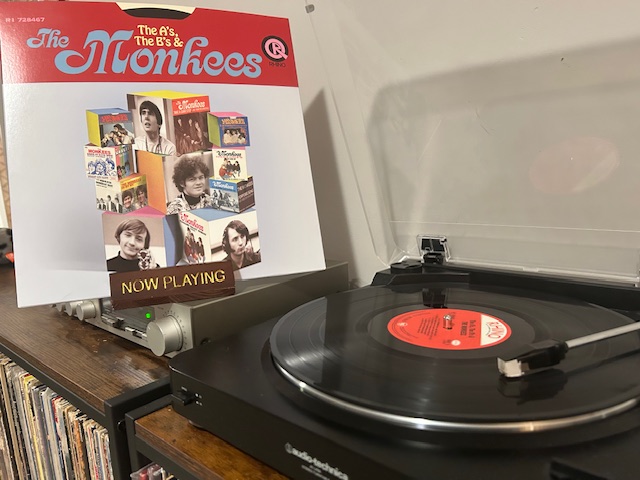
Every leader needs a trapdoor that allows the soul to breathe. Recently, I opened one by starting a TikTok account and creating a small series called Vinyl Riffs. The premise is simple. I talk about records I love and celebrate the joy of music. It lets me feel like a late night radio host spinning albums for anyone who needs a song. I do not know if the videos make sense. I do not expect to go viral. However, every time I create one, I feel my joy return. I feel myself reconnect with my passions, dreams, and ideas. I feel true to who I am.

By writing and creating, I am staying anchored to my purpose. I am staying faithful to the sound inside me. If I keep playing my sound, then maybe it will resonate with someone who needs it. Maybe there is a band out there that needs me and I need them. Maybe my sound will help someone find their own.

We all need something that restores us. Something that reminds us that we are human beings and not human doings. Something that lets our souls breathe.

So on this Giving Tuesday, here is my gift. An invitation.

Find the thing that fills you up and make space for it.
Write. Sing. Paint. Walk. Play. Listen. Build. Dream.
And most importantly, connect.

Because when we create, we reconnect with ourselves.
And when we reconnect with ourselves, we create space to connect with others.
This is the heart of human centeredness.
This is the gift worth giving.

To borrow wisdom from The Beatles, words that have guided me through so many seasons:

“And in the end, the love you take is equal to the love you make.”
-Lennon and McCartney

May we continue to make love visible through connection, creativity, and courage. If you need a bandmate on that journey, I am here.


A Short Leadership Riff for Carrying On

Sometimes we have to sit with the hurt. We cannot rush the healing or pretend we are fine. We acknowledge the sting we feel. We name it. We breathe through it.

And then we carry on.

We move forward with peace in our hearts. We keep showing up with love and integrity. We hold onto the belief that our story is still unfolding in ways we cannot yet see.

We walk forward with quiet strength. We choose to rise. We choose to keep playing our song.

Peace is not the absence of pain. It is the courage to continue in spite of it.

#LeadershipRiffs

Everyday Begins Again: A Leadership Riff for the Crossroads

There is a scene near the end of Mad Men that has been living in my mind lately. It appears in “The Milk and Honey Route,” the penultimate episode of the entire series. Don Draper is sitting alone on a simple wooden bench at a literal crossroads. His past is heavy. His sense of identity is shaken. Every illusion he has held onto is slipping away.

He is not in a boardroom. He is not commanding a room or crafting the perfect pitch. He is simply a human being at a crossroads waiting for a bus. Two roads stretch away from him. The world around him is still and quiet. Then Buddy Holly’s song, “Everyday,” begins to play. It is light and gentle almost innocent against the weight of everything happening in his life. Don does not say a word. He simply smiles. It is small and worn but it is real.

And in that moment the crossroads becomes something else entirely. It is not a sign of failure. It is a place of possibility. A reminder that endings are also invitations. A signal that a new chapter might be waiting just beyond the next turn. That scene has always stayed with me and it echoes especially whenever I reach crossroads. The crossroads can sometimes be a place where I feel like a castaway from my own story. It sometimes resonates as place where the past feels louder than the future.

But crossroads are also moments of choice. They remind us that the narrative is not over.


Leaders Are Human First

Leadership can trick us into believing that we need to be composed and clear at all times. But human centeredness asks us to stop pretending. It reminds us that we can feel discouraged. We can feel disconnected. We can feel unsure. We can feel deeply human.

We cannot foster belonging for others if we ignore our own longing.
We cannot create connection for others if we are afraid to name the disconnection inside of us.
We cannot invite others to honor their gifts if we forget the gifts we carry.

When we forget our humanity leadership becomes empty.
When we honor our humanity belonging begins to grow.


Taking Back the Narrative

Lately, I have been wrestling with my narrative. The old version no longer fits yet the new one has not appeared in full shape. That in-between space can make even the strongest leader feel small. It can stir up doubt. It can amplify old wounds. It can convince us that we have failed.

But the narrative is not fixed. It is alive. It breathes.
We have the ability to reclaim it.
We have the ability to reinterpret the past.
We have the ability to decide what comes with us into the next chapter.

Reclaiming a narrative does not require us to erase pain.
It requires us to believe that we are still in the story.


How Might We Move Forward

I have been sitting with a set of big questions. Quiet questions. Honest questions that come from a place of wanting to understand what comes next.

How might we create belonging when we feel lost?
How might we honor our gifts when doubt feels heavy?
How might we acknowledge the seasons that humbled us?
How might we carry on when the path does not reveal itself?

Maybe the answer is simpler than we think.
We choose the next small step that moves us forward.
Not the perfect step.
Not the loudest or most impressive step.
Just the one that points toward healing and growth and connection.

Forward is not about speed. Forward is about intention. There is always a way forward at a crossroads.


A New Narrative Begins With One Step

Crossroads do not require us to know the entire map. They only require us to breathe to rise and to choose. Leaders carry the responsibility of illuminating a future path for others. That same responsibility calls us to illuminate a future path inside ourselves.

We keep showing up.
We keep tuning into the gifts that are still there.
We keep noticing the gifts others bring.
We keep giving ourselves permission to change.
We keep claiming belonging even when we feel like castaways.

Most of all we keep writing the next sentence of our narrative with honest hope and steady courage trusting that more of the story is still waiting to be revealed.


Your Move at the Crossroads

If you find yourself at your own crossroads I hope you remember this. You are not alone. You have not failed. You have not reached the end. You are standing in a place where your narrative can open into something new and meaningful. A place where the horizon stretches in every direction. A place where you get to choose the next chapter.

There is a future waiting that you cannot yet see. But it will meet you as soon as you take the next step toward it.

In the Liminal: A Leadership Riff

There are seasons when the music fades and all that’s left is the echo. You find yourself standing in the hallway between what was and what’s next. The applause has stopped. The setlist is blank. It can feel lonely, alienating, and rough. Yet this space, the liminal, often carries the quiet rhythm of our becoming.

Every artist and every leader eventually enters this space. It’s not failure. It’s the necessary silence before the next riff.

The Sound of the In-Between

David Bowie once walked away from his own fame. After Ziggy Stardust, he felt trapped inside the glitter and noise. He moved to Berlin, stripped his sound to its essence, and created Low and “Heroes.” Those albums didn’t just reinvent his music; they reinvented him. Bowie found clarity in exile.

Bruce Springsteen did the same when he recorded Nebraska. Alone with a cassette recorder, he traded stadium lights for solitude. Those stark songs revealed a deeper truth: sometimes the loudest growth happens in quiet rooms.

Aretha Franklin’s Amazing Grace marked her own liminal awakening. She paused the pop spotlight to sing from her foundation. By returning to the gospel roots that first shaped her voice, she reminded the world and herself where her power began.

Johnny Cash, long written off by the industry as an oldies act, found redemption through American Recordings. One man, one guitar, one truth. The stripped-down sound of renewal.

Paul Simon, after heartbreak and creative uncertainty, traveled the world and discovered Graceland, an album that is proof that curiosity and collaboration can pull us from the shadows into new light.

Each of them faced an in-between. Each emerged with something truer, deeper, and more human.

The Leadership Riff

Leadership has its own liminal moments. The band breaks up. The stage lights dim. We’re left wondering if what we created mattered at all. It’s tempting to see these stretches as endings, but they are often tuning sessions. These are times to recalibrate, rediscover, and ready ourselves for the next song.

These moments test us. They strip away the applause and ask, Who are you when no one’s listening? They demand honesty and patience. They can feel endless. Yet this is where the next riff takes shape.

A leadership riff is born in those quiet intervals when we listen more closely to the rhythm beneath the noise. It’s the small act of courage to keep playing, even when the room is empty.

The Stage Beyond the Silence

Growth is rarely glamorous. It’s often silent, slow, and unseen. But it’s in those moments when we are not center stage that our next chapter quietly tunes itself.

Like Bowie, we learn reinvention.
Like Springsteen, we rediscover simplicity.
Like Aretha, we return to our roots.
Like Cash, we reclaim authenticity.
Like Simon, we find new rhythms in unexpected places.

The liminal isn’t the end of the concert. It’s the soundcheck for the encore.

So if you’re in that hallway right now feeling unsure, unseen, and waiting for direction trust that the next song is coming. This is the space where your voice deepens, your purpose sharpens, and your leadership takes on a new sound.

Keep playing. The world will hear you in time.


Author’s Note

This reflection is part of the evolving ideas that will shape my next book, Leadership Riffs: Harmonizing Inspiration, Innovation, and Impact. It’s about the music that plays in the background of leadership: the improvisation, the courage, and the faith to keep going when the crowd goes quiet.

🎧 Follow more reflections and episodes at seangaillard.com.

The Sound That Prevails: Leadership Lessons from Nick Drake and Unseen Impact

The Vinyl Moment

This morning, I started my day with a cup of black coffee and a vinyl spin. I always appreciate the reflective warmth of time alone with coffee and the crackle of the needle on an album. I decided to start the day with Nick Drake’s “Five Leaves Left.” His 1968 debut is going through a renaissance of source with a recently released multi-disc archival reissue. “The Making of ‘Five Leaves Left'” was recently nominated for a Grammy Award for Best Historical Album.” “Five Leaves Left” is timeless and intimate with the delicate stylings of Nick Drake’s voice and solid layers of his acoustic guitar fingerpicking. Some of the tracks resonate with the lush sensitivity of orchestral accompaniment. Unfortunately, the quiet beauty of this music was largely unheard in Nick Drake’s lifetime. The album did not chart in the artist’s United Kingdom homeland or the United States. It is estimated that “Five Leaves Left” my have sold 5,000 copies initially. A few UK critics admired the album and praised its songwriting, but Nick Drake’s debut did not serve as the basis for any triumphant herald.

There is something sacred about starting the day with Nick Drake on vinyl. The gentle crackle of the needle gives way to his quiet voice, fragile yet eternal. In his lifetime, few listened. His albums never charted. His songs drifted into silence before they could find an audience. Yet decades later, his music has become a timeless canon that reaches hearts he never lived to know. I think about that often as a leader. We may never fully know the reach of our work or the appreciation we long to feel. We hear the critiques, the surveys, the noise of what is wrong. But somewhere, in the midst of that silence, our sound still carries. It reaches someone. It matters.

The Unheard Artist

Nick Drake’s musical career continued on that same trajectory as his debut. He released two more albums in his lifetime. None of them charted and received little radio airplay. Nick Drake also struggled with promoting his work due to his lack of confidence with live performance. The record company believed in his artistry but struggled with how to market and promote him. Nick Drake also struggled with depression. Tragically, Nick Drake died at 26 unaware of how profoundly his music would resonate decades later.

There’s something in the story of Nick Drake that mirrors leadership. The work we do as leaders is sometimes unseen, unacknowledged, and often uncelebrated.

The Leader’s Quiet Stage

As a school leader over the years, I have had my share of complaints, negative survey outcomes, and feedback that can sting. It’s easy to for others to fixate on what’s wrong or missing from your leadership. In those moments, it can alienating like no one can hear the song you are trying to play. Even though these moments are fleeting, sometimes they can fester. I can definitely acknowledge the emotional cost that those moments can ignite spaces of self doubt, loneliness, and Imposter Syndrome. We have to tune into the belief that leadership, like art, is an act of faith that the sound will reach someone even if you never know it.

A Therapeutic Takeaway for Reflection

In a recent conversation with my therapist, he encouraged me to sit still and reflect upon the impact that I had made over the years as a school leader. It was a timely reminder that I took to heart as we bemoaning the negative moments and allowing them permission to define my core and impact as a leader. Sometimes, it’s not loud applause but quiet ripples that matter the most. Those quiet ripples like a teacher’s growth, a student’s success or a colleague’s encouragement that resonate in ways that we never know. We just have to know that when we lean into the gifts of others that we are making an impact. We have to believe in ourselves even on the days when we think no one believes in us.

An Unlikely Impact in a Volkswagen Commercial

Nick Drake’s songs eventually reached millions nearly 25 years after his untimely death. The resonance of his beautifully wrought music from his small corpus of three albums took time, but it happened. In 1999, a commerical promoting the Volkswagen Cabrio used the title track from Nick Drake’s final album, “Pink Moon.” A massive revival of Nick Drake followed and the small cult following that had kindled the flames of Nick Drake’s work felt validated by this movement. I remember seeing said commerical and almost falling off my couch. I had lovingly kept, “Way to Blue,” a compact disc complilation of Nick Drake’s music as one of my most cherished albums. I was in a small club of devoted followers who were drawn to the ache of Drake’s music-the bittersweet, poetic lyrics, the complex guitar tunings, and the moving production. Now, Nick Drake was catapaulted into legendary musical infinity. His voice now timeless and boundless for future generations to discover and cherish.

In leadership, sometmes our influence often plays out long after the moment. The sound of encouragement, belief, and kindness endures even if we never hear it echoed back. When we do hear that echo land back to us, it is important that we treasure that moment and know that our presence mattered to someone else. We should take stock of that moment of impact on someone else and be grateful that our presence mattered to someone else and proved to be a salve for that person.

I think of the leaders and teachers who saw something in me that I did not see in myself and I am grateful. As best as I can, I try to let that past leaders and teachers that their seemingly small act of seeing me and believing in my worth changed my world. Even though Nick Drake passed away when I was a mere child of four years and an ocean away, his music made my days less lonely when I was questioning my own journey. Now, I unabashedly give thanks for the music and legacy of Nick Drake.

Keep Playing

Even when appreciation feels absent, keep playing your song. Leadership is not a performance for applause or validation. Sometimes, it’s a quiet composition for connection. The work we do may not always be noticed, but it still matters. Somewhere, in a classroom, a meeting, or a passing moment, a note of what you’ve created is resonating. The sound may be soft, but it carries. Keep playing, even when the room feels silent. Trust that your melody will reach someone who needs it, even if you never hear the echo. The sound prevails.


Here’s the famous 1999 Volkswagen commercial featuring Nick Drake’s “Pink Moon.”

Failure Hurts, But the Beat Goes On

Failure hurts. There’s no sugar-coating that simple truth. When the Beatles were turned down by Decca Records, it could have been the end of their story. But it wasn’t. They found another path and changed the world. As I wrote in The Pepper Effect, that “no” was just the prelude to a bigger “yes.”

And they’re in good company. Walt Disney was once fired for “lacking imagination,” and Oprah Winfrey was told she was “unfit for television” before becoming a media icon. Each of them had moments that could have ended their journeys, but instead, they used those setbacks to fuel their next success.

In leadership, we all have those moments. And I’ll say personally, I’ve had my own failures. Sometimes the things I write or the ideas I share don’t resonate the way I hope. Sometimes a well-intentioned plan becomes a flop and I fall on the sword of doubt. Each of those moments is a chance to keep creating, keep pushing, and keep striving. It’s a reminder that our perseverance can inspire others to do the same.

In leadership, we face our own versions of these stories. Sometimes failure lands on our shoulders alone, and it feels isolating. The secret I have learned over the years is that failure is less sharp when you’re in a band, when you have those who know you and stand by you. It’s easier to turn a setback into a new song when you’re not playing solo. That’s why it is essential to surround yourself with those who support and empower you. That’s why it is essential to stay connected with those who knew you and stood by before you got the leadership gig, corner office, or prestigious title.

When failure comes, and it will, remember that you’re not the first and you won’t be the last. Take a breath, lean on your bandmates, and see failure as the beginning of a new opportunity. Failure is the spark for something greater. I know that failure can hurt and force you to stand still in the marrow of your doubts. Someone needs your spark and there is a band relies upon your sound. One day, your failure story will be the inspiration for someone else and may even be that spark that sets the world as a better place for others.

When failure comes, let it be your cue, not your curtain call. Let it remind you that you’re not alone, that your story isn’t over, and that the band is still playing. Every “no” carries the seed of a future “yes.” Every closed door echoes with the sound of what’s next. Lean into your vision, surround yourself with those who believe in your song, and keep showing up with your whole heart. Because someone out there needs the music only you can make.