There was a stretch in high school when I dressed like I belonged somewhere in Creedence Clearwater Revival. If our paths had crossed in late 1984, you would have found me wearing a flannel shirt, Levi’s corduroys, and my father’s old cowboy boots. My wardrobe was a far cry from the prevailing Miami Vice fashion of the day. I was a light skinned African American teenager with a solid Afro who probably looked out of place among my peers. I was also a teenager with an unabashed love for The Beatles and Creedence Clearwater Revival.
There was something about the world of Creedence that spoke to me. Their music had a tight groove rooted in rock, soul, gospel, blues, and the rich traditions of American music. Their sound seemed to carry the winds of the Mississippi Delta, even though the band hailed from California, just as I did. I imagined a sense of camaraderie among the musicians that made me wish I could be part of their band. During the late 1960s, when psychedelia dominated much of the rock landscape, Creedence followed a different path. They embraced their musical roots and created something unmistakably their own.
I could relate to that independence. As a teenager navigating the mid 1980s, surrounded by the Brat Pack, New Wave, and emerging alternative music, I often felt more connected to the sounds of an earlier generation. John Fogerty, the driving creative force behind Creedence as its principal singer, songwriter, and producer, represented something important to me. His unmistakable voice and determination to follow his musical instincts reminded me that authenticity mattered more than fitting into whatever happened to be popular.
Creedence Clearwater Revival disbanded in 1972 following an extraordinary run of hit records and relentless radio airplay. The years that followed were marked by legal disputes, strained relationships, and disagreements over the band’s musical and business legacy. Despite those difficulties, the music endured. Creedence remained a fixture on the radio, and its popularity continued to grow among listeners discovering the band for the first time.
I was there during the early rise of classic rock radio, and I remember feeling validated whenever I heard the music that meant so much to me. The Doors, The Who, The Allman Brothers Band, Led Zeppelin, and Creedence were finding renewed attention on the airwaves. These were the bands that helped shape my musical identity, even when their heyday belonged to an earlier generation.
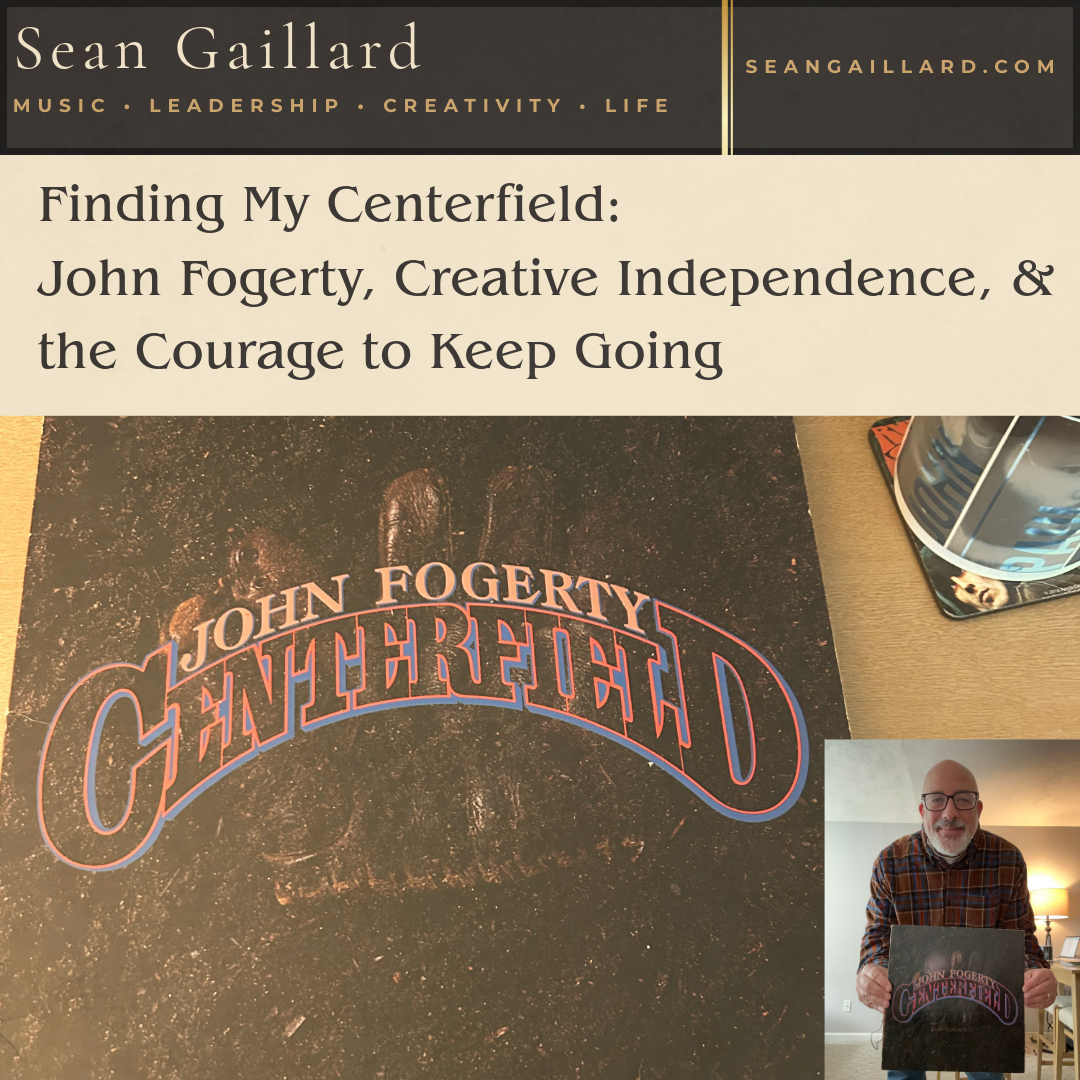
When John Fogerty released Centerfield in early 1985, the album resonated with me in a profound way. I remember seeing the video for “The Old Man Down the Road” in heavy rotation on MTV. That unmistakable guitar sound and Fogerty’s commanding voice announced that he was back. After years away from the recording spotlight, he had returned with music that sounded both familiar and renewed.
What makes Centerfield particularly remarkable is that Fogerty arranged, produced, and played all the instruments himself. He did not need to reassemble Creedence Clearwater Revival to make another meaningful record. He had the songs, the musical ability, and the determination to create something on his own terms.
The album’s joyful title track became an anthem of possibility. With its baseball imagery and infectious invitation to get into the game, “Centerfield” captured the spirit of someone who still had something meaningful to contribute. Fogerty was not simply revisiting past accomplishments. He was stepping into another chapter of his creative life. That spirit of renewal has been on my mind lately.
Those who have been following my writing know that I have been navigating a season of frustration, reflection, and uncertainty. I have spent considerable time hoping to be seen, recognized, called, or invited into new opportunities. Perhaps I have been waiting for someone to invite me into another band. What I have really been searching for are kindred spirits and bandmates who believe in genuine collaboration, mutual encouragement, and the possibilities that emerge when people invest in one another.
Some past friendships and collaborations have left me disappointed by a lack of reciprocity and communication. Those experiences have been painful, particularly when I believed we were creating something meaningful together. I have sometimes allowed those disappointments to influence how I perceive my own contributions and value. Somewhere along the way, I began placing too much importance on whether someone else recognized what I had to offer. In spite of all that, something else has been happening during this same season.
I have been writing every day, producing podcasts, developing RiffWorks Media, and continuing work on my next book, Leadership Riffs. I have been creating, experimenting, reflecting, and building a body of work that matters deeply to me. These efforts may not generate invitations to keynote conferences, earn accolades, or attract widespread attention. They are still meaningful expressions of my purpose and the ideas I believe deserve to be shared.
I have spent so much time hoping someone would invite me into the band that I nearly overlooked the records I was already making.
That realization has challenged me to reconsider how much of my creative confidence I have placed in the hands of others. I cannot control who extends an invitation, acknowledges my contributions, or chooses to collaborate. I can control whether I continue writing, creating, and sharing my ideas. Allowing disappointment to diminish my sense of purpose would mean surrendering something that has always been an essential part of who I am.
John Fogerty’s Centerfield offers a powerful reminder about creative independence and the courage to begin again. His return demonstrated that meaningful work does not always require the familiar band, the established platform, or the approval of others. Sometimes the most important step is recognizing that we already possess something worth contributing.
The same principle applies to leadership. We do not have to wait for a particular title, position, platform, or invitation to make a difference. We can contribute ideas, encourage others, create opportunities, and lead with purpose wherever we find ourselves. Our ability to make meaningful contributions should never depend entirely on whether someone else recognizes our potential.
Choosing to create independently does not mean rejecting collaboration. I still believe deeply in the power of a great band. I believe in the beauty of people bringing their talents together, listening to one another, and creating something greater than any individual could accomplish alone. I remain open to new bandmates and opportunities grounded in sincerity, trust, and reciprocity. I simply recognize that my own creative work does not have to remain unfinished while I wait for those connections to emerge.
As I look back on that geeky 14 year old version of myself strutting around in a flannel shirt, wearing my father’s cowboy boots, and strumming the chords to “Proud Mary,” I feel a sense of pride. That teenager was not particularly concerned about fitting into the prevailing trends. He loved the music that moved him and followed his own interests, even when they made him different from everyone else.
Perhaps there is something important to reclaim from that younger version of myself. He understood the freedom of following his own musical instincts without waiting for approval. Decades later, I am rediscovering that same freedom through writing, creating, and finding my own way forward. I still hope to find kindred spirits who want to make meaningful music together. Until then, I have work to create, stories to share, and a purpose that remains very much alive.
I am no longer waiting for someone to put me in the game. I am already on the field, and I have every intention of playing.

