Here’s a thought to share from my reflection and writing this morning.
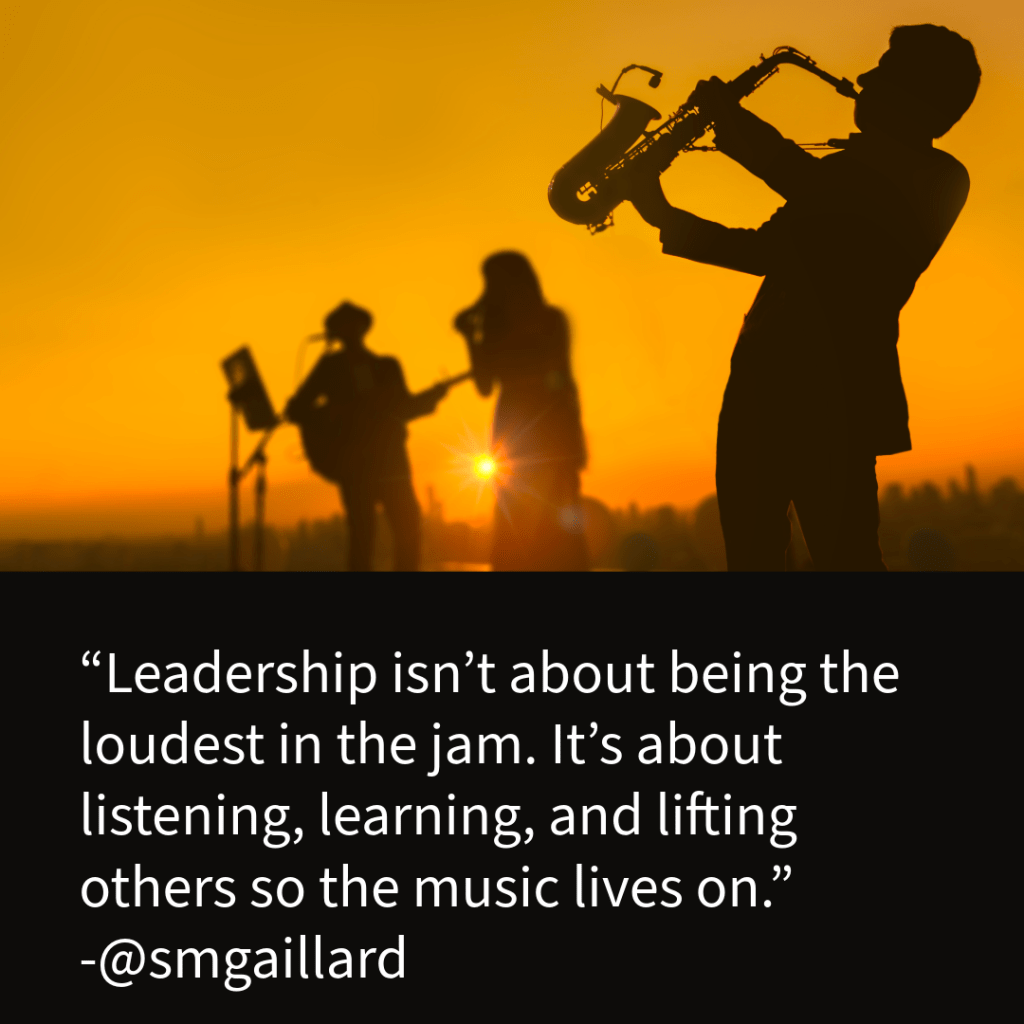
I hope you know that your sound matters and any band is lucky to have you. I sure do believe in you. Thanks for being in the band!
Here’s a thought to share from my reflection and writing this morning.
I hope you know that your sound matters and any band is lucky to have you. I sure do believe in you. Thanks for being in the band!
Now and Then, There Is Hope
Hope is something we all need. Whether we’re leading a school, guiding a team, or simply navigating the ups and downs of daily life, hope serves as our compass. It’s the whisper that reminds us we’re on the right path, that our vision matters, and that our efforts have the potential to create something meaningful.
But let’s be real—there are days when the compass feels broken. Days when we question our choices, when doubt creeps in, and Imposter Syndrome casts a shadow over our accomplishments. I’ve been there. We all have. And in those moments, I’ve learned that it’s the small, unexpected flashes of hope that keep us going: the spontaneous smile from a student as I walk down the hallway, the moment a teacher’s lesson hits its stride, or even a kind text from a loved one reminding me I’m not alone in this work.
Sometimes, hope arrives in the form of a song. As many of you know, I’m an unabashed Beatles fan. From The Pepper Effect to #ThePepperEffect, to countless references in talks, blog posts, and podcasts, The Beatles are my creative wellspring. My book, The Pepper Effect, explores the lessons of collaboration, creativity, and leadership that can be drawn from The Beatles’ groundbreaking Sgt. Pepper’s Lonely Hearts Club Band. If you’d like to learn more about it, you can check it out here.
Last year, I had the privilege of writing a piece for Culture Sonar about Now and Then, the “last” Beatles song. The story behind this song resonates deeply with me as a testament to the power of hope. You can read that full piece here.
The story of Now and Then is itself a lesson in hope and perseverance. John Lennon recorded a rough demo at his piano in 1977. When the surviving Beatles—Paul McCartney, George Harrison, and Ringo Starr—tried to finish it in the mid-90s, the project hit a wall. The synergy wasn’t there, and the technical limitations made it impossible to isolate John’s vocal clearly. The song was shelved, unfinished, but Paul never let it go. He believed there was something special in John’s demo—a spark waiting to ignite.
Decades later, in 2022, Paul and Ringo revisited Now and Then. With the help of advances in AI and the brilliant production skills of Giles Martin (son of George Martin, The Beatles’ original producer), they were able to clean up John’s vocal and add new musical elements. In 2023, the song was released, and for me, it felt like the world was witnessing a small miracle—a moment when something lost was found again. It was a triumph of hope, a testament to the belief that the impossible can become possible.
Earlier this week, I heard the news: Now and Then has been nominated for a Grammy Award for Record of the Year. It’s a powerful reminder that music—like hope—has the power to change the world. This song, born from a rough demo and sustained by Paul McCartney’s unwavering belief, is a symbol of what can happen when we refuse to give up on something that matters. It’s a lesson for all of us as leaders: sometimes, our vision won’t be embraced right away. There will be times when our ideas are met with polite nods or silence. But that doesn’t mean the idea isn’t worth pursuing. It just means we need to persevere and trust in the process.
Hope isn’t just a feeling; it’s a leadership move. It’s the quiet persistence to revisit ideas, to keep communicating, to invite others to collaborate and play together in the sandbox of possibility. I think about my latest initiative at school—the Principal Read Aloud. As a new leader, I wanted to find a way to connect with our students and teachers, to build trust and community. I proposed giving teachers a 30-minute break while I read aloud to their classes. It’s a simple idea, but it’s grounded in hope and the desire to show our school community that I’m here for them.
So far, only two teachers have signed up, and that’s okay. I’m hanging in there, just like Paul McCartney did with Now and Then. I believe in this small act of connection, and I’m willing to wait for it to grow, one read-aloud session at a time. Because that’s what hope looks like—it’s the willingness to keep showing up, to keep believing in the possibility of something beautiful taking shape.
As leaders, we have to hold onto hope like a North Star. It’s our guiding light, helping us navigate through challenges and inspiring others to do the same. Whether it’s in our school hallways, our team meetings, or even in the quiet moments of reflection, we have to keep hope in the foreground. It’s not always easy, but it’s always worth it.
And as The Beatles remind us in their final song, hope is the thread that ties the past, present, and future together. Now and then, there is hope. It’s what brings us back, time and time again, to believe in the magic of possibility and the power of collaboration.
Let’s keep hope alive in our leadership moves. Let’s embrace the small moments that spark joy and connection. Let’s take the time to revisit old ideas, to share our vision with others, and to trust that, in the end, something beautiful will emerge.
The journey of Now and Then is a reminder that we’re all part of something bigger. When we lead with hope, we open the door for new possibilities to enter, and that’s when the real magic happens.
Listen to Now and Then by The Beatles here.
#NowAndThen #LeadershipRiffs #TuneIntoHope
Links:

Simplicity in Jazz:
In 1969, during the recording of his groundbreaking album In a Silent Way, Miles Davis famously told guitarist John McLaughlin to “play the guitar like you’re picking it up for the first time.” McLaughlin, renowned for his complex, intricate solos, was likely perplexed by this direction. Jazz, after all, is a swirl of notes, harmonies, and complexities—a musical enigma. But Miles was after something else, something new. He envisioned a sound that was simple yet profound, stripped down to its core. He wanted his band to create a fresh ambience, to tap into a deeper, purer musical experience.
This wasn’t just any jazz album. It was a collaborative effort with musicians who, for many of them, were playing together for the first time. Miles led them to embrace simplicity, allowing space for discovery. The result? An album that, decades later, still influences and inspires musicians worldwide. It stands as a testament to the power of stepping into something new with fresh eyes and an open heart.
Back to School:
For school leaders, the phrase “Back to School” stirs a similar mix of emotions: joy, anticipation, maybe even a little fear. It’s the beginning of something new, a reset button. For some, this is a welcome opportunity; for others, it can be daunting, especially for those stepping into a new school or leadership role. But there’s immense value in embracing these new beginnings, or what I call “Square One.”
Square One offers the chance to rewrite, renew, and refocus. Whether you’re a brand-new principal or a seasoned leader in a new building, starting over can feel like walking into a conversation where everyone else is already laughing at an inside joke. You may not yet be in on it, but there’s an opportunity to listen, connect, and contribute. Building trust, creating relationships, and setting the tone for a collaborative culture takes time and effort—but it’s well worth it.
As a turnaround principal, I’ve lived through this over and over. Every school, every new beginning, felt like standing at the edge of something vast and uncertain. But I’ve learned that there’s beauty in Square One. It’s where connection is made, where trust is earned, and where growth is inevitable if you lean into the discomfort.
Embracing Square One:
I used to dread the awkwardness of starting fresh. It felt like a weird dance where I would stumble more than glide. But with time, I realized that Square One isn’t something to fear. It’s a unique opportunity. In Square One, you get to build from the ground up, to create a vision, and invite others to join in shaping something beautiful for your school community. This is where you can set the stage for a culture of psychological safety, where teachers and staff feel seen, heard, and valued.
As leaders, we can choose to embrace Square One not as a setback, but as a launchpad. We get to set the tone for our schools, encouraging collaboration and creativity in ways that may not have been possible before. When we invite others to see their strengths, both tapped and untapped, we unleash the power of collective potential. It’s like that band Miles Davis assembled for In a Silent Way—everyone playing together for the first time, discovering new possibilities.
Leadership Moves to Embrace Square One:
Conclusion:
Just as Miles Davis sought a deeper sound by stripping away the complexity, we, as school leaders, can find clarity and strength in the simplicity of Square One. Embracing the beginning allows us to reset, reimagine, and reframe the possibilities for our school communities. As we step into new roles or new school years, let’s lead with intention, vulnerability, and an openness to collaboration. The beauty of Square One lies not in its uncertainty, but in its promise. Like Miles and his band on In a Silent Way, we have the opportunity to create something timeless by being fully present in the moment.
As someone who proudly wears the badge of a “Beatles Encyclopedia,” my journey in music appreciation is a perpetual adventure. The joy I derive from delving into the world of music, particularly the legendary band that holds a special place in my heart, knows no bounds. If you were to step into my home office, you’d find it adorned with shelves filled to the brim with books dedicated to none other than “The Beatles.” I’ve devoured so many books over the years on this iconic band that I could probably recite passages from memory. (I’d likely be of little help in the book refuge depicted in Fahrenheit 451!)
Currently, my literary journey has led me to “The Lyrics” by Paul McCartney. Released just last year in hardcover, I couldn’t resist adding the paperback edition to my collection. This remarkable book sees McCartney opening up about the stories and personal anecdotes behind the songs that defined his tenure with The Beatles and his solo career. In the book’s introduction, McCartney shares an anecdote from the early days of The Beatles that, surprisingly, I had never encountered before.
Let me share a quick recap. Picture the scene: The Beatles, in the nascent stages of their career, find themselves on a wintry night journeying between gigs. Suddenly, their van skids on ice, careening off the road and down an embankment. Miraculously, no one is hurt, but they’re left stranded. Amidst the chaos, McCartney recalls a pivotal statement uttered by someone in the band: “Something will happen.” This simple phrase quickly became a rallying cry for The Beatles whenever faced with adversity or uncertainty. I try to envision when this statement would echo at various stages during The Beatles trajectory as a band. It is a tantalizing game to play in imagining when this line would be appropriate.
The profound simplicity of this statement struck a chord with me as I immersed myself in McCartney’s book. It served as a poignant reminder that even the idols we admire are, at their core, human. “Something will happen” encapsulates a resolute hope, reminding us that amidst seemingly insurmountable odds, the realm of possibility remains wide open.
Reflecting on this mantra, I couldn’t help but draw parallels to my own journey as a principal and school leader. In the face of daunting challenges, “Something will happen” embodies a steadfast belief in the power of resilience and perseverance. It speaks to the essence of our roles as leaders, tasked with navigating complex landscapes against all odds. We have to tune into possibilities on a daily basis. Additionally, we have to encourage others to tune into possibilities as we educate and empower the kids we serve.
Recently, our team encountered a situation demanding swift action and collaboration. In its aftermath, I found myself echoing a similar mantra to reassure my colleagues: “We responded. We were there for others.” I have echoed this statement many times as a leader to serve as a salve for others who support during a crisis. This instance brought to mind The Beatles and their mantra, reinforcing the notion that amidst uncertainty, hope prevails.
My mantra, “We responded,” shares the same essence and intention as The Beatles’ rallying cry. As leaders, it’s our responsibility to provide comfort and empowerment through compassionate words and actions. Whether serving as a soothing balm in times of crisis or bringing clarity to chaos, our words hold the power to inspire and uplift. Being intentional with our words is a necessary move as a leader. We are the navigators of our narrative and we must choose our words with care, compassion, and intention.
Stepping back and reflecting on our experiences is not just advisable; it’s imperative for effective leadership. Taking stock of our decisions and actions allows us to glean valuable insights and pave the way for growth. In the end, it’s the simple yet profound words—whether “Something will happen” or “We responded”—that ignite the spark of hope and resilience in those we lead.
| -Reflect: Find intentional time to reflect on the words you use as a leader to comfort or inspire during a crisis. |
| -Write: Jot down those words and statements you use. Reflect upon the meaning and intention in each of those words. Do they empower? Do they avoid judgement or placing blame? |
| -Share: Find a trusted thought partner and share words to gain feedback and growth. |
| -Connect: With people you serve and collaborate, take time as a group to discuss words used during a crisis. Establish kinship and understanding along with ensuring that meanings are understood. |
Whether serving as a soothing balm in times of crisis or bringing clarity to chaos, our words hold the power to inspire and uplift. Being intentional with our words is a necessary move as a leader. We are the navigators of our narrative and we must choose our words with care, compassion, and intention.
This past weekend, I found myself engaged in a collaborative conversation with two friends. As we explored ideas and shared perspectives, there was an undeniable sense of belonging in the air. It felt like we were in tune with each other’s strengths, creating a harmonious space that fueled our creativity. This experience made me reflect on the significance of sustaining a sense of belonging, especially for leaders, and how tapping into the strengths and gifts of others is a powerful way to achieve this.
In the realm of leadership, one trait stands out as essential: the ability to foster a sense of belonging. A leader who understands the importance of creating an environment where every individual feels valued, appreciated, and empowered is destined to cultivate a thriving community. One effective strategy for achieving this is to recognize and tap into the strengths and gifts of those around you, allowing them the space to shine.
A captivating example of this leadership approach can be found in the world of jazz music, a genre built on collaboration and improvisation. Consider the iconic rendition of “My Favorite Things” by John Coltrane and his quartet. In this performance, Coltrane, a legendary saxophonist, showcased a profound understanding of fostering belonging by stepping away from the spotlight.
As the melody unfolded, Coltrane gracefully stepped back, creating a space for his pianist and collaborator, McCoy Tyner, to take center stage. Tyner, known for his brilliant and innovative piano playing, seized the opportunity to stretch out and deliver a transcendent solo. Coltrane’s decision to give Tyner the spotlight not only highlighted Tyner’s strengths but also contributed to the overall beauty of the performance. It was a harmonious collaboration that showcased the power of recognizing and celebrating the unique talents within a team.
This jazz analogy holds valuable lessons for leaders in any setting, including the schoolhouse. A leader must possess an acute awareness of the people they serve and a deep understanding of the strengths that each individual brings to the table. By creating a culture that allows these strengths to thrive, leaders can foster a sense of belonging that goes beyond mere inclusion.
In the school environment, leaders must recognize and celebrate the diverse talents of teachers, students, and staff. Just as Coltrane allowed Tyner’s brilliance to shine in their musical collaboration, leaders should provide opportunities for educators to showcase their strengths in the classroom, whether it be through innovative teaching methods, mentorship programs, or collaborative projects.
Moreover, leaders should be attuned to the needs of the school community and actively seek out opportunities for collaboration. By tapping into the collective strengths of the team, leaders can create a culture of belonging where everyone feels heard, valued, and empowered to contribute to the success of the school.
In conclusion, sustaining a sense of belonging is a crucial aspect of effective leadership. Leaders who understand the importance of recognizing and tapping into the strengths and gifts of others can create a harmonious and thriving community. The example of John Coltrane stepping back to let McCoy Tyner shine serves as a powerful illustration of how leaders can foster a culture where the strengths of every individual are celebrated. As we navigate the complex world of leadership, let us strive to lead with harmony, creating spaces where everyone’s strengths can contribute to the beautiful melody of success.
Check out John Coltrane’s “My Favorite Things” featuring that transcendent piano solo by McCoy Tyner
Here’s Episode 20 of “The Principal Liner Notes Podcast.”
It is entitled “In the Fan Club.” I explore how the recent release of the “Yesterday” movie connects to my pride in being a Beatles Fan. I also explore connections from the film to our noble profession as educators.
https://anchor.fm/sean-gaillard/episodes/In-the-Fan-Club-e4fp3t/a-ahua79
Here’s the latest episode of “The Principal Liner Notes Podcast.” It’s entitled “Embrace the Crossroads.” I explore how a pivotal moment in the “Mad Men” television series coupled with a song by Buddy Holly connects to the infinite possibilities at the end of a school year.
Here’s the link for the podcast: Click HERE.
Please feel free to share the podcast with friends and colleagues. Thanks for listening!
Here’s Episode 13 of “The Principal Liner Notes Podcast” entitled “Get Back on the Rooftop.”
Click HERE to listen!
Click HERE for Episode 6 of “The Principal Liner Notes Podcast!”
 Leadership Liner Notes: Sean Gaillard