Some connections are for a season. They help us grow, reflect, and find our footing. Then, sometimes, the paths quietly diverge.
I am learning that clarity around values can be both grounding and lonely. It does not mean anger. It does not mean judgment. It simply means paying attention to what no longer fits.
I am choosing to keep moving toward what aligns with who I am becoming. I am choosing alignment over approval. I am choosing peace over proximity. With gratitude for what was. With honesty about what is.
There is a place I often call Principal School. It is the imaginary training ground where we believe all the lessons of leadership will be handed to us before we ever step into the role. Over time, I have learned that some of the most important lessons are never taught there at all. They are learned the hard way, often quietly, and sometimes at great cost.
One of the biggest myths perpetuated in school leadership is that there is a single way to lead well. I bought into that myth for far too long. I watched other principals on social media and began to believe that if my style did not look like theirs, then I must not be good enough. I measured myself against highlight reels instead of my own values. That comparison and pressure sent me to the emergency room twice. It took a toll on my body, my mind, and my spirit.
Another lesson they do not teach you in Principal School is that leadership can slowly pull you away from the very relationships that sustain you. I regret not investing the time I once did in friendships. I regret choosing email replies and late night work over phone calls and shared meals. I felt the weight of that loss deeply over the last few years when the invitations stopped coming. I am grateful for the meaningful friendships I still have, even though many of them live far away. Today, I cherish every text message, every phone call, and every Zoom conversation because I know how easily those connections can fade when duty becomes all consuming.
I also regret the moments I missed with my wife and daughters. There were times when I chose the principalship over being fully present with them. That truth is hard to name, but it matters. You blink, and your children are grown and moving out of the house. You do not get that time back. Now, I cherish my family even more, and I hold our time together with greater care and intention than ever before.
For my physical and mental health, I made the decision to step away from the principalship. I returned to my assistant principal roots and found something I had lost along the way. I found myself again. I am happier, healthier, and more grounded. I have grown in my therapy work and remain deeply committed to it. That commitment has helped me reconnect with my core, my purpose, and my humanity. The version of leadership I was living was not aligned with who I am or how I want to live. In trying to be everything for everyone at school, I lost sight of who I needed to be for myself and for the people who love me.
Recently, in a conversation with Dr. Andrea Trudeau, a phrase stayed with me. We need to rescript the narrative. Human Centered Leadership is not widely accepted in some spaces, and I am fully aware of that. Still, I am determined to disrupt the conversation in a good way. Leadership does not have to cost you your health. It does not have to require the sacrifice of your family or your friendships. Human Centered Leadership is not only about how you serve others. It is also about how you care for yourself and how you show up for those who cherish you as a spouse, a parent, and a friend.
I learned these lessons the hard way. I do not want others to have to do the same. My purpose now is simple and deeply personal. If these words help one leader put their phone down and spend time with their child, then I have done my job. If they help one leader step away from email long enough to call a friend, then I have done my job. If they help one person avoid being rushed to the hospital from the schoolhouse like I was, then I have done my job.
This post will not go viral. It will not collect metrics or applause. That is not the point. Leadership does not have to be lonely. Leadership does not have to break you. You can lead with love. You can protect your humanity. You can serve others well without losing yourself along the way.
This reflection is not the end of the conversation for me. It is the beginning of a deeper commitment to naming what matters and creating space for a more human way to lead. One of the ways I am continuing this work is through a new podcast series I am co- hosting with Dr. Sonia Matthew called Leading While Human.
Our first episode drops on February 1 and features a powerful conversation with Dr. Rachel Edoho-Eket. Throughout February, we will release a new episode every Sunday with guests including Lauren Kaufman, Dr. Donya Ball, and Principal Kafele. Each voice brings wisdom, honesty, and lived experience to the question of what it truly means to lead while human.
Leading While Human will be a quarterly podcast. Each series will feature four guests and four conversations designed to slow us down, ground us, and remind us that leadership does not have to cost us our health, our relationships, or our humanity.
I am grateful for the opportunity to learn alongside these voices and to invite others into this space. Stay tuned for what comes next as we continue to rescript the narrative on leadership together, one human centered conversation at a time.
I keep returning to the same conviction lately. Leadership is not supposed to cost us our humanity.
That belief feels more urgent now than ever. Human centered leadership is not a slogan or a presentation slide. It is a way of being that honors dignity, presence, and care. It resists the temptation to reduce people to metrics, optics, or short term performance. It recognizes the unseen weight others carry and chooses compassion anyway.
This season has tested me in ways I did not anticipate. The pressure to produce test scores has felt relentless and narrow. Health scares forced me to stop and confront my own limits without avoidance. Failure has spoken loudly at times and left me questioning my impact and my place. There were moments when leadership felt less like calling and more like endurance.
Over time, I have begun to see that failure does not always signal an ending. Sometimes it offers an invitation.
Stepping away from a role I once loved because my health required it was hard. That decision still aches occasionally, but I know that I am a better person for my family. At the same time, it created space for a new beginning. I could not see it at first. It has helped me realize I was not a failure in that gig. I was holding on too tightly to the demands of the gig that I could not see straight. I experienced another new beginning. I reached out to start a book study in my current gig. Unfortunately, no one joined. That disappointment lingered, yet the act of reaching out still mattered. My account on X was hacked and ultimately deactivated. What initially felt like loss became an unexpected redirection toward platforms where connection feels more personal and more grounded.
This season reminds me often of Paul McCartney in the immediate aftermath of The Beatles’ breakup.
McCartney did not emerge from that moment with certainty or acclaim. His first solo album, “McCartney,” was raw, homemade, and introspective. Critics dismissed it as unfinished and small. What they missed was the deeper truth. McCartney was not chasing relevance. He was healing. He was rebuilding quietly. He was making music not for applause, but for survival and clarity.
That period was not a collapse. It was a recalibration.
That analogy resonates deeply with me right now. I am not trying to recreate a past version of myself or chase a louder stage. I am learning how to rebuild in a way that is sustainable, honest, and aligned with who I am becoming. The work has become quieter, but it has also become truer.
That sense of recalibration followed me recently while watching “CBS Sunday Morning.” A segment on an upcoming book by Dr. Ezekiel Emanuel titled Eat More Ice Cream stayed with me, particularly his advice for 2026. He spoke about the importance of developing social relationships for well being and longevity. That message landed deeply. I know I need to invest more intentionally in connection. I know there may be times when invitations do not come. That possibility still stings. The commitment to reaching out remains because isolation is not sustainable for any of us. I didn’t get any takers on that book study I mentioned. But I did take a giant step to reach out to others, and that is o.k.
Leadership can be lonely. I want to name that for anyone who feels unseen or alienated right now. I have been there. I still visit that place at times. Reaching out can feel vulnerable and risky, yet it remains essential. No one should feel invisible while carrying responsibility for others.
I was reminded again of what human centered leadership looks like through my three adult daughters. Watching them lead with empathy, courage, and quiet awareness in different capacities affirmed this kind of leadership. It shows what leadership looks like when it is lived rather than announced. That moment grounded me. It also reinforced my belief that the future deserves better models than the ones we often elevate today.
There is still an ache present in my life on occasion. Gratitude and struggle exist side by side. I remain deeply thankful for the steady support of my wife and for the ongoing work of therapy. Healing continues to teach me patience, humility, and honesty. Leadership demands the same posture.
Frank Sinatra’s “Cycles” has been playing often in my space lately. The message of that particular song feels fitting. Life moves in seasons. Endings and beginnings overlap more than we like to admit. Growth rarely arrives without discomfort. As leaders, it is important for us to strive for that constant path towards growth.
As I continue writing my upcoming second book, Leadership Riffs, clarity keeps emerging as wrestle with the ideas shared here. This work is not about spotlighting me. It is about amplifying others. I want my platforms to honor educators and leaders who show up quietly, consistently, and with courage. I want to praise those doing the real work of human-centered leadership. I also want to gently drown out the noise of performative leadership. This noise is loud, fleeting, and hollow.
There is no One Word guiding me this year. There is no formal New Year’s Resolution.
There is simply a commitment.
A commitment to purpose. A commitment to humanity. A commitment to reaching out even when the response is uncertain. A commitment to acknowledging and celebrating those who lead with sincerity, care, and belonging.
That is where I am right now. Still spinning. Still rebuilding. Still choosing what matters.
The other day, I had the privilege of speaking with a former superintendent from the early days of my principalship in Winston-Salem. It was one of those conversations that stays with you long after it ends. I felt deeply grateful for her wisdom, for the lessons she shared years ago, and for the way she continues to lead with humility and care.
At one point, our conversation turned to belonging. We did not speak of it as a buzzword or a program. We spoke of it as a fundamental human need in schools and in leadership. That moment mattered. It affirmed something that has been awakening in me over the past year and a half, a journey that began after my heart episode and has been deepened through therapy, reflection, and honest reckoning with myself. That conversation did not begin this journey, but it reignited it. It reminded me that leadership, at its best, is rooted in humanity.
That conversation also made something painfully clear.
The leadership we are currently celebrating in too many spaces is missing the mark.
Many systems have become overly reliant on noise, metrics, programs, and performance. Visibility is often mistaken for value. Activity is often mistaken for impact. Standing on tables, creating a staged video, or chasing what is trending is frequently confused with leadership. In the process, we are losing sight of what actually sustains schools and the people inside them.
A line from Dr. Donya Ball has been echoing in my mind ever since that conversation: “One of the biggest leadership turn offs is the leader who chases public recognition instead of private excellence.”
That distinction matters now more than ever.
Private excellence is where real leadership lives. It lives in quiet conversations. It lives in trust built over time. It lives in making people feel seen, heard, and valued when no one is watching. That is where belonging is cultivated, not performed. I am grateful for the inspiring words and thought partnership of Dr. Donya Ball. She is definitely a worthwhile addition to any Professional Learning Network.
Greater care is also required in choosing the voices we amplify. Many voices offer quick solutions and so-called fixes to deeply complex problems of practice. Some of those voices have not been in a classroom or schoolhouse doing the work in years. Others sell packaged answers designed more for self promotion than service. Discernment matters, because what we consume shapes what we believe leadership is supposed to look like.
There are sincere voices doing this work with integrity. These are leaders who stay close to schools, who listen more than they sell, and who center belonging over branding. That sincerity feels harder to find than it once was, which makes intentional discernment even more important.
The voices worth seeking are those that foster belonging, courage, and empowerment. They honor the complexity of schools. They understand that innovation does not come in a package and that transformation cannot be rushed.
This moment calls for a return to something more human. It calls for leadership that is analog in spirit and rooted in connection rather than consumption.
I often think about The Beatles performing Hey Judeon the David Frost Show in 1968. As the song reached its closing chorus, the band invited a diverse group of audience members to gather around them. Everyone sang together. There was no hierarchy in that moment and no spotlight chasing. There was shared humanity in action. Everyone had a place in the song.
That image offers a powerful metaphor for the leadership we need now.
Belonging is not an accessory to leadership. Belonging is the entry point. It is the foundation that allows people to take risks, grow, and contribute their gifts. My father used to say, “Everybody starts, everybody plays.” That belief has never felt more urgent.
Schools are facing real challenges. Budgets are shrinking. Demands are increasing. Pipelines into teaching and leadership are fragile. Burnout is widespread and cannot be resolved through another initiative or an unfunded mandate. This is not the moment to double down on outdated leadership playbooks.
There is still reason for hope. Educators continue to make a profound difference in the lives of others. This moment invites leaders to pause and reflect. It encourages them to reimagine how school communities are served in ways that are sustainable, affirming, and deeply human. We need to change the conversation on what it means to lead in schools. We must invite everyone to the table for this much-needed crucial conversation.
A few places offer meaningful starting points:
-Leaders can create intentional space for reflection in daily practice. They should treat it as a priority rather than an add on. -Leaders can commit to real conversations that center around listening and learning. -Leaders can commit to building belonging first, knowing everything else grows from that foundation.
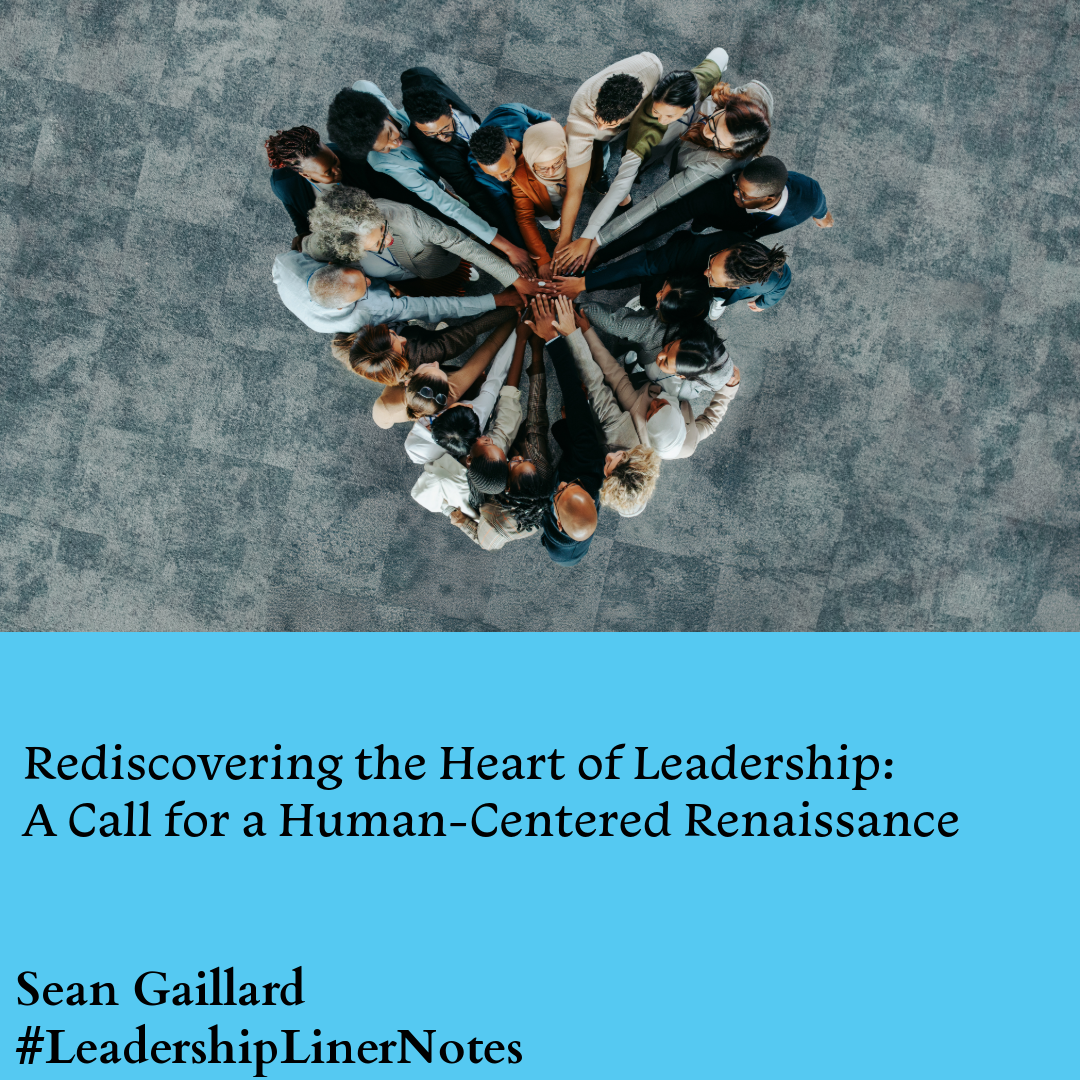
School leadership is overdue for a renaissance. That renaissance must be rooted in presence, humility, and courage. When leaders dare to lead from the heart and make belonging the work, leadership can once again be reclaimed as a human act rather than a spectacle.
Author’s Note
This piece was written as an invitation rather than an indictment. It reflects a personal and professional awakening shaped by lived experience, reflection, and honest conversations about what leadership demands in this moment. The hope is that it encourages thoughtful pause, renewed discernment, and a recommitment to leadership grounded in humanity.
When I was a kid, I was often one of the last picked for kickball. I remember the sting of waiting. I stood in awkward anticipation. I hoped someone would invite me on the team. I did my best to keep my head held high like my father had taught me. I watched captains point to someone else and tried not to show my disappointment. I was that kid hoping to belong. Hoping to be seen. Hoping to be chosen.
I think I have spent most of my life chasing that feeling of belonging. Wanting to be part of something bigger than myself. Wanting to feel the spark when you look around and know you are with your people who see you. Wanting a band.
A band for me is not just the literal type where individuals play music together. I use the band as an analogy for collaboration, belonging, and sustaining a shared vision. As a school leader, I would perpetuate this concept by referring to colleagues as “bandmates.” I thought that this mindset would help the culture and enhance belonging for all in the schoolhouse.
Being in a band is wonderful. There is purpose and possibility in the sound you create together. I felt that sense of belonging as a guitarist in a few literal bands. There is nothing like locking into a groove. Seeing another musician look over with that nod says we are in the pocket. I felt that same belonging when I taught English at Governor’s School. I was surrounded by a team of educators who celebrated collaboration and creativity. I felt it a few times in school leadership within administrative teams that shared a vision and worked in harmony.
Spinning on my turntable as of late is “The Beatles Anthology Collection.” It is a treasure trove of alternate takes, live recordings, and demos. It also includes unreleased tracks and a trio of their reunion songs. I love hearing the band workshopping songs and encouraging each other through various mistakes and flubs in the studio. It serves as a reminder of what a band should do when they face an echo of a failure. They should handle the resonance of a mistake wisely and stick together. You play through it, learn from it, and keep the groove moving on. Listening to this beautiful audio package of The Beatles in this alternate trajectory is wonderful. It makes me miss the joy of being in a band. I miss being with people who understand my sound.
Lately, I have been drifting. Feeling like a castaway. Wandering around a crossroads. Watching from a distance as others find their bands. I see camaraderie and connection and I often feel sadness that I am not part of it. Recently, I saw a group of leaders celebrating together in a LinkedIn post and I felt left out. I felt that old kickball feeling. The one that sits heavy.
For a long time I thought that if I waited long enough a band would find me. That a group would invite me in. That someone would want my presence, ideas, and voice. I waited. I believed. I hoped.
And then it hit me. I was waiting for a band that was never coming.
I have also forced the idea of band on others over the years. I regret that. Not everyone is ready to be in a band. I never took the time to realize that I am the barrier to the band. And the harder truth to accept is that maybe nobody wants to be in a band with me. Maybe I am not meant to join someone else’s group. Maybe I am meant to build something from the ground up. I am learning to sit with that. I am learning to accept it with honesty.
So here is where I am now.
I am at peace with where I am now.
I am at peace with the people I get to meet and support daily.
In the meantime, I am forming my own band.
Not by asking others or convincing colleagues or trying to prove myself that a band is the way to go. Not by waiting for an invitation that will never arrive. I am just going to keep creating. Keep writing. Keep podcasting. Keep blogging. Keep finishing the second book. Keep playing my sound without apology.
If I stay true to that maybe the right bandmates will hear the music. Maybe the ones who resonate with authenticity will wander into the room. Maybe belonging is not something you wait for. Maybe belonging is something you build.
Sometimes we have to sit with the hurt. We cannot rush the healing or pretend we are fine. We acknowledge the sting we feel. We name it. We breathe through it.
And then we carry on.
We move forward with peace in our hearts. We keep showing up with love and integrity. We hold onto the belief that our story is still unfolding in ways we cannot yet see.
We walk forward with quiet strength. We choose to rise. We choose to keep playing our song.
Peace is not the absence of pain. It is the courage to continue in spite of it.
Back to the Mic: The Leadership Liner Notes Podcast
I am back to podcasting, and it feels good.
After some time away from the mic, I am excited to share a brand new project that is close to my heart, The Leadership Liner Notes Podcast. This new series builds on everything I have learned from Principal Liner Notes and takes it to a new space for reflection, connection, and growth.
This season begins with a fresh rhythm and a simple idea: #CelebrateTheMoment. It is a reminder that joy, gratitude, and presence are not limited to one day of the week. They live in the moments we create, when a student smiles, a colleague feels seen, or we take a breath to appreciate where we are right now.
Each episode will explore stories, lessons, and insights that inspire us to lead with heart. Some moments will be reflective, others practical, but all will be grounded in the belief that leadership is most powerful when it is authentic and human.
In the first episode, I share what inspired this return to podcasting, how I have been rethinking presence and purpose, and why now felt like the right time to reconnect with this creative space.
Thank you for continuing to be part of this journey. Your encouragement and support keep the music playing. Here is to new conversations, fresh insights, and moments that matter.
A Note on Leadership Riffs, My Upcoming Book
This podcast is also an echo of my upcoming book, Leadership Riffs. Both are rooted in the same belief that leadership, like music, is about harmony, collaboration, and finding your unique sound. We all have riffs to share: those small but powerful ideas and actions that lift others, shape culture, and bring rhythm to our work.
The Leadership Liner Notes Podcast is another verse in that song. It is a space for leaders, dreamers, and difference makers to reflect, recharge, and rediscover the joy in what they do.
Thank you for tuning in and being part of the band.
The other day I was listening to The Beatles Channel on Sirius XM. I know that sounds like a casual moment, but truth be told, I spend plenty of time tuned into that station. As a lifelong Beatles fan, I’m fully immersed in their world of melodies, harmonies, and timeless lessons.
In between the songs and interviews, the channel often airs short reflections from musicians and fans. One that recently stood out to me came from John Oates, half of the legendary duo Hall & Oates. He shared a story about his friendship with George Harrison that has been playing in my mind ever since.
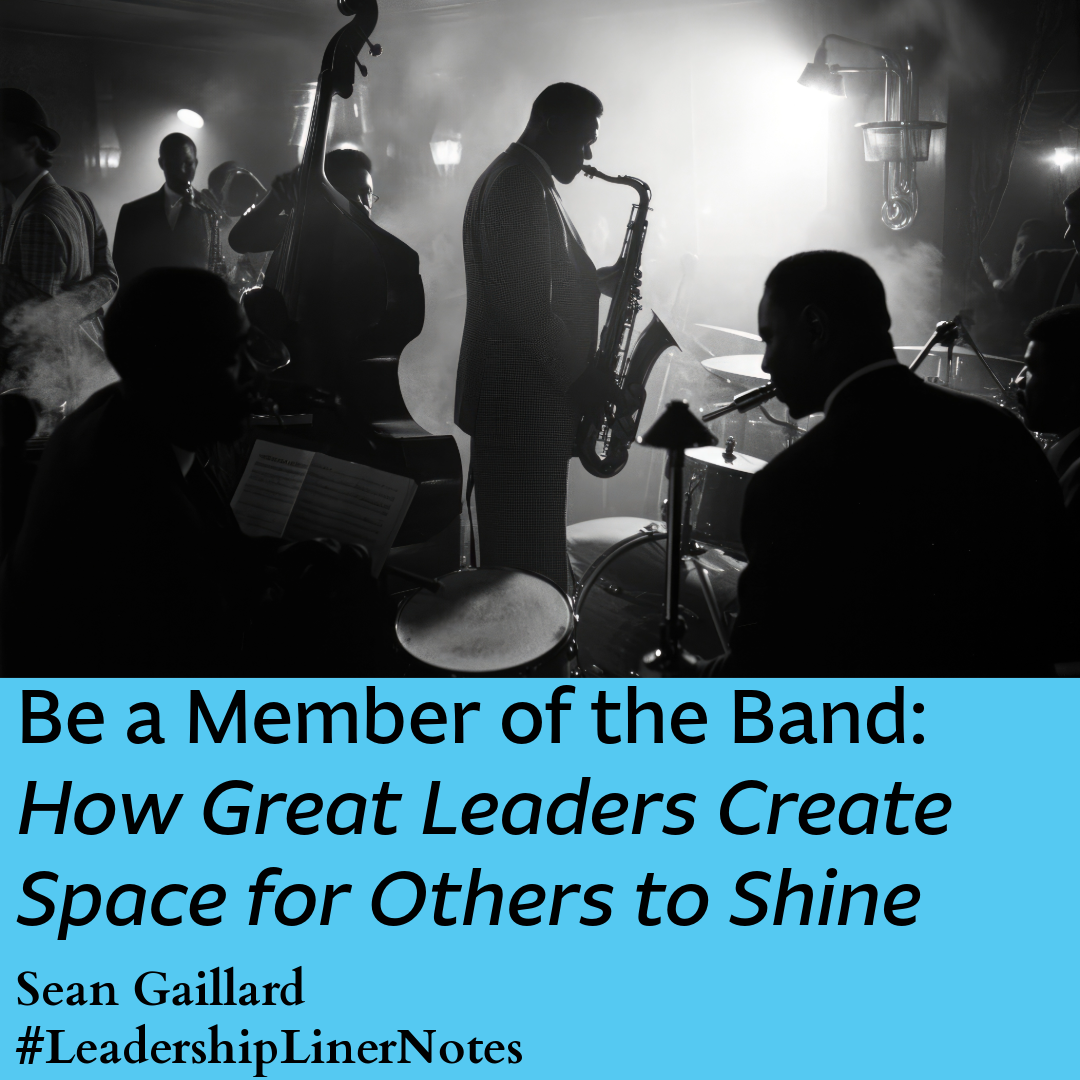
Oates talked about how he and George connected over a shared love of Formula One racing. That connection eventually led to visits at George’s home, Friar Park. During one visit, Oates mustered the courage to ask if George would play guitar on the Hall & Oates album Along the Red Ledge. George agreed, but he had one request: he only wanted to be a member of the band.
He didn’t want to take the lead. He didn’t want to be “George Harrison of The Beatles.” He just wanted to play alongside everyone else and contribute to the groove. His guitar work shines on the track “The Last Time,” yet what makes this story powerful is George’s humility. Here was someone who had stood on the world’s biggest stages, yet he found meaning in simply being part of the band.
That lesson resonates deeply with me. I’ve played in a few bands myself. I’m not a virtuoso guitarist, but I’m a solid rhythm player. I love creating that foundation that lets others soar. There’s something special about hearing another musician shine because you’re holding down the rhythm behind them. That’s leadership in action.
David Bowie did a similar move when formed the band, Tin Machine. Here was one of the most iconic solo acts in music simply wanting to be a part of a band. Bowie was known for making all kinds of unexpected turns and pivots in his career. Here, he took an eclectic turn and went back to the basics of being in a band. The band wasn’t called “David Bowie and Tin Machine.” It was simply Tin Machine.
Leadership is often seen as standing front and center, but the best leaders know when to step back. Sometimes the greatest impact we can have is to lay down a steady rhythm that allows others to take flight. Being a leader means being a collaborator, a listener, a supporter. It’s about tuning into the strengths of others and amplifying them for the good of the team.
George Harrison reminded us that leadership isn’t about spotlight moments or social media metrics. It’s about humility, collaboration, and humanity. It’s about seeing the gifts in others and creating the space for those gifts to be heard.
So, wherever you lead, whether it’s a classroom, a meeting, or a community, remember this simple truth: the best leaders know how to be a member of the band. Tune into the gifts of others. Uplift their strengths. Create harmony together. That’s how the best songs and the best teams are made.
I take medication for that, as well as for high blood pressure. I lean on prayer for guidance, strength, and courage. Music, exercise, and writing serve as my entry points for continued healing.
This is a reality that I face and accept. I am okay. I am a proud father, a grateful husband, and a human being doing his best each day.
We have to normalize the conversation around mental health. It is not a stigma, and it should not be a secret.
Years ago, I listened to an interview where Dwayne Johnson openly shared his battle with depression. Bruce Springsteen, in his memoir Born to Run, wrote candidly about his own struggles. Both sought professional help. Both broke through the stereotype of invulnerability. And when I heard their stories, something deep within me stirred. It was a reminder that I was not alone.
It takes courage to be that open. Johnson and Springsteen are seen as strong, larger than life figures. Leaders, creators, and entertainers who have given millions joy. And yet, they are human. Their willingness to be vulnerable gave me the courage to carry my own weight and step forward in hope.
I want to be clear. I am not an expert on mental health. I can only share the truth I know and the experiences I have lived. What I do know is what it feels like to be alone in the struggle, to wonder if anyone else understands, and to silently hope for connection. I write this with my arm extended, reaching toward you, to say that you do not have to endure this alone.
The myth of leadership tells us to wear capes, to never stumble, to prove our strength through invulnerability. Social media only amplifies this illusion. But the truth is simpler and more profound. We are human. And being human means there are seasons when the darkness feels too heavy to carry on our own.
Viktor Frankl once wrote, “When we are no longer able to change a situation, we are challenged to change ourselves.” That quote has carried me in the hardest moments. It reminds me that even in the weight of depression, there is always a small step forward, always a chance to choose connection, always a chance to choose hope.
Depression is real. But so is support. So is the slow, steady step toward light when we reach out, seek help, and allow others to walk beside us.
This summer, on a turbulent flight, I sat next to a man in the grip of a panic attack. I recognized the signs instantly because I have been there. I leaned in and gently reminded him of strategies I knew he likely carried with him. He looked at me in surprise and whispered, “You know about the strategies, too?” I nodded. “Yes. You are going to be okay.” In that moment, both of us were reminded of a powerful truth. We are not alone when we reach out.
I am learning peace. I still face setbacks, but I continue to carry forward with my faith, the love of my wife and our daughters, the guidance of my therapist, and the support of my family along with a few trusted friends who check in on me. Each moment, however small, is a victory. Each step into the light is a lesson in resilience. And each time I share my story, I am reminded that others are waiting for the validation that they, too, are not alone.
Maya Angelou said it beautifully: “We may encounter many defeats but we must not be defeated.” Her words remind me that setbacks are part of the journey, but they do not define us. They are reminders to rise, to endure, to keep moving toward the light.
So, if you are silently struggling, know this: I see you. You are loved. You are valued. You belong.
As my father taught me to hold my head high, you are encouraged to do the same. If you do not feel compelled, then you are welcome to lean on me and we can walk forward together.
As I write, Beethoven’s 7th Symphony plays in the background. He composed it even as he faced the devastating reality of losing his hearing. He leaned into his craft and created something timeless. That reminder gives me courage: even in the face of struggle, we can pivot into something beautiful.
Let us do that together. Let us lean on one another. Let us check in with each other. Let us create, compose, and carry forward.