Hold On to Your People: A Note for School Leaders (and Myself)

They don’t tell you in principal school just how lonely this gig can be.

Sure, there’s training on instructional leadership, school law, strategic planning, and evaluation protocols. All important stuff. But no one pulls you aside and says, Hey, just so you know, this work will sometimes feel like you’re on an island. Even when you’re surrounded by people, it may feel like no one sees the real you.

This is something I’ve carried with me in all my years as a principal.

Maybe it’s the pace. Maybe it’s the weight of making sure every child is seen, every adult is supported, and every decision aligns with the mission. Or maybe it’s just that in the whirlwind of trying to show up for everyone else, I started to drift from those who know me best.

I’ve lost friends. Not from fights. Not from falling outs. Just from the slow fade that happens when the job becomes the only song you play. And I’m learning through therapy, reflection, and some long walks with myself that it doesn’t have to be that way.

This summer reminded me.

At the ISTE-ASCD Conference in San Antonio, I was surrounded by kindred spirits. Educators, innovators, and thought partners I’ve known for years through screens and conversations. We laughed. We shared. We learned together. But most importantly, I wasn’t “Principal Gaillard.” I was just Sean. The same Sean who loves vinyl records and The Beatles. The same Sean who shows up with a notepad full of scribbles and a heart full of ideas. That feeling of being seen and embraced without the title attached nourished something in me.

That same feeling showed up again in a different space at my cousin’s wedding in Michigan. No one was asking for school updates or strategic plans. I was simply a cousin. A brother. A nephew. A dad. A husband. I was known not because of what I do, but because of who I am. Nothing will beat the joyful moment of hitting the dance floor at the wedding repection with my wife and daughters.

Those moments sustained me. And they reminded me that who I am matters just as much as what I do. Maybe more.

So this post isn’t just a message for my fellow school leaders as we enter another school year. It’s a note to myself.

Don’t lose your people.

The ones who love you for your corny jokes. The ones who know your favorite song. The ones who don’t care about your school data but care deeply about your heart.

Leadership doesn’t have to be lonely. But we have to choose connection on purpose. That’s the work I’m trying to do. And if it helps, here are four small, doable moves I’m committing to this year. Maybe they’ll work for you too.


4 Moves to Stay Connected (That Even a Busy School Leader Can Do):

1. Send one text a week to a friend.
Not a long update. Just a quick check-in. Thinking of you. Hope you’re good. It takes less than a minute but can mean everything.

2. Put a standing “non-school” date on your calendar.
Maybe it’s coffee with a college friend once a month. Maybe it’s a walk with your partner every Thursday evening. Block the time like it’s a meeting. Because it is a meeting with the best parts of yourself.

3. Say “yes” to one invite.
Even when you’re tired. Even when the to-do list is yelling. If a friend invites you to dinner, a concert, a call—say yes. One yes can reconnect you to who you are outside of the principal’s office.

4. Name your people.
Make a list of 3 to 5 folks who know you beyond the job. Tape it to your desk. These are your people. When the days get heavy, look at those names. Then call one. Or just remember their laughter. That’s your reset button.


As this new school year begins, don’t forget the people who walk with you outside of the school walls. They’re the ones who keep your heart steady. They’re the ones who remind you that being just you is more than enough.

I’m holding onto my people this year.

Hold onto yours.

Coach. Mentor. Lead. Empowering the Assistant Principal with Dr. Sonia Matthew

The Summer Series of The Principal Liner Notes Podcast continues with an inspiring and heartfelt conversation featuring Dr. Sonia Matthew, the 2025 Maryland Assistant Principal of the Year.

Dr. Matthew brings deep insight, clarity, and joy to this conversation. We explore the essential role of the assistant principal and the importance of school leaders being intentional about mentoring and empowering their APs. Our discussion was more than a reflection, it was a call to action. As principals, we are called to create space for leadership to grow and thrive at every level.

One of my favorite moments in this episode is the mention by Sonia of Lauren Kaufman and her amazing book, The Leader Inside. As many of you know, Lauren is a frequent guest on my podcast. Her book is a great resource for mentorship and inspiration that is worthwhile for several revisitations. The impact of the book on Sonia is definitely compelling and you will get an opportunity to experience that impact in this episode.

What you’ll also hear in this episode is just the beginning. Dr. Matthew and I are already planting seeds for a new collaboration that will shine a spotlight on the assistant principalship and provide meaningful support and coaching resources for those who serve in that vital role.

Listen and join us in this reflection on purpose, leadership, and the power of lifting each other up. I would love to hear your comments on this episode. Please feel free to share here or on one of the podcast platforms shared here.

🎧 Listen or Watch:
Spotify: https://open.spotify.com/episode/33lnp3fkVlZxSlafdeloqO?si=L5Z9fjL-Sfq-BdLlnkFTQQ
Apple: https://podcasts.apple.com/us/podcast/coach-mentor-lead-empowering-the-assistant-principal/id1438352351?i=1000714105008
YouTube: https://www.youtube.com/watch?v=5Ob7Zw2Gy6s

Let’s continue to lead, uplift, and believe.

—Sean

#PrincipalLinerNotes #LeadershipRiffs #EmpowerTheAP #SchoolLeadership #EdLeadership #ThoughtPartners

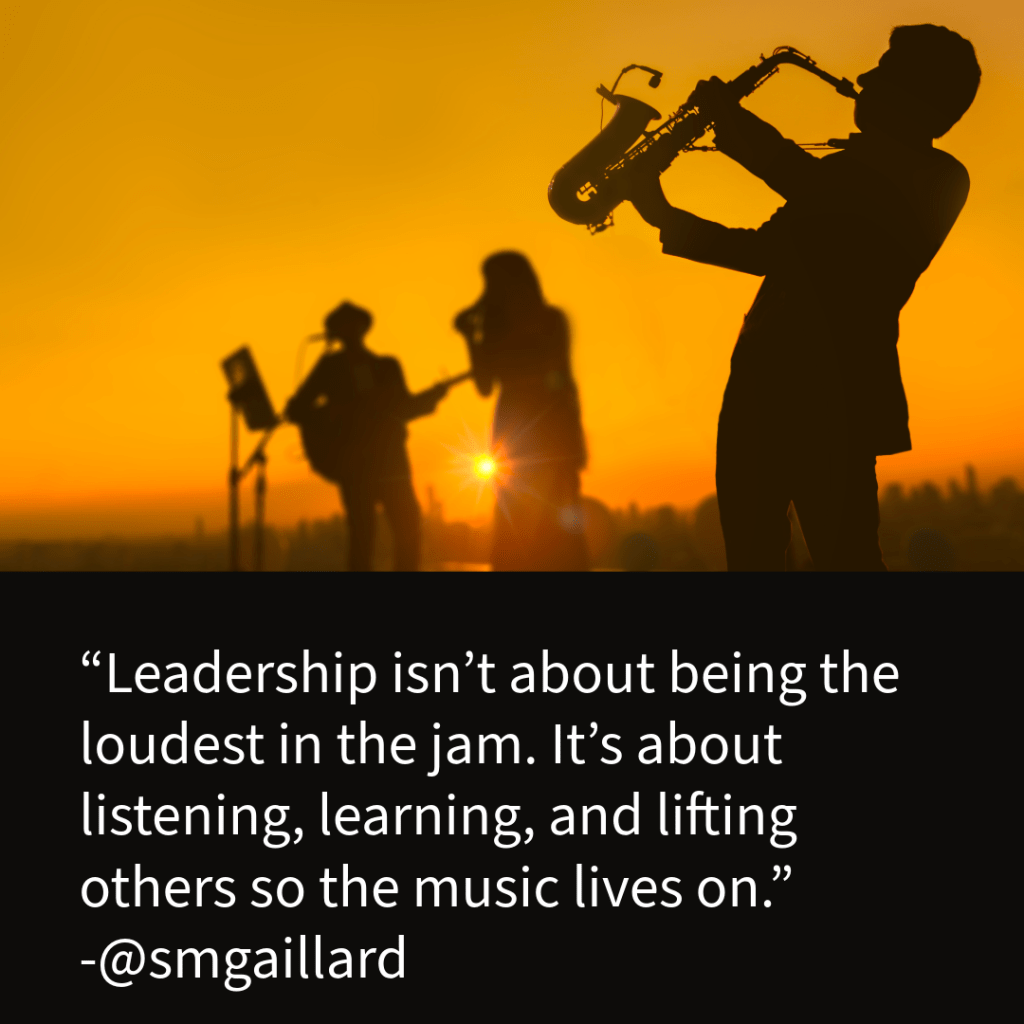
A Leadership Riff for You

Here’s a thought to share from my reflection and writing this morning.

I hope you know that your sound matters and any band is lucky to have you. I sure do believe in you. Thanks for being in the band!

The Loneliness of Leadership: A Heartfelt Reflection for School Leaders


Typically, I don’t write blog posts back-to-back. I’ve kept to a steady rhythm of weekly writing since my heart episode last year. That ritual has become part of my healing—recommended by my therapist, yes, but also something I’ve come to cherish. Writing has broken through the fog of writer’s block that followed the release of The Pepper Effect. Through journaling and reflection, I’ve found my way back to words and meaning. I am even working on finishing up a proposal for a new book.

But this piece couldn’t wait.

I’ve been sitting with a question no one prepared me for in “Principal School”:
Why does leadership have to feel so lonely?

It’s a question that’s erupted into big feelings—enough to make me pause on other writing projects and sit with this one instead.

There’s a scene in Peter Jackson’s Get Back documentary that lingers with me. George has left the band. A meeting doesn’t go well. Paul and Ringo return to the studio, uncertain of what’s next. John is nowhere to be found. Paul, visibly shaken, says quietly, “And then there were two.” He stares off into the distance. His eyes well with tears. His voice trembles. You can feel the grief. The possibility that something beautiful and world-changing might be coming to an end.

Watching that moment recently, I didn’t just see it through the eyes of a Beatles fan—I saw it through the lens of a leader holding onto connection, trying not to lose grip.

I’ve been a principal for almost sixteen years. I’ve served in multiple schools, answered the call for turnaround, and poured myself into the gig. I’m grateful for a beautiful family—my wife and three amazing daughters. Their love is a constant light. And I do have a handful of trusted friends, most not nearby. But I’ve felt friendship fade over the years—some lost to distance, some to time, some to disillusionment.

This is the part they don’t tell you about leadership. That people may see your title before they see you. That the weight of tough decisions can sometimes isolate you. That you’ll have days where it feels like everyone is counting on you—and no one is standing with you.

I once thought the PLN (Professional Learning Network) would solve this. Twitter, Voxer groups, hashtags that I created like #CelebrateMonday and #TrendThePositive—those were my entry points to community. And for a while, they worked. I met incredible educators, interviewed inspirational guests for the Principal Liner Notes podcast, and even achieved my dream of becoming a published author.

But not all connections held. Some collaborations quietly ended. Some people I looked up to didn’t turn out to be who I thought they were. And yes, I’ve even had a book idea stolen.

Still, I’m thankful for the moments of light in those spaces—moments when a shoutout brightened someone’s Monday or a podcast guest became a kindred spirit. Yet, after the episode ended or the tweet was sent, the silence would sometimes creep in.

Loneliness doesn’t negate purpose. It doesn’t mean the work isn’t good. But it does mean we need to be mindful of our well-being and human need for belonging.

Recently, I’ve had the privilege of co-facilitating the ISTE-ASCD webinar series with Andrea Trudeau. We’ve explored what it means to create spaces of connection and belonging—especially for those in unique roles like principals and school librarians. These conversations have reminded me that belonging doesn’t just happen. It’s a practice. A choice. A rhythm to keep playing, even when the band seems scattered.

In her book The Let Them Theory, Mel Robbins has a powerful chapter on the quiet heartbreak of adult friendships. She describes how friendships shift from group experiences to individual efforts—and how easy it is to look around one day and realize your circle has vanished. Her advice? Reach out first. Be kind without expectation. Smile. Be curious. Give it time.

It’s advice I’ve tried to follow, even when it’s hard. Even when it’s lonely.

So what do we do with this?

We remember that our core matters. Our heart matters. And so does connection.

Here are a few ways I’m working to move through leadership loneliness—and maybe they’ll help you, too:

  • Savor family and those who know you beyond your title. The gig will wait—those moments with loved ones won’t. I am grateful daily for my wife and our daughters and my family.
  • Reach out. A coffee, a text, a hallway chat. Don’t wait for someone else to go first.
  • Find “only ones” like you. Look for the school librarian, the instructional coach, the counselor—others who might be the only one in their role. Forge that bond.
  • Be vulnerable. Share your story. Someone else might need to hear it. I have been writing deeply about the experiences surrounding my heart episode. I am grateful that others have found it helpful for their journey.
  • Build something outside the gig. A book club. A podcast. A project that brings joy without the pressure.

You are not alone—even when it feels that way. Someone out there gets it. Someone is looking for connection, too.

Keep showing up. Keep being kind. Keep playing your part in this great, imperfect, meaningful symphony of leadership.


Postscript:
During those Get Back sessions, Paul’s loneliness was palpable. But the story didn’t end there. The band found their way back. The Beatles regrouped. And they gave us the Rooftop Concert—a final live performance filled with joy, grit, and unity.

It was their last time playing live together. And it was iconic.

A reminder that even in moments of disconnection, something timeless can still emerge.

A Postcard, A Drumbeat, and A Leadership Move: Building a Culture of Belonging

Earlier this week, Beatles fans around the world commemorated the 56th anniversary of their final live performance—the legendary rooftop concert atop Apple Records. Captured in Get Back and memorialized in Let It Be, this moment was their live swan song, a testament to creative courage and collaboration.

Last week, I wrote about Rooftop Moments—the bold, defining moments that school leaders should cultivate with their teams. But there’s another, lesser-known moment in Beatles history that happened the day after that performance. A simple yet profound leadership move.

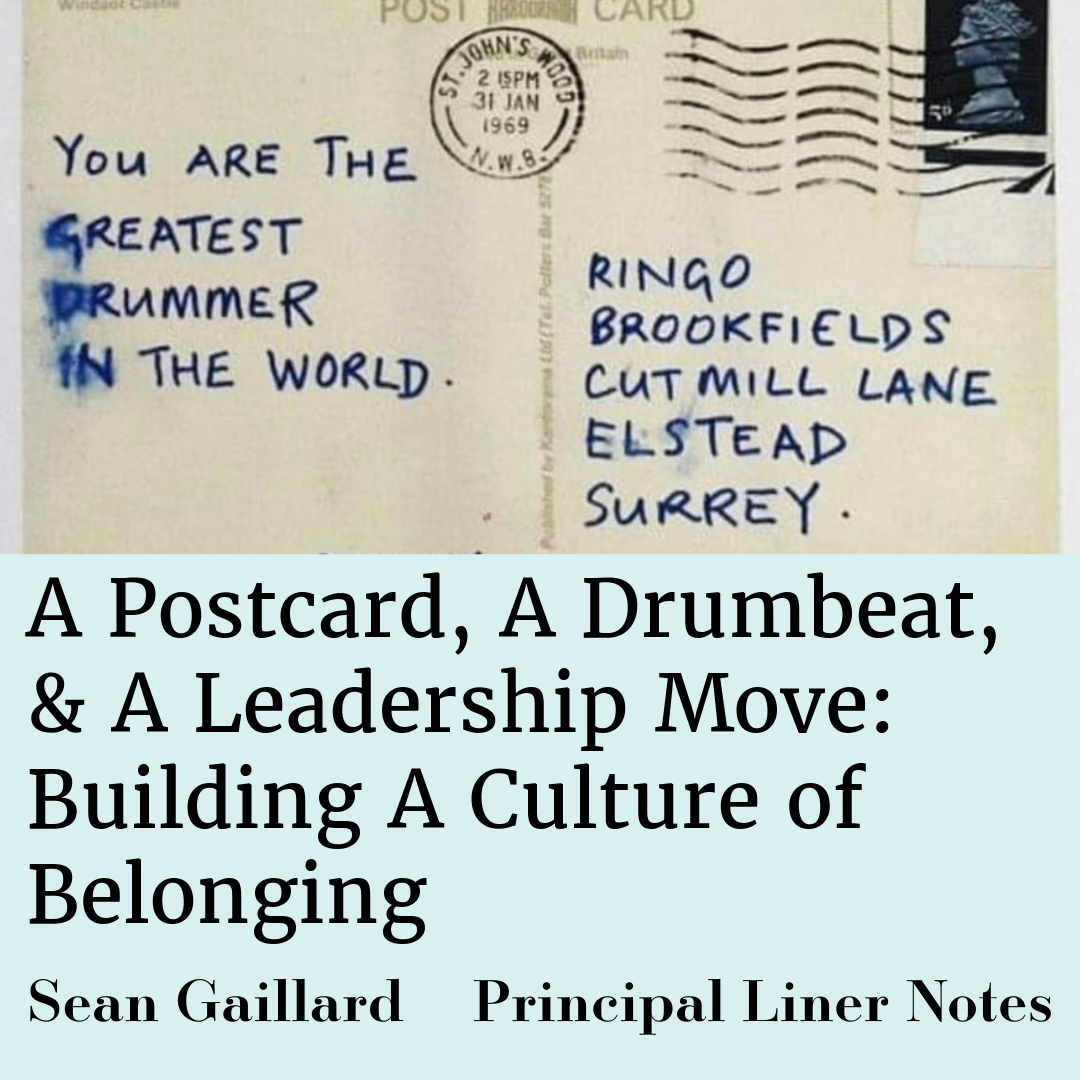
On January 31, 1969, Paul McCartney sent Ringo Starr a postcard that read:

“You are the greatest drummer in the world. Really.”

This wasn’t a public accolade or a grand gesture. It was a handwritten note—one musician reaching out to another, reinforcing connection and belonging. A small moment, but a significant one.

As school leaders, we talk about culture-building, trust, and recognition. Shoutouts in memos or emails are a start, but I’ve come to realize they often feel transactional, fleeting. Teachers deserve more than a quick mention in a newsletter that might be skimmed and forgotten. True belonging is built in the quiet, intentional moments—through handwritten notes and meaningful feedback.

The Power of a Handwritten Note

At Charles England Elementary, we start each faculty meeting with Praise and Thanks—a time to share shoutouts and gratitude. It sets a positive tone and creates psychological safety. But not everyone feels comfortable speaking in a large group, and exhaustion can sometimes make participation hard.

At a recent meeting, I placed blank Energy Bus-themed notes (inspired by Jon Gordon’s book) on tables and asked staff to write a message of gratitude to a colleague. No prompts, no pressure—just a moment to reflect and uplift. As I looked around, I saw teachers smiling, some wiping away tears, completely immersed in the moment. The next day, those notes found their way into mailboxes, and the ripple effect of encouragement began.

A handwritten note isn’t just ink on paper—it’s a tangible reminder that someone sees you. That your work matters. That you belong.

The Leadership Move: 30-Second Feedback

Another way we are reinforcing belonging is through 30-second feedback, a practice inspired by Mike Rutherford’s Seven Tools for Developing Teachers and Teaching (link). This simple but powerful strategy involves stopping into a classroom, identifying one specific positive thing, and sharing that feedback—either verbally or in a quick note.

Here’s what makes it work:

  • It’s not evaluative—just pure affirmation of great teaching.
  • It’s quick but intentional—a handwritten note, a short hallway chat, or a sticky note left on a desk.
  • It highlights strengths—no jargon, no checklist, just celebrating a moment of impact.
  • It builds connection—leaders engaging with teachers in a meaningful way, beyond scheduled observations.

I keep a pocketful of blank Post-its and make it a goal to visit at least three classrooms a day, leaving behind 30-second feedback. It’s transformed how teachers feel about their work. They light up, just like I imagine Ringo did when he read Paul’s postcard.

Four Ways to Build Belonging with Handwritten Notes & 30-Second Feedback

  1. Commit to Daily Touchpoints
    • Visit three teachers a day and leave either a quick verbal or written affirmation.
    • Track your visits to ensure everyone receives meaningful recognition.
  2. Use Specific Praise
    • Instead of “Great lesson!” try: “The way you engaged students in discussion today was fantastic. I could see their excitement!”
    • Authentic, detailed praise carries weight.
  3. Make Handwritten Notes a Habit
    • Keep blank notecards or sticky notes handy.
    • Surprise staff with a handwritten note in their mailbox or taped to their door.
  4. Encourage Peer-to-Peer Recognition
    • Incorporate note-writing into staff meetings or PLCs.
    • Provide postcards or themed templates to make it easy and fun.

A Legacy of Belonging

Think about the impact: just 90 seconds a day dedicated to 30-second feedback builds a culture where teachers feel seen, valued, and empowered. Multiply that over a school year, and you’ve created an environment where trust and belonging flourish.

As Meghan Lawson (link) reminds us in Legacy of Learning, these small wins shape the culture of a school. They’re the moments that keep teachers inspired and engaged.

56 years later, I’m still moved by a simple postcard between bandmates. It reminds me that leadership isn’t always about the big moves—it’s about the small, consistent moments of connection that build something lasting. Just like The Beatles, our legacy as educators is one of collaboration, impact, and belonging.

What’s your next leadership move? Maybe it’s as simple as writing a note.

The Heart of Leadership: Humility and Belonging

Earlier this week, our country lost a remarkable leader in former President Jimmy Carter. The tributes that followed didn’t focus on grand speeches or flashy displays of power. Instead, they celebrated Carter’s unwavering faith, his steadfast dedication to community, and his lifelong commitment to making the world a better place for others. His leadership wasn’t about being the center of attention or staging photo-ops; it was about rolling up his sleeves and humbly serving those around him.

As educators, we must ask ourselves: What kind of leaders are we striving to be? Are we chasing the spotlight or building the light in others? For too long, I’ve seen school leaders drawn to performative leadership—the standing on tables, the viral stunts, the costumes designed for “likes” rather than lasting impact. While these acts may entertain for a moment, they often fail to empower others or build the foundation of belonging that our students, teachers, and families need.

Leadership isn’t about gimmicks or self-promotion. True leadership lies in tuning into the gifts of others and encouraging them to follow their unique paths. It’s about listening more than speaking, serving more than being served, and building a culture where everyone feels valued, seen, and capable of greatness.

Jimmy Carter once said, “We must adjust to changing times and still hold to unchanging principles.” His words remind us that the principles of humility, service, and community are timeless in leadership. Humble leadership is a quiet force that lifts others without fanfare. It builds cultures of belonging, not through stunts, but through consistency, care, and compassion.

For many years, my father instilled in me the idea that greatness comes not from being on a stage but from being in service to others. He taught me to dare to be great by encouraging others to step off the sidelines and into their potential. As leaders, it’s our calling to help others “kick off the bench” and take those daring steps toward their own greatness.

Four Leadership Moves to Build a Culture of Belonging with Humility

1. Listen With Purpose

Create opportunities to listen to the voices of students, teachers, and families. Regularly ask, “What do you need?” or “How can I support you?” and act on what you hear. Listening isn’t just hearing—it’s responding with action and intention.

2. Celebrate Others’ Gifts

Leadership isn’t about being the hero of every story. Shine the spotlight on your team. Recognize the unique talents and achievements of those you serve. Build platforms where others can share their brilliance.

3. Serve Quietly and Consistently

Leadership is often found in the small, unseen moments. Show up early to greet students. Pitch in during tough times without announcing it. Let your actions speak louder than your words.

4. Model Humility in Every Interaction

Humility isn’t weakness; it’s strength in understanding that leadership is about others, not ourselves. Admit mistakes, ask for feedback, and be willing to learn alongside your team.

Let us step away from the noise of performative leadership and into the quiet power of service. Leadership isn’t standing on a table or staging antics that distract from our core mission. It’s about humbly helping others discover their greatness.

As I reflect on Jimmy Carter’s legacy and the lessons my father taught me, I’m reminded of the simple truth: Leadership is not about being in the spotlight—it’s about igniting the light in others. Dare to be great by building a culture where everyone belongs and is empowered to lead.

Let’s get to work, sleeves rolled up, hearts full of humility, and hands ready to serve.

Beat Support Revisited: Leadership in Rhythm

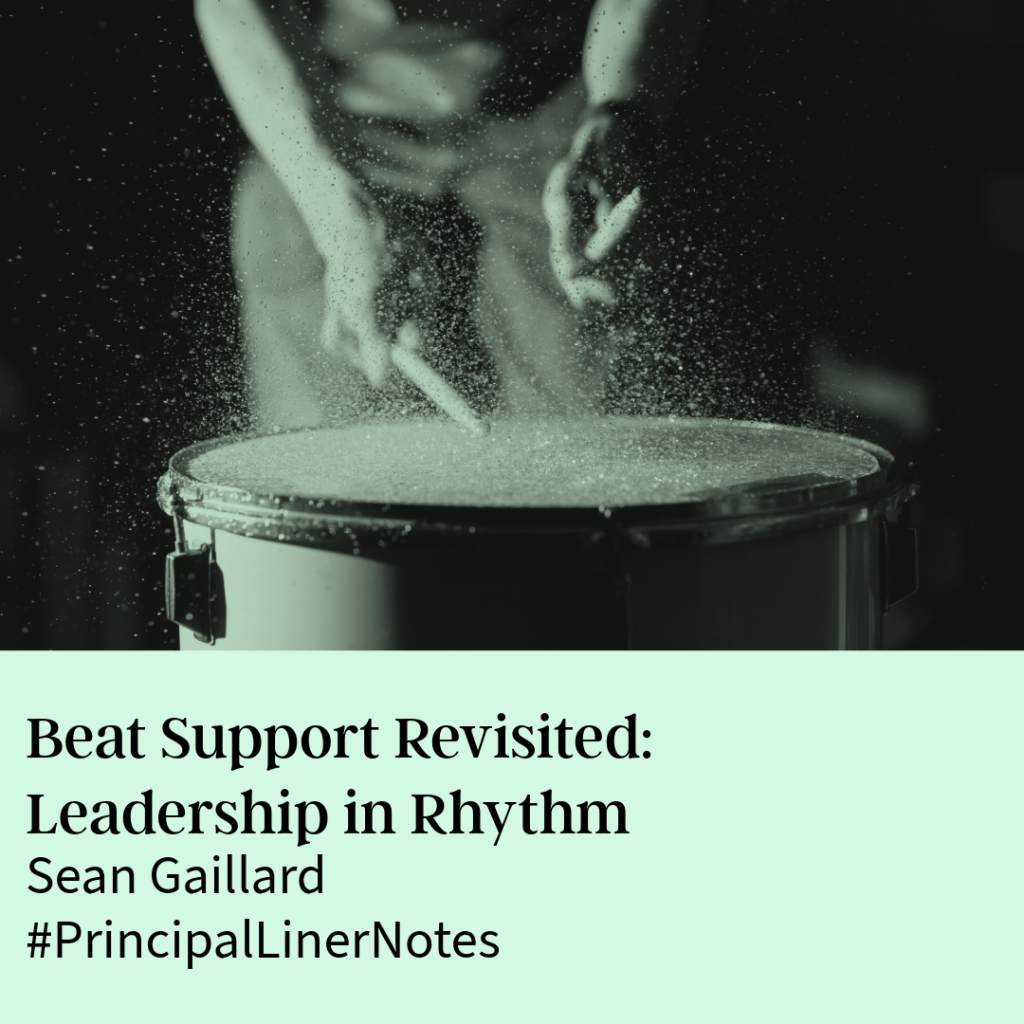
Leadership can feel like navigating the swirling chaos of a live performance—where the screams of the crowd threaten to drown out your rhythm. As school leaders, it’s easy to get lost in the noise, but it’s in these moments that we must tune into those around us. The people we lead and serve are our rhythm section, and finding the right “beat support” can make all the difference.

I’ve been reflecting on this idea recently, inspired by a moment I once shared on my podcast, #PrincipalLinerNotes. Years ago, during one of my “Impromptu Carpool Episodes,” I recorded an off-the-cuff reflection about a clip of The Beatles performing “I Feel Fine” live. Amidst the chaos of Beatlemania—where stage monitors were nonexistent and screaming fans drowned out everything—Paul McCartney stepped in with a move of pure leadership. During Ringo Starr’s incredible drum break, Paul gave a quick cue, counting Ringo back in and ensuring he nailed his return to the beat.

That moment wasn’t just about music; it was a masterclass in leadership. It demonstrated the importance of being attuned to your team, providing support when they need it, and ensuring that everyone finds their rhythm.

The Rhythm of Belonging

I explored this connection between The Beatles, leadership, and education in my book, The Pepper Effect. In it, I share lessons from the Fab Four that remind us of the power of collaboration, creativity, and connection. (You can check out the book here! The Pepper Effect on Amazon).

One of the most important lessons from both The Beatles and leadership is the role of belonging. As leaders, we need to provide the cues and support that allow our team to thrive. Whether it’s a trusted teacher who serves as your barometer or the intentional moments where you help others find their groove, belonging starts with building connections.

Four Ways Leaders Can Build Beat Support

Here are four actionable ways leaders can create their own “beat support” and foster belonging:

1. Find Your Barometer

Identify someone you trust—someone who will be honest with you—and use them as a gauge to understand how your decisions and words land with your team.

2. Be a Barometer for Others

Provide clear and supportive cues for your team. Let them know where they stand and help them feel confident in their role.

3. Celebrate Strengths

Like Paul recognizing Ringo’s brilliance, tune into the unique gifts of your team members and amplify their contributions.

4. Create Collaborative Spaces

Build opportunities for your team to share ideas, support each other, and work toward common goals. Belonging grows in the spaces where collaboration thrives.

What’s Next: Why The Beatles Matter

This reflection on leadership, belonging, and The Beatles has inspired me to launch a new podcast called “Why The Beatles Matter,”starting December 12. This podcast will explore the lasting impact of The Beatles and their legacy through conversations with people whose lives have been shaped by their music and message.

I’m looking for future guests to share their stories of how The Beatles inspired them. If you’d like to join me on this journey, email me at sgaillard84@gmail.com. Spaces are filling up fast.

Now and Then, There Is Hope

Now and Then, There Is Hope

Hope is something we all need. Whether we’re leading a school, guiding a team, or simply navigating the ups and downs of daily life, hope serves as our compass. It’s the whisper that reminds us we’re on the right path, that our vision matters, and that our efforts have the potential to create something meaningful.

But let’s be real—there are days when the compass feels broken. Days when we question our choices, when doubt creeps in, and Imposter Syndrome casts a shadow over our accomplishments. I’ve been there. We all have. And in those moments, I’ve learned that it’s the small, unexpected flashes of hope that keep us going: the spontaneous smile from a student as I walk down the hallway, the moment a teacher’s lesson hits its stride, or even a kind text from a loved one reminding me I’m not alone in this work.

Sometimes, hope arrives in the form of a song. As many of you know, I’m an unabashed Beatles fan. From The Pepper Effect to #ThePepperEffect, to countless references in talks, blog posts, and podcasts, The Beatles are my creative wellspring. My book, The Pepper Effect, explores the lessons of collaboration, creativity, and leadership that can be drawn from The Beatles’ groundbreaking Sgt. Pepper’s Lonely Hearts Club Band. If you’d like to learn more about it, you can check it out here.

Last year, I had the privilege of writing a piece for Culture Sonar about Now and Then, the “last” Beatles song. The story behind this song resonates deeply with me as a testament to the power of hope. You can read that full piece here.

The story of Now and Then is itself a lesson in hope and perseverance. John Lennon recorded a rough demo at his piano in 1977. When the surviving Beatles—Paul McCartney, George Harrison, and Ringo Starr—tried to finish it in the mid-90s, the project hit a wall. The synergy wasn’t there, and the technical limitations made it impossible to isolate John’s vocal clearly. The song was shelved, unfinished, but Paul never let it go. He believed there was something special in John’s demo—a spark waiting to ignite.

Decades later, in 2022, Paul and Ringo revisited Now and Then. With the help of advances in AI and the brilliant production skills of Giles Martin (son of George Martin, The Beatles’ original producer), they were able to clean up John’s vocal and add new musical elements. In 2023, the song was released, and for me, it felt like the world was witnessing a small miracle—a moment when something lost was found again. It was a triumph of hope, a testament to the belief that the impossible can become possible.

Earlier this week, I heard the news: Now and Then has been nominated for a Grammy Award for Record of the Year. It’s a powerful reminder that music—like hope—has the power to change the world. This song, born from a rough demo and sustained by Paul McCartney’s unwavering belief, is a symbol of what can happen when we refuse to give up on something that matters. It’s a lesson for all of us as leaders: sometimes, our vision won’t be embraced right away. There will be times when our ideas are met with polite nods or silence. But that doesn’t mean the idea isn’t worth pursuing. It just means we need to persevere and trust in the process.

Hope isn’t just a feeling; it’s a leadership move. It’s the quiet persistence to revisit ideas, to keep communicating, to invite others to collaborate and play together in the sandbox of possibility. I think about my latest initiative at school—the Principal Read Aloud. As a new leader, I wanted to find a way to connect with our students and teachers, to build trust and community. I proposed giving teachers a 30-minute break while I read aloud to their classes. It’s a simple idea, but it’s grounded in hope and the desire to show our school community that I’m here for them.

So far, only two teachers have signed up, and that’s okay. I’m hanging in there, just like Paul McCartney did with Now and Then. I believe in this small act of connection, and I’m willing to wait for it to grow, one read-aloud session at a time. Because that’s what hope looks like—it’s the willingness to keep showing up, to keep believing in the possibility of something beautiful taking shape.

As leaders, we have to hold onto hope like a North Star. It’s our guiding light, helping us navigate through challenges and inspiring others to do the same. Whether it’s in our school hallways, our team meetings, or even in the quiet moments of reflection, we have to keep hope in the foreground. It’s not always easy, but it’s always worth it.

And as The Beatles remind us in their final song, hope is the thread that ties the past, present, and future together. Now and then, there is hope. It’s what brings us back, time and time again, to believe in the magic of possibility and the power of collaboration.

Let’s keep hope alive in our leadership moves. Let’s embrace the small moments that spark joy and connection. Let’s take the time to revisit old ideas, to share our vision with others, and to trust that, in the end, something beautiful will emerge.

Tune in to Hope:

  • Embrace Small Acts of Connection: Like my Principal Read Aloud, find simple ways to show your heart and commitment to your school community.
  • Persevere with Your Ideas: Even if your vision isn’t immediately accepted, keep refining and revisiting it. Trust that it has the potential to resonate with others over time.
  • Invite Others to Collaborate: Hope grows when we invite others to join us on the journey. Create space for shared ownership and creative contributions.

The journey of Now and Then is a reminder that we’re all part of something bigger. When we lead with hope, we open the door for new possibilities to enter, and that’s when the real magic happens.

Listen to Now and Then by The Beatles here.

#NowAndThen #LeadershipRiffs #TuneIntoHope


Links:

Every Principal Needs a Thought Partner

What They Don’t Teach You in Principal School

There are many lessons learned in the proverbial “Principal School.” I am grateful for my graduate courses in school administration. But as I near year 17 as an administrator, I reflect on those lessons that weren’t taught in class but were learned on the job and in the moment.

One of the most significant lessons I had to learn on the job is this:

Leadership can be a lonely gig.

Let that sentence sink in. As a school principal, I’ve been blessed with countless experiences where I’ve served others and had the opportunity to make a positive impact. The days filled with fist pumps, laughter at my corny jokes, beautiful moments where a student discovers the joy of learning, or when a teacher steps into a teachable moment and ignites a synergy of learning—those moments are inspiring and reassuring. Yet, there are also days when tough decisions must be made, and you’re met with resistance. The stress of leading change can be intense, especially when met with hesitation. There’s an aura of isolation that can follow the principal because you’re the lone person with that title in the schoolhouse.

I often reflect on John Fogerty’s story about performing with Creedence Clearwater Revival at Woodstock. Their late-night set followed the Grateful Dead, and much of the audience had fallen asleep. Fogerty shared how disconnected they felt from the crowd until one audience member yelled out, “Don’t worry, John, we’re with you.” Those words compelled Fogerty to play harder and persevere. In many ways, the principalship mirrors this experience. We often lead schools against the grain of the status quo, pushing forward even when we feel isolated. But just like CCR did at Woodstock, we find our groove and keep playing, leveraging good things for others.

You Are Not Alone

There are many ways principals sustain their leadership purpose. We read, attend conferences, pursue camaraderie with other school leaders, hit the gym, and connect with families. These activities are essential to maintaining our well-being as leaders. But perhaps one of the most crucial aspects of our roles is maintaining connection and rapport. Due to the intense nature of our position, isolation can creep in, making it vital for us to find our own “band” within the school—a leadership team, instructional leadership team, or PLC. This collaborative cohort within the building is essential for battling isolation.

Every principal needs a thought partner. In a recent discussion on my #PrincipalLinerNotes podcast, I had the joy of talking with School Librarian Extraordinaire, Andrea Trudeau. We discussed the unique partnership between a principal and a school librarian. Both roles often stand alone in the schoolhouse, making intentional collaboration necessary. This conversation enlarged my thinking on the essential nature of thought partnership. A principal needs someone to share ideas with, dream big with, and sometimes pull them back down to earth. A thought partner can help battle isolation and serve as a bridge for collaborative camaraderie—a reminder that you’re not the only one.

Epiphanies in the PLN

As a connected educator, I take great care to nurture my Professional Learning Network (PLN). I work to forge connections for collaboration and learning with other educators and school leaders. It’s one way I combat the isolation that can accompany the principalship. Finding kindred spirits in my PLN is invaluable; I can connect with digital thought partners who trade ideas and share resources. I also appreciate the outreach I can maintain by sharing content through my podcast and blog.

However, the other day, I faced a moment of doubt when something in my PLN caused disappointment. I considered pausing my writing and podcasting, feeling irrelevant and as if I were shouting into an echo chamber. As I lamented this with a friend, they reassured me and provided inspirational context, lifting my spirits. What sealed the deal was a brief message from someone in my PLN, expressing gratitude and support for a recent podcast episode. This reminded me that just as I need thought partners, others rely on me to be theirs. Thought partnership is a mutual exchange of ideas, rapport, and support.

It was a timely reminder to continue writing and podcasting and an essential signpost for my “why” as a leader and principal. While it’s wonderful to connect with kindred voices in the PLN, it’s equally important to remember the impact we can have on others.

Three Actionable Ideas for Principals to Connect with Thought Partners:

  1. Cultivate a Leadership Team within Your School: Identify and nurture a group of trusted colleagues who can serve as your sounding board and thought partners. This team can help you navigate challenges, brainstorm solutions, and maintain a sense of camaraderie within the building.
  2. Engage with Professional Communities: Actively participate in communities like ASCD and ISTE. These organizations offer a wealth of resources and opportunities to connect with other leaders. Engaging in these spaces allows you to find thought partners beyond your district and stay current on best practices in education.
  3. Leverage Your PLN: Make it a habit to connect with your PLN regularly. Whether through social media, virtual meetups, or collaborative projects, your PLN can be a source of inspiration, support, and fresh ideas. Don’t hesitate to reach out to others in your network when you need advice or want to share a breakthrough.

The Power of Thought Partners and Belonging

Every principal needs a thought partner. It’s not just a nice-to-have; it’s essential for thriving in our roles. The gig doesn’t have to be lonely when we intentionally seek out those connections that can uplift us, challenge us, and remind us why we do what we do. Cultivating a sense of belonging within our profession isn’t just about finding camaraderie; it’s about fortifying our leadership purpose and ensuring that we’re equipped to lead with clarity and passion.

It’s equally important to recognize the value of thought partners within our own buildings. Seek out those colleagues who, like you, are the only ones with their title in the schoolhouse. Whether it’s the school librarian, counselor, or instructional coach, these individuals can become invaluable allies in your leadership journey. Forge those connections, share your vision, and collaborate intentionally. Together, you can create a network of support that strengthens not only your leadership but also the culture of your school.

Remember, the best leaders are those who know how to connect, collaborate, and create a community where everyone feels they belong. Embrace the opportunity to grow alongside your thought partners, and let that sense of belonging fuel your drive to make a positive impact every day.

Listen to the latest episode of #PrincipalLinerNotes featuring Andrea Trudeau here.

Inspiring Leadership Symphonies in the Keys of Culture and Trust

There is a famous moment in the history of conducting with the great Leonard Bernstein where he lowers his baton and conducts the orchestra with simply his face. This beautiful moment, which I learned about years ago from a colleague through a TED Talk on leadership and the art of conducting, continues to resonate deeply with me. Itay Talgam facilitates this TED Talk by using various clips of conductors to illustrate different leadership styles. The sequence of Bernstein conducting with just his face is highlighted by Talgam as an aspirational portrait of leadership that fosters a culture of trust and empowers others.

Seeing Bernstein loosen his hold as conductor, caught up in the realm of musical expression and trusting the orchestra to deliver the beautiful nuances of a Haydn symphony, is profoundly moving. The pride and love emanating from Bernstein’s face are palpable. He still guided and responded with his expressions, but he lowered his baton to symbolically and literally exemplify the trust he had in his musicians. This shared delight illustrates an essential aspect of leadership—it’s not about creating followers, but about empowering others to lead. Bernstein shows the humility and trust that leaders must possess to elevate their teams and organizations to new heights.

Our Gig as Leaders

When coaching or advising aspiring leaders, I emphasize that our role is not to build a following. We are called to empower others, tap into their strengths, and motivate them to lead. I have seen many leaders build a cult around their leadership persona, a detrimental move that inhibits growth, breeds toxicity, and ultimately dulls any impact on the students we serve. It is vital for leaders to foster a culture of trust, surrounded by a shared and purposeful vision. This is not a one-time event but a daily commitment that must be modeled with sincerity and led with our authentic selves.

As I near my 17th year in school administration, I am learning the essence of leading with my authentic self and tuning into the gifts of those I serve. Leadership is not about titles, staged selfies, or social media analytics; it’s about recognizing the gifts in others and helping them realize their best selves. Sometimes, we have to step off the conductor’s podium and lower our baton so the orchestra can create its music. We, as leaders, must steward a culture that inspires others to lead. That’s the gig.

My Bernstein Leadership Moment

While I am nowhere near the charismatic leadership of Leonard Bernstein, I had a moment that resonated with the love and pride he felt for his orchestra. This past week, I was immersed in our School Improvement Team Retreat at Charles England Elementary School in Lexington, NC. In my new role as principal, I have been savoring every minute, returning to this district. Although my time here has been short, I truly love the community and appreciate the direction we are heading in service of our kids.

Our retreat involved hard work planning for the year ahead and crafting the next steps to build a culture of trust and inspiration. We analyzed data, built a yearly calendar, and devised a master schedule. Each day concluded with a restorative circle where we shared strengths, learning, and praises for teammates. I cherished this intense collaboration and look forward to our future steps together. I have made intentional efforts to be open, vulnerable, and honor the gifts of others on the team. We leaned into hard conversations, but we also laughed and enjoyed each other’s company. I wanted to make sure that everyone felt psychologically safe and I kept giving voice to that. Additionally, I wanted to make sure that I was honoring their respective voices, so I was intentional in the scheduling of breaks, reflection times, and collaborative activities.

On our final day, I was exhilarated to see the team and eager for another productive day of collaborative work. Arriving early, my assistant principal shared that the team was already working on polishing our school improvement plan goals from the previous day. I hurried to our planning space and found the team deeply engaged. I was amazed and inspired, tiptoeing around the room to avoid disrupting their momentum. It felt like watching a great jazz band improvising and being in the groove of the moment. Actually, my mind wandered to the moment of Bernstein conducting the Haydn symphony and letting go. This was my Bernstein moment.

Filled with inspiration, I expressed my gratitude and joy at their leadership and collaboration. It was truly a moving moment that will be embedded in my memory forever. The energy in the room was palpable. The smiles were contagious. We had reached a mountaintop together.

As leaders, we must sometimes step back and let the momentum and learning happen. By stepping aside and guiding, we create space for learning, collaboration, and progress. Having the podium and baton doesn’t mean we must conduct with a heavy hand. We invite others on the podium with us and share the joy in conducting and composing a symphony together. By inviting others to compose the symphony with us and playing to each other’s strengths, we collectively create a beautiful and lasting sound.

Building a Culture of Trust: Four Moves for School Leaders

  1. Model Authenticity: Be genuine and transparent in your actions and decisions. Your authenticity will inspire trust and encourage others to lead with their true selves.
  2. Empower Through Delegation: Trust your team with responsibilities and opportunities to lead. This not only builds their confidence but also fosters a sense of ownership and accountability.
  3. Foster Open Communication: Create an environment where open and honest communication is valued. Encourage feedback, listen actively, and act on the insights shared by your team.
  4. Celebrate Strengths: Recognize and celebrate the strengths and achievements of your team members. Highlighting their contributions builds morale and reinforces a culture of mutual respect and trust.

For further inspiration, explore the following resources:

By embracing these principles, we can create a culture of trust and empowerment that enables everyone to lead and succeed. That’s the true symphony of leadership.