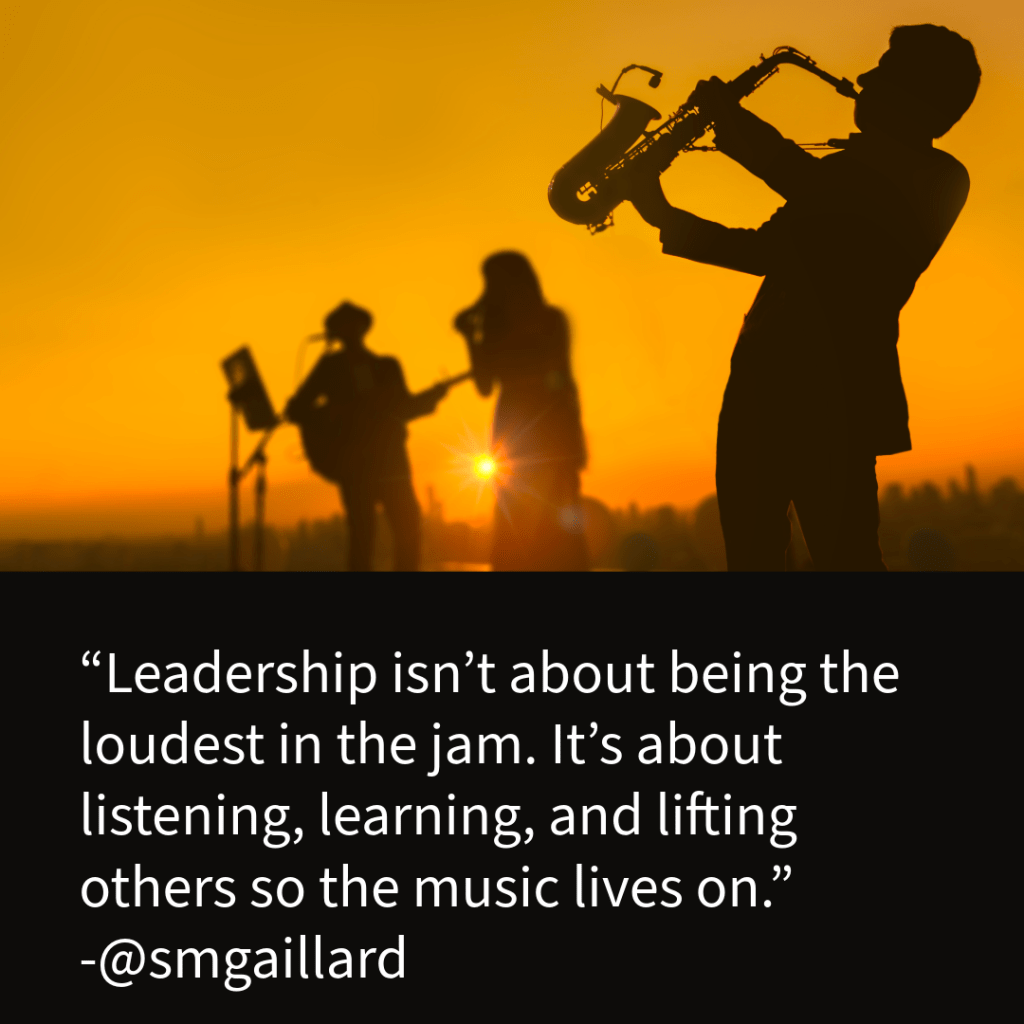
Here’s a thought to share from my reflection and writing this morning.
I hope you know that your sound matters and any band is lucky to have you. I sure do believe in you. Thanks for being in the band!
Here’s a thought to share from my reflection and writing this morning.
I hope you know that your sound matters and any band is lucky to have you. I sure do believe in you. Thanks for being in the band!
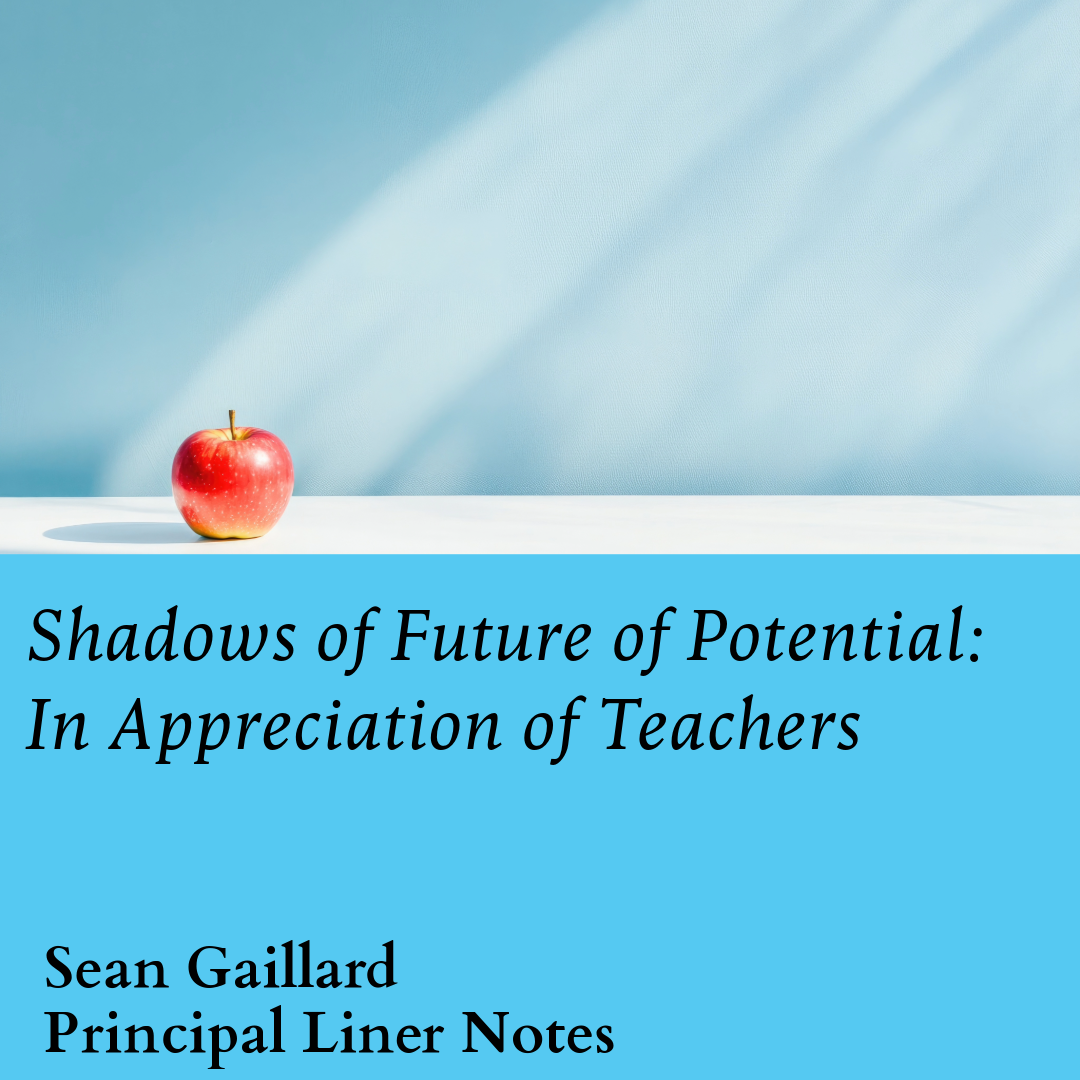
In an old comic book from my childhood, there’s a powerful image that has always stayed with me. It was an issue of Detective Comics that told the origin story of Batman. A young Bruce Wayne walks into Wayne Manor, ready to begin his hero’s journey. As he enters, his shadow stretches behind him—not as a boy, but as the full-formed silhouette of Batman. It was a simple panel, but it carried a profound truth: even in our earliest steps, the shadows of our future potential are already taking shape.
This image made me think about our calling as educators. Every day, we walk alongside students and teachers who are living their own origin stories. Some are just starting out, unsure of who they are or where they belong. Yet within them, we can glimpse the shadows of what they may become—leaders, artists, scientists, changemakers, or quiet heroes who make the world better in unseen ways.
This week is Teacher Appreciation Week, a moment to celebrate the educators who see those shadows before anyone else does. Teachers have a remarkable gift—a kind of superpower. They tune into the potential of their students and help them believe in it, even when the students can’t yet see it for themselves. Our teachers transform the impossible into the possible. They are not just instructors; they are cultivators of hope.
As school leaders, we are called to be architects of that hope. Our job is to build cultures where teachers are empowered to do their best work—where they can create the conditions for students to discover who they are meant to be.
I’ll never forget my fifth-grade teacher, Mrs. McMonagle. I was a new student, the only Black child in the class, adjusting to a new school in a new state. I felt lost—alienated, unsure, and afraid. But Mrs. McMonagle saw something in me that I couldn’t see in myself. She created a space where I felt seen and welcomed. She introduced me to the joy of writing, literature, and even encouraged my growing love for The Beatles. She pushed me, challenged me, and inspired me. I am forever grateful for the way she believed in me and gave me a sense of belonging.
Everyone carries the shadow of future potential. Teachers have a special sense for detecting those shadows and helping students realize the greatness within them. This week, and every week, let’s honor and celebrate that gift.
Here’s to the ones who chose to build trajectories of hope in our classrooms. Here’s to the ones who see the future before it arrives.

As I write this, I’m sitting with the weight of another school year nearing its close—reflective, grateful, and searching for meaning in the midst of it all.
I’ve been a principal for 16 years. I’ve poured myself into school after school, often the ones that needed the most care. I’ve stood on stages, been a finalist for NC Principal of the Year, written a book from my heart, and still—there are moments, like now, when I wonder if it’s all making a difference.
Maybe you’ve felt that too.
Lately, I’ve been thinking about The Beatles.
Specifically, August 29, 1966—their last public concert at Candlestick Park in San Francisco. They had reached a breaking point. They felt like they weren’t playing well. Between public backlash over John Lennon’s remarks about The Beatles being more popular Jesus Christ and diplomatic fallout in the Philippines from unintentionally snubbing the President and First Lady there, the pressures became too much. So they did something radical—they stepped back. No farewell tour. No grand finale. Just a quiet pause.
Each band member took time to rediscover who they were beyond the noise. John went to Spain to film How I Won the War. Paul collaborated with George Martin on a film score. George immersed himself in sitar studies with Ravi Shankar in India. Ringo stayed home to be with his family.
Then, something beautiful happened.
They returned—not to the stage, but to the studio. And from that retreat came a wave of brilliance: Strawberry Fields Forever, Penny Lane, Sgt. Pepper’s Lonely Hearts Club Band.
All of it began with a pause. A reset. A reclaiming of identity. A spark of innovation that changed the face of Music.
As leaders, we may not have world tours or screaming fans, but we do know what it feels like to carry the weight of expectations and the constant drumbeat of demands. In that rhythm, we can forget to care for ourselves in the same way we care for others.
We all crave connection. We all crave belonging.
And while we work so hard to create that for our teams, our students, and our communities—we must also remember to create it for ourselves.
Take the walk.
Play the record.
Write what’s on your heart.
Give yourself the same grace you offer to everyone else.
It’s easy to fall into the comparison trap—scrolling through highlight reels, seeing the accolades, the applause, the polished smiles. I’ve been there too. But the truth is, none of that defines your worth or your purpose.
Your worth is in the quiet moment with a student who needed someone to believe in them.
It’s in the coaching conversation that sparked a teacher’s growth.
It’s in the way you show up—consistently, compassionately, courageously.
You may not always see the impact. But it’s there.
If you’re at a crossroads, unsure of what’s next, or simply longing to feel grounded again, let this be your reminder:
Somewhere in the universe, someone believes in you completely.
Not for your title.
Not for your credentials.
But for who you are. For how you lead with heart. For how you care, even when it’s hard.
You matter.
Your leadership matters.
Your impact matters, and it will continue to do so in ways seen and unseen.
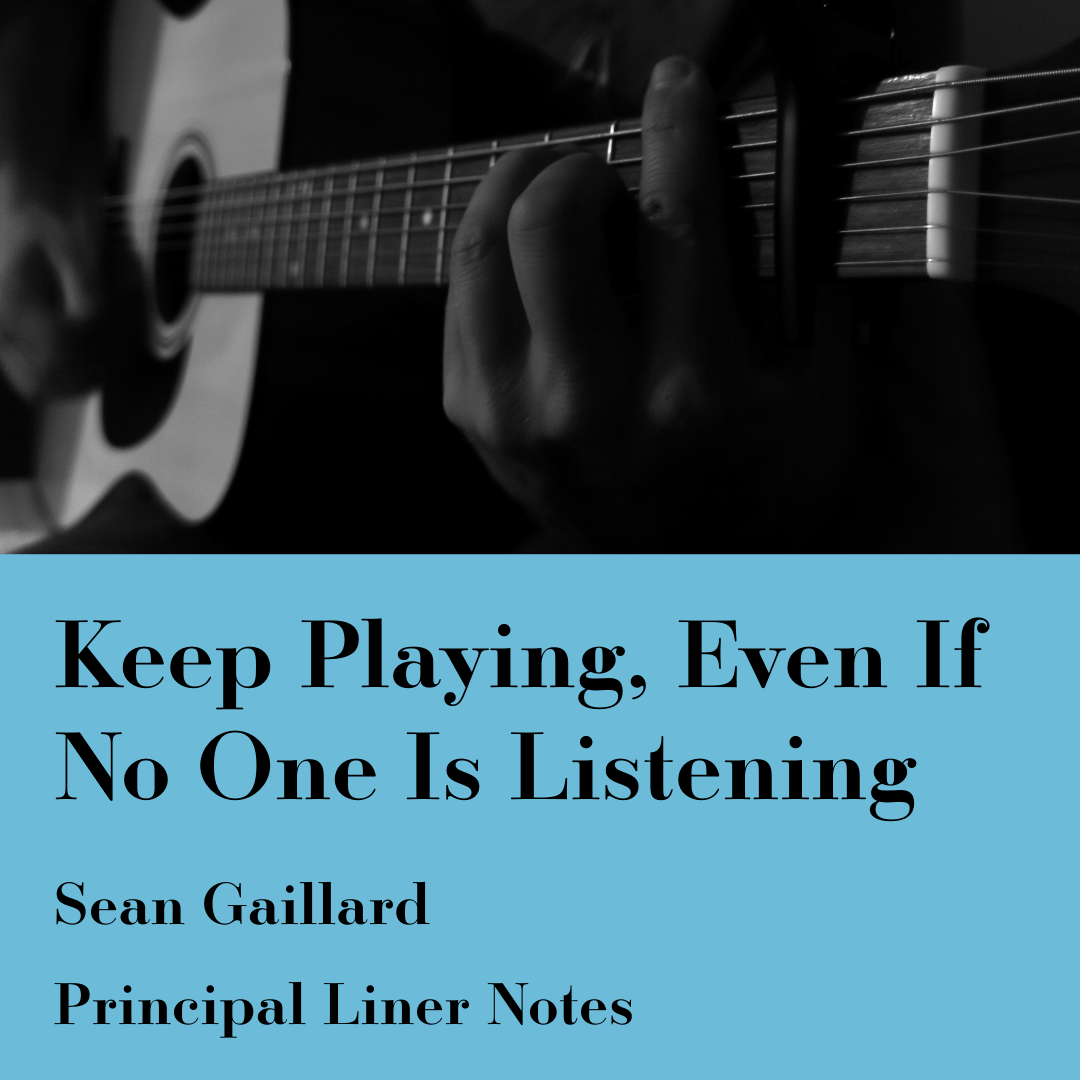
There’s something powerful about picking up the guitar, writing the words, and hitting record—even when it feels like no one is tuning in. The greatest artists, thinkers, and change-makers didn’t wait for an audience before they started creating. They played. They wrote. They spoke. They persevered against the silence.
Paul McCartney recorded McCartney alone, layering every instrument himself. Bruce Springsteen stripped it all down and put out Nebraska, unsure if anyone would connect with its raw vulnerability. Nick Drake’s Pink Moon was met with quiet indifference at first, only to become a masterpiece embraced long after he was gone. These albums weren’t made for applause; they were made because the artist had to create.
The same applies to you. Your words, your leadership, your creativity—it all matters, even if it feels like no one is paying attention. Keep writing the blog. Keep crafting the lesson. Keep showing up for your students and colleagues. Someone, somewhere, will be moved by your work when they need it most.
The silence isn’t a signal to stop. It’s an invitation to keep going. #LeadershipRiffs
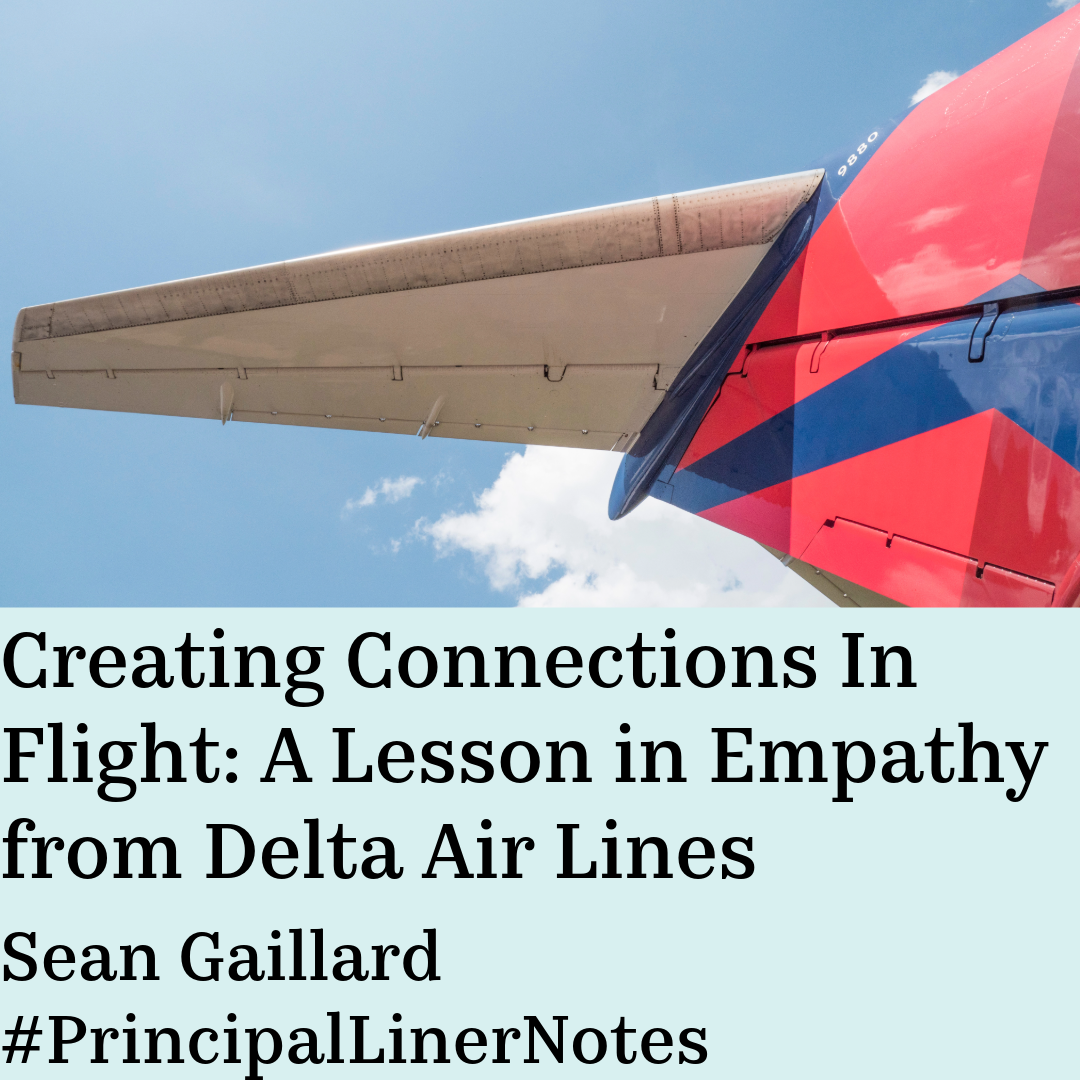
As many of my close friends and family know, I am a nervous flyer. Over the years, I have had to face this fear head-on, seeking the support of a therapist and using strategies, including medication, to overcome the challenges of flying. While it hasn’t been easy, I’m proud of my ongoing efforts to confront this fear.
Flying isn’t something I do often—time and expense tend to be barriers—but recently, I had the opportunity to attend the National Education Leaders Workshop in Atlanta. It was an incredible event, full of ideas on reimagining teaching and learning in the schoolhouse. To experience it, though, I had to book a flight.
Before the trip, I reviewed my strategies with my therapist and felt optimistic. For the first time in a long while, I didn’t feel that familiar pit of anxiety in my stomach as I prepared for the flight. Instead, I felt calm anticipation.
As I sat at the gate with my colleagues, I began to notice small, powerful moments unfolding around me. At one point, a pilot walked out—likely heading for a quick coffee—and spotted two young boys playing with a toy plane. He knelt down to greet them warmly, telling them how excited he was to have them on his flight. Then, he invited them and their parents to visit the cockpit before takeoff. Later, as I boarded, the gate agent greeted each passenger—including me—by name. Touched by her effort, I made sure to thank her personally, using her name from her nametag.
These intentional acts of connection helped dissolve any lingering nervousness I had about the flight. They also served as a powerful reminder of the importance of small, meaningful gestures in leadership. Witnessing those moments inspired me to think about how such intentional actions could foster trust and belonging in the schoolhouse, reaffirming my commitment to creating a culture of connection in our community. The flight itself was smooth, and I even shared a lighthearted exchange with the pilot, who joked about our shared baldness. These small yet meaningful moments reminded me of a recent book I read, Unreasonable Hospitality by Will Guidara. It’s a must-read for leaders who want to create cultures of connection and build meaningful moments within their organizations. Check out the book here.
Delta Airlines demonstrated a commitment to humanity and empathy during that flight, and it left a profound impact on me. Their intentional gestures—from personalized greetings to creating special moments for passengers—highlight the power of thoughtful actions. As a school leader, this translates to practices like ensuring every student and teacher feels personally welcomed, celebrating achievements in visible ways, and creating opportunities for connection that make each person feel valued and supported. Their thoughtful gestures weren’t just routine—they were intentional, and they made me feel seen and valued. As a school leader, this experience reinforced my belief in the power of small yet meaningful actions to create a culture of connection in the schoolhouse.
The Delta crew had no idea I struggled with flight anxiety, but their thoughtful actions created an environment where I felt safe and at ease. Similarly, in our schools, we may not always know the struggles our students, teachers, families, and staff carry with them each day. It is our responsibility to create an atmosphere of psychological safety—a place where everyone feels supported and valued.
Each act of connection, no matter how small, sends a powerful message: “You matter. We’re glad you’re here.” When we lead with hope and belief, we create ripples of positivity that can transform our schoolhouse communities. Let’s commit to making these moments a daily practice, knowing that our words and actions have the power to uplift, inspire, and connect.
As a principal, I often find myself dreaming big. I thrive on the grand visions, the Moonshot thinking, and the aspirational moves that inspire transformation. I envision a schoolhouse where many hands work together, creating a masterpiece of learning. But here’s the thing: while I may live in that realm of possibility, I know not everyone shares the same bandwidth or sense of urgency. We all move at different speeds, and it’s our responsibility as leaders to gauge where our teams are. To lead effectively, we must be visible, be present, and most importantly, listen. It’s through this intentional awareness that trust is cultivated.
In the past year, I’ve found a renewed appreciation for the power of small wins, a lesson beautifully captured in two books that have become cornerstones of my leadership practice: Legacy of Learning by Meghan Lawson and The Leader Inside by Lauren Kaufman. Both authors remind us of the importance of celebrating small moves as stepping stones to greater heights. They offer a powerful perspective on how small, intentional acts can build momentum, nurture growth, and foster a culture of progress.
In today’s educational landscape, many of us are feeling the weight of the pandemic’s aftermath and the uncertainties of new challenges. I see it daily in our school—a fatigue that cannot be lifted by a Jeans Day or a Donut Party. We need more than quick fixes or temporary boosts. As leaders, we must make deeper, more intentional moves that celebrate small wins and bring joy back into our school communities.
One way I’ve embraced this approach is through curating Images of Possibility. I’ve been using Wakelet to capture and share snapshots of the good happening in our schoolhouse—students smiling, engaging in hands-on learning, or experiencing new adventures like a virtual field trip to Alaska via Nearpod. I sent this Wakelet collection to our staff with a simple note, inviting them to pause and savor these moments. It was a small gesture, but it created a powerful ripple of positivity.
During a recent focus group with our teacher assistants, I shared the Wakelet collection and asked them to reflect on the small wins they’ve witnessed. One TA’s words resonated deeply: “A small win is just that—a win. And a win is a win.” Her comment sparked a wave of sharing, as others opened up about personal victories and classroom successes. It was a moment filled with belonging, connection, and most importantly, hope.
Reading Unreasonable Hospitality by Will Guidara has also shaped my perspective on leadership lately. Guidara talks about building delight, not through grand gestures, but through thoughtful, intentional moves that show we care. This idea has inspired me to rethink how I approach small wins, not as fleeting moments, but as opportunities to build delight and create lasting impact.
We, as leaders, are called to cultivate hope. We must lift each other up, recognizing that our presence and our voice are catalysts for the hope our students need. It’s about finding the small wins, tuning into them with intention, and amplifying them with purpose.
As school leaders, we have the power to shape the narrative. Let’s tune into the small wins, build delight, and create a culture of hope. Let’s support each other in this journey, lifting each other up through the small yet powerful moves we make every day. Together, we can make a difference, one small win at a time.
So, let’s start today. Share your small wins using the hashtag #SmallWinsEDU and let’s create a collective space of inspiration and support. After all, a small win is still a win, and every win deserves to be celebrated.
Keep dreaming big and finding joy in the small moments. We’ve got this—together.
Now and Then, There Is Hope
Hope is something we all need. Whether we’re leading a school, guiding a team, or simply navigating the ups and downs of daily life, hope serves as our compass. It’s the whisper that reminds us we’re on the right path, that our vision matters, and that our efforts have the potential to create something meaningful.
But let’s be real—there are days when the compass feels broken. Days when we question our choices, when doubt creeps in, and Imposter Syndrome casts a shadow over our accomplishments. I’ve been there. We all have. And in those moments, I’ve learned that it’s the small, unexpected flashes of hope that keep us going: the spontaneous smile from a student as I walk down the hallway, the moment a teacher’s lesson hits its stride, or even a kind text from a loved one reminding me I’m not alone in this work.
Sometimes, hope arrives in the form of a song. As many of you know, I’m an unabashed Beatles fan. From The Pepper Effect to #ThePepperEffect, to countless references in talks, blog posts, and podcasts, The Beatles are my creative wellspring. My book, The Pepper Effect, explores the lessons of collaboration, creativity, and leadership that can be drawn from The Beatles’ groundbreaking Sgt. Pepper’s Lonely Hearts Club Band. If you’d like to learn more about it, you can check it out here.
Last year, I had the privilege of writing a piece for Culture Sonar about Now and Then, the “last” Beatles song. The story behind this song resonates deeply with me as a testament to the power of hope. You can read that full piece here.
The story of Now and Then is itself a lesson in hope and perseverance. John Lennon recorded a rough demo at his piano in 1977. When the surviving Beatles—Paul McCartney, George Harrison, and Ringo Starr—tried to finish it in the mid-90s, the project hit a wall. The synergy wasn’t there, and the technical limitations made it impossible to isolate John’s vocal clearly. The song was shelved, unfinished, but Paul never let it go. He believed there was something special in John’s demo—a spark waiting to ignite.
Decades later, in 2022, Paul and Ringo revisited Now and Then. With the help of advances in AI and the brilliant production skills of Giles Martin (son of George Martin, The Beatles’ original producer), they were able to clean up John’s vocal and add new musical elements. In 2023, the song was released, and for me, it felt like the world was witnessing a small miracle—a moment when something lost was found again. It was a triumph of hope, a testament to the belief that the impossible can become possible.
Earlier this week, I heard the news: Now and Then has been nominated for a Grammy Award for Record of the Year. It’s a powerful reminder that music—like hope—has the power to change the world. This song, born from a rough demo and sustained by Paul McCartney’s unwavering belief, is a symbol of what can happen when we refuse to give up on something that matters. It’s a lesson for all of us as leaders: sometimes, our vision won’t be embraced right away. There will be times when our ideas are met with polite nods or silence. But that doesn’t mean the idea isn’t worth pursuing. It just means we need to persevere and trust in the process.
Hope isn’t just a feeling; it’s a leadership move. It’s the quiet persistence to revisit ideas, to keep communicating, to invite others to collaborate and play together in the sandbox of possibility. I think about my latest initiative at school—the Principal Read Aloud. As a new leader, I wanted to find a way to connect with our students and teachers, to build trust and community. I proposed giving teachers a 30-minute break while I read aloud to their classes. It’s a simple idea, but it’s grounded in hope and the desire to show our school community that I’m here for them.
So far, only two teachers have signed up, and that’s okay. I’m hanging in there, just like Paul McCartney did with Now and Then. I believe in this small act of connection, and I’m willing to wait for it to grow, one read-aloud session at a time. Because that’s what hope looks like—it’s the willingness to keep showing up, to keep believing in the possibility of something beautiful taking shape.
As leaders, we have to hold onto hope like a North Star. It’s our guiding light, helping us navigate through challenges and inspiring others to do the same. Whether it’s in our school hallways, our team meetings, or even in the quiet moments of reflection, we have to keep hope in the foreground. It’s not always easy, but it’s always worth it.
And as The Beatles remind us in their final song, hope is the thread that ties the past, present, and future together. Now and then, there is hope. It’s what brings us back, time and time again, to believe in the magic of possibility and the power of collaboration.
Let’s keep hope alive in our leadership moves. Let’s embrace the small moments that spark joy and connection. Let’s take the time to revisit old ideas, to share our vision with others, and to trust that, in the end, something beautiful will emerge.
The journey of Now and Then is a reminder that we’re all part of something bigger. When we lead with hope, we open the door for new possibilities to enter, and that’s when the real magic happens.
Listen to Now and Then by The Beatles here.
#NowAndThen #LeadershipRiffs #TuneIntoHope
Links:
There’s a powerful moment in the Ron Howard documentary, The Beatles: Eight Days a Week – The Touring Years, where Paul McCartney reflects on when Ringo Starr first joined the band. McCartney becomes visibly emotional as he recalls the moment The Beatles finally found their unique sound with Ringo’s drumming—the missing piece they’d been searching for. It’s a reminder of the magic that happens when people unite around a shared vision, truly seeing one another in that experience. That’s the heartbeat of any great band, and it’s the pulse that drives a meaningful school culture: connection.
Not every team operates like The Beatles, and not every organization feels that synergy. Even The Beatles had their ups and downs, but despite personal struggles, they continued to rally together. And in our schools, we, too, are called to cultivate that kind of connection, especially in times when loneliness and isolation can seem overwhelming.
A recent article in the Harvard Business Review highlights that one in five employees feel lonely at work. This statistic resonated with me as a principal because leadership can be an isolating role. Principals, often the only ones in their specific position, can feel a sharp sense of loneliness, especially when new to a school. Walking into a new environment, we’ve often left behind a place of familiarity and success and stepped into an unknown, where we may even be perceived as a threat. Building trust in these moments is essential but cannot be accomplished through quick fixes or shallow gestures.
It is also important to remember that the people we serve may be battling some form of loneliness as well. Human-centered work is a labor of love. For some educators in the schoolhouse, the work can be isolating. Individuals in the building may feel bereft of connection for a myriad of reasons. As leaders, we must be steadfast, sincere, and intentional in the steps we take to include those who are not experiencing connection or belonging.
As a principal who has navigated the challenges of turnarounds, I know that intentionality is key. Building trust takes time, and trust is essential for establishing the genuine connections that will combat isolation and loneliness for everyone in the school. As leaders, we must commit to meaningful interactions that empower others and foster a sense of belonging.
Getting into classrooms is one of the most valuable moves we can make as principals. Walkthroughs and observations are essential, but there are ways to build trust and connection beyond mere evaluation. Try hosting a “Read Aloud” or engaging in a “Question Aloud” or “Think Aloud” session. Sharing the written word—whether it’s a passage from an inspiring book or a content-related question—allows us to connect with students and teachers alike. A Read Aloud isn’t just for elementary levels; sharing language and stories can resonate at any grade level, and it’s a moment to be seen as a partner in the learning process rather than an evaluator.
In seeking these connection points, we’re also building pathways for collaboration. One approach I’ve found impactful is a practice I started a couple of years called #InstantPD. After observing a teacher excel in a particular area, I invite them to share a brief, 15-minute PD session for their colleagues. This optional, quick-format session provides a space for teachers to share their insights and build professional connections. As a leader, witnessing this shared growth not only strengthens my sense of belonging but also empowers our educators to connect with each other. This in turn creates authentic belonging and connection for them.
Our role as leaders is not only to combat our own loneliness but also to actively work against it within our schools. Some may be reluctant to join the “band” initially, but with intention and consistency, we can foster a culture where everyone feels they belong.
Conclusion
Hope is the ignition for belonging, and as school leaders, we must foster that hope in ourselves and those we serve. Just as Ringo’s drumming completed The Beatles’ sound, our consistent efforts to connect and include each person in our schools create harmony and a shared purpose. Building a culture of connection requires us to lean into that hope, step into vulnerability, and lead with compassion. Together, we can create school communities that resonate with trust, connection, and shared vision.
Action Steps for Combating Loneliness and Building Connection:
By taking these steps, we can build a culture where loneliness is replaced with a sense of shared purpose, and every member of the school community feels seen, valued, and connected.

Simplicity in Jazz:
In 1969, during the recording of his groundbreaking album In a Silent Way, Miles Davis famously told guitarist John McLaughlin to “play the guitar like you’re picking it up for the first time.” McLaughlin, renowned for his complex, intricate solos, was likely perplexed by this direction. Jazz, after all, is a swirl of notes, harmonies, and complexities—a musical enigma. But Miles was after something else, something new. He envisioned a sound that was simple yet profound, stripped down to its core. He wanted his band to create a fresh ambience, to tap into a deeper, purer musical experience.
This wasn’t just any jazz album. It was a collaborative effort with musicians who, for many of them, were playing together for the first time. Miles led them to embrace simplicity, allowing space for discovery. The result? An album that, decades later, still influences and inspires musicians worldwide. It stands as a testament to the power of stepping into something new with fresh eyes and an open heart.
Back to School:
For school leaders, the phrase “Back to School” stirs a similar mix of emotions: joy, anticipation, maybe even a little fear. It’s the beginning of something new, a reset button. For some, this is a welcome opportunity; for others, it can be daunting, especially for those stepping into a new school or leadership role. But there’s immense value in embracing these new beginnings, or what I call “Square One.”
Square One offers the chance to rewrite, renew, and refocus. Whether you’re a brand-new principal or a seasoned leader in a new building, starting over can feel like walking into a conversation where everyone else is already laughing at an inside joke. You may not yet be in on it, but there’s an opportunity to listen, connect, and contribute. Building trust, creating relationships, and setting the tone for a collaborative culture takes time and effort—but it’s well worth it.
As a turnaround principal, I’ve lived through this over and over. Every school, every new beginning, felt like standing at the edge of something vast and uncertain. But I’ve learned that there’s beauty in Square One. It’s where connection is made, where trust is earned, and where growth is inevitable if you lean into the discomfort.
Embracing Square One:
I used to dread the awkwardness of starting fresh. It felt like a weird dance where I would stumble more than glide. But with time, I realized that Square One isn’t something to fear. It’s a unique opportunity. In Square One, you get to build from the ground up, to create a vision, and invite others to join in shaping something beautiful for your school community. This is where you can set the stage for a culture of psychological safety, where teachers and staff feel seen, heard, and valued.
As leaders, we can choose to embrace Square One not as a setback, but as a launchpad. We get to set the tone for our schools, encouraging collaboration and creativity in ways that may not have been possible before. When we invite others to see their strengths, both tapped and untapped, we unleash the power of collective potential. It’s like that band Miles Davis assembled for In a Silent Way—everyone playing together for the first time, discovering new possibilities.
Leadership Moves to Embrace Square One:
Conclusion:
Just as Miles Davis sought a deeper sound by stripping away the complexity, we, as school leaders, can find clarity and strength in the simplicity of Square One. Embracing the beginning allows us to reset, reimagine, and reframe the possibilities for our school communities. As we step into new roles or new school years, let’s lead with intention, vulnerability, and an openness to collaboration. The beauty of Square One lies not in its uncertainty, but in its promise. Like Miles and his band on In a Silent Way, we have the opportunity to create something timeless by being fully present in the moment.

What They Don’t Teach You in Principal School
There are many lessons learned in the proverbial “Principal School.” I am grateful for my graduate courses in school administration. But as I near year 17 as an administrator, I reflect on those lessons that weren’t taught in class but were learned on the job and in the moment.
One of the most significant lessons I had to learn on the job is this:
Leadership can be a lonely gig.
Let that sentence sink in. As a school principal, I’ve been blessed with countless experiences where I’ve served others and had the opportunity to make a positive impact. The days filled with fist pumps, laughter at my corny jokes, beautiful moments where a student discovers the joy of learning, or when a teacher steps into a teachable moment and ignites a synergy of learning—those moments are inspiring and reassuring. Yet, there are also days when tough decisions must be made, and you’re met with resistance. The stress of leading change can be intense, especially when met with hesitation. There’s an aura of isolation that can follow the principal because you’re the lone person with that title in the schoolhouse.
I often reflect on John Fogerty’s story about performing with Creedence Clearwater Revival at Woodstock. Their late-night set followed the Grateful Dead, and much of the audience had fallen asleep. Fogerty shared how disconnected they felt from the crowd until one audience member yelled out, “Don’t worry, John, we’re with you.” Those words compelled Fogerty to play harder and persevere. In many ways, the principalship mirrors this experience. We often lead schools against the grain of the status quo, pushing forward even when we feel isolated. But just like CCR did at Woodstock, we find our groove and keep playing, leveraging good things for others.
You Are Not Alone
There are many ways principals sustain their leadership purpose. We read, attend conferences, pursue camaraderie with other school leaders, hit the gym, and connect with families. These activities are essential to maintaining our well-being as leaders. But perhaps one of the most crucial aspects of our roles is maintaining connection and rapport. Due to the intense nature of our position, isolation can creep in, making it vital for us to find our own “band” within the school—a leadership team, instructional leadership team, or PLC. This collaborative cohort within the building is essential for battling isolation.
Every principal needs a thought partner. In a recent discussion on my #PrincipalLinerNotes podcast, I had the joy of talking with School Librarian Extraordinaire, Andrea Trudeau. We discussed the unique partnership between a principal and a school librarian. Both roles often stand alone in the schoolhouse, making intentional collaboration necessary. This conversation enlarged my thinking on the essential nature of thought partnership. A principal needs someone to share ideas with, dream big with, and sometimes pull them back down to earth. A thought partner can help battle isolation and serve as a bridge for collaborative camaraderie—a reminder that you’re not the only one.
Epiphanies in the PLN
As a connected educator, I take great care to nurture my Professional Learning Network (PLN). I work to forge connections for collaboration and learning with other educators and school leaders. It’s one way I combat the isolation that can accompany the principalship. Finding kindred spirits in my PLN is invaluable; I can connect with digital thought partners who trade ideas and share resources. I also appreciate the outreach I can maintain by sharing content through my podcast and blog.
However, the other day, I faced a moment of doubt when something in my PLN caused disappointment. I considered pausing my writing and podcasting, feeling irrelevant and as if I were shouting into an echo chamber. As I lamented this with a friend, they reassured me and provided inspirational context, lifting my spirits. What sealed the deal was a brief message from someone in my PLN, expressing gratitude and support for a recent podcast episode. This reminded me that just as I need thought partners, others rely on me to be theirs. Thought partnership is a mutual exchange of ideas, rapport, and support.
It was a timely reminder to continue writing and podcasting and an essential signpost for my “why” as a leader and principal. While it’s wonderful to connect with kindred voices in the PLN, it’s equally important to remember the impact we can have on others.
Three Actionable Ideas for Principals to Connect with Thought Partners:
The Power of Thought Partners and Belonging
Every principal needs a thought partner. It’s not just a nice-to-have; it’s essential for thriving in our roles. The gig doesn’t have to be lonely when we intentionally seek out those connections that can uplift us, challenge us, and remind us why we do what we do. Cultivating a sense of belonging within our profession isn’t just about finding camaraderie; it’s about fortifying our leadership purpose and ensuring that we’re equipped to lead with clarity and passion.
It’s equally important to recognize the value of thought partners within our own buildings. Seek out those colleagues who, like you, are the only ones with their title in the schoolhouse. Whether it’s the school librarian, counselor, or instructional coach, these individuals can become invaluable allies in your leadership journey. Forge those connections, share your vision, and collaborate intentionally. Together, you can create a network of support that strengthens not only your leadership but also the culture of your school.
Remember, the best leaders are those who know how to connect, collaborate, and create a community where everyone feels they belong. Embrace the opportunity to grow alongside your thought partners, and let that sense of belonging fuel your drive to make a positive impact every day.
Listen to the latest episode of #PrincipalLinerNotes featuring Andrea Trudeau here.
 Leadership Liner Notes: Sean Gaillard