Earlier this week, our country lost a remarkable leader in former President Jimmy Carter. The tributes that followed didn’t focus on grand speeches or flashy displays of power. Instead, they celebrated Carter’s unwavering faith, his steadfast dedication to community, and his lifelong commitment to making the world a better place for others. His leadership wasn’t about being the center of attention or staging photo-ops; it was about rolling up his sleeves and humbly serving those around him.
As educators, we must ask ourselves: What kind of leaders are we striving to be? Are we chasing the spotlight or building the light in others? For too long, I’ve seen school leaders drawn to performative leadership—the standing on tables, the viral stunts, the costumes designed for “likes” rather than lasting impact. While these acts may entertain for a moment, they often fail to empower others or build the foundation of belonging that our students, teachers, and families need.
Leadership isn’t about gimmicks or self-promotion. True leadership lies in tuning into the gifts of others and encouraging them to follow their unique paths. It’s about listening more than speaking, serving more than being served, and building a culture where everyone feels valued, seen, and capable of greatness.
Jimmy Carter once said, “We must adjust to changing times and still hold to unchanging principles.” His words remind us that the principles of humility, service, and community are timeless in leadership. Humble leadership is a quiet force that lifts others without fanfare. It builds cultures of belonging, not through stunts, but through consistency, care, and compassion.
For many years, my father instilled in me the idea that greatness comes not from being on a stage but from being in service to others. He taught me to dare to be great by encouraging others to step off the sidelines and into their potential. As leaders, it’s our calling to help others “kick off the bench” and take those daring steps toward their own greatness.
Four Leadership Moves to Build a Culture of Belonging with Humility
1. Listen With Purpose
Create opportunities to listen to the voices of students, teachers, and families. Regularly ask, “What do you need?” or “How can I support you?” and act on what you hear. Listening isn’t just hearing—it’s responding with action and intention.
2. Celebrate Others’ Gifts
Leadership isn’t about being the hero of every story. Shine the spotlight on your team. Recognize the unique talents and achievements of those you serve. Build platforms where others can share their brilliance.
3. Serve Quietly and Consistently
Leadership is often found in the small, unseen moments. Show up early to greet students. Pitch in during tough times without announcing it. Let your actions speak louder than your words.
4. Model Humility in Every Interaction
Humility isn’t weakness; it’s strength in understanding that leadership is about others, not ourselves. Admit mistakes, ask for feedback, and be willing to learn alongside your team.
Let us step away from the noise of performative leadership and into the quiet power of service. Leadership isn’t standing on a table or staging antics that distract from our core mission. It’s about humbly helping others discover their greatness.
As I reflect on Jimmy Carter’s legacy and the lessons my father taught me, I’m reminded of the simple truth: Leadership is not about being in the spotlight—it’s about igniting the light in others. Dare to be great by building a culture where everyone belongs and is empowered to lead.
Let’s get to work, sleeves rolled up, hearts full of humility, and hands ready to serve.
Hope is something we all need. Whether we’re leading a school, guiding a team, or simply navigating the ups and downs of daily life, hope serves as our compass. It’s the whisper that reminds us we’re on the right path, that our vision matters, and that our efforts have the potential to create something meaningful.
But let’s be real—there are days when the compass feels broken. Days when we question our choices, when doubt creeps in, and Imposter Syndrome casts a shadow over our accomplishments. I’ve been there. We all have. And in those moments, I’ve learned that it’s the small, unexpected flashes of hope that keep us going: the spontaneous smile from a student as I walk down the hallway, the moment a teacher’s lesson hits its stride, or even a kind text from a loved one reminding me I’m not alone in this work.
Sometimes, hope arrives in the form of a song. As many of you know, I’m an unabashed Beatles fan. From The Pepper Effect to #ThePepperEffect, to countless references in talks, blog posts, and podcasts, The Beatles are my creative wellspring. My book, The Pepper Effect, explores the lessons of collaboration, creativity, and leadership that can be drawn from The Beatles’ groundbreaking Sgt. Pepper’s Lonely Hearts Club Band. If you’d like to learn more about it, you can check it out here.
Last year, I had the privilege of writing a piece for Culture Sonar about Now and Then, the “last” Beatles song. The story behind this song resonates deeply with me as a testament to the power of hope. You can read that full piece here.
The story of Now and Then is itself a lesson in hope and perseverance. John Lennon recorded a rough demo at his piano in 1977. When the surviving Beatles—Paul McCartney, George Harrison, and Ringo Starr—tried to finish it in the mid-90s, the project hit a wall. The synergy wasn’t there, and the technical limitations made it impossible to isolate John’s vocal clearly. The song was shelved, unfinished, but Paul never let it go. He believed there was something special in John’s demo—a spark waiting to ignite.
Decades later, in 2022, Paul and Ringo revisited Now and Then. With the help of advances in AI and the brilliant production skills of Giles Martin (son of George Martin, The Beatles’ original producer), they were able to clean up John’s vocal and add new musical elements. In 2023, the song was released, and for me, it felt like the world was witnessing a small miracle—a moment when something lost was found again. It was a triumph of hope, a testament to the belief that the impossible can become possible.
Earlier this week, I heard the news: Now and Then has been nominated for a Grammy Award for Record of the Year. It’s a powerful reminder that music—like hope—has the power to change the world. This song, born from a rough demo and sustained by Paul McCartney’s unwavering belief, is a symbol of what can happen when we refuse to give up on something that matters. It’s a lesson for all of us as leaders: sometimes, our vision won’t be embraced right away. There will be times when our ideas are met with polite nods or silence. But that doesn’t mean the idea isn’t worth pursuing. It just means we need to persevere and trust in the process.
Hope isn’t just a feeling; it’s a leadership move. It’s the quiet persistence to revisit ideas, to keep communicating, to invite others to collaborate and play together in the sandbox of possibility. I think about my latest initiative at school—the Principal Read Aloud. As a new leader, I wanted to find a way to connect with our students and teachers, to build trust and community. I proposed giving teachers a 30-minute break while I read aloud to their classes. It’s a simple idea, but it’s grounded in hope and the desire to show our school community that I’m here for them.
So far, only two teachers have signed up, and that’s okay. I’m hanging in there, just like Paul McCartney did with Now and Then. I believe in this small act of connection, and I’m willing to wait for it to grow, one read-aloud session at a time. Because that’s what hope looks like—it’s the willingness to keep showing up, to keep believing in the possibility of something beautiful taking shape.
As leaders, we have to hold onto hope like a North Star. It’s our guiding light, helping us navigate through challenges and inspiring others to do the same. Whether it’s in our school hallways, our team meetings, or even in the quiet moments of reflection, we have to keep hope in the foreground. It’s not always easy, but it’s always worth it.
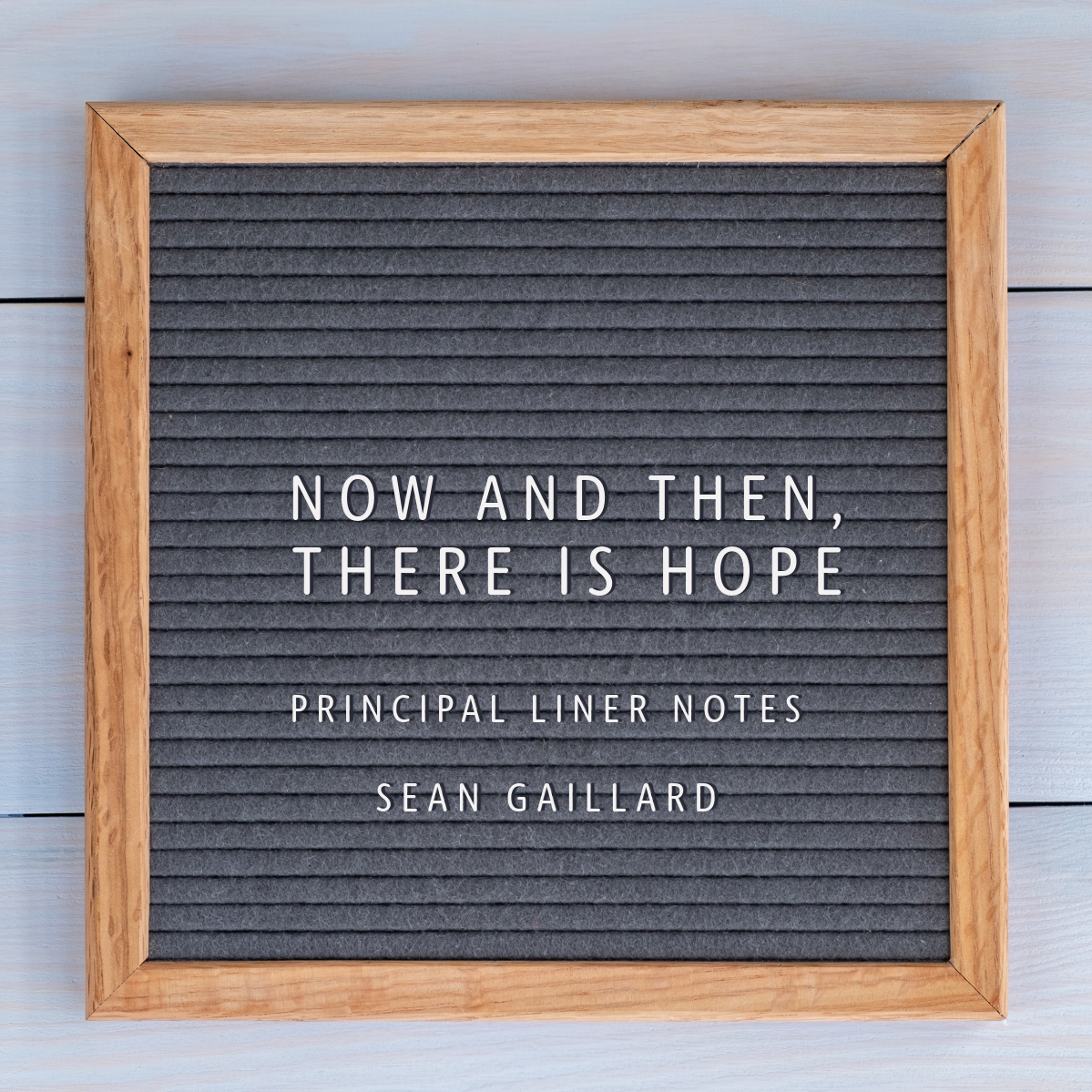
And as The Beatles remind us in their final song, hope is the thread that ties the past, present, and future together. Now and then, there is hope. It’s what brings us back, time and time again, to believe in the magic of possibility and the power of collaboration.
Let’s keep hope alive in our leadership moves. Let’s embrace the small moments that spark joy and connection. Let’s take the time to revisit old ideas, to share our vision with others, and to trust that, in the end, something beautiful will emerge.
Tune in to Hope:
Embrace Small Acts of Connection: Like my Principal Read Aloud, find simple ways to show your heart and commitment to your school community.
Persevere with Your Ideas: Even if your vision isn’t immediately accepted, keep refining and revisiting it. Trust that it has the potential to resonate with others over time.
Invite Others to Collaborate: Hope grows when we invite others to join us on the journey. Create space for shared ownership and creative contributions.
The journey of Now and Then is a reminder that we’re all part of something bigger. When we lead with hope, we open the door for new possibilities to enter, and that’s when the real magic happens.
In 1969, during the recording of his groundbreaking album In a Silent Way, Miles Davis famously told guitarist John McLaughlin to “play the guitar like you’re picking it up for the first time.” McLaughlin, renowned for his complex, intricate solos, was likely perplexed by this direction. Jazz, after all, is a swirl of notes, harmonies, and complexities—a musical enigma. But Miles was after something else, something new. He envisioned a sound that was simple yet profound, stripped down to its core. He wanted his band to create a fresh ambience, to tap into a deeper, purer musical experience.
This wasn’t just any jazz album. It was a collaborative effort with musicians who, for many of them, were playing together for the first time. Miles led them to embrace simplicity, allowing space for discovery. The result? An album that, decades later, still influences and inspires musicians worldwide. It stands as a testament to the power of stepping into something new with fresh eyes and an open heart.
Back to School:
For school leaders, the phrase “Back to School” stirs a similar mix of emotions: joy, anticipation, maybe even a little fear. It’s the beginning of something new, a reset button. For some, this is a welcome opportunity; for others, it can be daunting, especially for those stepping into a new school or leadership role. But there’s immense value in embracing these new beginnings, or what I call “Square One.”
Square One offers the chance to rewrite, renew, and refocus. Whether you’re a brand-new principal or a seasoned leader in a new building, starting over can feel like walking into a conversation where everyone else is already laughing at an inside joke. You may not yet be in on it, but there’s an opportunity to listen, connect, and contribute. Building trust, creating relationships, and setting the tone for a collaborative culture takes time and effort—but it’s well worth it.
As a turnaround principal, I’ve lived through this over and over. Every school, every new beginning, felt like standing at the edge of something vast and uncertain. But I’ve learned that there’s beauty in Square One. It’s where connection is made, where trust is earned, and where growth is inevitable if you lean into the discomfort.
Embracing Square One:
I used to dread the awkwardness of starting fresh. It felt like a weird dance where I would stumble more than glide. But with time, I realized that Square One isn’t something to fear. It’s a unique opportunity. In Square One, you get to build from the ground up, to create a vision, and invite others to join in shaping something beautiful for your school community. This is where you can set the stage for a culture of psychological safety, where teachers and staff feel seen, heard, and valued.
As leaders, we can choose to embrace Square One not as a setback, but as a launchpad. We get to set the tone for our schools, encouraging collaboration and creativity in ways that may not have been possible before. When we invite others to see their strengths, both tapped and untapped, we unleash the power of collective potential. It’s like that band Miles Davis assembled for In a Silent Way—everyone playing together for the first time, discovering new possibilities.
Leadership Moves to Embrace Square One:
Assess the Current Reality: Work with a coach, mentor, or thought partner to clearly identify where your Square One stands. What are the challenges, and where are the opportunities?
Connect with Your Community: Engage with your staff, students, and families. Share the vision for this new beginning and the path forward. Build excitement around what’s possible.
Create a Roadmap: Develop a timeline with actionable next steps. Break down your vision into tangible goals. This will give you and your team a clear sense of direction.
Reflect Regularly: Take time each day to journal and reflect on the progress being made. These reflections will guide future decisions and help keep you grounded in your purpose.
Celebrate Wins: Don’t wait for the big milestones. Celebrate small wins along the way, and do it publicly. Acknowledging progress builds momentum and fosters a positive culture.
Conclusion:
Just as Miles Davis sought a deeper sound by stripping away the complexity, we, as school leaders, can find clarity and strength in the simplicity of Square One. Embracing the beginning allows us to reset, reimagine, and reframe the possibilities for our school communities. As we step into new roles or new school years, let’s lead with intention, vulnerability, and an openness to collaboration. The beauty of Square One lies not in its uncertainty, but in its promise. Like Miles and his band on In a Silent Way, we have the opportunity to create something timeless by being fully present in the moment.
In 1991, U2 released their pivotal album, “Achtung Baby.” As a senior in college, I recall the initial shock of hearing that U2 had made a dance album. As a rock purist, this was hard to accept. I scoffed at dance music and felt U2 was undermining the legacy they had built with their quintessential album, “The Joshua Tree.” I vividly remember seeing early pictures of U2’s new look—Bono in oversized sunglasses and The Edge sporting a neon-colored bandana. This wasn’t the U2 of “The Joshua Tree,” with their ten-gallon hats and denim. Where had my U2 gone?
When I first heard the single “The Fly,” I didn’t get it. It didn’t sound like U2. But as I listened to the rest of the album, I began to understand their new direction. “Achtung Baby” is an excellent groundbreaking album depicting a band willing to disrupt their trajectory and do something fresh.
Blackberries Falling
When I was first named an administrator, one thing I eagerly anticipated was getting my very own Blackberry. I had long admired other administrators who brandished their Blackberries with the cool ease of a Jedi wielding a lightsaber. When it was finally issued to me at central office, I felt like I had fully become an assistant principal. I even thought there should have been an induction ceremony as I received my Blackberry. Little did I know, Blackberries don’t make leaders.
I was overly consumed with the status I believed the Blackberry afforded me. When Steve Jobs unveiled the iPhone, I scoffed at it. I thought it was useless and would flop against the Blackberry’s dominance. Clearly, I was proven wrong as the iPhone eclipsed the Blackberry universe. Once I experienced the capabilities of the iPhone, I quickly abandoned my Blackberry and haven’t looked back since.
For those reading, you may feel some nostalgia about the rise of the Blackberry phone. Others may have no idea what it is due to the ubiquity of the iPhone. Some may be hanging on to a cherished Android. Regardless, will we be cradling any of these devices within the next 5-10 years? What will be the next disruption that we are challenged to embrace?
Reflection Moves
In the wake of the recent ISTE Conference, I’m sure Artificial Intelligence was on everyone’s lips. Even though I wasn’t at the conference this time, I am certain AI was a hot topic. A new age has arrived, and we are in the midst of an exciting shift with the advent of AI. Perhaps five years ago at an ed tech conference, AI may have only been a topic for a handful of folks.
As we undergo this seismic shift in technology, it is vital for school leaders to have a firm vision balanced between the past, present, and future. Having a 360-degree view of current and future trends is not always easy for leaders. There are many demands on the plate for school leaders—observation schedules, school safety issues, paperwork, impromptu conferences. It goes with the gig. However, to equip our students and teachers for the challenges and opportunities surrounding any new dawn in education, it is crucial to nurture our leadership core with all things reflection.
AI is here to stay. It may fade away like U2’s denims and Blackberry’s ephemeral grasp, but its impact on education is undeniable. According to a 2022 McKinsey report on AI, more than 50% of companies in the US had at least one AI functionality embedded in their framework. That was two years ago, and I would bet that number has significantly increased. The impact of AI on education is something school leaders must understand. Taking time to reflect, read, and connect with other school leaders is essential for supporting teachers in integrating AI into the schoolhouse.
Reflection requires intentionality, space, and a plan. Within the PLN, many school leaders share their journey of adapting AI into their framework, and many states are creating structures and policies to align the use of AI proactively and meaningfully. AI is with us and is disrupting the landscape in many ways. Rather than avoid the disruption, we have an opportunity to embrace it. As the great Stoic philosopher Marcus Aurelius writes, “Willing acceptance—now at this very moment—of all external events. That’s all you need.” Ryan Holiday, who has written extensively about the Stoics, sums up this mindset to embrace setbacks in the title of his compelling book, The Obstacle Is The Way. AI and all of its techno baggage and rapid changes may seem like an obstacle, but it is a pathway for us to walk upon and embrace together. School leaders, we have an opportunity to inspire and support the people we serve to embrace disruption collectively and ignite new paths for building authentic, student-centered communities.
With this embrace of disruption, it is necessary for school leaders to take the time to reflect in a real and visceral way. Reflection is the ignition for inspiring action. As leaders, inspiring action and supporting others is the gig. The more we embrace disruption and support others in that realm, the easier it is to tackle any level of change in an organization. Reflection must also include the people you serve and empowering them as they navigate the challenges of change and disruptions. We must meet folks where they are and develop a supportive stamina to guide them. Reflection benefits leaders in this way as well.
Disruption can be messy and overwhelming, but it doesn’t have to be. AI, in my opinion, is not a monolith looming sinisterly over people. There is much to learn from it, and the disruption it brings is not an impossible obstacle course but rather an opportunity for school leaders to compel others to embrace the disruption and traverse the challenges together. When those challenges are encountered together, it is an opportunity for the strengths and gifts of others to overcome and harmonize any challenging situation into a solution that is human-centered that fosters a sense of belonging for everyone.
Embracing the disruption is an essential move for leaders to take to help remove barriers, face changes, and compel dynamic action.
Resources
There are many resources available to help compel reflection and ignite connection. Swivl has developed Mirror, an AI classroom tool that serves as a conduit for reflection. Recently, they unveiled the app version of it, known as MirrorTalk. I used MirrorTalk as a tool for reflection in forming my thoughts and ideas for this post. It was very helpful and deepened my reflection to further insights. Monica Burns, an Ed Tech Consultant, Author, and Expert, provides a helpful set of resources for educators to integrate tools into the schoolhouse. Her dynamic Class Tech Tips website is a solid entry point for curated resources ranging from her email newsletter to the “Easy Tech” podcast. Stacy Roshan, my good friend and past guest on my podcast, #PrincipalLinerNotes, is a sincere and reflective ed tech influencer. Her book, Tech With Heart: Leveraging Technology to Empower Student Voice, Ease Anxiety, & Create Compassionate Classrooms, is a deep journey on balancing humanity and technology in the classroom. Stacy’s blog site, “techieMusings,” is just that—filled with helpful entry points on various ed tech tools and resources. All of these resources are momentum-filled for school leaders to reflect and embrace disruption.
Next Moves for School Leaders:
Schedule Daily Reflection Time: Dedicate 15 minutes each day to reflect on your experiences, challenges, and successes. Use this time to jot down thoughts, ideas, and observations in a journal or digital note.
Engage in Peer Conversations: Connect with fellow school leaders regularly to discuss the impact of AI and other technological advancements. Share insights, strategies, and support each other in navigating the changing landscape. Bring it into the conversation and invite others to share.
Stay Informed and Educated: Commit to continuous learning about AI and its implications for education. Attend webinars, read relevant articles, and participate in professional development opportunities to stay ahead of the curve and lead effectively. Both ISTE and FETC provide edifying and compelling webinars to expand one’s learning and professional learning network.
The frame for this piece is collaborative in nature. You are invited to engage in conversation on cultivating your legacy for leadership. Imagine this post as an interactive conversation with three thought partners. It may read more like loosely connected haiku poems than a deep dive piece. We are grateful to collectively compose this piece amongst the three of us. Most importantly, we value being a part of your leadership journey and look forward to the legacy you are cultivating.
Living Your Leadership Legacy
Leadership is a choice. It rests on the shoulders of influence and inspiration, not compliance and control. Living a leadership legacy means recognizing the greatness that lives inside others and giving credit where it’s due. It’s about inspiring others to cultivate confidence in themselves so they can breathe life into ideas that will awaken their soul. -Lauren
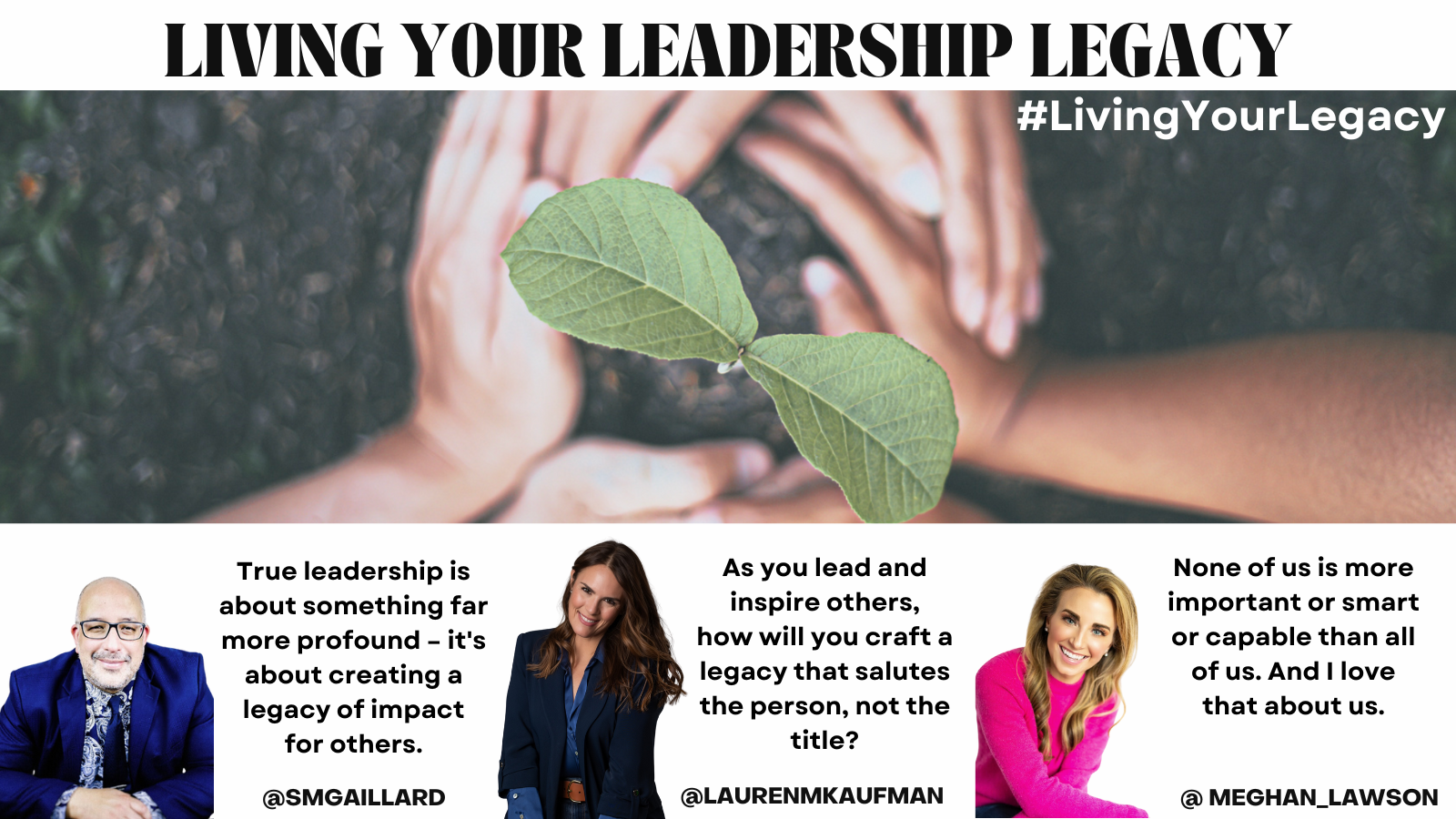
Leadership isn’t a mere position; it’s a profound impact that transcends titles and authority. Within the structured confines of education, it’s easy to fall into the trap of hierarchical thinking, where leadership is mistakenly equated with power. True leadership is about something far more profound – it’s about creating a legacy of impact for others. –Sean
Leadership isn’t about being important. It’s about showing others how important and capable they are. Many people think of leadership as being first and in front. But living a leadership legacy means that we are willing to go first with what matters most. Being human. Being vulnerable. The rest of it is really cultivating the conditions and creating the systems needed to make the work well, work. And in a way that supports the humanity, learning, and contributions of all. – Meghan
Leadership is harnessing the gifts that are manifesting within. It’s letting others recognize their potential by planting seeds that they can nurture and grow. Leadership is a privilege that empowers others and unlocks potential. In a recent episode of the How To Academy Podcast, best-selling author David Brooks shared, “The kind of attention you cast on the world determines your way of being in the world.”
So, I ask, what kind of attention will you cast on the world to nurture and inspire those around you?
How will you shape a leadership legacy that leaves a meaningful, lasting impact?” – Lauren
In my leadership journey, I’ve come to realize that the most effective leaders aren’t the ones who wield authority like a blunt instrument, but rather those who embrace collaboration as their guiding principle. These leaders understand that their true power lies not in their own capabilities, but in their ability to empower and uplift those around them. –Sean
Living a leadership legacy means that we don’t wait until we are perfect or the work is perfect to take action. If we continue to only invite people into our schools, our classrooms, our work, our planning and collaboration when we’ve deemed it to be perfect, then we’ve made this work something that only perfect people do. There are no perfect people and there is no one right way or perfect plan. There are simply people. The willing. And that is more than enough to make progress in schools, communities, and in this world. – Meghan
As I have navigated close to two decades in education, I have discovered that I am a natural observer of people. I take great interest in what others say, do, and act on. I look closely at the body language, reactions, and the responses of others. I try to understand others’ perspectives and have empathy for the hidden stories I cannot see. Let me be clear, I’m not perfect. I have learned to embrace my mistakes as opportunities to learn and have the desire to improve for the benefit of those I serve. –Lauren
I’ve been fortunate to have crossed paths with such leaders – individuals who set aside their egos and fostered an environment where everyone could shine. They didn’t see themselves as the sole architects of success; instead, they recognized the inherent leadership potential in others and worked tirelessly to nurture it. –Sean
It’s the way we show up, treat others, and do the work that gives us real, lasting impact. Not our titles. – Meghan
Growing up, I was fortunate to have leaders exemplifying their legacies around me, with my Dad at the forefront. He is a highly respected educator known for prioritizing people. I still hear former students consistently express gratitude for his kindness and the lessons learned from him since he taught in my hometown, where I currently live. Although he didn’t hold a formal leadership title, his influence is undeniable. He inherited this ethos from his father, a community leader dedicated to serving others. Through the years, I’ve sought my Dad’s counsel, and his mantra resonates: “Salute the person, not the title. There is a leader living inside us all.” –Lauren
For me, the moment of clarity came when I was invited by my principal to participate in a schoolwide project. I was surprised that my principal invited me. I didn’t think of myself as a leader in my role as a classroom teacher. I remember being so uplifted and inspired by his invitation. As we gathered together, I looked around the room and I could see that it was a diverse group of individuals. We all came from different departments and levels of experience. The principal cleared his throat and shared such a compelling statement. His words, spoken with genuine belief in our collective potential, still resonate with me today: “You all possess a gift that I need you to share that’s going to help a lot of kids in our school.” In that simple yet profound statement, I saw the essence of true leadership – the ability to recognize and harness the strengths of others for the greater good. –Sean
In my seventh year of teaching, I could feel that I needed something different. I could just feel that I was restless and stagnating. I applied for a teaching job in a neighboring school district. I didn’t get it. When I didn’t get it, I thought, “Wow, now what?” We really have two choices in any situation. We can change where we are and if we can’t change where we are, we change ourselves in the situation. I spent the next year invested in showing up as the kind of person my classroom, my school, and my students needed but mostly, the kind of person I needed. At the end of that next school year, I accepted a job in that same school which had turned me down for a teaching position, but this time as an assistant principal. The most important work we do is the work we do on ourselves. Everything else is secondary. – Meghan
When reflecting on the people I have saluted throughout my life in any capacity, the common gifts they possess are their ability to lead through inspiration. They are people who were living their leadership legacy. I can still hear and see the leaders who didn’t limit my potential, instead, they fueled it. When I formally stepped into leadership, I think about those interactions that shaped the leader I am still becoming. So, as you lead and inspire others, how will you craft a legacy that salutes the person, not the title? –Lauren
Leadership is a calling, but it’s one that often goes unheard amidst the noise of self-doubt and missed opportunities. Yet, all it takes is a single invitation, a gesture of belief from someone who sees the untapped potential within us. As leaders, it’s our duty to extend that invitation, to create space for others to step into their own greatness. –Sean
In the dynamic realm of education, the true measure of leadership lies not in titles or accolades, but in the profound impact we have on the lives we touch and the futures we shape. The past pandemic has underscored the necessity for adaptive leadership that responds to the ever-changing landscape of our world. As we reflect on our roles, let us strive to leave behind a legacy defined by meaningful impact, one that empowers others rather than glorifies ourselves. Let us become the catalysts igniting the flames of leadership in those around us, guiding them towards realizing their full potential. Ultimately, genuine leadership transcends personal recognition; it resonates in the ripple effect of our actions, the lives we inspire, and the futures we shape. –Sean
“We’re all just walking each other home.” – Ram Dass
None of us is more important or more smart or more capable than all of us. And I love that about us. – Meghan
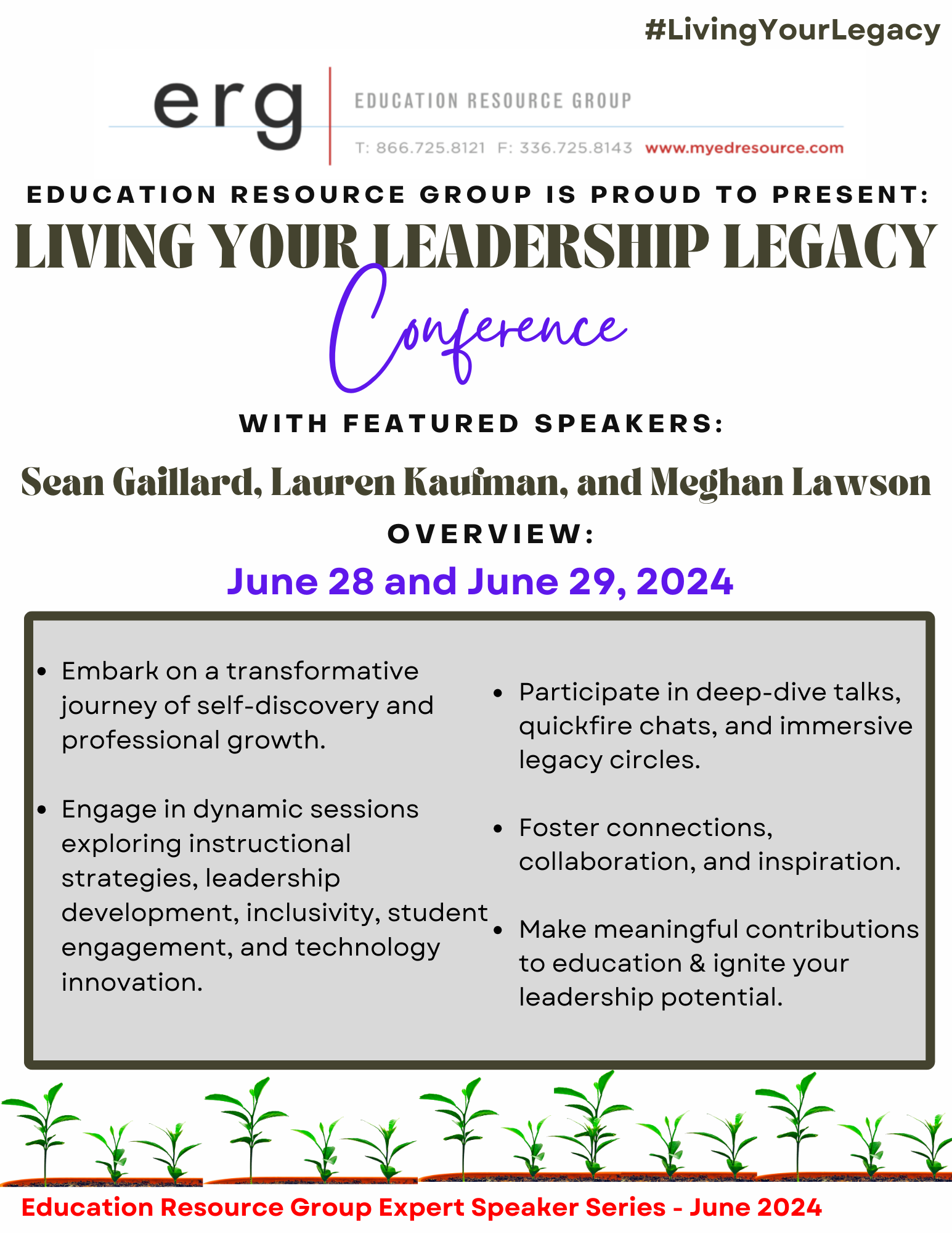
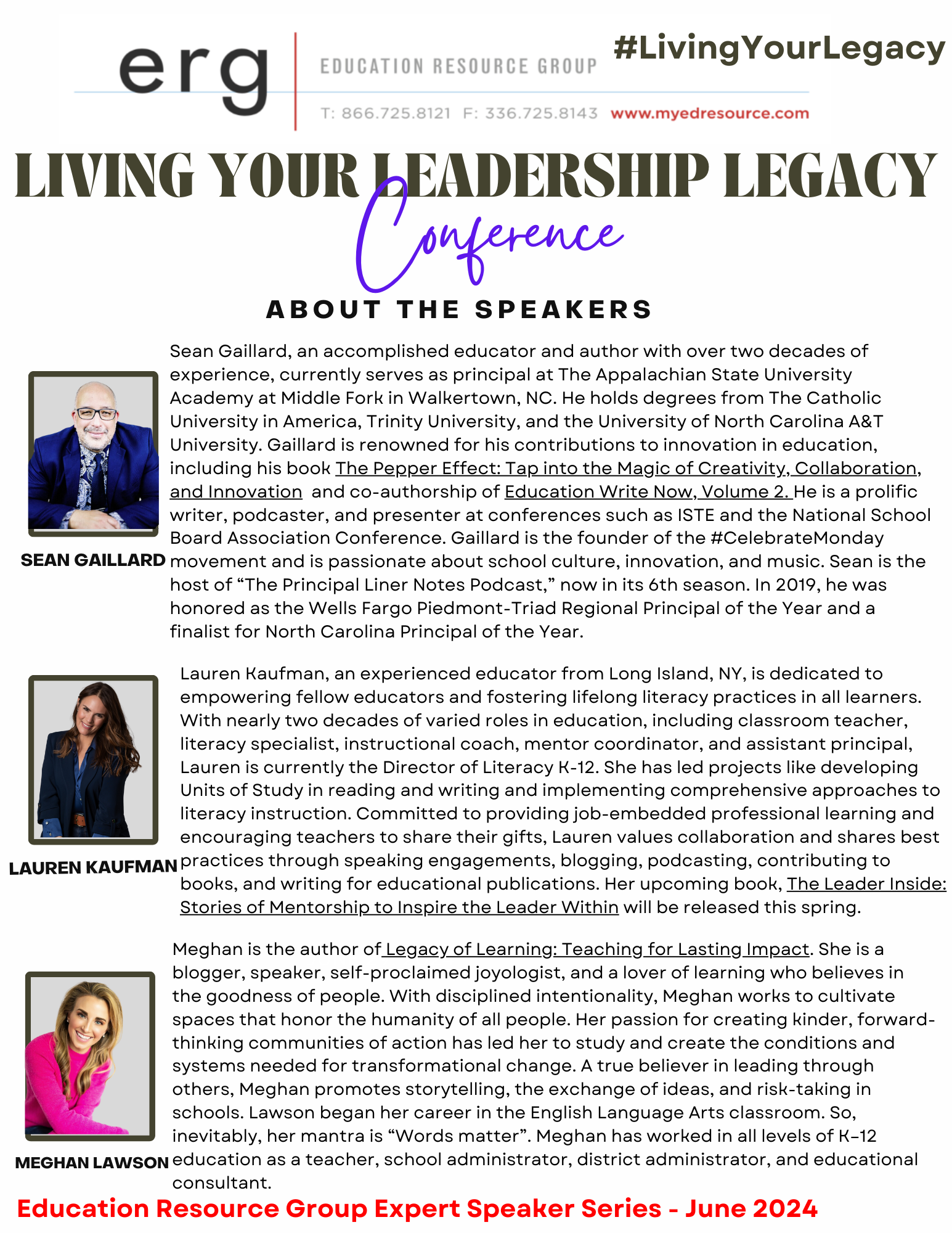
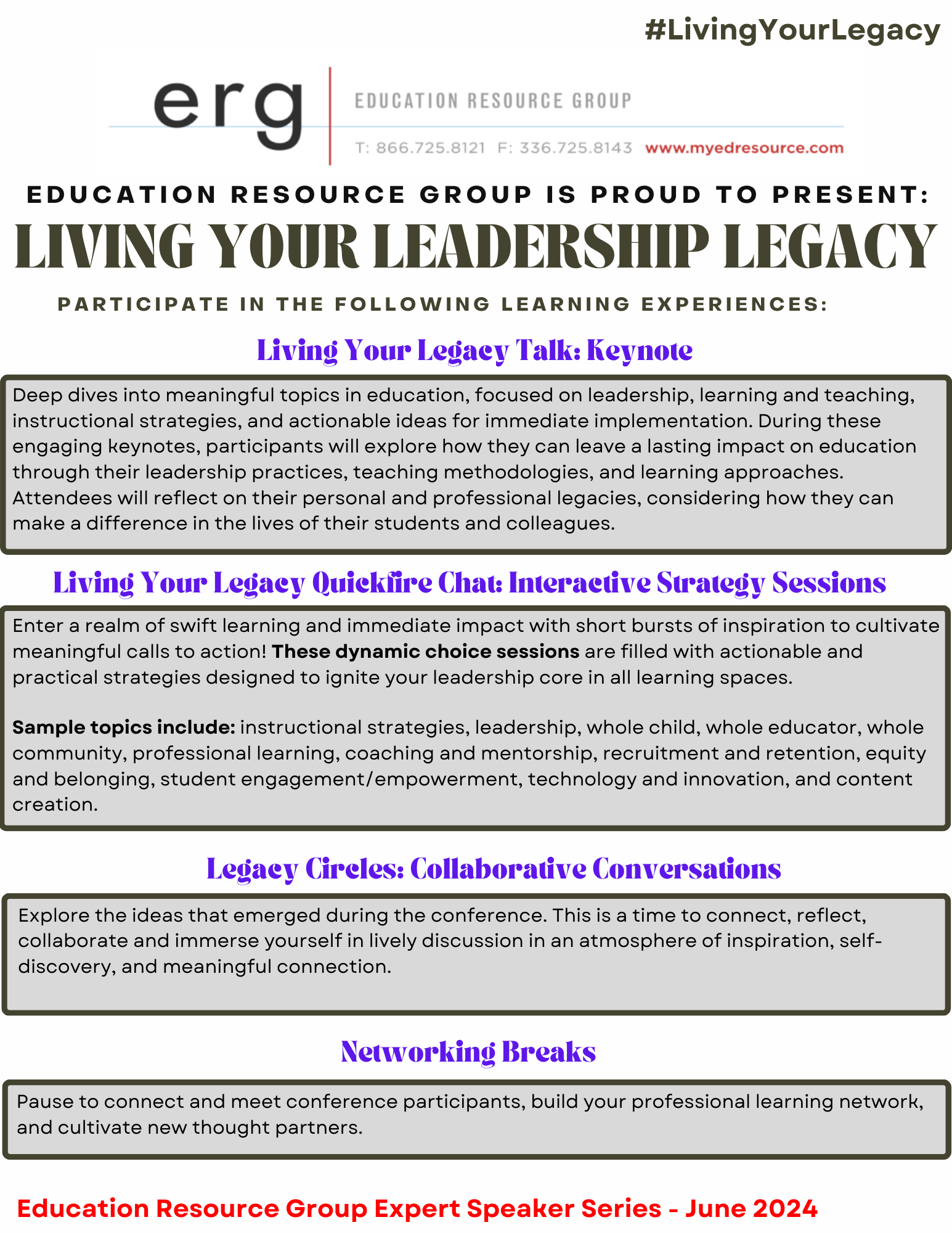
In collaboration with ERG (Education Resource Group), Sean Gaillard, Lauren Kaufman, and Meghan Lawson invite you to join the Living a Leadership Legacy Conference where we will explore the themes of empowerment, collaboration, nurturing potential and much more. Join us as we delve into strategies for leaving a meaningful impact and igniting the leadership legacy of others. See more details below! REGISTER HERE
In the grand tapestry of music history, there’s a chapter that resonates deeply with those of us seeking inspiration in our own journeys. It’s the story of The Beatles, that legendary band whose rise to stardom seemed like a fairytale, but whose beginnings were marked by struggle and rejection.
Before they were hailed as icons of Beatlemania, before their records flew off the shelves and stadiums echoed with the screams of adoring fans, The Beatles were just four lads trying to make their mark. They faced empty venues, disinterested audiences, and the harsh sting of rejection from record labels. Yet, amidst these challenges, they clung to a shared vision, a dream that propelled them forward despite the odds.
One particular anecdote from their early days shines brightly as a beacon of leadership and resilience. Picture this: John Lennon, the soulful voice and guiding force of the band, rallying his comrades with a simple call and response:
John: “Where are we going, fellas?”
The Band: “To the top, Johnny!”
John: “And where’s that, fellas?”
The Band: “To the toppermost of the poppermost!”
In those moments of doubt and adversity, Lennon embodied the essence of leadership – a potent blend of motivation, compassion, and unwavering vision. They shared what Eric Jensen aptly terms a “gaudy goal,” an audacious dream to transcend boundaries and become the very best.
Reflecting on this story, I’m reminded of my own journey as a leader. Like The Beatles, we all encounter setbacks and moments of uncertainty. It’s easy to lose sight of our purpose, to succumb to the weight of despair. Yet, in those dark moments, we must summon the courage to fix our gaze upon the horizon and press onward.
I recall a pivotal moment when a wise colleague shook me from my reverie of doubt. With a gentle yet firm reminder of my purpose, she urged me to lift my head high and embrace the mantle of leadership. It was a wake-up call I sorely needed, a beacon of light cutting through the fog of self-doubt.
This wise colleague was our school secretary. She gave me a very much needed quick wake-up call when I was facing a setback and I was wearing every bit of it on my sleeve. I was walking into her office with my head hanging low and looking like a poster child for The Blues. She simply told me:
“Remember your purpose. Fix your face and go be our principal.”
It was truly a stark moment, but it was the moment I needed. I had a responsibility to not only get out of my doldrums, but I had to remember that I had others relying upon me. It is totally acceptable to pause in the moment and be human. I also needed that verbal kick in the pants to get back into my core as a leader and remember why I started the gig there in the first place. Her words energized me, and I ended up having a better rest of the day.
Later that day, I made it a point to thank our school secretary. I shared my gratitude at her sincere honesty and comfort with calling her principal out in a good way. I really needed that. I shared and I asked her to never hesitate for calling me out again. She was modest in her acceptance of my thanks. I did ask that she continue to give me that motivating push if she ever caught me slipping into the leadership blues. She smiled and gladly acquiesced to my request. It’s important to express our gratitude but to also find trusted colleagues who will take the time to motivate and help us stay focused on our purpose.
Gratitude, too, plays a crucial role in our journey. We must acknowledge those who uplift us, who lend a helping hand when the path grows rocky. In expressing our thanks, we foster a culture of support and encouragement, one where each member plays a vital role in the collective pursuit of greatness.
Leadership, I’ve come to realize, extends far beyond titles and accolades. It resides in the depths of our being, in the unwavering commitment to empower and uplift those around us. It’s a journey of self-discovery, of embracing our humanity and vulnerability, even as we strive to inspire others to reach new heights.
So, as we navigate the winding road of leadership, let us remember the lessons of The Beatles – the power of shared vision, the resilience in the face of adversity, and the importance of staying true to our purpose. Together, let us soar to the toppermost of our own poppermost, igniting the flames of inspiration in every heart we touch.
As someone who proudly wears the badge of a “Beatles Encyclopedia,” my journey in music appreciation is a perpetual adventure. The joy I derive from delving into the world of music, particularly the legendary band that holds a special place in my heart, knows no bounds. If you were to step into my home office, you’d find it adorned with shelves filled to the brim with books dedicated to none other than “The Beatles.” I’ve devoured so many books over the years on this iconic band that I could probably recite passages from memory. (I’d likely be of little help in the book refuge depicted in Fahrenheit 451!)
Currently, my literary journey has led me to “The Lyrics” by Paul McCartney. Released just last year in hardcover, I couldn’t resist adding the paperback edition to my collection. This remarkable book sees McCartney opening up about the stories and personal anecdotes behind the songs that defined his tenure with The Beatles and his solo career. In the book’s introduction, McCartney shares an anecdote from the early days of The Beatles that, surprisingly, I had never encountered before.
Let me share a quick recap. Picture the scene: The Beatles, in the nascent stages of their career, find themselves on a wintry night journeying between gigs. Suddenly, their van skids on ice, careening off the road and down an embankment. Miraculously, no one is hurt, but they’re left stranded. Amidst the chaos, McCartney recalls a pivotal statement uttered by someone in the band: “Something will happen.” This simple phrase quickly became a rallying cry for The Beatles whenever faced with adversity or uncertainty. I try to envision when this statement would echo at various stages during The Beatles trajectory as a band. It is a tantalizing game to play in imagining when this line would be appropriate.
The profound simplicity of this statement struck a chord with me as I immersed myself in McCartney’s book. It served as a poignant reminder that even the idols we admire are, at their core, human. “Something will happen” encapsulates a resolute hope, reminding us that amidst seemingly insurmountable odds, the realm of possibility remains wide open.
Reflecting on this mantra, I couldn’t help but draw parallels to my own journey as a principal and school leader. In the face of daunting challenges, “Something will happen” embodies a steadfast belief in the power of resilience and perseverance. It speaks to the essence of our roles as leaders, tasked with navigating complex landscapes against all odds. We have to tune into possibilities on a daily basis. Additionally, we have to encourage others to tune into possibilities as we educate and empower the kids we serve.
Recently, our team encountered a situation demanding swift action and collaboration. In its aftermath, I found myself echoing a similar mantra to reassure my colleagues: “We responded. We were there for others.” I have echoed this statement many times as a leader to serve as a salve for others who support during a crisis. This instance brought to mind The Beatles and their mantra, reinforcing the notion that amidst uncertainty, hope prevails.
My mantra, “We responded,” shares the same essence and intention as The Beatles’ rallying cry. As leaders, it’s our responsibility to provide comfort and empowerment through compassionate words and actions. Whether serving as a soothing balm in times of crisis or bringing clarity to chaos, our words hold the power to inspire and uplift. Being intentional with our words is a necessary move as a leader. We are the navigators of our narrative and we must choose our words with care, compassion, and intention.
Stepping back and reflecting on our experiences is not just advisable; it’s imperative for effective leadership. Taking stock of our decisions and actions allows us to glean valuable insights and pave the way for growth. In the end, it’s the simple yet profound words—whether “Something will happen” or “We responded”—that ignite the spark of hope and resilience in those we lead.
Next Moves for Dynamic Leadership Action: Reflection on Communication
-Reflect: Find intentional time to reflect on the words you use as a leader to comfort or inspire during a crisis.
-Write: Jot down those words and statements you use. Reflect upon the meaning and intention in each of those words. Do they empower? Do they avoid judgement or placing blame?
-Share: Find a trusted thought partner and share words to gain feedback and growth.
-Connect: With people you serve and collaborate, take time as a group to discuss words used during a crisis. Establish kinship and understanding along with ensuring that meanings are understood.
Whether serving as a soothing balm in times of crisis or bringing clarity to chaos, our words hold the power to inspire and uplift. Being intentional with our words is a necessary move as a leader. We are the navigators of our narrative and we must choose our words with care, compassion, and intention.
Here’s Episode 20 of “The Principal Liner Notes Podcast.”
It is entitled “In the Fan Club.” I explore how the recent release of the “Yesterday” movie connects to my pride in being a Beatles Fan. I also explore connections from the film to our noble profession as educators.
Here’s the latest episode of “The Principal Liner Notes Podcast.” It’s entitled “Embrace the Crossroads.” I explore how a pivotal moment in the “Mad Men” television series coupled with a song by Buddy Holly connects to the infinite possibilities at the end of a school year.
A renaissance for kindness has surfaced within the last few years as a vital component of a schoolhouse’s culture. Educators in classrooms all around the world are finding ways to slow things down a bit and take notice of acts of kindness and goodwill — prioritizing relationships and making memories together along the way.
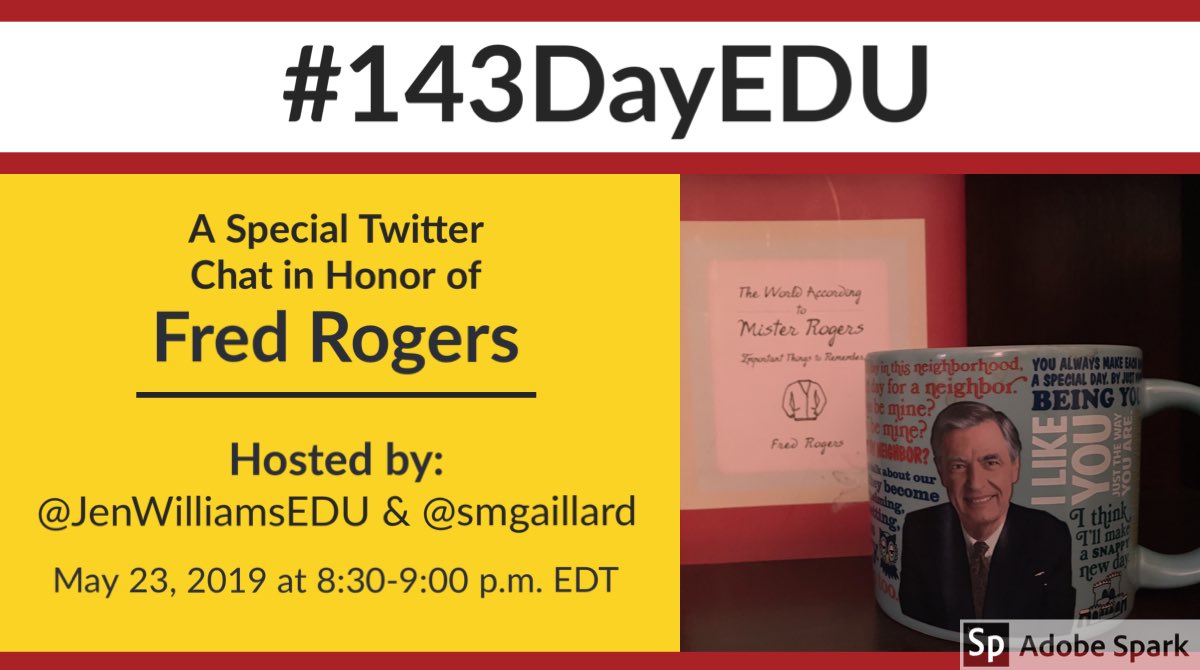
Fred Rogers, children’s broadcasting icon, promoted kindness for 31 seasons in a simple and sincere way on the television masterpiece, “Mister Rogers Neighborhood.” In honor of Mr. Rogers, the state of Pennsylvania has designated May 23 (the 143rd day of the calendar year) as #143DayinPA. This stands as a tribute to homestate hero, Fred Rogers, and his favorite number. “143” is numeric code for “I Love You.” We thought it would be fitting to extend the 143 culture of kindness to education with the #143DayEdu hashtag.
#143DayEdu
Using the #143DayEdu hashtag, we are encouraging all educators to share examples of kindness happening on May 23. To join in on the fun, simply use #143DayEdu to promote acts of kindness and compassion happening in the schoolhouse. You are also invited to join us this Thursday, May 23 at 8:30 – 9:00 p.m. EDT for a special Twitter Chat where we intend to promote positivity and celebrate the enduring legacy of Fred Rogers.
Here are the questions and times for Thursday night’s Twitter chat. To join, simply head over to Twitter by clicking HERE at 8:30pm ET and watch for the Qs from @smgaillard and @JenWilliamsEdu.
Q1: Thinking back to Mr. Roger’s Neighborhood, what are some of your fondest memories of the show? (8:35 pm ET)
Q2: What lessons can we learn from Mr. Rogers that we can apply to the classroom? (8:40 pm ET)
Q3: How did you promote kindness in your school recently? (8:47pm ET)
Q4: What are some ways we can finish the school year promoting kindness with our school communities? (8:53 pm ET)
Pass It On
As we prepare for #143DayEdu and the #143DayEdu Twitter chat, we invite you to consider this quote on kindness from Mr. Rogers along with these related resources. Please feel free to share the invitation for a Day of Kindness — pass it on! We look forward to this special week and the opportunity to celebrate you — just for being you!
Imagine what our real neighborhoods would be like if each of us offered, as a matter of course, just one kind word to another person.





 Leadership Liner Notes: Sean Gaillard