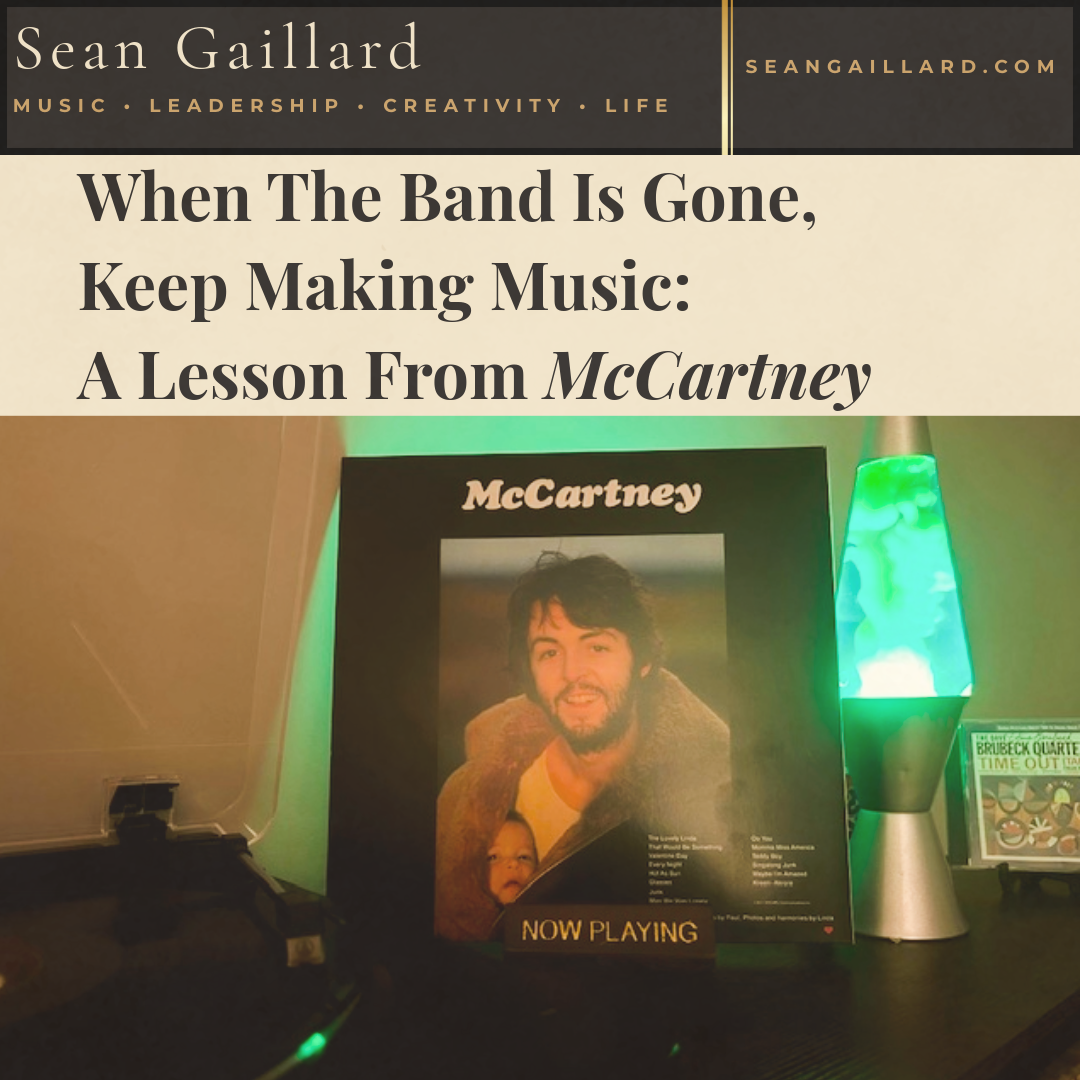
Lately, I have been reflecting on my first listen to Paul McCartney’s debut solo album, McCartney. Released in April 1970, the album is a marvel of simplicity and sincerity. It is largely a homemade affair, with Paul playing nearly all the instruments and his wife, Linda, contributing vocal harmonies. Songs like “The Lovely Linda,” “Every Night,” and “That Would Be Something” are wonderfully organic and gloriously analog. The album’s masterpiece, “Maybe I’m Amazed,” features Paul’s passionate vocal celebrating his devotion to Linda, who helped him find his footing during the painful aftermath of The Beatles’ breakup.
The album is homemade in every sense of the word. McCartney recorded much of it at home, surrounded by his young family. There is an intimacy to these recordings that makes the music feel personal, spontaneous, and wonderfully human. We hear Paul experimenting, exploring, and rediscovering the joy of making music on his own terms.
Unfortunately, McCartney is often overshadowed by the turmoil surrounding the end of The Beatles. Included with the album was a question and answer insert in which Paul revealed that the Lennon and McCartney songwriting partnership was over and that he did not foresee working with The Beatles again. His comments made worldwide headlines and contributed to the perception that Paul had announced the breakup of the world’s most famous band. The music itself became somewhat lost in the controversy.
Over the years, my appreciation for McCartney has grown. What once sounded like a declaration of independence now feels like the soundtrack to a deeply personal and creative transition. Paul was navigating the uncertainty of leaving behind the band that had defined much of his life. He was entering that uncomfortable space between what had been and what might come next. He has since spoken openly about the emotional struggles and depression he experienced during this period.
The emotional toll of The Beatles’ unraveling was significant. In Peter Jackson’s Get Back documentary, there is a heartbreaking moment when Paul becomes visibly emotional as he reflects on the band’s uncertain future. That scene has stayed with me because it reveals the human being behind the legendary musician. Here was someone who had spent his formative years creating extraordinary music alongside people he loved, facing the possibility that those relationships and that shared creative identity were coming to an end.
My reflective listening to McCartney has led me to consider a deeply personal question: What happens when the people who helped define your creative identity no longer make music alongside you? I have been sitting with that question as I reflect on the past few years of my own life. Those years have included a health crisis, mental health challenges, and the difficult decision to step back from a leadership position that had become an internal struggle between joy, stress, and heartbreak.
Throughout my career in education, I have embraced the belief that schools, faculties, and leaders make their best music together as a band. I have written extensively about the power of collaboration, belonging, and finding our collective rhythm. I still believe that the most meaningful work happens when people recognize one another’s gifts and create something greater than any individual could accomplish alone.
Over the past two and a half years, I have found myself navigating my own season of transition. Some friendships have shifted. Colleagues have retired or moved on to other opportunities. Connections that once felt strong have faded. There is a particular sadness that comes when people who once shared your music are no longer playing alongside you. I have struggled with the realization that the band I once knew may no longer exist in the same way. Perhaps I am a solo act right now, and I am learning that this is okay.
Listening to McCartney has helped me reconsider what that means. Paul did not wait for another band to appear before making music. He picked up his instruments, experimented with sounds, and recorded an album that reflected where he was in his life. The music was sometimes imperfect, unfinished, and wonderfully spontaneous. He was not necessarily trying to manufacture another collection of chart-topping hits. He was creating something personal and authentic. He made the music he needed to make.
There is something incredibly liberating about that realization. We do not have to wait for the perfect collaborators, the applause, or the approval of others before creating something meaningful. Sometimes, the most important work happens when we simply trust our own voice and press record. For years, I became caught up in the pursuit of creating masterpieces as a leader and encouraging others to join me in that work. These days, I am learning to appreciate the simplicity of the homemade. I find meaning in celebrating small wins quietly, connecting with others authentically, and taking intentional time to listen.
I think about trusting my voice and pulling a McCartney as I continue my daily blogging, recording reels, producing podcasts, and working to finish my next book, Leadership Riffs. I put my ideas into the world because I believe they have something meaningful to contribute. Not every post will generate a response. Not every creative effort will be celebrated. Some people I have supported over the years may never reciprocate that encouragement. I am learning to make peace with that reality.
The act of creating has to matter beyond the recognition it might receive. I cannot measure the worth of my work solely through applause, likes, comments, or invitations. There is joy in the process itself. There is meaning in showing up every day, finding something worth saying, and pressing publish. Perhaps the homemade approach is teaching me to value the music itself rather than the attention surrounding it.
Paul’s story also reminds me that a solo season does not have to become a permanent identity. Within a relatively short time, he would form Wings and begin another extraordinary chapter of his musical life. The band he had known was gone, but his ability to create music with others had not disappeared. His creative journey was far from over.
Perhaps that is the most hopeful lesson I take from McCartney. We cannot always control who stays in our lives, who moves on, or who chooses to make music alongside us. We can, however, continue creating with sincerity, courage, and purpose. We can remain open to the possibility that new collaborators and friendships are waiting somewhere beyond our present circumstances.
I still believe in the band. I still believe in the beautiful music we can make together. As I was writing this reflection, I thought about a meeting earlier today with a group of people who saw potential in the podcasts I produce. There was genuine interest in the possibilities of creating something together. Perhaps this is the beginning of another band, one where collaboration, creativity, and belonging can find a shared rhythm. I do not know what will come from that conversation, but I am grateful for the possibility.
For now, I will keep writing, creating, and making my own music. I do not know when the next band will come together or who will be part of it. I am learning that I do not need those answers before beginning the next song. Like Paul McCartney in 1970, I can find meaning in the music I am making right now, even as I remain hopeful about what comes next.
The band may be gone, but the music does not have to stop.

