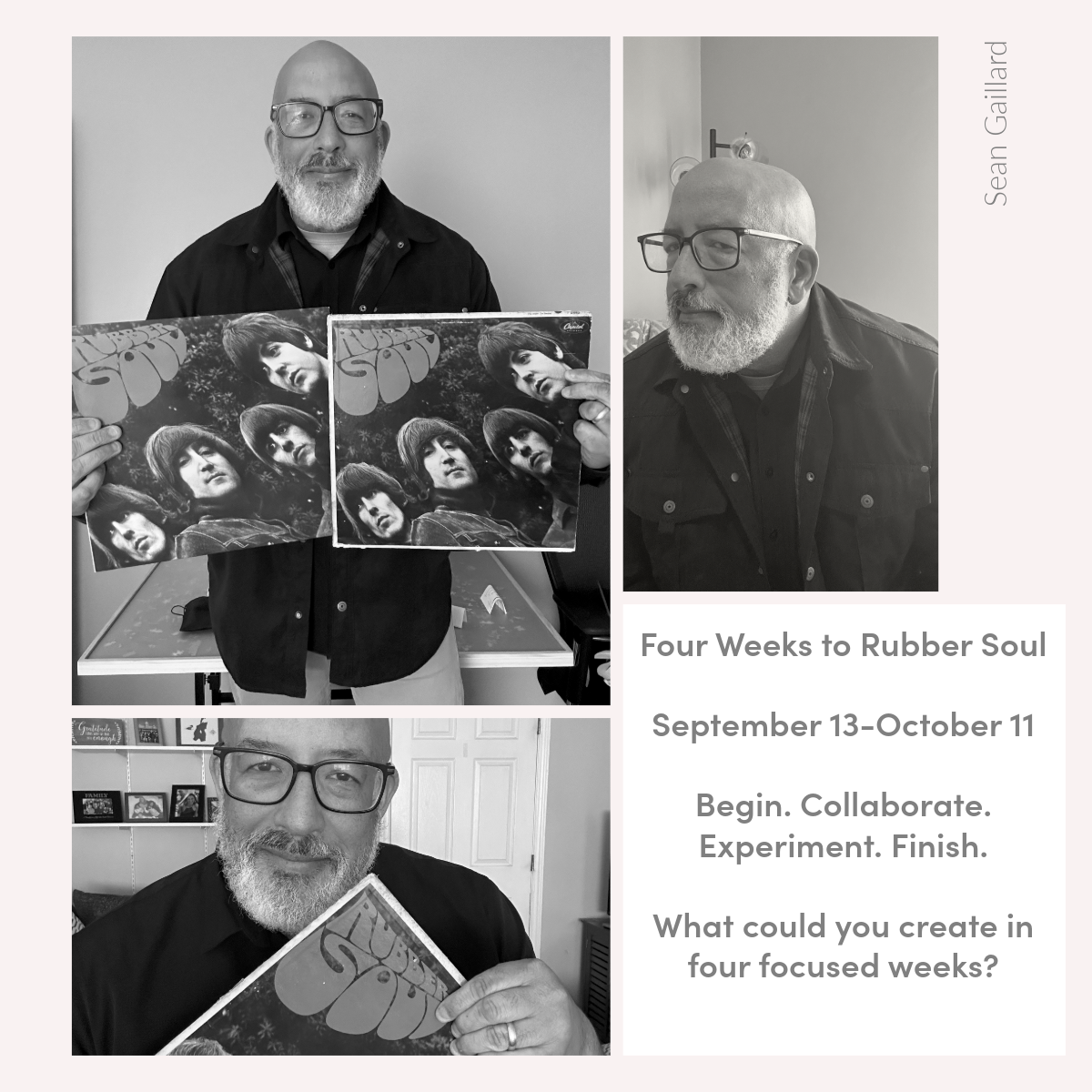
This is Day 15 of Four Weeks to Rubber Soul, which means we have reached the halfway point of our month together. We have spent the past two weeks exploring the creative journey The Beatles took during the fall of 1965 as they recorded Rubber Soul along with “Day Tripper” and “We Can Work It Out.” Those two songs were released separately from the album as their first double A side single.
I am grateful for everyone who has followed these daily blog posts and reels, shared them, reposted them, or offered a nudge of encouragement along the way. If you have missed a day or fallen behind, there is no checklist, deadline, or test waiting at the end. Creativity does not always move according to a schedule. Sometimes we need room to explore, wander, return, and move at the pace that helps the work grow.
Today also begins a new week and a new theme: Experiment. Our word for Day 15 is Curiosity, because experimentation usually begins with one of the simplest and most powerful creative questions we can ask:
What if?
That question seems especially fitting for Rubber Soul. The Beatles were increasingly interested in finding different sounds, trying unfamiliar instruments, and pushing beyond the musical boundaries that had defined their earlier recordings. George Martin later recalled that they were constantly experimenting with unusual sounds and bringing new ideas into the studio.
Imagine some of the questions surrounding those sessions. What if George Harrison tried a sitar on “Norwegian Wood?” What if a piano part could be manipulated to create a completely different texture? What if another harmony changed the emotional feel of a passage? What if an unexpected percussion sound gave a song exactly what it needed?
Those questions may be imagined, but the experimentation behind them was very real. George Harrison brought the sitar into “Norwegian Wood,” one of the album’s most distinctive sounds and an early sign of his growing fascination with Indian music. The larger spirit of Rubber Soul was one of exploration, with the band deliberately searching for sounds and approaches they had not used before.
“What if?” is an essential question for any creative pursuit because it creates room for possibility. It moves us beyond the safety of what we already know and invites us to explore what might happen next. Curiosity opens the door to conversation, experimentation, collaboration, and discovery.
The best part is that asking the question does not require knowing the answer. Creativity rarely gives us that luxury. Sometimes we simply have to follow the idea, try the sound, write the paragraph, make the call, invite the collaboration, or test the possibility.
What question are you willing to follow as you work to ship something that matters? What question could invite a new idea, a different perspective, or an unexpected collaboration into your work?
Curiosity gives us permission to wonder before we know. Experimentation gives us permission to find out.
Curiosity is “What if?” in action.
Check out today’s reel for more:

