Finding My Band

When I was a kid, I was often one of the last picked for kickball. I remember the sting of waiting. I stood in awkward anticipation. I hoped someone would invite me on the team. I did my best to keep my head held high like my father had taught me. I watched captains point to someone else and tried not to show my disappointment. I was that kid hoping to belong. Hoping to be seen. Hoping to be chosen.

I think I have spent most of my life chasing that feeling of belonging. Wanting to be part of something bigger than myself. Wanting to feel the spark when you look around and know you are with your people who see you. Wanting a band.

A band for me is not just the literal type where individuals play music together. I use the band as an analogy for collaboration, belonging, and sustaining a shared vision. As a school leader, I would perpetuate this concept by referring to colleagues as “bandmates.” I thought that this mindset would help the culture and enhance belonging for all in the schoolhouse.

Being in a band is wonderful. There is purpose and possibility in the sound you create together. I felt that sense of belonging as a guitarist in a few literal bands. There is nothing like locking into a groove. Seeing another musician look over with that nod says we are in the pocket. I felt that same belonging when I taught English at Governor’s School. I was surrounded by a team of educators who celebrated collaboration and creativity. I felt it a few times in school leadership within administrative teams that shared a vision and worked in harmony.

Spinning on my turntable as of late is “The Beatles Anthology Collection.” It is a treasure trove of alternate takes, live recordings, and demos. It also includes unreleased tracks and a trio of their reunion songs. I love hearing the band workshopping songs and encouraging each other through various mistakes and flubs in the studio. It serves as a reminder of what a band should do when they face an echo of a failure. They should handle the resonance of a mistake wisely and stick together. You play through it, learn from it, and keep the groove moving on. Listening to this beautiful audio package of The Beatles in this alternate trajectory is wonderful. It makes me miss the joy of being in a band. I miss being with people who understand my sound.

Lately, I have been drifting. Feeling like a castaway. Wandering around a crossroads. Watching from a distance as others find their bands. I see camaraderie and connection and I often feel sadness that I am not part of it. Recently, I saw a group of leaders celebrating together in a LinkedIn post and I felt left out. I felt that old kickball feeling. The one that sits heavy.

For a long time I thought that if I waited long enough a band would find me. That a group would invite me in. That someone would want my presence, ideas, and voice. I waited. I believed. I hoped.

And then it hit me. I was waiting for a band that was never coming.

I have also forced the idea of band on others over the years. I regret that. Not everyone is ready to be in a band. I never took the time to realize that I am the barrier to the band. And the harder truth to accept is that maybe nobody wants to be in a band with me. Maybe I am not meant to join someone else’s group. Maybe I am meant to build something from the ground up. I am learning to sit with that. I am learning to accept it with honesty.

So here is where I am now.

I am at peace with where I am now.

I am at peace with the people I get to meet and support daily.

In the meantime, I am forming my own band.

Not by asking others or convincing colleagues or trying to prove myself that a band is the way to go. Not by waiting for an invitation that will never arrive. I am just going to keep creating. Keep writing. Keep podcasting. Keep blogging. Keep finishing the second book. Keep playing my sound without apology.

If I stay true to that maybe the right bandmates will hear the music. Maybe the ones who resonate with authenticity will wander into the room. Maybe belonging is not something you wait for. Maybe belonging is something you build.

I believe in the band. I always have.

And the next track begins now.
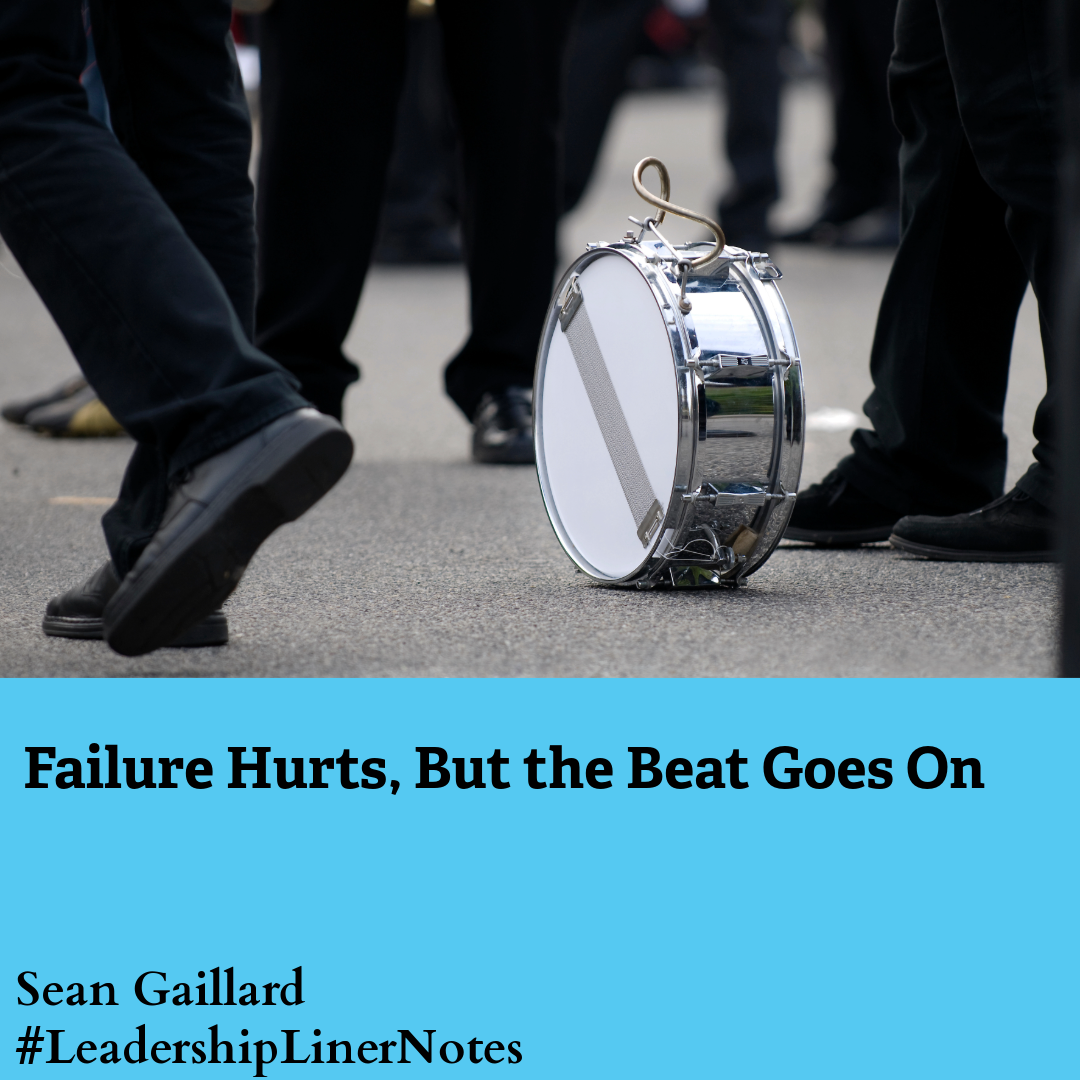
Failure Hurts, But the Beat Goes On

Failure hurts. There’s no sugar-coating that simple truth. When the Beatles were turned down by Decca Records, it could have been the end of their story. But it wasn’t. They found another path and changed the world. As I wrote in The Pepper Effect, that “no” was just the prelude to a bigger “yes.”

And they’re in good company. Walt Disney was once fired for “lacking imagination,” and Oprah Winfrey was told she was “unfit for television” before becoming a media icon. Each of them had moments that could have ended their journeys, but instead, they used those setbacks to fuel their next success.

In leadership, we all have those moments. And I’ll say personally, I’ve had my own failures. Sometimes the things I write or the ideas I share don’t resonate the way I hope. Sometimes a well-intentioned plan becomes a flop and I fall on the sword of doubt. Each of those moments is a chance to keep creating, keep pushing, and keep striving. It’s a reminder that our perseverance can inspire others to do the same.

In leadership, we face our own versions of these stories. Sometimes failure lands on our shoulders alone, and it feels isolating. The secret I have learned over the years is that failure is less sharp when you’re in a band, when you have those who know you and stand by you. It’s easier to turn a setback into a new song when you’re not playing solo. That’s why it is essential to surround yourself with those who support and empower you. That’s why it is essential to stay connected with those who knew you and stood by before you got the leadership gig, corner office, or prestigious title.

When failure comes, and it will, remember that you’re not the first and you won’t be the last. Take a breath, lean on your bandmates, and see failure as the beginning of a new opportunity. Failure is the spark for something greater. I know that failure can hurt and force you to stand still in the marrow of your doubts. Someone needs your spark and there is a band relies upon your sound. One day, your failure story will be the inspiration for someone else and may even be that spark that sets the world as a better place for others.

When failure comes, let it be your cue, not your curtain call. Let it remind you that you’re not alone, that your story isn’t over, and that the band is still playing. Every “no” carries the seed of a future “yes.” Every closed door echoes with the sound of what’s next. Lean into your vision, surround yourself with those who believe in your song, and keep showing up with your whole heart. Because someone out there needs the music only you can make.

Celebrating Small Wins and Building Delight in the Schoolhouse

As a principal, I often find myself dreaming big. I thrive on the grand visions, the Moonshot thinking, and the aspirational moves that inspire transformation. I envision a schoolhouse where many hands work together, creating a masterpiece of learning. But here’s the thing: while I may live in that realm of possibility, I know not everyone shares the same bandwidth or sense of urgency. We all move at different speeds, and it’s our responsibility as leaders to gauge where our teams are. To lead effectively, we must be visible, be present, and most importantly, listen. It’s through this intentional awareness that trust is cultivated.

In the past year, I’ve found a renewed appreciation for the power of small wins, a lesson beautifully captured in two books that have become cornerstones of my leadership practice: Legacy of Learning by Meghan Lawson and The Leader Inside by Lauren Kaufman. Both authors remind us of the importance of celebrating small moves as stepping stones to greater heights. They offer a powerful perspective on how small, intentional acts can build momentum, nurture growth, and foster a culture of progress.

Embracing the Power of Small Wins

In today’s educational landscape, many of us are feeling the weight of the pandemic’s aftermath and the uncertainties of new challenges. I see it daily in our school—a fatigue that cannot be lifted by a Jeans Day or a Donut Party. We need more than quick fixes or temporary boosts. As leaders, we must make deeper, more intentional moves that celebrate small wins and bring joy back into our school communities.

One way I’ve embraced this approach is through curating Images of Possibility. I’ve been using Wakelet to capture and share snapshots of the good happening in our schoolhouse—students smiling, engaging in hands-on learning, or experiencing new adventures like a virtual field trip to Alaska via Nearpod. I sent this Wakelet collection to our staff with a simple note, inviting them to pause and savor these moments. It was a small gesture, but it created a powerful ripple of positivity.

During a recent focus group with our teacher assistants, I shared the Wakelet collection and asked them to reflect on the small wins they’ve witnessed. One TA’s words resonated deeply: “A small win is just that—a win. And a win is a win.” Her comment sparked a wave of sharing, as others opened up about personal victories and classroom successes. It was a moment filled with belonging, connection, and most importantly, hope.

Building Delight Through Intentional Leadership

Reading Unreasonable Hospitality by Will Guidara has also shaped my perspective on leadership lately. Guidara talks about building delight, not through grand gestures, but through thoughtful, intentional moves that show we care. This idea has inspired me to rethink how I approach small wins, not as fleeting moments, but as opportunities to build delight and create lasting impact.

We, as leaders, are called to cultivate hope. We must lift each other up, recognizing that our presence and our voice are catalysts for the hope our students need. It’s about finding the small wins, tuning into them with intention, and amplifying them with purpose.

Four Action Steps for Building Delight and Celebrating Small Wins

  1. Curate Moments of Joy: Start a collection on Wakelet to capture images and posts that highlight the everyday successes in your school. Share these with your staff regularly, creating a visual reminder of the good happening in your schoolhouse. It’s a simple yet powerful way to inspire and uplift.
  2. Begin Meetings with Small Wins: Kick off your meetings by inviting staff to share a recent small win. This practice sets a positive tone, fosters a sense of accomplishment, and encourages a mindset of celebration. It’s a small step that can create a big impact.
  3. Build a Culture of Sharing: Encourage your staff and PLN to use the hashtag #SmallWinsEDU across social media platforms. By sharing small wins, we create a dialogue of support and inspiration. Let’s celebrate each other’s victories and build a network of hope together.
  4. Celebrate Progress, Not Just Perfection: Make it a point to notice and celebrate progress, even if it’s incremental. Acknowledge the effort and the journey, not just the final outcome. When we focus on progress, we create a culture where every step forward is valued and celebrated.

A Call to Action

As school leaders, we have the power to shape the narrative. Let’s tune into the small wins, build delight, and create a culture of hope. Let’s support each other in this journey, lifting each other up through the small yet powerful moves we make every day. Together, we can make a difference, one small win at a time.

So, let’s start today. Share your small wins using the hashtag #SmallWinsEDU and let’s create a collective space of inspiration and support. After all, a small win is still a win, and every win deserves to be celebrated.

Keep dreaming big and finding joy in the small moments. We’ve got this—together.

Why Not Hope?-Embracing Possibility in Leadership


The Dreamer’s Dilemma
Facing Skepticism with Vision

The other day, I found myself discussing a bold, ambitious goal with colleagues. While I was met with polite nods, I sensed hesitation. When I asked if I needed to clarify my vision, they shared that while they appreciated the dream, they believed the realities of our situation—budget constraints, time limits, and logistical barriers—would prevent it from becoming a reality.

I listened and expressed gratitude for their feedback. However, I countered that if we let impossibilities win, we’ll never achieve anything. It’s easy to accept limitations as inevitable, but when we allow that mindset to dominate, progress halts. Dreaming big requires not just vision but also the courage to challenge reality with hope.


Meeting Others Where They Are
Small Moves, Big Impact

I know dreaming big can be daunting for others. Fear, grounded in past experiences, often holds us back from stepping into uncharted territory. I must remind myself not to judge the fears of others but to empower them. Together, we can take small steps to bring the dream closer to reality.

This idea echoes the work of my friend and thought partner Meghan Lawson, whose book, Legacy of Learning: Teaching for Lasting Impact, explores the concept of “small moves.” She shows how incremental progress can sustain dreams and turn them into dynamic action that benefits everyone.


The Power of Hope
Why Leaders Must Defy Cynicism

In a recent episode of my Principal Liner Notes Podcast, I had the pleasure of speaking with Meghan Lawson for the fourth time. As always, her insights were illuminating. This time, she shared her research on the Science of Hope, a framework that fascinated me. Meghan framed hope not as a passive emotion but as a viable tool for creating change.

Too often, leaders dismiss hope, branding it as ineffective. We’ve all heard the phrase, “Hope is not a strategy.” But when did we decide that embracing hope meant abandoning strategy? Hope can be the catalyst that ignites action. It’s the foundation we need to build dynamic, transformative strategies that work.

Just think—what if John F. Kennedy hadn’t embraced hope when he delivered his famous “We Choose to Go to the Moon” speech? Without hope, there would be no Moon landing, no template for Moonshot Thinking. The impossible only became possible because someone dared to hope and challenged others to do the same.


A Beatles Lesson in Hope
Staying True to Vision

The Beatles’ classic song “Hey Jude” offers another powerful lesson in hope. When they first recorded the song, some in the music industry said it was too long at over seven minutes. Radio stations wouldn’t play it, they warned. But John Lennon famously replied, “They will if it’s us.”

And he was right. Hey Jude went on to sell over 8 million copies after its initial release and stayed at #1 on the Billboard Hot 100 chart for nine weeks. To this day, it’s been streamed over 1.5 billion times on Spotify.

The Beatles operated with hope by trusting their vision and defying the limitations imposed by industry norms. That hope led to the creation of a timeless song that still resonates today.


The Call for Hope in Education
Leading with Vision and Possibility

As school leaders, we carry enormous responsibility. Many look to us for solutions, quick fixes, and results. The pressure to meet objectives can make it tempting to dismiss hope as impractical or naive. But I believe hope is exactly what we need.

There will always be pushback—colleagues may talk about you in the parking lot, claiming you’re chasing windmills. But there’s someone in your building who needs to hear a voice rooted in hope. Remember those who saw something in you, believed in you, and called out your potential. They didn’t see you as you were; they saw you as you could be—and that’s the power of hope.

Just as JFK’s words on a Houston day in September ignited a nation to reach the Moon, we, too, can challenge our teams to strive for the stars. Think of the teacher who believed in you and stretched your learning into unknown territory, simply because they had hope.

As Martin Luther King, Jr. shares, “We must accept finite disappointment, but never lose infinite hope.” Hope is lasting, enduring, and impactful. We need Hope in the marrow of our culture and the cadence of our dialogue. We need to illuminate a compass of Hope on the teachers and students we serve.

Yes, why not hope?


Four Action Steps to Build a Culture of Hope
Transforming Leadership with Vision

  1. Research the Science of Hope
    Leverage resources on hope to ground your leadership approach in actionable, evidence-based strategies that inspire change.
  2. Start with Small Moves
    Build momentum by taking small, consistent steps toward your larger vision. Focus on small wins that create a ripple effect in your organization. Meghan Lawson writes about this in her amazing book, Legacy of Learning.
  3. Lead with Vision, Not Fear
    Acknowledge the realities, but don’t let them stifle your vision. Inspire your team to look beyond limitations and into possibilities.
  4. Amplify Success Stories
    Celebrate the achievements—both big and small—of your team and students. When others see what’s possible, they’re more likely to believe in and contribute to the bigger vision. Curate those stories using a school hashtag and creating a list with either Padlet, Canva, or Wakelet.

Hope is not just a lofty ideal; it’s the engine that powers real change. Let it be the guide that drives your leadership and inspires others to dream bigger.


Enjoy The Beatles performance of “Hey Jude.”