Play the Mistakes

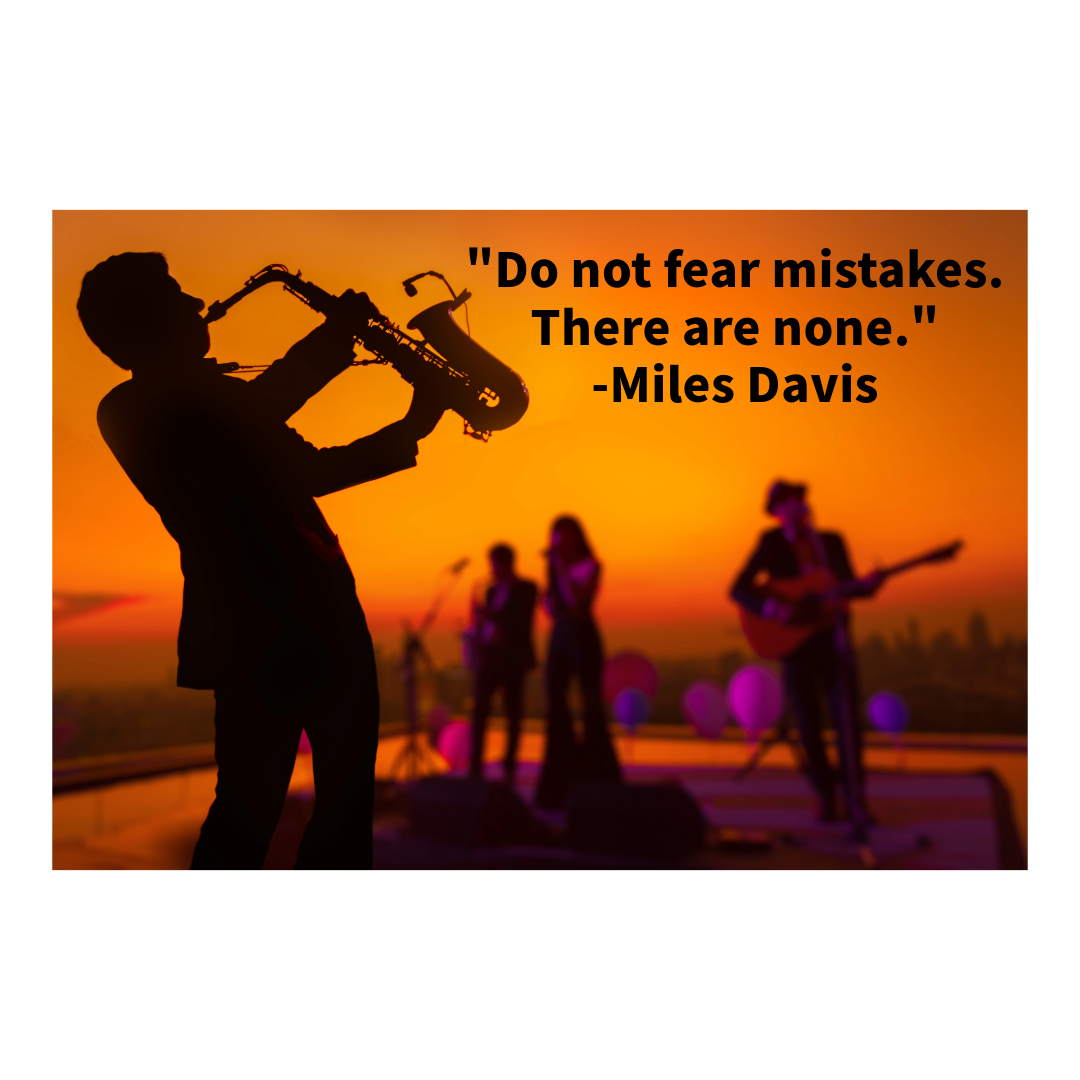
The great Jazz pianist and composer, Herbie Hancock, shares an oft-told tale about his tenure playing with Miles Davis. You were covered under a mantle of protection in his Miles’ band because he trusted you. This trust was forged in the ethos of the band. If you played a mistake during a gig, Miles would play your mistake as if it were meant to be all along. Somehow he would play the wrong notes in a way that impelled them to feel as they naturally belong in the song. Hancock shares that Miles felt a responsibility to find a place for the mistake in the scope of the song.

Click the video clip below to hear Herbie Hancock’s story:

I am on a constant quest for meaning and purpose in leadership. My wellspring of inspiration flows from the profound lessons enshrined in music. Whether orchestrating a band or leading an organization, we are certain to encounter mistakes stemming from those we guide. The pivotal question is: how do we react when a mistake occurs? Do we diligently cultivate an environment of psychological safety, fostering the resilience of our companions in the face of adversity? Within an organization, a relentless pursuit of perfection stifles, obstructs, and fuels burnout. Embracing the ethos of Miles Davis, acknowledging the absence of mistakes, engenders an environment teeming with creativity and emboldens risk-taking.

Playing the mistake requires that leaders are in tune with the gifts and strengths of the people they support. Simply put, know your people and value their strengths. Miles Davis knew his bandmates after dedicated time for rehearsal and live performance. He was also open to possibilities and knew that mistakes formed boundaries and inhibitions. Leaders must have this same mindset. Being open to the possibilities that mistakes foster can lead to dynamic new ideas. Most importantly, re-shifting the paradigm on mistakes empowers others

Next Moves for Dynamic Leadership Action:

1. Connect with your team on what constitutes a mistake in your action.
2. Create trust and establish how you will respond as a leader when a mistake occurs.
3. After a mistake occurs, debrief and share with the team how the mistake pivoted the team forward.
4. Use the mistake as an opportunity for growth.

Tuning into Possibilities: A Lesson in Leadership from The Beatles

As someone who proudly wears the badge of a “Beatles Encyclopedia,” my journey in music appreciation is a perpetual adventure. The joy I derive from delving into the world of music, particularly the legendary band that holds a special place in my heart, knows no bounds. If you were to step into my home office, you’d find it adorned with shelves filled to the brim with books dedicated to none other than “The Beatles.” I’ve devoured so many books over the years on this iconic band that I could probably recite passages from memory. (I’d likely be of little help in the book refuge depicted in Fahrenheit 451!)

Currently, my literary journey has led me to “The Lyrics” by Paul McCartney. Released just last year in hardcover, I couldn’t resist adding the paperback edition to my collection. This remarkable book sees McCartney opening up about the stories and personal anecdotes behind the songs that defined his tenure with The Beatles and his solo career. In the book’s introduction, McCartney shares an anecdote from the early days of The Beatles that, surprisingly, I had never encountered before.

Let me share a quick recap. Picture the scene: The Beatles, in the nascent stages of their career, find themselves on a wintry night journeying between gigs. Suddenly, their van skids on ice, careening off the road and down an embankment. Miraculously, no one is hurt, but they’re left stranded. Amidst the chaos, McCartney recalls a pivotal statement uttered by someone in the band: “Something will happen.” This simple phrase quickly became a rallying cry for The Beatles whenever faced with adversity or uncertainty. I try to envision when this statement would echo at various stages during The Beatles trajectory as a band. It is a tantalizing game to play in imagining when this line would be appropriate.

The profound simplicity of this statement struck a chord with me as I immersed myself in McCartney’s book. It served as a poignant reminder that even the idols we admire are, at their core, human. “Something will happen” encapsulates a resolute hope, reminding us that amidst seemingly insurmountable odds, the realm of possibility remains wide open.

Reflecting on this mantra, I couldn’t help but draw parallels to my own journey as a principal and school leader. In the face of daunting challenges, “Something will happen” embodies a steadfast belief in the power of resilience and perseverance. It speaks to the essence of our roles as leaders, tasked with navigating complex landscapes against all odds. We have to tune into possibilities on a daily basis. Additionally, we have to encourage others to tune into possibilities as we educate and empower the kids we serve.

Recently, our team encountered a situation demanding swift action and collaboration. In its aftermath, I found myself echoing a similar mantra to reassure my colleagues: “We responded. We were there for others.” I have echoed this statement many times as a leader to serve as a salve for others who support during a crisis. This instance brought to mind The Beatles and their mantra, reinforcing the notion that amidst uncertainty, hope prevails.

My mantra, “We responded,” shares the same essence and intention as The Beatles’ rallying cry. As leaders, it’s our responsibility to provide comfort and empowerment through compassionate words and actions. Whether serving as a soothing balm in times of crisis or bringing clarity to chaos, our words hold the power to inspire and uplift. Being intentional with our words is a necessary move as a leader. We are the navigators of our narrative and we must choose our words with care, compassion, and intention.

Stepping back and reflecting on our experiences is not just advisable; it’s imperative for effective leadership. Taking stock of our decisions and actions allows us to glean valuable insights and pave the way for growth. In the end, it’s the simple yet profound words—whether “Something will happen” or “We responded”—that ignite the spark of hope and resilience in those we lead.

Next Moves for Dynamic Leadership Action: Reflection on Communication

-Reflect: Find intentional time to reflect on the words you use as a leader to comfort or inspire during a crisis.
-Write: Jot down those words and statements you use. Reflect upon the meaning and intention in each of those words. Do they empower? Do they avoid judgement or placing blame?
-Share: Find a trusted thought partner and share words to gain feedback and growth.
-Connect: With people you serve and collaborate, take time as a group to discuss words used during a crisis. Establish kinship and understanding along with ensuring that meanings are understood.

Whether serving as a soothing balm in times of crisis or bringing clarity to chaos, our words hold the power to inspire and uplift. Being intentional with our words is a necessary move as a leader. We are the navigators of our narrative and we must choose our words with care, compassion, and intention.

Leading with Harmony: Fostering Belonging Through Collaboration

This past weekend, I found myself engaged in a collaborative conversation with two friends. As we explored ideas and shared perspectives, there was an undeniable sense of belonging in the air. It felt like we were in tune with each other’s strengths, creating a harmonious space that fueled our creativity. This experience made me reflect on the significance of sustaining a sense of belonging, especially for leaders, and how tapping into the strengths and gifts of others is a powerful way to achieve this.

In the realm of leadership, one trait stands out as essential: the ability to foster a sense of belonging. A leader who understands the importance of creating an environment where every individual feels valued, appreciated, and empowered is destined to cultivate a thriving community. One effective strategy for achieving this is to recognize and tap into the strengths and gifts of those around you, allowing them the space to shine.

A captivating example of this leadership approach can be found in the world of jazz music, a genre built on collaboration and improvisation. Consider the iconic rendition of “My Favorite Things” by John Coltrane and his quartet. In this performance, Coltrane, a legendary saxophonist, showcased a profound understanding of fostering belonging by stepping away from the spotlight.

As the melody unfolded, Coltrane gracefully stepped back, creating a space for his pianist and collaborator, McCoy Tyner, to take center stage. Tyner, known for his brilliant and innovative piano playing, seized the opportunity to stretch out and deliver a transcendent solo. Coltrane’s decision to give Tyner the spotlight not only highlighted Tyner’s strengths but also contributed to the overall beauty of the performance. It was a harmonious collaboration that showcased the power of recognizing and celebrating the unique talents within a team.

This jazz analogy holds valuable lessons for leaders in any setting, including the schoolhouse. A leader must possess an acute awareness of the people they serve and a deep understanding of the strengths that each individual brings to the table. By creating a culture that allows these strengths to thrive, leaders can foster a sense of belonging that goes beyond mere inclusion.

In the school environment, leaders must recognize and celebrate the diverse talents of teachers, students, and staff. Just as Coltrane allowed Tyner’s brilliance to shine in their musical collaboration, leaders should provide opportunities for educators to showcase their strengths in the classroom, whether it be through innovative teaching methods, mentorship programs, or collaborative projects.

Moreover, leaders should be attuned to the needs of the school community and actively seek out opportunities for collaboration. By tapping into the collective strengths of the team, leaders can create a culture of belonging where everyone feels heard, valued, and empowered to contribute to the success of the school.

In conclusion, sustaining a sense of belonging is a crucial aspect of effective leadership. Leaders who understand the importance of recognizing and tapping into the strengths and gifts of others can create a harmonious and thriving community. The example of John Coltrane stepping back to let McCoy Tyner shine serves as a powerful illustration of how leaders can foster a culture where the strengths of every individual are celebrated. As we navigate the complex world of leadership, let us strive to lead with harmony, creating spaces where everyone’s strengths can contribute to the beautiful melody of success.

Check out John Coltrane’s “My Favorite Things” featuring that transcendent piano solo by McCoy Tyner

In the Fan Club

Here’s Episode 20 of “The Principal Liner Notes Podcast.”

It is entitled “In the Fan Club.” I explore how the recent release of the “Yesterday” movie connects to my pride in being a Beatles Fan. I also explore connections from the film to our noble profession as educators.

https://anchor.fm/sean-gaillard/episodes/In-the-Fan-Club-e4fp3t/a-ahua79


Embrace the Crossroads

Here’s the latest episode of “The Principal Liner Notes Podcast.” It’s entitled “Embrace the Crossroads.” I explore how a pivotal moment in the “Mad Men” television series coupled with a song by Buddy Holly connects to the infinite possibilities at the end of a school year.

Here’s the link for the podcast: Click HERE.

Please feel free to share the podcast with friends and colleagues. Thanks for listening!

#143DayEdu: A Day of Kindness in Education in Honor of Mister Rogers

#143DayEdu: A Day of Kindness in Education in Honor of Mister Rogers

By Sean Gaillard and Jennifer Williams

A renaissance for kindness has surfaced within the last few years as a vital component of a schoolhouse’s culture. Educators in classrooms all around the world are finding ways to slow things down a bit and take notice of acts of kindness and goodwill — prioritizing relationships and making memories together along the way.

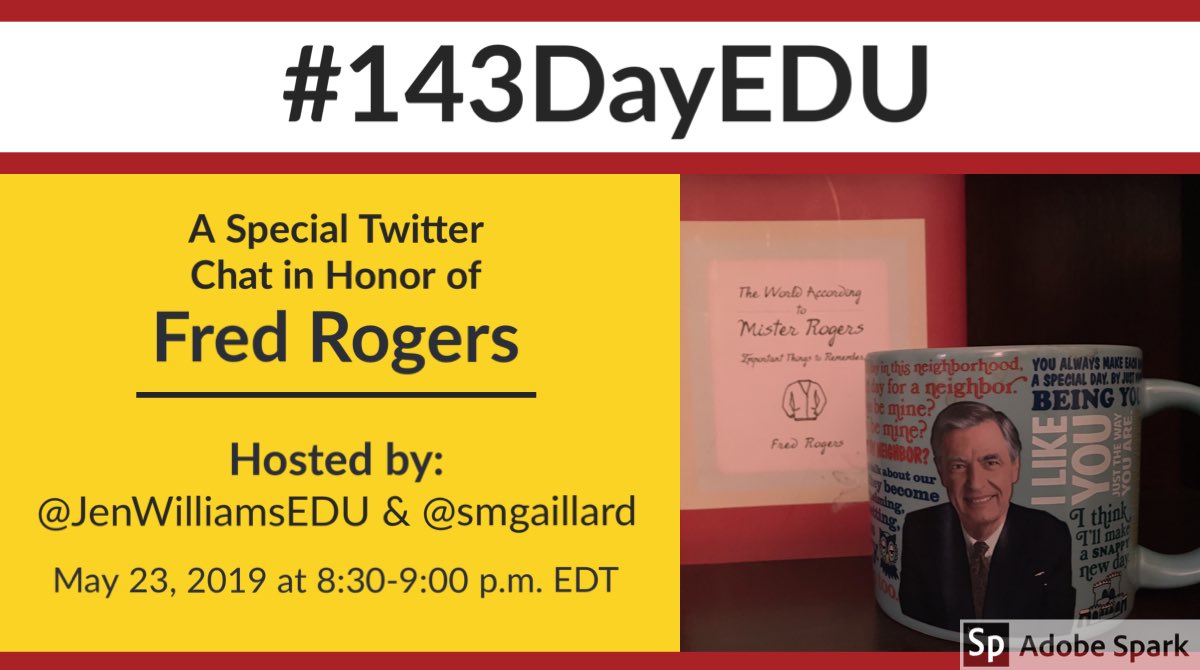
Fred Rogers, children’s broadcasting icon, promoted kindness for 31 seasons in a simple and sincere way on the television masterpiece, “Mister Rogers Neighborhood.” In honor of Mr. Rogers, the state of Pennsylvania has designated May 23 (the 143rd day of the calendar year) as #143DayinPA. This stands as a tribute to homestate hero, Fred Rogers, and his favorite number. “143” is numeric code for “I Love You.” We thought it would be fitting to extend the 143 culture of kindness to education with the #143DayEdu hashtag.

#143DayEdu

Using the #143DayEdu hashtag, we are encouraging all educators to share examples of kindness happening on May 23. To join in on the fun, simply use #143DayEdu to promote acts of kindness and compassion happening in the schoolhouse. You are also invited to join us this Thursday, May 23 at 8:30 – 9:00 p.m. EDT for a special Twitter Chat where we intend to promote positivity and celebrate the enduring legacy of Fred Rogers.

Here are the questions and times for Thursday night’s Twitter chat. To join, simply head over to Twitter by clicking HERE at 8:30pm ET and watch for the Qs from @smgaillard and @JenWilliamsEdu.

  • Q1: Thinking back to Mr. Roger’s Neighborhood, what are some of your fondest memories of the show? (8:35 pm ET)
  • Q2: What lessons can we learn from Mr. Rogers that we can apply to the classroom? (8:40 pm ET)
  • Q3: How did you promote kindness in your school recently? (8:47pm ET)
  • Q4: What are some ways we can finish the school year promoting kindness with our school communities? (8:53 pm ET)

Pass It On

As we prepare for #143DayEdu and the #143DayEdu Twitter chat, we invite you to consider this quote on kindness from Mr. Rogers along with these related resources. Please feel free to share the invitation for a Day of Kindness — pass it on! We look forward to this special week and the opportunity to celebrate you — just for being you!

Imagine what our real neighborhoods would be like if each of us offered, as a matter of course, just one kind word to another person.

D6fexloXoAAjbrC