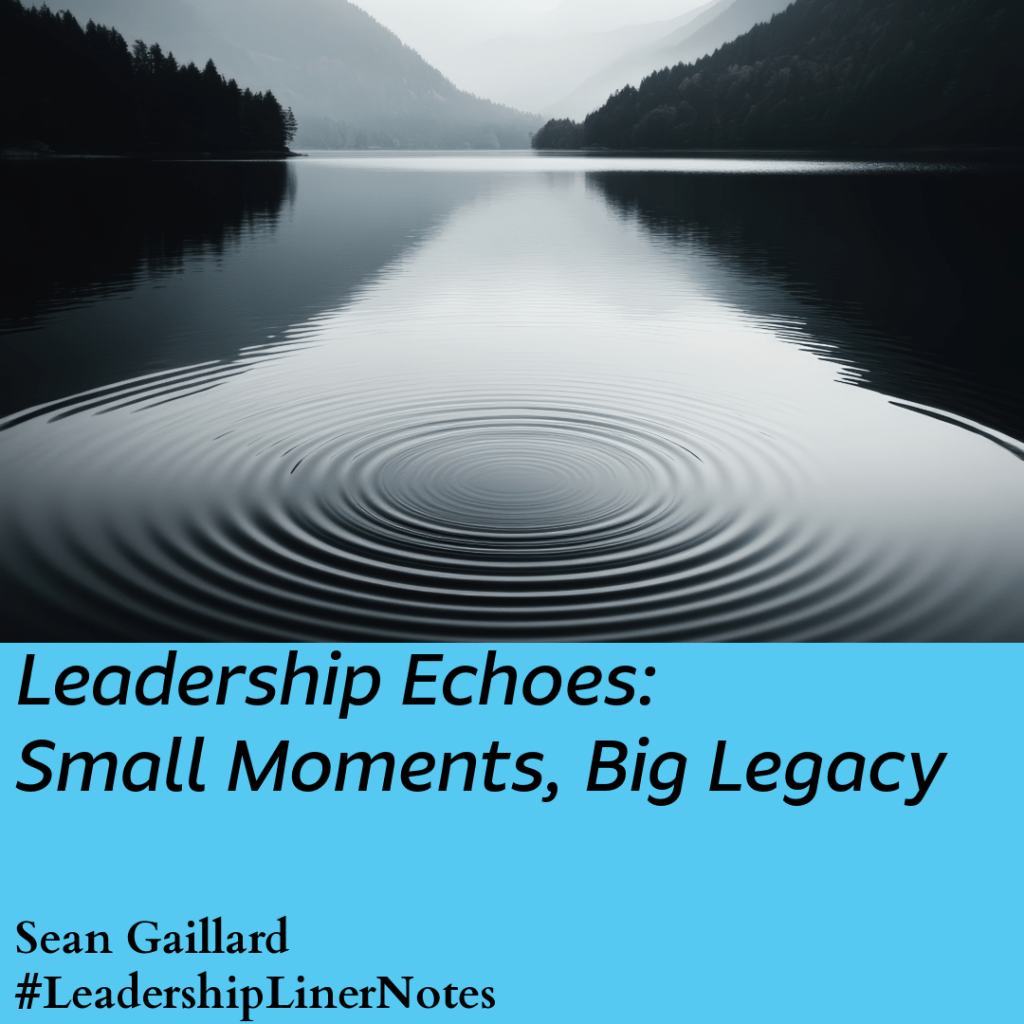
Leadership Echoes: Small Moments, Big Legacy

A Lesson from Administrator School

During my days in “administrator school,” I was fortunate to have our superintendent, where I was employed as a teacher, instruct one of our courses. The course was Strategic Planning, and I gained much wisdom from his years as a seasoned district leader. The class happened to land on the final day of the semester for our cohort. Looking back, it was a meaningful milestone as it marked the last class on the last day of my entire Master’s in School Administration program.

A moment from that day has stayed with me throughout my career. At the time, I did not realize how deeply it would echo through my leadership journey.

A Moment That Still Resonates

We were wrapping up the final review before exams when our superintendent began to share parting wisdom. I do not know what moved him to do so, but his reflections were powerful. He began to riff on lessons from his own career, weaving together aphorisms, stories, and insights.

Then came the moment I will never forget. He said, “Remember those conversations you had about your principal or even about me after a faculty meeting? Remember those meetings after the meetings where you shared your thoughts about leadership decisions? Maybe you complained and maybe you didn’t. Well, someday soon, you will be the topic of those conversations in the parking lot. How will you respond to that?”

He paused and looked at each of us. The room fell silent. We all sat in the weight of his words.

At the time, those words felt heavy and unsettling. Over the years, I have come to understand their profound truth about leadership and influence.

The Power of the Leadership Echo

All leaders have what I call a leadership echo. This is the way our tone, actions, empathy, and integrity ripple beyond our presence. It is the resonance of the legacy we create for others. Each of us has a leadership echo, and we are the composers of the melody it leaves behind.

Music and the Subtle Notes That Stay

As a lifelong music fan, I am always drawn to the small details in a song that stay with you. One of my favorite moments in music is the bridge of “Here Comes the Sun” by The Beatles. The sequence of handclaps adds a percussive joy that lingers long after the song ends.

Leadership works the same way. The small, intentional acts: kind word, a listening ear, a thoughtful pause before reacting—create lasting harmony. They resonate across classrooms and communities.

I still remember the high five I received from my principal after he observed my American Literature class. I was teaching “Richard Cory” and playing Simon and Garfunkel’s musical version. That simple gesture not only encouraged me, but I could see my students respond to it, too. It was a cool moment, one that continues to echo for me.

Echoes in Action

Leadership echoes take many forms. A leader checking in on a struggling teacher. A principal celebrating small wins during a tough week. A colleague modeling grace under pressure. A teacher calling home to share a moment of student success.

These gestures may seem small, but they often become the stories others tell later. When we amplify these positive echoes, they build the shared culture that defines our schools.

Hearing the Unflattering Echo

Sometimes, the echoes we hear are not flattering. Thinking back to what my superintendent said that day, leaders will always be the subject of conversation. Those conversations are sometimes positive and sometimes not.

As leaders, we must approach those moments with reflection, not fear. Even when the echo is critical, it can still reveal purpose and integrity. I recently reviewed survey data about my leadership. Some of it stung, but I chose to use it as a mirror for growth rather than a judgment.

Listening to your leadership echo takes humility and curiosity. It is an opportunity to grow, not to defend.

Three Ways to Strengthen Your Leadership Echo

Here are three reflective strategies for tuning your leadership echo into a source of growth and impact:

  1. Tune Your Tone:
    Pause before responding. Speak as if your words might echo in someone’s memory tomorrow.
  2. Play Small Notes Loud:
    Celebrate micro moments with either a handwritten note, a hallway check-in, or a quick “thank you.” Small gestures can carry great resonance.
  3. Listen for Resonance:
    Ask for feedback, reflect often, and be open to what comes back, even when it is uncomfortable.

The Last Chord

Just like the handclaps in “Here Comes the Sun,” your leadership will ring on long after you have turned the page to a new chapter. Think of the final chord in “A Day in the Life” by The Beatles. It sustains, fades, and lingers with an unforgettable sound that carries on long after the needle travels off the record.

Leadership is the same way. The decisions we make, the tone we set, and the kindness we extend all continue to reverberate through others long after we leave the room. Every word, action, and choice becomes part of our echo.

Each of us has the power to shape what that echo sounds like. We can choose to create an echo that uplifts, inspires, and builds others. The more we lead with intention, empathy, and grace, the more beautiful that resonance becomes.

My father often reminded me to lead with humility and to hold my head high. His words, much like that chord in “A Day in the Life,” continue to echo in my life and in my leadership.

May your echo be one of kindness, courage, and grace. May it be the kind that reminds others of the good they carry within. And may it continue to resonate long after the music fades.


One More Thing

This reflection is part of my ongoing Leadership Liner Notes blog, where I explore the harmony between music and leadership. The idea of the leadership echo reminds me that every interaction carries a note of influence, just like every chord in a great song contributes to the melody.

As I continue to write and learn, I’m inspired by the small moments that form the soundtrack of leadership. Every conversation, every decision, and every high five in the hallway becomes part of the echo we leave behind.

If this reflection resonates with you, share your own leadership echo story on social media using #LeadershipRiffs and #LeadershipLinerNotes, and tag me in your post. Let’s keep the conversation. and the echoes going.
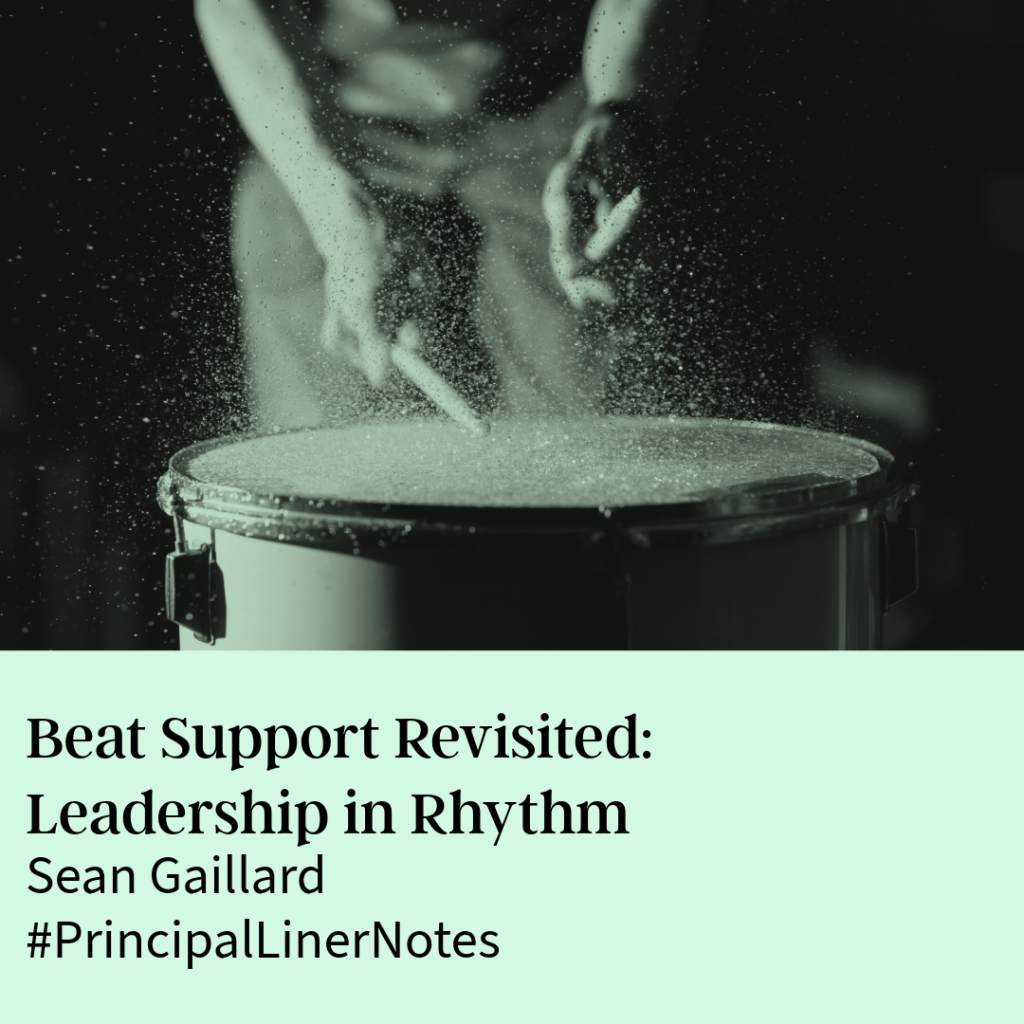
Beat Support Revisited: Leadership in Rhythm

Leadership can feel like navigating the swirling chaos of a live performance—where the screams of the crowd threaten to drown out your rhythm. As school leaders, it’s easy to get lost in the noise, but it’s in these moments that we must tune into those around us. The people we lead and serve are our rhythm section, and finding the right “beat support” can make all the difference.

I’ve been reflecting on this idea recently, inspired by a moment I once shared on my podcast, #PrincipalLinerNotes. Years ago, during one of my “Impromptu Carpool Episodes,” I recorded an off-the-cuff reflection about a clip of The Beatles performing “I Feel Fine” live. Amidst the chaos of Beatlemania—where stage monitors were nonexistent and screaming fans drowned out everything—Paul McCartney stepped in with a move of pure leadership. During Ringo Starr’s incredible drum break, Paul gave a quick cue, counting Ringo back in and ensuring he nailed his return to the beat.

That moment wasn’t just about music; it was a masterclass in leadership. It demonstrated the importance of being attuned to your team, providing support when they need it, and ensuring that everyone finds their rhythm.

The Rhythm of Belonging

I explored this connection between The Beatles, leadership, and education in my book, The Pepper Effect. In it, I share lessons from the Fab Four that remind us of the power of collaboration, creativity, and connection. (You can check out the book here! The Pepper Effect on Amazon).

One of the most important lessons from both The Beatles and leadership is the role of belonging. As leaders, we need to provide the cues and support that allow our team to thrive. Whether it’s a trusted teacher who serves as your barometer or the intentional moments where you help others find their groove, belonging starts with building connections.

Four Ways Leaders Can Build Beat Support

Here are four actionable ways leaders can create their own “beat support” and foster belonging:

1. Find Your Barometer

Identify someone you trust—someone who will be honest with you—and use them as a gauge to understand how your decisions and words land with your team.

2. Be a Barometer for Others

Provide clear and supportive cues for your team. Let them know where they stand and help them feel confident in their role.

3. Celebrate Strengths

Like Paul recognizing Ringo’s brilliance, tune into the unique gifts of your team members and amplify their contributions.

4. Create Collaborative Spaces

Build opportunities for your team to share ideas, support each other, and work toward common goals. Belonging grows in the spaces where collaboration thrives.

What’s Next: Why The Beatles Matter

This reflection on leadership, belonging, and The Beatles has inspired me to launch a new podcast called “Why The Beatles Matter,”starting December 12. This podcast will explore the lasting impact of The Beatles and their legacy through conversations with people whose lives have been shaped by their music and message.

I’m looking for future guests to share their stories of how The Beatles inspired them. If you’d like to join me on this journey, email me at sgaillard84@gmail.com. Spaces are filling up fast.

Visible Listening: #ThePepperMindset in Action

Every band has a template for the creative process. These are the pivotal steps taken to either remain inside or outside the proverbial box. Recording a song for a band can take on many approaches and the path is not always the same. For The Beatles, there was one step they often took along the way in their studio recording creation. It involved auditioning a new song in the studio to George Martin, their producer and sounding board.

There are many pictures documented of The Beatles pitching their song ideas to their producer. Early studio session photos usually depict George Martin perched on a stool with his head bowed down and his hands placed on his knees. He is arrayed in a crisply starched white dress shirt and an immaculately thin tie dangling in time to the music. John Lennon and Paul McCartney are standing on either side of George Martin. Their guitars are slung over their shoulders with voices harmonizing. George Harrison may be slightly off to the side picking out lead guitar riffs and studying the chord formations on John and Paul’s respective guitars. Ringo Starr is in the background listening intently to the lyrics and perhaps imagining how his future percussive beats will compliment the lyrics of “Another Lennon-McCartney Original.”

Producer Martin would listen intently to the tune and then provide direct feedback to the songwriters. His opinion was highly valued by the band and they at first viewed him as a kind of schoolteacher. He may have suggested an arrangement idea or technical suggestion. Perhaps, George Martin was looking for a teachable moment for the band to take them down a new path in songwriting and recording. Perhaps, he was tuning into an innovative and whimsical idea a songwriter suggested and looking to build upon it.

The Beatles had a gift of being open to the best idea regardless of who shared it. Martin’s direct and timely feedback coupled with the songwriting genius of The Beatles led each song to embark on a creative journey that would eventually impact generations of listeners. The collaboration of The Beatles and George Martin was always rooted in this first step of auditioning a song before recording. It began with the simple act of listening.

In starting my new assignment as principal at Lexington Middle School, I find myself taking a few pages from George Martin’s playbook as a leader, educator and collaborator. It is easy for a principal to leap into a school full of vigor and ideas in the name of change and innovation. I made a similar move in my first principal assignment. Thinking I was going to single-handedly save the school with the simple wave of a smile and a quote from a well-thumbed book on change leadership, I stumbled hard over my ego and stubbornness. I am still learning and striving to hit the same universal notes as The Beatles did.

For the first two weeks in the new school, I am making an intentional effort to practice what I call Visible Listening. This practice takes on many permutations, but the aim is still the same in service and support of kids, teachers and the school community. Visible Listening means visiting classrooms and engaging with students and teacher. It means sitting down and being open to learning more about the pulse of the school. Visible Listening means sitting down with each team member (whether they are a student, teacher or family member) and setting up time for an intentional conversation by asking three simple questions:

  • What is great about our school?
  • What do we need to work on together to grow our school?
  • How may I serve and support you as your principal/lead learner?

I imagine myself as George Martin sitting on that stool in Abbey Road Studios and the teachers are my Beatles. I am listening to their words and music. Looking for ways to learn more about our school. I am in tune with those teachable moments and hoping to share what I can with them. In turn, I am looking for those teachable moments so they may edify me about our school. We are sketching out plans to build a masterpiece for our students so that they may add to the tapestry of our school culture. We are building the blueprint for our students to create their own respective masterpieces.

During one of these chats with my some of my new bandmates, I noticed that I was talking too much. My excitement for our collaboration was droning on too long and I could sense that I was spiraling into that nonsensical “Charlie Brown Teacher Voice.” Stopping immediately, I asked them what their dreams were for our time together. The barometer of the conversation changed and we were able to learn more on building our collaboration to new heights. I am so happy that I took the time to stop my ramblings so that I could tune into the dreams of my colleagues.

Beatles Producer George Martin knew that active listening to The Beatles was a crucial element in the recording process. Tuning into his clients provided a necessary foundation for the band to create the timeless and universal songs that still inspire us today. His simple act of Visible Listening led to a world-changing musical canon.

The creative and collaborative focus that is The Pepper Mindset helped The Beatles build an innovative album which still challenges and motivates. “Sgt. Pepper’s Lonely Hearts Club Band” could not have happened with dismissive or rushed listening. 50 years after its release, “Sgt. Pepper” still stands as a pinnacle of recording achievement.

Principals are called to practice Visible Listening in service and support of our students, teachers and families. Stopping for those intentional pauses and inviting those whom we serve into the collaborative marrow will lead to world-changing music in the schoolhouse. Visible Listening is a pivotal move in building The Pepper Mindset and we can adopt that same action to enact bold and creative innovations for our school communities. Visible Listening is one of many notes any educator can use to compose a majestic schoolhouse symphony.