Resetting Rejection: Leading with Resilience and Authenticity

Rejection is a reality. It happens, and it stings. Sometimes, the worst rejection isn’t from others who naysay, doubt, or echo endlessly the phrases, “We’ve never done it this way…” or “We always have…” Often, it’s the rejection we inflict upon ourselves that hurts the most.

The Beatles faced rejection head-on. In my 2018 book, The Pepper Effect, I recount their infamous rejection by Decca Records in 1962. The label dismissed them with the now-legendary phrase: “Guitar groups are on their way out.” Yet, the Beatles didn’t let that stop them. Instead, they adopted a “reset mindset” amidst the setback. They persevered, refined their craft, and sought opportunities elsewhere. Their resilience led to a groundbreaking partnership with producer George Martin and, eventually, music that would change the world.

Recently, I revisited the concept of resilience while reading Penny Zenker’s The Reset Mindset. Zenker outlines a three-step process for overcoming both personal and professional setbacks: Step Back, Get Perspective, and Realign. Her approach emphasizes mindful choices and intentional progress. The Beatles, whether consciously or not, exemplified this mindset. They regrouped, made strategic changes (including bringing Ringo Starr into the band), and doubled down on their songwriting. Their determination and shared vision propelled them to unimaginable heights.

I’ve endured my own share of rejection—writer’s block, rejected book proposals, pilfered ideas from unreliable collaborators, and negative problem admirers eclipsing possibilities. At times, I’ve been my harshest critic, rejecting myself before anyone else had the chance. Pressing “Publish” on a blog post can feel like stepping off a ledge, wondering if anyone will read it or if it will resonate. Recording a podcast episode Yet, a trusted thought partner recently reminded me to let my words go—to trust they’ll land where they’re meant to do so.

This advice brought to mind the Beatles’ 1968 self-titled album, commonly known as the “White Album.” This sprawling, 30-song masterpiece faced criticism for being too long or unfocused. Paul McCartney’s response? “It’s great, it sold, it’s the bloody Beatles’ White Album, shut up!” That unapologetic confidence is a lesson in staying true to one’s vision and maintaining a reset mindset.

I channeled that spirit recently when deciding whether to bring my guitar to a school assembly. As a new principal at my school, I felt hesitation. I have been a principal for 16 years and I have lugged my guitar to school for various events so this was not first gig with a guitar in the schoolhouse. Yet, I endured a series of stumbling doubts with bringing my guitar along to school. Would this feel out of place? Would it connect? But in the end, I applied the Reset Mindset. I took an intentional step back to reflect and wonder. I focused on my purpose: creating a joyful, meaningful moment for our students. I decided to move forward, tune into building a culture of belonging for students and faculty, and bring my beloved guitar to the scheduled grade level assemblies. Music is an entry point for others and serves a divine thread that connects us to our shared humanity.

The butterflies didn’t stop as I hurriedly carried my guitar into school, but when I sat down in front of our first graders and began to play, I knew I’d made the right choice. The laughter, joy, and connection we shared affirmed the decision. It was a reminder of the power of leading with authenticity and purpose. I love playing music and I wanted to be unabashedly comfortable with my best self.

Recently, on my podcast Why The Beatles Matter, I had a conversation with Dr. Donya Ball that gave me even more perspective on rejection. It was serendipitous that she brought up the idea of leaders leaning into and accepting rejection.  As I was just working on this blog post before our conversation, I readily welcomed her insight on rejection. She shared how we, as leaders, don’t talk about rejection enough and how it’s a necessary part of growth. I deeply appreciated her real talk on this reality. Rejection, she said, is an opportunity to renew, recalibrate, and re-focus. It’s another way to adapt the Reset Mindset—seeing rejection not as the end or the finality of an idea, but as a stepping stone to connect with others, build collaborative coalitions, or simply reset.

As leaders, our gig is to create meaningful moments that inspire, connect, and uplift. When we embrace resilience and focus on our purpose, we transcend rejection and lead from a place of authenticity.

Four Leadership Moves Inspired by The Beatles and the Reset Mindset:

  1. Evolve and Adapt: The Beatles didn’t let their rejection by Decca define them. They stepped back, reflected on what they needed, and made a bold move by bringing in Ringo Starr. This pivotal decision transformed their sound and solidified their lineup, exemplifying the importance of adapting to move forward.
  2. Collaborate with Vision: Recognizing the need for a fresh perspective, the Beatles partnered with George Martin, who brought a new dimension to their music. This collaboration highlighted the power of seeking thought partners who align with your vision and elevate your work.
  3. Refine Your Craft: After their setback at the failed Decca Records Audition, the Beatles didn’t stagnate. They doubled down on songwriting, tirelessly honing their skills and experimenting with new ideas. This relentless pursuit of excellence demonstrates how leaders can use rejection as fuel to refine their craft.
  4. Stay True to Your Purpose: Despite criticism and pushback, The Beatles never abandoned their creative vision. Whether it was the ambitious scope of the “White Album” or their genre-defying innovations, they stayed true to their purpose, leading with authenticity and confidence.

The importance of tuning into the Reset Mindset cannot be overstated. As leaders, modeling this mindset for others empowers our teams and fosters resilience. Let’s embrace the journey together and inspire others to do the same.


Resources to Dig Deeper for Reflection and Action

Tune in to the upcoming episode of my podcast, Why The Beatles Matter, where I continue this conversation with Dr. Donya Ball. Her insights on leadership, rejection, and authenticity are not to be missed. Plus, she’s a joy to engage in for conversation! You can also learn more about her work and check out her TEDx Talk at https://www.donyaball.com/.

Explore more connections to The Beatles and leadership in my book, The Pepper Effect: Tap into the Magic of Creativity, Collaboration, and Innovation.

Check out Penny Zenker’s The Reset Mindset: How To Get Unstuck, Focus on What Matters Most, and Reach Your Goals Faster.

Paul McCartney on “The White Album” as mentioned above: It’s a great quote and shows The Reset Mindset in action.
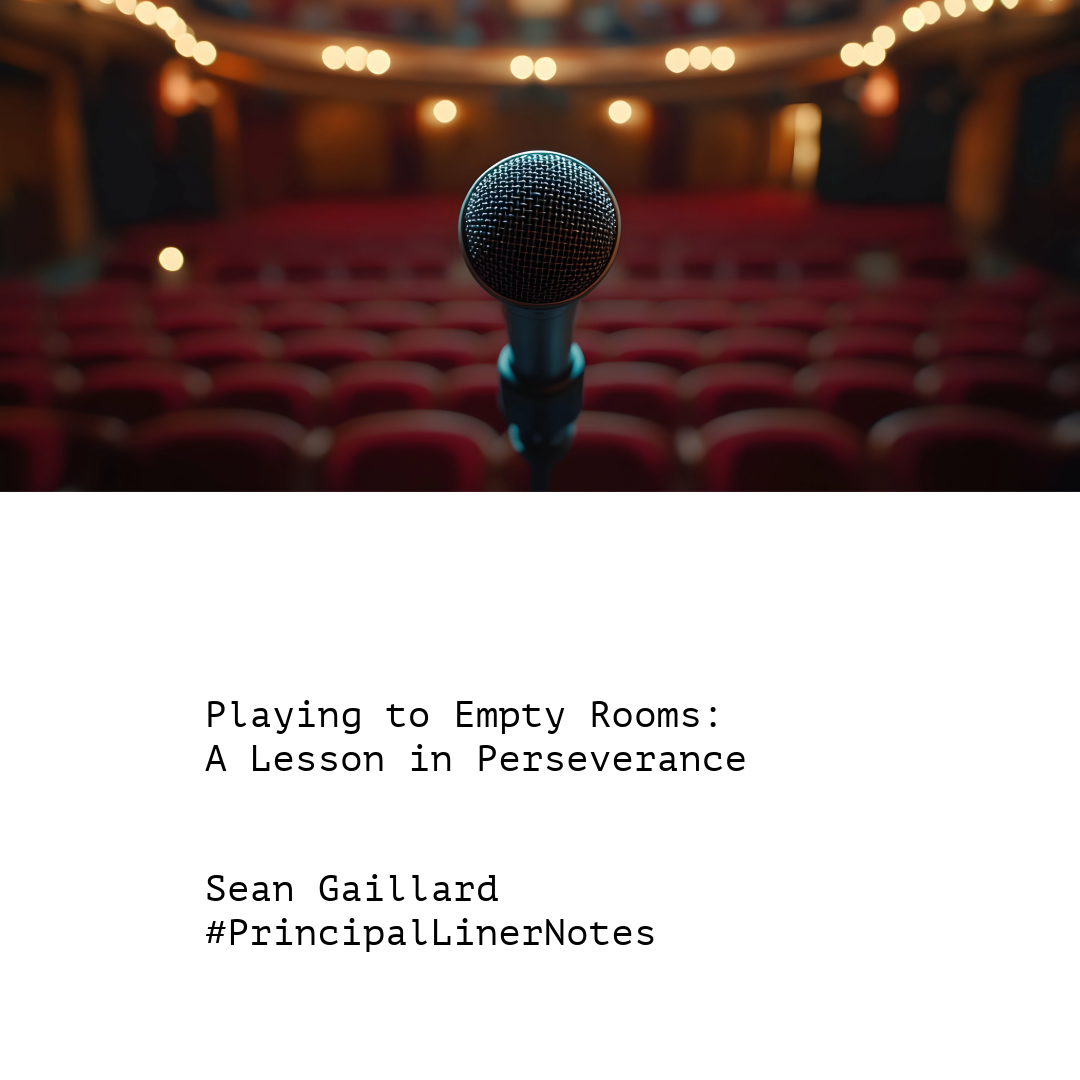

Playing to Empty Rooms: A Lesson in Perseverance

As I write this, the early morning hours find me awake, wrestling with insomnia. It’s around 3:00 a.m., and in the quiet solitude, I decide to revisit this blog. Against my better judgment, I check the stats on a recent post. I know the adage, “Comparison is the thief of joy,” but still, I fall into the trap.

The numbers aren’t encouraging. They stir up a flood of past memories—times when my efforts seemed to fall flat. The book giveaway that garnered no participation. The speaking engagement with an empty room. The book study I excitedly promoted, only to find no one signed up.

I have played to empty rooms. It’s a gut-wrenching experience. You pour your heart into your work, stepping vulnerably onto a stage without a net, only to be met with silence. It feels like validation of your worst fear: that your voice doesn’t matter. That your efforts aren’t enough. The doubt can spiral quickly, pulling you into an abyss that’s hard to climb out of.

I find myself wondering about the lack of engagement with my writing. I tag others and hear no response. I try to support others when tagged, yet often feel like I’m shouting into the void when I press Publish.

Before I sink too deep into this whirlpool of self-doubt, I pause and take a cue from The Reset Mindset by Penny Zenker, a book that has been a lifeline for me recently. The concept of resetting resonates deeply. It’s about an intentional pause—a mindful shift in perspective to open the door to new possibilities. Resetting means revisiting your core purpose and recalibrating your moves with intention.

So here, in this moment of doubt, I reset.

Why do I write? It’s not for stats, clicks, or reposts. It’s for connection. Writing is my bridge—to myself, to others, and to meaning. It’s a way to foster belonging, to reflect, and to find resonance with others navigating the lonely and challenging paths of leadership.

When I embrace this reset mindset, I remember: this moment of doubt is just that—a moment. It doesn’t define me or my work. My writing is not about chasing external validation; it’s about helping others seek meaning in their own leadership journeys. It’s about creating space for reflection and connection.

I remind myself of the moments that truly matter: the time a struggling reader reached out with gratitude after finding solace in my book. The fulfillment of a lifelong dream in publishing a book, The Pepper Effect. The joy of being invited to speak at upcoming conferences like FETC and the North Carolina Middle School Matters Conference. These are the moments that validate my voice and purpose.

And then, as I often do, I think of The Beatles.

In December 1961, before Beatlemania, before sold-out arenas and screaming fans, The Beatles played a gig at the Palais Ballroom in Aldershot. A booking error left the show poorly promoted, and only 18 people attended. Imagine it: the band that would change the world, performing in near obscurity.

But they didn’t let it break them. They played on, laughing and joking through the set, treating it as an opportunity rather than a failure. That moment was just one small chapter in their story—a necessary step on the path to greatness.

Failures happen. We stumble. We fall. And yet, like The Beatles, we get back up and keep playing.

As I stand in my own empty room—whether as a writer or a leader—I hold fast to my purpose. We all must. The value of our voice, our vision, isn’t determined by the size of the audience. It’s found in the connection with that one reader, that one listener, that one colleague who sees and understands your purpose.

When you play to empty rooms, remember: it’s not the end. It’s a pit stop—a chance to hone your craft, to reset, and to move forward.

Someone out there needs your voice. Someone out there is better because of your vision. Take heart in the small moments of connection and press on.

Each moment—success or setback—is a step forward in this journey of leadership and perseverance. Let’s keep playing.

Reflect and Reset for the New Year

Reflect and Reset for the New Year

As the year winds down and the calendar inches closer to 2025, I invite you to take a meaningful pause. My hope is that these words reach you during a moment of restoration, where you are embracing time with loved ones, reflecting on your journey, and finding opportunities to recharge physically, emotionally, mentally, and spiritually. Winter Break is a gift—a time to clear the noise and center ourselves as we prepare to lead with purpose into the new year.

This past year has been a challenging yet transformative one for me. I reflect on a pivotal moment back in February when a heart episode led to an ambulance ride and a stark reminder of life’s fragility. That experience set me on a path of healing, physically and emotionally. Renewing my dedication to fitness has been a much needed salve. Therapy has helped me confront and overcome anxiety, and the unwavering support of family and friends has kept me grounded. These challenges have not only renewed my faith but have also strengthened my resolve to serve with clarity and gratitude.

In 2024, I rediscovered the beauty of creation and connection. I launched three new podcast series (“Hope Amplified,” “Why The Beatles Matter,” and the upcoming “Chords of Connection”) and overcame my writer’s block to return to this blog, laying the groundwork for a new book. I also concluded “The Principal Liner Notes Podcast” with the feeling of satisfying closure and the hope of exploring new territories of expression. Most importantly, I learned to savor life’s small moments—the ones that weave together into a tapestry of hope, joy, and connection. Letting go of toxic ties and re-embracing meaningful relationships has been a powerful act of resetting my personal and professional compass.

The word “reset” has emerged as my guiding star for 2025. It first resonated with me during a professional development session on leadership, where I encountered Penny Zenker’s The Reset Mindset. Her definition of a reset mindset—“a way of thinking that focuses on dynamic reassessment and the willingness to reinvent”—perfectly encapsulates what leaders need to navigate challenges and inspire reinvention within their teams. The concept reappeared during a keynote at a leadership conference, and a trusted thought partner encouraged me to dive deeper into Zenker’s work. I’m savoring the insights from this book, which validates my journey and offers actionable steps for growth and leadership.

As we prepare to embrace 2025, I encourage us to adopt a Reset Mindset—one that empowers us to pause, reassess, and reinvent with intentionality. Here are four action steps for leaders to reset and lead with renewed purpose:

1. Take Intentional Time to Recharge Daily

Leadership can be all-consuming, but it’s essential to carve out moments each day to refuel. Whether through meditation, exercise, or simply a quiet moment with a cup of coffee, these intentional pauses restore our energy and focus. As Zenker notes, “recharge time” is not a luxury—it’s a necessity for clarity and effectiveness.

2. Revisit Your School’s Vision and Mission with the Faculty

The new year is an ideal time to recalibrate and ensure alignment with your team. Engage your faculty in meaningful conversations about your school’s vision and mission. Reflect together on what’s working, what needs reimagining, and how you can collaboratively set the course for a thriving 2025.

3. Read The Reset Mindset by Penny Zenker with a Thought Partner

Growth is amplified when shared. Invite a trusted colleague or thought partner to join you in reading The Reset Mindset. Use it as a springboard for dialogue, reflection, and the co-creation of strategies to navigate challenges and inspire reinvention within your school community. Discover The Reset Mindset here.

4. Pursue Personal Passions

Leaders are at their best when they bring their whole, authentic selves to the table. Dedicate time to personal pursuits that ignite your joy—whether it’s workouts, exploring new hobbies, or simply trying something new. These moments of personal fulfillment recharge our spirits and fuel our leadership.

Reflecting on 2024, I’m reminded of how my favorite band, The Beatles, exemplified the art of the reset. After the tumultuous 1966 World Tour, they reinvented themselves as “Sgt. Pepper’s Lonely Hearts Club Band,” creating a timeless masterpiece. Later, during the “Get Back/Let It Be” sessions, they overcame discord to perform live once again, rediscovering their connection as a band. These moments of reinvention hold lessons for us as leaders—to embrace change, foster collaboration, and find new possibilities amid challenges. Explore these stories in The Pepper Effect: Tap into the Magic of Creativity, Collaboration, and Innovation.

As I step into 2025, I carry forward the lessons of intentional resetting—a process that has given me clarity, optimism, and purpose. I look forward to the opportunities ahead, both in my personal journey and within the schoolhouse I am privileged to serve. Together, let’s reset, reassess, and reimagine a brighter future for ourselves and our school communities.

Here’s to 2025—a year of reinvention, resilience, and renewal.