In the Key of Brian

How Brian Wilson’s Music Taught Me About Leadership, Vulnerability, and the Courage to Keep Going
Devastated.

Brian Wilson is gone.

The news hit me hard today. Brian wasn’t just a musical genius. He was a spiritual guide, a quiet architect of harmony, and the voice behind songs that shaped my life. His music—those symphonies of soul, longing, and joy—have been my compass through the loud and quiet moments of living.

Just last week, I was basking in the joy of a surprise Father’s Day gift from my wife and daugthers: tickets to see The Beach Boys live. Brian had long since retired from performing, but his presence was felt. It always is. It lingers in the harmonies. It rises in the arrangements. It pulses in every chorus sung by a crowd of strangers suddenly made family by melody.

I was fortunate to see Brian perform live several times in the late 1990s and early 2000s during his remarkable comeback. It was more than a concert. It was a rebirth.


Brian’s music has accompanied the milestones of my life.

I remember pressing my ear to a clock radio 45 years ago, trying to catch every layered nuance of Good Vibrations. I didn’t understand the complexity of what I was hearing yet—but I felt it. I was entranced.

I remember watching a Beach Boys concert on HBO in the 1980s with my dad. He loved R&B and soul, and yet there we were—grooving, smiling, singing along to Fun, Fun, Fun like it was gospel.

I remember hearing the opening chords of California Girls in the delivery room as my twin daughters were being born. That mini-symphony played while new life entered the world, and in that moment, I felt the rush of peace. God was with us. Everything was going to be okay.

I remember not getting Pet Sounds, in its first when I first heard it in 1990. But I grew into it—and came to see it for what it is: the greatest album of all time. A masterpiece of heart, soul, and innovation.

I remember hearing Cabin Essence from a bootleg copy of SMiLE on vinyl in a record store. I looked around in stunned silence. A clerk caught my gaze and nodded as if to silently say, “We get it, don’t we?” No words. Just knowing.

I remember driving my oldest daughter home from daycare, both of us singing Heroes and Villains at the top of our lungs. Laughter and joy spilling through the car like sunshine.


But Brian Wilson didn’t just give us songs. He gave us strength.

Through Pet Sounds, he showed me that vulnerability isn’t weakness—it’s strength in its purest form.
Through SMiLE, he taught me that unfinished dreams can be resurrected with grace, imagination, and perseverance.
Through his life, he reminded us that the creative process is messy, sacred, and worth the fight.

Brian Wilson’s willingness to face his mental health struggles publicly—amidst a whirlwind of fame and pressure—changed how I view courage. He didn’t hide his pain. He didn’t pretend it wasn’t there. He just kept going. Kept writing. Kept harmonizing. That quiet, determined bravery became a guiding light for me.

Last year, when I experienced a heart episode that resulted in me being rushed to the hospital, I found myself in one of the most vulnerable seasons of my life. Alongside the physical recovery came emotional weight—mental health struggles I didn’t always know how to name. In that difficult stretch, I thought of Brian. I revisited his story. I played Pet Sounds and SMiLE. His music gave me permission to slow down, to feel, to heal. His example reminded me that we don’t have to be perfect to keep going—we just have to keep showing up, one note at a time.


Brian Wilson’s quote, “Music is God’s voice,” echoes eternally in my mind.

As a school leader, that idea centers me. It reminds me that learning is sacred. That harmony matters. That love, when set to rhythm, can move hearts and minds in ways nothing else can.

For those who’ve followed this blog or listened to the Principal Liner Notes podcast, you’ve heard me talk about Creative Courage. That’s Brian Wilson to the core. The courage to innovate. To feel deeply. To fail. To rise. To try again.

Today, I mourn. But I also give thanks.

I give thanks for the peace his songs brought me in a delivery room.
I give thanks for the laughter his melodies brought into my car.
I give thanks for the strength his life gave me when I needed it most.

Brian Wilson changed my life.

His harmonies still ring. His spirit still sings. And for those of us willing to listen, his legacy keeps leading us forward—in the key of empathy, in the tempo of grace.

Thank you, Brian.
You gave us harmony.
You gave us honesty.
You gave us your heart.

We’ll carry the melody from here.
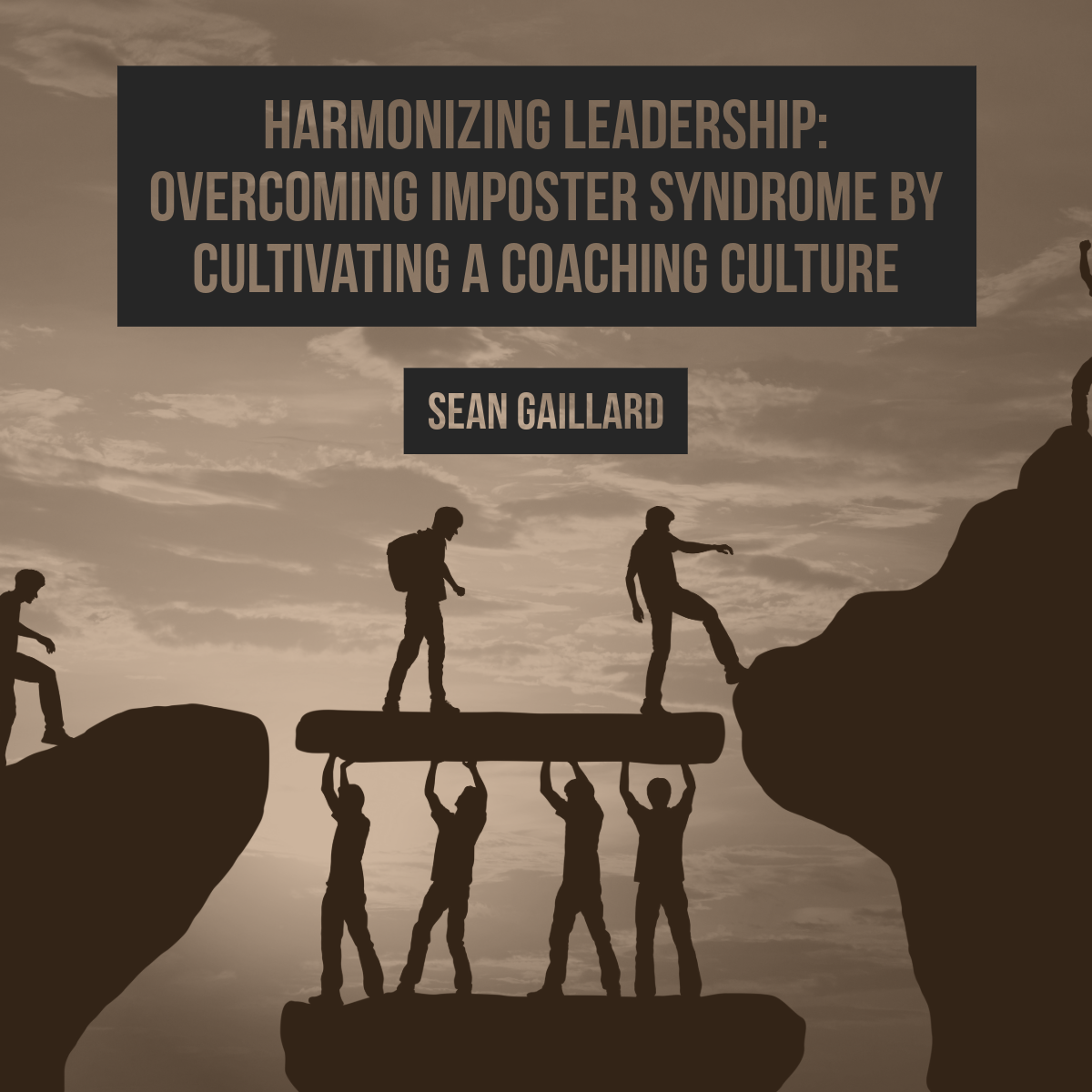
Harmonizing Leadership: Overcoming Imposter Syndrome By Cultivating a Coaching Culture


Years ago, as a young enthusiast of music, I immersed myself in a biography of The Beach Boys. My love for music biographies runs deep; I cherish learning about the origins of my favorite albums. One chapter in that Beach Boys biography centered around an unreleased album meant to follow their stylistic shift “Pet Sounds” and the #1 hit single, “Good Vibrations.” Brian Wilson, the band’s leader and creative genius, was collaborating with lyricist Van Dyke Parks on an ambitious project that transcended the concept album format. Wilson envisioned it as a “teenage symphony to God,” an album poised to redefine music and tackle grand subjects such as the American Dream. My excitement turned to disappointment upon learning that Brian Wilson shelved the album, leaving only a few tracks scattered across various releases.

I was troubled by Wilson’s lack of confidence and drive to complete this masterpiece. Having heard some of these tracks, I was astounded by their beauty and poetic depth. These compositions were symphonic and grand, with luminaries like Leonard Bernstein recognizing their brilliance. Bernstein praised “Surf’s Up” as “poetic, beautiful even in its obscurity,” highlighting its complexity as emblematic of the innovative changes in pop music. I was astounded that someone like Brian Wilson who is musical genius could not complete his modern-day symphony.

Fortunately, after enduring years of personal struggles, Wilson eventually completed the album, which was warmly received and even earned a Grammy Award. The original tracks were later compiled into a Beach Boys album, also met with acclaim. Yet, I remain in awe of how such a work of pure beauty was almost lost to Wilson’s own version of Imposter Syndrome. Despite his success, Wilson didn’t feel worthy and doubted the album’s merit. His crisis of confidence nearly buried a quantum leap in musical artistry.

This reflection led me to think about leaders in various fields who face similar struggles with Imposter Syndrome. How many innovative ideas have been abandoned due to a lack of courage and the toxic effects of naysayers? I have faced my own bouts with this as a leader, letting confidence gaps stifle new ideas. A recent CNBC report revealed that 71% of CEOs admitted to battling Imposter Syndrome. The lost ideas and solutions, stunted by this struggle, resonate with Wilson’s shelved masterpiece.

According to the American Psychological Society, Imposter Syndrome is is the feeling of doubting your abilities and fearing being exposed as a fraud, even when you are competent and successful. It often involves attributing achievements to luck rather than skill. Imposter Syndrome is like a shadow that follows even the brightest stars, making them feel like they’re just pretending to shine. It’s that nagging doubt that, despite your achievements and hard work, you’re not truly deserving and might be exposed as a fraud at any moment.

Embracing Failure and Finding Strength

Recently, in deep reflection over the past year in my leadership role, I found myself fixated on my failures. Instead of extracting lessons from them, I wallowed in the losses, deeming myself a failure. These sharp feelings of self-doubt echoed the pangs of Imposter Syndrome, making past accolades feel hollow.

My wife, perceptive as ever, noticed my downward spiral and called me out. She challenged me to inventory my achievements, no matter how small. At her urging, I listed every instance where I served, supported, and made an impact. The exercise was revelatory, shifting my focus from despair to empowerment. This shift in perspective led to an epiphany: I want to help others persevere through their own Imposter Syndrome. I am determined to be a thought partner and coach, empowering others to navigate their valleys of self-doubt.

Combatting Imposter Syndrome Through Coaching

In a recent leadership webinar with Daniel Pink and Stephen M.R. Covey, an epiphany struck me. Hearing these thought leaders together—akin to Hendrix and Clapton sharing a stage—discuss their works, I found revelation. Stephen M.R. Covey has authored many pivotal books on leadership and his recent one, Trust and Inspire: How Truly Great Leaders Unleash Greatness in Others is a game-changer on shifting the paradigm on leadership. Daniel Pink has also authored many though-provoking and his most recent tome, The Power of Regret: How Looking Backward Moves Us Forward is quite compelling. Daniel Pink in the webinar stated that to be a “Trust and Inspire” leader with “Drive,” one must “nurture, guide, and coach” themselves and others. This insight underscored the importance of intentional support and coaching in overcoming self-doubt. There were so many insightful takeaways by both Stephen M.R. Covey and Daneil Pink in their webinar. I am grateful for the reflection, learning, and growth they both inspired.

Leaders need to foster a culture of coaching, where everyone feels a sense of belonging and receives nurturing guidance. In turn, leaders must foster this same culture within themselves to preserve their well-being and leadership core. Creating this intentional space fosters productivity, creativity, collaboration, and innovation. A coaching culture can deflate the potency of Imposter Syndrome, ensuring that potential masterpieces aren’t lost like Brian Wilson’s initial vision for “Smile.”

Creating a Culture of Empowered Coaching

To cultivate this culture, consider these three moves:

  1. Model Coaching for Ourselves: Create a daily inventory of positive impact. Daniel Pink suggests listing three ways we made daily progress in any endeavor. This practice reinforces self-worth and achievement. (Another takeaway from the Covey-Pink Webinar!)
  2. Seek Thought Partners: Share ideas and seek support from trusted colleagues. Thought partners can provide invaluable perspective and encouragement.
  3. Strengths-Based Inventory: Collaborate with your team to identify strengths and invite members to coach others in those areas. This differentiated support fosters a collaborative and empowered community.

As leaders, it’s crucial to give ourselves grace and recognize our accomplishments. By structuring space for coaching and seeking thought partners, we can empower ourselves and our organizations to overcome Imposter Syndrome. In doing so, we ensure that our collective potential is realized, and no masterpiece is left abandoned.


Embrace the journey, nurture your ideas, and empower others to do the same. Together, we can create a symphony of success.


Check out “Surf’s Up” by The Beach Boys to get a sense of the sheer symphonic beauty intended for the “Smile” album:

Crafting Masterpieces with Love and Energy: Leadership Lessons from “Pet Sounds”

As the seasons change, I find myself drawn to celebrate an album that holds a special place in my heart—one of my all-time favorites. I have a deep appreciation for the historic moments marked by the arrival of great works of art. As I write, “Pet Sounds” by The Beach Boys plays joyously in the background. Today marks the 58th anniversary of its release. Although the album debuted four years before I was born, it profoundly impacted my life and continues to resonate with me.

“Pet Sounds” is deeply embedded in my musical soul. It is widely regarded as a masterpiece, often mentioned alongside the monumental works of Beethoven and The Beatles. When we discuss what constitutes a masterpiece, we frequently refer to Beethoven’s 9th Symphony or The Beatles’ “Sgt. Pepper’s Lonely Hearts Club Band.” “Pet Sounds” undoubtedly belongs in this illustrious company.

Brian Wilson, the visionary composer and producer behind The Beach Boys, elevated 1960s pop music to symphonic heights. Collaborating with lyricist Tony Asher and bandmate Mike Love, Wilson crafted a concept album that transcended the band’s earlier surf and car-themed hits. More than a million records sold, and 58 years later, “Pet Sounds” remains a lushly orchestrated album, showcasing The Beach Boys’ genius harmonies and backed by the legendary session musicians of The Wrecking Crew.

Members of The Beatles and their producer, George Martin, have often cited “Pet Sounds” as a crucial influence on their own work, particularly the “Sgt. Pepper” album. Paul McCartney has repeatedly called it the greatest album ever made. It consistently ranks high on lists of the greatest albums of all time; in 2020, Rolling Stone magazine placed it at #2 on their “500 Greatest Albums of All Time.”

To me, “Pet Sounds” symbolizes creative courage. It reminds us that we all have the potential to create something extraordinary. We may not possess Brian Wilson’s musical genius or Frida Kahlo’s visual artistry, but I believe we all have a spark to create something timeless and impactful. Anything we create that positively influences someone is, in my view, a masterpiece.

On Brian Wilson’s social media, there’s a clip celebrating the release of “Pet Sounds.” In it, Wilson reflects on the album’s enduring beauty and impact:

“Well, the reason why I think ‘Pet Sounds’ did so well is that we put a lot of love into it… love and energy… It was a combination of good energy and good love.”

Love and energy. These simple elements, according to Wilson, are the foundation of his masterpiece’s creation and longevity. Is it really that simple? Evidently so, if we listen to Brian Wilson.

I believe we should all aspire to create something that can be deemed a masterpiece. For leaders, adopting a masterpiece mindset is an aspiration that resonates with the “better angels” of any organization, team, school, district, classroom, or department. When we infuse love and energy into our endeavors, we create masterpieces. Small actions and efforts weave together to form a tapestry of greatness.

We have the opportunity to act with love and energy. That’s the leadership lesson of “Pet Sounds.” Lead and inspire others with love, energy, and purpose. When you do that, you create a masterpiece like “Pet Sounds.”

Taking time to pause and reflect is essential for leaders. Placing love and energy at the heart of our actions can transform and leave a lasting legacy, much like a masterpiece.