Here’s a thought to share from my reflection and writing this morning.
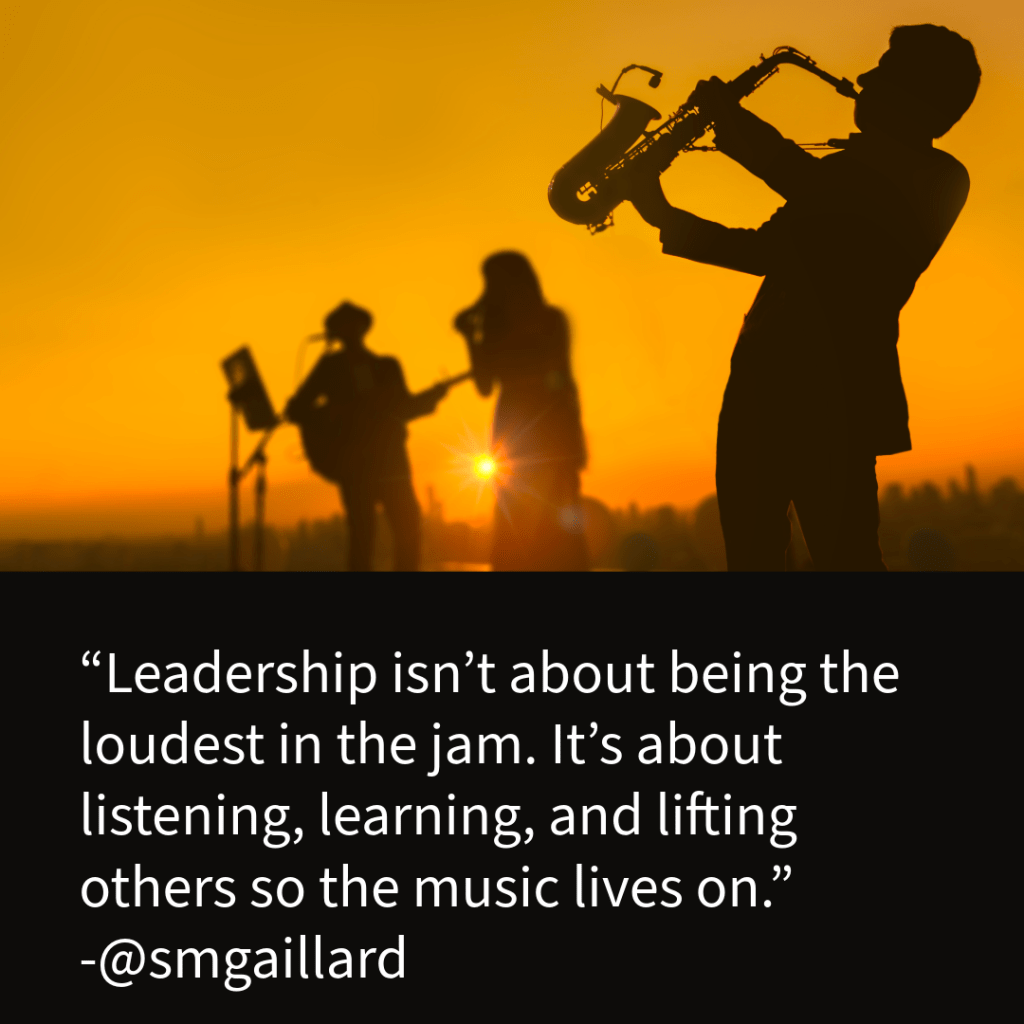
I hope you know that your sound matters and any band is lucky to have you. I sure do believe in you. Thanks for being in the band!
Here’s a thought to share from my reflection and writing this morning.
I hope you know that your sound matters and any band is lucky to have you. I sure do believe in you. Thanks for being in the band!

Earlier this week, our country lost a remarkable leader in former President Jimmy Carter. The tributes that followed didn’t focus on grand speeches or flashy displays of power. Instead, they celebrated Carter’s unwavering faith, his steadfast dedication to community, and his lifelong commitment to making the world a better place for others. His leadership wasn’t about being the center of attention or staging photo-ops; it was about rolling up his sleeves and humbly serving those around him.
As educators, we must ask ourselves: What kind of leaders are we striving to be? Are we chasing the spotlight or building the light in others? For too long, I’ve seen school leaders drawn to performative leadership—the standing on tables, the viral stunts, the costumes designed for “likes” rather than lasting impact. While these acts may entertain for a moment, they often fail to empower others or build the foundation of belonging that our students, teachers, and families need.
Leadership isn’t about gimmicks or self-promotion. True leadership lies in tuning into the gifts of others and encouraging them to follow their unique paths. It’s about listening more than speaking, serving more than being served, and building a culture where everyone feels valued, seen, and capable of greatness.
Jimmy Carter once said, “We must adjust to changing times and still hold to unchanging principles.” His words remind us that the principles of humility, service, and community are timeless in leadership. Humble leadership is a quiet force that lifts others without fanfare. It builds cultures of belonging, not through stunts, but through consistency, care, and compassion.
For many years, my father instilled in me the idea that greatness comes not from being on a stage but from being in service to others. He taught me to dare to be great by encouraging others to step off the sidelines and into their potential. As leaders, it’s our calling to help others “kick off the bench” and take those daring steps toward their own greatness.
Four Leadership Moves to Build a Culture of Belonging with Humility
1. Listen With Purpose
Create opportunities to listen to the voices of students, teachers, and families. Regularly ask, “What do you need?” or “How can I support you?” and act on what you hear. Listening isn’t just hearing—it’s responding with action and intention.
2. Celebrate Others’ Gifts
Leadership isn’t about being the hero of every story. Shine the spotlight on your team. Recognize the unique talents and achievements of those you serve. Build platforms where others can share their brilliance.
3. Serve Quietly and Consistently
Leadership is often found in the small, unseen moments. Show up early to greet students. Pitch in during tough times without announcing it. Let your actions speak louder than your words.
4. Model Humility in Every Interaction
Humility isn’t weakness; it’s strength in understanding that leadership is about others, not ourselves. Admit mistakes, ask for feedback, and be willing to learn alongside your team.
Let us step away from the noise of performative leadership and into the quiet power of service. Leadership isn’t standing on a table or staging antics that distract from our core mission. It’s about humbly helping others discover their greatness.
As I reflect on Jimmy Carter’s legacy and the lessons my father taught me, I’m reminded of the simple truth: Leadership is not about being in the spotlight—it’s about igniting the light in others. Dare to be great by building a culture where everyone belongs and is empowered to lead.
Let’s get to work, sleeves rolled up, hearts full of humility, and hands ready to serve.
Years ago, as a young enthusiast of music, I immersed myself in a biography of The Beach Boys. My love for music biographies runs deep; I cherish learning about the origins of my favorite albums. One chapter in that Beach Boys biography centered around an unreleased album meant to follow their stylistic shift “Pet Sounds” and the #1 hit single, “Good Vibrations.” Brian Wilson, the band’s leader and creative genius, was collaborating with lyricist Van Dyke Parks on an ambitious project that transcended the concept album format. Wilson envisioned it as a “teenage symphony to God,” an album poised to redefine music and tackle grand subjects such as the American Dream. My excitement turned to disappointment upon learning that Brian Wilson shelved the album, leaving only a few tracks scattered across various releases.
I was troubled by Wilson’s lack of confidence and drive to complete this masterpiece. Having heard some of these tracks, I was astounded by their beauty and poetic depth. These compositions were symphonic and grand, with luminaries like Leonard Bernstein recognizing their brilliance. Bernstein praised “Surf’s Up” as “poetic, beautiful even in its obscurity,” highlighting its complexity as emblematic of the innovative changes in pop music. I was astounded that someone like Brian Wilson who is musical genius could not complete his modern-day symphony.
Fortunately, after enduring years of personal struggles, Wilson eventually completed the album, which was warmly received and even earned a Grammy Award. The original tracks were later compiled into a Beach Boys album, also met with acclaim. Yet, I remain in awe of how such a work of pure beauty was almost lost to Wilson’s own version of Imposter Syndrome. Despite his success, Wilson didn’t feel worthy and doubted the album’s merit. His crisis of confidence nearly buried a quantum leap in musical artistry.
This reflection led me to think about leaders in various fields who face similar struggles with Imposter Syndrome. How many innovative ideas have been abandoned due to a lack of courage and the toxic effects of naysayers? I have faced my own bouts with this as a leader, letting confidence gaps stifle new ideas. A recent CNBC report revealed that 71% of CEOs admitted to battling Imposter Syndrome. The lost ideas and solutions, stunted by this struggle, resonate with Wilson’s shelved masterpiece.
According to the American Psychological Society, Imposter Syndrome is is the feeling of doubting your abilities and fearing being exposed as a fraud, even when you are competent and successful. It often involves attributing achievements to luck rather than skill. Imposter Syndrome is like a shadow that follows even the brightest stars, making them feel like they’re just pretending to shine. It’s that nagging doubt that, despite your achievements and hard work, you’re not truly deserving and might be exposed as a fraud at any moment.
Recently, in deep reflection over the past year in my leadership role, I found myself fixated on my failures. Instead of extracting lessons from them, I wallowed in the losses, deeming myself a failure. These sharp feelings of self-doubt echoed the pangs of Imposter Syndrome, making past accolades feel hollow.
My wife, perceptive as ever, noticed my downward spiral and called me out. She challenged me to inventory my achievements, no matter how small. At her urging, I listed every instance where I served, supported, and made an impact. The exercise was revelatory, shifting my focus from despair to empowerment. This shift in perspective led to an epiphany: I want to help others persevere through their own Imposter Syndrome. I am determined to be a thought partner and coach, empowering others to navigate their valleys of self-doubt.
In a recent leadership webinar with Daniel Pink and Stephen M.R. Covey, an epiphany struck me. Hearing these thought leaders together—akin to Hendrix and Clapton sharing a stage—discuss their works, I found revelation. Stephen M.R. Covey has authored many pivotal books on leadership and his recent one, Trust and Inspire: How Truly Great Leaders Unleash Greatness in Others is a game-changer on shifting the paradigm on leadership. Daniel Pink has also authored many though-provoking and his most recent tome, The Power of Regret: How Looking Backward Moves Us Forward is quite compelling. Daniel Pink in the webinar stated that to be a “Trust and Inspire” leader with “Drive,” one must “nurture, guide, and coach” themselves and others. This insight underscored the importance of intentional support and coaching in overcoming self-doubt. There were so many insightful takeaways by both Stephen M.R. Covey and Daneil Pink in their webinar. I am grateful for the reflection, learning, and growth they both inspired.
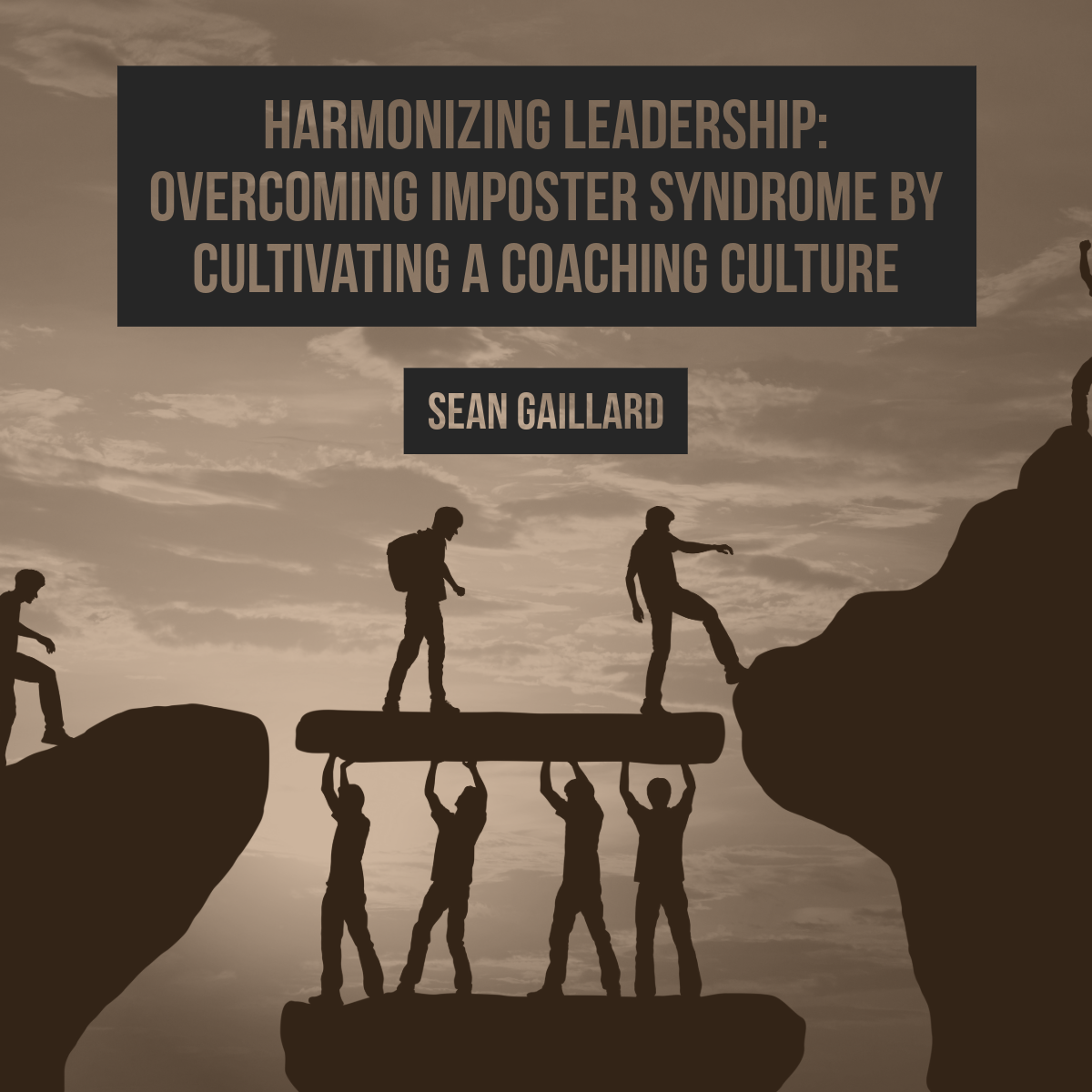
Leaders need to foster a culture of coaching, where everyone feels a sense of belonging and receives nurturing guidance. In turn, leaders must foster this same culture within themselves to preserve their well-being and leadership core. Creating this intentional space fosters productivity, creativity, collaboration, and innovation. A coaching culture can deflate the potency of Imposter Syndrome, ensuring that potential masterpieces aren’t lost like Brian Wilson’s initial vision for “Smile.”
To cultivate this culture, consider these three moves:
As leaders, it’s crucial to give ourselves grace and recognize our accomplishments. By structuring space for coaching and seeking thought partners, we can empower ourselves and our organizations to overcome Imposter Syndrome. In doing so, we ensure that our collective potential is realized, and no masterpiece is left abandoned.
Embrace the journey, nurture your ideas, and empower others to do the same. Together, we can create a symphony of success.
Check out “Surf’s Up” by The Beach Boys to get a sense of the sheer symphonic beauty intended for the “Smile” album:
 Leadership Liner Notes: Sean Gaillard