Here’s a thought to share from my reflection and writing this morning.
I hope you know that your sound matters and any band is lucky to have you. I sure do believe in you. Thanks for being in the band!
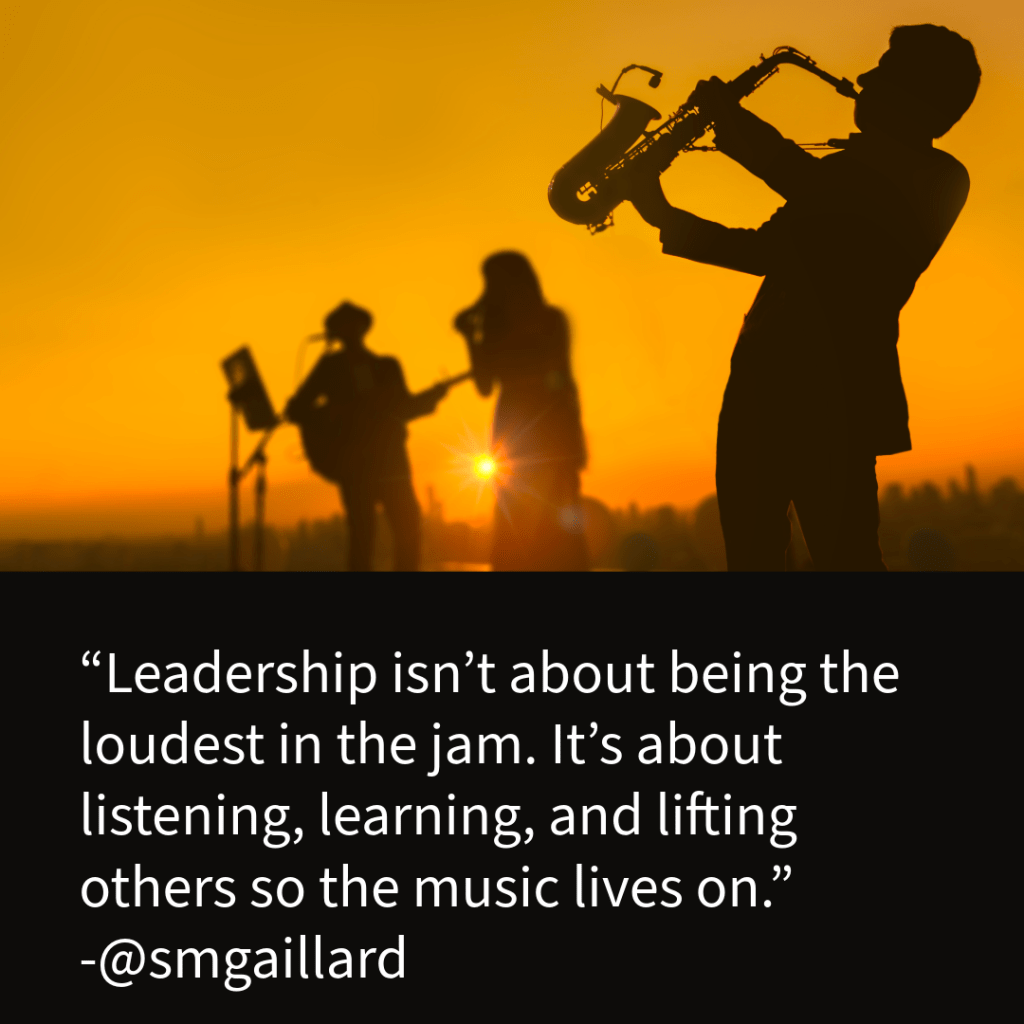
Here’s a thought to share from my reflection and writing this morning.
I hope you know that your sound matters and any band is lucky to have you. I sure do believe in you. Thanks for being in the band!

When I was a young adult, I used to shudder at the statement, “Be yourself.” It seemed like a trite sentiment, almost painfully obvious. Of course, one would want to be oneself. Why wouldn’t that advice make sense? Now, in my later years as a school principal, I have a much deeper appreciation for those words.
During my early years as a principal, I believed I had to conform to the image others had of a school leader. I modeled myself after the austere principals I saw in films like Lean On Me. I thought I needed to wear a three-piece suit, keep my shoes polished, and stride through the building with a Morgan Freeman-like swagger. For those who know me, that’s not the character I am in the story I’m writing as a leader. I quickly learned that those I served could see through the facade and empathized with my internal struggle. I was pretending to be something I wasn’t, and I needed to return to my core values as a leader.
Seeking advice from the best leader I know, my father, I was reminded to hold my head high and stay true to my values. With his guidance and the support of a leadership coach, I was able to reflect on my core values and not only articulate them but also act with authenticity. It was a long journey of reflection and discovery, but it was worth it and helped shape the leader I am today.
We all have a story we are composing that serves as the architecture for our life’s journey. Early in my leadership as a principal, I learned the importance of carrying your values with courage, passion, and humility. My good friend, Lauren Kaufman, beautifully explores the significance of storytelling in unleashing one’s leadership potential in her recent book, The Leader Inside: Stories of Mentorship to Inspire the Leader Within. The inspiring Baruti Kafele, also known as Principal Kafele, emphasizes the importance of staying true to your leadership core. Your leadership core is the DNA of your momentum as a leader. It embodies the values that drive your vision and mission.
In the latest edition of Ryan Holiday’s The Daily Stoic newsletter, Holiday underscores the absolute importance of being yourself and embracing who you are. This resonated with me and highlighted the essential move of embracing our leadership core. We must remain true to ourselves as leaders and individuals. There will be naysayers who try to divert you from your core, and sometimes you may be your own worst critic. This self-doubt cannot be tolerated. Questioning your core and the goodness within leads to a path of devastation filled with Imposter Syndrome and personal well-being fractures. Trust me, I’ve been there and know the negative effects. I’ve seen it ruin leaders.
Stephen M.R. Covey’s pivotal book, Trust and Inspire: How Truly Great Leaders Unleash Greatness in Others, talks about the need for a new type of leadership in our ever-shifting global landscape. Covey challenges leaders to shift from a “Command and Control” style to one rooted in the ethos of “Trust and Inspire.” To flow as “Trust and Inspire” leaders, we must take stock of our authentic selves and connect with others. Remember, leadership is not about getting others to follow but rather about amplifying and encouraging the unique strengths of others.
Whether you are a leader returning to an assignment or starting anew, who you are matters. Your leadership is needed for a reason. Don’t shortchange your passion or compromise what inspires you. If you are an unabashed Taylor Swift fan and that inspires your leadership, then share it and incorporate it into your daily banter. If you are an avid, amateur geologist, then let rocks and soil be part of your faculty repertoire. By embracing the light of your leadership core, you build a culture of trust and inspire others to do the same.
I often sign off on the #PrincipalLinerNotes podcast with the following thought: “Don’t forget to share with the world your dreams, ideas, and insights because the world needs them, and you help make the world a better place for others.” This rings true for leaders grappling with expressing their authentic selves. You have value, and your leadership core will ignite gifts in others, making your school or organization a place that will better our world and community. Illuminate your core and let its light inspire others to do the same.

As I scroll through my social media feeds, I’m struck by the wave of colleagues stepping into new leadership roles. Their proud smiles and celebratory posts radiate an infectious energy. Each promotion tells a story of dedication, perseverance, and the courage to step outside one’s comfort zone. For many, it’s the culmination of years of effort, marked by moments of doubt and anticipation, until finally receiving that life-changing call or message signaling that a new chapter awaits.
I vividly recall my own experience receiving that pivotal call, inviting me to step into my first principalship. The rush of emotions was overwhelming, shared in joyful celebration with my family. With a sense of purpose and readiness, I prepared to embark on this new journey. Before starting, the superintendent met with me to outline my mission. It felt like a scene from a James Bond movie—entering with casual coolness, awaiting my action-packed assignment. Despite the absence of 007 theme music, I was eager and ready to dive in.
However, two months into my tenure, my initial bravado gave way to doubt and regret. My determination to be a change agent, to impose my way as the only way, was met with resistance. I believed my title alone would command respect and compliance. How wrong I was! My arrogance blinded me to the value of the existing culture and the contributions of those who came before me.
In a moment of desperation, after a particularly disheartening day, I reached out to my predecessor. I needed to talk to someone who understood the unique challenges of the role. He had offered his support, and I was ready to accept it. During our conversation, he listened patiently to my ideas and frustrations. His advice was direct yet profound: sometimes, a leader’s greatest strength is in cheering for their team. People need recognition, encouragement, and sincere acknowledgment of their efforts.
Reflecting on my 16 years as a principal in various K-12 assignments, I’ve come to understand the critical importance of navigating transitions with care and empathy. This is especially relevant now, as many new leaders step into their roles. Transitioning into leadership requires a delicate balance of confidence and humility. It’s essential to build trust, communicate effectively, and, most importantly, listen.
Investing time to understand the culture and climate of your new environment is crucial. Transparency in your thoughts and actions, coupled with active listening, lays a foundation of trust. Stephen M.R. Covey, in his book Trust and Inspire, emphasizes the importance of building trust and inspiring others to harness their strengths for the greater good. As a new leader, fostering trust and inspiration is not just beneficial but necessary.
Transitions are shared experiences. They require everyone in the organization to adjust, adapt, and navigate changes together. Recognize that not everyone embraces change readily. Show sensitivity and patience, understanding that your presence as a new leader symbolizes change, which can be unsettling for some.
Seek out what works well and build on it. Engage in meaningful conversations with your predecessor, if possible, to learn about the history and values that have shaped the organization. Even if direct contact isn’t feasible, find ways to understand and respect the established culture.
Rushing into change without empathy can lead to a disconnect. I learned this the hard way. Investing in the transition with empathy, patience, and a willingness to listen is a powerful leadership strategy that fosters trust and uplifts the people you serve. According to David Brooks in his book How To Know a Person, people want to be seen, heard, acknowledged, and valued. It is crucial for leaders to establish this early in their transition to a new role.
By embracing these steps, new leaders can navigate transitions with awareness and empathy, building on the strengths of their teams and fostering a positive, collaborative environment. Moving through a transition as a new leader with human-centered approach is a worthwhile investment for the school or organization that is lucky to have your leadership.
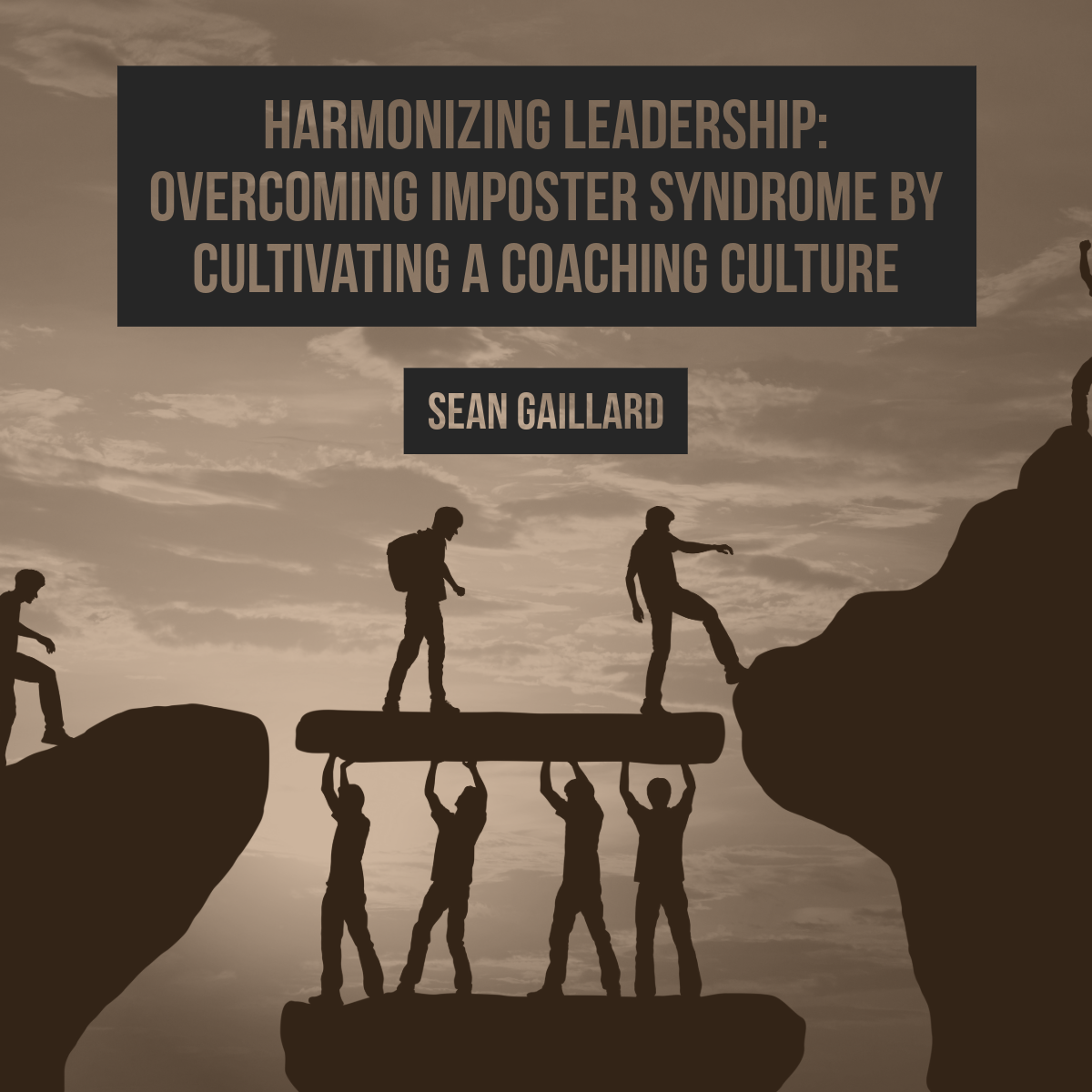
Years ago, as a young enthusiast of music, I immersed myself in a biography of The Beach Boys. My love for music biographies runs deep; I cherish learning about the origins of my favorite albums. One chapter in that Beach Boys biography centered around an unreleased album meant to follow their stylistic shift “Pet Sounds” and the #1 hit single, “Good Vibrations.” Brian Wilson, the band’s leader and creative genius, was collaborating with lyricist Van Dyke Parks on an ambitious project that transcended the concept album format. Wilson envisioned it as a “teenage symphony to God,” an album poised to redefine music and tackle grand subjects such as the American Dream. My excitement turned to disappointment upon learning that Brian Wilson shelved the album, leaving only a few tracks scattered across various releases.
I was troubled by Wilson’s lack of confidence and drive to complete this masterpiece. Having heard some of these tracks, I was astounded by their beauty and poetic depth. These compositions were symphonic and grand, with luminaries like Leonard Bernstein recognizing their brilliance. Bernstein praised “Surf’s Up” as “poetic, beautiful even in its obscurity,” highlighting its complexity as emblematic of the innovative changes in pop music. I was astounded that someone like Brian Wilson who is musical genius could not complete his modern-day symphony.
Fortunately, after enduring years of personal struggles, Wilson eventually completed the album, which was warmly received and even earned a Grammy Award. The original tracks were later compiled into a Beach Boys album, also met with acclaim. Yet, I remain in awe of how such a work of pure beauty was almost lost to Wilson’s own version of Imposter Syndrome. Despite his success, Wilson didn’t feel worthy and doubted the album’s merit. His crisis of confidence nearly buried a quantum leap in musical artistry.
This reflection led me to think about leaders in various fields who face similar struggles with Imposter Syndrome. How many innovative ideas have been abandoned due to a lack of courage and the toxic effects of naysayers? I have faced my own bouts with this as a leader, letting confidence gaps stifle new ideas. A recent CNBC report revealed that 71% of CEOs admitted to battling Imposter Syndrome. The lost ideas and solutions, stunted by this struggle, resonate with Wilson’s shelved masterpiece.
According to the American Psychological Society, Imposter Syndrome is is the feeling of doubting your abilities and fearing being exposed as a fraud, even when you are competent and successful. It often involves attributing achievements to luck rather than skill. Imposter Syndrome is like a shadow that follows even the brightest stars, making them feel like they’re just pretending to shine. It’s that nagging doubt that, despite your achievements and hard work, you’re not truly deserving and might be exposed as a fraud at any moment.
Recently, in deep reflection over the past year in my leadership role, I found myself fixated on my failures. Instead of extracting lessons from them, I wallowed in the losses, deeming myself a failure. These sharp feelings of self-doubt echoed the pangs of Imposter Syndrome, making past accolades feel hollow.
My wife, perceptive as ever, noticed my downward spiral and called me out. She challenged me to inventory my achievements, no matter how small. At her urging, I listed every instance where I served, supported, and made an impact. The exercise was revelatory, shifting my focus from despair to empowerment. This shift in perspective led to an epiphany: I want to help others persevere through their own Imposter Syndrome. I am determined to be a thought partner and coach, empowering others to navigate their valleys of self-doubt.
In a recent leadership webinar with Daniel Pink and Stephen M.R. Covey, an epiphany struck me. Hearing these thought leaders together—akin to Hendrix and Clapton sharing a stage—discuss their works, I found revelation. Stephen M.R. Covey has authored many pivotal books on leadership and his recent one, Trust and Inspire: How Truly Great Leaders Unleash Greatness in Others is a game-changer on shifting the paradigm on leadership. Daniel Pink has also authored many though-provoking and his most recent tome, The Power of Regret: How Looking Backward Moves Us Forward is quite compelling. Daniel Pink in the webinar stated that to be a “Trust and Inspire” leader with “Drive,” one must “nurture, guide, and coach” themselves and others. This insight underscored the importance of intentional support and coaching in overcoming self-doubt. There were so many insightful takeaways by both Stephen M.R. Covey and Daneil Pink in their webinar. I am grateful for the reflection, learning, and growth they both inspired.
Leaders need to foster a culture of coaching, where everyone feels a sense of belonging and receives nurturing guidance. In turn, leaders must foster this same culture within themselves to preserve their well-being and leadership core. Creating this intentional space fosters productivity, creativity, collaboration, and innovation. A coaching culture can deflate the potency of Imposter Syndrome, ensuring that potential masterpieces aren’t lost like Brian Wilson’s initial vision for “Smile.”
To cultivate this culture, consider these three moves:
As leaders, it’s crucial to give ourselves grace and recognize our accomplishments. By structuring space for coaching and seeking thought partners, we can empower ourselves and our organizations to overcome Imposter Syndrome. In doing so, we ensure that our collective potential is realized, and no masterpiece is left abandoned.
Embrace the journey, nurture your ideas, and empower others to do the same. Together, we can create a symphony of success.
Check out “Surf’s Up” by The Beach Boys to get a sense of the sheer symphonic beauty intended for the “Smile” album:
 Leadership Liner Notes: Sean Gaillard