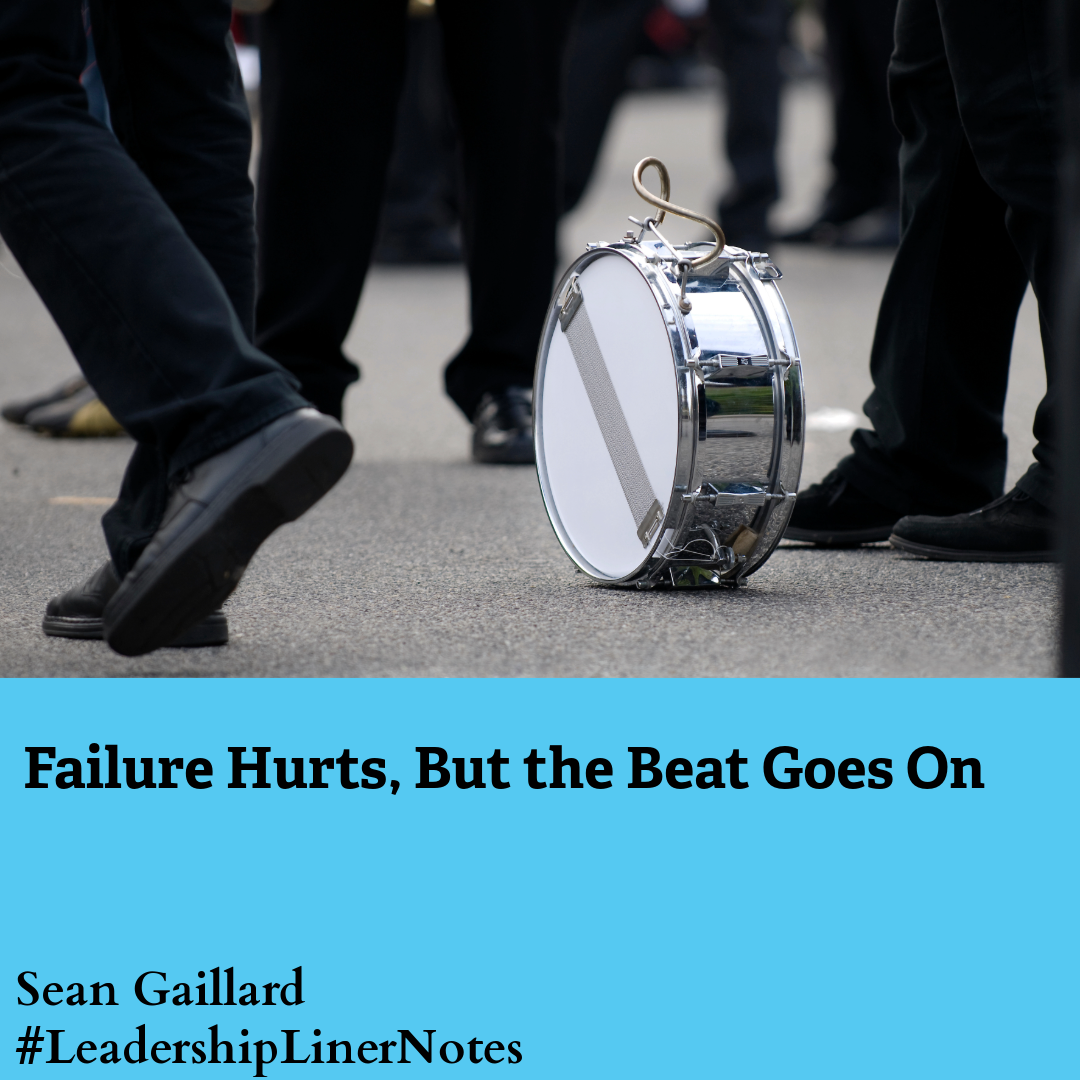
Failure hurts. There’s no sugar-coating that simple truth. When the Beatles were turned down by Decca Records, it could have been the end of their story. But it wasn’t. They found another path and changed the world. As I wrote in The Pepper Effect, that “no” was just the prelude to a bigger “yes.”
And they’re in good company. Walt Disney was once fired for “lacking imagination,” and Oprah Winfrey was told she was “unfit for television” before becoming a media icon. Each of them had moments that could have ended their journeys, but instead, they used those setbacks to fuel their next success.
In leadership, we all have those moments. And I’ll say personally, I’ve had my own failures. Sometimes the things I write or the ideas I share don’t resonate the way I hope. Sometimes a well-intentioned plan becomes a flop and I fall on the sword of doubt. Each of those moments is a chance to keep creating, keep pushing, and keep striving. It’s a reminder that our perseverance can inspire others to do the same.
In leadership, we face our own versions of these stories. Sometimes failure lands on our shoulders alone, and it feels isolating. The secret I have learned over the years is that failure is less sharp when you’re in a band, when you have those who know you and stand by you. It’s easier to turn a setback into a new song when you’re not playing solo. That’s why it is essential to surround yourself with those who support and empower you. That’s why it is essential to stay connected with those who knew you and stood by before you got the leadership gig, corner office, or prestigious title.
When failure comes, and it will, remember that you’re not the first and you won’t be the last. Take a breath, lean on your bandmates, and see failure as the beginning of a new opportunity. Failure is the spark for something greater. I know that failure can hurt and force you to stand still in the marrow of your doubts. Someone needs your spark and there is a band relies upon your sound. One day, your failure story will be the inspiration for someone else and may even be that spark that sets the world as a better place for others.
When failure comes, let it be your cue, not your curtain call. Let it remind you that you’re not alone, that your story isn’t over, and that the band is still playing. Every “no” carries the seed of a future “yes.” Every closed door echoes with the sound of what’s next. Lean into your vision, surround yourself with those who believe in your song, and keep showing up with your whole heart. Because someone out there needs the music only you can make.
A couple of weeks ago, I had another health scare. My blood pressure spiked, and I ended up in the hospital. I am better now, but those hours of quiet reflection reminded me of something I can’t overlook anymore. I had lost my balance, and it caught up with me.
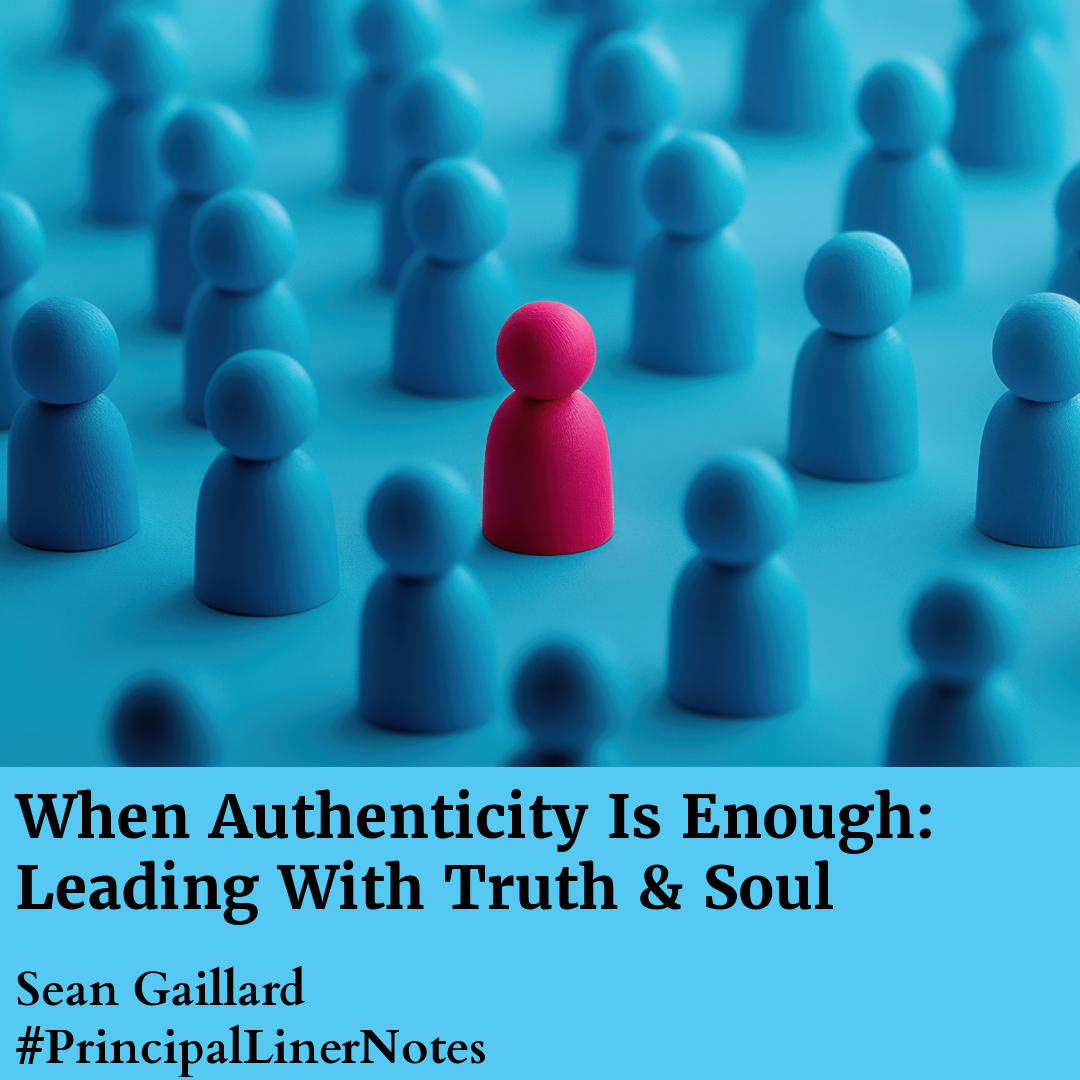
What surfaced most clearly in that hospital room was this truth: I have to lead as my authentic self. Every time I have tried to wear the mask of someone else’s idea of leadership, I’ve paid the price. The expectations, the performances, the comparisons; none of it leads to joy. Authenticity does. The words of my dear father resonated in my mind as I was facing my internal valley of doubts, “Hold your head high, like I taught you.” My father is my icon for what it means to be an authentic leader. He sees the best in others, guides his moves with faith, and motivates others to get off the proverbial bench because as he says, “Everyone plays. Everyone is a starter. Let’s dare to be great!”
Autenticity is the pathway to joy and the ignition us to be our very best selves for others.
And I am reminded daily that joy comes in the smallest of places. The other morning, I was standing in the cafeteria line talking with kids over breakfast. One challenged me to a game of rock paper scissors. In that small moment of laughter and connection, I found energy again. These little moments are not little. They are everything.
That’s why Bruce Springsteen’s Nebraskahas been on my turntable again. A stripped-down, raw, uncompromising record. Just voice, guitar, and truth. The industry didn’t expect it, but Springsteen didn’t compromise. He stayed true to the vision he knew he had to share. And now, with the upcoming film based on the creation of Nebraska, Deliver Me From Nowhereon the horizon, it feels validating to see that choice recognized for the powerful act it was.
Every leader has their own version of Nebraska, a stripped-down truth that others may ignore, dismiss, or even resist. The challenge is to hold on to it, to trust it, and to keep leading from it. Authentic leadership rarely comes with applause or bright lights. It is often quiet work, anchored in conviction and presence. It is about refusing to dilute your vision simply because it doesn’t match someone else’s script.
We see examples of this courage throughout history. Rosa Parks chose quiet defiance over spectacle, and her authenticity shifted the course of a nation. Nelson Mandela held to his convictions through decades of imprisonment and emerged stronger, not broken. I think of the times in my leadership where my authenticity help to guide me to embrace the impossible even when naysayers attempted to dispel what I could bring to the table.
Even in our time, I see inspiring friends like Lauren Kaufman and Meghan Lawson modeling this kind of authentic leadership in their blogs. Their writing resonates because it comes from a place of truth, not performance. Their voices remind me that leadership grounded in honesty has the power to connect, inspire, and endure.
Your Nebraska may not look like anyone else’s. It may not be understood at first. It may even be pushed aside. But if you stay with it, if you let your truth guide your steps, it can become the defining force of your leadership. And in the end, authenticity is not only enough, it is everything.
Four Takeaways for Leaders
Authenticity sustains: Don’t chase someone else’s version of leadership. Stay rooted in who you are.
Small moments matter: A quick conversation or shared laugh can carry more impact than a staged performance.
Comparison drains, presence restores: Shift your focus from how you measure up to where you are needed most.
Find your Nebraska: Hold on to your stripped-down truth, even when it’s overlooked. That is where your real strength lives.
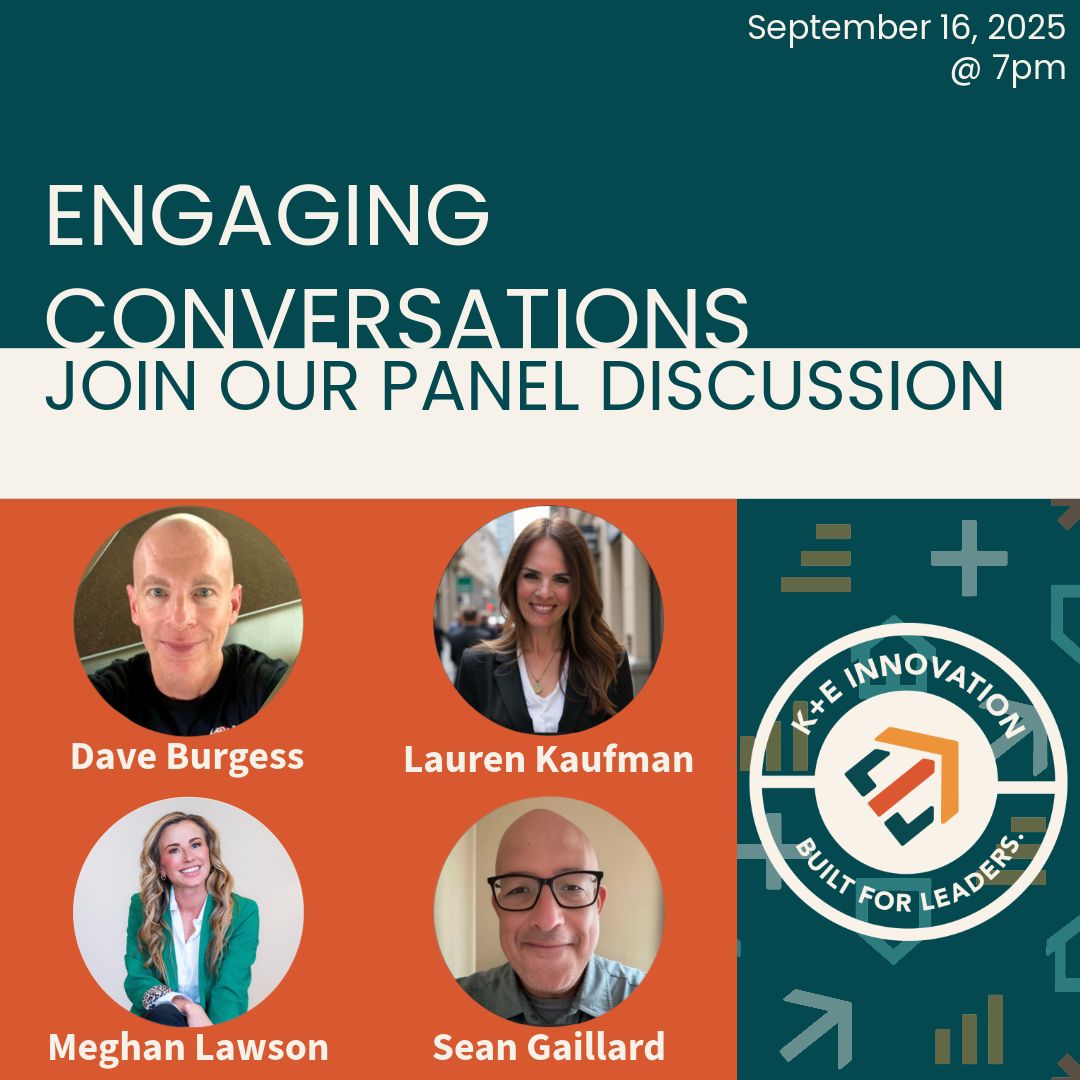
I am honored to be part of the Courageous Leadership Panel, a free webinar sponsored by K + E Innovation with Lauren Kaufman, Meghan Lawson, and Dave Burgess on September 16, 2025 at 7:00 p.m. Eastern. RSVP for this dynamic conversation here: https://lnkd.in/g6SswcTm
There are checklists to check off. Boxes to move. Emails to answer. Meetings to attend. Conversations to wrap. It can feel like you’re racing a clock with no hands—just noise, motion, and that persistent push toward “done.” As school leaders, we often wear this urgency like a badge of honor. But somewhere in the frenzy, we lose sight of something vital:
The pause.
The other day, our custodian was out, and I had to stay late to close the building. Alone. I walked the halls, locking doors and preparing to set the alarm. The building was still. No laughter echoing down the halls. No rush of students heading to the buses. Just me and the walls that had witnessed a school year’s worth of highs, lows, pivots, and quiet victories.
That simple rhythm—step, door, lock, breathe—became something sacred. I wasn’t just closing a building. I was closing a chapter. In that silence, the year spoke back to me. I remembered the breakthroughs. The bruises. The bounce-backs. The beauty of what we had built together.
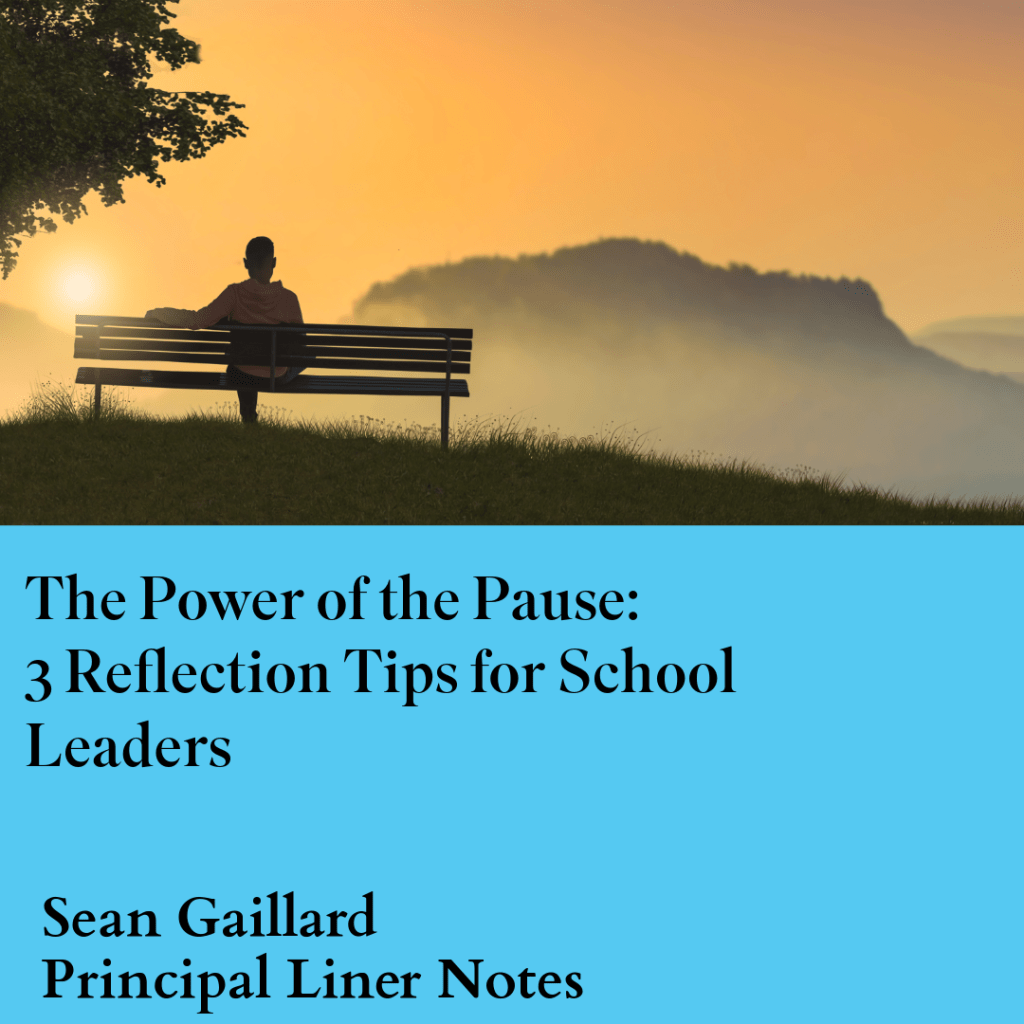
And I realized something all over again: reflection is not a luxury. It’s a necessity.
Since my heart episode last year—a moment that forced me to recharge not just physically, but mentally and spiritually—I’ve come to believe even more deeply in the power of pause. I spent too many years avoiding it. Confusing the speed of leadership with the strength of leadership. I mistook checklists for vision. And it nearly broke me.
Innovation doesn’t come from being in constant motion. It comes from being still enough to listen to what the year has been teaching us all along.
So I offer this, not just as a fellow school leader, but as someone who had to learn the hard way: Make reflection part of your leadership practice. Not later. Now.
Here are three ways I’m leaning into reflection, even in the middle of the end-of-year mania:
🎧 1. Schedule 15 Minutes of Stillness
Block out 15 minutes this week—no email, no meetings, no phone. Find a quiet corner of your school. Sit. Breathe. Let the silence remind you of your why.
📝 2. Journal with Three Prompts
What am I most proud of this year? What did I learn from my staff? What will I do differently next year? Keep it short. Keep it honest. But write it down. Let your words catch up with your heart.
🚶♂️ 3. Take a Solo Walk Through the Building
No agenda. No checklist. Just walk. Let the sights, sounds, and stillness speak to you. Every poster, every student project, every empty seat is a story. These are the artifacts of your leadership.
If you’re reading this and feeling overwhelmed or alone, know this: you’re not. I’m walking this with you. And if you need a thought partner or a word of encouragement, I’m here.
Leadership is lonely—but it doesn’t have to be isolating. Especially when we choose to pause, reflect, and lead with presence.
In music, a riff is a heartfelt, memorable melody—like the opening chords Keith Richards plays on The Rolling Stones’ “Satisfaction.” But riffs aren’t limited to music alone; they’re found in those spontaneous, soulful exchanges we have as leaders after faculty meetings, in hallway conversations, or during inspiring conferences.
At the recent North Carolina Association for Middle Level Education (NCMLE) conference in Charlotte, NC, I experienced some deeply moving “Leadership Riffs.” Visionary leaders like Dr. Darrin Peppard opened my mind to fresh possibilities about cultivating vibrant leadership teams. Dr. Marie Moreno shared her heartfelt passion for an upcoming book, igniting an inspired dialogue that still resonates. These beautiful exchanges reminded me that leadership, like music, thrives on improvisation, authenticity, and the power of human connection.
Leadership Riffs aren’t about playing the same old notes—they’re about courageously pushing boundaries, creating harmonies, and passionately innovating together.
Here are a few heartfelt “Leadership Riffs” that underscore why our impact truly matters:
1. “A Throwaway Line in a Beatles Epic”
Paul McCartney nearly tossed out the lyric, “The movement you need is on your shoulder,” from the timeless Beatles’ classic “Hey Jude.” He saw it merely as a temporary placeholder, lacking clarity. But when John Lennon passionately insisted the line remain, Paul recognized something deeper—a powerful moment of trust and affirmation between friends. Now, every time Paul sings that lyric, he holds tightly to the memory of John’s insight, a bond made even more poignant by John’s absence. Lesson: The seemingly small details, moments, and gestures in our leadership carry profound significance and lasting impact.
2. “A Word of Thanks”
After a challenging and exhausting day filled with meetings, decisions, and the weight of responsibility, a teacher quietly appeared at my office door. Bracing myself for another issue to solve, I was instead met with a gentle smile and sincere words: “I just wanted to say thank you. You probably don’t hear it enough.” Her unexpected gratitude moved me deeply, serving as a gentle, transformative reminder of how kindness and acknowledgment can lift our spirits and renew our sense of purpose. Lesson: Every word of appreciation we speak has the potential to uplift and sustain those around us.
3. “The Words of a Child”
During a parent conference discussing support strategies, their first-grade child quietly explored the books on my office shelf, eventually selecting Green Eggs and Ham. As he confidently read aloud, his enthusiasm and ability amazed me. Inspired by his joy, I offered him a book from my collection, and with a smile, he whispered, “You’re my hero.” In truth, his words profoundly touched my heart and reminded me of the true heroes in our schools—our students, whose growth and potential inspire us daily. Lesson: Every interaction with a child echoes profoundly, reminding us why our roles in education matter.
4. “A Heart in the Wild”
My dear friend, Maria Galanis, recently shared a poignant image on X—a heart carefully crafted from seashells by an unknown stranger on a serene beach. Maria’s simple act of sharing this discovery instantly sparked joy and reflection in those who saw it. This beautiful moment powerfully illustrates how our intentional actions, even small gestures left anonymously, leave trails of positivity, hope, and inspiration that uplift others far beyond our immediate circle. Lesson: As leaders, we are called to intentionally leave pieces of our hearts behind, illuminating paths of connection and possibility.
How to Host Your Own Leadership Riffs Jam Session
Looking to cultivate deeper connections, creativity, and heartfelt impact in your school community? Consider hosting a “Leadership Riffs Jam Session”:
Create a Welcoming Space: Offer an inviting, relaxed, 15-minute gathering after school—no pressure, just meaningful conversations.
Invite Everyone to the Table: Emphasize inclusivity, encouraging participation from every role and level.
Lead with Openness: Share your own authentic stories or pose a meaningful question to inspire genuine dialogue.
Encourage Improvisation: Let ideas flow freely, embracing spontaneity to spark innovative and meaningful exchanges.
Reflect and Empower: Conclude with clear insights and actionable steps, empowering everyone to bring their inspired “riffs” to life.
Heartfelt gratitude to Darrin Peppard, Marie Moreno, and Maria Galanis for their invaluable friendship, inspiration, and thought partnership.
Let’s keep riffing from the heart—because the songs we create together truly matter.
As I write this, the early morning hours find me awake, wrestling with insomnia. It’s around 3:00 a.m., and in the quiet solitude, I decide to revisit this blog. Against my better judgment, I check the stats on a recent post. I know the adage, “Comparison is the thief of joy,” but still, I fall into the trap.
The numbers aren’t encouraging. They stir up a flood of past memories—times when my efforts seemed to fall flat. The book giveaway that garnered no participation. The speaking engagement with an empty room. The book study I excitedly promoted, only to find no one signed up.
I have played to empty rooms. It’s a gut-wrenching experience. You pour your heart into your work, stepping vulnerably onto a stage without a net, only to be met with silence. It feels like validation of your worst fear: that your voice doesn’t matter. That your efforts aren’t enough. The doubt can spiral quickly, pulling you into an abyss that’s hard to climb out of.
I find myself wondering about the lack of engagement with my writing. I tag others and hear no response. I try to support others when tagged, yet often feel like I’m shouting into the void when I press Publish.
Before I sink too deep into this whirlpool of self-doubt, I pause and take a cue from The Reset Mindsetby Penny Zenker, a book that has been a lifeline for me recently. The concept of resetting resonates deeply. It’s about an intentional pause—a mindful shift in perspective to open the door to new possibilities. Resetting means revisiting your core purpose and recalibrating your moves with intention.
So here, in this moment of doubt, I reset.
Why do I write? It’s not for stats, clicks, or reposts. It’s for connection. Writing is my bridge—to myself, to others, and to meaning. It’s a way to foster belonging, to reflect, and to find resonance with others navigating the lonely and challenging paths of leadership.
When I embrace this reset mindset, I remember: this moment of doubt is just that—a moment. It doesn’t define me or my work. My writing is not about chasing external validation; it’s about helping others seek meaning in their own leadership journeys. It’s about creating space for reflection and connection.
In December 1961, before Beatlemania, before sold-out arenas and screaming fans, The Beatles played a gig at the Palais Ballroom in Aldershot. A booking error left the show poorly promoted, and only 18 people attended. Imagine it: the band that would change the world, performing in near obscurity.
But they didn’t let it break them. They played on, laughing and joking through the set, treating it as an opportunity rather than a failure. That moment was just one small chapter in their story—a necessary step on the path to greatness.
Failures happen. We stumble. We fall. And yet, like The Beatles, we get back up and keep playing.
As I stand in my own empty room—whether as a writer or a leader—I hold fast to my purpose. We all must. The value of our voice, our vision, isn’t determined by the size of the audience. It’s found in the connection with that one reader, that one listener, that one colleague who sees and understands your purpose.
When you play to empty rooms, remember: it’s not the end. It’s a pit stop—a chance to hone your craft, to reset, and to move forward.
Someone out there needs your voice. Someone out there is better because of your vision. Take heart in the small moments of connection and press on.
Each moment—success or setback—is a step forward in this journey of leadership and perseverance. Let’s keep playing.
As the year winds down and the calendar inches closer to 2025, I invite you to take a meaningful pause. My hope is that these words reach you during a moment of restoration, where you are embracing time with loved ones, reflecting on your journey, and finding opportunities to recharge physically, emotionally, mentally, and spiritually. Winter Break is a gift—a time to clear the noise and center ourselves as we prepare to lead with purpose into the new year.
This past year has been a challenging yet transformative one for me. I reflect on a pivotal moment back in February when a heart episode led to an ambulance ride and a stark reminder of life’s fragility. That experience set me on a path of healing, physically and emotionally. Renewing my dedication to fitness has been a much needed salve. Therapy has helped me confront and overcome anxiety, and the unwavering support of family and friends has kept me grounded. These challenges have not only renewed my faith but have also strengthened my resolve to serve with clarity and gratitude.
In 2024, I rediscovered the beauty of creation and connection. I launched three new podcast series (“Hope Amplified,” “Why The Beatles Matter,” and the upcoming “Chords of Connection”) and overcame my writer’s block to return to this blog, laying the groundwork for a new book. I also concluded “The Principal Liner Notes Podcast” with the feeling of satisfying closure and the hope of exploring new territories of expression. Most importantly, I learned to savor life’s small moments—the ones that weave together into a tapestry of hope, joy, and connection. Letting go of toxic ties and re-embracing meaningful relationships has been a powerful act of resetting my personal and professional compass.
The word “reset” has emerged as my guiding star for 2025. It first resonated with me during a professional development session on leadership, where I encountered Penny Zenker’s The Reset Mindset. Her definition of a reset mindset—“a way of thinking that focuses on dynamic reassessment and the willingness to reinvent”—perfectly encapsulates what leaders need to navigate challenges and inspire reinvention within their teams. The concept reappeared during a keynote at a leadership conference, and a trusted thought partner encouraged me to dive deeper into Zenker’s work. I’m savoring the insights from this book, which validates my journey and offers actionable steps for growth and leadership.
As we prepare to embrace 2025, I encourage us to adopt a Reset Mindset—one that empowers us to pause, reassess, and reinvent with intentionality. Here are four action steps for leaders to reset and lead with renewed purpose:
1. Take Intentional Time to Recharge Daily
Leadership can be all-consuming, but it’s essential to carve out moments each day to refuel. Whether through meditation, exercise, or simply a quiet moment with a cup of coffee, these intentional pauses restore our energy and focus. As Zenker notes, “recharge time” is not a luxury—it’s a necessity for clarity and effectiveness.
2. Revisit Your School’s Vision and Mission with the Faculty
The new year is an ideal time to recalibrate and ensure alignment with your team. Engage your faculty in meaningful conversations about your school’s vision and mission. Reflect together on what’s working, what needs reimagining, and how you can collaboratively set the course for a thriving 2025.
3. Read The Reset Mindset by Penny Zenker with a Thought Partner
Growth is amplified when shared. Invite a trusted colleague or thought partner to join you in reading The Reset Mindset. Use it as a springboard for dialogue, reflection, and the co-creation of strategies to navigate challenges and inspire reinvention within your school community. Discover The Reset Mindset here.
4. Pursue Personal Passions
Leaders are at their best when they bring their whole, authentic selves to the table. Dedicate time to personal pursuits that ignite your joy—whether it’s workouts, exploring new hobbies, or simply trying something new. These moments of personal fulfillment recharge our spirits and fuel our leadership.
Reflecting on 2024, I’m reminded of how my favorite band, The Beatles, exemplified the art of the reset. After the tumultuous 1966 World Tour, they reinvented themselves as “Sgt. Pepper’s Lonely Hearts Club Band,” creating a timeless masterpiece. Later, during the “Get Back/Let It Be” sessions, they overcame discord to perform live once again, rediscovering their connection as a band. These moments of reinvention hold lessons for us as leaders—to embrace change, foster collaboration, and find new possibilities amid challenges. Explore these stories in The Pepper Effect: Tap into the Magic of Creativity, Collaboration, and Innovation.
As I step into 2025, I carry forward the lessons of intentional resetting—a process that has given me clarity, optimism, and purpose. I look forward to the opportunities ahead, both in my personal journey and within the schoolhouse I am privileged to serve. Together, let’s reset, reassess, and reimagine a brighter future for ourselves and our school communities.
Here’s to 2025—a year of reinvention, resilience, and renewal.
As a principal, I often find myself dreaming big. I thrive on the grand visions, the Moonshot thinking, and the aspirational moves that inspire transformation. I envision a schoolhouse where many hands work together, creating a masterpiece of learning. But here’s the thing: while I may live in that realm of possibility, I know not everyone shares the same bandwidth or sense of urgency. We all move at different speeds, and it’s our responsibility as leaders to gauge where our teams are. To lead effectively, we must be visible, be present, and most importantly, listen. It’s through this intentional awareness that trust is cultivated.
In the past year, I’ve found a renewed appreciation for the power of small wins, a lesson beautifully captured in two books that have become cornerstones of my leadership practice: Legacy of Learning by Meghan Lawson and The Leader Inside by Lauren Kaufman. Both authors remind us of the importance of celebrating small moves as stepping stones to greater heights. They offer a powerful perspective on how small, intentional acts can build momentum, nurture growth, and foster a culture of progress.
Embracing the Power of Small Wins
In today’s educational landscape, many of us are feeling the weight of the pandemic’s aftermath and the uncertainties of new challenges. I see it daily in our school—a fatigue that cannot be lifted by a Jeans Day or a Donut Party. We need more than quick fixes or temporary boosts. As leaders, we must make deeper, more intentional moves that celebrate small wins and bring joy back into our school communities.
One way I’ve embraced this approach is through curating Images of Possibility. I’ve been using Wakelet to capture and share snapshots of the good happening in our schoolhouse—students smiling, engaging in hands-on learning, or experiencing new adventures like a virtual field trip to Alaska via Nearpod. I sent this Wakelet collection to our staff with a simple note, inviting them to pause and savor these moments. It was a small gesture, but it created a powerful ripple of positivity.
During a recent focus group with our teacher assistants, I shared the Wakelet collection and asked them to reflect on the small wins they’ve witnessed. One TA’s words resonated deeply: “A small win is just that—a win. And a win is a win.” Her comment sparked a wave of sharing, as others opened up about personal victories and classroom successes. It was a moment filled with belonging, connection, and most importantly, hope.
Building Delight Through Intentional Leadership
Reading Unreasonable Hospitality by Will Guidara has also shaped my perspective on leadership lately. Guidara talks about building delight, not through grand gestures, but through thoughtful, intentional moves that show we care. This idea has inspired me to rethink how I approach small wins, not as fleeting moments, but as opportunities to build delight and create lasting impact.
We, as leaders, are called to cultivate hope. We must lift each other up, recognizing that our presence and our voice are catalysts for the hope our students need. It’s about finding the small wins, tuning into them with intention, and amplifying them with purpose.
Four Action Steps for Building Delight and Celebrating Small Wins
Curate Moments of Joy: Start a collection on Wakelet to capture images and posts that highlight the everyday successes in your school. Share these with your staff regularly, creating a visual reminder of the good happening in your schoolhouse. It’s a simple yet powerful way to inspire and uplift.
Begin Meetings with Small Wins: Kick off your meetings by inviting staff to share a recent small win. This practice sets a positive tone, fosters a sense of accomplishment, and encourages a mindset of celebration. It’s a small step that can create a big impact.
Build a Culture of Sharing: Encourage your staff and PLN to use the hashtag #SmallWinsEDU across social media platforms. By sharing small wins, we create a dialogue of support and inspiration. Let’s celebrate each other’s victories and build a network of hope together.
Celebrate Progress, Not Just Perfection: Make it a point to notice and celebrate progress, even if it’s incremental. Acknowledge the effort and the journey, not just the final outcome. When we focus on progress, we create a culture where every step forward is valued and celebrated.
A Call to Action
As school leaders, we have the power to shape the narrative. Let’s tune into the small wins, build delight, and create a culture of hope. Let’s support each other in this journey, lifting each other up through the small yet powerful moves we make every day. Together, we can make a difference, one small win at a time.
So, let’s start today. Share your small wins using the hashtag #SmallWinsEDU and let’s create a collective space of inspiration and support. After all, a small win is still a win, and every win deserves to be celebrated.
Keep dreaming big and finding joy in the small moments. We’ve got this—together.
The Dreamer’s Dilemma Facing Skepticism with Vision
The other day, I found myself discussing a bold, ambitious goal with colleagues. While I was met with polite nods, I sensed hesitation. When I asked if I needed to clarify my vision, they shared that while they appreciated the dream, they believed the realities of our situation—budget constraints, time limits, and logistical barriers—would prevent it from becoming a reality.
I listened and expressed gratitude for their feedback. However, I countered that if we let impossibilities win, we’ll never achieve anything. It’s easy to accept limitations as inevitable, but when we allow that mindset to dominate, progress halts. Dreaming big requires not just vision but also the courage to challenge reality with hope.
Meeting Others Where They Are Small Moves, Big Impact
I know dreaming big can be daunting for others. Fear, grounded in past experiences, often holds us back from stepping into uncharted territory. I must remind myself not to judge the fears of others but to empower them. Together, we can take small steps to bring the dream closer to reality.
This idea echoes the work of my friend and thought partner Meghan Lawson, whose book, Legacy of Learning: Teaching for Lasting Impact, explores the concept of “small moves.” She shows how incremental progress can sustain dreams and turn them into dynamic action that benefits everyone.
The Power of Hope Why Leaders Must Defy Cynicism
In a recent episode of myPrincipal Liner Notes Podcast, I had the pleasure of speaking with Meghan Lawson for the fourth time. As always, her insights were illuminating. This time, she shared her research on the Science of Hope, a framework that fascinated me. Meghan framed hope not as a passive emotion but as a viable tool for creating change.
Too often, leaders dismiss hope, branding it as ineffective. We’ve all heard the phrase, “Hope is not a strategy.” But when did we decide that embracing hope meant abandoning strategy? Hope can be the catalyst that ignites action. It’s the foundation we need to build dynamic, transformative strategies that work.
Just think—what if John F. Kennedy hadn’t embraced hope when he delivered his famous “We Choose to Go to the Moon” speech? Without hope, there would be no Moon landing, no template for Moonshot Thinking. The impossible only became possible because someone dared to hope and challenged others to do the same.
A Beatles Lesson in Hope Staying True to Vision
The Beatles’ classic song “Hey Jude” offers another powerful lesson in hope. When they first recorded the song, some in the music industry said it was too long at over seven minutes. Radio stations wouldn’t play it, they warned. But John Lennon famously replied, “They will if it’s us.”
And he was right. Hey Jude went on to sell over 8 million copies after its initial release and stayed at #1 on the Billboard Hot 100 chart for nine weeks. To this day, it’s been streamed over 1.5 billion times on Spotify.
The Beatles operated with hope by trusting their vision and defying the limitations imposed by industry norms. That hope led to the creation of a timeless song that still resonates today.
The Call for Hope in Education Leading with Vision and Possibility
As school leaders, we carry enormous responsibility. Many look to us for solutions, quick fixes, and results. The pressure to meet objectives can make it tempting to dismiss hope as impractical or naive. But I believe hope is exactly what we need.
There will always be pushback—colleagues may talk about you in the parking lot, claiming you’re chasing windmills. But there’s someone in your building who needs to hear a voice rooted in hope. Remember those who saw something in you, believed in you, and called out your potential. They didn’t see you as you were; they saw you as you could be—and that’s the power of hope.
Just as JFK’s words on a Houston day in September ignited a nation to reach the Moon, we, too, can challenge our teams to strive for the stars. Think of the teacher who believed in you and stretched your learning into unknown territory, simply because they had hope.
As Martin Luther King, Jr. shares, “We must accept finite disappointment, but never lose infinite hope.” Hope is lasting, enduring, and impactful. We need Hope in the marrow of our culture and the cadence of our dialogue. We need to illuminate a compass of Hope on the teachers and students we serve.
Yes, why not hope?
Four Action Steps to Build a Culture of Hope Transforming Leadership with Vision
Research the Science of Hope Leverage resources on hope to ground your leadership approach in actionable, evidence-based strategies that inspire change.
Start with Small Moves Build momentum by taking small, consistent steps toward your larger vision. Focus on small wins that create a ripple effect in your organization. Meghan Lawson writes about this in her amazing book, Legacy of Learning.
Lead with Vision, Not Fear Acknowledge the realities, but don’t let them stifle your vision. Inspire your team to look beyond limitations and into possibilities.
Amplify Success Stories Celebrate the achievements—both big and small—of your team and students. When others see what’s possible, they’re more likely to believe in and contribute to the bigger vision. Curate those stories using a school hashtag and creating a list with either Padlet, Canva, or Wakelet.
Hope is not just a lofty ideal; it’s the engine that powers real change. Let it be the guide that drives your leadership and inspires others to dream bigger.


 Leadership Liner Notes: Sean Gaillard