A Call for Human-Centeredness

During this week of Thanksgiving, I am reflecting actively on the things I am grateful for this year. I am zoning in on those people who have filled my bucket with inspiration in meaningful ways. The last two years have been filled with intentional paths. I am intentionally focusing on inspiration for my self care. This approach benefits my well being. My PLN has been an oasis for inspiration and connection and belonging. I have been fortunate to develop authentic friendships beyond hashtags and GIFs with a select few.

There are two individuals who I want to honor in this space. I have been blessed with their friendship. Both have been mentioned here before and both have been guests on my podcast. This time, I want to share how both serve as beacons for human centeredness.

Meghan Lawson and Maria Galanis are humble voices in my PLN. They create space for belonging in the way they craft their content. Meghan writes a weekly blog that stirs the soul. Her Instagram is a pocket of joy. She shares inspiring words and pictures of her cats. She also shares the delight of friendships and learning communities. Maria posts beautiful reminders about cherishing family. She shares her love of Coldplay. She also celebrates those magical moments when she finds images of hearts in the wild.

Most importantly, both remind us what it means to be human centered. Their content is never about promoting themselves. They uplift our humanity in the joy they capture and share. Maria literally shares the images of hearts she discovers in her travels. Meghan shares the joy she feels when she amplifies the voices of others.

Human centeredness is not a buzz word. It is a mindset that our world needs more than ever. Especially in education. Too often we are buried in acronyms and staged icebreakers and meetings and data points. Human centeredness is the pause we take. It allows us to connect with others through a kind word. We also ask an authentic question and call out the good in the moment. We do not do it enough in our profession in my opinion. Human centeredness is the spark that ignites belonging. We sustain it when we lean into each other and take the time to help one another along the way.

The other day before Thanksgiving Break, I was passing out Little Debbie snack cakes. It was not a stunt for social media. It was an entry point to connect with the people I serve. I wanted to express gratitude. I wanted to listen and share a moment of joy face to face. I wanted to stand together as humans and bandmates.

This is the path I want to walk with intention. I want to offer a pathway for others to embrace human centeredness. I want to express gratitude for Meghan and Maria. They inspire me to live with greater presence and heart. I am grateful for our friendship.

Here is the simple truth that rises in my heart. People matter most. Moments matter most. Belonging matters most.

May we listen more than we speak. May we see one another fully and without agenda. May we choose connection over convenience. May we choose love over hurry. May we lift each other through small gestures that echo far beyond the moment.

When we lead from a place of human centeredness, we create rooms where others feel seen and valued. People feel safe to become who they are meant to be. We create communities where joy grows. We create teams that play like bands in perfect rhythm.

That is the work that lasts. That is the work that changes schools and lives.

Here is my invitation. Let us keep our hearts open. Let us reach across the divide with generosity and presence. Let us build something beautiful through the way we treat each other.

Human centeredness is not a strategy. It is a way of being.

And everything starts there.
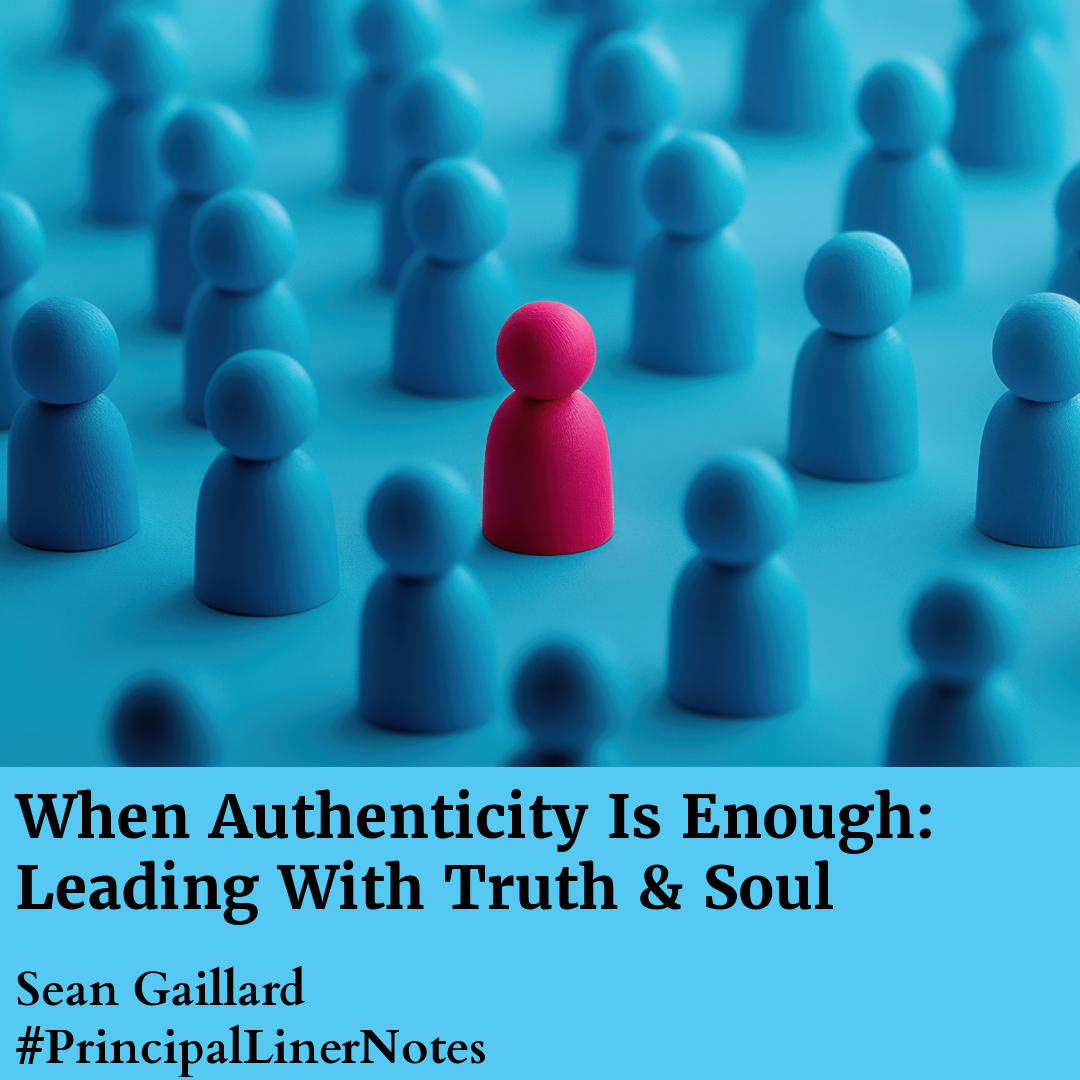
When Authenticity Is Enough: Leading With Truth & Soul

A couple of weeks ago, I had another health scare. My blood pressure spiked, and I ended up in the hospital. I am better now, but those hours of quiet reflection reminded me of something I can’t overlook anymore. I had lost my balance, and it caught up with me.

What surfaced most clearly in that hospital room was this truth: I have to lead as my authentic self. Every time I have tried to wear the mask of someone else’s idea of leadership, I’ve paid the price. The expectations, the performances, the comparisons; none of it leads to joy. Authenticity does. The words of my dear father resonated in my mind as I was facing my internal valley of doubts, “Hold your head high, like I taught you.” My father is my icon for what it means to be an authentic leader. He sees the best in others, guides his moves with faith, and motivates others to get off the proverbial bench because as he says, “Everyone plays. Everyone is a starter. Let’s dare to be great!”

Autenticity is the pathway to joy and the ignition us to be our very best selves for others.

And I am reminded daily that joy comes in the smallest of places. The other morning, I was standing in the cafeteria line talking with kids over breakfast. One challenged me to a game of rock paper scissors. In that small moment of laughter and connection, I found energy again. These little moments are not little. They are everything.

That’s why Bruce Springsteen’s Nebraska has been on my turntable again. A stripped-down, raw, uncompromising record. Just voice, guitar, and truth. The industry didn’t expect it, but Springsteen didn’t compromise. He stayed true to the vision he knew he had to share. And now, with the upcoming film based on the creation of Nebraska, Deliver Me From Nowhere on the horizon, it feels validating to see that choice recognized for the powerful act it was.

Every leader has their own version of Nebraska, a stripped-down truth that others may ignore, dismiss, or even resist. The challenge is to hold on to it, to trust it, and to keep leading from it. Authentic leadership rarely comes with applause or bright lights. It is often quiet work, anchored in conviction and presence. It is about refusing to dilute your vision simply because it doesn’t match someone else’s script.

We see examples of this courage throughout history. Rosa Parks chose quiet defiance over spectacle, and her authenticity shifted the course of a nation. Nelson Mandela held to his convictions through decades of imprisonment and emerged stronger, not broken. I think of the times in my leadership where my authenticity help to guide me to embrace the impossible even when naysayers attempted to dispel what I could bring to the table.

Even in our time, I see inspiring friends like Lauren Kaufman and Meghan Lawson modeling this kind of authentic leadership in their blogs. Their writing resonates because it comes from a place of truth, not performance. Their voices remind me that leadership grounded in honesty has the power to connect, inspire, and endure.

Your Nebraska may not look like anyone else’s. It may not be understood at first. It may even be pushed aside. But if you stay with it, if you let your truth guide your steps, it can become the defining force of your leadership. And in the end, authenticity is not only enough, it is everything.


Four Takeaways for Leaders

  1. Authenticity sustains: Don’t chase someone else’s version of leadership. Stay rooted in who you are.
  2. Small moments matter: A quick conversation or shared laugh can carry more impact than a staged performance.
  3. Comparison drains, presence restores: Shift your focus from how you measure up to where you are needed most.
  4. Find your Nebraska: Hold on to your stripped-down truth, even when it’s overlooked. That is where your real strength lives.

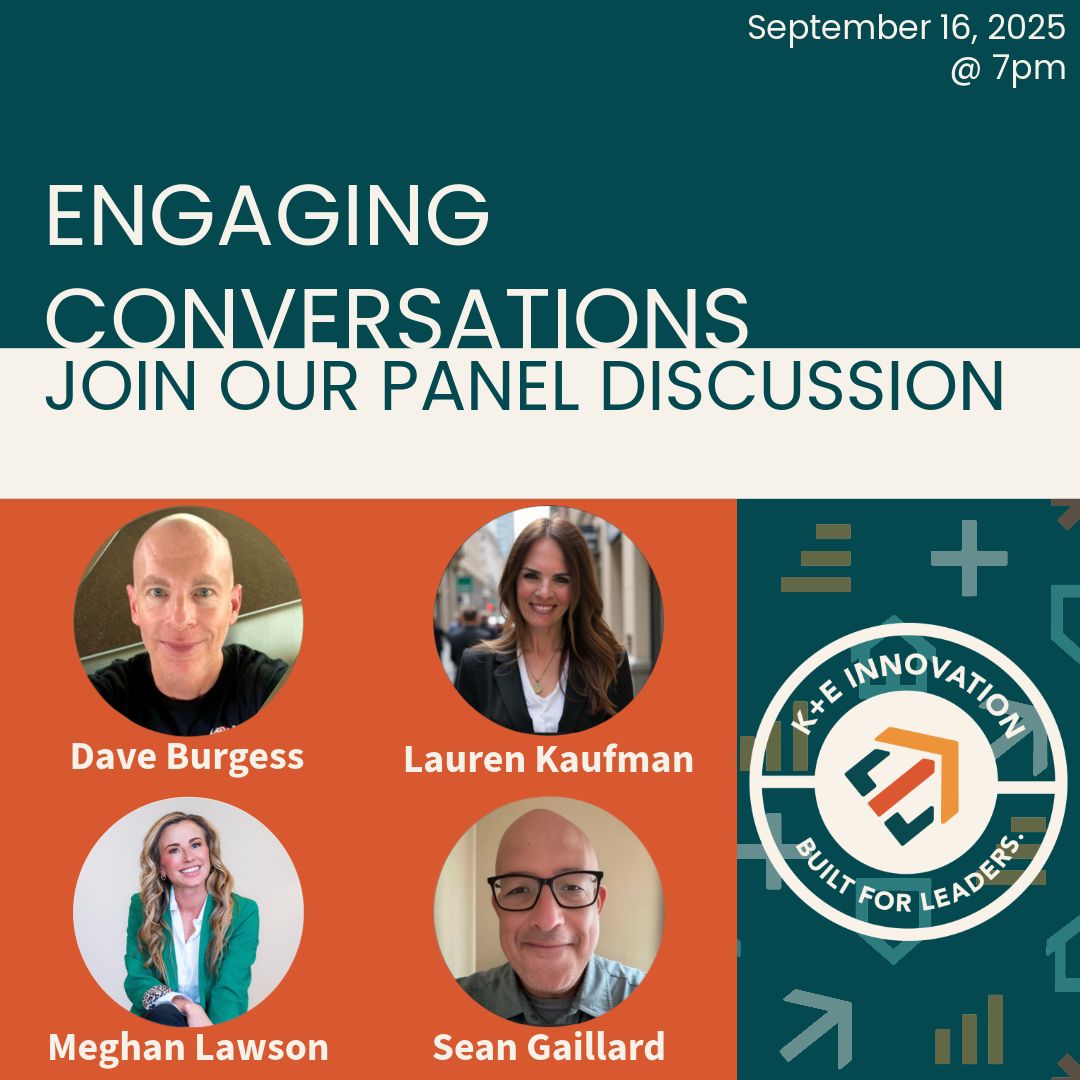
I am honored to be part of the Courageous Leadership Panel, a free webinar sponsored by K + E Innovation with Lauren Kaufman, Meghan Lawson, and Dave Burgess on September 16, 2025 at 7:00 p.m. Eastern. RSVP for this dynamic conversation here: https://lnkd.in/g6SswcTm

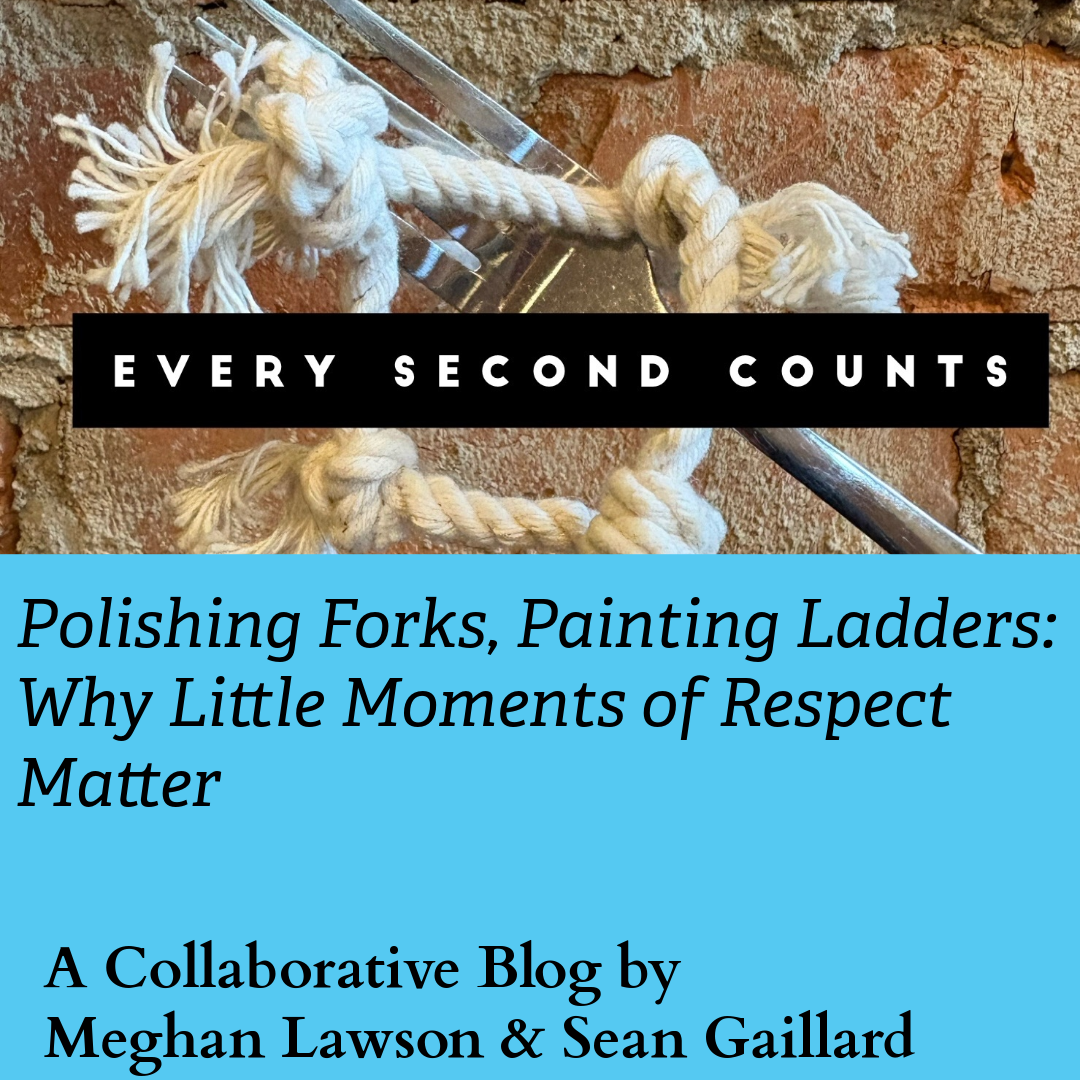
Polishing Forks, Painting Ladders: Why Little Moments of Respect Matter

A Collaborative Blog Post by Meghan Lawson & Sean Gaillard


Sean:

This post is a follow-up to our recent collaboration on Season 4 of The Bear. Meghan Lawson and I had such a great time thought-partnering and exploring leadership through the lens of this compelling show that we knew we had to keep the conversation going. When a story grabs your heart and your mind in equal measure, you follow it. For us, The Bear does just that.

We both love this show. We find ourselves returning to its characters, their struggles, their growth, and the environments they navigate because there are so many leadership lessons embedded in their journeys. These are not neat, polished takeaways. These are messy, raw, and very real moments that mirror the work we do in schools and systems every day.

One of the most moving scenes from Season Two is found in Episode Seven, “Forks.” It’s a moment where Richie, played with heart and grit by recent Emmy nominee Ebon Moss-Bachrach, has just completed a transformative stage at a fine dining restaurant. He wanders into the kitchen, reflecting, observing, absorbing. There, he finds Chef Terry, portrayed with quiet power by Olivia Colman, delicately peeling mushrooms.

They exchange a short but unforgettable conversation.

Richie asks, “Why do you do this?”
Terry replies, “Respect.”

That single word hangs in the air—soft yet commanding. It lands like a truth bomb.

Richie follows up, “Time well spent. That’s what it’s all about?”
Terry responds, “Yeah, I think so.”

As she steps away, she shares a simple, affirming note: Carmy, Richie’s current boss, told her that Richie was good with people.

That moment is not loud. It is not filled with urgency or ego. It is filled with presence, affirmation, and intentionality. Those are the moments worth striving for as a leader.

I love those quiet moments when I’m walking the hallways and visiting classrooms in the school I serve. These are the quiet moments that reflect the glow of a child who feels that sense of belonging. It is the knowing glance from a teacher when I see them in action with a teachable moment. Those are the moments which sustain and carry me on the days when I may be bereft of energy or I have forgotten my leadership purpose.

You go in quest of those moments that echo your purpose as a leader and resonate in impact that ignites the good for others. That makes the whole gig worthwhile.

Over the years, school leadership has sometimes been mistaken for performance art—standing on tables, performing viral-worthy stunts, orchestrating social media optics. While there’s a place for fun, it should never be contrived. Leadership is not about applause. It’s about authenticity.

The “Forks” episode plays like a compelling work of art. It simmers and marinates with beautifully-wrought simplicity. And in that quiet simplicity, we’re reminded: respect isn’t loud. It’s intentional.

And there it is—one leadership lesson.


Meghan:

Sean has so beautifully captured this story, and I’m so glad he mentions it because it is indeed one of my favorite moments from the show.

My husband works in college basketball, and a while back, I wrote a blog post titled, Painting Ladders. It was about how I learned from him that every little detail matters, and none of us are above contributing to those little details.

There was a season when his team won their conference. We all know the tradition: players climb the ladder to cut down the net. That moment is symbolic, beautiful, and hard-earned.

But before the moment, there was the ladder.

The team’s ladder was yellow—not one of the school’s colors. My husband didn’t complain or delegate. He went out, bought navy paint, and stayed up until midnight painting it. No announcement. No credit. He just did it.

Because it mattered. Because of respect.

I try to carry that lesson with me into schools. No job is below me. No detail is too small. It’s about honoring the work and the people who do it. It’s about the culture we’re building—one choice at a time.

“Every second counts” is a phrase repeated throughout The Bear. It’s even emblazoned on the kitchen wall. But this scene reminds us: it doesn’t mean hustle until you break. It means something deeper. Every second is an opportunity to honor your work, your people, and the space you share.

Leadership isn’t just pushing for results. It’s about presence. Listening. Quietly showing someone they matter.

Terry is peeling mushrooms. Richie is paying attention. A few words are exchanged. A leader is affirmed. A purpose is clarified.

That is leadership.

I believe these kinds of moments shape culture. Hallway conversations. Check-ins after a tough day. The unseen prep done with care. The fork that gets polished when no one is watching.

I remember when I first became a building principal. I had dreams of grand gestures for staff, but I was serving over 700 students PK–5 with no assistant principal or counselor. The grand ideas gave way to meaningful ones: showing up in classrooms, learning kids’ names (first, last, and middle), greeting students at the door, cleaning fingernails, brushing hair, riding the bus.

That’s where the culture was built.

There are no small moments in a school.

So, here’s to peeling mushrooms. Here’s to painting ladders. Here’s to time well spent, quiet presence, and respect that shows up without a microphone.

Every second really does count.

Let’s keep leading like it matters. Because it does.


Four Actionable Leadership Moves:

  1. Lead with Presence, Not Performance
    Show up consistently, not for the spotlight, but for the people. Leadership is built in everyday interactions, not staged moments.
  2. Honor the Small Details
    From a clean classroom to a student’s confidence boost, the smallest touches reflect the greatest respect. Don’t underestimate their impact.
  3. Practice Intentional Affirmation
    Just like Terry affirmed Richie, leaders should look for genuine moments to recognize others. Quiet encouragement often speaks the loudest.
  4. Be Willing to Paint the Ladder
    Do the behind-the-scenes work. Fix the overlooked things. Whether anyone notices or not, that’s how you show respect for the team and the mission.

Let’s keep polishing forks and painting ladders. Leadership lives in the quiet corners.

Echoes of Legacy: Reflecting on Impact, Vision, and What We Leave Behind

The other day, I was meeting someone for the first time, and—no surprise—The Beatles came up in conversation. I found myself doing what I often do: searching for shared connection, for kindred sparks, for the chords that bring people together.

As I sipped from my well-worn Let It Be coffee mug, I found myself reflecting—not just on my love for the band, but on why I love them so deeply. My thoughts landed in the final scene of The Beatles Anthology documentary, where each Beatle offers a summation of the band’s journey. Paul McCartney’s words have always stuck with me:

“I’m really glad that most of our songs were about love, peace, and understanding.”

That’s the legacy of The Beatles. A body of work grounded in themes that transcend time and trend. Love. Peace. Understanding. Their music is an echo that still resonates across generations, creating belonging, joy, and reflection in all who listen.

That’s the power of legacy.

As I wrap up my 33rd year in education, I find myself tuning in to that word—legacy—and asking what it means in the context of a school year. I think of my good friend, Meghan Lawson, and her powerful book, Legacy of Learning. She writes:

“What you do in your classroom and school matters. In a big way. We are always making an impact on students and colleagues, whether good or bad.”

Legacy is not about ego, applause, or glory. It’s not about showmanship or staged stunts dressed up as leadership. Legacy is about the quiet echoes we leave behind in the lives we’ve touched—the ones who are better because we showed up and stayed the course.

In my office hangs a photo of Walt Disney standing in the middle of a swamp in central Florida, surrounded by blueprints for what would one day become Walt Disney World. He never lived to see it finished. But his vision endured, carried forward by a team who believed in the mission.

I often show that photo to my leadership teams—not because I want us to build castles, but because I want us to believe in what’s possible. It’s a reminder that legacy is built not in isolation, but in collaboration. It takes vision, belief, and a team that leans into each other’s strengths.

This year, I invited our Instructional Leadership Team and School Improvement Team to create an Accomplishment Inventory—a running list of all we had done that positively impacted students. It was a celebration of small wins and shared progress. It was a testament to the legacy we’re building together, moment by moment, step by step.

As this school year nears its close, I offer these reflections and action steps for you to consider:

🎧 Reflect with Intention
Take 10 minutes. Journal. Ask yourself: What is the legacy I’ve left this year? Where did I show up? Who did I lift?

📷 Find Your “Swamp” Photo
Print or display a photo that symbolizes your long-term vision—the unfinished dream. Revisit it when you need clarity or courage.

📋 Create Your Accomplishment Inventory
Alone or with your team, write out the moments that made a difference. Celebrate them. Share them. Build on them.

Legacy isn’t what we say about ourselves. It’s what others say when we’re not in the room. It’s the tone we set, the hope we pass on, the lives we quietly change.

So tune in. Reflect. And keep building. Your echo matters.

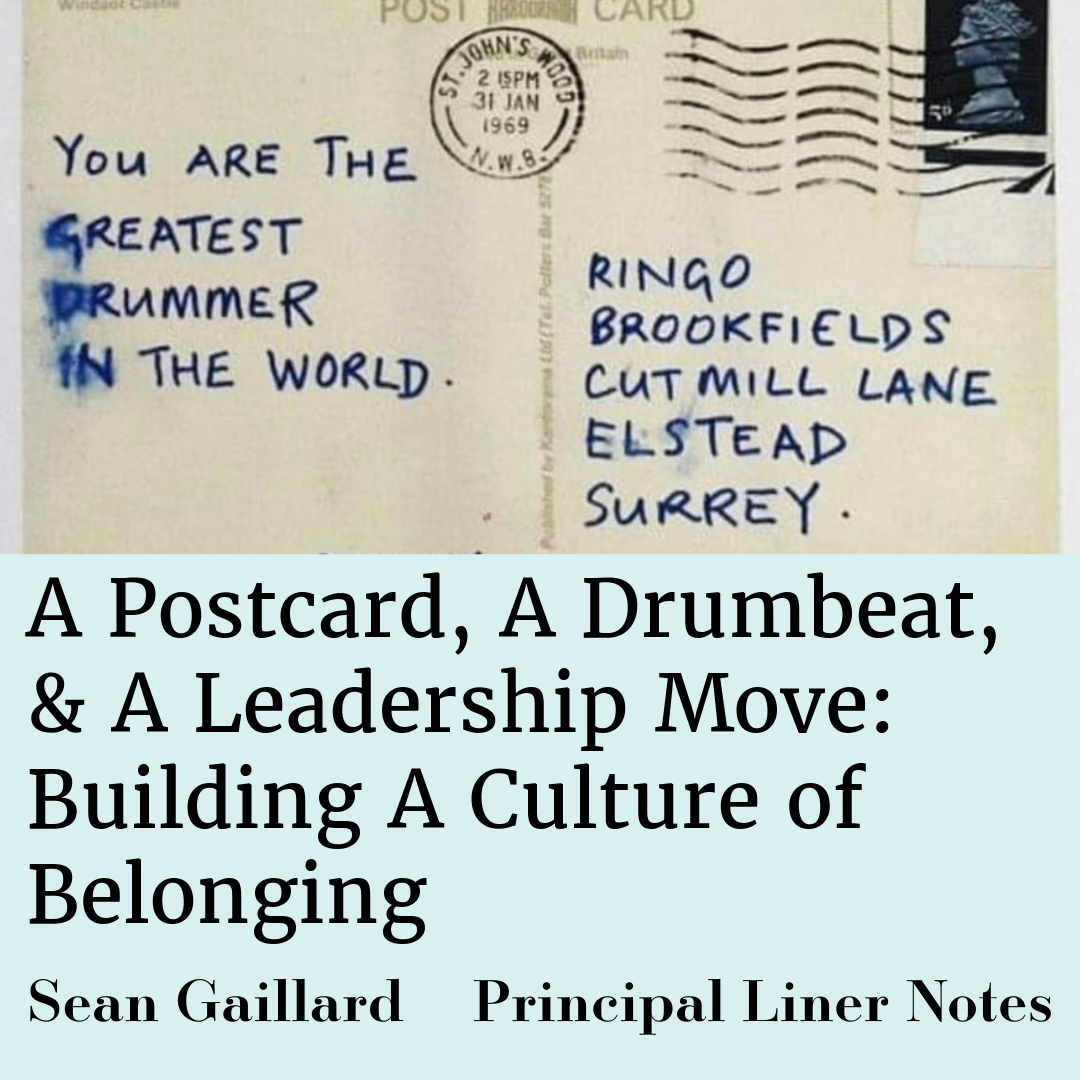
A Postcard, A Drumbeat, and A Leadership Move: Building a Culture of Belonging

Earlier this week, Beatles fans around the world commemorated the 56th anniversary of their final live performance—the legendary rooftop concert atop Apple Records. Captured in Get Back and memorialized in Let It Be, this moment was their live swan song, a testament to creative courage and collaboration.

Last week, I wrote about Rooftop Moments—the bold, defining moments that school leaders should cultivate with their teams. But there’s another, lesser-known moment in Beatles history that happened the day after that performance. A simple yet profound leadership move.

On January 31, 1969, Paul McCartney sent Ringo Starr a postcard that read:

“You are the greatest drummer in the world. Really.”

This wasn’t a public accolade or a grand gesture. It was a handwritten note—one musician reaching out to another, reinforcing connection and belonging. A small moment, but a significant one.

As school leaders, we talk about culture-building, trust, and recognition. Shoutouts in memos or emails are a start, but I’ve come to realize they often feel transactional, fleeting. Teachers deserve more than a quick mention in a newsletter that might be skimmed and forgotten. True belonging is built in the quiet, intentional moments—through handwritten notes and meaningful feedback.

The Power of a Handwritten Note

At Charles England Elementary, we start each faculty meeting with Praise and Thanks—a time to share shoutouts and gratitude. It sets a positive tone and creates psychological safety. But not everyone feels comfortable speaking in a large group, and exhaustion can sometimes make participation hard.

At a recent meeting, I placed blank Energy Bus-themed notes (inspired by Jon Gordon’s book) on tables and asked staff to write a message of gratitude to a colleague. No prompts, no pressure—just a moment to reflect and uplift. As I looked around, I saw teachers smiling, some wiping away tears, completely immersed in the moment. The next day, those notes found their way into mailboxes, and the ripple effect of encouragement began.

A handwritten note isn’t just ink on paper—it’s a tangible reminder that someone sees you. That your work matters. That you belong.

The Leadership Move: 30-Second Feedback

Another way we are reinforcing belonging is through 30-second feedback, a practice inspired by Mike Rutherford’s Seven Tools for Developing Teachers and Teaching (link). This simple but powerful strategy involves stopping into a classroom, identifying one specific positive thing, and sharing that feedback—either verbally or in a quick note.

Here’s what makes it work:

  • It’s not evaluative—just pure affirmation of great teaching.
  • It’s quick but intentional—a handwritten note, a short hallway chat, or a sticky note left on a desk.
  • It highlights strengths—no jargon, no checklist, just celebrating a moment of impact.
  • It builds connection—leaders engaging with teachers in a meaningful way, beyond scheduled observations.

I keep a pocketful of blank Post-its and make it a goal to visit at least three classrooms a day, leaving behind 30-second feedback. It’s transformed how teachers feel about their work. They light up, just like I imagine Ringo did when he read Paul’s postcard.

Four Ways to Build Belonging with Handwritten Notes & 30-Second Feedback

  1. Commit to Daily Touchpoints
    • Visit three teachers a day and leave either a quick verbal or written affirmation.
    • Track your visits to ensure everyone receives meaningful recognition.
  2. Use Specific Praise
    • Instead of “Great lesson!” try: “The way you engaged students in discussion today was fantastic. I could see their excitement!”
    • Authentic, detailed praise carries weight.
  3. Make Handwritten Notes a Habit
    • Keep blank notecards or sticky notes handy.
    • Surprise staff with a handwritten note in their mailbox or taped to their door.
  4. Encourage Peer-to-Peer Recognition
    • Incorporate note-writing into staff meetings or PLCs.
    • Provide postcards or themed templates to make it easy and fun.

A Legacy of Belonging

Think about the impact: just 90 seconds a day dedicated to 30-second feedback builds a culture where teachers feel seen, valued, and empowered. Multiply that over a school year, and you’ve created an environment where trust and belonging flourish.

As Meghan Lawson (link) reminds us in Legacy of Learning, these small wins shape the culture of a school. They’re the moments that keep teachers inspired and engaged.

56 years later, I’m still moved by a simple postcard between bandmates. It reminds me that leadership isn’t always about the big moves—it’s about the small, consistent moments of connection that build something lasting. Just like The Beatles, our legacy as educators is one of collaboration, impact, and belonging.

What’s your next leadership move? Maybe it’s as simple as writing a note.

Celebrating Small Wins and Building Delight in the Schoolhouse

As a principal, I often find myself dreaming big. I thrive on the grand visions, the Moonshot thinking, and the aspirational moves that inspire transformation. I envision a schoolhouse where many hands work together, creating a masterpiece of learning. But here’s the thing: while I may live in that realm of possibility, I know not everyone shares the same bandwidth or sense of urgency. We all move at different speeds, and it’s our responsibility as leaders to gauge where our teams are. To lead effectively, we must be visible, be present, and most importantly, listen. It’s through this intentional awareness that trust is cultivated.

In the past year, I’ve found a renewed appreciation for the power of small wins, a lesson beautifully captured in two books that have become cornerstones of my leadership practice: Legacy of Learning by Meghan Lawson and The Leader Inside by Lauren Kaufman. Both authors remind us of the importance of celebrating small moves as stepping stones to greater heights. They offer a powerful perspective on how small, intentional acts can build momentum, nurture growth, and foster a culture of progress.

Embracing the Power of Small Wins

In today’s educational landscape, many of us are feeling the weight of the pandemic’s aftermath and the uncertainties of new challenges. I see it daily in our school—a fatigue that cannot be lifted by a Jeans Day or a Donut Party. We need more than quick fixes or temporary boosts. As leaders, we must make deeper, more intentional moves that celebrate small wins and bring joy back into our school communities.

One way I’ve embraced this approach is through curating Images of Possibility. I’ve been using Wakelet to capture and share snapshots of the good happening in our schoolhouse—students smiling, engaging in hands-on learning, or experiencing new adventures like a virtual field trip to Alaska via Nearpod. I sent this Wakelet collection to our staff with a simple note, inviting them to pause and savor these moments. It was a small gesture, but it created a powerful ripple of positivity.

During a recent focus group with our teacher assistants, I shared the Wakelet collection and asked them to reflect on the small wins they’ve witnessed. One TA’s words resonated deeply: “A small win is just that—a win. And a win is a win.” Her comment sparked a wave of sharing, as others opened up about personal victories and classroom successes. It was a moment filled with belonging, connection, and most importantly, hope.

Building Delight Through Intentional Leadership

Reading Unreasonable Hospitality by Will Guidara has also shaped my perspective on leadership lately. Guidara talks about building delight, not through grand gestures, but through thoughtful, intentional moves that show we care. This idea has inspired me to rethink how I approach small wins, not as fleeting moments, but as opportunities to build delight and create lasting impact.

We, as leaders, are called to cultivate hope. We must lift each other up, recognizing that our presence and our voice are catalysts for the hope our students need. It’s about finding the small wins, tuning into them with intention, and amplifying them with purpose.

Four Action Steps for Building Delight and Celebrating Small Wins

  1. Curate Moments of Joy: Start a collection on Wakelet to capture images and posts that highlight the everyday successes in your school. Share these with your staff regularly, creating a visual reminder of the good happening in your schoolhouse. It’s a simple yet powerful way to inspire and uplift.
  2. Begin Meetings with Small Wins: Kick off your meetings by inviting staff to share a recent small win. This practice sets a positive tone, fosters a sense of accomplishment, and encourages a mindset of celebration. It’s a small step that can create a big impact.
  3. Build a Culture of Sharing: Encourage your staff and PLN to use the hashtag #SmallWinsEDU across social media platforms. By sharing small wins, we create a dialogue of support and inspiration. Let’s celebrate each other’s victories and build a network of hope together.
  4. Celebrate Progress, Not Just Perfection: Make it a point to notice and celebrate progress, even if it’s incremental. Acknowledge the effort and the journey, not just the final outcome. When we focus on progress, we create a culture where every step forward is valued and celebrated.

A Call to Action

As school leaders, we have the power to shape the narrative. Let’s tune into the small wins, build delight, and create a culture of hope. Let’s support each other in this journey, lifting each other up through the small yet powerful moves we make every day. Together, we can make a difference, one small win at a time.

So, let’s start today. Share your small wins using the hashtag #SmallWinsEDU and let’s create a collective space of inspiration and support. After all, a small win is still a win, and every win deserves to be celebrated.

Keep dreaming big and finding joy in the small moments. We’ve got this—together.

So Long to The Principal Liner Notes Podcast

Leadership can feel isolating, a reality that can weigh heavily. I’ve often thought of the solitude woven into the journey, wondering how we might transcend it. Over my 17 years as a principal, I’ve felt the weight of those lonely moments—losing connections, facing personal and professional scrutiny, and confronting doubts. Those moments brought a quiet determination to build something that could foster the connection we so often miss in leadership. Thus, The Principal Liner Notes Podcast was born.

When I began the podcast, I recorded episodes solo on my phone, using the Anchor app, talking into the mic about the universal threads between music and leadership. I imagined each episode as a conversation with a fellow leader who needed to hear, “You’re not alone, and your work matters.” Each riff, every anecdote about The Beatles or Miles Davis, was my way of saying, This is for you. Over time, the podcast evolved into a space to build true connections. I began inviting guests I admired, creating what I called “Connected Conversations”—an open invitation to join in reflection and connection.

One of the great joys of the podcast was finding myself with guests who became more than interviewees; they became friends. These were colleagues and mentors from my Professional Learning Network who so generously offered their time, insights, and encouragement. My heartfelt thanks go to each guest who trusted this modest podcast, sharing their stories and making themselves heard. I’ll always treasure those deeply personal conversations, some stretching an hour or two before we even pressed record. These moments of openness and support felt like meeting up at a record store or a quiet coffee shop—creating a space where ideas sparked and spirits connected. I’m profoundly grateful for every guest and for every listener who tuned in, showing up and sharing your thoughts. You were there in those moments, and that connection has left an indelible mark.

I remember my good friend and five-time guest, Lauren Kaufman, perfectly articulating what I hoped the podcast would be: a place to reflect, grow, and connect with others. Her words about the trajectory of the powerful moments we have shared on the podcast have stayed with me, especially as I consider what comes next. She described what I had felt but struggled to express. For that, I’m grateful to her and to every member of my PLN who has taken the time to share an episode, write a note, or repost my reflections. Together, we created a community—one rooted in the idea that each of us, in sharing a piece of ourselves, makes leadership a little less solitary.

This farewell is also a reflection on gratitude. The Principal Liner Notes Podcast was more than a podcast; it was a creative outlet and a chance to share a love of music and leadership. It allowed me to honor the musicians and leaders who have inspired me and to dive into my own passions with renewed enthusiasm. As I step back from this chapter, I’m left with the richness of these experiences, deeply appreciative of the community that has supported me. Maybe these episodes will form the foundation for a future book or a revival of the series one day. Until then, I’m excited to continue exploring new creative paths. Projects like Hope Amplified with my good friend Meghan Lawson, and Chords of Connection, a solo podcast centered on music and storytelling, are on the horizon, and I look forward to seeing where those journeys lead.

The spirit of this transition reminds me of Simon & Garfunkel’s farewell anthem, “So Long, Frank Lloyd Wright,” a tender goodbye from their final album. It’s a nod to the end of an era, yet it carries the anticipation of what lies ahead in their individual creative paths. This podcast, in that same spirit, is about moving forward—grateful for what’s been and inspired for what’s next.

In reflecting on this transition, I’m reminded of the late Tom Snyder and his poignant final episode of Tomorrow. He signed off with dignity and a sense of gratitude that I hope to echo here. With each episode, I tried to foster meaning and connection, and as I bring The Principal Liner Notes Podcast to a close, I leave with the same sense of gratitude and hope for the connections yet to come. My goal is to continue sharing those connections through future podcast projects—and maybe even a new book. These chapters, filled with purpose, leave me deeply thankful for the music, leaders, and each of you who have been part of this journey.

To my listeners, thank you for being there—whether on a morning walk, a drive, or a quiet afternoon. Your choice to press play, to share these reflections, has meant the world. And as I sign off, I leave with this message: “Don’t forget to share your thoughts, words, ideas, and dreams with the world. The world needs them, and YOU make it a better place.”

Thank you for listening, for tuning in, for connecting, and for making leadership a little less lonely.

Explore Episodes of The Principal Liner Notes Podcast
Check out The Pepper Effect

Hope On: Cultivating a Culture of Possibility in the Schoolhouse

I’m an unabashed fan of the television series The Bear. I’ve breezed through all three seasons, savoring the beautiful portrayal of a group of people coming together around a shared vision to make the impossible possible. The story of a humble sandwich shop transforming into a fine dining restaurant, with aspirations of becoming the world’s greatest, is nothing short of inspiring.

Without giving away spoilers for those who haven’t seen the latest season, I want to share a brief scene that recently came up in a conversation with Meghan Lawson while preparing for our new podcast, Hope Amplified. It’s no secret that Meghan and I admire the show, having discussed it at length on my other podcast, #PrincipalLinerNotes.

Talking with Meghan is always a meaningful and uplifting experience, and I’m eagerly anticipating our upcoming discussions on the art and science of hope in a new podcast we are co-creating called Hope Amplified. As we were mapping out our inaugural episode, we both recalled a powerful scene from the Season 3 finale of The Bear.

In the scene, the chefs and restaurant staff gather for an impromptu afterparty, marking the bittersweet closure of a renowned restaurant. The head chef—celebrated worldwide for her culinary brilliance—decides to prepare a midnight snack for the guests. The host, a rising chef, hesitates when the famous chef finds only a few modest ingredients, including a frozen pizza. Yet, the renowned chef isn’t deterred. With creativity and mastery, she transforms those humble ingredients into something extraordinary. It’s a moment worth watching, as she turns a frozen pizza into a culinary delight.

As we reflected on this scene, we saw it as a fitting emblem for hope. The show itself is a deep, reflective series filled with life-affirming moments of perseverance, collaboration, and innovation. In Hope Rising by Casey Gwinn and Chan Hellman, hope is defined as the belief that the future can be better than the present, combined with the understanding that we have the power to make it so.

Educators strive to embody this belief every day. Even with limited resources, they create transformative experiences in the classroom. I think of the teachers I have the privilege to support as principal at Charles England Elementary, who cultivate hope daily, opening new possibilities for our students. I’m reminded of my 5th-grade teacher, Mrs. McMonagle, who saw something in me—a young, awkward, light-skinned African American boy—that I didn’t always see in myself. She revealed the possibilities within the written word and storytelling. I also think of my first teachers, my parents, who taught me to dream big, walk with purpose, and hold my head high.

Teachers need many things, but at the core is the hope that they can make a difference in the lives of children. It’s the leader’s role to ignite that hope by fostering a sense of belonging, trust, and open communication. Leaders must call out hope and passionately embrace the possibilities it brings. It’s not just a sentiment but an essential, strategic action.

I’m thrilled to dive deeper into the art and science of hope in upcoming episodes of Hope Amplified with Meghan. Some may argue that hope is not a strategy for leaders to depend on. While I understand that perspective, I disagree. Hope isn’t merely a strategy; it’s a must. It’s an essential thread in the daily fabric of our schools, shaping the lives of those we serve. Without hope, we have nothing. With it, we have purpose, potential, and the catalyst for meaningful change. Don’t let anyone deprive you of that spark. Hope on.

Stay tuned for the debut of Hope Amplified, launching November 2nd. Meghan and I invite you to join the conversation and share your thoughts on hope using the hashtag #HopeAmplified. Here are three small moves for leaders to inspire hope in your school:

  1. Impromptu Restorative Circle: Gather colleagues and teachers for an informal circle to share what gives them hope.
  2. Hope in Action Bulletin Board: Showcase experiences from your school where hope is making a difference.
  3. Hope Playlist: Curate a playlist of songs that inspire hope and share it with your faculty.

Let’s continue amplifying hope together. #HopeAmplified

Why Not Hope?-Embracing Possibility in Leadership


The Dreamer’s Dilemma
Facing Skepticism with Vision

The other day, I found myself discussing a bold, ambitious goal with colleagues. While I was met with polite nods, I sensed hesitation. When I asked if I needed to clarify my vision, they shared that while they appreciated the dream, they believed the realities of our situation—budget constraints, time limits, and logistical barriers—would prevent it from becoming a reality.

I listened and expressed gratitude for their feedback. However, I countered that if we let impossibilities win, we’ll never achieve anything. It’s easy to accept limitations as inevitable, but when we allow that mindset to dominate, progress halts. Dreaming big requires not just vision but also the courage to challenge reality with hope.


Meeting Others Where They Are
Small Moves, Big Impact

I know dreaming big can be daunting for others. Fear, grounded in past experiences, often holds us back from stepping into uncharted territory. I must remind myself not to judge the fears of others but to empower them. Together, we can take small steps to bring the dream closer to reality.

This idea echoes the work of my friend and thought partner Meghan Lawson, whose book, Legacy of Learning: Teaching for Lasting Impact, explores the concept of “small moves.” She shows how incremental progress can sustain dreams and turn them into dynamic action that benefits everyone.


The Power of Hope
Why Leaders Must Defy Cynicism

In a recent episode of my Principal Liner Notes Podcast, I had the pleasure of speaking with Meghan Lawson for the fourth time. As always, her insights were illuminating. This time, she shared her research on the Science of Hope, a framework that fascinated me. Meghan framed hope not as a passive emotion but as a viable tool for creating change.

Too often, leaders dismiss hope, branding it as ineffective. We’ve all heard the phrase, “Hope is not a strategy.” But when did we decide that embracing hope meant abandoning strategy? Hope can be the catalyst that ignites action. It’s the foundation we need to build dynamic, transformative strategies that work.

Just think—what if John F. Kennedy hadn’t embraced hope when he delivered his famous “We Choose to Go to the Moon” speech? Without hope, there would be no Moon landing, no template for Moonshot Thinking. The impossible only became possible because someone dared to hope and challenged others to do the same.


A Beatles Lesson in Hope
Staying True to Vision

The Beatles’ classic song “Hey Jude” offers another powerful lesson in hope. When they first recorded the song, some in the music industry said it was too long at over seven minutes. Radio stations wouldn’t play it, they warned. But John Lennon famously replied, “They will if it’s us.”

And he was right. Hey Jude went on to sell over 8 million copies after its initial release and stayed at #1 on the Billboard Hot 100 chart for nine weeks. To this day, it’s been streamed over 1.5 billion times on Spotify.

The Beatles operated with hope by trusting their vision and defying the limitations imposed by industry norms. That hope led to the creation of a timeless song that still resonates today.


The Call for Hope in Education
Leading with Vision and Possibility

As school leaders, we carry enormous responsibility. Many look to us for solutions, quick fixes, and results. The pressure to meet objectives can make it tempting to dismiss hope as impractical or naive. But I believe hope is exactly what we need.

There will always be pushback—colleagues may talk about you in the parking lot, claiming you’re chasing windmills. But there’s someone in your building who needs to hear a voice rooted in hope. Remember those who saw something in you, believed in you, and called out your potential. They didn’t see you as you were; they saw you as you could be—and that’s the power of hope.

Just as JFK’s words on a Houston day in September ignited a nation to reach the Moon, we, too, can challenge our teams to strive for the stars. Think of the teacher who believed in you and stretched your learning into unknown territory, simply because they had hope.

As Martin Luther King, Jr. shares, “We must accept finite disappointment, but never lose infinite hope.” Hope is lasting, enduring, and impactful. We need Hope in the marrow of our culture and the cadence of our dialogue. We need to illuminate a compass of Hope on the teachers and students we serve.

Yes, why not hope?


Four Action Steps to Build a Culture of Hope
Transforming Leadership with Vision

  1. Research the Science of Hope
    Leverage resources on hope to ground your leadership approach in actionable, evidence-based strategies that inspire change.
  2. Start with Small Moves
    Build momentum by taking small, consistent steps toward your larger vision. Focus on small wins that create a ripple effect in your organization. Meghan Lawson writes about this in her amazing book, Legacy of Learning.
  3. Lead with Vision, Not Fear
    Acknowledge the realities, but don’t let them stifle your vision. Inspire your team to look beyond limitations and into possibilities.
  4. Amplify Success Stories
    Celebrate the achievements—both big and small—of your team and students. When others see what’s possible, they’re more likely to believe in and contribute to the bigger vision. Curate those stories using a school hashtag and creating a list with either Padlet, Canva, or Wakelet.

Hope is not just a lofty ideal; it’s the engine that powers real change. Let it be the guide that drives your leadership and inspires others to dream bigger.


Enjoy The Beatles performance of “Hey Jude.”

Within Our Second: Leadership Reflections in the Moment

In a recent episode of my #PrincipalLinerNotes podcast, I had the true honor of welcoming back my friend, Meghan Lawson, for another insightful discussion on “The Bear.” This show has become a favorite of ours for many reasons, particularly its parallels to leadership, culture, and collaboration. “The Bear” tells an intense tale of a Chicago sandwich shop’s transformation into a world-class restaurant—a journey that resonates deeply with those in leadership roles. I highly recommend checking out the podcast episodes featuring Meghan’s sharp insights on “The Bear.”

Without revealing spoilers, one notable aspect of the show is a sign prominently displayed in the restaurant kitchen: “Every Second Counts.” This sign, curated by the protagonist Carmy, serves as a constant reminder to the staff about the importance of urgency. Having waited tables myself, I understand the precision required in food preparation and service—it demands synchronized efforts, clear communication, and flawless execution. It’s akin to a choreographed dance, where every team member plays a crucial role in delivering an exceptional experience to customers.

“The Bear” beautifully captures this intensity, showcasing the behind-the-scenes artistry of food service, complemented by a soundtrack that enriches the viewing experience—a treat for any music enthusiast like myself. (Any show referencing “Vegetables” and “Mrs. O’Leary’s Cow” from the “Brian Wilson Presents SMiLE” album is worth the price of admission!)

The “Every Second Counts” sign silently commands respect throughout the series. It underscores the necessity of prompt action and efficient use of time—a principle crucial in change leadership. The characters on the show display a solemnity for the message embedded in the three words of the sign. Watching “The Bear” has inspired me to reflect on my own approach to leading change, finding invaluable lessons even in non-educational media like this.

While it’s easy to interpret “Every Second Counts” as merely a call for speed and urgency, its deeper message lies in appreciating each moment. Every second contributes to a collective tapestry of strengths, talents, and skills that enriches any organization or school community. A leader must recognize and harness these strengths, ensuring alignment with the team’s goals. Additionally, a leader must support the people they serve in seeing the good within themselves within the moment.

Moreover, embracing “Every Second Counts” means being present and mindful—acknowledging the significance of each moment, both for oneself and others. Recently, a personal health scare reminded me of life’s preciousness, reinforcing the importance of cherishing every moment and its potential for goodness.

Meghan Lawson’s book, Legacy of Learning, emphasizes the value of savoring small moves and building upon them—a sentiment echoed in Ryan Holiday’s insights about Nick Saban’s coaching philosophy in The Obstacle Is The Way. Coach Saban encouraged his players in what he called the “process.” In other words, each player was to make each play, step, and down the very best.

As leaders, it’s crucial to cultivate this mindset not just for organizational success but also for personal well-being. Every second counts towards advancing our mission and nurturing those we serve. Every second counts for stewarding our own well-being and savoring the moments that serve as the architecture for our life.

Here are three ways to embrace this approach:

  1. Reflection: Take time for introspection through activities like walks, reading, exercise, or journaling.
  2. Acknowledge the Good: Verbalize appreciation for positive moments as they occur.
  3. Intentional Pauses: Schedule moments in your day to recognize and appreciate the good around you.

By embodying “Every Second Counts” in both professional and personal spheres, we enrich our lives and those of others, fostering a culture of mindfulness, gratitude, and purposeful action.