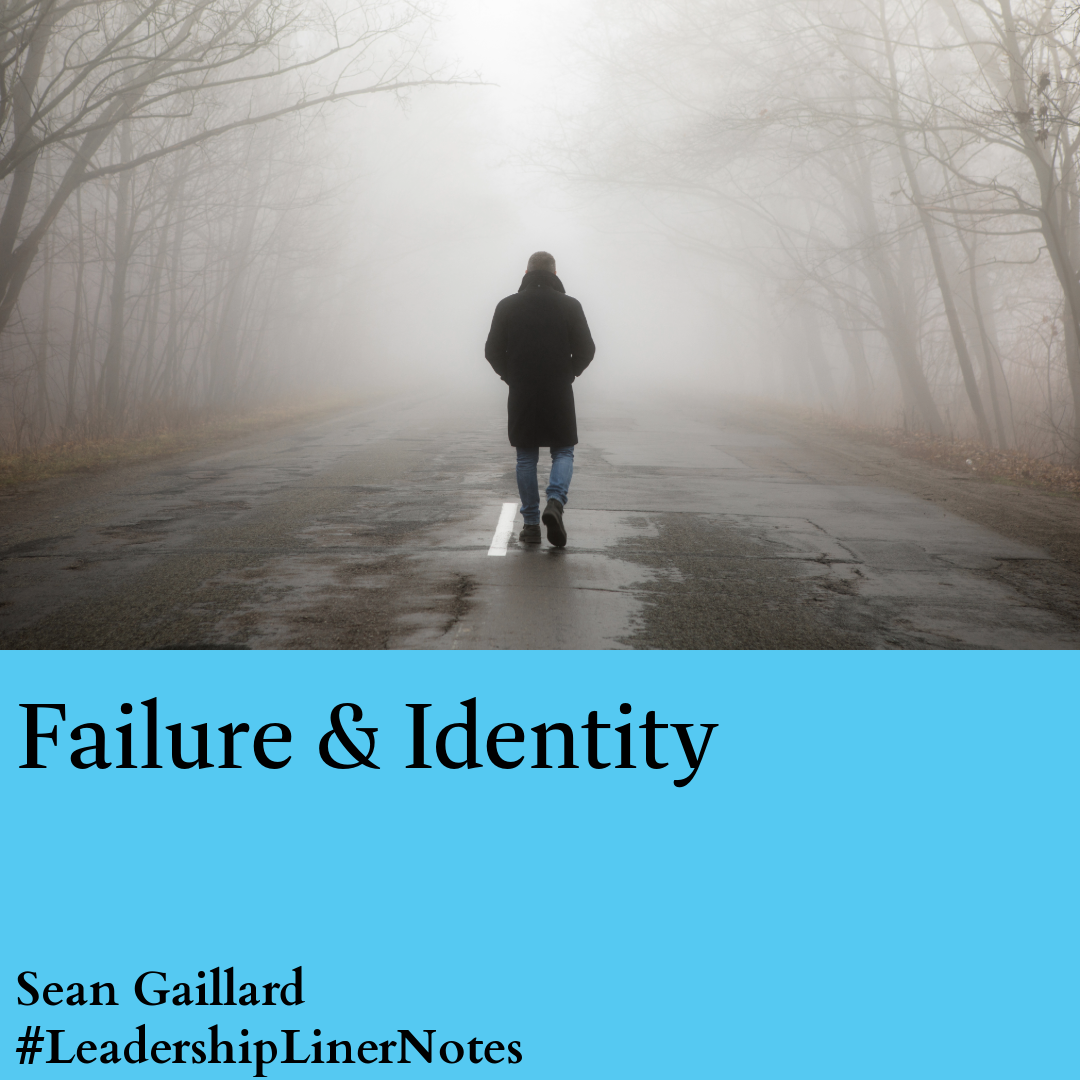
Failure and Identity

This is for the leader who feels like they have lost their place.

In 2007, Robert Plant, lead singer of the most iconic bands in music history, stood on stage with Led Zeppelin at the O2 Arena for what would become one of the most celebrated reunions in rock history. The world wanted more. Promoters offered a massive tour and an even larger payday. The expectation was clear. Step back into the machine. Relive the past. Give the audience what it wants.

Plant walked away.

He chose a different path. He followed his own creative instincts. He leaned into new sounds, new collaborations, and new risks, including his work with Alison Krauss. He stepped away from what the world defined as success and into something that aligned with who he was becoming.

Some called it a missed opportunity. Others called it a mistake.

It was neither.

It was identity.

That moment has stayed with me because it reframes how we think about failure. We are conditioned to believe that turning away from something big, something visible, something validated by others must mean we failed. We attach our worth to outcomes, roles, titles, and applause. When those things shift or disappear, we question who we are.

John C. Maxwell offers a powerful reframe in his work Failing Forward: Turning Mistakes into Stepping Stones for Success. Failure is an event, not a person. That idea has been sitting with me in this season. I have replayed decisions. I have questioned outcomes. I have wrestled with the weight of what did not work. I have felt the tension between what was and what is.

I am learning that failure does not get to define me unless I allow it to do so.

Walking away has been part of that learning.

Walking away from environments that drain rather than develop. Walking away from expectations that do not align with who I am. Walking away from traditional leadership paths that no longer reflect the kind of leader I want to be.

There have been moments when that felt like failure. There have been moments when it felt like I was stepping off a stage with no clear next act.

Those moments have become the catalyst for something else.

Space.

Space to think. Space to reflect. Space to reconnect with why I started this work in the first place. Space to explore new collaborations, new ideas, and new ways of showing up. That space has led to new conversations, new creative work, and new projects, including the podcast I am building with Donya Ball. That work is rooted in something real. It is not built on noise or performance. It is built on truth, reflection, and connection.

That would not have happened if I had stayed where I was.

We have to normalize this.

We have to normalize that walking away from what is toxic is not quitting. It is not weakness. It is not failure. It is an act of clarity. It is an act of courage. It is a commitment to protecting your humanity in spaces that often ask you to leave it behind.

Leadership has too often been framed as endurance at all costs. Stay longer. Push harder. Ignore the signals. Keep performing. That narrative is not only outdated, it is harmful.

There is a different way.

A way that allows leaders to reflect, to reset, and to realign. A way that recognizes that identity is not tied to a title or a role. A way that gives permission to step away in order to step into something more aligned and more sustainable.

I am still in that work.

I am still unpacking what failure means in my own story. I am still learning how to separate what happened from who I am. I am still finding my voice in spaces that value honesty over hype.

What I know is this.

Walking away did not end my story.

It helped me find it.
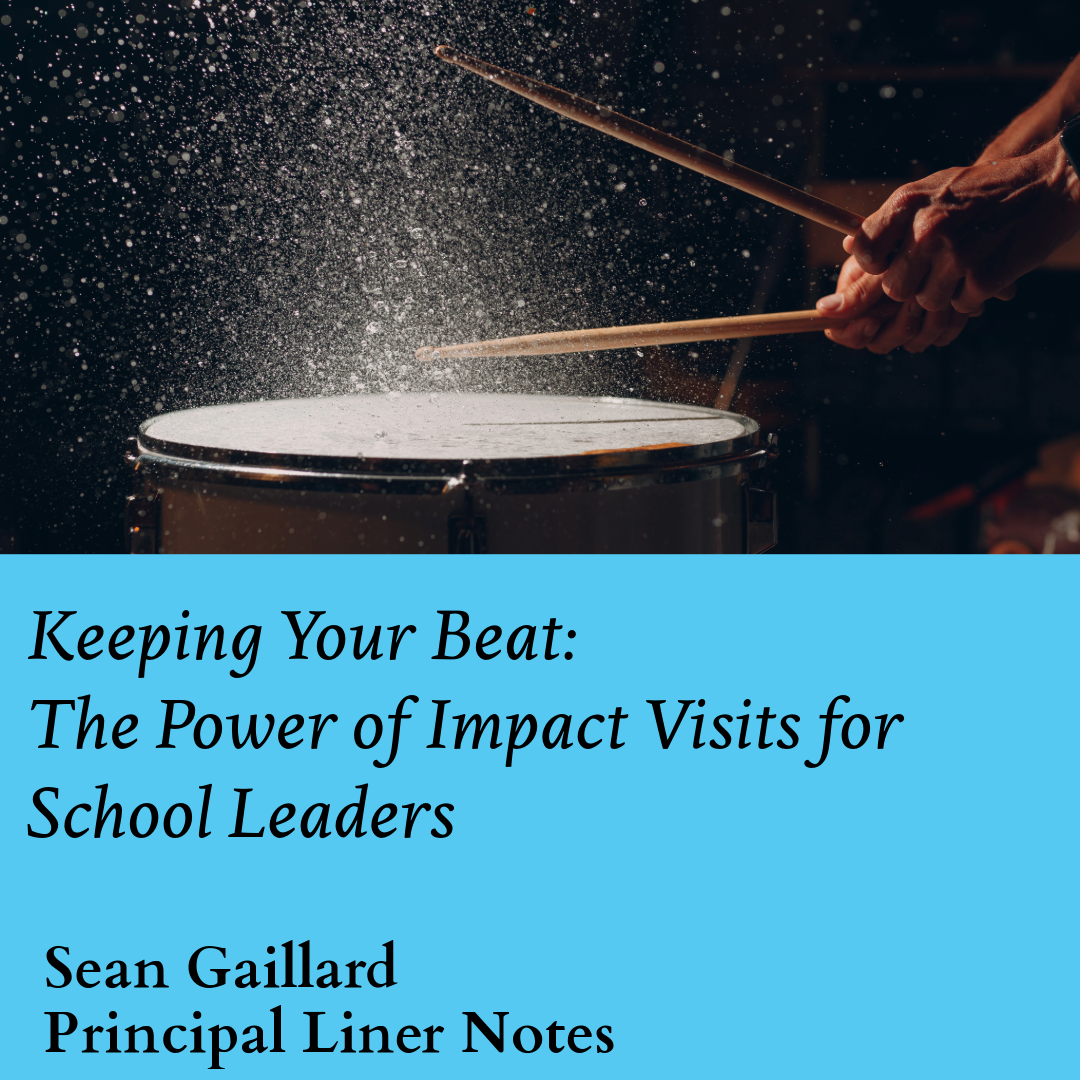
Keeping Your Beat: The Power of Impact Visits for School Leaders

A reflection inspired by John Bonham, legacy, and the rhythm of leadership
#PrincipalLinerNotes

Special Thanks to Jimmy Casas and Lainie Rowell for their respective missions inspiring my gig! I am grateful that our PLN connections have evolved into sincere, lifelong friendships.

A very special thanks to my amazing wife, Deb, for being that constant source of love, inspiration, and strength every day! Thanks for inspiring Impact Visits!


A Soundcheck at Knebworth

It was just a soundcheck.
August 1979. Knebworth. A wide open field waiting to be filled with music. Led Zeppelin was preparing for a monumental return to the British stage. But as the band warmed up, it wasn’t John Bonham—the thunderous backbone of the band—behind the drum kit. It was his 13-year-old son, Jason.

In a rare and touching moment, Bonham stepped away from the drums and wandered into the field. He didn’t just want to hear the band; he wanted to listen from a distance. He stood alone, away from the stage, and let the sound wash over him. The rhythm of his legacy. His son’s rhythm.

There were no headlines. No fanfare. But there was something sacred in that quiet act: a father making space for the next generation, a rock legend becoming an audience member. Trust. Love. Legacy. It was all there in that field of amplifiers and dreams.

As a teenager, I remember reading about that moment in one of the many music biographies I devoured. It stuck with me. Especially knowing that John Bonham would pass away just over a year later. His son, Jason, would grow up to carry the torch—eventually joining surviving members of Led Zeppelin for reunion shows, most notably in the legendary 2007 performance captured on Celebration Day.

That soundcheck was more than rehearsal. It was legacy in action. It was impact. It was a leader stepping back—so something deeper could move forward.


Stepping Back for Impact

The response to my recent blog post, The Loneliness of Leadership, has been both humbling and healing. I wrote it to name and navigate the isolation I’ve felt in leadership—and to extend a hand to others who may be feeling the same. The heartfelt messages and outreach reminded me that we’re not as alone as we think. There is resonance when we share our truth.

This morning, I had the sincere honor of being a guest on Jimmy Casas’ podcast, The Interview Chair.
You can listen to that episode soon, but here’s what struck me during our conversation: Jimmy asked how I maintain mental health in leadership—especially after sharing my heart episode experience from last year. My answer came quickly: Impact Visits.


What Are Impact Visits?

Impact Visits are intentional moments carved out of the chaos. They’re brief detours in your day where you go and witness your leadership in motion—where the fingerprints of your work are making a difference.

Over the years of my principalship, my wife Deb would often tell me, especially on the hard days, “Go visit a classroom where you know it’s working.” She’d say it gently but with urgency—usually on the days when I was feeling discouraged, disconnected, or alienated. I didn’t always listen. I’d get swept up in the whirlwind of tasks and to-dos. But since my heart episode and my renewed focus on mental health, I’ve made it a point to follow her advice.

So, thank you, Deb. I know to listen to you now.

These are not evaluative visits. They’re not walk-throughs with clipboards and checklists. They’re personal moments—to be reminded, to be renewed. A time to refuel your spirit and reconnect to why you said yes to this work in the first place.

If you can, use these visits as a chance to connect. To offer a word of thanks. A fist bump. A simple “You’re doing great.” As my friend Lainie Rowell reminds us in her #EvolvingWithGratitude mission—gratitude is a powerful act of leadership. A little goes a long way.


Four Ways to Make Impact Visits Happen

  1. Schedule Intentionally
    Block time on your calendar each week. Just 10–15 minutes to step into a classroom, a hallway, or the front line of your impact.
  2. Make It Routine
    Ritual turns into rhythm. If you make Impact Visits a part of your leadership practice, they’ll become the pause that powers your next move.
  3. Share the Visit
    Reflect on your visits with a thought partner or friend. If you don’t have someone, you’re welcome to reach out to me. I’d be honored to be that listening ear: sgaillard84@gmail.com
  4. Encourage Others
    Inspire your team, your assistant principals, or even colleagues in your PLN to create their own version of Impact Visits. Help build a culture of reflection and renewal.

Your Beat Still Matters

Leadership is not a sprint of perfection. It’s a series of riffs—some raw, some refined. We owe it to ourselves and those we serve to keep our rhythm aligned with our core values.

So, take that walk. Stand in that hallway. Listen to the beat that’s still echoing from something you once helped shape.

Because even in the quiet moments—maybe especially in the quiet moments—we find proof that we’re still making a difference.

Keep your beat.