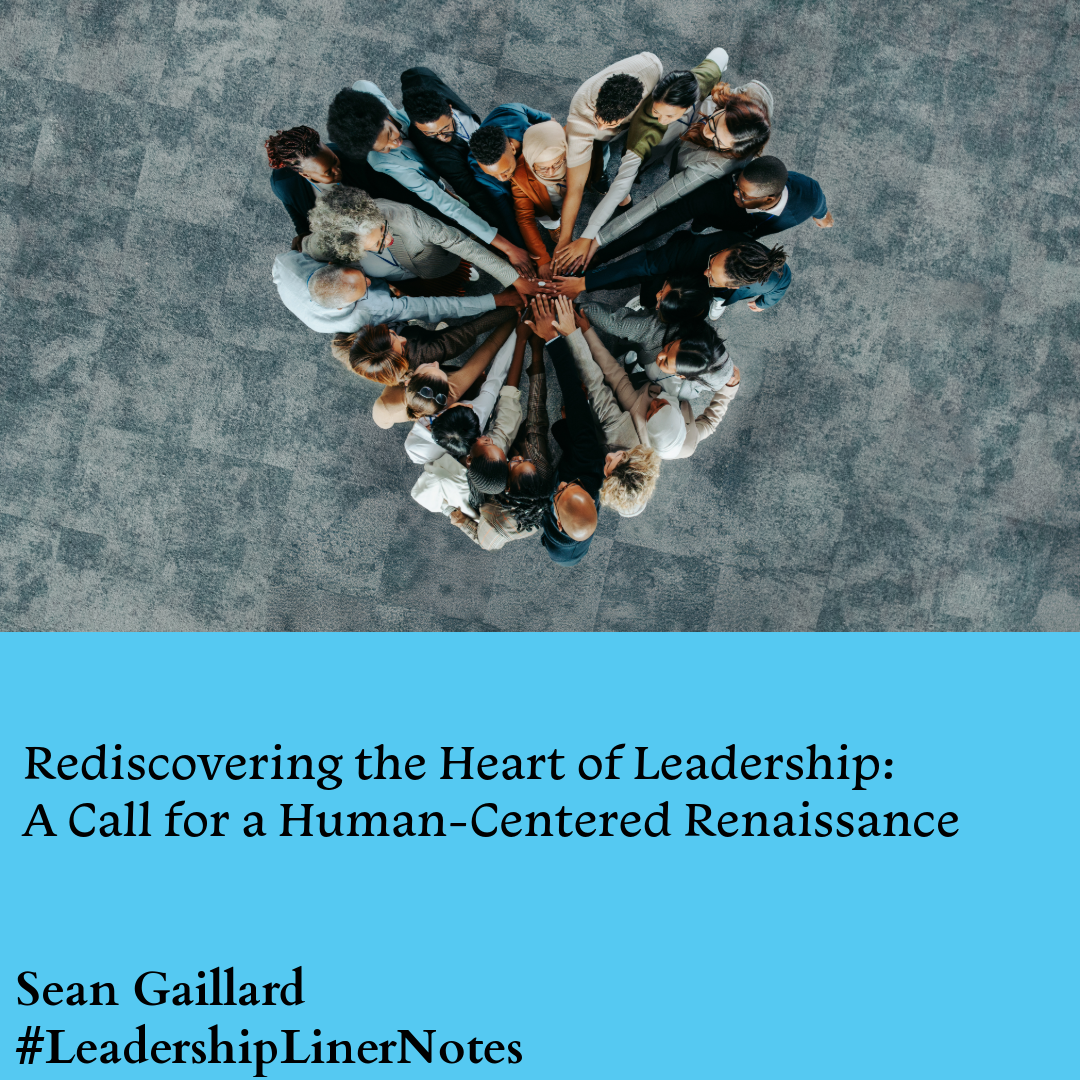
Rediscovering the Heart of Leadership: A Call for a Human Centered Renaissance

The other day, I had the privilege of speaking with a former superintendent from the early days of my principalship in Winston-Salem. It was one of those conversations that stays with you long after it ends. I felt deeply grateful for her wisdom, for the lessons she shared years ago, and for the way she continues to lead with humility and care.

At one point, our conversation turned to belonging. We did not speak of it as a buzzword or a program. We spoke of it as a fundamental human need in schools and in leadership. That moment mattered. It affirmed something that has been awakening in me over the past year and a half, a journey that began after my heart episode and has been deepened through therapy, reflection, and honest reckoning with myself. That conversation did not begin this journey, but it reignited it. It reminded me that leadership, at its best, is rooted in humanity.

That conversation also made something painfully clear.

The leadership we are currently celebrating in too many spaces is missing the mark.

Many systems have become overly reliant on noise, metrics, programs, and performance. Visibility is often mistaken for value. Activity is often mistaken for impact. Standing on tables, creating a staged video, or chasing what is trending is frequently confused with leadership. In the process, we are losing sight of what actually sustains schools and the people inside them.

A line from Dr. Donya Ball has been echoing in my mind ever since that conversation: “One of the biggest leadership turn offs is the leader who chases public recognition instead of private excellence.”

That distinction matters now more than ever.

Private excellence is where real leadership lives. It lives in quiet conversations. It lives in trust built over time. It lives in making people feel seen, heard, and valued when no one is watching. That is where belonging is cultivated, not performed. I am grateful for the inspiring words and thought partnership of Dr. Donya Ball. She is definitely a worthwhile addition to any Professional Learning Network.

Greater care is also required in choosing the voices we amplify. Many voices offer quick solutions and so-called fixes to deeply complex problems of practice. Some of those voices have not been in a classroom or schoolhouse doing the work in years. Others sell packaged answers designed more for self promotion than service. Discernment matters, because what we consume shapes what we believe leadership is supposed to look like.

There are sincere voices doing this work with integrity. These are leaders who stay close to schools, who listen more than they sell, and who center belonging over branding. That sincerity feels harder to find than it once was, which makes intentional discernment even more important.

The voices worth seeking are those that foster belonging, courage, and empowerment. They honor the complexity of schools. They understand that innovation does not come in a package and that transformation cannot be rushed.

This moment calls for a return to something more human. It calls for leadership that is analog in spirit and rooted in connection rather than consumption.

I often think about The Beatles performing Hey Jude on the David Frost Show in 1968. As the song reached its closing chorus, the band invited a diverse group of audience members to gather around them. Everyone sang together. There was no hierarchy in that moment and no spotlight chasing. There was shared humanity in action. Everyone had a place in the song.

That image offers a powerful metaphor for the leadership we need now.

Belonging is not an accessory to leadership. Belonging is the entry point. It is the foundation that allows people to take risks, grow, and contribute their gifts. My father used to say, “Everybody starts, everybody plays.” That belief has never felt more urgent.

Schools are facing real challenges. Budgets are shrinking. Demands are increasing. Pipelines into teaching and leadership are fragile. Burnout is widespread and cannot be resolved through another initiative or an unfunded mandate. This is not the moment to double down on outdated leadership playbooks.

There is still reason for hope. Educators continue to make a profound difference in the lives of others. This moment invites leaders to pause and reflect. It encourages them to reimagine how school communities are served in ways that are sustainable, affirming, and deeply human. We need to change the conversation on what it means to lead in schools. We must invite everyone to the table for this much-needed crucial conversation.

A few places offer meaningful starting points:

-Leaders can create intentional space for reflection in daily practice. They should treat it as a priority rather than an add on.
-Leaders can commit to real conversations that center around listening and learning.
-Leaders can commit to building belonging first, knowing everything else grows from that foundation.

School leadership is overdue for a renaissance. That renaissance must be rooted in presence, humility, and courage. When leaders dare to lead from the heart and make belonging the work, leadership can once again be reclaimed as a human act rather than a spectacle.


Author’s Note

This piece was written as an invitation rather than an indictment. It reflects a personal and professional awakening shaped by lived experience, reflection, and honest conversations about what leadership demands in this moment. The hope is that it encourages thoughtful pause, renewed discernment, and a recommitment to leadership grounded in humanity.
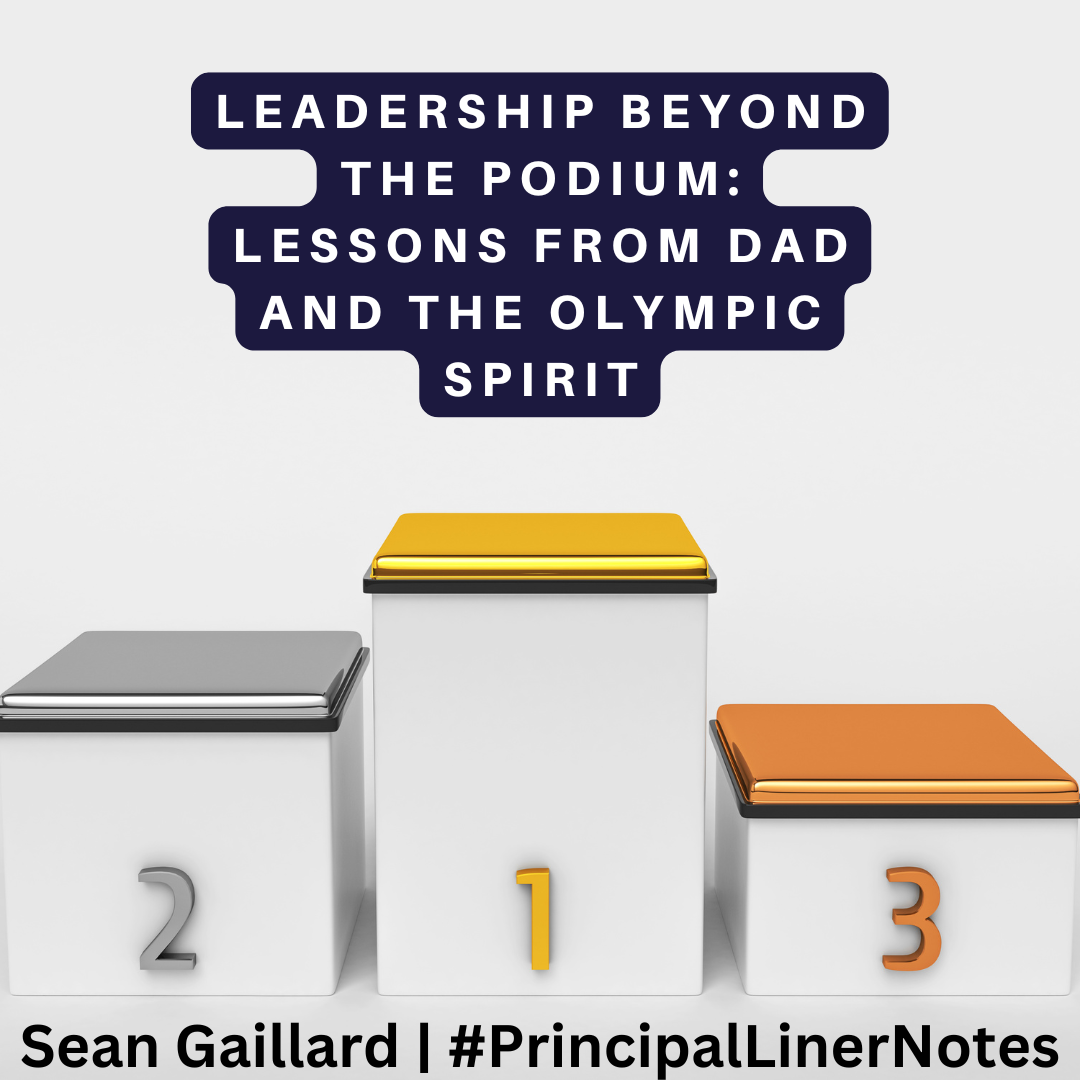
Leadership Beyond the Podium: Lessons from Dad and the Olympic Spirit

Advice from Dad

“It’s not about you anymore.”

That was the statement my father shared with me when I sought his advice for my first leadership challenge. I was newly appointed as the English Department Chair and was grappling with a seemingly small issue. Naturally, I turned to the best leadership coach I know—my dad. He was blunt and direct, following up with, “Hold your head high like I taught you.”

It took me some time to fully understand the depth of that lesson. Leadership, I realized, isn’t about advancing my own goals; it’s about lifting others up and amplifying their strengths.

In the Olympic Spirit

The 2024 Paris Olympics have been a treasure trove of inspiring stories and moments that remind us of our shared humanity. I’ve been captivated by the Olympic Spirit—athletes from different countries embracing and encouraging each other in the face of fierce competition.

One story that stood out to me was featured in Inc. Magazine. It highlighted a powerful leadership lesson from Katie Ledecky, an Olympic medalist extraordinaire. During one of her many medal ceremonies, as she stood on the podium with her gold medal, she invited her teammate, Paige Madden, to join her. Despite Madden earning a bronze, her journey to Paris was marked by significant health challenges. Yet she persevered. Ledecky, already cemented as one of the greatest Olympians of all time, showed remarkable leadership by literally uplifting a teammate to share the glory on a global stage.

True Leadership

Leadership isn’t about titles or authority. It’s not about getting people to follow orders. True leadership is about recognizing potential in others and empowering them to shine. I’m immensely grateful for the mentors, coaches, and teachers who saw something in me that I couldn’t see in myself. They pushed me out of my comfort zone, helping me take both small and giant steps toward becoming the leader I am today. As someone who stood out in my awkwardness as a youth, I’m especially thankful for those in the schoolhouse who believed in me.

As a school principal, I see it as my duty to coach others to reach new heights, drawing on their unique strengths and talents. My heart belongs in the classroom. Even though I’m no longer assigned to one, I firmly believe that a principal’s role is to facilitate and model leadership for all teachers and staff members. I love mentoring and coaching budding leaders within the schoolhouse, which is a crucial responsibility for any principal. We are talent scouts, tuning into the strengths of others and creating an environment where those strengths can flourish and evolve into leadership.

One of the most rewarding aspects of my role has been the opportunity to coach principal interns and assistant principals. Watching their careers blossom into significant roles—whether as principals, central office directors, or even a superintendent—has been a true testament to the power of mentorship and guidance. Seeing them take what they’ve learned and apply it in their own leadership journeys fills me with pride and reinforces the importance of investing in others.

A principal’s job is to lead, manage, and supervise, but it doesn’t end there. The vision and mission of a schoolhouse rests on the principal’s shoulders, but it must be shared and modeled in order to empower others. We can’t do it alone. Part of our role is to inspire leadership within the community we serve. Too often, we see diluted versions of leadership reduced to superficial stunts—like standing on tables or staging selfies to appear innovative. But real leadership isn’t about appearances; it’s about inviting others to share their gifts, strengths, and abilities. As my father often says, “Everyone plays. Everyone is off the bench.” As leaders, our job is to call people off the bench, encouraging them to play to each other’s strengths and score points for our kids. Everyone should be invited to stand on the gold medal podium, sharing in the success and lifting others along the way.

Four Actionable Steps for Leaders:

  1. Embrace a Servant Leadership Mindset: Shift your focus from personal success to empowering others. Your role is to amplify the strengths and gifts of those around you.
  2. Be a Talent Scout: Identify and nurture the potential in your team. Create opportunities for others to step up and lead, and encourage them to take on new challenges.
  3. Model Leadership Daily: Lead by example. Show your team what true leadership looks like through your actions, whether it’s mentoring a colleague or stepping back to let others shine.
  4. Check Out #TheLeaderInside: Dive into The Leader Inside: Stories of Mentorship to Inspire the Leader Within by Lauren Kaufman. It’s a treasure trove of stories that can inspire you to cultivate leadership in yourself and others. Read more here.

True leadership is about lifting others to new heights and creating a culture where everyone plays. Let’s all stand together on that gold medal podium, celebrating each other’s successes and pushing each other to be the best we can be

Illuminating Your Core: Leadership Moves for Authenticity

When I was a young adult, I used to shudder at the statement, “Be yourself.” It seemed like a trite sentiment, almost painfully obvious. Of course, one would want to be oneself. Why wouldn’t that advice make sense? Now, in my later years as a school principal, I have a much deeper appreciation for those words.

During my early years as a principal, I believed I had to conform to the image others had of a school leader. I modeled myself after the austere principals I saw in films like Lean On Me. I thought I needed to wear a three-piece suit, keep my shoes polished, and stride through the building with a Morgan Freeman-like swagger. For those who know me, that’s not the character I am in the story I’m writing as a leader. I quickly learned that those I served could see through the facade and empathized with my internal struggle. I was pretending to be something I wasn’t, and I needed to return to my core values as a leader.

Seeking advice from the best leader I know, my father, I was reminded to hold my head high and stay true to my values. With his guidance and the support of a leadership coach, I was able to reflect on my core values and not only articulate them but also act with authenticity. It was a long journey of reflection and discovery, but it was worth it and helped shape the leader I am today.

We all have a story we are composing that serves as the architecture for our life’s journey. Early in my leadership as a principal, I learned the importance of carrying your values with courage, passion, and humility. My good friend, Lauren Kaufman, beautifully explores the significance of storytelling in unleashing one’s leadership potential in her recent book, The Leader Inside: Stories of Mentorship to Inspire the Leader Within. The inspiring Baruti Kafele, also known as Principal Kafele, emphasizes the importance of staying true to your leadership core. Your leadership core is the DNA of your momentum as a leader. It embodies the values that drive your vision and mission.

In the latest edition of Ryan Holiday’s The Daily Stoic newsletter, Holiday underscores the absolute importance of being yourself and embracing who you are. This resonated with me and highlighted the essential move of embracing our leadership core. We must remain true to ourselves as leaders and individuals. There will be naysayers who try to divert you from your core, and sometimes you may be your own worst critic. This self-doubt cannot be tolerated. Questioning your core and the goodness within leads to a path of devastation filled with Imposter Syndrome and personal well-being fractures. Trust me, I’ve been there and know the negative effects. I’ve seen it ruin leaders.

Stephen M.R. Covey’s pivotal book, Trust and Inspire: How Truly Great Leaders Unleash Greatness in Others, talks about the need for a new type of leadership in our ever-shifting global landscape. Covey challenges leaders to shift from a “Command and Control” style to one rooted in the ethos of “Trust and Inspire.” To flow as “Trust and Inspire” leaders, we must take stock of our authentic selves and connect with others. Remember, leadership is not about getting others to follow but rather about amplifying and encouraging the unique strengths of others.

Whether you are a leader returning to an assignment or starting anew, who you are matters. Your leadership is needed for a reason. Don’t shortchange your passion or compromise what inspires you. If you are an unabashed Taylor Swift fan and that inspires your leadership, then share it and incorporate it into your daily banter. If you are an avid, amateur geologist, then let rocks and soil be part of your faculty repertoire. By embracing the light of your leadership core, you build a culture of trust and inspire others to do the same.

I often sign off on the #PrincipalLinerNotes podcast with the following thought: “Don’t forget to share with the world your dreams, ideas, and insights because the world needs them, and you help make the world a better place for others.” This rings true for leaders grappling with expressing their authentic selves. You have value, and your leadership core will ignite gifts in others, making your school or organization a place that will better our world and community. Illuminate your core and let its light inspire others to do the same.

Action Steps for Leaders

  1. Reflect on Your Core Values: Take time to deeply consider what values are most important to you as a leader. Write them down and think about how they influence your actions and decisions.
  2. Seek Authentic Feedback: Engage with a mentor or leadership coach who can provide honest feedback and help you align your actions with your core values.
  3. Embrace Your Passions: Integrate your personal interests and passions into your leadership style. This authenticity will resonate with and inspire those you lead.
  4. Create a Culture of Trust: Foster an environment where others feel safe to express their authentic selves. Encourage and amplify the unique strengths of your team members.

Links to Books Mentioned

Collaboration Moves

“Deliver a Masterpiece”

In the realm of music, Daniel Lanois stands as a legendary figure whose influence spans over four decades. While his name might not be immediately recognizable to all, his impact on the industry is profound. As a producer, Lanois has lent his talents to iconic albums by artists such as Bob Dylan, Willie Nelson, Peter Gabriel, Emmylou Harris, and The Neville Brothers. Yet, perhaps his most celebrated collaboration was with the legendary band U2, co-producing landmark albums like “The Unforgettable Fire” and “The Joshua Tree.”

Recently, a friend shared a video interview of Lanois discussing the making of U2’s groundbreaking album, “Achtung Baby.” In the interview, Lanois exudes humility as he reflects on the creative process behind the album. His simple yet profound philosophy on his role as a producer struck a chord with me: “Listen, man, when I go in the studio, it’s head down, get the job done, be creative, support the house philosophy, obey the house rules, deliver a masterpiece, and get on with your life.”

Lanois’ words resonate far beyond the realm of music production. They speak to the essence of leadership—of guiding, supporting, and inspiring others to achieve greatness. Just as Lanois supported U2 in creating a masterpiece, leaders in education must foster an environment where every member of the community can contribute their unique gifts towards a shared vision of excellence.

True collaboration goes beyond mere lip service. It requires leaders to tune into the strengths of those they serve and to relentlessly invite everyone to share their gifts. This means moving beyond the superficialities of titles and status and embracing a genuine appreciation for the diverse talents within the organization. By doing this we help to nurture a culture abounding with a sense of belonging and psychological safety.

As leaders, we must cultivate a culture of collective efficacy—one where every individual feels valued and empowered to make a meaningful contribution. Just as Lanois stepped aside to let U2’s vision shine, leaders must remove barriers and facilitate the emergence of greatness within their teams. Lanois’ move was a true leadership move. He put his ego aside in service of supporting the band’s vision.

Authentic collaboration, grounded in a deep appreciation for the strengths of others, is the key to creating masterpieces in education. By shifting our mindset from mere task delegation to the intentional celebration of each individual’s gifts, we can elevate our schools and districts to new heights of excellence.

Let us heed the wisdom of Daniel Lanois and strive to deliver masterpieces in our own realms of leadership. Let us keep our heads down, focus on the work, but also hold them high to acknowledge and celebrate the contributions of others. Together, we can create timeless works of art that positively impact the lives of students and educators for generations to come. Who knows? With dedication, collaboration, and a commitment to excellence, we may just produce our own “Achtung Baby.”

4 Leadership Moves for Nurturing Collaboration

1. Individual Strength Scouting Walks: Visit classrooms and learning spaces without an evaluative lens. Spend time in these spaces with the intention of finding strengths in the people you serve. Take note of these strengths and curate a list for future reference. It’s always important to leave a note of gratitude for that teacher and cite a specific strength you experienced being demonstrated.
2. Strength-Based Follow Up: Take a couple of minutes and invite conversation with that teacher. Share the specific strengths and gifts you witnessed. A conversation filled with warmth and support from the leader goes a long way in building psychological safety for others.
3. Team Strength Scouting Walks: What if the school leader inviting others to join in Strength Scouting Walks? You can really shift the mindset on classroom walkthroughs and instructional rounds by encouraging others to join you in finding strengths in action in the schoolhouse.
4. Strengths Curation: There are many tools out there to survey staff on their individual strengths. Using Gallup’s Strengths Finder or Patrick Lencioni’s The Six Types of Working Genuis are great resources to curate the strengths of everyone in the schoolhouse and district. School leaders can follow-up with team-based activities to curate the strengths of the entire faculty and have a resource for others to refer to when building efforts for collective efficacy.

You can view the interview with Daniel Lanois here: