In a recent episode of my #PrincipalLinerNotes podcast, I had the true honor of welcoming back my friend, Meghan Lawson, for another insightful discussion on “The Bear.” This show has become a favorite of ours for many reasons, particularly its parallels to leadership, culture, and collaboration. “The Bear” tells an intense tale of a Chicago sandwich shop’s transformation into a world-class restaurant—a journey that resonates deeply with those in leadership roles. I highly recommend checking out the podcast episodes featuring Meghan’s sharp insights on “The Bear.”
Without revealing spoilers, one notable aspect of the show is a sign prominently displayed in the restaurant kitchen: “Every Second Counts.” This sign, curated by the protagonist Carmy, serves as a constant reminder to the staff about the importance of urgency. Having waited tables myself, I understand the precision required in food preparation and service—it demands synchronized efforts, clear communication, and flawless execution. It’s akin to a choreographed dance, where every team member plays a crucial role in delivering an exceptional experience to customers.
“The Bear” beautifully captures this intensity, showcasing the behind-the-scenes artistry of food service, complemented by a soundtrack that enriches the viewing experience—a treat for any music enthusiast like myself. (Any show referencing “Vegetables” and “Mrs. O’Leary’s Cow” from the “Brian Wilson Presents SMiLE” album is worth the price of admission!)
The “Every Second Counts” sign silently commands respect throughout the series. It underscores the necessity of prompt action and efficient use of time—a principle crucial in change leadership. The characters on the show display a solemnity for the message embedded in the three words of the sign. Watching “The Bear” has inspired me to reflect on my own approach to leading change, finding invaluable lessons even in non-educational media like this.
While it’s easy to interpret “Every Second Counts” as merely a call for speed and urgency, its deeper message lies in appreciating each moment. Every second contributes to a collective tapestry of strengths, talents, and skills that enriches any organization or school community. A leader must recognize and harness these strengths, ensuring alignment with the team’s goals. Additionally, a leader must support the people they serve in seeing the good within themselves within the moment.
Moreover, embracing “Every Second Counts” means being present and mindful—acknowledging the significance of each moment, both for oneself and others. Recently, a personal health scare reminded me of life’s preciousness, reinforcing the importance of cherishing every moment and its potential for goodness.
Meghan Lawson’s book, Legacy of Learning, emphasizes the value of savoring small moves and building upon them—a sentiment echoed in Ryan Holiday’s insights about Nick Saban’s coaching philosophy in The Obstacle Is The Way. Coach Saban encouraged his players in what he called the “process.” In other words, each player was to make each play, step, and down the very best.
As leaders, it’s crucial to cultivate this mindset not just for organizational success but also for personal well-being. Every second counts towards advancing our mission and nurturing those we serve. Every second counts for stewarding our own well-being and savoring the moments that serve as the architecture for our life.
Here are three ways to embrace this approach:
Reflection: Take time for introspection through activities like walks, reading, exercise, or journaling.
Acknowledge the Good: Verbalize appreciation for positive moments as they occur.
Intentional Pauses: Schedule moments in your day to recognize and appreciate the good around you.
By embodying “Every Second Counts” in both professional and personal spheres, we enrich our lives and those of others, fostering a culture of mindfulness, gratitude, and purposeful action.
In 1991, U2 released their pivotal album, “Achtung Baby.” As a senior in college, I recall the initial shock of hearing that U2 had made a dance album. As a rock purist, this was hard to accept. I scoffed at dance music and felt U2 was undermining the legacy they had built with their quintessential album, “The Joshua Tree.” I vividly remember seeing early pictures of U2’s new look—Bono in oversized sunglasses and The Edge sporting a neon-colored bandana. This wasn’t the U2 of “The Joshua Tree,” with their ten-gallon hats and denim. Where had my U2 gone?
When I first heard the single “The Fly,” I didn’t get it. It didn’t sound like U2. But as I listened to the rest of the album, I began to understand their new direction. “Achtung Baby” is an excellent groundbreaking album depicting a band willing to disrupt their trajectory and do something fresh.
Blackberries Falling
When I was first named an administrator, one thing I eagerly anticipated was getting my very own Blackberry. I had long admired other administrators who brandished their Blackberries with the cool ease of a Jedi wielding a lightsaber. When it was finally issued to me at central office, I felt like I had fully become an assistant principal. I even thought there should have been an induction ceremony as I received my Blackberry. Little did I know, Blackberries don’t make leaders.
I was overly consumed with the status I believed the Blackberry afforded me. When Steve Jobs unveiled the iPhone, I scoffed at it. I thought it was useless and would flop against the Blackberry’s dominance. Clearly, I was proven wrong as the iPhone eclipsed the Blackberry universe. Once I experienced the capabilities of the iPhone, I quickly abandoned my Blackberry and haven’t looked back since.
For those reading, you may feel some nostalgia about the rise of the Blackberry phone. Others may have no idea what it is due to the ubiquity of the iPhone. Some may be hanging on to a cherished Android. Regardless, will we be cradling any of these devices within the next 5-10 years? What will be the next disruption that we are challenged to embrace?
Reflection Moves
In the wake of the recent ISTE Conference, I’m sure Artificial Intelligence was on everyone’s lips. Even though I wasn’t at the conference this time, I am certain AI was a hot topic. A new age has arrived, and we are in the midst of an exciting shift with the advent of AI. Perhaps five years ago at an ed tech conference, AI may have only been a topic for a handful of folks.
As we undergo this seismic shift in technology, it is vital for school leaders to have a firm vision balanced between the past, present, and future. Having a 360-degree view of current and future trends is not always easy for leaders. There are many demands on the plate for school leaders—observation schedules, school safety issues, paperwork, impromptu conferences. It goes with the gig. However, to equip our students and teachers for the challenges and opportunities surrounding any new dawn in education, it is crucial to nurture our leadership core with all things reflection.
AI is here to stay. It may fade away like U2’s denims and Blackberry’s ephemeral grasp, but its impact on education is undeniable. According to a 2022 McKinsey report on AI, more than 50% of companies in the US had at least one AI functionality embedded in their framework. That was two years ago, and I would bet that number has significantly increased. The impact of AI on education is something school leaders must understand. Taking time to reflect, read, and connect with other school leaders is essential for supporting teachers in integrating AI into the schoolhouse.
Reflection requires intentionality, space, and a plan. Within the PLN, many school leaders share their journey of adapting AI into their framework, and many states are creating structures and policies to align the use of AI proactively and meaningfully. AI is with us and is disrupting the landscape in many ways. Rather than avoid the disruption, we have an opportunity to embrace it. As the great Stoic philosopher Marcus Aurelius writes, “Willing acceptance—now at this very moment—of all external events. That’s all you need.” Ryan Holiday, who has written extensively about the Stoics, sums up this mindset to embrace setbacks in the title of his compelling book, The Obstacle Is The Way. AI and all of its techno baggage and rapid changes may seem like an obstacle, but it is a pathway for us to walk upon and embrace together. School leaders, we have an opportunity to inspire and support the people we serve to embrace disruption collectively and ignite new paths for building authentic, student-centered communities.
With this embrace of disruption, it is necessary for school leaders to take the time to reflect in a real and visceral way. Reflection is the ignition for inspiring action. As leaders, inspiring action and supporting others is the gig. The more we embrace disruption and support others in that realm, the easier it is to tackle any level of change in an organization. Reflection must also include the people you serve and empowering them as they navigate the challenges of change and disruptions. We must meet folks where they are and develop a supportive stamina to guide them. Reflection benefits leaders in this way as well.
Disruption can be messy and overwhelming, but it doesn’t have to be. AI, in my opinion, is not a monolith looming sinisterly over people. There is much to learn from it, and the disruption it brings is not an impossible obstacle course but rather an opportunity for school leaders to compel others to embrace the disruption and traverse the challenges together. When those challenges are encountered together, it is an opportunity for the strengths and gifts of others to overcome and harmonize any challenging situation into a solution that is human-centered that fosters a sense of belonging for everyone.
Embracing the disruption is an essential move for leaders to take to help remove barriers, face changes, and compel dynamic action.
Resources
There are many resources available to help compel reflection and ignite connection. Swivl has developed Mirror, an AI classroom tool that serves as a conduit for reflection. Recently, they unveiled the app version of it, known as MirrorTalk. I used MirrorTalk as a tool for reflection in forming my thoughts and ideas for this post. It was very helpful and deepened my reflection to further insights. Monica Burns, an Ed Tech Consultant, Author, and Expert, provides a helpful set of resources for educators to integrate tools into the schoolhouse. Her dynamic Class Tech Tips website is a solid entry point for curated resources ranging from her email newsletter to the “Easy Tech” podcast. Stacy Roshan, my good friend and past guest on my podcast, #PrincipalLinerNotes, is a sincere and reflective ed tech influencer. Her book, Tech With Heart: Leveraging Technology to Empower Student Voice, Ease Anxiety, & Create Compassionate Classrooms, is a deep journey on balancing humanity and technology in the classroom. Stacy’s blog site, “techieMusings,” is just that—filled with helpful entry points on various ed tech tools and resources. All of these resources are momentum-filled for school leaders to reflect and embrace disruption.
Next Moves for School Leaders:
Schedule Daily Reflection Time: Dedicate 15 minutes each day to reflect on your experiences, challenges, and successes. Use this time to jot down thoughts, ideas, and observations in a journal or digital note.
Engage in Peer Conversations: Connect with fellow school leaders regularly to discuss the impact of AI and other technological advancements. Share insights, strategies, and support each other in navigating the changing landscape. Bring it into the conversation and invite others to share.
Stay Informed and Educated: Commit to continuous learning about AI and its implications for education. Attend webinars, read relevant articles, and participate in professional development opportunities to stay ahead of the curve and lead effectively. Both ISTE and FETC provide edifying and compelling webinars to expand one’s learning and professional learning network.
As I scroll through my social media feeds, I’m struck by the wave of colleagues stepping into new leadership roles. Their proud smiles and celebratory posts radiate an infectious energy. Each promotion tells a story of dedication, perseverance, and the courage to step outside one’s comfort zone. For many, it’s the culmination of years of effort, marked by moments of doubt and anticipation, until finally receiving that life-changing call or message signaling that a new chapter awaits.
I vividly recall my own experience receiving that pivotal call, inviting me to step into my first principalship. The rush of emotions was overwhelming, shared in joyful celebration with my family. With a sense of purpose and readiness, I prepared to embark on this new journey. Before starting, the superintendent met with me to outline my mission. It felt like a scene from a James Bond movie—entering with casual coolness, awaiting my action-packed assignment. Despite the absence of 007 theme music, I was eager and ready to dive in.
However, two months into my tenure, my initial bravado gave way to doubt and regret. My determination to be a change agent, to impose my way as the only way, was met with resistance. I believed my title alone would command respect and compliance. How wrong I was! My arrogance blinded me to the value of the existing culture and the contributions of those who came before me.
In a moment of desperation, after a particularly disheartening day, I reached out to my predecessor. I needed to talk to someone who understood the unique challenges of the role. He had offered his support, and I was ready to accept it. During our conversation, he listened patiently to my ideas and frustrations. His advice was direct yet profound: sometimes, a leader’s greatest strength is in cheering for their team. People need recognition, encouragement, and sincere acknowledgment of their efforts.
Leaning into the Transition
Reflecting on my 16 years as a principal in various K-12 assignments, I’ve come to understand the critical importance of navigating transitions with care and empathy. This is especially relevant now, as many new leaders step into their roles. Transitioning into leadership requires a delicate balance of confidence and humility. It’s essential to build trust, communicate effectively, and, most importantly, listen.
Investing time to understand the culture and climate of your new environment is crucial. Transparency in your thoughts and actions, coupled with active listening, lays a foundation of trust. Stephen M.R. Covey, in his book Trust and Inspire, emphasizes the importance of building trust and inspiring others to harness their strengths for the greater good. As a new leader, fostering trust and inspiration is not just beneficial but necessary.
Transitions are shared experiences. They require everyone in the organization to adjust, adapt, and navigate changes together. Recognize that not everyone embraces change readily. Show sensitivity and patience, understanding that your presence as a new leader symbolizes change, which can be unsettling for some.
Seek out what works well and build on it. Engage in meaningful conversations with your predecessor, if possible, to learn about the history and values that have shaped the organization. Even if direct contact isn’t feasible, find ways to understand and respect the established culture.
Rushing into change without empathy can lead to a disconnect. I learned this the hard way. Investing in the transition with empathy, patience, and a willingness to listen is a powerful leadership strategy that fosters trust and uplifts the people you serve. According to David Brooks in his book How To Know a Person, people want to be seen, heard, acknowledged, and valued. It is crucial for leaders to establish this early in their transition to a new role.
Action Steps for New Leaders
Listen and Learn: Take the time to listen to the stories and experiences of your new team. Understand their values, challenges, and successes. This builds trust and shows that you value their contributions.
Build Relationships: Establish strong relationships with your team members. Engage in open and honest conversations, showing genuine interest in their perspectives. Building rapport is key to creating a cohesive and motivated team.
Celebrate and Acknowledge: Regularly recognize and celebrate the efforts and achievements of your team. A kind word, a compliment, or public acknowledgment goes a long way in boosting morale and demonstrating your support.
Connect with Other Leaders: Form a Professional Learning Community (PLC) or join a Mastermind group with other leaders. Sharing problems of practice and collaboratively building solutions fosters professional growth and provides a support network.
Lean on a Mentor or Coach: If your district assigns a mentor or coach, take full advantage of this resource. If not, request the district to connect you with an experienced leader. A mentor or coach can offer invaluable guidance and support as you navigate your new role.
Develop an Entry Plan: Create a detailed entry plan for your new assignment. Resources like 100-Day Leaders: Turning Short-Term Wins into Long-Term Success in Schools by Douglas Reeves and Robert Eaker can provide valuable guidance. Share this plan with your superintendent, coach, and faculty. An entry plan outlines your goals, priorities, and strategies for the initial phase, ensuring everyone is aligned and informed.
By embracing these steps, new leaders can navigate transitions with awareness and empathy, building on the strengths of their teams and fostering a positive, collaborative environment. Moving through a transition as a new leader with human-centered approach is a worthwhile investment for the school or organization that is lucky to have your leadership.
Vicki Wilson, educator, author, and education consultant, joins me for a connected conversation. We discuss Strengths-Based Instruction Rounds, which is the basis for her book, Lead with Instructional Rounds: Creating a Culture of Professional Learning.
Years ago, as a young enthusiast of music, I immersed myself in a biography of The Beach Boys. My love for music biographies runs deep; I cherish learning about the origins of my favorite albums. One chapter in that Beach Boys biography centered around an unreleased album meant to follow their stylistic shift “Pet Sounds” and the #1 hit single, “Good Vibrations.” Brian Wilson, the band’s leader and creative genius, was collaborating with lyricist Van Dyke Parks on an ambitious project that transcended the concept album format. Wilson envisioned it as a “teenage symphony to God,” an album poised to redefine music and tackle grand subjects such as the American Dream. My excitement turned to disappointment upon learning that Brian Wilson shelved the album, leaving only a few tracks scattered across various releases.
I was troubled by Wilson’s lack of confidence and drive to complete this masterpiece. Having heard some of these tracks, I was astounded by their beauty and poetic depth. These compositions were symphonic and grand, with luminaries like Leonard Bernstein recognizing their brilliance. Bernstein praised “Surf’s Up” as “poetic, beautiful even in its obscurity,” highlighting its complexity as emblematic of the innovative changes in pop music. I was astounded that someone like Brian Wilson who is musical genius could not complete his modern-day symphony.
Fortunately, after enduring years of personal struggles, Wilson eventually completed the album, which was warmly received and even earned a Grammy Award. The original tracks were later compiled into a Beach Boys album, also met with acclaim. Yet, I remain in awe of how such a work of pure beauty was almost lost to Wilson’s own version of Imposter Syndrome. Despite his success, Wilson didn’t feel worthy and doubted the album’s merit. His crisis of confidence nearly buried a quantum leap in musical artistry.
This reflection led me to think about leaders in various fields who face similar struggles with Imposter Syndrome. How many innovative ideas have been abandoned due to a lack of courage and the toxic effects of naysayers? I have faced my own bouts with this as a leader, letting confidence gaps stifle new ideas. A recent CNBC report revealed that 71% of CEOs admitted to battling Imposter Syndrome. The lost ideas and solutions, stunted by this struggle, resonate with Wilson’s shelved masterpiece.
According to the American Psychological Society, Imposter Syndrome is is the feeling of doubting your abilities and fearing being exposed as a fraud, even when you are competent and successful. It often involves attributing achievements to luck rather than skill. Imposter Syndrome is like a shadow that follows even the brightest stars, making them feel like they’re just pretending to shine. It’s that nagging doubt that, despite your achievements and hard work, you’re not truly deserving and might be exposed as a fraud at any moment.
Embracing Failure and Finding Strength
Recently, in deep reflection over the past year in my leadership role, I found myself fixated on my failures. Instead of extracting lessons from them, I wallowed in the losses, deeming myself a failure. These sharp feelings of self-doubt echoed the pangs of Imposter Syndrome, making past accolades feel hollow.
My wife, perceptive as ever, noticed my downward spiral and called me out. She challenged me to inventory my achievements, no matter how small. At her urging, I listed every instance where I served, supported, and made an impact. The exercise was revelatory, shifting my focus from despair to empowerment. This shift in perspective led to an epiphany: I want to help others persevere through their own Imposter Syndrome. I am determined to be a thought partner and coach, empowering others to navigate their valleys of self-doubt.
Combatting Imposter Syndrome Through Coaching
In a recent leadership webinar with Daniel Pink and Stephen M.R. Covey, an epiphany struck me. Hearing these thought leaders together—akin to Hendrix and Clapton sharing a stage—discuss their works, I found revelation. Stephen M.R. Covey has authored many pivotal books on leadership and his recent one, Trust and Inspire: How Truly Great Leaders Unleash Greatness in Others is a game-changer on shifting the paradigm on leadership. Daniel Pink has also authored many though-provoking and his most recent tome, The Power of Regret: How Looking Backward Moves Us Forward is quite compelling. Daniel Pink in the webinar stated that to be a “Trust and Inspire” leader with “Drive,” one must “nurture, guide, and coach” themselves and others. This insight underscored the importance of intentional support and coaching in overcoming self-doubt. There were so many insightful takeaways by both Stephen M.R. Covey and Daneil Pink in their webinar. I am grateful for the reflection, learning, and growth they both inspired.
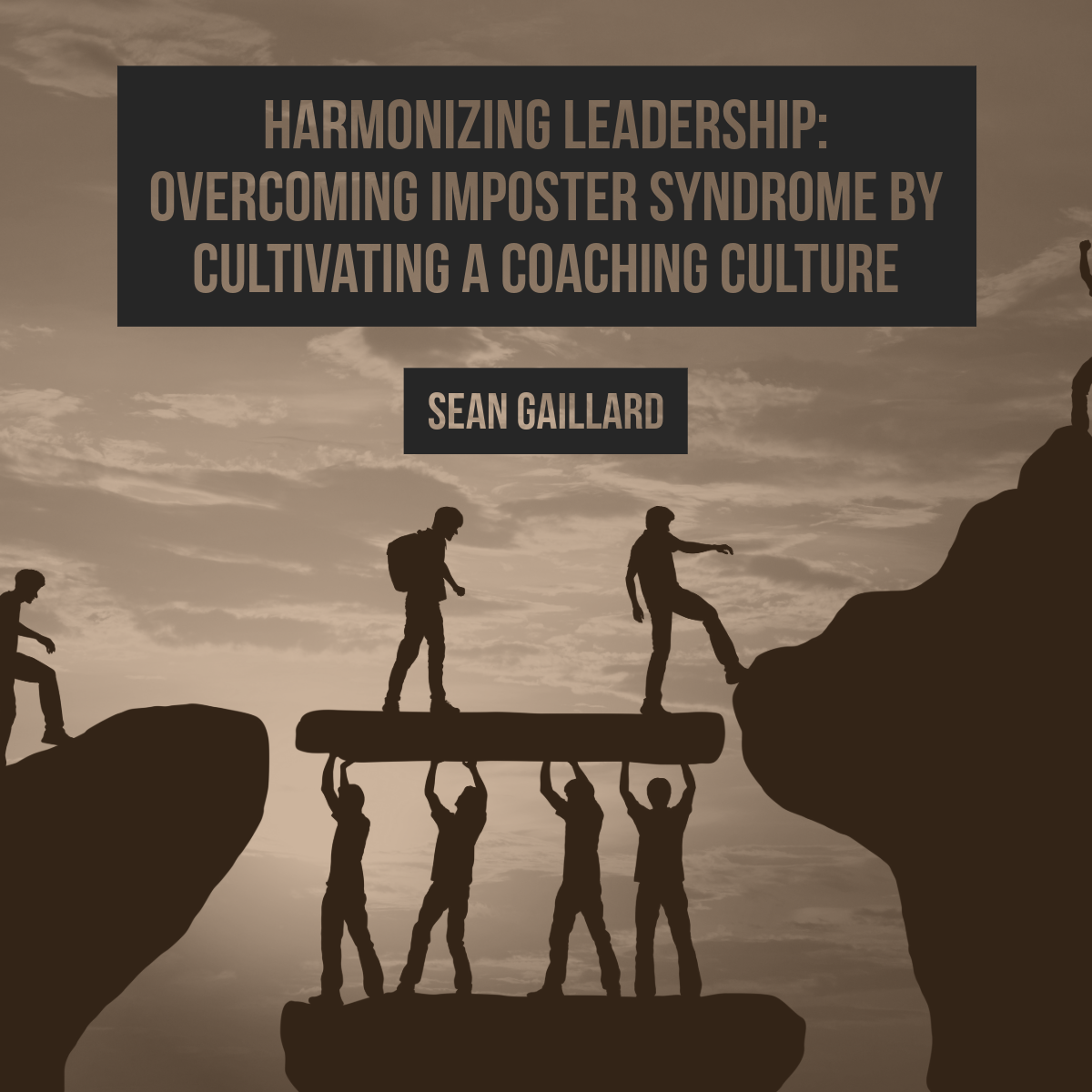
Leaders need to foster a culture of coaching, where everyone feels a sense of belonging and receives nurturing guidance. In turn, leaders must foster this same culture within themselves to preserve their well-being and leadership core. Creating this intentional space fosters productivity, creativity, collaboration, and innovation. A coaching culture can deflate the potency of Imposter Syndrome, ensuring that potential masterpieces aren’t lost like Brian Wilson’s initial vision for “Smile.”
Creating a Culture of Empowered Coaching
To cultivate this culture, consider these three moves:
Model Coaching for Ourselves: Create a daily inventory of positive impact. Daniel Pink suggests listing three ways we made daily progress in any endeavor. This practice reinforces self-worth and achievement. (Another takeaway from the Covey-Pink Webinar!)
Seek Thought Partners: Share ideas and seek support from trusted colleagues. Thought partners can provide invaluable perspective and encouragement.
Strengths-Based Inventory: Collaborate with your team to identify strengths and invite members to coach others in those areas. This differentiated support fosters a collaborative and empowered community.
As leaders, it’s crucial to give ourselves grace and recognize our accomplishments. By structuring space for coaching and seeking thought partners, we can empower ourselves and our organizations to overcome Imposter Syndrome. In doing so, we ensure that our collective potential is realized, and no masterpiece is left abandoned.
Embrace the journey, nurture your ideas, and empower others to do the same. Together, we can create a symphony of success.
Check out “Surf’s Up” by The Beach Boys to get a sense of the sheer symphonic beauty intended for the “Smile” album:
Embrace the Wichita Train Whistle: Taking a Creative Leap for Leadership Growth
In the frenetic pace of our daily leadership roles, it’s all too easy to become ensnared in the routine, the predictable, and the safe. However, summer presents a unique opportunity to break free from these confines and embark on a journey of creativity and innovation. Just as Mike Nesmith of The Monkees did with his audacious project, “The Wichita Train Whistle Sings,” leaders today can benefit immensely from taking a radical step away from their normal gigs. Let’s delve into how this seemingly offbeat album can inspire us to break away, iterate, reflect, and ultimately grow.
The Audacious Experiment of Mike Nesmith
In 1968, Mike Nesmith, best known as a member of The Monkees, embarked on a creative odyssey that was as bold as it was unconventional. He created “The Wichita Train Whistle Sings,” an album that was a commercial failure but a personal triumph. This instrumental album, filled with orchestral renditions of Nesmith’s compositions performed by members of the 1960s studio hired guns known as The Wrecking Crew, was a radical departure from his work with The Monkees. Despite its lack of commercial success, this project was a testament to Nesmith’s willingness to explore and innovate. It was a stepping stone that likely fueled his later creative endeavors, both with The Monkees and in his solo career.
Nesmith’s willingness to take this creative risk highlights an essential truth for leaders: sometimes, stepping away from the norm can ignite the spark of innovation and courage necessary for future success.
A Personal Journey: Teaching English at Governor’s School
Reflecting on my own experience, I recall the summers I spent teaching English at Governor’s School. This was a significant departure from my regular responsibilities as an educator and administrator. Immersing myself in this unique educational environment allowed me to view teaching and leadership through a new lens. It reinvigorated my passion for education and provided fresh perspectives that I could bring back to my usual role. I was ensconced with kindred spirits who truly wanted to collaborate and innovate. I was seen and valued by my colleagues for my gifts. I felt a true sense of belonging during this innovative teaching experience. This break from routine was not just refreshing but also instrumental in my professional growth.
Why Leaders Should Take a Creative Leap
Taking a break from your regular routine to engage in something entirely different is not merely a retreat; it’s a strategic move. Here’s why:
Fostering Innovation: Stepping into a new realm can break the cycle of conventional thinking, fostering a more innovative mindset.
Building Resilience: Embracing the unknown and overcoming new challenges builds resilience and adaptability.
Gaining Perspective: New experiences provide fresh perspectives, enabling leaders to approach their usual roles with renewed insight and creativity. Plus, we are always learning and growing and new experiences ignite that drive.
The Power of Stepping Away
Sometimes, we need a break from our usual grind to be away from ourselves and the usual people. This break is not an escape but a strategic pause. It’s a breath of fresh air that allows us to connect with new people, scenarios, and locales, ultimately making us better leaders, creators, and innovators. Leaders must take intentional steps to protect well-being and ignite creativity.
Four Action Steps for Leaders
To harness the power of stepping away and embracing the creative unknown, consider these four suggested action steps. Keep in mind that these are just suggestions. You are the captain of your journey towards more creativity and reflection. Don’t let these steps limit your creative pursuits.
Create a Personal Innovation Lab: Dedicate a week to immerse yourself in a field outside your expertise. For instance, experiment with virtual reality, explore robotics, or delve into advanced culinary arts. Document your journey, challenges, and breakthroughs.
Design a Community Project: Initiate a community-based project that combines your leadership skills with an entirely new setting. Whether it’s organizing a local art festival, starting an urban garden, or setting up a pop-up science fair, engage with new collaborators and diverse ideas.
Embark on a Creative Retreat: Plan a retreat that focuses on creative practices. Join a writer’s workshop in a different part of the world, take a silent meditation retreat, or enroll in a week-long immersive theater experience. This intensive focus on a singular creative pursuit can lead to profound personal and professional insights.
Explore AI: Plan intentional time to explore different modes of AI. Swivl has created an AI-generated reflection tool known as Mirror which is breaking new ground in a compelling and thoughtful way. AudioPen is another AI tool designed to help capture your words and reflections on a simple to use app. Magic School is a dynamic platform for educators and students that is saving time and generating creativity in a compelling way.
Conclusion
As leaders, the summer months offer a prime opportunity to step away from the ordinary and immerse ourselves in the extraordinary. Actively seek out creative pursuits this summer and use that time for learning, reflection, and growth. Channel your inner Mike Nesmith and embark on a creative venture that, while it may not yield immediate commercial success, will undoubtedly enrich your professional and personal growth. Embrace the Wichita Train Whistle philosophy: take bold, creative risks, and watch as your capacity for innovation and resilience flourishes.
Take this summer to connect with new people, explore unfamiliar locales, and dive into new scenarios. Bring back the invaluable experiences to your organization, which is lucky to have your dynamic leadership. Modeling and sharing your learning as a leader helps to build a culture of growth in your organization. That culture of growth will ignite others to take giant steps beyond their realm which only makes the organization better. What radical, creative leap will you take this summer? Dare to innovate, and let the journey transform you.
Check out a track from “The Wichita Train Whistle Sings” album:
Elizabeth Dampf returns to “The Principal Liner Notes Podcast” for a THIRD time! Elizabeth shares her compelling insights on leadership, imposter syndrome and discusses her new book, Dealing with Staff Turnover: Systems That Make Schools More Resilient in Times of Change.
An idea I had nurtured and built was dismissed. The specifics of the idea are not important for this blog. What matters is that I had a vision for the schoolhouse that wasn’t embraced by the faculty I served. This is a familiar scenario when you sit in the principal’s chair—you have an idea that energizes you and perhaps others. You see some momentum, but for various reasons, the idea fizzles out. It’s part of the leadership journey. Some ideas gain traction, while others don’t. I accept the responsibility for the failure of an idea to take hold. Maybe I didn’t communicate the ‘why’ compellingly, or perhaps my own arrogance hindered capacity-building with others. Regardless, we invest passion into our ideas. When we push beyond the mundane tasks and have-tos as school leaders and our passion isn’t accepted, it’s a challenge not to take it personally.
I bounced back from this setback. It wasn’t the first time my leadership heart had cracked, and it wouldn’t be the last. There would be future successes and failures. What made this particular loss resonate was the profound sense of loneliness. The principal gig is isolating as it is, but feeling the rejection of a cherished idea made it especially painful. At that time, my usual network of thought partners wasn’t available. I had to endure this one alone and dig deeply into my core to carry on.
Eventually, I was able to connect with a trusted thought partner. That person was able to listen to me, ask critical questions, and empower me to get back at it. I was fortunate that I had someone to help me navigate through the leadership blues and help me recalibrate my course.
Not every school leader has this resource. A 2022 study from NASSP cites that 77% of principals in the US desire to connect with other leaders facing similar challenges. School leaders faces many challenges alone bereft of authentic and consistent support.
The Loneliness of Leadership
They don’t teach you enough in “principal school” about how lonely leadership can be. That’s why nurturing your core as a leader and keeping your loved ones close is essential. It’s also crucial for school leaders to be open to coaching. Despite the title and position, no amount of status should make us look down on the need for a network of thought partners and coaching. School systems must develop intentional coaching networks for leaders due to the loneliness, anxiety, and fatigue that often accompany leadership roles. I’ve been fortunate to have valued thought partners and coaches in various leadership assignments. It’s vital that we, as leaders, find those trusted voices to harmonize with and share our thoughts, fears, and ideas. Every leader needs a coach, and there are many pathways to find one if your school district doesn’t provide one. Tapping into a Professional Learning Network is one way to find helpful school leaders willing to share their expertise.
The Power of Coaching
Coaching is essential for sustaining momentum and balance in a leadership role. We must be open to and accept the strengths of others to fill our buckets. Coaching helps us navigate the complex landscape of leadership, providing us with the tools to overcome challenges and celebrate successes. An effective coach offers a fresh perspective, helping us see our blind spots and areas for growth.
Three Ways for School Leaders to Seek Out Coaching Support
Join a Mastermind Group
Mastermind groups bring together like-minded leaders who support and challenge each other to grow. These groups provide a safe space to share ideas, seek advice, and gain new insights.
Engaging in a book study with fellow leaders allows for deep dives into relevant topics and provides a structured way to learn and discuss new concepts. It also fosters a sense of community and shared purpose.
Resource:ASCD Book Study Groups provide opportunities to explore educational leadership books with peers.
3. Utilize Virtual Coaching
Virtual coaching offers flexibility and access to a wide range of experts. Whether through video calls, webinars, or online courses, virtual coaching can provide valuable support and guidance tailored to your specific needs.
Resource:BTS Spark offers a wealth of resources and opportunities for individualized coaching.
Specific Resources for Coaching Support
The National Association of Elementary School Principals (NAESP)
NAESP offers mentoring programs, professional development resources, and a supportive community for elementary school leaders seeking guidance and support.
2. The Association for Supervision and Curriculum Development (ASCD)
ASCD provides numerous professional development opportunities, including book studies, webinars, and conferences that can help school leaders grow and connect with others.
3. The International Society for Technology in Education (ISTE)
ISTE offers resources and professional learning opportunities focused on integrating technology in education, supporting school leaders in leveraging digital tools for effective leadership.
4. The National Association of Secondary School Principals (NASSP)
NASSP provides leadership resources, professional development, and a network of support specifically for secondary school leaders.
5. BTS Spark
BTS Spark offers coaching and leadership development programs tailored for educators, focusing on personal and professional growth.
Leadership is a journey filled with sublime peaks and ponderous valleys. Embracing coaching can make the journey less lonely and more enriching. By seeking out coaching support, we sharpen our saw, maintain our leadership core, and continue to grow and inspire those we lead. In this ever-shifting landscape of Education especially felt with the onset of AI, it is vital for school leaders to have needed support.
I invite you to share your resources and ideas in the comments for this blog post. Let’s learn and grow together.
Tune in for the latest episode of “The Principal Liner Notes Podcast” featuring Alyssa Gallagher. Alyssa is a leadership coach with BTS Spark( https://btsspark.org/en-us). She recently co-authored the book, “Embracing MESSY Leadership: How 20,000 School Leaders Can Transform You and Your School.” You can learn more about her book here: https://btsspark.org/en-us/messyleadership.
There are sure signs of summer on the horizon. Summer resonates differently for many. For some, signs of summer lie within beach towels, vacation plans, and hurried trips to the bookstore for beach reads. For me, it’s always within the guise of music. Certain songs stand as emblems for the promise of a new season. “Blue Sky” by The Allman Brothers Band or the aptly named “Summer” by War serve as anthems for a season that brings extended time with family, road trips, and visits to the ice cream stand.
But for this unabashed Beatles fan, the true sign of summer is the “All Together Now: Top 100 Beatles Song Countdown” on Sirius XM’s The Beatles Channel. This annual broadcast event airs over Memorial Day weekend, playing nonstop, and I, of course, listen to it nonstop. I love engaging in internal debates—sometimes audible—with the song rankings. It’s a common practice and serves as my entry point into summer.
The other day, my wife and I were driving home. The Beatles Channel was playing in the background, and I was rambling on about some arcane Beatles fact, something my wife has heard probably a billion times. As I continued my Beatle bravado, “She’s Leaving Home” came on. This poignant song about a teenage runaway, beautifully sung by Paul McCartney with harmony from John Lennon, is backed by a harp and string ensemble. It’s a classic track from the “Sgt. Pepper’s Lonely Hearts Club Band” album, significant on so many levels. I even wrote a book about it.
As soon as I heard the opening notes, I promptly turned the song off.
Deb turned to me and asked why I had turned off a Beatles song. I replied, “New meaning to this song for us.” Deb immediately understood, and we both remembered the mix of joy and dread facing us.
Our daughter is heading to Spain for a college internship. She leaves in a few days. I’m turning to writing for some therapeutic reflection as I come to terms with my baby leaving the nest. I keep rationalizing—she’s smart, she’s about to turn 21, I’ve been through this with our oldest daughter living in Spain—she’s ready to conquer the world. Yet, I keep returning to memories of holding her as a baby, singing “Across the Universe” to lull her to sleep. She’s my baby, and I’m a hopeless Papa Bear.
I sadly recall the times I missed moments during her childhood. As a principal, I sometimes placed school duties before family. This particular daughter would lovingly admonish me not to read school books at home and encourage me to read fun books. It’s hard not to regret those lost moments with all three of my daughters. It’s even harder not to envision walking away from my dear daughter at the airport. But if, as a leader, you keep your family as the core priority, it’s a beautiful day. There will be moments when duty pulls at you, but those moments can never supersede precious time with loved ones. Defaulting to love, family, and care protects your well-being and ensures you can never go wrong.
I am thrilled my daughter is embarking on a new adventure in a new world. She’s excited about Spain, and I couldn’t be prouder. Though we will be separated by an ocean, I look forward to floating through the ocean of memories I have with her and to the continued moments we will share together.
Steps to Prioritize Family Time
As leaders, it’s easy to become consumed by our responsibilities. However, it’s crucial to remember that our families are our core support system. Here are some actionable steps to ensure you prioritize family time:
Schedule Family Time: Just as you schedule meetings and work commitments, schedule regular family time. Block out evenings or weekends to spend with your loved ones.
Be Present: When you’re with your family, be fully present. Put away your phone, close your laptop, and focus on the moment.
Create Traditions: Establish family traditions, whether it’s a weekly movie night, a monthly outing, or an annual vacation. These traditions create lasting memories.
Involve Your Family: Share your work challenges and successes with your family. This inclusion helps them understand your responsibilities and allows them to celebrate your achievements with you.
Set Boundaries: Learn to say no to work demands that encroach on family time. Setting clear boundaries helps maintain a healthy work-life balance.
By taking these steps, you can ensure that your role as a leader does not come at the expense of your family. Prioritizing family time fosters stronger relationships and enhances your overall well-being, making you a better leader both at work and at home.






 Leadership Liner Notes: Sean Gaillard