Earlier this week, Beatles fans around the world commemorated the 56th anniversary of their final live performance—the legendary rooftop concert atop Apple Records. Captured in Get Back and memorialized in Let It Be, this moment was their live swan song, a testament to creative courage and collaboration.
Last week, I wrote about Rooftop Moments—the bold, defining moments that school leaders should cultivate with their teams. But there’s another, lesser-known moment in Beatles history that happened the day after that performance. A simple yet profound leadership move.
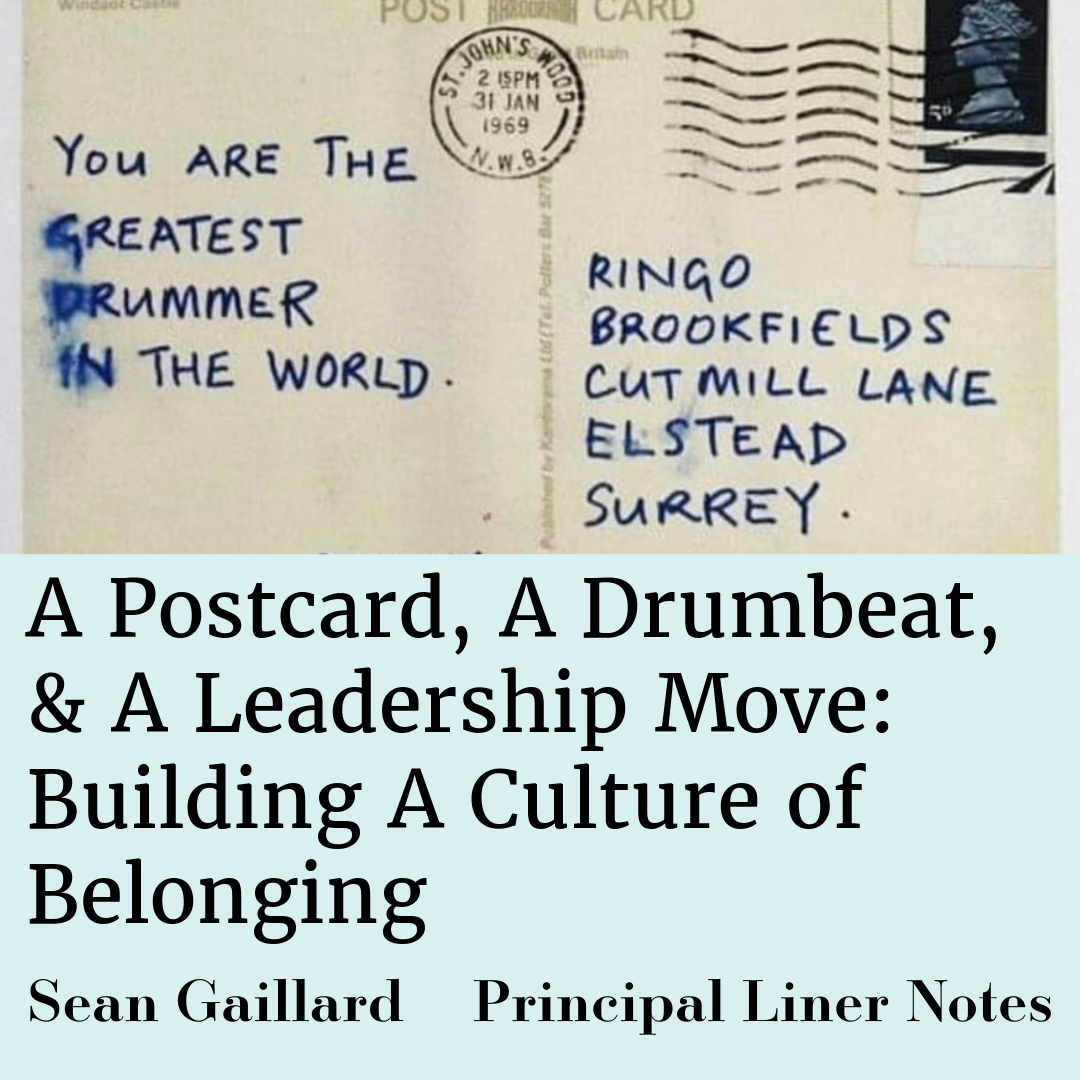
On January 31, 1969, Paul McCartney sent Ringo Starr a postcard that read:
“You are the greatest drummer in the world. Really.”
This wasn’t a public accolade or a grand gesture. It was a handwritten note—one musician reaching out to another, reinforcing connection and belonging. A small moment, but a significant one.
As school leaders, we talk about culture-building, trust, and recognition. Shoutouts in memos or emails are a start, but I’ve come to realize they often feel transactional, fleeting. Teachers deserve more than a quick mention in a newsletter that might be skimmed and forgotten. True belonging is built in the quiet, intentional moments—through handwritten notes and meaningful feedback.
The Power of a Handwritten Note
At Charles England Elementary, we start each faculty meeting with Praise and Thanks—a time to share shoutouts and gratitude. It sets a positive tone and creates psychological safety. But not everyone feels comfortable speaking in a large group, and exhaustion can sometimes make participation hard.
At a recent meeting, I placed blank Energy Bus-themed notes (inspired by Jon Gordon’s book) on tables and asked staff to write a message of gratitude to a colleague. No prompts, no pressure—just a moment to reflect and uplift. As I looked around, I saw teachers smiling, some wiping away tears, completely immersed in the moment. The next day, those notes found their way into mailboxes, and the ripple effect of encouragement began.
A handwritten note isn’t just ink on paper—it’s a tangible reminder that someone sees you. That your work matters. That you belong.
The Leadership Move: 30-Second Feedback
Another way we are reinforcing belonging is through 30-second feedback, a practice inspired by Mike Rutherford’s Seven Tools for Developing Teachers and Teaching (link). This simple but powerful strategy involves stopping into a classroom, identifying one specific positive thing, and sharing that feedback—either verbally or in a quick note.
Here’s what makes it work:
- It’s not evaluative—just pure affirmation of great teaching.
- It’s quick but intentional—a handwritten note, a short hallway chat, or a sticky note left on a desk.
- It highlights strengths—no jargon, no checklist, just celebrating a moment of impact.
- It builds connection—leaders engaging with teachers in a meaningful way, beyond scheduled observations.
I keep a pocketful of blank Post-its and make it a goal to visit at least three classrooms a day, leaving behind 30-second feedback. It’s transformed how teachers feel about their work. They light up, just like I imagine Ringo did when he read Paul’s postcard.
Four Ways to Build Belonging with Handwritten Notes & 30-Second Feedback
- Commit to Daily Touchpoints
- Visit three teachers a day and leave either a quick verbal or written affirmation.
- Track your visits to ensure everyone receives meaningful recognition.
- Use Specific Praise
- Instead of “Great lesson!” try: “The way you engaged students in discussion today was fantastic. I could see their excitement!”
- Authentic, detailed praise carries weight.
- Make Handwritten Notes a Habit
- Keep blank notecards or sticky notes handy.
- Surprise staff with a handwritten note in their mailbox or taped to their door.
- Encourage Peer-to-Peer Recognition
- Incorporate note-writing into staff meetings or PLCs.
- Provide postcards or themed templates to make it easy and fun.
A Legacy of Belonging
Think about the impact: just 90 seconds a day dedicated to 30-second feedback builds a culture where teachers feel seen, valued, and empowered. Multiply that over a school year, and you’ve created an environment where trust and belonging flourish.
As Meghan Lawson (link) reminds us in Legacy of Learning, these small wins shape the culture of a school. They’re the moments that keep teachers inspired and engaged.
56 years later, I’m still moved by a simple postcard between bandmates. It reminds me that leadership isn’t always about the big moves—it’s about the small, consistent moments of connection that build something lasting. Just like The Beatles, our legacy as educators is one of collaboration, impact, and belonging.
What’s your next leadership move? Maybe it’s as simple as writing a note.
 Leadership Liner Notes: Sean Gaillard