Light Our Fire: Leadership, Problem-Solving, and the Sound of Collaboration

Recently, I came across a clip on YouTube of the late Ray Manzarek of The Doors telling the origin story of their 1967 hit Light My Fire. It’s one of those creative origin stories that just sticks. Ray talked about how each band member added a unique musical flavor that transformed the song into something iconic.

Guitarist Robby Krieger brought his flamenco background and wrote the core of the tune. John Densmore layered in a Latin beat on drums. Jim Morrison added a poetic and haunting verse about a funeral pyre. Ray himself took a page from Bach to create that unforgettable keyboard intro. All these ingredients came together like a great jam session, different parts working in harmony to create something innovative, inspired, and bold.

The Doors didn’t play it safe. They took a leap. They trusted each other. And they built something greater than the sum of their parts. That story got me thinking about what it means to lead and solve problems in a school.

When it came time to revise our master schedule at the school I serve as principal, the challenge was real. We needed to maximize instructional time and expand opportunities for intervention. But we didn’t tackle it in isolation. We did it together.

Over two weeks, I brought the challenge to our Instructional Leadership Team, the School Improvement Team, and several staff and teacher partners. These weren’t just quick drop-ins or top-down mandates. These were real conversations, one-on-one meetings, small group huddles, and full team sessions. I started each one with a simple design thinking prompt: How Might We…?

I’ll never forget one particular session with the School Improvement Team. We were all gathered around the same table. Teachers led the discussion. We weighed pros and cons. Ideas flew. Everyone added a perspective, and each voice mattered. There was no single author of the final schedule. Just like The Doors building Light My Fire, each person added a line, a beat, a riff.

Once we landed on a draft, I shared we’d treat it as a trial run. That removed pressure and opened space for feedback. We gave it a shot, came back, reflected, and adjusted. And here’s the best part—it worked. Not because it was perfect, but because it was owned. Teachers had skin in the game. Everyone contributed. Everyone collaborated. Everyone made it better.

This process reminded me that these collaborative moments between teachers and school leaders must echo what we want our students to experience. According to the World Economic Forum, one of the top job skills for 2025 is complex problem solving. Our students won’t master that skill from worksheets alone. They’ll learn it because we model it. Because we live it. Because we solve problems together.


3 Action Steps To Take Build A Collaborative Problem Solving Culture

Leadership is about making space for others to create. It’s about asking How Might We instead of You Must. It’s about letting teachers jam. Here are three ways schools can start building that kind of collaborative problem-solving culture:

1. Create Solution Building Time
Set aside time during the month for small, creative think tanks. Bring together teachers, staff, and leaders in a low-pressure space to brainstorm, ideate, and prototype solutions. Use design thinking prompts. Use sticky notes. Use music. Just make it fun and focused.

2. Launch #InstantPD Moments
Give teachers the mic. Once a week, host a 15-minute pop-up PD session where a teacher shares a strategy that works. These micro-sessions build confidence, spread great practice, and create the conditions for more teacher-led innovation.

3. Use the Power of the Trial Run
When testing something new, give permission to try without pressure. Frame it as a pilot. Invite feedback. Circle back. This builds trust and opens the door for authentic input that shapes real change.


Whether it’s jamming with colleagues on a new idea or leading a full schedule redesign, when we bring people together, we get better. We build trust. We spark creativity. We light fires.

Let’s keep jamming. Let’s keep solving. Let’s keep leading like it matters.

This is your latest #LeadershipRiffs moment from the desk of a school principal who still believes in the power of collaboration, creativity, and the beautiful noise we make when we lead together.

Keep leading with rhythm. Keep building with heart.
Watch the Ray Manzarek Clip

Shadows of Future Potential: In Appreciation for Teachers

In an old comic book from my childhood, there’s a powerful image that has always stayed with me. It was an issue of Detective Comics that told the origin story of Batman. A young Bruce Wayne walks into Wayne Manor, ready to begin his hero’s journey. As he enters, his shadow stretches behind him—not as a boy, but as the full-formed silhouette of Batman. It was a simple panel, but it carried a profound truth: even in our earliest steps, the shadows of our future potential are already taking shape.

This image made me think about our calling as educators. Every day, we walk alongside students and teachers who are living their own origin stories. Some are just starting out, unsure of who they are or where they belong. Yet within them, we can glimpse the shadows of what they may become—leaders, artists, scientists, changemakers, or quiet heroes who make the world better in unseen ways.

This week is Teacher Appreciation Week, a moment to celebrate the educators who see those shadows before anyone else does. Teachers have a remarkable gift—a kind of superpower. They tune into the potential of their students and help them believe in it, even when the students can’t yet see it for themselves. Our teachers transform the impossible into the possible. They are not just instructors; they are cultivators of hope.

As school leaders, we are called to be architects of that hope. Our job is to build cultures where teachers are empowered to do their best work—where they can create the conditions for students to discover who they are meant to be.

I’ll never forget my fifth-grade teacher, Mrs. McMonagle. I was a new student, the only Black child in the class, adjusting to a new school in a new state. I felt lost—alienated, unsure, and afraid. But Mrs. McMonagle saw something in me that I couldn’t see in myself. She created a space where I felt seen and welcomed. She introduced me to the joy of writing, literature, and even encouraged my growing love for The Beatles. She pushed me, challenged me, and inspired me. I am forever grateful for the way she believed in me and gave me a sense of belonging.

Everyone carries the shadow of future potential. Teachers have a special sense for detecting those shadows and helping students realize the greatness within them. This week, and every week, let’s honor and celebrate that gift.

Here’s to the ones who chose to build trajectories of hope in our classrooms. Here’s to the ones who see the future before it arrives.

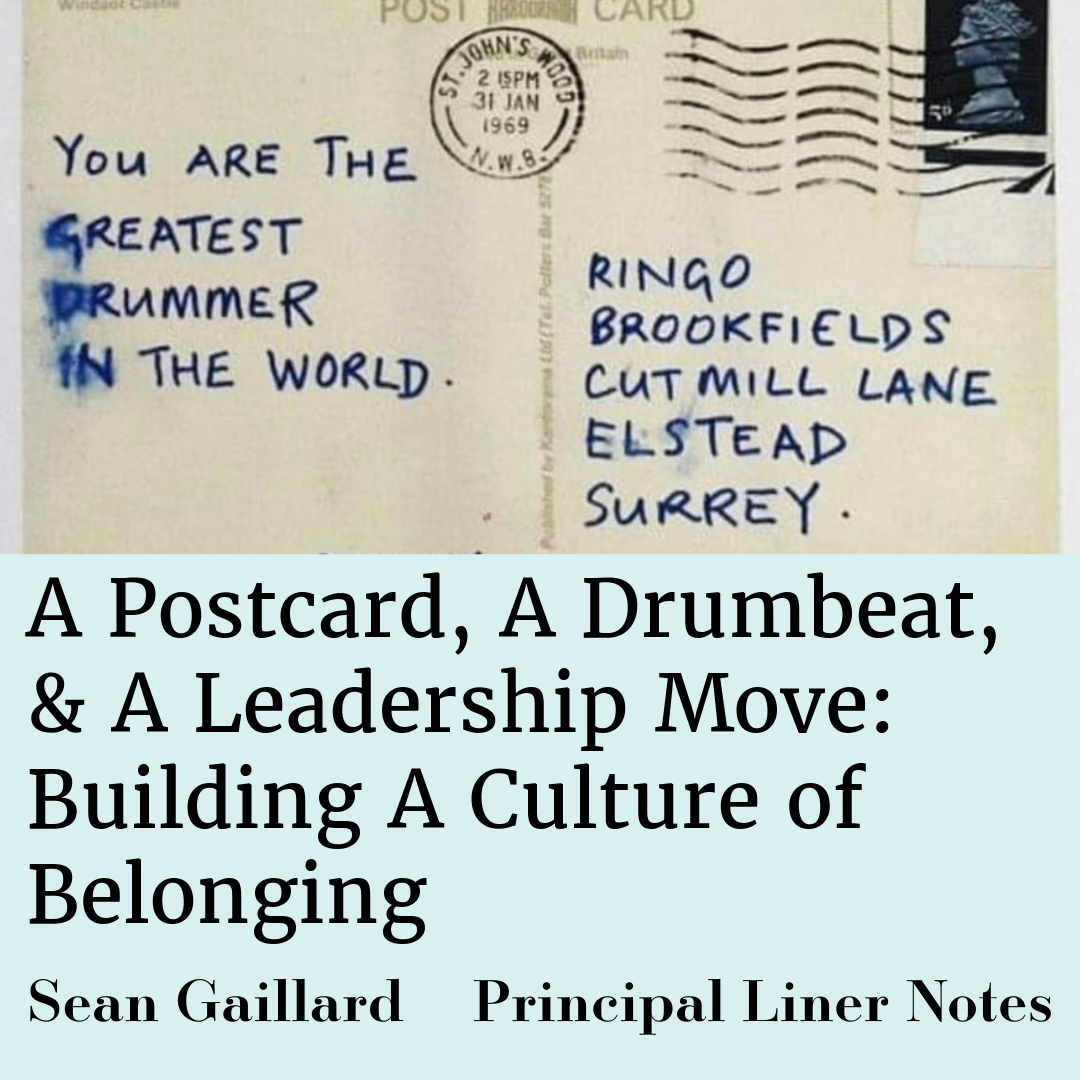
A Postcard, A Drumbeat, and A Leadership Move: Building a Culture of Belonging

Earlier this week, Beatles fans around the world commemorated the 56th anniversary of their final live performance—the legendary rooftop concert atop Apple Records. Captured in Get Back and memorialized in Let It Be, this moment was their live swan song, a testament to creative courage and collaboration.

Last week, I wrote about Rooftop Moments—the bold, defining moments that school leaders should cultivate with their teams. But there’s another, lesser-known moment in Beatles history that happened the day after that performance. A simple yet profound leadership move.

On January 31, 1969, Paul McCartney sent Ringo Starr a postcard that read:

“You are the greatest drummer in the world. Really.”

This wasn’t a public accolade or a grand gesture. It was a handwritten note—one musician reaching out to another, reinforcing connection and belonging. A small moment, but a significant one.

As school leaders, we talk about culture-building, trust, and recognition. Shoutouts in memos or emails are a start, but I’ve come to realize they often feel transactional, fleeting. Teachers deserve more than a quick mention in a newsletter that might be skimmed and forgotten. True belonging is built in the quiet, intentional moments—through handwritten notes and meaningful feedback.

The Power of a Handwritten Note

At Charles England Elementary, we start each faculty meeting with Praise and Thanks—a time to share shoutouts and gratitude. It sets a positive tone and creates psychological safety. But not everyone feels comfortable speaking in a large group, and exhaustion can sometimes make participation hard.

At a recent meeting, I placed blank Energy Bus-themed notes (inspired by Jon Gordon’s book) on tables and asked staff to write a message of gratitude to a colleague. No prompts, no pressure—just a moment to reflect and uplift. As I looked around, I saw teachers smiling, some wiping away tears, completely immersed in the moment. The next day, those notes found their way into mailboxes, and the ripple effect of encouragement began.

A handwritten note isn’t just ink on paper—it’s a tangible reminder that someone sees you. That your work matters. That you belong.

The Leadership Move: 30-Second Feedback

Another way we are reinforcing belonging is through 30-second feedback, a practice inspired by Mike Rutherford’s Seven Tools for Developing Teachers and Teaching (link). This simple but powerful strategy involves stopping into a classroom, identifying one specific positive thing, and sharing that feedback—either verbally or in a quick note.

Here’s what makes it work:

  • It’s not evaluative—just pure affirmation of great teaching.
  • It’s quick but intentional—a handwritten note, a short hallway chat, or a sticky note left on a desk.
  • It highlights strengths—no jargon, no checklist, just celebrating a moment of impact.
  • It builds connection—leaders engaging with teachers in a meaningful way, beyond scheduled observations.

I keep a pocketful of blank Post-its and make it a goal to visit at least three classrooms a day, leaving behind 30-second feedback. It’s transformed how teachers feel about their work. They light up, just like I imagine Ringo did when he read Paul’s postcard.

Four Ways to Build Belonging with Handwritten Notes & 30-Second Feedback

  1. Commit to Daily Touchpoints
    • Visit three teachers a day and leave either a quick verbal or written affirmation.
    • Track your visits to ensure everyone receives meaningful recognition.
  2. Use Specific Praise
    • Instead of “Great lesson!” try: “The way you engaged students in discussion today was fantastic. I could see their excitement!”
    • Authentic, detailed praise carries weight.
  3. Make Handwritten Notes a Habit
    • Keep blank notecards or sticky notes handy.
    • Surprise staff with a handwritten note in their mailbox or taped to their door.
  4. Encourage Peer-to-Peer Recognition
    • Incorporate note-writing into staff meetings or PLCs.
    • Provide postcards or themed templates to make it easy and fun.

A Legacy of Belonging

Think about the impact: just 90 seconds a day dedicated to 30-second feedback builds a culture where teachers feel seen, valued, and empowered. Multiply that over a school year, and you’ve created an environment where trust and belonging flourish.

As Meghan Lawson (link) reminds us in Legacy of Learning, these small wins shape the culture of a school. They’re the moments that keep teachers inspired and engaged.

56 years later, I’m still moved by a simple postcard between bandmates. It reminds me that leadership isn’t always about the big moves—it’s about the small, consistent moments of connection that build something lasting. Just like The Beatles, our legacy as educators is one of collaboration, impact, and belonging.

What’s your next leadership move? Maybe it’s as simple as writing a note.

Momentary Awareness: Leadership Riffs for Belonging

The other day, I had a text conversation with a friend who was transitioning to a new job opportunity. While my friend was leaving on good terms, it saddened me to hear that the departure went unacknowledged—no farewell, no simple goodbye. This person, whom I hold in high regard, experienced a silent exit. It struck me deeply and reminded me of the power of moments in our professional lives.

As a principal, I believe in the significance of building intentional bookends in service to others. These bookends, moments that begin and conclude a journey, are crucial in creating a tapestry of experiences that resonate. I developed this habit from my days in a band, where I would help arrange setlists to craft an experience for the audience. We’d start strong, set the tone, and build to a powerful conclusion that lingered long after the final note. I carried the same approach into my lesson planning as an English teacher.

As leaders, we are called to foster a culture of belonging for the people we serve. One key to building that sense of belonging is being mindful of the moments. How we welcome our people is just as important as how we conclude things. In the midst of the day’s chaos—meetings, deadlines, hurried communications—it’s easy to lose sight of this. But nothing is more important than investing time in making sure moments are meaningful for those we serve.

Whether we’re creating an upbeat orientation for new team members or wishing someone well as they move on to a new opportunity, it’s essential to be intentional. These interactions should be personal and meaningful, honoring the role that person played in our organization. We want them to leave with a positive narrative about their experience. More importantly, as leaders, we want to be decent, kind, and supportive.

Several years ago, I was captivated by The Power of Moments by Chip Heath and Dan Heath. The book emphasizes the impact of meaningful experiences in organizations, making it a must-read for any leader. One quote that resonates with me is, “Our lives are measured in moments, and defining moments are the ones that endure in our memories.” As school leaders, we must invest in creating moments that will echo in the lives of those we serve, ensuring that our teachers and students walk away from our schools feeling connected and a true sense of belonging. How we welcome is just as important as how we bid farewell.

Here are four ways school leaders can build meaningful moments that serve as bookends for the teachers and students they serve:

  1. Morning Meetings: Start the day with intention by hosting Morning Meetings. This time can be used to set a positive tone, share goals, and build a sense of community. It’s a moment where everyone can feel seen and heard, setting the stage for a productive and connected day.
  2. #CelebrateMonday: Kick off the week with #CelebrateMonday. This initiative is about starting each week on a positive and inviting note for all stakeholders. Recognize achievements, share uplifting stories, and set the tone for the days ahead. It’s a simple yet powerful way to create an environment where everyone feels valued and motivated.
  3. Closing Meetings for Students: As the school day ends, hold a Closing Meeting for Students. This is an opportunity to reflect on the day’s successes, address any challenges, and leave students with an empowering message. It ensures that they leave on an uplifting note, carrying that positive energy into their homes and communities.
  4. Personalized Farewells: When someone leaves your school, whether a student, teacher, or staff member, make it a point to acknowledge their departure in a meaningful way. A personalized farewell, whether it’s a small gathering, a handwritten note, or a simple but sincere goodbye, honors their contributions and ensures they leave with a sense of closure and appreciation.

Moments are intentional moves that must align with the vision and mission but must also resonate with the hearts of the people we get to serve and support. As leaders, let’s commit to creating those defining moments that will endure in the memories of those we lead