Somewhere in the Universe, Someone Believes in You Completely

As I write this, I’m sitting with the weight of another school year nearing its close—reflective, grateful, and searching for meaning in the midst of it all.

I’ve been a principal for 16 years. I’ve poured myself into school after school, often the ones that needed the most care. I’ve stood on stages, been a finalist for NC Principal of the Year, written a book from my heart, and still—there are moments, like now, when I wonder if it’s all making a difference.

Maybe you’ve felt that too.

Lately, I’ve been thinking about The Beatles.
Specifically, August 29, 1966—their last public concert at Candlestick Park in San Francisco. They had reached a breaking point. They felt like they weren’t playing well.  Between public backlash over John Lennon’s remarks about The Beatles being more popular Jesus Christ and diplomatic fallout in the Philippines from unintentionally snubbing the President and First Lady there, the pressures became too much. So they did something radical—they stepped back. No farewell tour. No grand finale. Just a quiet pause.

Each band member took time to rediscover who they were beyond the noise. John went to Spain to film How I Won the War. Paul collaborated with George Martin on a film score. George immersed himself in sitar studies with Ravi Shankar in India. Ringo stayed home to be with his family.

Then, something beautiful happened.

They returned—not to the stage, but to the studio. And from that retreat came a wave of brilliance: Strawberry Fields Forever, Penny Lane, Sgt. Pepper’s Lonely Hearts Club Band.

All of it began with a pause. A reset. A reclaiming of identity. A spark of innovation that changed the face of Music.


As leaders, we may not have world tours or screaming fans, but we do know what it feels like to carry the weight of expectations and the constant drumbeat of demands. In that rhythm, we can forget to care for ourselves in the same way we care for others.

We all crave connection. We all crave belonging.
And while we work so hard to create that for our teams, our students, and our communities—we must also remember to create it for ourselves.

Take the walk.
Play the record.
Write what’s on your heart.
Give yourself the same grace you offer to everyone else.


It’s easy to fall into the comparison trap—scrolling through highlight reels, seeing the accolades, the applause, the polished smiles. I’ve been there too. But the truth is, none of that defines your worth or your purpose.

Your worth is in the quiet moment with a student who needed someone to believe in them.
It’s in the coaching conversation that sparked a teacher’s growth.
It’s in the way you show up—consistently, compassionately, courageously.

You may not always see the impact. But it’s there.


If you’re at a crossroads, unsure of what’s next, or simply longing to feel grounded again, let this be your reminder:

Somewhere in the universe, someone believes in you completely.

Not for your title.
Not for your credentials.
But for who you are. For how you lead with heart. For how you care, even when it’s hard.

You matter.

Your leadership matters.

Your impact matters, and it will continue to do so in ways seen and unseen.
Echoes of Legacy: Reflecting on Impact, Vision, and What We Leave Behind

The other day, I was meeting someone for the first time, and—no surprise—The Beatles came up in conversation. I found myself doing what I often do: searching for shared connection, for kindred sparks, for the chords that bring people together.

As I sipped from my well-worn Let It Be coffee mug, I found myself reflecting—not just on my love for the band, but on why I love them so deeply. My thoughts landed in the final scene of The Beatles Anthology documentary, where each Beatle offers a summation of the band’s journey. Paul McCartney’s words have always stuck with me:

“I’m really glad that most of our songs were about love, peace, and understanding.”

That’s the legacy of The Beatles. A body of work grounded in themes that transcend time and trend. Love. Peace. Understanding. Their music is an echo that still resonates across generations, creating belonging, joy, and reflection in all who listen.

That’s the power of legacy.

As I wrap up my 33rd year in education, I find myself tuning in to that word—legacy—and asking what it means in the context of a school year. I think of my good friend, Meghan Lawson, and her powerful book, Legacy of Learning. She writes:

“What you do in your classroom and school matters. In a big way. We are always making an impact on students and colleagues, whether good or bad.”

Legacy is not about ego, applause, or glory. It’s not about showmanship or staged stunts dressed up as leadership. Legacy is about the quiet echoes we leave behind in the lives we’ve touched—the ones who are better because we showed up and stayed the course.

In my office hangs a photo of Walt Disney standing in the middle of a swamp in central Florida, surrounded by blueprints for what would one day become Walt Disney World. He never lived to see it finished. But his vision endured, carried forward by a team who believed in the mission.

I often show that photo to my leadership teams—not because I want us to build castles, but because I want us to believe in what’s possible. It’s a reminder that legacy is built not in isolation, but in collaboration. It takes vision, belief, and a team that leans into each other’s strengths.

This year, I invited our Instructional Leadership Team and School Improvement Team to create an Accomplishment Inventory—a running list of all we had done that positively impacted students. It was a celebration of small wins and shared progress. It was a testament to the legacy we’re building together, moment by moment, step by step.

As this school year nears its close, I offer these reflections and action steps for you to consider:

🎧 Reflect with Intention
Take 10 minutes. Journal. Ask yourself: What is the legacy I’ve left this year? Where did I show up? Who did I lift?

📷 Find Your “Swamp” Photo
Print or display a photo that symbolizes your long-term vision—the unfinished dream. Revisit it when you need clarity or courage.

📋 Create Your Accomplishment Inventory
Alone or with your team, write out the moments that made a difference. Celebrate them. Share them. Build on them.

Legacy isn’t what we say about ourselves. It’s what others say when we’re not in the room. It’s the tone we set, the hope we pass on, the lives we quietly change.

So tune in. Reflect. And keep building. Your echo matters.

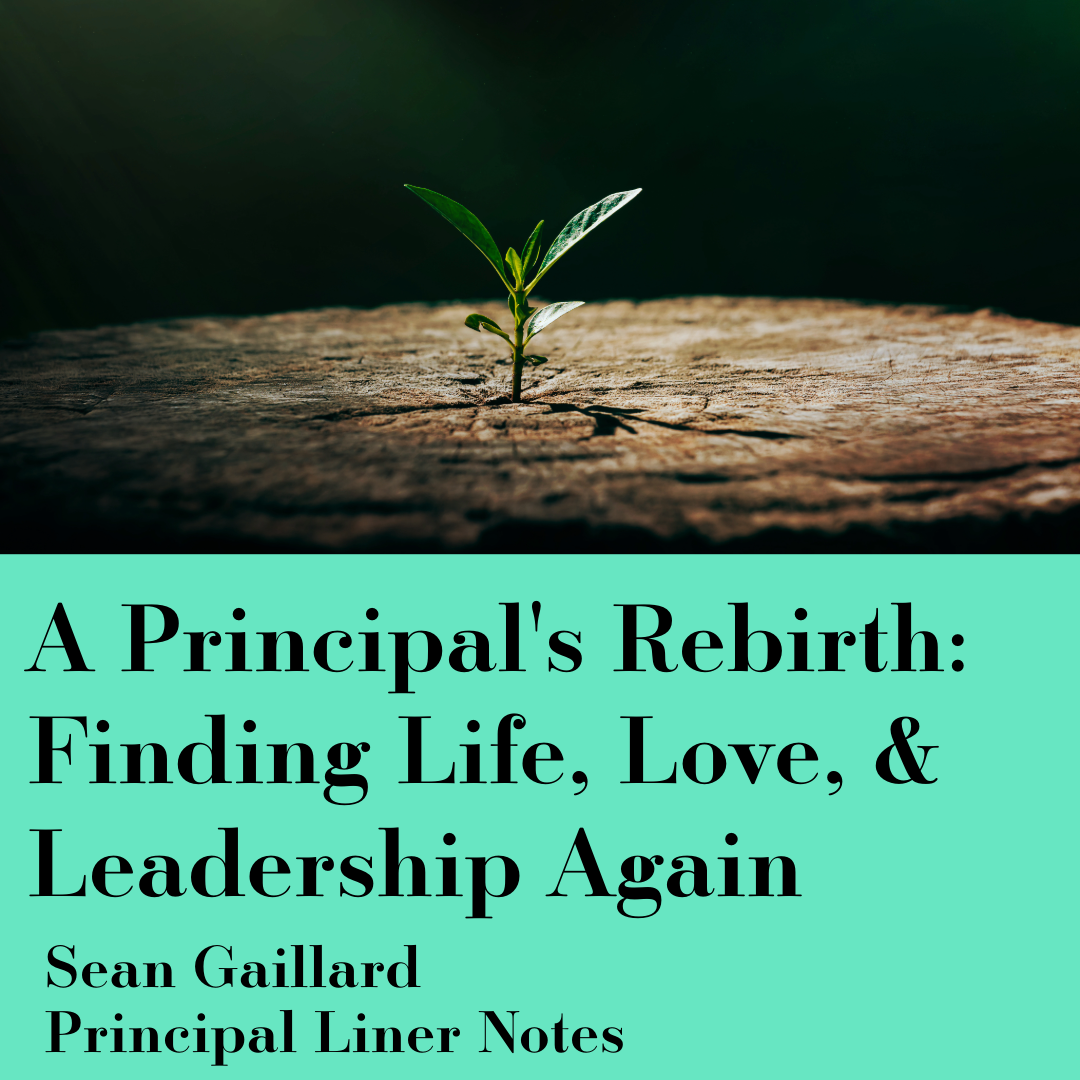
A Principal’s Rebirth: Finding Life, Love, and Leadership Again

“Call 911.”

These were the last words I heard from our SRO before everything went dark and I fell to the ground.

This was not just a sudden medical emergency—it was the culmination of years spent silently carrying anxiety, stress, and deepening depression. It was the moment my body forced me onto a new path, the first steps toward rebirth.

Last year, I experienced a traumatic health crisis, what doctors described as a cardiac episode triggered by years of relentless anxiety, chronic chest pains, and suffocating Imposter Syndrome. It happened at school, amid the daily chaos and pressures we face as leaders. My body simply gave out.

When I regained consciousness, I was surrounded by paramedics and the incredible members of my office staff, working rapidly to keep me alive. Tears filled my eyes as fear overtook me—I genuinely believed I might never see my wife and our three beautiful daughters again. Breathing was impossible, and the chest pains intensified.

As they rolled me into the ambulance, a flood of thoughts rushed in. I saw my family—moments missed, memories sacrificed. My heart ached thinking of the countless times I’d prioritized my work over my loved ones, placing duty to my school ahead of duty to my family and, ultimately, myself. I called out to God, and then darkness returned.

When I awoke in the hospital, tethered to various medical devices, my heart eased the moment I met my wife’s calming eyes. My oldest daughter was already there, confidently navigating conversations with doctors, demonstrating remarkable strength and poise. Pride overwhelmed me—but so did shame. As her father, I should have been protecting her, not the other way around.

It’s been a full year since that fateful day—a journey of healing, renewal, and rediscovery. My physical health and blood pressure are now managed carefully. Regular therapy sessions every other week have transformed my outlook, grounded in the love and unwavering support of my family and a few deeply cherished friends who check in weekly. Every day, I practice intentional self-care, finally understanding that my identity as a principal should never overshadow my humanity.

As the creator of #CelebrateMonday, I recognize now that I wasn’t celebrating myself. I leaned too heavily on fleeting PLN connections, seeking external validation while overlooking the unconditional, immediate love from my family. While my PLN gifted me a handful of true friendships, I realize my greatest strength comes from being fully present with those who truly cherish me. In pursuit of acceptance, I had unknowingly compromised my core values as a leader.

This past year has gifted me profound clarity and growth. I’ve learned to distinguish between genuine leadership and the seductive illusion often sold through polished selfies, viral gimmicks, and ego-driven platforms. I now seek authenticity, humility, and depth, distancing myself from empty slogans and superficial validations. I am grateful being at a new assignment returning to a school district I truly love and feel sincere support, empowerment, and belonging.

This month marks a year since my rebirth—a new birthday I honor with deep gratitude. My perspective is forever changed. I embrace each moment ahead with my family and true friends, choosing authenticity over illusion, presence over performance, and self-care over self-neglect.

Here’s to life renewed, leadership redefined, and love fully embraced.

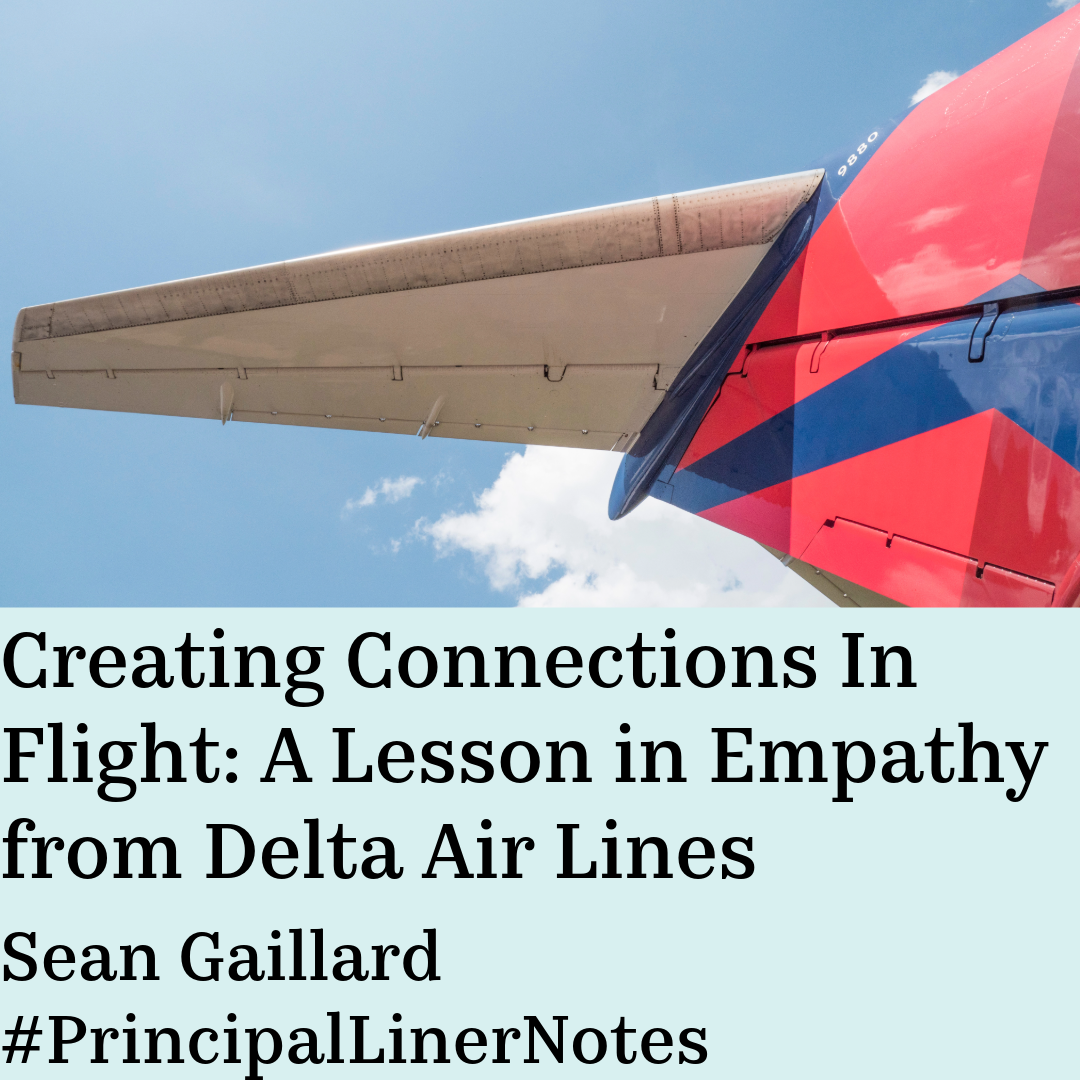
Creating Connections in Flight: A Lesson in Empathy from Delta Airlines

As many of my close friends and family know, I am a nervous flyer. Over the years, I have had to face this fear head-on, seeking the support of a therapist and using strategies, including medication, to overcome the challenges of flying. While it hasn’t been easy, I’m proud of my ongoing efforts to confront this fear.

Flying isn’t something I do often—time and expense tend to be barriers—but recently, I had the opportunity to attend the National Education Leaders Workshop in Atlanta. It was an incredible event, full of ideas on reimagining teaching and learning in the schoolhouse. To experience it, though, I had to book a flight.

Before the trip, I reviewed my strategies with my therapist and felt optimistic. For the first time in a long while, I didn’t feel that familiar pit of anxiety in my stomach as I prepared for the flight. Instead, I felt calm anticipation.

As I sat at the gate with my colleagues, I began to notice small, powerful moments unfolding around me. At one point, a pilot walked out—likely heading for a quick coffee—and spotted two young boys playing with a toy plane. He knelt down to greet them warmly, telling them how excited he was to have them on his flight. Then, he invited them and their parents to visit the cockpit before takeoff. Later, as I boarded, the gate agent greeted each passenger—including me—by name. Touched by her effort, I made sure to thank her personally, using her name from her nametag.

These intentional acts of connection helped dissolve any lingering nervousness I had about the flight. They also served as a powerful reminder of the importance of small, meaningful gestures in leadership. Witnessing those moments inspired me to think about how such intentional actions could foster trust and belonging in the schoolhouse, reaffirming my commitment to creating a culture of connection in our community. The flight itself was smooth, and I even shared a lighthearted exchange with the pilot, who joked about our shared baldness. These small yet meaningful moments reminded me of a recent book I read, Unreasonable Hospitality by Will Guidara. It’s a must-read for leaders who want to create cultures of connection and build meaningful moments within their organizations. Check out the book here.

Delta Airlines demonstrated a commitment to humanity and empathy during that flight, and it left a profound impact on me. Their intentional gestures—from personalized greetings to creating special moments for passengers—highlight the power of thoughtful actions. As a school leader, this translates to practices like ensuring every student and teacher feels personally welcomed, celebrating achievements in visible ways, and creating opportunities for connection that make each person feel valued and supported. Their thoughtful gestures weren’t just routine—they were intentional, and they made me feel seen and valued. As a school leader, this experience reinforced my belief in the power of small yet meaningful actions to create a culture of connection in the schoolhouse.

Four Action Steps for Building Connections in Your Schoolhouse

  1. Greet Students and Teachers at the Door Be present and intentional at the start of the day. A warm greeting at the door sets a positive tone and ensures that everyone—students and teachers alike—feels seen and valued.
  2. Write Handwritten Notes Take time to write notes to teachers, celebrating the amazing things you see happening in classrooms. A personal, sincere message can uplift and inspire.
  3. Make Positive Phone Calls Home Share good news with families about their children. A positive phone call can build trust and strengthen relationships with parents and guardians.
  4. Surprise Your Team with Small Acts of Kindness Bring a favorite coffee order, leave a sticky note of encouragement on a desk, or organize a quick celebration to recognize milestones. These unexpected gestures build morale and community.

Building Psychological Safety

The Delta crew had no idea I struggled with flight anxiety, but their thoughtful actions created an environment where I felt safe and at ease. Similarly, in our schools, we may not always know the struggles our students, teachers, families, and staff carry with them each day. It is our responsibility to create an atmosphere of psychological safety—a place where everyone feels supported and valued.

Each act of connection, no matter how small, sends a powerful message: “You matter. We’re glad you’re here.” When we lead with hope and belief, we create ripples of positivity that can transform our schoolhouse communities. Let’s commit to making these moments a daily practice, knowing that our words and actions have the power to uplift, inspire, and connect.