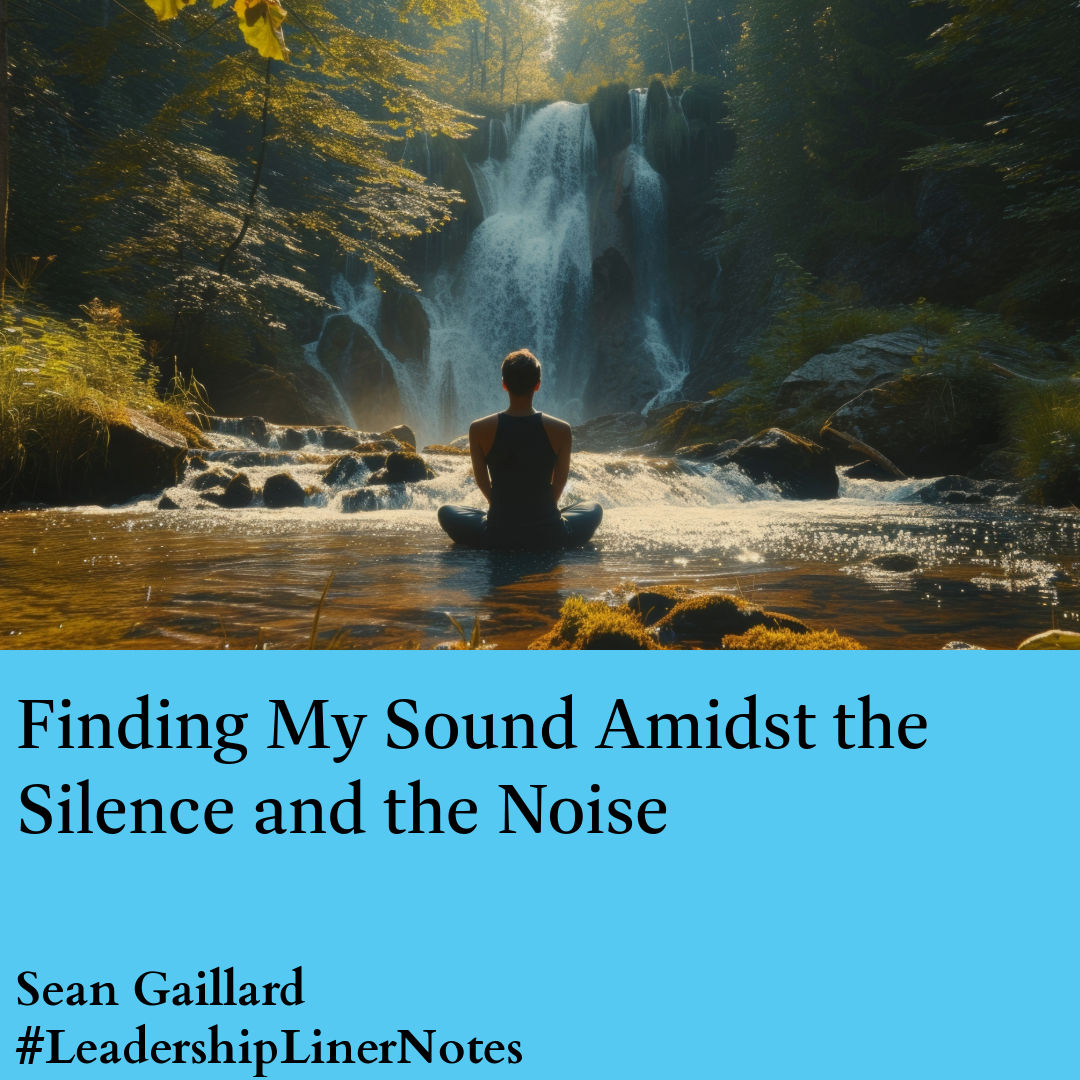
We all want to be a part of something that is meaningful and that gives a sense of belonging. That truth has never felt more real to me than it does right now. It is not just a passing thought. It is something I carry with me in the quiet moments and in the spaces where I am trying to make sense of where I am and where I am going.
Sometimes the hardest truth to carry is that your own backyard may not hear your song the way it was meant to be heard. For me, that is not just a metaphor. I can point to moments that still sit with me. I remember sharing the idea for #CelebrateMonday in a meeting and being laughed at. That idea later grew beyond those walls as schools across the country and beyond began using it to build culture and recognize the good in their communities. I have shared #InstantPD, presented on it, and believed in its potential to create quick, meaningful learning for teachers, yet it never fully took root in the schools and district where I served. I have stood as a finalist for North Carolina Principal of the Year and still felt like I was on the outside of that circle, never quite included in the way I had hoped. I think about principal meetings where I would sit alone, not quite feeling like I fit in, with no one saving me a seat. I think about presenting at local and state conferences and seeing small turnouts for sessions I poured myself into. I think about traveling to state and national conferences on my own without a team beside me, navigating those spaces as an individual rather than as part of a group. These are not grievances. These are truths. They have shaped how I understand what it means to feel like an outsider in my own professional community.
That realization has forced me to look inward in ways that are both honest and uncomfortable. I have had to sit with the reality that the spaces I thought would affirm me have often been quiet. That silence can feel heavy. It can make you question your voice and your place.
I have felt adrift in that silence.
At the same time, I know that this season has been both joyful and agonizing. There have been moments of clarity where I feel aligned with the work I am doing. There have also been moments where I question everything and wonder if any of it is landing with anyone beyond me. That tension is real. It is part of what it means to be human in this work.
What I am learning is that peace cannot be dependent on whether others hear the music.
It has to come from within.
I have to be willing to be transparent with myself. I have to face the truths of my past, the realities of my present, and the uncertainty of my future without turning away. That kind of honesty is not easy. It requires me to separate the events of failure from my identity. It requires me to acknowledge the hurt without allowing it to define me. It requires me to keep going even when the path forward is not clear.
The absence of recognition does not mean the music is wrong.
It means I am still in the process of finding my people.
There are people out there who will recognize this sound. They will lean in. They will connect with what I am creating in a way that feels real and mutual. They will not just hear the dream. They will help me play it louder. That belief matters, even on the days when it feels fragile.
At the same time, I am coming to terms with another truth.
No band is going to come calling for me.
That realization is not defeat. It is clarity.
It is my cue to build something of my own.
Instead of waiting to be called in or tapped on the shoulder, I am choosing to create my own spaces and invite others in. I am doing that through the work I am building with my podcast projects and through the Disruption Table webinar, where leaders from different spaces can come together in honest conversation. I am doing that in collaboration with Dr. Donya Ball as we create a space for “Real Riffs,” a podcast that is grounded in truth, reflection, and the voices of those who want to be part of something real. That work is coming to life in April, and it represents more than a project. It represents a shift in how I see my role in this work.
If I want a space where belonging is real, where voices are valued, and where the work carries meaning, then I have to create it. I have to be willing to take the same risks I have been waiting for others to take with me. I have to trust that what I am building has value, even before anyone else affirms it.
This is what leading while human looks like for me right now.
It is holding joy and struggle in the same space.
It is continuing to create even when the response is quiet.
It is choosing peace within myself while still seeking connection with others.
It is believing that there is a place for this work and being willing to build that place if it does not yet exist.
I am still learning.
I am still searching.
I am still here.
There is a sound within me that is not finished.
I am going to keep playing until it finds its way.

 Leadership Liner Notes: Sean Gaillard